
Kokyu Ho in Motion: Harnessing Breath Power in Every Aikido Form

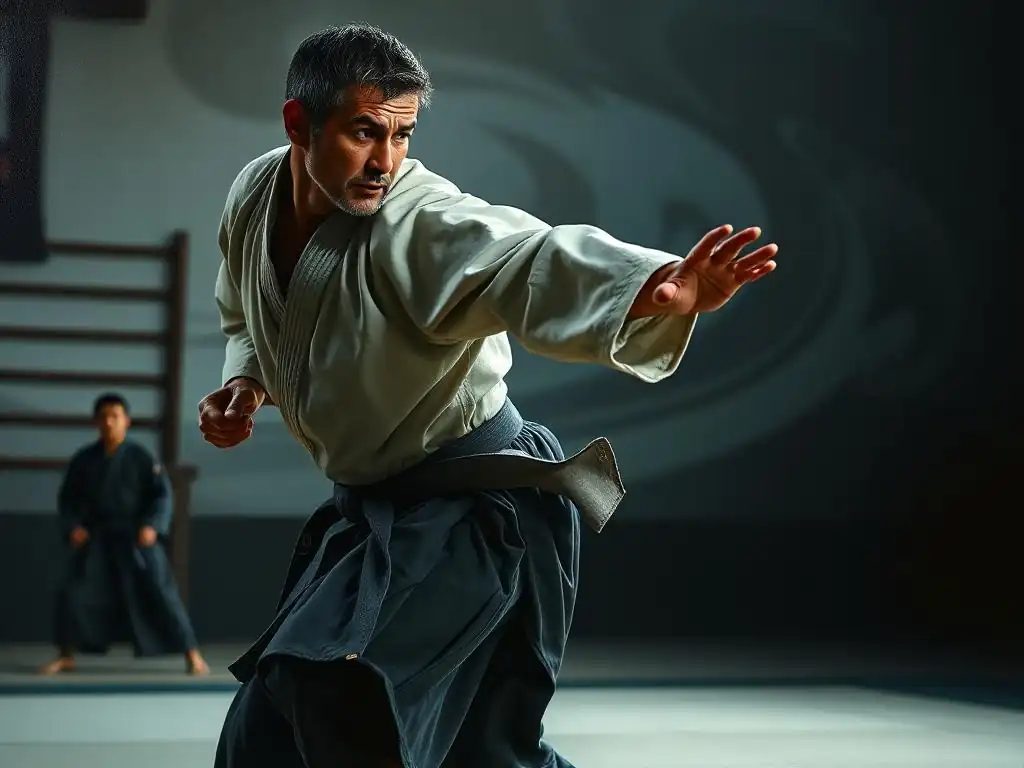
Welcome to Martial Arts Mastery, where we explore the rich tapestry of martial arts traditions!
Ever wondered how a seemingly effortless technique can generate immense power? Dive into our latest exploration, "Kokyu Ho in Motion: Harnessing Breath Power in Every Aikido Form," where we unlock the secrets of Aikido breath power techniques. Prepare to deepen your understanding of this fundamental principle and discover how to integrate it seamlessly into your practice. Intrigued? Let the journey begin...
- Understanding Aikido Breath Control: Kokyu Ho Explained
- Implementing Aikido Breath Power Techniques in Fundamental Forms
- Advanced Aikido Breathing Drills for Enhanced Performance
- Kokyu Ho in Aikido Kata: A Detailed Examination
- Common Mistakes and How to Correct Them in Aikido Breathing
- Benefits of Mastering Aikido Breath Power Techniques
- Conclusion: The Essential Role of Breath in Aikido Mastery
-
Frequently Asked Questions
- What is Kokyu Ho and why is it important in Aikido?
- How do Aikido breath power techniques contribute to effective self-defense?
- Can Kokyu Ho be practiced independently of other Aikido techniques?
- What are some common misconceptions about Aikido breath power techniques?
- Where can I learn more about incorporating Kokyu Ho into my Aikido training?
- Final Reflection: The Breath of Aikido's Future
- Unleash Your Inner Power: Breathe Life Into Your Aikido
Understanding Aikido Breath Control: Kokyu Ho Explained
What is Kokyu Ho and its Significance in Aikido?
Kokyu Ho, often translated as "breath method," is a fundamental principle and practice within Aikido that goes far beyond simple inhalation and exhalation. It is the art of coordinating breath with physical movement and mental focus to generate internal power, known as ki. This power is not brute muscular strength but a dynamic energy flow that allows the practitioner to execute techniques effectively, maintain balance, and blend with an opponent's movement.
O-Sensei Morihei Ueshiba, the founder of Aikido, emphasized Kokyu Ho as central to the art, stating that Aikido is "Kokyu no Budo," the martial art of breath. Without mastering Kokyu Ho, one cannot truly understand or apply the core principles of Aikido, such as aiki (harmonizing energy) and effortless execution.
The significance of Kokyu Ho in Aikido is multifaceted. Firstly, it is the source of Kokyu Ryoku, or breath power, which enables even a smaller practitioner to control a larger, stronger attacker. This power is generated from the hara (lower abdomen) and directed through the body via coordinated breath and movement.
Secondly, Kokyu Ho is crucial for maintaining zanshin (alertness) and heijoshin (calmness of mind) during practice or confrontation. A calm, centered breath helps regulate the nervous system, allowing for clearer thinking and faster reactions. Thirdly, it fosters the mind-body connection, integrating physical action with internal state, which is essential for developing true martial skill and self-awareness.
The Role of Breath in Generating Power (Ki) in Aikido Techniques
In Aikido, generating power through breath involves a specific coordination of inhalation, exhalation, and movement. The principle is often described as gathering energy during inhalation (or a preparatory phase) and releasing it forcefully and directionally during exhalation, timed precisely with the execution of a technique. This is not a shallow chest breath but a deep, abdominal breath originating from the hara, the body's energetic and physical center of gravity. By rooting the breath in the hara, the practitioner creates a stable base from which power can be projected.
Consider a simple Kokyu Ho exercise where partners sit facing each other, grasping hands. The practitioner takes a deep breath into their hara, centering their weight, and on a strong exhalation, extends their energy forward, aiming to unbalance the partner. This isn't about pushing with muscular strength, but about projecting a unified force generated from the core, guided by the breath.
This same principle is applied to standing techniques. For instance, in a throw like Kokyunage (breath throw), the power doesn't come from lifting or muscling the opponent, but from timing a strong, rooted movement with a focused exhalation that disrupts the opponent's balance and structure. This coordinated effort of body, mind, and breath is the essence of Aikido breath power techniques.
Differentiating Kokyu Ho from Other Breathing Exercises
While many disciplines utilize breathing exercises for various purposes, Kokyu Ho in Aikido has specific characteristics and objectives that set it apart. Practices like pranayama in Yoga focus on breath control for spiritual, mental, and physical well-being, often involving complex breath retention and alternate nostril techniques. Qigong and Tai Chi also emphasize coordinated movement and breath for health, energy circulation, and internal power, sharing some philosophical underpinnings with Aikido regarding ki.
However, Kokyu Ho is specifically tailored for the dynamic, often explosive, and defensive nature of Aikido techniques. Its primary goal is the generation and projection of Kokyu Ryoku for martial application and the maintenance of centeredness under pressure.
A key difference lies in the martial context. Kokyu Ho is intrinsically linked to the execution of throws, pins, and blending movements against an attacking force. The breath is not just for relaxation or internal energy circulation (though it aids these); it is a direct tool for destabilizing an opponent, absorbing impact, and executing techniques with efficiency and power.
While other methods might focus on slow, deliberate breathing for meditation or health, Kokyu Ho often involves sharp, powerful exhalations timed with impactful movements, or controlled, rooted breathing to maintain stability against external force. It's a breathing method designed for dynamic interaction and self-defense, making it a unique component of Aikido breath power techniques.
Implementing Aikido Breath Power Techniques in Fundamental Forms
Integrating Kokyu Ho into Basic Aikido Movements (Kihon Waza)
Integrating Kokyu Ho into basic Aikido movements, or kihon waza, is foundational for developing effective technique. Simple movements like ikkyo undo (first principle exercise) or tenkan (turning movement) are not just physical drills but opportunities to synchronize breath and body. When practicing ikkyo undo, for example, the downward motion of the arms should ideally be accompanied by a rooted stance and a focused exhalation from the hara, directing energy downwards and outwards. This synchronicity helps to develop unified body movement, where the power originates from the core rather than isolated limb strength.
Similarly, in tenkan, the pivot and turn should be linked to a controlled breath. Often, practitioners might inhale during the preparatory phase of the turn and exhale as they complete the rotation and extend their energy. This ensures that the movement is not just a mechanical turn but a dynamic shift of weight and energy, powered by the breath. Consistent practice of kihon waza with conscious Kokyu Ho application is crucial.
Dojo practice often involves hundreds of repetitions of these basic movements. A student practicing shomenuchi ikkyo might perform the initial blending movement with an inhalation, absorbing the attack, and then execute the pin with a strong, grounded exhalation, rooting their power. This repetition, perhaps 50-100 times per class for basic movements, builds the ingrained habit of coordinating breath and technique.
Shomenuchi Ikkyo (front-of-the-head strike, first principle pin) is a fundamental technique that heavily relies on proper Kokyu Ho for both stability and power. As uke (the attacker) delivers the shomenuchi strike, nage (the defender) must absorb or blend with the incoming energy while maintaining their own centeredness. This initial phase often involves a focused inhalation or controlled breath to root oneself and receive the force without being easily moved. The stability comes from directing the breath down into the hara, creating a solid base.
The power phase of Ikkyo involves leading uke's arm downwards and applying the pin. This movement requires projecting energy through nage's structure. As nage moves to control uke's arm and bring them down, a strong, controlled exhalation from the hara is essential.
This exhalation, coordinated with the downward movement and rooted stance, allows nage to generate significant power without relying solely on muscular strength. This unified force from the core, guided by the breath and channeled through the body, makes the pin effective and stable, preventing uke from easily resisting or escaping. Without this breath coordination, the technique often feels disconnected and lacks the necessary power and control.
Yokomenuchi Shihonage (side-of-the-head strike, four-direction throw) is another core technique where Kokyu Ho is vital, particularly for timing and coordination. The technique involves blending with a side strike, turning, and executing a throw that projects uke in one of four directions. The timing of Shihonage is critical – blending too early or too late renders the technique ineffective. Proper breathing helps synchronize nage's movement with uke's attack and subsequent imbalance.
As uke initiates the yokomenuchi strike, nage must blend by entering and turning. This initial blend often involves a subtle inhalation or a neutral breath to remain relaxed and receptive. The crucial timing comes during the turn and the execution of the throw.
As nage completes the turn and extends through their center to project uke, a powerful, directed exhalation is timed precisely with the release of energy. This exhalation helps to unify the body's movement, ensuring that the power comes from the core and is channeled effectively through the arms and structure to unbalance and throw uke. The breath acts as a natural rhythm keeper, helping nage coordinate their complex circular movement with the linear or circular energy of uke, making the Aikido breath power techniques flow seamlessly.
Advanced Aikido Breathing Drills for Enhanced Performance
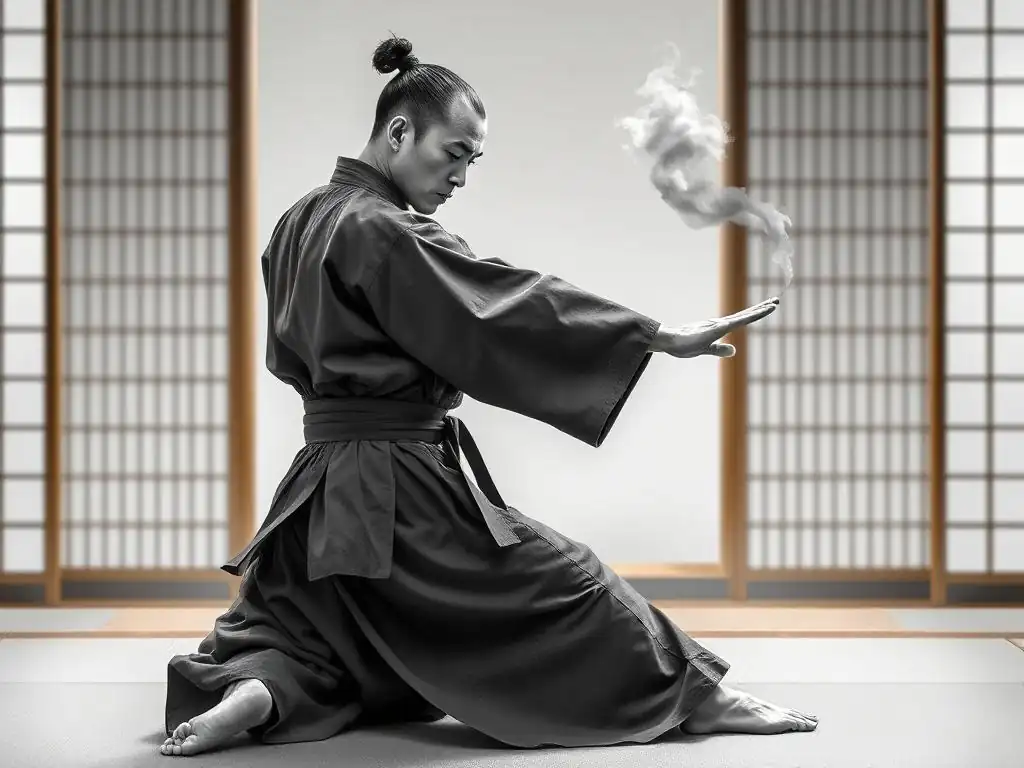
Developing Advanced Kokyu Ho Skills for Greater Control
Developing advanced Kokyu Ho skills moves beyond basic synchronization to achieving finer control over breath flow and energy projection in more complex and dynamic situations. This involves drills that isolate and enhance specific aspects of breath power. One such drill is Kokyu Tanden Ho, a seated practice focusing on deep, abdominal breathing while maintaining a strong, stable posture.
Practicing this for 10-15 minutes daily helps cultivate a deeper connection to the hara and increases the capacity to generate rooted power. Another drill involves resisting a partner's push while maintaining complete relaxation and rooting through breath, focusing on absorbing force rather than opposing it directly.
More dynamic drills include executing techniques against increasing resistance while maintaining natural, powerful breathing. For example, practicing Kokyunage against a partner actively resisting the throw forces the practitioner to rely more on breath power and timing than muscular strength. Advanced practitioners also work on varying the intensity and duration of their exhalation to match the specific demands of different techniques and situations – a short, sharp breath for a quick projection versus a longer, sustained breath for a continuous pin or blend. These advanced Aikido breath power techniques require not just physical practice but also heightened internal awareness.
Breath as a Tool for Redirecting Energy and Maintaining Balance
In advanced Aikido, breath becomes a sophisticated tool for managing and redirecting an opponent's energy and maintaining one's own balance under pressure. When receiving a strong push or pull, a practitioner can use a focused, rooted breath (often a subtle inhalation or holding breath momentarily while rooting) to absorb the impact into their core rather than being pushed off balance. This isn't about tensing up, but about becoming heavy and stable from the hara.
Conversely, when redirecting energy, a timed exhalation can amplify the force of the redirection. For instance, in techniques like Iriminage (entering throw), as the practitioner enters and turns, a strong, directed exhalation can help channel uke's forward momentum past them, contributing to the throw. The breath helps to create a 'wave' of energy that blends with and redirects the incoming force.
Maintaining balance during complex movements, like continuous multiple attacks, relies heavily on keeping the hara centered and breathing deeply and calmly, allowing for fluid transitions between techniques. This mastery of breath-work is key to executing advanced Aikido breath power techniques effortlessly.
Optimizing Breathing Patterns for Different Aikido Scenarios
Optimizing breathing patterns involves understanding that different Aikido scenarios require different breath approaches. During warm-ups and gentle practice ( aiki taiso), breathing is typically slow, deep, and coordinated with large, flowing movements, focusing on relaxation and energy circulation. During vigorous, fast-paced practice ( randori), breathing becomes more dynamic, often involving sharper inhalations and exhalations, but still rooted in the hara to maintain power and stability amidst chaos.
In a static pin like Ikkyo or Sankyo, the breathing might be controlled and steady to maintain continuous pressure and connection. In a dynamic throw like Kokyunage or Shihonage, a powerful, explosive exhalation is often timed with the moment of projection.
Dealing with multiple attackers requires maintaining a constant state of calm, centered breathing, allowing for quick transitions and adaptations without losing composure or power. An advanced practitioner learns to intuitively adjust their breathing rhythm, depth, and intensity based on the specific demands of the technique, the partner's energy, and the overall situation, making their Aikido breath power techniques highly adaptable.
Kokyu Ho in Aikido Kata: A Detailed Examination
The Interplay of Breath and Form in Aikido Kata Practice
Kata, or pre-arranged forms, in Aikido are not merely sequences of movements but embody the principles of the art, including Kokyu Ho. Practicing kata allows for the development of unified body movement, timing, and the integration of breath power without the unpredictable variable of a partner.
Each movement within a kata, from the initial bow to the final posture, should ideally be linked to a specific phase of breath – inhalation, exhalation, or a brief pause. This conscious connection ensures that the kata is performed not just as a physical drill but as a moving meditation that cultivates internal power and awareness.
Consider the solo practice of a basic movement like suburi (sword or staff cutting practice). A downward cut with a bokken (wooden sword) is typically accompanied by a strong, focused exhalation from the hara, projecting energy through the sword tip. The recovery phase might involve an inhalation, preparing for the next cut.
Practicing a series of suburi while consciously coordinating breath helps build stamina and reinforces the principle of generating power from the core. Similarly, solo jo (staff) or bokken kata integrate footwork, body movement, and weapon techniques, all synchronized with specific breathing patterns to embody the flow and power of aiki.
Analyzing the Breathing Rhythm in Sanjo no Kata
Sanjo no Kata (Third Principle Form), while not universally practiced in all Aikido lineages in the same way, often involves movements related to techniques like Sankyo (third principle pin) or flowing circular movements. Analyzing the breathing rhythm in such a kata involves understanding how breath supports the core actions: blending, turning, and controlling an opponent's center or limb. If a section of Sanjo no Kata involves a strong, circular movement designed to unbalance, the peak of that movement might be punctuated by a focused exhalation.
For a hypothetical sequence involving a blend and a turn, one might inhale during the initial receptive movement, then exhale powerfully as the turn is executed and energy is projected through the arms or body. If the kata includes elements of a pin like Sankyo, maintaining pressure might involve a steady, controlled breath, perhaps with a slightly longer exhalation to maintain rootedness.
The rhythm isn't just about breathing during the movement, but using the breath to initiate and conclude phases of the movement, creating dynamic tension and release. A practitioner might spend significant time, perhaps 20-30 minutes per session, repeating sections of a kata, focusing solely on refining the breath-movement coordination.
Maximizing the Effectiveness of Yonjo no Kata Through Conscious Breathing
Yonjo no Kata (Fourth Principle Form), again varying by lineage, might incorporate elements related to Yonkyo (fourth principle pin) or more advanced blending and throwing principles. Maximizing the effectiveness of such a kata through conscious breathing involves using Kokyu Ho to enhance the core principles demonstrated. If a section of Yonjo no Kata involves receiving force and redirecting it with minimal effort, the breathing must support this yielding and blending. This might involve a relaxed inhalation or a subtle hara breath to absorb, followed by a timed exhalation to amplify the redirection.
For movements within Yonjo no Kata that demonstrate powerful projections or throws, a sharp, focused exhalation timed precisely with the moment of extension is crucial. The breath helps to unify the entire body's power into a single, directed force.
Conscious breathing also helps maintain zanshin throughout the kata, keeping the practitioner alert and connected to their center even during complex sequences. By treating each movement as an opportunity to apply Kokyu Ho, perhaps practicing the kata slowly 5-10 times focusing only on breath, then increasing speed while maintaining breath awareness, the practitioner internalizes the principles of Aikido breath power techniques, making the kata a truly dynamic and powerful practice.
Common Mistakes and How to Correct Them in Aikido Breathing
Identifying and Addressing Breathing Errors in Aikido Practice
Common breathing errors in Aikido practice often stem from tension, lack of awareness, or misunderstanding of Kokyu Ho principles. One frequent mistake is shallow chest breathing instead of deep abdominal breathing from the hara. This limits the ability to generate Kokyu Ryoku and makes the practitioner top-heavy and unstable. Another error is holding the breath during techniques, which creates tension and restricts the flow of ki and movement. Conversely, some practitioners exhale too early or too weakly, failing to time their breath with the peak moment of power projection.
Other issues include breathing erratically or inconsistently, failing to synchronize breath with movement, or tensing the shoulders and neck while trying to breathe deeply. Identifying these errors often requires feedback from an instructor or senior student. A good instructor can observe a student's posture, movement, and even listen for strained breathing, providing corrections. Self-correction involves increased body awareness, perhaps practicing basic breathing exercises outside of technique, and slowing down complex movements to consciously integrate breath. Recording oneself or practicing in front of a mirror can also help visualize breathing patterns and tension.
Tips for Improving Breath Control and Awareness
Improving breath control and awareness in Aikido requires dedicated practice both on and off the mat.
- Practice Hara Breathing: Dedicate time daily (e.g., 5-10 minutes) to simply sit or stand quietly and practice deep, relaxed abdominal breathing, focusing on expanding the abdomen on inhalation and contracting it on exhalation. Place a hand on your lower abdomen to feel the movement.
- Slow Down Techniques: When learning new techniques or refining old ones, practice them very slowly, focusing specifically on coordinating your breath with each phase of the movement.
- Listen to Your Breath: Become aware of the sound and feel of your breath during practice. Is it strained, shallow, or smooth and deep?
- Use Visualization: Imagine your breath as a source of power originating from your hara and extending outwards through your movements.
- Seek Feedback: Regularly ask your instructor or senior training partners for specific feedback on your breathing during techniques.
[ ] Practice Hara Breathing for 5 minutes daily.
[ ] Select one basic technique (e.g., Ikkyo) and practice it slowly 10 times, focusing only on breath coordination.
[ ] During warm-up, pay attention to your breath for the first 10 minutes.
The Importance of Consistent Practice for Mastering Kokyu Ho in Aikido
Mastering Kokyu Ho is not a quick fix but a lifelong process that requires consistent, dedicated practice. Just like developing physical strength or flexibility, developing breath power and awareness requires regular effort. Sporadic attempts to use Kokyu Ho during practice will yield limited results. It's the consistent, often repetitive, integration of breath into every movement, every technique, and every kata that builds true proficiency.
Consistent practice helps to make Kokyu Ho intuitive. Eventually, the practitioner no longer has to consciously think about when to inhale or exhale during a technique; the breath naturally synchronizes with the movement, becoming an integral part of the action. This level of integration, often taking years of dedicated training (e.g., 5-10 years to truly grasp the principles, and longer for mastery), allows for effortless power generation and greater responsiveness. Regular attendance at the dojo, combined with personal practice focused on Aikido breath power techniques, is essential for unlocking the full potential of Kokyu Ho.
Benefits of Mastering Aikido Breath Power Techniques
Increased Power and Efficiency in Aikido Techniques
Mastering Aikido breath power techniques leads directly to a significant increase in the power and efficiency of your techniques. When breath, body movement, and mental focus are unified, the resulting force is far greater than muscular strength alone. This allows practitioners to execute techniques with less physical effort, making them more sustainable and effective against opponents of varying sizes and strengths. The power generated from the hara is rooted and stable, enabling throws and pins that are difficult to resist.
For example, a practitioner who effectively uses Kokyu Ho in Kokyunage can often throw a much heavier opponent with seemingly minimal effort, simply by timing their rooted movement and powerful exhalation to disrupt the opponent's balance at the critical moment. Efficiency is also enhanced because wasted muscular tension is reduced. Energy is directed purposefully through the body and into the technique, rather than being dissipated through unnecessary effort. This increased efficiency means practitioners can train longer and more effectively, reducing the risk of strain or injury.
Improved Focus and Concentration During Training
The practice of Kokyu Ho is inherently a practice of mindfulness. Focusing on the breath naturally brings the mind into the present moment, reducing distractions and improving concentration. During intense training or while practicing complex techniques, maintaining conscious awareness of the breath helps to keep the mind calm and centered, preventing panic or mental clutter. This improved focus allows practitioners to absorb instruction more effectively, learn techniques faster, and react more appropriately in dynamic situations.
Consider a situation during randori (freestyle practice) with multiple attackers. A practitioner who maintains calm, centered breathing is better able to assess the situation, anticipate attacks, and transition smoothly between techniques. Conversely, holding the breath or breathing shallowly in such a scenario often leads to tension, clouded judgment, and decreased performance. The ability to maintain relaxed focus through breath control is a hallmark of advanced Aikido practice and a direct benefit of mastering Aikido breath power techniques.
Enhanced Mind-Body Connection Through Breathing
Perhaps one of the most profound benefits of mastering Kokyu Ho is the enhancement of the mind-body connection. The breath serves as a bridge between the physical body and the conscious mind. By consciously coordinating breath with movement, practitioners become more attuned to their internal state and how it affects their physical actions. This heightened awareness allows for greater control over one's own energy and responses.
Developing this connection helps practitioners understand that physical technique is inseparable from internal state. A tense mind leads to a tense body and ineffective technique. A calm, focused mind, supported by centered breathing, allows the body to move fluidly and powerfully. This integrated approach to training fosters not just martial skill but also self-awareness and control that extends beyond the dojo, impacting daily life by promoting calmness, focus, and efficient energy use. The journey of mastering Aikido breath power techniques is thus also a journey of self-discovery and integration.
Conclusion: The Essential Role of Breath in Aikido Mastery
Emphasizing the Importance of Kokyu Ho for All Aikido Practitioners
Kokyu Ho is not an optional add-on to Aikido; it is the very engine that drives the art. Without understanding and practicing Kokyu Ho, a practitioner is essentially performing physical movements that resemble Aikido but lack the core principles of aiki and effortless power. Regardless of one's rank or experience level, dedicated attention to breath is crucial.
For beginners, it provides a stable foundation and introduces the concept of generating power from the core. For intermediate practitioners, it refines technique and enhances efficiency. For advanced practitioners, it unlocks deeper levels of understanding, control, and the ability to perform techniques with true aiki.
Every movement in Aikido, from the simplest bow to the most complex throw or pin, is an opportunity to apply Kokyu Ho. It is the constant thread that weaves through all aspects of training, providing structure, power, and internal connection. Instructors often emphasize breath from the very first class, recognizing its foundational importance. Students who commit to developing their Aikido breath power techniques will invariably find their progress accelerates and their understanding of Aikido deepens significantly.
Continuing the Journey of Breath Awareness in Aikido
The journey of breath awareness in Aikido is continuous. There is no point at which one has 'mastered' Kokyu Ho completely; there are always deeper levels of subtlety, control, and integration to explore. As physical technique improves, so too must the refinement of breath coordination. As challenges increase, the ability to maintain calm, centered breathing becomes even more critical.
Practitioners are encouraged to make breath awareness a constant companion, both on and off the mat. Paying attention to breath during daily activities can help build the mindfulness required for effective Kokyu Ho in dynamic situations. Returning to basic breathing exercises, even after years of training, can reveal new insights. The path of Aikido mastery is intimately linked with the path of mastering one's own breath, making the study of Aikido breath power techniques an essential and ongoing pursuit for any serious practitioner.
Frequently Asked Questions
What is Kokyu Ho and why is it important in Aikido?
Kokyu Ho refers to breath power techniques in Aikido. It's crucial because it connects breath control to body mechanics, enhancing power and stability.
How do Aikido breath power techniques contribute to effective self-defense?
Breath control allows for enhanced focus and calmness under pressure. This translates to more effective execution of Aikido techniques in a self-defense situation.
Can Kokyu Ho be practiced independently of other Aikido techniques?
While ideally integrated, elements of Kokyu Ho, such as focused breathing exercises, can be practiced separately to improve overall body awareness and energy control.
What are some common misconceptions about Aikido breath power techniques?
One misconception is that it's purely about forceful exhalation. It's actually about rhythmic breathing, centering, and coordinating breath with movement for optimal power.
Where can I learn more about incorporating Kokyu Ho into my Aikido training?
MartialArtsMastery.org offers in-depth resources on Aikido disciplines, training tips, and the historical context of Kokyu Ho to enhance your understanding.
Final Reflection: The Breath of Aikido's Future
The exploration of Kokyu Ho within Aikido reveals a profound truth: Aikido breath power techniques are not merely physical exercises, but a pathway to unlocking inner strength and harmony. This understanding transcends the dojo, offering valuable lessons in mindfulness and control that resonate deeply in our fast-paced, often chaotic world. The ability to center oneself through breath, as demonstrated in each Aikido form, provides a powerful antidote to the stresses of modern life.
This connection between breath and movement has profoundly influenced my own practice and understanding of Aikido. Witnessing the transformative power of Kokyu Ho firsthand has instilled a deeper appreciation for the interconnectedness of mind, body, and spirit. It's a reminder that true strength comes not just from physical prowess, but from the cultivation of inner peace and focused intention. The body is your temple. Keep it pure and clean for the soul to reside in.
- B.K.S. Iyengar. This quote perfectly encapsulates the essence of Kokyu Ho, highlighting the importance of nurturing our physical vessel to unlock our full potential.
As you step off the mat and back into your daily life, I encourage you to carry the lessons of Kokyu Ho with you. Take a moment each day to connect with your breath, to find that center of calm amidst the storm. Embrace the power within you, the power to harness your breath and transform your movements, your thoughts, and ultimately, your life. Let the breath of Aikido guide you towards a future of strength, balance, and unwavering presence.
Unleash Your Inner Power: Breathe Life Into Your Aikido
Thank you for exploring the profound connection between breath and movement in Aikido! We hope this article has illuminated new pathways for deepening your practice and harnessing the power of Kokyu Ho. Now, let’s put this knowledge into action:
- Commit to incorporating conscious, diaphragmatic breathing into your next Aikido practice. Feel the difference it makes in your stability, power, and connection.
- Explore related breathing techniques from other martial arts or meditative practices to enhance your understanding.
- Share your experiences with Kokyu Ho in the dojo or online martial arts community. Let’s learn from each other!
What specific Aikido technique will you focus on imbuing with the power of Kokyu Ho this week?