
Adapting Judo Joint Locks for Different Body Types (Yours and Theirs)

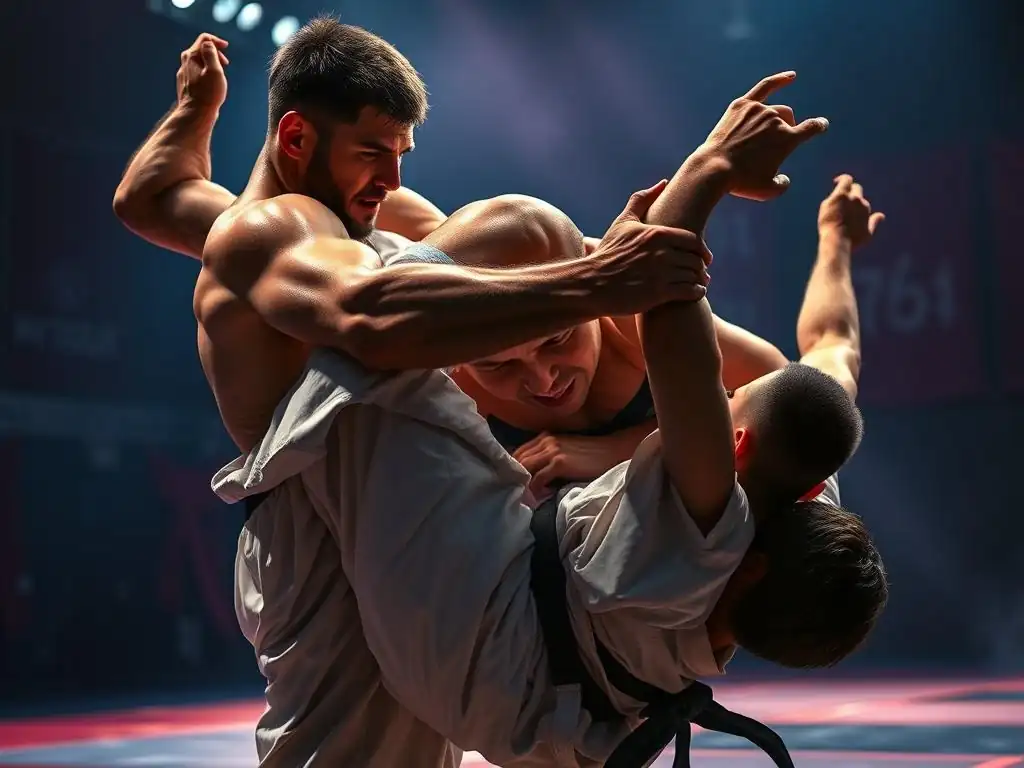
Welcome to Martial Arts Mastery!
Ever wonder how to make Judo joint locks truly effective, regardless of your size or your opponent's build? This isn't a one-size-fits-all technique. Dive into our exploration of Judo joint locks and discover how to adapt these powerful techniques for different body types – both yours and theirs. Unlock the secrets to maximizing leverage and control. Ready to master the subtle nuances that separate success from failure on the mat?
- Adapting Judo Joint Locks for Different Body Types: A Guide for Grapplers
- Applying Judo Arm Locks (Kansetsu-waza) Effectively Across Body Types
- Leg Locks (Ashi-Gatame) Adaptations Based on Body Size Discrepancies in Judo
- Adapting Joint Locks for Your Body Type: Leveraging Your Strengths
- Countering Common Defenses to Judo Joint Locks Based on Body Type
- Advanced Strategies for Judo Joint Locks and Body Type Considerations
- The Importance of Positional Dominance in Applying Judo Joint Locks Regardless of Body Type
-
Frequently Asked Questions
- What is the primary focus of Adapting Judo Joint Locks for Different Body Types (Yours and Theirs) on MartialArtsMastery.org?
- Why is understanding body type important when performing Judo joint locks?
- What specific adaptations might be necessary for a smaller Judo practitioner against a larger opponent when applying joint locks?
- Does the article discuss how the practitioner's own body type might affect their ability to execute certain Judo joint locks?
- Are there specific Judo joint locks that are generally more effective regardless of body type?
- Final Reflection: The Art of Adaptive Submission
- Unleash Your Judo Potential: Master Joint Locks Now!
Adapting Judo Joint Locks for Different Body Types: A Guide for Grapplers
The Significance of Anthropometry in Judo Technique
Anthropometry, the study of the measurements and proportions of the human body, plays a crucial role in the effective application of Judo techniques, particularly Kansetsu-waza (joint locks). The physical dimensions of both the practitioner and the opponent directly influence leverage, range of motion, and the points of pressure that can be applied or defended against.
For instance, a difference of even a few inches in arm or leg length can fundamentally alter the angle required to finish a lock or the ease with which an opponent can escape. Understanding these variations is key to mastering Judo joint locks body types adaptations.
Considering anthropometry allows a Judoka to move beyond simply learning the standard form of a technique and instead develop a deeper understanding of its underlying principles. This knowledge enables adjustments based on real-time interactions. For example, applying an effective armlock on someone with significantly longer arms requires a different approach to securing the limb and applying pressure compared to someone with shorter arms. This isn't just about strength; it's about geometry, leverage, and exploiting the specific structural vulnerabilities presented by different Judo joint locks body types.
Common Body Type Classifications in Judo (Ectomorph, Mesomorph, Endomorph)
While not strict scientific categories applied universally in sports science, general body type classifications like Ectomorph, Mesomorph, and Endomorph offer a useful framework for understanding typical challenges and advantages in Judo, including the execution of Judo joint locks body types strategies. Ectomorphs are often characterized by a lean build, longer limbs, and less natural muscle mass, which can make them flexible and quick but potentially less naturally strong in static positions. Their long limbs can be difficult to control but may also provide longer levers for joint locks if secured properly.
Mesomorphs typically have a more muscular, athletic build with balanced proportions. They often possess good natural strength and power, which can be advantageous in applying crushing pressure or resisting joint lock attempts. However, their build might sometimes compromise extreme flexibility. Endomorphs tend to have a rounder, heavier build with more body mass. This mass can provide significant stability and crushing pressure from top positions, making escapes difficult. While they might have less natural flexibility, their density can make isolating limbs for locks challenging, requiring adjustments to secure the joint effectively against different Judo joint locks body types.
How Height and Limb Length Affect Joint Lock Mechanics
Height and limb length are perhaps the most immediately apparent anthropometric factors influencing Judo joint locks body types adaptations. A taller opponent with longer arms will have a greater range of extension in their elbow, meaning a standard armlock like Ude-Hishigi-Juji-Gatame (cross armlock) might need to be applied deeper or with a different angle to reach the point of hyperextension. Their longer legs can also make controlling their hips or transitioning to leg locks more complex, as they can use their reach to create distance or base out effectively.
Conversely, a shorter opponent with shorter limbs might be more compact and harder to isolate. Their shorter arms require the practitioner to get closer to the joint to apply pressure, and their reduced limb length offers less leverage for the uke (receiver) to resist the lock through extension. However, their compactness can make them harder to stretch out, which is often a precursor to securing a limb for a lock. Effectively applying Judo joint locks body types requires constant micro-adjustments based on these subtle, yet significant, differences in physical structure.
Applying Judo Arm Locks (Kansetsu-waza) Effectively Across Body Types
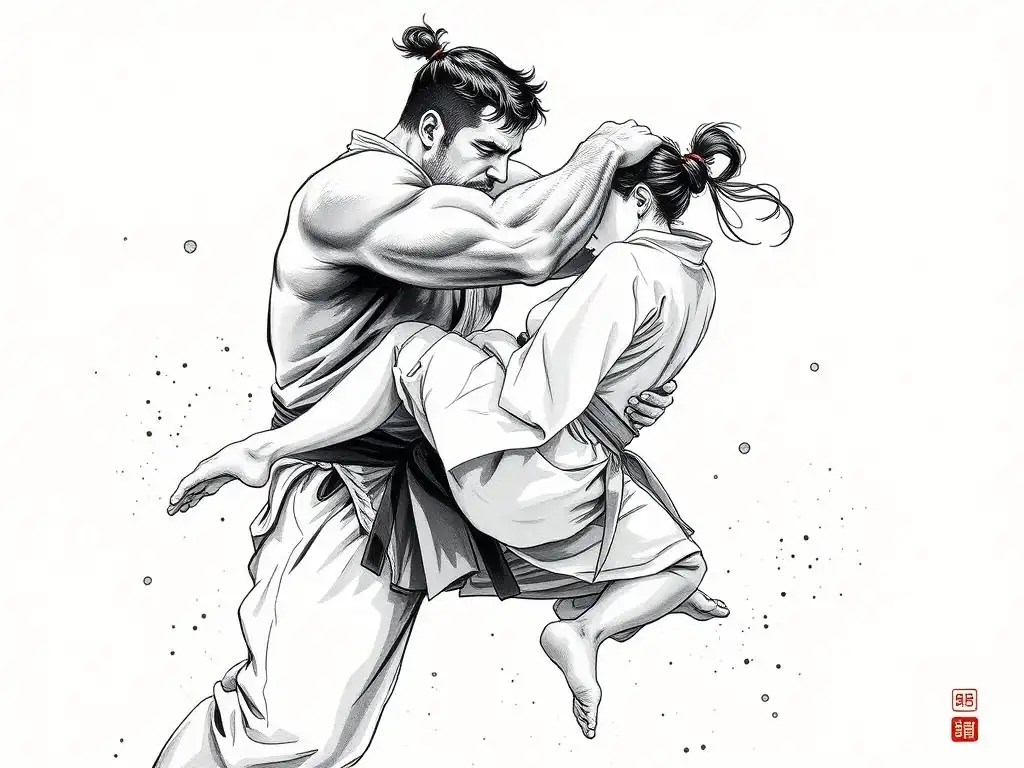
Adapting Ude-Hishigi-Juji-Gatame (Cross Armlock) for Taller Opponents
Applying Ude-Hishigi-Juji-Gatame (cross armlock) against a taller opponent with long arms presents a common challenge in Judo. Their extended reach allows them to straighten their arm further before the joint reaches its limit, or they can use their length to create space and posture up. To adapt, the practitioner must focus on securing the arm tightly near the shoulder joint, preventing any slack. This often involves sitting closer to the opponent's shoulder line and using a strong grip higher up on the triceps, near the elbow, rather than just the wrist.
Furthermore, controlling the opponent's posture and hips is paramount. A tall opponent can often alleviate pressure by sitting up or turning away. The practitioner needs to maintain a strong base, use their legs to pinch the opponent's body tightly, and keep the opponent's head down. Applying pressure with the hips towards the opponent's head, while keeping their wrist pulled towards the practitioner's chest, shortens the lever and makes the lock effective despite the extra length. This adaptation is crucial for finishing Judo joint locks body types when facing height discrepancies.
Modifying Ude-Hishigi-Waki-Gatame (Armpit Armlock) for Shorter Opponents
Ude-Hishigi-Waki-Gatame (armpit armlock) relies on trapping the opponent's arm under the practitioner's armpit and applying pressure. When facing a shorter opponent with shorter arms, securing the arm deeply under the armpit can be challenging, as there is less limb length extending past the joint to control. The practitioner must ensure the opponent's elbow is precisely positioned against their armpit or slightly behind it to create the necessary fulcrum.
To compensate for the shorter limb, increased body pressure and a tighter squeeze are often required. The practitioner needs to bring their elbow closer to their own body's center, creating a more acute angle at the opponent's elbow joint. Using the shoulder and chest to apply downward pressure onto the opponent's trapped arm, while simultaneously lifting the elbow, enhances the effectiveness of the lock. This modification ensures that Judo joint locks body types adjustments account for reduced limb length in techniques like Waki-Gatame.
Tailoring Ude-Hishigi-Hara-Gatame (Stomach Armlock) for Different Torso Lengths
Ude-Hishigi-Hara-Gatame (stomach armlock) utilizes the practitioner's abdomen to apply pressure on the opponent's elbow joint while controlling the arm. The effectiveness of this technique can vary based on the torso lengths of both individuals. If the practitioner has a relatively short torso compared to the opponent's arm length, they might struggle to position their stomach correctly over the elbow joint while maintaining control of the arm.
In such cases, the practitioner must focus on using their hips more actively to drive into the opponent's elbow. They might need to adjust their angle slightly or use their legs to bridge and increase pressure. Conversely, if the practitioner has a longer torso or is applying the lock against someone with a shorter torso, they must be careful not to overextend or lose control of the opponent's body, which could lead to an escape. Precise hip placement and controlled pressure application are key to tailoring this specific Judo joint locks body types variation.
Leg Locks (Ashi-Gatame) Adaptations Based on Body Size Discrepancies in Judo
Adjusting Knee Locks (Hiza-Gatame) for Varying Leg Lengths
Hiza-Gatame (knee lock) techniques often target the opponent's knee joint through hyperextension or rotational force. The length of the opponent's leg significantly impacts the leverage points and the range of motion available. Against an opponent with long legs, the practitioner might need to control the leg further up towards the hip or use their own legs to pinch higher to prevent the opponent from extending fully or creating space. The angle of pressure might also need to be adjusted to target the joint effectively along the longer limb.
For opponents with shorter legs, the practitioner needs to ensure the pressure is applied directly to the knee joint itself, as there is less length to work with as a lever. Securing the leg tightly and preventing the opponent from bending their knee or rotating out is crucial. The practitioner's own leg placement and hip drive become critical in generating sufficient pressure over the shorter distance. Adapting Judo joint locks body types for leg techniques requires sensitivity to these length variations.
Optimizing Ankle Locks (Ashi-Garami) Against Different Body Types
Ashi-Garami (ankle lock variations) target the ankle joint through twisting or compression. The success of these locks can be influenced by factors like ankle flexibility and the sheer mass/strength of the opponent's leg and body. Against a very strong, compact opponent with less ankle flexibility, focusing purely on hyperextension might be less effective. Instead, the practitioner might need to emphasize rotational force or compression by adjusting the angle of their attack and using their body weight.
Conversely, against a more flexible or lighter opponent, a hyperextension-based ankle lock might be easier to achieve. However, flexibility can also allow them to bend in ways that relieve pressure. Therefore, maintaining tight control of the opponent's foot and preventing any movement that allows them to alleviate pressure is vital. Adapting Judo joint locks body types for ankle attacks means understanding how the opponent's structure influences their ability to resist or escape.
Calf Locks (Fukubu-Gatame) and Their Application Across Diverse Body Structures
Fukubu-Gatame (calf locks, often involving compression on the calf muscle) are less common than ankle or knee locks in standard Judo but can be highly effective when applied correctly. The effectiveness of a calf lock is directly related to the opponent's calf structure – specifically, the amount of muscle mass and fatty tissue, and the location of sensitive nerve points. Against an opponent with large, heavily muscled calves, applying sufficient pressure to cause pain or submission can be difficult.
To make calf locks effective against different body structures, the practitioner must focus on applying pressure precisely to the nerve bundles located between the muscles, rather than just squeezing the bulk of the calf. This often requires using a hard edge, like the forearm or shin, and applying focused, directional pressure. Against a less muscular calf, the lock might take effect more quickly with less overall force, but precise placement remains key. Tailoring Judo joint locks body types for calf locks is about finding the right pressure point for the individual opponent.
Adapting Joint Locks for Your Body Type: Leveraging Your Strengths
Judo Joint Locks for Smaller Grapplers: Utilizing Leverage and Speed
Smaller grapplers in Judo often face opponents with significant weight and strength advantages. For these practitioners, relying solely on brute force for Judo joint locks body types is often ineffective. Instead, they must focus on techniques that maximize leverage and utilize speed and precise timing. Techniques that exploit rotational force, like specific variations of Ude-Garami (americana) or Kimura, where body mechanics create powerful torques, can be highly effective regardless of the opponent's size.
Furthermore, smaller grapplers can use their agility to quickly transition between positions and capitalize on momentary openings. They can be adept at slipping into tight spaces to isolate limbs or using momentum to break an opponent's posture, creating the necessary slack to initiate a lock. Focus on securing the joint with minimal muscular effort initially, then using body weight and structural alignment to apply pressure. This approach allows smaller Judoka to finish Judo joint locks body types against larger adversaries.
Judo Joint Locks for Larger Grapplers: Employing Strength and Control
Larger grapplers often possess natural advantages in strength and mass, which can be leveraged effectively in Judo joint locks body types. Their weight can be used to create crushing pressure, making it difficult for opponents to move or defend. Techniques that benefit from static control and sustained pressure, such as certain types of armbars from mount or side control, can be particularly potent. Their strength can also help in maintaining tight control over the opponent's limbs, preventing escapes.
However, larger size can sometimes lead to less flexibility or speed. Larger practitioners must be mindful of opponents who use speed and agility to escape or counter. While strength is a tool, relying solely on it can lead to predictable attacks. Integrating precise technique and understanding leverage points is still crucial. A larger Judoka can often finish a lock with less hyperextension required than a smaller person, simply due to the amount of pressure they can generate. This allows for finishing Judo joint locks body types even when the opponent's limb isn't fully extended.
Adjusting Techniques Based on Your Own Limb Length and Proportions
Understanding your own body type and proportions is as important as analyzing your opponent's when applying Judo joint locks body types. A practitioner with long arms might find techniques like Juji-Gatame or Ude-Hishigi-Hara-Gatame more natural, as their longer reach makes securing the arm and applying pressure easier. They might excel at finishing locks from positions where reach is an advantage, like guard.
Conversely, someone with shorter limbs might find that techniques requiring deep limb penetration or long-range control are more challenging. They might naturally gravitate towards locks that require tighter, closer control, such as certain variations of Waki-Gatame or compression locks. Recognizing these natural inclinations based on one's own anthropometry allows a Judoka to focus on refining the techniques that best suit their build, while also understanding the necessary modifications for techniques that are less naturally suited.
Countering Common Defenses to Judo Joint Locks Based on Body Type
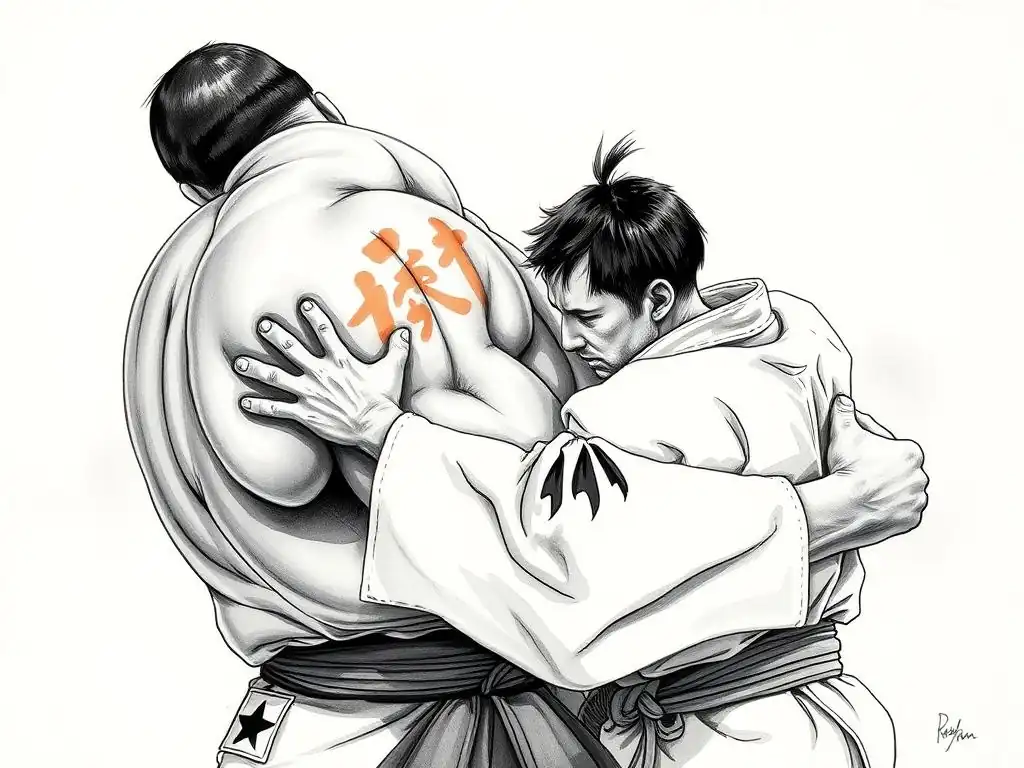
Breaking the Grip of a Stronger Opponent with Joint Locks
A common defense against Judo joint locks body types is gripping tightly to prevent the isolation of a limb or to create tension that resists the lock. Stronger opponents, often those with a mesomorphic or endomorphic build, can exert significant grip strength. Attempting to break such a grip with brute force is usually inefficient. Instead, the practitioner should use principles of joint manipulation on the opponent's fingers, wrist, or elbow to compromise their hold.
Applying pressure to the opponent's pinky finger or twisting their wrist slightly can often significantly weaken a strong grip, allowing the practitioner to peel it away. Using the practitioner's legs or body weight to create leverage against the opponent's arm or hand can also help. For example, in Juji-Gatame, trapping the opponent's gripping hand between the practitioner's legs can help break their defensive grip. This strategic application of pressure on smaller joints is key to overcoming strength disparities when applying Judo joint locks body types.
Preventing Escape from Joint Locks by Taller Opponents
Taller opponents with longer limbs often attempt to escape Judo joint locks body types by extending their bodies, creating space, or straightening the targeted limb prematurely. To prevent this, the practitioner must prioritize control over finishing speed. Maintain tight control of the opponent's hips and posture, using legs to pinch and prevent them from sitting up or turning away.
When applying an armlock, ensure the opponent's arm is secured deeply, with no slack. Keep their wrist pulled tightly towards your chest or shoulder, shortening the lever they can use to resist. For leg locks, control the opponent's hips and upper body to prevent them from turning into the lock or rolling. By eliminating their ability to create space or use their length for leverage, you significantly reduce their escape options, making Judo joint locks body types effective even against longer limbs.
Maintaining Control Against a More Flexible Opponent
Highly flexible opponents, often those with ectomorphic characteristics or specific training backgrounds (like gymnastics or yoga), can bend in ways that relieve pressure from Judo joint locks body types or allow them to slip out of positions. Against such individuals, securing the joint deeply and maintaining constant, intelligent pressure is crucial. Don't wait for full extension before applying pressure; start applying pressure as soon as the joint is reasonably isolated.
Focus on controlling the opponent's entire body, not just the limb. Prevent them from posturing, bridging, or twisting in ways that use their flexibility to their advantage. For example, in an armlock, ensure their shoulder is pinned to the ground if possible. In a leg lock, control their upper body and hips to limit their ability to rotate or bend away from the pressure. Maintaining a strong base and positional dominance while applying the lock minimizes the opportunities for a flexible opponent to utilize their range of motion for escape.
Advanced Strategies for Judo Joint Locks and Body Type Considerations
Combining Joint Locks for Maximum Effectiveness Across Body Types
Advanced Judoka understand that attempting a single joint lock in isolation is often less effective than chaining techniques together. This is particularly true when facing opponents with varying body types, as their initial defense against one lock might inadvertently open them up to another. For example, an opponent defending a straight armbar ( Juji-Gatame) by bending their arm and pulling it back might expose their shoulder or elbow to rotational attacks like Ude-Garami or Kimura.
By combining attacks, the practitioner keeps the opponent constantly defending, preventing them from settling into a strong defensive posture specific to their body type. If an opponent is particularly resistant to hyperextension due to structure or flexibility, transitioning to a compression or rotational lock might be the key. This requires a fluid understanding of how different Judo joint locks body types defenses create vulnerabilities for other attacks.
Transitioning Between Joint Locks Based on Opponent's Reaction and Size
Effective transitions between Judo joint locks body types are dictated by the opponent's defensive reactions, which are often influenced by their size and build. A larger, stronger opponent might rely on static strength to resist, allowing transitions that exploit their lack of mobility. A smaller, faster opponent might try to scramble or use agility, requiring quicker transitions to catch them before they fully escape.
Observing how an opponent defends provides clues for the next attack. If they are pulling their arm in tightly against a straight armbar attempt, switching to an attack on the bent arm makes sense. If they are straightening their leg to escape a leg lock, a different angle targeting hyperextension might become available. Mastering these transitions, tailored to the opponent's physical response and underlying body type, is a hallmark of high-level Judo joint locks body types application.
Drills and Exercises for Developing Sensitivity to Body Type Differences in Judo
Developing sensitivity to the nuances of applying Judo joint locks body types requires specific training. Drills should focus not just on the mechanics of the lock itself, but on feeling the opponent's structure, identifying potential escape routes, and recognizing how their physical attributes affect the technique. Partner drills with individuals of significantly different heights, weights, and builds are invaluable.
- Resistance Drills: Practice applying a lock slowly against partners who offer varying degrees and types of resistance typical of different body types (e.g., static strength, flexibility, quick escapes).
- Transition Drills: Start in a position where a lock is possible and have the partner defend in a way characteristic of their body type. The practitioner then transitions to a different lock or control position based on the defense.
- Positional Sparring: Focus specifically on achieving and maintaining positions that are prerequisites for joint locks against different partners, learning how to control their posture and base regardless of their size.
These drills help a Judoka build the intuitive understanding needed to adapt Judo joint locks body types effectively in live situations.
The Importance of Positional Dominance in Applying Judo Joint Locks Regardless of Body Type
Controlling Posture and Balance for Effective Joint Lock Application
Positional dominance is the foundation of effective Judo joint locks body types application, regardless of the physical attributes involved. Before attempting a lock, establishing control over the opponent's posture and balance ( Kuzushi) is essential. An opponent who is able to sit up straight, maintain a strong base, or posture effectively can use their entire body to defend the targeted limb, significantly reducing the chances of a successful submission.
By breaking the opponent's posture – pulling their head down, flattening them out, or controlling their hips – the practitioner isolates the limb and limits the opponent's ability to use their core strength and structure for defense. This creates a window of opportunity where the joint is vulnerable. Without this initial control, even a perfectly executed lock technique can fail against a strong, well-balanced opponent, highlighting the importance of positional control in Judo joint locks body types.
Using Kuzushi (Breaking Balance) to Create Opportunities for Joint Locks
Kuzushi, or breaking the opponent's balance, is a fundamental principle in Judo throws but is equally vital for setting up Judo joint locks body types. An opponent who is off-balance is unstable and cannot effectively use their strength or structure to resist. Pulling or pushing an opponent in a specific direction can momentarily compromise their base and create the necessary slack or angle to attack a joint.
For instance, pulling an opponent forward while in guard can break their posture and make their arms vulnerable for an armlock. Pushing them backward might open up opportunities for leg attacks. The direction and method of Kuzushi should be tailored to the opponent's body type and how they typically base out. A heavier opponent might require more dynamic force to break their balance, while a lighter opponent might be more susceptible to subtle shifts. Understanding how to apply Kuzushi effectively is a key step in initiating Judo joint locks body types.
Maintaining a Strong Base to Prevent Reversals
While focusing on applying Judo joint locks body types, it is critical for the practitioner to maintain their own strong base and stability. An opponent's primary defense often involves attempting to reverse the position or escape the lock by moving their body. If the practitioner is unstable, they risk being swept, rolled, or losing the position entirely, even if the lock itself was close to being finished.
A strong base involves proper weight distribution, stable leg positioning, and maintaining core tension. Whether applying a lock from guard, mount, or side control, the practitioner must ensure their body is positioned to absorb the opponent's movements and counter-attacks. This self-awareness of one's own stability is crucial for securing the submission and preventing the opponent, regardless of their body type, from turning the tables. Mastering Judo joint locks body types includes mastering your own position.
Frequently Asked Questions
What is the primary focus of Adapting Judo Joint Locks for Different Body Types (Yours and Theirs) on MartialArtsMastery.org?
The article focuses on modifying Judo joint lock techniques to be more effective based on the body types of both the Judo practitioner and their opponent.
Why is understanding body type important when performing Judo joint locks?
Understanding body type allows for better leverage application and more effective manipulation of joints, making techniques work even against opponents with different builds.
What specific adaptations might be necessary for a smaller Judo practitioner against a larger opponent when applying joint locks?
Smaller practitioners may need to focus on targeting vulnerable joints with precise technique and using body positioning to maximize leverage against larger opponents.
Does the article discuss how the practitioner's own body type might affect their ability to execute certain Judo joint locks?
Yes, the article likely explores how a practitioner's own physical attributes, such as height and limb length, can influence which joint lock techniques they can execute most effectively.
Are there specific Judo joint locks that are generally more effective regardless of body type?
While adaptation is key, certain fundamental joint locks, like ude-hishigi-juji-gatame (arm lock), can be effective across body types when applied with correct form and timing.
Final Reflection: The Art of Adaptive Submission
The exploration of adapting Judo joint locks for diverse body types, as we've seen, isn't merely a technical exercise; it's a testament to the inherent adaptability and respect within the martial art itself. The principles discussed highlight that Judo, at its core, is about leverage and understanding, not brute force, making it accessible and effective for practitioners of all shapes and sizes.
This understanding extends beyond the dojo, subtly influencing how we approach problem-solving in life. Recognizing that a single solution rarely fits all circumstances is a powerful lesson Judo teaches. It encourages us to observe, analyze, and adjust our strategies based on the unique characteristics of each situation. The principle of Judo is this: adapt to your opponent.
This quote, though simple, encapsulates the essence of not only Judo but also a valuable life philosophy, reminding us to be flexible and resourceful in the face of challenges.
Now, consider how this principle of adaptation applies to your own life. How can you leverage your unique strengths and adapt your approach to overcome obstacles? Just as a skilled Judoka modifies their technique based on their opponent's build, you too can tailor your strategies to achieve your goals. Embrace the spirit of Judo – observe, adapt, and conquer. The power to adapt resides within you.
Unleash Your Judo Potential: Master Joint Locks Now!
Thanks for diving into the world of adapting Judo joint locks! We hope you've gained valuable insights into tailoring techniques for different body types and maximizing your effectiveness on the mat. Now it's time to put that knowledge into action!
Here's how to take your Judo skills to the next level:
- Immediately apply one adjusted joint lock technique during your next Judo practice, focusing on adapting it specifically for your training partner's body type. Observe the results!
- Share your personal adaptations of Judo joint locks with fellow practitioners in the comments section below. Let's learn from each other's experiences!
- Challenge yourself to discover a completely new joint lock adaptation that isn't commonly taught. Document your process and results!
What surprising adaptation have you discovered that drastically improved a joint lock's effectiveness?