
Advanced Ninjutsu Evasion: Disappearing in Plain Sight


Welcome to Martial Arts Mastery, where we delve into the heart of combat traditions. Are you ready to unlock the secrets of the shadows? Prepare to explore the ancient and often misunderstood world of Ninjutsu, specifically focusing on Ninjutsu evasion techniques training. Discover how to seemingly vanish into thin air, leaving your opponents bewildered and disoriented. This is more than just defense; it's an art form. Dive in and begin your journey into the subtle power of disappearing in plain sight...
- Advanced Evasion Techniques: Blending into the Background
- Mastering Evasion Techniques for Stealth and Escape
- Understanding the Foundations of Evasion
- Advanced Evasion Techniques
- Evasion Drills and Training Exercises
- Evasion Strategies in Real-World Scenarios
- The Psychological Aspect of Evasion
- Evasion Techniques: A Summary of Key Principles
-
Frequently Asked Questions
- What is the primary focus of Advanced Ninjutsu Evasion training?
- How does Ninjutsu evasion differ from other forms of martial arts defense?
- What are some key principles behind successful Ninjutsu evasion techniques?
- Does Ninjutsu evasion training require specific physical attributes or pre-existing martial arts experience?
- Where can I find more information about Ninjutsu evasion techniques training, especially from a historical perspective?
- Final Reflection: Mastering the Art of Vanishing
- Master the Art of Vanishing: Embrace Stealth Now!
Advanced Evasion Techniques: Blending into the Background
Mastering Evasion Techniques for Stealth and Escape
Ninjutsu, often shrouded in mystery and popular culture, contains a rich tradition of onshin no jutsu, the art of not being seen or detected. This goes far beyond mere physical concealment; it encompasses psychological principles, environmental awareness, and mastery of movement. Advanced Ninjutsu evasion techniques training focuses on developing the practitioner's ability to disappear from an opponent's perception, whether escaping immediate danger or positioning for tactical advantage. It is a core component of the shinobi skillset, emphasizing survival and strategic positioning over direct confrontation.
True mastery in this domain requires rigorous Ninjutsu evasion techniques training that hones instincts, refines physical capabilities, and cultivates a unique mindset. It is not about magic or supernatural abilities, but the application of fundamental principles of physics, psychology, and human perception to become an unperceivable element within the environment. This level of skill allows a practitioner to navigate dangerous situations, evade pursuit, and even approach targets undetected, making it a vital aspect of traditional Ninjutsu practice.
Understanding the Foundations of Evasion
Effective evasion in Ninjutsu is built upon a deep understanding of core principles that govern human perception and physical movement. Before delving into complex maneuvers, a student undergoing Ninjutsu evasion techniques training must first internalize these foundational concepts. This involves not just learning physical techniques but cultivating a specific way of seeing and interacting with the world.
The foundation of any effective Ninjutsu evasion techniques training program lies in developing an intuitive grasp of distance, timing, angle, and the opponent's likely reactions. It's about understanding how to break the line of sight, how to move without creating noticeable disturbances, and how to exploit the natural limitations and biases of human perception. This initial phase is crucial for building the mental and physical framework upon which more advanced techniques are layered.
The Philosophy of Evasion
The philosophical underpinning of Ninjutsu evasion is heijoshin, the concept of maintaining a calm heart or ordinary mind even in extraordinary circumstances. This mental state is paramount because panic or excessive tension disrupts the subtle awareness required for effective evasion. A practitioner must remain present, observing the environment and the opponent without emotional interference. Onshin no jutsu is not about becoming invisible, but about becoming unnoticeable – blending into the background, disrupting the observer's focus, and exploiting the mind's tendency to filter out non-threatening information.
This philosophy also emphasizes adaptability and non-resistance. Instead of fighting against the situation, the practitioner learns to flow with it, using the opponent's momentum or the environment's features to aid their escape or concealment. It's about redirecting energy and attention away from oneself. This core philosophical stance profoundly influences the physical execution of Ninjutsu evasion techniques training, making mental discipline as important as physical prowess.
Core Principles of Movement and Deception
Ninjutsu evasion relies heavily on the principles of kyojitsu kanken (observing truth and falsehood) and sokuhatsu (instantaneous response). Movement must be efficient, low, and fluid to minimize detection. Deception involves creating false cues, exploiting blind spots, and manipulating the opponent's expectations. For example, a sudden drop to the ground or a quick sidestep just as an opponent commits to an attack can make the practitioner seem to vanish. The principle is to be where the opponent isn't looking or expects you to be.
Timing is critical; milliseconds can mean the difference between evasion and detection. Ninjutsu evasion techniques training emphasizes moving during moments when the opponent's attention is diverted, their vision is obstructed, or their body is off-balance. This might be during their own movement, a glance away, or even the brief moment of impact if a distraction is used. The deception aspect isn't just physical; it's psychological, playing on the opponent's assumptions about your location and intentions.
Essential Body Mechanics for Effective Evasion
Proper body mechanics are fundamental to silent and efficient movement, a cornerstone of Ninjutsu evasion techniques training. This includes learning to walk and run with minimal sound, utilizing low stances ( shizentai or natural posture, adapted low) to reduce silhouette and maintain balance, and executing rolls and falls ( ukemi) to navigate uneven terrain or recover from unexpected impacts smoothly. The ability to control one's breathing and heart rate is also vital to minimize auditory cues and maintain physical control.
Furthermore, understanding how to use body positioning to break line of sight is essential. Even a slight shift in angle behind a small object can offer critical seconds of concealment. Training involves practicing these movements until they become instinctual, allowing the practitioner to react instantly and move without conscious thought. This physical conditioning and refinement of movement patterns are non-negotiable parts of effective Ninjutsu evasion techniques training.
Advanced Evasion Techniques
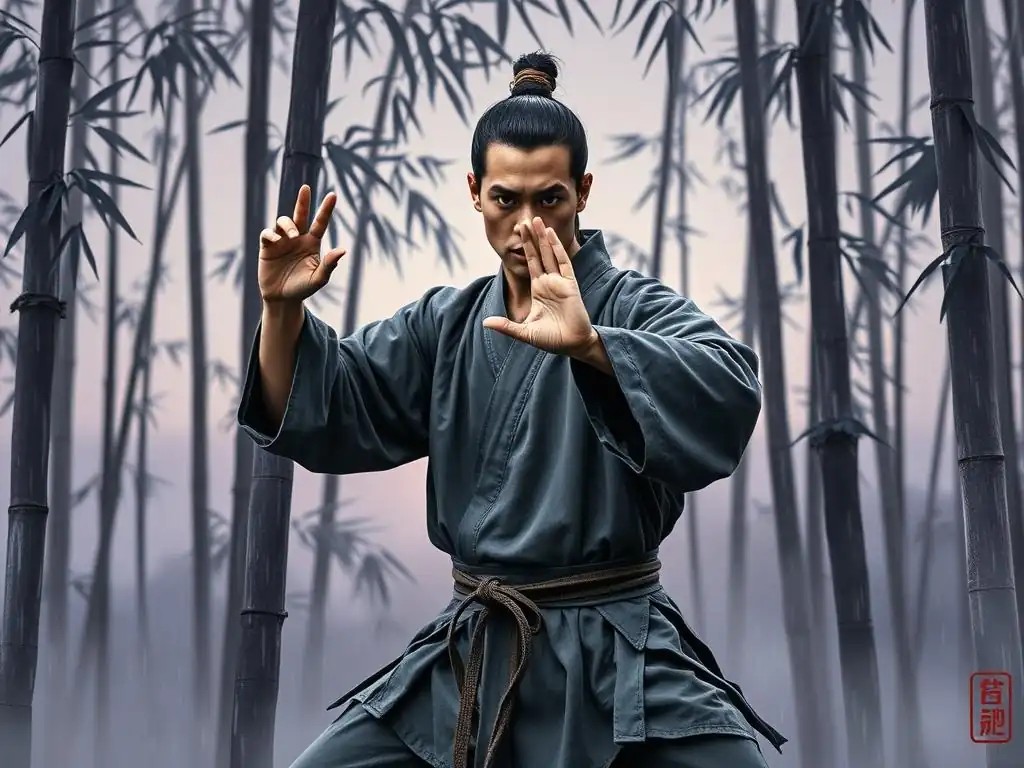
Building upon the foundational principles, advanced Ninjutsu evasion techniques involve sophisticated methods of interacting with the environment and manipulating an opponent's perception. These techniques require significant practice and a deep understanding of both physical and psychological principles.
Advanced training in Ninjutsu evasion techniques pushes practitioners beyond basic footwork and concealment. It delves into the nuances of blending, distraction, and exploiting the subtle ways humans perceive their surroundings. Mastery at this level allows for evasion not just from immediate threats but for strategic movement through complex or hostile environments.
Utilizing Environmental Camouflage
Environmental camouflage in Ninjutsu is not about wearing specific patterns (though that helps) but about becoming part of the environment itself. This involves understanding how light, shadow, and textures affect visibility and learning to move in concert with these elements. Ninjutsu evasion techniques training teaches practitioners to observe and utilize everything around them as potential cover or concealment.
This aspect of training emphasizes observation skills. Learning to see the environment not just as obstacles but as opportunities for concealment is key. It involves recognizing how different materials absorb or reflect light, how sound travels, and how human eyes are drawn to movement and contrast.
Blending with Shadows: Shadowing Techniques
Moving within shadows is a classic Ninjutsu technique. This isn't just about staying in dark areas, but about understanding how light falls and how to move with the edge of shadow, using it as a moving screen. It requires precise timing and speed to transition between light and dark areas unnoticed, particularly when crossing open spaces. Training involves practicing movement patterns that minimize exposure while traversing varied lighting conditions.
Effective shadowing also involves adjusting posture and movement speed to match the perceived stillness of the shadows. A sudden, jerky movement within a shadow is far more noticeable than a slow, deliberate shift. Ninjutsu evasion techniques training drills focus on smooth, continuous motion that keeps the practitioner silhouetted against darkness or blends their form into the irregular shapes of shadows.
Concealment Tactics: Using Cover
Utilizing cover means understanding what objects can physically hide you and how to move between them effectively. This includes natural elements like trees, rocks, or bushes, and artificial structures like walls, vehicles, or doorways. The key is to move to cover without being seen and then use the cover to observe, reposition, or escape. It's also crucial to understand the limitations of different types of cover – what stops a bullet, what just hides you from view, what offers protection from overhead observation.
Advanced concealment tactics taught in Ninjutsu evasion techniques training involve using even minimal cover effectively. This might mean using a low wall by staying low, using a thin pole by keeping it precisely between you and the observer, or using a crowd by blending into the flow of people. It requires constant assessment of the environment and the opponent's vantage points.
Mastering the Art of Misdirection
Misdirection is a psychological tool used to divert an opponent's attention away from your actual location or intentions. It can be physical, like throwing a stone to create a sound, or psychological, like feigning movement in one direction before moving in another. This exploits the opponent's tendency to focus on perceived threats or stimuli.
Training in misdirection is a vital part of Ninjutsu evasion techniques training. It involves understanding how people react to sudden sounds, movements, or visual cues and learning to generate these distractions at the precise moment needed to facilitate escape or concealment.
Creating Diversions: Distracting Opponents
Diversions can range from simple actions to complex setups. A classic example is throwing a metsubushi (blinding powder) or a smoke bomb, but it can be as simple as kicking a loose object, shouting, or creating a sudden, loud noise elsewhere. The goal is to momentarily seize the opponent's attention, creating a window of opportunity, often just a few seconds, to move unseen.
Practicing diversion techniques in Ninjutsu evasion techniques training involves learning to gauge the opponent's reaction time (which averages around 0.25 seconds for visual stimuli, slightly faster for auditory) and timing the diversion and subsequent movement perfectly. It's about understanding that the distraction isn't the evasion itself, but a tool to enable the evasion.
Exploiting Perceptual Gaps: The Blind Spot
Human vision has inherent limitations, including a physiological blind spot and the tendency for peripheral vision to be less detailed and slower to detect movement than central vision. Ninjutsu evasion techniques training teaches practitioners to exploit these gaps. Moving quickly through an opponent's peripheral vision or positioning oneself within their blind spot during a brief turn or glance can be incredibly effective.
This also extends to psychological blind spots – the things an opponent might overlook because they are unexpected or outside their immediate focus. For instance, hiding in plain sight by acting like a non-threat or blending into a seemingly innocuous group. Training involves developing an awareness of how others perceive their environment and identifying these moments of reduced attention or visual limitation.
Advanced Movement Techniques
Beyond basic walking and running, advanced Ninjutsu movement techniques are designed for silent, efficient, and unpredictable motion. These are highly refined physical skills that are central to practical Ninjutsu evasion techniques training.
These techniques require significant physical conditioning, flexibility, and body control. They are not about speed alone, but about moving with minimal disturbance and maximum control, allowing for instantaneous changes in direction or posture.
The Silent Step: Minimizing Auditory Detection
The silent step, or shinobi-aruki, is a specialized way of walking that minimizes sound. It involves placing the foot down heel-to-toe or toe-to-heel depending on the surface, distributing weight gradually, and avoiding scuffing or heavy impacts. It also includes techniques for moving over difficult surfaces like gravel or dry leaves with minimal noise. The goal is to keep auditory signature below the ambient noise level, which might be as low as 20-30 dB in a quiet night environment.
Mastering the silent step requires extensive practice on various surfaces and in different conditions. Ninjutsu evasion techniques training includes drills specifically focused on developing the proprioception and muscle control needed to place feet precisely and shift weight smoothly, making movement almost inaudible to an untrained ear.
The Quick Escape: Maximizing Speed and Agility
When concealment or misdirection isn't sufficient, pure speed and agility become necessary. The quick escape involves explosive bursts of movement, rapid changes in direction, and the ability to navigate obstacles seamlessly. This isn't just running in a straight line, but utilizing techniques like vaulting, climbing, sliding, and rolling to maintain momentum while breaking pursuit.
Training for the quick escape in Ninjutsu evasion techniques training involves rigorous physical conditioning focusing on explosive power, agility drills, and parkour-like movements adapted for evasion. It's about moving from a state of stillness or slow movement to maximum speed and complexity of movement in milliseconds, making the practitioner incredibly difficult to track or intercept.
Evasion Drills and Training Exercises
Developing proficiency in Ninjutsu evasion techniques requires specific, targeted training drills. These exercises are designed to hone reflexes, enhance spatial awareness, and build the physical skills necessary for seamless evasion.
Consistent practice of these drills is essential for integrating Ninjutsu evasion techniques into a practitioner's natural responses. They move the skills from conscious application to subconscious reaction, which is crucial in high-stress situations.
Developing Reflexes for Instantaneous Evasion
Evasion often needs to be instantaneous. A split-second delay can mean the difference between success and failure. Training reflexes is therefore a critical component of Ninjutsu evasion techniques training.
These drills aim to shorten the time between perceiving a threat or opportunity and initiating an evasive action. They build the neurological pathways needed for rapid, accurate responses under pressure.
Reaction Time Training
Drills focusing on reaction time involve responding to sudden stimuli. This could be a visual cue (a light flashing, an object moving), an auditory cue (a sound), or even a tactile cue (a light touch). Practitioners train to react by moving, ducking, or changing direction as quickly as possible. Simple drills might involve a partner throwing soft objects to be dodged, or reacting to verbal commands to move to specific points.
Advanced reaction time training within Ninjutsu evasion techniques training might involve responding to unpredictable patterns or multiple simultaneous stimuli, forcing the practitioner to prioritize and react instantly. The goal is to reduce reaction time significantly from the average civilian time, potentially down to 0.15 seconds or less for specific, trained responses.
Evasion-Specific Sparring Drills
Sparring drills focused specifically on evasion involve scenarios where one or more partners are attempting to tag, capture, or simply maintain line of sight on the practitioner, whose primary goal is to evade or disappear. These are not traditional fighting spars but exercises centered purely on the principles of onshin no jutsu.
Such drills in Ninjutsu evasion techniques training might involve starting in an open space and requiring the practitioner to use the environment to evade being seen for a set amount of time, or evading multiple opponents attempting to surround them. They teach the practical application of techniques under dynamic pressure.
Enhancing Spatial Awareness
Spatial awareness is the understanding of one's body in relation to the surrounding environment and other objects or people. High spatial awareness is vital for effective evasion, allowing a practitioner to navigate complex spaces, utilize cover effectively, and avoid obstacles while moving rapidly.
Training to enhance spatial awareness helps practitioners develop an almost intuitive understanding of their surroundings, allowing them to move confidently and efficiently without needing to constantly look at their feet or potential obstacles.
Peripheral Vision Training
Peripheral vision is crucial for detecting movement and changes in the environment without directly looking at them. Training exercises can involve focusing on a central point while attempting to identify objects or movements happening at the edges of vision. This helps expand the practitioner's effective field of awareness.
Integrating peripheral vision training into Ninjutsu evasion techniques training allows practitioners to maintain focus on a potential threat while simultaneously scanning their surroundings for escape routes, cover, or other threats. It increases the amount of information the practitioner can process simultaneously.
Understanding and Mapping Your Environment
Before and during evasion, a practitioner must rapidly assess and "map" the environment. This involves identifying potential cover, obstacles, escape routes, and areas of poor visibility. Training includes exercises in quickly scanning and memorizing details of an unfamiliar environment and practicing navigating it under simulated stress.
This aspect of Ninjutsu evasion techniques training is about turning the environment into an ally. It involves not just seeing objects but understanding their potential use for concealment, movement, or diversion. It's an ongoing process of observation and mental calculation.
Evasion Strategies in Real-World Scenarios
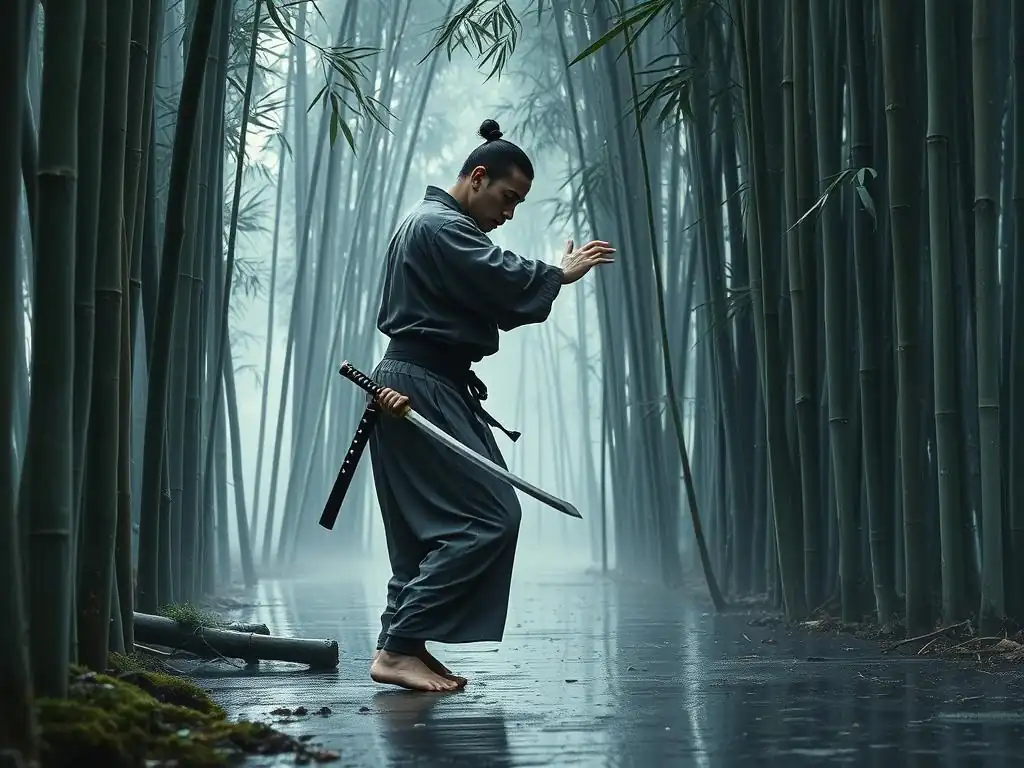
Applying Ninjutsu evasion techniques effectively in real-world scenarios requires adapting techniques to specific environments and understanding how evasion can be integrated with other skills, including offensive capabilities.
Real-world application is the ultimate test of Ninjutsu evasion techniques training. It moves from controlled drills to unpredictable, dynamic situations where adaptability and quick thinking are paramount.
Adapting Evasion Techniques to Different Environments
The principles of evasion remain constant, but their application changes dramatically depending on whether you are in a dense urban area or a wide-open wilderness.
Effective Ninjutsu evasion techniques training must prepare practitioners for a variety of landscapes, each presenting its own unique challenges and opportunities for concealment and movement.
Urban Evasion: Navigating City Landscapes
Urban environments offer abundant vertical and horizontal cover (buildings, vehicles, walls), complex routes (alleys, stairwells, rooftops), and potential distractions (crowds, traffic, noise). Evasion in a city often involves utilizing these elements to break line of sight, blend into crowds, move between buildings, or use the noise of the city to mask movement. Techniques like vaulting low walls or using fire escapes become relevant.
Urban Ninjutsu evasion techniques training focuses on navigating hard, often reflective surfaces, dealing with artificial light sources, and utilizing the constant visual and auditory clutter of city life as camouflage. It requires a high degree of agility and the ability to move quickly and quietly over man-made structures.
Wilderness Evasion: Utilizing Natural Terrain
Wilderness environments offer natural cover (foliage, rocks, terrain features) but often less immediate, solid concealment than urban settings. Evasion here relies on moving through dense vegetation, utilizing terrain elevation changes, moving along water sources to mask sound or scent, and understanding natural animal trails. Camouflage becomes more about blending with natural patterns and textures.
Wilderness Ninjutsu evasion techniques training incorporates skills like tracking/anti-tracking, moving silently through forests, utilizing natural shadows cast by the sun or moon, and understanding how weather conditions affect visibility and sound propagation. It requires resilience and a deep understanding of the natural world.
Combining Evasion with Offensive Maneuvers
Evasion in Ninjutsu is rarely a purely passive act. It is often used strategically to gain a tactical advantage or to position for a counter-attack. This concept is known as sakate (reversed hand) or using the opponent's momentum against them.
Integrating offensive capabilities into Ninjutsu evasion techniques training adds another layer of complexity and effectiveness. Evasion becomes a means to an end, not just an escape.
The Art of the Counter-Attack After Evasion
Evasion can create openings. As an opponent commits to an attack or pursuit, their balance or focus may be compromised. A successful evasion puts the practitioner in a position to launch a swift, decisive counter-attack from an unexpected angle or distance. This requires transitioning instantly from evasive movement to offensive action.
Training drills in Ninjutsu evasion techniques training often incorporate a counter-attack element. For example, evading a lunge and immediately following with a strike or joint lock, or using a roll to evade a sweep and coming up into a striking posture. The evasion sets up the counter.
Using Evasion to Gain a Tactical Advantage
Beyond counter-attacks, evasion can be used to reposition oneself to a more advantageous location – perhaps higher ground, behind the opponent, or towards an escape route. It can also be used to draw an opponent into a trap or separate them from allies.
This strategic use of evasion is a hallmark of advanced Ninjutsu evasion techniques training. It requires not just reacting to threats but thinking several steps ahead, using movement not just to survive but to control the flow of the encounter and dictate terms.
The Psychological Aspect of Evasion
While physical techniques are important, the psychological elements are arguably more critical for advanced evasion. Maintaining mental control, understanding how to deceive an opponent's mind, and being able to anticipate their actions are key.
The mind is the most powerful tool in Ninjutsu evasion techniques training. Cultivating the right mental state and understanding psychological principles allows the practitioner to perform complex physical feats under pressure and manipulate the opponent's perception.
Maintaining Calm Under Pressure: Mental Fortitude
As mentioned earlier, heijoshin is foundational. Panic leads to mistakes, predictable movements, and increased visibility. Training involves developing mental resilience through challenging drills, meditation, and visualization techniques. The ability to remain calm allows for clear thinking, accurate assessment of the situation, and efficient execution of techniques.
Developing mental fortitude is an ongoing process in Ninjutsu evasion techniques training. It involves pushing physical and mental limits in a controlled environment to build confidence and the ability to function effectively when stressed or fearful.
Deception and Psychological Warfare
Evasion is inherently deceptive. It involves presenting a false reality to the opponent – making them think you are where you are not, or that you are doing something you are not. This can involve feigning injury, creating false trails, or using vocalizations to draw attention away. Understanding human psychology – how people react to fear, surprise, and uncertainty – is key.
Psychological training within Ninjutsu evasion techniques training teaches practitioners to read body language, understand common reactions to stress, and exploit these for their advantage. It's about manipulating the opponent's mind to facilitate physical escape or concealment.
Reading Your Opponent: Anticipating Their Moves
Being able to predict what an opponent will do next allows you to evade their actions before they are even fully committed. This involves reading subtle cues in their posture, eye movements, and breathing, as well as understanding their likely intentions based on the situation. Anticipation reduces the need for instantaneous reaction and allows for smoother, more efficient evasion.
Developing this predictive ability is a sophisticated skill honed through sparring, observation, and study in Ninjutsu evasion techniques training. It's about understanding the "tells" that reveal an opponent's intentions, whether they are preparing to strike, pursue, or search.
Evasion Techniques: A Summary of Key Principles
Mastering Ninjutsu evasion techniques is a complex but achievable goal through dedicated Ninjutsu evasion techniques training. It combines physical prowess, environmental awareness, psychological understanding, and philosophical grounding.
The key principles weave together to create a cohesive art form focused on survival and strategic movement.
Integrating Evasion into Your Overall Training
Evasion should not be seen as a separate skill but as an integrated part of all Ninjutsu training. Whether practicing unarmed combat, weapons techniques, or strategy, the principles of evasion – timing, angle, distance, blending, deception – are always relevant.
A comprehensive Ninjutsu evasion techniques training program ensures that evasion principles inform every other aspect of the curriculum, making the practitioner adaptable and elusive in any situation.
Continuous Learning and Refinement of Evasion Skills
True mastery is a journey, not a destination. The environment changes, opponents adapt, and new challenges arise. Continuous learning, practice, and refinement of Ninjutsu evasion techniques are essential to maintaining proficiency. This involves seeking out new training scenarios, learning from experience, and constantly analyzing and improving one's own methods.
The pursuit of advanced Ninjutsu evasion techniques training is a lifelong endeavor, requiring dedication, adaptability, and a constant willingness to learn and evolve.
Frequently Asked Questions
What is the primary focus of Advanced Ninjutsu Evasion training?
The primary focus is on learning techniques that allow you to disappear in plain sight, using a combination of movement, perception manipulation, and environmental awareness. It's about becoming unseen and unpredictable.
How does Ninjutsu evasion differ from other forms of martial arts defense?
Ninjutsu evasion emphasizes avoidance and escape rather than direct confrontation. Unlike blocking or parrying, the goal is to completely negate the threat by becoming a difficult or impossible target.
What are some key principles behind successful Ninjutsu evasion techniques?
Key principles include misdirection, camouflage (both physical and mental), and utilizing the environment to your advantage. Adaptability and understanding your opponent are also critical.
Does Ninjutsu evasion training require specific physical attributes or pre-existing martial arts experience?
While physical fitness is beneficial, Ninjutsu evasion focuses more on technique and strategy than brute strength. Prior martial arts experience can be helpful, but it's not always a prerequisite for learning.
Where can I find more information about Ninjutsu evasion techniques training, especially from a historical perspective?
MartialArtsMastery.org provides historical overviews, training techniques, and insights into the philosophical underpinnings of Ninjutsu, including its evasion strategies. Look under the Ninjutsu discipline section.
Final Reflection: Mastering the Art of Vanishing
The principles of Ninjutsu evasion, once shrouded in mystery, now offer profound insights into adaptability and awareness, making the ability to disappear in plain sight not just a historical skill, but a powerful metaphor for navigating the complexities of the modern world. Understanding these techniques transcends mere physical training; it's about cultivating a mindset of observation, anticipation, and strategic action, applicable to everything from personal interactions to professional challenges.
This ancient art continues to resonate because it speaks to our innate desire for control and resilience in the face of adversity. The enduring appeal of Ninjutsu lies in its emphasis on resourcefulness and the ability to turn perceived weaknesses into strengths. The ultimate aim of martial arts is not to win a fight, but to avoid fighting altogether.
This wisdom, deeply embedded in Ninjutsu philosophy, urges us to seek proactive solutions and cultivate inner peace, rather than relying solely on reactive measures.
Now, consider how you can apply these principles of Ninjutsu evasion to your own life. Embrace the power of observation, anticipate potential challenges, and develop your own unique strategies for navigating the obstacles that lie ahead. Just as the ninja sought to blend seamlessly with their surroundings, strive to cultivate a presence that is both powerful and adaptable, allowing you to move through life with grace, resilience, and the quiet confidence of one who has mastered the art of vanishing.
Master the Art of Vanishing: Embrace Stealth Now!
Thank you for delving into the secrets of advanced ninjutsu evasion. We hope you've gained valuable insights into the techniques that allow you to move unseen and unheard. Now, it's time to put this knowledge into action and truly embody the ninja spirit.
Here's how you can continue your journey:
- Practice the "Art of Misdirection": Dedicate at least 15 minutes each day to practicing the core techniques, focusing on fluidity and adaptability, not just speed. Try a mirror.
- Explore Further:Research historical accounts of ninjutsu masters and analyze their strategies for real-world inspiration. Visit a museum or library if possible.
- Share Your Experience: If you liked the article, introduce it to a friend, or share it on social media!
What creative applications of these evasion techniques can you envision in your everyday life?