
The Art of Disguise: How Ninja Became Masters of Deception

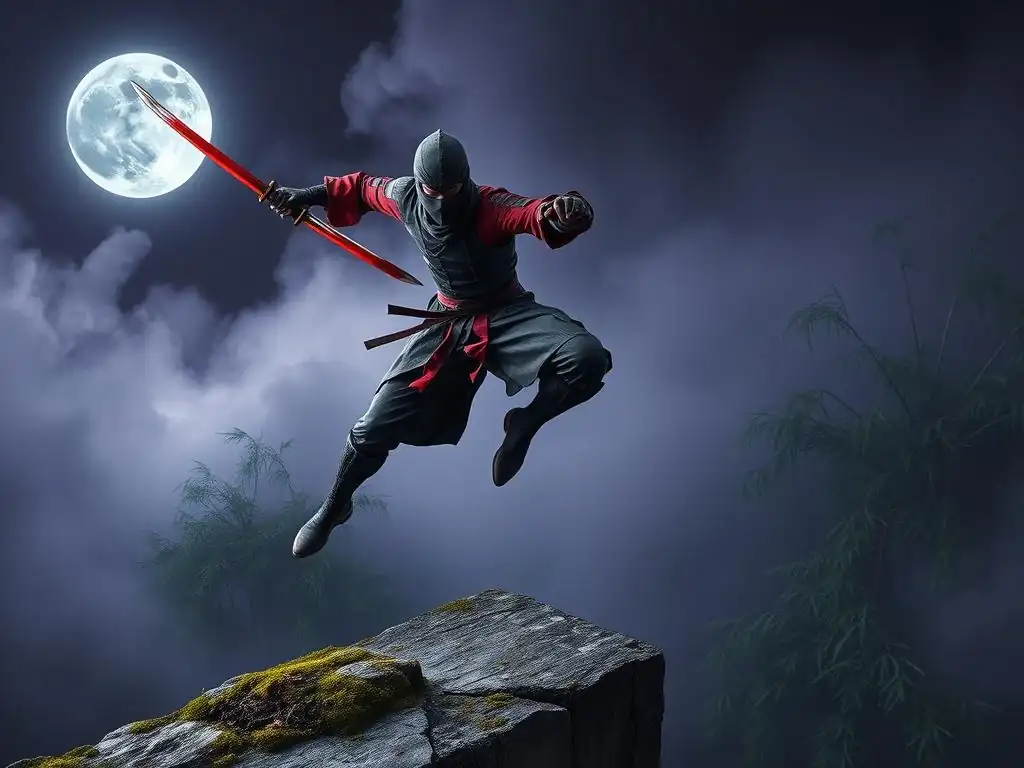
Welcome to Martial Arts Mastery, your gateway to the world's fighting arts. Ever wondered how the legendary ninja seemed to vanish into thin air? Dive into "The Art of Disguise: How Ninja Became Masters of Deception" and unlock the secrets of ninja deception tactics training. Discover how these shadow warriors used cunning and misdirection to become masters of espionage and survival. Prepare to be amazed by the profound strategies that lay beneath the surface of their deadly skills.
- Introduction: Unveiling the Secrets of Ninja Deception Tactics
- The Historical Context of Ninja Disguise and Infiltration
- Mastering Physical Disguise: Transforming into the Unseen
- Psychological Warfare: Deception Beyond Physical Appearance
- Ninja Deception Tactics Training: Key Elements and Techniques
- The Role of Tools and Gadgets in Ninja Deception
- Case Studies: Legendary Examples of Ninja Deception in Action
- Modern Applications of Ninja Deception Principles
- The Ethical Considerations of Ninja Deception
- Conclusion: The Enduring Legacy of Ninja Deception
-
Frequently Asked Questions
- How important was deception to Ninja training, and why?
- What are some examples of Ninja deception tactics mentioned in MartialArtsMastery.org's article?
- How did the historical context of feudal Japan influence the development of Ninja deception tactics?
- Does MartialArtsMastery.org provide practical training advice on implementing Ninja deception tactics?
- How can modern martial artists benefit from studying Ninja deception tactics training as detailed on MartialArtsMastery.org?
- Final Reflection: Embracing the Shadows of Perception
- Unleash Your Inner Ninja: Embrace the Art of Deception!
Introduction: Unveiling the Secrets of Ninja Deception Tactics
Throughout history, few figures have captured the imagination quite like the ninja. Often portrayed as shadowy assassins, their true expertise lay not just in combat, but in the subtle and sophisticated arts of espionage, sabotage, and infiltration. At the heart of these operations was a profound mastery of deception.
Ninja understood that misleading the enemy, manipulating their perceptions, and moving unseen were often more effective than direct confrontation. This strategic approach, deeply embedded in their training, allowed them to navigate a treacherous world where survival depended on wit and cunning as much as on physical prowess. Understanding these Ninja deception tactics training principles provides insight into a fascinating aspect of martial history.
Ninjutsu's Emphasis on Deception and Infiltration
Ninjutsu, the comprehensive martial art and strategy system practiced by ninja, placed an immense emphasis on unconventional warfare. Unlike the samurai, who often favored direct confrontation and adherence to strict codes of honor in battle, ninja operated in the shadows, prioritizing mission success through any means necessary. Deception was not merely a tool but a fundamental pillar of ninjutsu. It encompassed everything from physical disguise and psychological manipulation to the strategic use of information and misdirection.
Training in ninjutsu involved rigorous instruction in various forms of deception. This included learning to blend seamlessly into different social strata, mastering the art of stealth movement, and understanding how to exploit human psychology. For instance, a ninja might spend weeks or months studying local customs, dialects, and mannerisms to convincingly impersonate a merchant, monk, or even a common laborer. This deep dive into the nuances of deception was considered as vital as weapons training or unarmed combat, highlighting how central Ninja deception tactics training was to their overall skillset.
The Historical Context of Ninja Disguise and Infiltration
The Need for Stealth and Deception in Feudal Japan
Feudal Japan was a period of constant conflict, with powerful warlords vying for control of the country. In this volatile environment, information was power, and the ability to strike unseen or gain access to enemy strongholds could turn the tide of war. Ninja emerged from this necessity, serving as intelligence gatherers, saboteurs, and infiltrators for various daimyō (feudal lords). Their missions often required operating behind enemy lines, where open combat would be suicidal.
The high stakes of their missions dictated a reliance on stealth and deception. A ninja attempting to infiltrate a heavily guarded castle, for example, could not simply fight their way in. They had to bypass defenses, avoid detection, and often blend in with the existing population or personnel. This practical need for clandestine operations fueled the development and refinement of sophisticated Ninja deception tactics training, making it a core component of their survival and effectiveness.
Early Forms of Ninja Camouflage and Concealment
Early forms of ninja camouflage were rudimentary but effective, primarily focused on blending into natural environments or urban settings under the cover of darkness. Clothing was often dark blue or grey, designed to be less visible at night than black, which can silhouette against moonlight. They utilized natural elements like mud, ash, and leaves to break up their outline and conceal themselves in forests, fields, or mountainous terrain.
Beyond simple coloration, they developed techniques for movement that minimized disturbance, such as walking on the balls of their feet or using specialized footwear. Historical accounts, though often exaggerated, suggest that ninja could remain motionless for extended periods, appearing as part of the natural landscape. This early emphasis on physical concealment and mastering the environment laid the groundwork for more complex Ninja deception tactics training that would evolve over time.
Mastering Physical Disguise: Transforming into the Unseen
One of the most effective physical deception tactics employed by ninja was the art of mimicry, specifically impersonating individuals from various social classes. Feudal Japan had a rigid social hierarchy: samurai, farmers, artisans, and merchants. Each class had distinct clothing, speech patterns, customs, and behaviors. A successful ninja needed to not only adopt the outward appearance of a particular class but also embody their mannerisms and knowledge to avoid suspicion.
This required extensive study and rigorous Ninja deception tactics training. A ninja might spend weeks observing and learning the daily routines and interactions of, say, a traveling merchant or a Buddhist monk to convincingly portray that role during an infiltration mission. They needed to understand the specific slang, posture, and even the way someone of that class would carry their tools or possessions. An estimated 70-80% of a ninja's operational time might be spent in disguise, highlighting the criticality of this skill.
Using Costumes and Props for Effective Deception
Costumes and props were essential tools in the ninja's repertoire of physical disguise. While the stereotypical "black outfit" (shinobi shōzoku) was used for night infiltration, it was far from their only or even primary costume. Ninja frequently adopted disguises such as komusō (mendicant monks who wore large reed baskets over their heads), yamabushi (mountain ascetics), merchants, entertainers (like sarugaku performers), or even farmers.
These disguises were chosen based on the mission's requirements and the environment. A komusō disguise, for instance, allowed a ninja to travel openly, seemingly harmlessly, while the large basket obscured their face and allowed them to observe their surroundings discreetly. Props, such as musical instruments, religious artifacts, or merchant goods, added authenticity to the disguise and could even conceal weapons or tools. One historical account mentions ninja using hollowed-out flutes (shakuhachi) to hide blades, integrating their lethal capabilities into their deceptive appearance.
Techniques for Altering Appearance: Makeup and Body Language
Beyond costumes, ninja employed techniques to alter their physical appearance more subtly. While not makeup in the modern sense, they might use natural pigments, dirt, or ash to change skin tone, create temporary scars, or modify facial features. They also learned to change their posture, gait, and overall body language to match the persona they were adopting.
Ninja deception tactics training included exercises focused on controlling facial expressions and eye contact, crucial for maintaining a convincing facade during questioning or casual interaction. Learning to walk with the slumped shoulders of a weary farmer, the upright posture of a samurai (if impersonating one), or the shuffling gait of an elderly person were all part of their training curriculum. These subtle alterations could make the difference between successful infiltration and immediate exposure.
Psychological Warfare: Deception Beyond Physical Appearance
Misdirection and Distraction: Creating Opportunities for Action
Psychological deception was as vital as physical disguise for the ninja. A key tactic was misdirection, drawing the enemy's attention away from the ninja's true objective or location. This could involve creating loud noises in one area while the ninja infiltrated another, starting small fires as a diversion, or spreading rumors to cause confusion.
For example, during a castle siege, ninja might create a disturbance at one gate to draw guards away, allowing a small team to scale a less-protected wall elsewhere. These tactics were not random; they were carefully planned as part of their Ninja deception tactics training, requiring an understanding of enemy troop movements, guard routines, and psychological responses to unexpected events. The element of surprise created by misdirection was a powerful advantage.
Spreading False Information: The Power of Propaganda in Ninjutsu
Information warfare was a crucial aspect of ninjutsu, and spreading false information was a potent tool for manipulating the enemy. Ninja acted as early masters of propaganda, planting rumors, forging documents, or delivering misleading messages to disrupt enemy plans, sow discord among their ranks, or undermine morale.
They might spread rumors about the strength or intentions of their own lord's army, causing the enemy to deploy forces incorrectly. Or they could exaggerate internal conflicts within the enemy's domain. This required infiltration not just of physical locations but also of information networks. Successfully executing this required keen observation skills and a deep understanding of human psychology, skills honed through dedicated Ninja deception tactics training focused on intelligence gathering and dissemination.
Manipulating Perceptions: Creating Illusions and Misleading the Enemy
Beyond outright lies, ninja sought to manipulate enemy perceptions, creating illusions that led opponents to believe things were different from reality. This could range from simple tricks, like using reflective surfaces to suggest movement where there was none, to more complex psychological operations.
One documented tactic involved using smoke or strategically placed objects to make a small force appear much larger, intimidating an enemy into retreat. Another involved exploiting superstitions or fears, perhaps making it seem as though a location was haunted to deter guards. These methods aimed to control the enemy's understanding of the situation, causing them to make mistakes based on false premises. Mastery of these techniques was a testament to the sophisticated nature of Ninja deception tactics training.
Ninja Deception Tactics Training: Key Elements and Techniques
Developing Observation Skills: Identifying Weaknesses and Opportunities
Effective deception begins with keen observation. Ninja training placed immense importance on developing the ability to observe their surroundings, the people within them, and the subtle cues that revealed weaknesses or opportunities. This included studying architecture for infiltration points, analyzing guard patrols for patterns, and reading body language to gauge reactions.
Trainees were likely given exercises that required them to scout areas, map out routes, and identify potential disguises or cover points. They learned to notice inconsistencies, spot surveillance, and understand the flow of information. This foundational skill was integrated into all aspects of Ninja deception tactics training, as accurate assessment was necessary before deploying any deceptive maneuver. Without precise observation, deception was likely to fail.
Mastering Silent Movement: The Art of Inaudible Approaches
Moving without being heard was perhaps the most fundamental physical skill for a ninja involved in infiltration and deception. This went far beyond simply walking quietly. It involved understanding the environment, anticipating the sounds they might make, and developing specialized techniques to minimize noise.
Techniques included walking on soft surfaces, stepping over rather than on dry leaves or twigs, distributing weight carefully, and moving slowly and deliberately. They might use specialized footwear (like tabi socks) or even wrap their feet in cloth. Training involved practicing movement in various terrains and conditions, often in complete darkness. Mastering the art of inaudible movement was a critical component of Ninja deception tactics training, enabling close approach and infiltration without raising alarms.
Blending into the Environment: Utilizing Natural Camouflage
Blending into the environment involved more than just wearing dark clothes. It was about becoming part of the background, whether natural or urban. In natural settings, this meant utilizing foliage, shadows, and terrain features to remain hidden. Ninja learned to move from cover to cover, making themselves appear as innocuous elements of the landscape.
In urban environments, blending meant adopting the appearance and behavior of the local population, essentially using social camouflage. This required understanding the rhythm of daily life, knowing when and where people would be, and how to move through crowds or quiet streets unnoticed. This skill was refined through extensive practice and was a cornerstone of effective Ninja deception tactics training, allowing ninja to operate unseen in plain sight.
The Role of Tools and Gadgets in Ninja Deception
Smoke Bombs and Caltrops: Creating Diversions and Escapes
Ninja utilized a variety of tools and gadgets, many of which were designed specifically for deception and escape. Smoke bombs (happō) were classic examples, used to create instant visual cover, disorient pursuers, or signal allies. These were particularly useful for breaking line of sight during an escape or creating a diversion to allow for infiltration.
Caltrops (tetsubishi) were small, sharp objects scattered on the ground to impede pursuers, particularly those wearing less protective footwear. While not strictly deceptive, they served a similar purpose by disrupting the enemy's movement and creating an opportunity for the ninja to disappear, effectively using the environment and simple tools to enhance their evasive Ninja deception tactics training.
Disguised Weapons: Concealing Deadly Instruments
Many ninja tools and weapons were designed to be easily concealed or disguised as everyday objects. The famous kusarigama (sickle with chain and weight) could be disassembled or hidden within clothing. Shuriken (throwing stars), while iconic, were small and easily concealed.
Perhaps the most deceptive were weapons integrated into seemingly harmless items. The aforementioned hollowed-out flutes or walking sticks hiding blades are examples. Even farming tools could be adapted for combat or used deceptively; a farmer's sickle could be a weapon. This fusion of utility, concealment, and deception was a hallmark of ninja ingenuity, demonstrating how tools were integral to their overall Ninja deception tactics training.
The Importance of Information Gathering for Successful Deception
All ninja deception tactics relied heavily on accurate and timely information. Without knowing the enemy's routines, defenses, strengths, and weaknesses, any attempt at deception was likely to fail. Therefore, information gathering (intelligences) was the initial and most critical phase of any mission.
Ninja employed various methods to collect information, including espionage, infiltration, eavesdropping, and interrogation (though less common for intelligence gathering than observation). They needed to know guard schedules to plan infiltration routes, understand political rivalries to spread effective propaganda, and identify key personnel to impersonate. This constant cycle of gathering information and using it to inform deceptive strategies was the bedrock of effective Ninja deception tactics training.
Case Studies: Legendary Examples of Ninja Deception in Action

The Night Attack on Takeda Clan by the Iga Ninja
While specific historical accounts can be debated, one often-cited example involves the Iga ninja and their interactions with powerful daimyō like Takeda Shingen. Although not a direct "attack" in the traditional sense, Iga ninja were known for their ability to infiltrate enemy territories and gather intelligence on formidable foes like the Takeda clan during the 16th century.
Stories suggest Iga ninja were employed to scout Takeda positions, assess their strengths, and potentially conduct sabotage. Their success relied heavily on their ability to operate unseen within Takeda domains, utilizing disguises and stealth to move through hostile territory. While precise details are scarce, the very fact that the Iga region (a prominent ninja homeland) managed to maintain a degree of autonomy amidst powerful neighbors like the Takeda suggests a mastery of unconventional warfare and deception that made them difficult to conquer or even track effectively.
Hattori Hanzo's Rescue of Tokugawa Ieyasu
Perhaps the most famous (and potentially embellished) tale of ninja deception is the rescue of the future shōgun Tokugawa Ieyasu after the assassination of Oda Nobunaga in 1582. Tokugawa Ieyasu found himself in hostile territory with limited retainers. Hattori Hanzo, a samurai loyal to Ieyasu but with strong ties to the Iga and Koga ninja, is credited with guiding Ieyasu through the dangerous Iga province to safety.
The "Iga-goe" (Crossing Iga) involved navigating treacherous mountain passes and hostile local forces. While likely involving direct combat at times, the successful passage is attributed to Hanzo's ability to leverage the knowledge and network of the local ninja.
This would have involved using hidden paths, creating diversions to evade pursuers (potentially employing smoke or other tactics), and utilizing local knowledge to find safe passage. The successful execution of this perilous journey, relying on stealth, local support, and likely elements of misdirection, serves as a historical example of how Ninja deception tactics training could be applied in high-stakes escape and evasion scenarios.
Modern Applications of Ninja Deception Principles
Utilizing Deception in Self-Defense Scenarios
While modern self-defense rarely involves castle infiltration, the core principles of ninja deception remain relevant. In a dangerous encounter, de-escalation and avoidance are often the safest strategies. This can involve using verbal misdirection to distract an aggressor, feigning compliance to create an opportunity for escape, or using the environment (like obstacles or crowds) to break contact.
Simple acts like pretending to reach for something in a pocket (which might be perceived as reaching for a weapon, causing hesitation) can create a split-second opening. Understanding how to manipulate an attacker's perception or use surprise to your advantage are direct echoes of historical Ninja deception tactics training applied to personal safety. The goal is to avoid or escape conflict, prioritizing survival through cunning rather than relying solely on physical force.
The Influence of Ninjutsu on Modern Espionage and Special Operations
The historical role of the ninja as spies, saboteurs, and infiltrators has clear parallels in modern espionage and special operations. Modern intelligence agencies and special forces units utilize principles that directly mirror ninja techniques, albeit with advanced technology.
Infiltration, intelligence gathering, psychological operations (propaganda and misinformation), disguise, and the use of specialized tools for entry or evasion are all standard practices. Training for modern operatives includes surveillance techniques, blending into foreign cultures, developing cover stories, and utilizing technology for stealth and communication. While the tools have changed dramatically, the underlying strategic thinking – achieving objectives through clandestine means, deception, and minimal direct engagement – shows a clear lineage from the historical Ninja deception tactics training.
The Ethical Considerations of Ninja Deception
The Fine Line Between Deception and Dishonor
In feudal Japan, particularly within the samurai class, there was a strong emphasis on honor, honesty, and directness, especially in combat. Deception was often viewed with suspicion or outright disdain. Ninja, operating outside this strict code, constantly walked a fine line. While their lord might approve of their successful deception, the methods themselves were often seen as dishonorable by the prevailing samurai ethos.
This created an inherent ethical tension. For the ninja, survival and mission success were paramount, often overriding conventional notions of honor. Their training instilled a pragmatic approach: achieve the goal efficiently, even if it required deceit. This highlights a fundamental difference in values between the overt warrior class and the covert operatives, a distinction central to understanding the historical context of Ninja deception tactics training.
Balancing Deception with Moral Principles in Martial Arts Training
For modern practitioners of martial arts, including those interested in the historical aspects of ninjutsu, understanding the role of deception raises ethical questions. While self-defense might necessitate using surprise or misdirection, is it appropriate to incorporate broader deceptive strategies into one's training or philosophy?
Modern martial arts often emphasize character development, discipline, and ethical conduct. Integrating the concept of deception requires careful consideration. It must be framed within the context of self-preservation and avoiding harm, rather than malicious manipulation. Exploring the ethical dimensions of Ninja deception tactics training encourages practitioners to think critically about when and why deception might be justified, ensuring that the skills are understood within a framework of responsible application.
Conclusion: The Enduring Legacy of Ninja Deception
The ninja's mastery of deception was not merely a collection of tricks; it was a sophisticated system of strategy, psychology, and practical skills honed over centuries. Their ability to blend in, manipulate perceptions, and operate unseen made them formidable agents in the turbulent landscape of feudal Japan. From physical disguise and silent movement to psychological warfare and the strategic use of tools, their methods were comprehensive and remarkably effective.
Ninja Deception Tactics: A Timeless Art of Strategy and Survival
The principles underlying Ninja deception tactics training remain relevant today, not just in military or espionage contexts, but also in understanding human interaction, strategy, and self-preservation. The emphasis on observation, adaptability, psychological insight, and achieving objectives through indirect means offers valuable lessons. The legacy of the ninja lies not just in their legendary combat prowess but equally, if not more so, in their unparalleled skill as masters of deception, proving that sometimes, the most powerful weapon is the ability to disappear.
Frequently Asked Questions
How important was deception to Ninja training, and why?
Deception was absolutely crucial for Ninja. It allowed them to infiltrate enemy territory, gather intelligence, and execute missions with minimal risk. Their survival often depended on it.
What are some examples of Ninja deception tactics mentioned in MartialArtsMastery.org's article?
The article likely discusses techniques such as disguise, mimicry, and misdirection. It might also cover using psychological manipulation to mislead opponents.
How did the historical context of feudal Japan influence the development of Ninja deception tactics?
Feudal Japan was a time of constant warfare and political intrigue. This environment created a need for espionage and covert operations, driving the evolution of sophisticated deception techniques.
Does MartialArtsMastery.org provide practical training advice on implementing Ninja deception tactics?
While the site might offer insights, true mastery requires dedicated training and guidance. The article may highlight the importance of mindfulness, observation, and adaptability.
How can modern martial artists benefit from studying Ninja deception tactics training as detailed on MartialArtsMastery.org?
Understanding deception can improve awareness, strategy, and self-defense skills. It teaches you to anticipate your opponent's actions and exploit their weaknesses effectively.
Final Reflection: Embracing the Shadows of Perception
The ninja, once shrouded in myth, now stand as potent symbols of strategic thinking and adaptability. Their mastery of deception, far from being mere trickery, represents a profound understanding of human psychology and the art of controlling perception. This article has explored the depths of their techniques, revealing a sophisticated system applicable far beyond the battlefield, resonating deeply with the modern world's need for strategic communication and nuanced understanding.
The enduring allure of the ninja lies not just in their combat prowess, but in their ability to manipulate reality itself. This resonates with me because it highlights the power of perspective and the importance of questioning what we perceive as truth. Appear weak when you are strong, and strong when you are weak.
- Sun Tzu, a principle the ninja embodied perfectly, demonstrating that true strength lies in the ability to control the narrative. The ninja's legacy continues to influence fields from business negotiation to personal branding, reminding us that perception is a powerful weapon.
As we conclude this exploration of ninja deception tactics, I invite you to consider how these principles can be applied to your own life. How can you become more aware of the narratives being presented to you? How can you master the art of strategic communication to achieve your goals? Embrace the shadows of perception, not to deceive, but to understand, to adapt, and to ultimately, control your own destiny.
Unleash Your Inner Ninja: Embrace the Art of Deception!
Thank you for exploring the secrets behind the ninja's mastery of disguise. Now, it's time to put that knowledge into action and unlock your own potential for deception and strategic thinking.
Here are some ways you can delve deeper:
- Practice observation: Dedicate just 15 minutes a day to observing people in a public place, noting details about their appearance, movements, and interactions. What disguises could you create based on these observations?
- Research historical camouflage techniques beyond ninjutsu. Explore military or artistic applications for a broader perspective.
- Share this article with a friend and brainstorm creative disguises you could use for a fun, harmless prank.
What unexpected situations could your newfound disguise skills help you navigate more effectively?