
The Art of Pak Sao: Slapping Hand Techniques in Chi Sao Exchanges

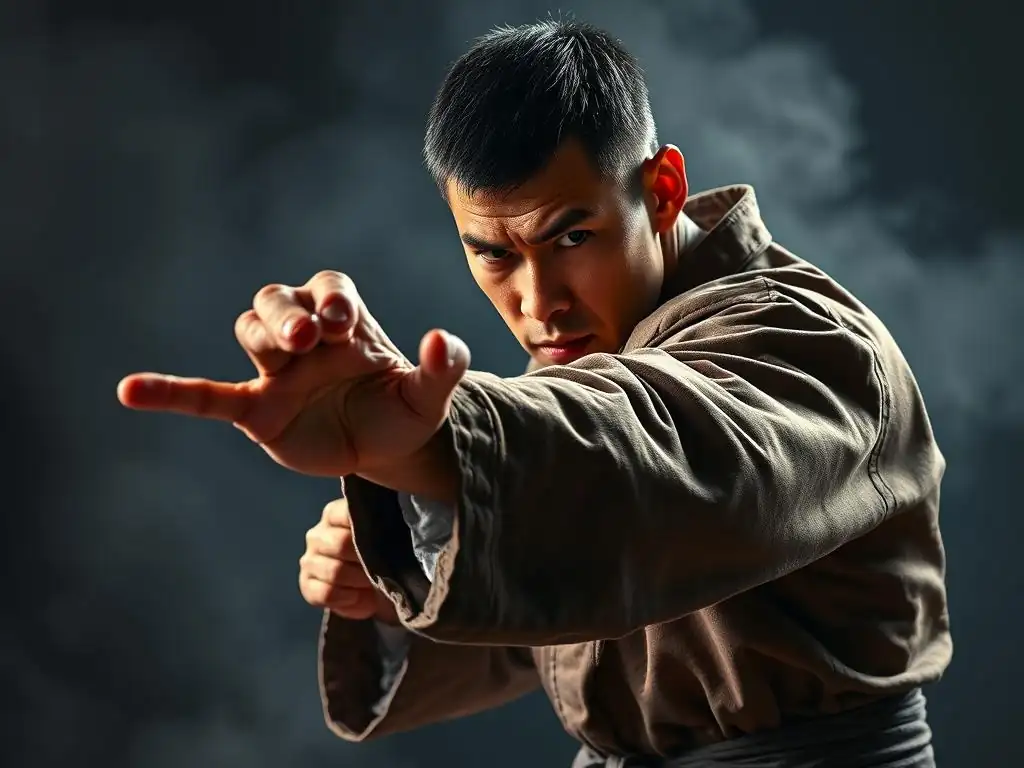
Welcome to Martial Arts Mastery, your ultimate guide to the world's fighting arts! Delve into the rich tapestry of martial traditions, from historical roots to cutting-edge training. Are you ready to unlock the secrets within each discipline? Today, we begin with a deep dive into the intricate world of Wing Chun, specifically exploring the power and precision of Pak Sao Chi Sao techniques. What makes these "slapping hand" movements so effective in close-quarters combat? Prepare to uncover the answers as we explore the intricacies and applications of this vital component of Wing Chun training.
- The Art of Bong Sao: Wing Arm Techniques in Chi Sao Exchanges
- Introduction to Bong Sao in Wing Chun Chi Sao
- Bong Sao Chi Sao Techniques: A Detailed Breakdown
- Bong Sao Applications in Chi Sao Drills
- Advanced Bong Sao Variations for Chi Sao
- Integrating Bong Sao into Your Chi Sao Training Routine
- Bong Sao vs. Other Defenses in Chi Sao
- The Importance of Sensitivity and Structure in Bong Sao Chi Sao
- Real-World Applications of Bong Sao for Self-Defense
- Conclusion: Mastering Bong Sao for Enhanced Chi Sao and Wing Chun Skill
- Frequently Asked Questions
- Final Reflection: Embracing the Flow of Pak Sao
- Unleash Your Inner Chi: Embrace the Slap!
The Art of Bong Sao: Wing Arm Techniques in Chi Sao Exchanges
Introduction to Bong Sao in Wing Chun Chi Sao
Understanding the Role of Bong Sao in Wing Chun Kung Fu
Bong Sao, often translated as "wing arm," is a fundamental defensive and redirecting technique within the martial art of Wing Chun Kung Fu. It is characterized by the forearm being held at an angle, typically around 45 degrees relative to the practitioner's body, with the elbow bent and pointing downwards.
The primary function of Bong Sao is not to block or stop an incoming force directly, but rather to deflect or redirect it, guiding it away from the centerline and creating an opening or advantage. This principle aligns with Wing Chun's core philosophy of efficiency and yielding to force rather than opposing it head-on.
In the broader context of Wing Chun, Bong Sao is one of the "three hands" (alongside Tan Sao and Fook Sao) that form the foundational building blocks for managing energy and distance in close-range combat. Its structure allows for simultaneous attack and defense, a hallmark of Wing Chun strategy. A well-executed Bong Sao maintains the practitioner's structure, absorbs or redirects incoming energy, and prepares the practitioner for follow-up techniques, often a strike or another controlling hand technique. Mastery of this technique is essential for developing sensitivity and understanding the flow of energy in exchanges.
Why Bong Sao is Crucial for Chi Sao (Sticking Hands) Training
Chi Sao, or "sticking hands," is a unique training method in Wing Chun that develops sensitivity, reflex, and the ability to feel an opponent's energy and intentions through touch. Bong Sao Chi Sao techniques are absolutely crucial within this training environment. Chi Sao is practiced with partners maintaining contact, typically forearm to forearm, allowing practitioners to sense pressure changes, direction of force, and openings. Bong Sao is frequently used in Chi Sao to neutralize incoming pressure from techniques like a straight punch or a Fook Sao pushing inwards, redirecting the force laterally while maintaining contact.
Training Bong Sao within Chi Sao develops vital attributes: tactile sensitivity to pressure and direction, the ability to maintain structure under pressure, and the spontaneous reflex to apply the technique appropriately. Without a proficient Bong Sao, a practitioner would struggle to manage the constant pressure and energy flow inherent in Chi Sao, often resulting in being pushed off balance or losing control of the centerline.
It teaches the practitioner to "melt" into force and redirect it, rather than stiffening up. Consistent practice of Bong Sao Chi Sao techniques refines the practitioner's understanding of leverage, angles, and timing in close quarters, making it indispensable for developing true Wing Chun skill.
Bong Sao Chi Sao Techniques: A Detailed Breakdown
The Mechanics of a Proper Bong Sao
Executing a proper Bong Sao involves precise body mechanics and structural integrity. The technique originates from the elbow, which acts as a hinge, not the shoulder. The forearm rotates upwards and slightly outwards, creating the "wing" shape. The elbow should remain relatively low and pointed downwards, connected to the practitioner's core structure. The wrist should be relaxed, not stiff, and the fingers naturally extended or slightly curled, not rigid. The angle of the forearm is critical; typically, it's around 45 degrees relative to the body's vertical axis, creating a ramp-like surface to deflect force.
The power and effectiveness of Bong Sao come not just from the arm itself, but from the connection to the entire body structure. The stance (often Iil Kum Tao or Biu Ma) provides the foundation. The waist and hips should be relaxed but engaged, allowing the body to turn slightly to facilitate the redirection.
The shoulder should remain dropped and relaxed to avoid tension that would stiffen the arm and hinder sensitivity. When contact is made with an opponent's limb, the Bong Sao should yield slightly, absorbing and redirecting the force away from the centerline, using the structure of the arm and body to guide the opponent's energy off track, often towards their outside.
Common Mistakes in Bong Sao Execution and How to Correct Them
Several common errors can undermine the effectiveness of Bong Sao Chi Sao techniques. One frequent mistake is raising the elbow too high, which disconnects the arm from the body's structure, exposes the ribs, and makes the technique weak and easily bypassed. To correct this, focus on keeping the elbow heavy and pointing downwards, allowing the forearm to rise by rotating from the elbow joint while maintaining a dropped shoulder.
Another error is using excessive muscular force or stiffness, attempting to block rather than redirect. This leads to fighting force with force, contrary to Wing Chun principles. The correction involves practicing relaxation drills and focusing on yielding to pressure, using the skeletal structure and slight body turn for redirection.
A third common mistake is losing the proper angle of the forearm, either making it too horizontal (becoming a weak block) or too vertical (losing its redirecting capability). The correct 45-degree angle is crucial for guiding force off-center effectively. Practicing the basic Bong Sao form slowly in front of a mirror or with a partner providing gentle, consistent pressure can help train the correct angle and feel.
Additionally, neglecting the connection to the lower body and stance makes the Bong Sao weak. Ensuring the stance is solid and allowing the waist to turn slightly with the technique integrates the whole body, providing stability and power for effective redirection. Consistent feedback from a Sifu or experienced partner is invaluable for identifying and correcting these subtle but critical flaws in Bong Sao Chi Sao techniques.
Bong Sao Applications in Chi Sao Drills
Using Bong Sao to Control the Centerline in Chi Sao
Controlling the centerline is a paramount objective in Wing Chun, and Bong Sao Chi Sao techniques are expertly employed to achieve this. When a partner applies pressure towards your centerline in Chi Sao, for example, with a forward Fook Sao or aggressive Tan Sao, a well-timed Bong Sao can intercept this pressure just outside the centerline.
By deflecting the incoming energy outwards, Bong Sao clears a path for your own hand or body to occupy the central space, which is the most direct line to the opponent's vital targets. The slight outward redirection creates an immediate opening while simultaneously protecting your own center.
In Chi Sao drills like single or double sticking hands, the practitioner constantly feels for pressure towards their center. If pressure comes from the inside line (relative to the Bong Sao arm), the Bong Sao guides it away. This not only defends the center but also disrupts the opponent's structure by forcing their energy outwards, making it harder for them to maintain balance or launch a follow-up attack along the most efficient line. Mastery of using Bong Sao to control the centerline in Chi Sao is a prerequisite for effective offense and defense in close-range Wing Chun applications.
Redirecting Force with Bong Sao in Close-Range Exchanges
The primary functional application of Bong Sao in Chi Sao and close-range exchanges is the skillful redirection of incoming force. Instead of meeting force with equal or greater force, the Bong Sao acts as a ramp or lever, guiding the opponent's energy off its intended path. Imagine an opponent pushing strongly with their forearm in Chi Sao; a proper Bong Sao yields slightly upon contact, then uses its structure and the practitioner's body mechanics to channel that forward pressure into a lateral or downward trajectory. This redirection neutralizes the threat without requiring significant muscular effort.
This redirection principle is vital in close-range Chi Sao drills where space is limited. By redirecting the opponent's arm outwards or downwards, the Bong Sao creates momentary gaps in their defense or disrupts their posture. For example, redirecting an opponent's pushing arm with Bong Sao might cause them to lean slightly or open up their flank.
This split-second disruption is the window needed for the Wing Chun practitioner to transition to an attack, such as a straight punch (Vertical Fist) down the now-clear centerline, or a controlling technique like a Pak Sao or Lap Sao on the redirected arm. The effectiveness of Bong Sao Chi Sao techniques lies in this efficient use of leverage and redirection.
Bong Sao as a Bridge to Other Wing Chun Techniques
Bong Sao is rarely an end in itself; rather, it serves as a crucial bridge to subsequent techniques in Wing Chun. In Chi Sao, once a Bong Sao has redirected the opponent's force and created an opening, the practitioner must immediately follow up.
A common transition involves the hand that executed the Bong Sao dropping or changing into another technique, while the other hand simultaneously attacks or controls. For instance, after a Bong Sao redirects an incoming punch, the Bong Sao arm might drop into a Fook Sao or Lap Sao to control the opponent's arm, while the other hand launches a punch.
Alternatively, the hand that performed the Bong Sao might itself transition. If the Bong Sao successfully deflects the opponent's arm outwards, that same hand might quickly change into a Pak Sao (slapping hand) to strike the opponent's arm and clear the path further, or transition into a Biu Sao (thrusting fingers) targeting the face or throat if the distance is appropriate.
Bong Sao Chi Sao techniques are trained to flow seamlessly into the next action. The sensitivity developed through Chi Sao practice allows the practitioner to feel the moment the Bong Sao has done its job and immediately transition to the most appropriate follow-up, whether it's an attack (like a punch or palm strike) or another controlling technique (like a Jut Sao or Quan Sao).
Advanced Bong Sao Variations for Chi Sao
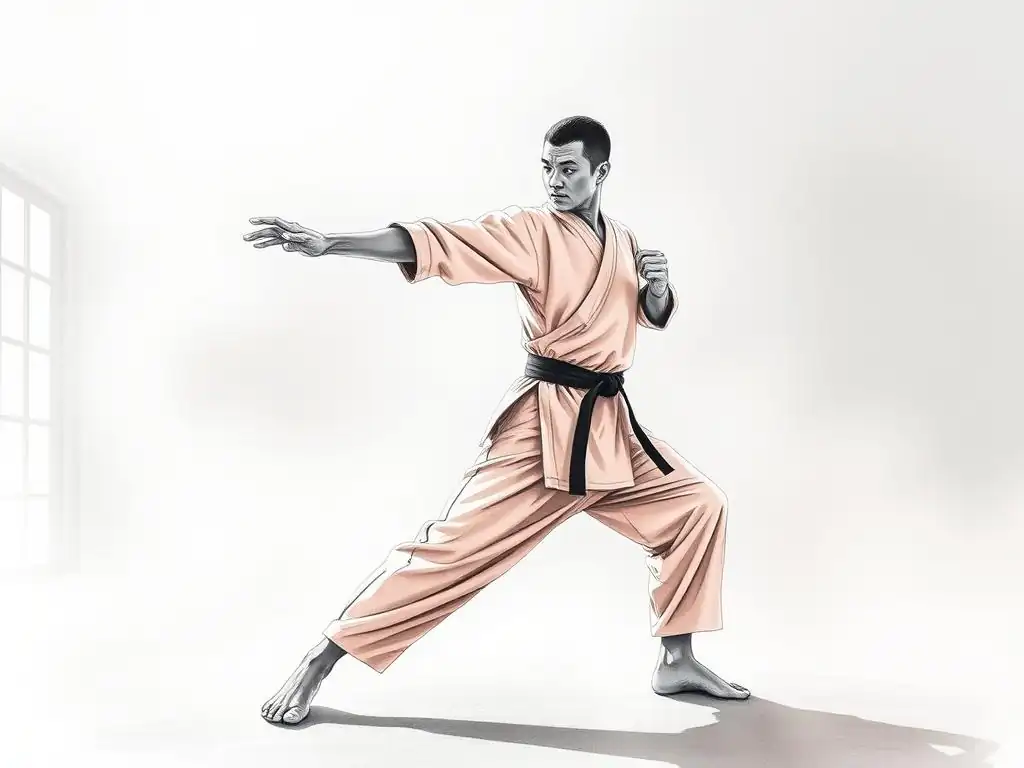
High Bong Sao (Upper Wing Arm)
While the standard Bong Sao is typically executed around chest or shoulder height, advanced Bong Sao Chi Sao techniques include variations like the High Bong Sao. This variation is used to deal with incoming attacks or pressure directed towards the upper part of the body, such as high punches, overhand strikes, or pressure applied high up on the arms during Chi Sao.
In a High Bong Sao, the forearm is angled upwards more significantly than in a standard Bong Sao, with the elbow potentially slightly higher, but still connected to the structure. The angle might be closer to 60-70 degrees from the vertical axis.
The High Bong Sao maintains the core principle of redirection, guiding the high incoming force upwards and outwards. It requires excellent shoulder relaxation and connection to the core to avoid becoming a weak, isolated arm block. In Chi Sao, a High Bong Sao might be used to manage an opponent who is trying to force their arms upwards or applying strong, high pressure.
It's also effective against techniques aimed at the head or neck area. Practicing High Bong Sao in Chi Sao drills helps develop the sensitivity and structural integrity needed to manage force at different vertical levels while maintaining balance and control.
Low Bong Sao (Lower Wing Arm)
Conversely, the Low Bong Sao is an advanced variation used to address incoming force directed at the lower part of the body or lower limbs during Chi Sao exchanges. This could be against techniques aimed at the abdomen, or pressure applied downwards or inwards against the lower arms during sticky hands. In a Low Bong Sao, the arm is angled downwards, potentially with the elbow dropping lower than usual, maintaining the wing shape but oriented towards a lower line of defense. The angle might be around 30 degrees or less from the vertical.
The Low Bong Sao redirects incoming low force downwards and outwards, away from the centerline. It demands strong stance and leg structure to support the redirection downwards without compromising balance. In Chi Sao, a Low Bong Sao is useful for managing an opponent who is trying to "dig" under your arms or apply downward pressure.
It helps maintain connection and control at a lower level. Mastery of both High and Low Bong Sao variations expands the practitioner's ability to apply Bong Sao Chi Sao techniques effectively across different attack lines, making their defense more comprehensive and adaptable in dynamic exchanges.
Forward and Backward Bong Sao
Beyond the standard lateral redirection, Bong Sao can also be applied with a forward or backward component, particularly in dynamic Chi Sao or sparring. A Forward Bong Sao involves projecting the Bong Sao slightly forward while maintaining the angle and structure, often used to meet and redirect incoming force earlier or to maintain forward pressure while defending. This requires precise timing and judgment to avoid overextension. The Forward Bong Sao helps maintain the initiative and control the space between practitioners.
A Backward Bong Sao involves a slight withdrawal or yielding motion with the Bong Sao, often coupled with minimal footwork or body rotation. This is used when the opponent's force is overwhelming or when creating a specific angle for a follow-up is desired.
The Backward Bong Sao absorbs some of the impact through yielding and redirection, preventing the practitioner from being pushed off balance. Practicing Forward and Backward Bong Sao in Chi Sao drills enhances the practitioner's ability to manage different types and intensities of force and develop more fluid, responsive Bong Sao Chi Sao techniques adapted to the specific needs of the moment.
Incorporating Footwork with Bong Sao for Enhanced Mobility
Effective Bong Sao Chi Sao techniques are inextricably linked with proper footwork. While Chi Sao often begins from a static stance, dynamic sticking hands and real applications require mobility. Incorporating footwork allows the practitioner to adjust distance, change angles, and generate more power for redirection or follow-up. Simple side-stepping (Juen Ma) can be used with Bong Sao to pivot and guide the opponent's force past the body, amplifying the redirection effect. Stepping back slightly (Tui Ma) in conjunction with a Backward Bong Sao can absorb and dissipate strong forward pressure.
More advanced footwork, such as shifting forward (Jin Choi Ma) after a Bong Sao has created an opening, allows for immediate offensive follow-up. The interplay between Bong Sao and footwork is crucial for maintaining balance and positional advantage. For example, using a slight diagonal step while executing Bong Sao can help you get off the line of attack while simultaneously redirecting the opponent. Training Bong Sao Chi Sao techniques with integrated footwork drills is essential for transitioning static sensitivity into dynamic, applicable skill. It adds another layer of complexity and effectiveness to the technique.
Integrating Bong Sao into Your Chi Sao Training Routine
Drills for Developing Bong Sao Sensitivity and Reflexes
Developing sensitivity and reflex for Bong Sao Chi Sao techniques requires dedicated drills. A foundational drill is Single Sticking Hands (Daan Chi Sao), where partners use one arm each (e.g., right arm to right arm) to maintain contact and feel for pressure. One partner can apply gentle, consistent forward pressure, and the other practices yielding and redirecting with Bong Sao. The focus is purely on feeling the force and responding appropriately without visual cues. This drill helps train the tactile sensitivity required to know when and how to apply Bong Sao.
Another effective drill involves partners taking turns applying different types of pressure – sometimes straight, sometimes angled, sometimes heavy, sometimes light – while the other partner uses Bong Sao (and other techniques) to manage the energy. The speed can be gradually increased as proficiency grows. Blindfolded Chi Sao is an advanced drill specifically designed to heighten tactile sensitivity and rely purely on feeling, forcing the practitioner to react instinctively with techniques like Bong Sao based solely on the pressure felt. These drills are vital for building the subconscious reflex action needed for effective Bong Sao application.
Partner Exercises to Improve Bong Sao Timing and Accuracy
Improving the timing and accuracy of Bong Sao Chi Sao techniques involves exercises that simulate more realistic exchanges. Basic rolling Chi Sao (Seung Chi Sao) provides a continuous flow of energy where partners alternate between offensive and defensive structures. Within this flow, opportunities arise to use Bong Sao against incoming pressure. Practitioners learn to time their Bong Sao application precisely as the opponent's force arrives, ensuring the redirection is effective. This practice refines the accuracy of the Bong Sao angle and position relative to the incoming limb.
Specific drills can also isolate timing challenges. For example, one partner might initiate a light, fast "attack" (a quick push or tap) towards the centerline, and the other must react instantaneously with a Bong Sao. The speed and unpredictability of the attack can be varied.
Accuracy is trained by focusing on contacting the correct part of the opponent's arm (usually the forearm) at the optimal angle. Drills that emphasize smooth transitions from Bong Sao to a follow-up technique also improve timing, ensuring there's no hesitation between redirecting the force and capitalizing on the opening created. Consistent partner feedback on timing ("too early," "too late," "wrong angle") is crucial.
Progression from Basic Bong Sao to Advanced Chi Sao Applications
Training progression for Bong Sao Chi Sao techniques typically moves from simple, static drills to complex, dynamic applications.
- Stage 1: Static Structure: Practice the basic Bong Sao form and angle without a partner. Focus on body alignment, relaxed shoulder, and elbow position.
- Stage 2: Single Sticking Hands: Practice Daan Chi Sao focusing solely on using Bong Sao to manage predictable, straight-line pressure. Develop basic sensitivity.
- Stage 3: Double Sticking Hands (Rolling): Introduce Seung Chi Sao, learning to apply Bong Sao within a continuous flow of energy and against varying pressures and angles. Begin integrating simple follow-ups.
- Stage 4: Introducing Variation: Practice Chi Sao with intentional variations in speed, force, and attack lines. Incorporate High, Low, Forward, and Backward Bong Sao variations.
- Stage 5: Integrated Footwork: Add simple stepping and turning to Chi Sao, learning how Bong Sao interacts with mobility.
- Stage 6: Application Drills: Practice specific scenarios where Bong Sao is used against simulated attacks (e.g., a straight punch, a hook), flowing into appropriate Wing Chun responses.
- Stage 7: Free-Flow Chi Sao/Sparring: Apply all learned Bong Sao Chi Sao techniques and principles in dynamic, less predictable exchanges, leading towards practical self-defense applications.
This structured progression ensures a solid foundation before introducing complexity, allowing the practitioner to gradually master Bong Sao Chi Sao techniques.
Bong Sao vs. Other Defenses in Chi Sao
Comparing Bong Sao to Fook Sao (Covering Hand)
Bong Sao and Fook Sao ("covering hand") are both fundamental hand techniques used in Wing Chun Chi Sao, but they serve distinct purposes and employ different mechanics. Fook Sao typically involves the forearm being angled downwards, with the palm facing towards the opponent, used to control or "listen" to the opponent's arm, applying gentle pressure or covering their structure. It's primarily a controlling or bridging technique, maintaining contact and sensing the opponent's intentions, often used to feel for openings or maintain connection on the inside gate.
In contrast, Bong Sao is primarily a redirecting technique, using the upward-angled forearm to deflect force outwards. While Fook Sao covers or controls the opponent's arm often by applying pressure or maintaining contact on top or inside, Bong Sao guides the opponent's energy away from the centerline.
In Chi Sao, you might use Fook Sao to maintain contact and feel the opponent's structure, but if they suddenly drive forward strongly towards your center, you might transition to a Bong Sao to deflect that pressure. Both Bong Sao Chi Sao techniques are essential, but their application depends on the specific energy and angle of the incoming force and the practitioner's objective.
Contrasting Bong Sao with Gum Sao (Pressing Hand)
Gum Sao ("pressing hand") is another Wing Chun technique often encountered in Chi Sao, but it differs significantly from Bong Sao. Gum Sao typically involves a downward pressing motion, often with the palm or forearm, used to break an opponent's structure, force their hands down, or disrupt their balance. It's a technique of applying direct downward pressure to control or attack.
Bong Sao, as discussed, is about redirection, using an upward-angled forearm to guide force outwards and away. Gum Sao applies force downwards to collapse or pin. In Chi Sao, if an opponent is pushing forward, you might use Bong Sao to deflect.
If they are trying to lift your arms or maintain a high posture, you might use Gum Sao to press down and break their structure. While both are hand techniques used in sticky hands, Bong Sao yields and redirects, while Gum Sao applies direct, downward force. Understanding when to apply Bong Sao Chi Sao techniques versus Gum Sao requires sensitive feeling of the opponent's energy direction.
When to Use Bong Sao Over Other Wing Chun Defenses
Choosing the appropriate defensive technique in Chi Sao depends entirely on the type, direction, and intensity of the incoming force. Bong Sao is the preferred technique when the opponent is applying significant forward pressure directed towards your centerline, particularly from a relatively straight line. Its structure is optimized for deflecting this type of energy outwards and upwards. If the opponent is pushing straight in with their forearm, Bong Sao is often the most efficient response to redirect that force.
You would typically choose Bong Sao over:
- Fook Sao: If the incoming force is strong and direct towards your center, Bong Sao is better for redirection than Fook Sao, which is more for sensing and control.
- Gum Sao: If the force is pushing forward rather than trying to lift or remaining high, Bong Sao's redirecting nature is more suitable than Gum Sao's downward press.
- Tan Sao: If the force is coming from the outside and pushing inwards, Tan Sao ("dispersing hand") might be more appropriate to deflect it outwards from the other side. Bong Sao is generally used for force coming from the inside or straight towards you, needing to be redirected outwards.
Mastering Bong Sao Chi Sao techniques involves developing the sensitivity to instantly recognize the incoming energy and select the correct hand technique for optimal defense and transition to offense.
The Importance of Sensitivity and Structure in Bong Sao Chi Sao
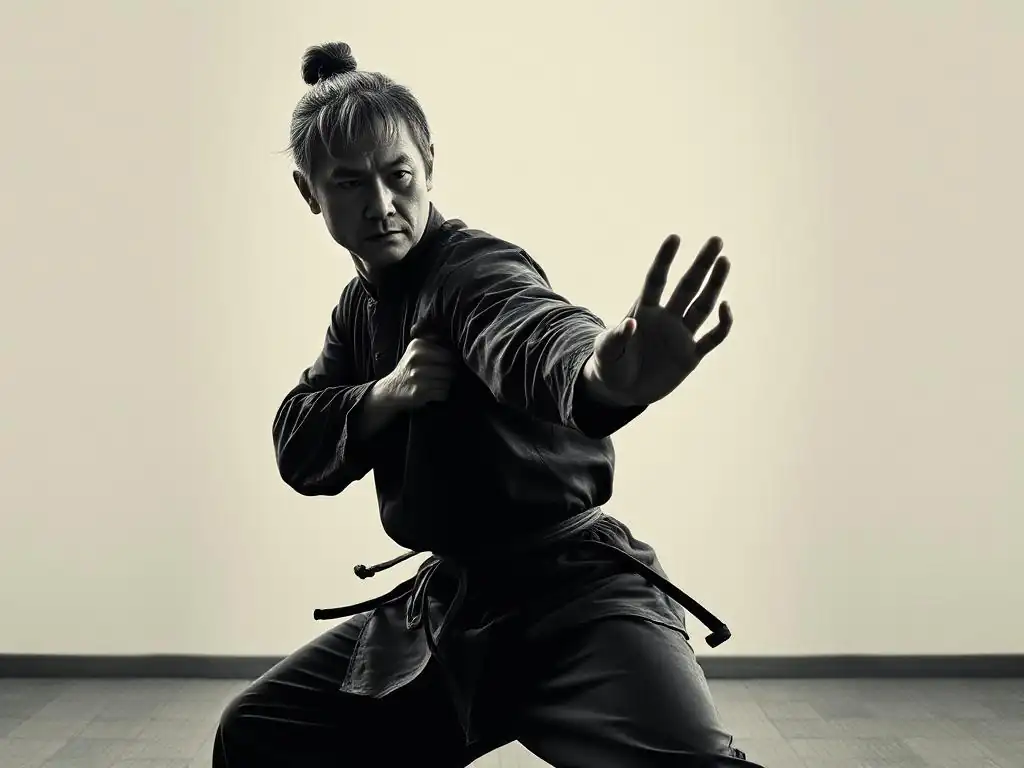
Developing Sensitivity for Effective Bong Sao Execution
Sensitivity, or "listening energy" (Ting Jin), is the cornerstone of effective Bong Sao Chi Sao techniques. It is the ability to feel the direction, intention, and strength of the opponent's force through physical contact. Without sensitivity, Bong Sao becomes a rigid block rather than a fluid redirection. Developing this skill requires countless hours of slow, deliberate Chi Sao practice, focusing intently on the feeling of pressure and movement through the arms. Drills like Daan Chi Sao, where partners apply varying pressures without visual cues, are specifically designed to hone this tactile awareness.
Sensitivity allows the practitioner to feel the precise moment the opponent commits their energy, the specific angle of their force, and any subtle shifts in their weight or structure. This information is processed instantly, allowing the practitioner to apply Bong Sao with the correct angle, timing, and yielding motion to effectively redirect the energy. A sensitive practitioner can feel an opponent's intention to push before they fully commit, allowing for a preemptive or perfectly timed Bong Sao. It's this refined sensitivity that makes Bong Sao Chi Sao techniques truly effective in dynamic exchanges.
Maintaining Proper Body Structure While Using Bong Sao
Proper body structure is non-negotiable for effective Bong Sao Chi Sao techniques. Bong Sao is not an arm technique in isolation; it is an extension of the entire body's power and stability. The core principle is maintaining a stable base through the stance (e.g., Iil Kum Tao), a connected and relaxed torso, dropped shoulders, and the elbow leading the arm's movement while remaining connected to the body's center. When structure is maintained, incoming force is not absorbed by the arm alone but is channeled through the skeletal alignment down into the ground, allowing for efficient redirection.
Common structural failures include raising the shoulder (disconnecting the arm), stiffening the wrist or elbow (inhibiting fluid redirection), leaning the body (compromising balance), or losing the connection to the stance (making the technique weak). A Bong Sao executed with poor structure will either be easily collapsed by the opponent's force or will require excessive muscular effort, leading to fatigue and loss of sensitivity. Consistent practice of the basic Wing Chun forms (Siu Lim Tao, Chum Kiu) lays the foundation for developing and maintaining the correct structure necessary for powerful and sensitive Bong Sao Chi Sao techniques.
Strengthening Your Stance for Powerful Bong Sao Delivery
The stance is the foundation upon which all Wing Chun techniques, including Bong Sao, are built. A strong, stable stance provides the necessary base to absorb and redirect incoming force without being easily pushed off balance. For Bong Sao Chi Sao techniques, the Iil Kum Tao ("character two goat riding stance") is foundational, emphasizing rootedness, balance, and the ability to generate power from the ground up. The knees are bent, the weight is settled, and the structure is compact.
Strengthening the stance involves dedicated practice of holding the stance for extended periods, focusing on proper alignment and relaxation. Drills that involve partners applying gentle pushing or pulling pressure while the practitioner maintains their stance and structure also help build stability. A strong stance allows the practitioner to use their body weight and grounding to augment the redirection provided by the Bong Sao, making the technique more powerful and less reliant on arm strength. It also facilitates smooth transitions and footwork, which are integral to dynamic Bong Sao Chi Sao applications.
Real-World Applications of Bong Sao for Self-Defense
Adapting Bong Sao for Practical Self-Defense Scenarios
While Chi Sao is a training methodology, the principles and techniques, including Bong Sao Chi Sao techniques, are adapted for practical self-defense. In a real-world scenario, an incoming attack might be a wild punch, a push, or a grab. Bong Sao's core principle of redirection is highly applicable. Against a straight punch, a Bong Sao can deflect the incoming limb outwards, just like in Chi Sao. The key adaptation is timing and commitment – in self-defense, the Bong Sao needs to be faster and more decisive than the yielding often practiced in sensitive Chi Sao drills.
Against a push or grab towards the centerline, Bong Sao can be used to guide the opponent's arms away, breaking their connection or balance. The angles might differ slightly from the refined movements of Chi Sao due to the unpredictable nature of real attacks, but the fundamental structure and principle of deflecting force remain the same.
Practicing Bong Sao against realistic attack simulations (with protective gear and controlled force) helps bridge the gap between the sensitivity of Chi Sao and the practical application in self-defense, ensuring the practitioner can adapt their Bong Sao Chi Sao techniques effectively outside the training hall.
Using Bong Sao to Create Openings for Offensive Techniques
One of the most important self-defense applications of Bong Sao is its role in creating immediate offensive opportunities. By effectively redirecting an opponent's incoming force, Bong Sao momentarily clears the path to vital targets along the centerline. If a Bong Sao successfully deflects a punch or push outwards, the opponent's guard is momentarily compromised, and their body might be slightly off-balance or exposed.
This split-second opening is the cue to launch a rapid, direct counter-attack. The hand that performed the Bong Sao might drop and the other hand strikes down the centerline with a punch (Vertical Fist), or the Bong Sao hand itself might transition into a palm strike or other close-range technique.
The goal is a simultaneous or near-simultaneous defense and attack. The sensitivity trained through Bong Sao Chi Sao techniques allows the practitioner to feel the moment the redirection is complete and the opening is available, enabling an immediate and decisive follow-up strike, making the defense active rather than purely reactive.
Integrating Bong Sao with Other Wing Chun Self-Defense Principles
Bong Sao is most effective in self-defense when integrated seamlessly with other core Wing Chun principles and techniques. This includes:
- Centerline Theory: Bong Sao is always used to defend or gain control of the centerline.
- Simultaneity: Ideally, defense (Bong Sao) and offense (a strike) happen at the same time or in rapid succession.
- Economy of Motion: Bong Sao uses the most direct and efficient path to redirect force.
- Facing: Maintaining a forward-facing structure (facing the opponent) provides the strongest base for Bong Sao.
- Yielding: While more committed than in Chi Sao, the Bong Sao still incorporates a degree of yielding to absorb energy before redirecting.
- Follow-up: Bong Sao is always a bridge to the next action, never the final technique.
In a self-defense scenario, Bong Sao might be used against an initial attack, followed by forward pressure and simultaneous strikes, using footwork to maintain position, and transitioning between other hand techniques (Tan Sao, Fook Sao, Lap Sao) as the exchange evolves. The sensitivity and structural integrity developed through Bong Sao Chi Sao techniques are the underlying skills that make this integrated approach possible and effective under pressure.
Conclusion: Mastering Bong Sao for Enhanced Chi Sao and Wing Chun Skill
The Ongoing Journey of Refining Your Bong Sao Techniques
Mastering Bong Sao Chi Sao techniques is not a destination but a continuous journey of refinement. Even after years of practice, practitioners continue to improve their sensitivity, structure, timing, and application of Bong Sao. The subtle nuances of yielding to different types of force, adjusting the angle for optimal redirection, and seamlessly transitioning to follow-up techniques require dedicated, ongoing training. The body's understanding of Bong Sao evolves from conscious application to subconscious reflex through thousands of repetitions in Chi Sao and other drills.
Refinement involves paying attention to minute details: the exact degree of the forearm angle, the relaxation of the shoulder, the connection to the waist, the timing of the yield and redirection, and the immediate follow-up. Training with different partners, experiencing varied pressures and body types, further refines the practitioner's ability to adapt their Bong Sao Chi Sao techniques. This lifelong process of honing Bong Sao is integral to deepening one's understanding and proficiency in the entire Wing Chun system.
Further Resources for Learning Wing Chun and Chi Sao
To continue your journey in mastering Bong Sao Chi Sao techniques and the art of Wing Chun, seeking qualified instruction is paramount. Learning from a Sifu or experienced instructor provides invaluable hands-on guidance, correction of structure, and development of sensitivity through partner drills. While books and videos can offer supplementary information on Wing Chun principles and Bong Sao mechanics, the tactile learning inherent in Chi Sao demands in-person training.
Look for reputable Wing Chun schools or instructors with a clear lineage. Consistent practice, both solo forms and partner drills like Chi Sao focusing on Bong Sao applications, is essential. Attending workshops or seminars can also provide exposure to different teaching perspectives and advanced Bong Sao Chi Sao techniques. The path to mastery requires dedication, patience, and a commitment to the fundamental principles of Wing Chun, especially as embodied in key techniques like Bong Sao within the vital training environment of Chi Sao.
Frequently Asked Questions
What is Pak Sao and how does it relate to Chi Sao?
Pak Sao, often translated as "slapping hand", is a fundamental technique in Wing Chun and other martial arts. It is frequently used within Chi Sao exchanges as a way to control the opponent's arms and create openings.
Why is Pak Sao important in Chi Sao training?
Pak Sao enables practitioners to disrupt an opponent's structure and balance. This disruption creates opportunities for attacks and allows for superior control within the close-range environment of Chi Sao.
What are some common applications of Pak Sao beyond Chi Sao?
While primarily associated with Chi Sao, Pak Sao principles can be applied to other ranges. It can be adapted for self-defense scenarios, providing a quick and effective way to deflect incoming attacks and create space for counterattacks.
How does one effectively train Pak Sao techniques?
Effective Pak Sao training involves repetitive drilling, focusing on proper structure, sensitivity, and timing. Practicing with a partner in Chi Sao drills is crucial to develop the necessary reflexes and adaptations.
Are there different variations of Pak Sao, and how do they differ?
Yes, there are variations depending on the angle of attack and the intended outcome. Some variations focus on deflection and control, while others prioritize creating openings for immediate counter-strikes, all within the Chi Sao context.
Final Reflection: Embracing the Flow of Pak Sao
The exploration of Pak Sao Chi Sao techniques, as detailed in this article, transcends mere martial arts instruction; it offers a pathway to understanding the dynamic interplay of yielding and asserting in all aspects of life. The principles of sensitivity, responsiveness, and adaptive force, so crucial in Pak Sao, resonate deeply in a world that demands constant adjustment and strategic thinking.
The practice of Pak Sao, and Chi Sao in general, has profoundly shaped the martial arts landscape, influencing countless practitioners to cultivate a deeper awareness of their own bodies and their opponent's intentions. This journey of self-discovery, mirrored in the continuous flow of Chi Sao, is a testament to the art's enduring power and relevance. The best fighter is never angry.
This quote, often attributed to Bruce Lee, encapsulates the essence of Pak Sao: a calm, centered response to external pressure, transforming potential conflict into an opportunity for connection and growth.
Now, as you consider the intricacies of Pak Sao Chi Sao techniques, I invite you to reflect on how these principles can be applied beyond the training hall. How can you cultivate greater sensitivity in your interactions? How can you adapt to changing circumstances with grace and power? Embrace the flow, find your center, and discover the art of yielding and asserting in your own life.
Unleash Your Inner Chi: Embrace the Slap!
Thank you for exploring the dynamic world of Pak Sao! Now that you've gained a deeper understanding of these powerful slapping hand techniques, it's time to put that knowledge into action.
- Immediately begin practicing Pak Sao drills with a training partner to refine your technique and sensitivity.
- Share this article with fellow martial artists to spark insightful discussions and mutual learning.
- Experiment with incorporating Pak Sao into your sparring sessions to discover its practical applications in real-time.
What innovative Pak Sao drill are you most excited to try in your next training session?