
Choy Li Fut's Long Range Combinations: Overwhelming Opponents from the Outside In

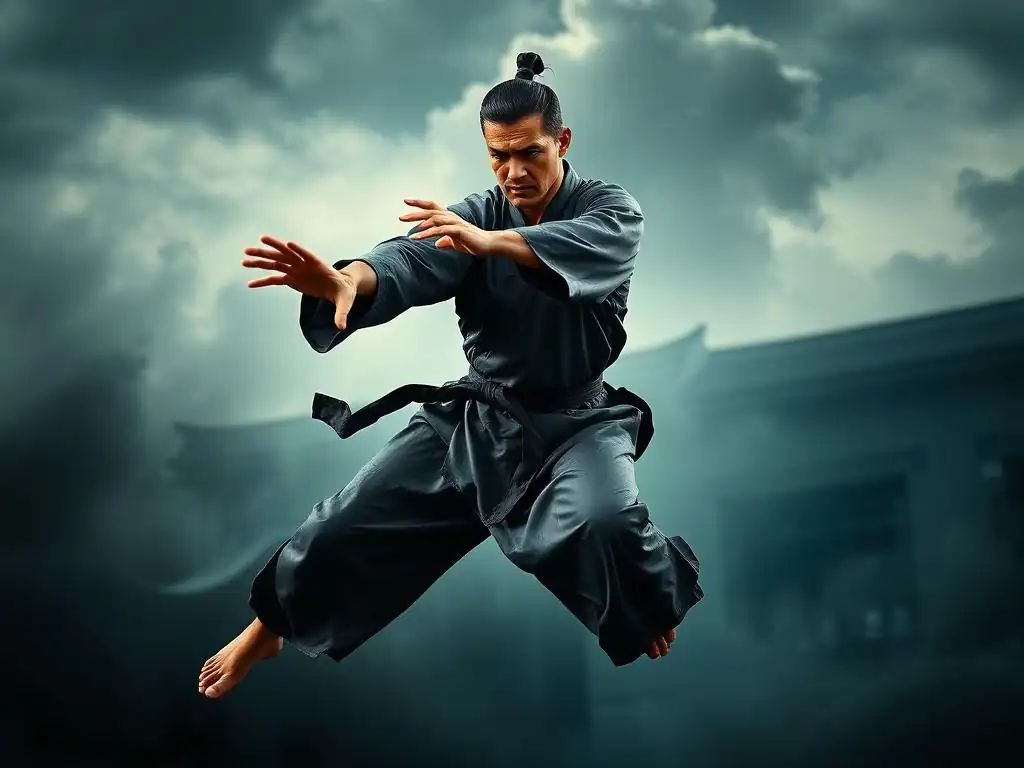
Welcome to Martial Arts Mastery, your gateway to unlocking the profound depths of combat wisdom!
Prepare to delve into the intricate world of Choy Li Fut, a dynamic martial art known for its devastating power. This article unveils the secrets behind Choy Li Fut's long range combinations, revealing how this style effectively overwhelms opponents from the outside in. Curious about how it achieves this? Explore the historical foundations and practical applications that make this style a force to be reckoned with.
- Mastering Long Range Combat in Choy Li Fut Kung Fu
- Key Techniques for Choy Li Fut Long Range Attacks
- Building Effective Choy Li Fut Long Range Combinations
- Drills and Training Exercises for Choy Li Fut Long Range Mastery
- Tactical Applications of Choy Li Fut Long Range in Self-Defense
- The Legacy of Choy Li Fut Long Range: Historical Context
- Advanced Concepts in Choy Li Fut Long Range Fighting
- Conclusion: Achieving Mastery of Choy Li Fut Long Range Techniques
-
Frequently Asked Questions
- What makes Choy Li Fut unique in its long-range fighting capabilities?
- What are some key stances used in Choy Li Fut to facilitate long-range attacks?
- How does Choy Li Fut incorporate footwork for maintaining and controlling distance?
- What types of hand techniques are commonly used in Choy Li Fut's long-range strategies?
- How can one effectively train for long-range combat in Choy Li Fut?
- Final Reflection: Mastering Distance, Embracing Flow
- Master the Distance: Ignite Your Choy Li Fut Potential!
Mastering Long Range Combat in Choy Li Fut Kung Fu
Understanding the Principles of Choy Li Fut Long Range Strategy
Choy Li Fut, a dynamic and comprehensive Southern Chinese martial art, is renowned for its emphasis on long and short-range techniques, but perhaps its most distinguishing characteristic lies in its powerful and versatile long-range arsenal. The core principle behind Choy Li Fut long range strategy is to control the fighting distance, leveraging the art's broad stances and sweeping arm techniques to engage opponents before they can close the gap.
This allows practitioners to deliver devastating strikes while minimizing the risk of being countered by shorter-range arts like Wing Chun or boxing. The system's founder, Chan Heung, synthesized techniques from various masters, incorporating the long-arm methods of Choy Gar and the flowing body movement of Li Gar, specifically adapting them for effective engagement from a distance.
A key aspect of the Choy Li Fut long range approach is the generation of power through body rotation and waist torque, often described as yao ma (waist horse). Unlike arts that rely solely on linear force, Choy Li Fut utilizes circular and whipping motions originating from the hips and torso, transferring kinetic energy through the limbs. This allows practitioners to generate significant force even with extended techniques.
For instance, a typical Choy Li Fut long range palm strike or backfist isn't just an arm movement; it's powered by a full turn of the body, enabling a strike that can travel over a meter and still deliver substantial impact. This method of power generation is crucial for making long-range attacks effective and overwhelming.
The Importance of Distance Control in CLF Fighting
Effective distance control is paramount in Choy Li Fut long range combat. It's the ability to dictate the space between you and your opponent, ensuring you are always in a position to strike effectively while remaining outside their optimal striking range. This is achieved through fluid footwork, strategic movement, and intelligent application of techniques. A Choy Li Fut practitioner constantly adjusts their distance, using steps like the Bui Ma (crab step) or Kau Ma (hook step) to advance, retreat, or circle, maintaining the precise range needed for their long-range arsenal to be most effective.
Maintaining the correct distance prevents an opponent from utilizing their preferred techniques. If an opponent is strong in close-quarters grappling, keeping them at Choy Li Fut long range prevents them from getting hold. If they rely on rapid, short punches, the longer reach of Choy Li Fut techniques keeps them at bay.
A skilled CLF fighter uses their long arms and legs like feelers, constantly probing and measuring the distance, ready to launch a long-range combination the moment an opening appears, or to evade if the opponent attempts to bridge the gap too quickly. This constant management of space is a fundamental skill drilled from the earliest stages of Choy Li Fut training.
Key Techniques for Choy Li Fut Long Range Attacks
Developing Powerful Choy Li Fut Kicks for Distance
Choy Li Fut boasts a wide array of kicks, many of which are specifically designed for long-range engagement. Unlike some systems that focus on low, fast kicks, CLF utilizes powerful, often circular or sweeping kicks aimed at various levels. Developing these kicks requires significant flexibility, balance, and power generated from the hips and supporting leg. Training involves countless repetitions of basic kicks, focusing on generating whip-like speed and torque. Practitioners spend hours developing the flexibility required for high kicks and the muscular endurance to throw multiple powerful kicks in succession without losing balance or momentum.
The power in Choy Li Fut kicks doesn't just come from lifting the leg; it's derived from the driving force of the supporting foot pushing off the ground and the rotation of the hips. For example, a simple side kick (Chung Tek) in Choy Li Fut, when used at long range, isn't just a push; it's delivered with a strong hip turn and body alignment that channels force directly through the heel or blade of the foot, making it capable of delivering significant impact even from several feet away.
Mastering this hip-driven power is essential for making Choy Li Fut long range kicks truly effective weapons.
The Whirling Leg Kick (Gwa Tek) in Long Range
The Gwa Tek, often translated as the whirling leg kick or hooking kick, is a signature Choy Li Fut long range technique. It's a powerful, sweeping kick that can target the opponent's legs, body, or even head, depending on the variation and flexibility of the practitioner. Executed with significant body rotation, the Gwa Tek generates immense centrifugal force, making it a devastating strike from a distance. Its circular path makes it harder to block than linear kicks and allows it to wrap around an opponent's guard.
In a Choy Li Fut long range scenario, the Gwa Tek serves multiple purposes. It can be used to disrupt an opponent's balance, damage their lead leg to limit their mobility, or delivered to the body or head as a knockout blow.
A skilled practitioner can use the Gwa Tek from several feet away, using the momentum of the kick to either follow up with hand techniques or to create distance if the opponent tries to close in. For instance, a Gwa Tek aimed at the thigh can momentarily disable an opponent's movement, creating an opening for a subsequent long-arm punch combination.
Utilizing the Springing Leg (Tan Tek) for Initial Assault
The Tan Tek, or springing leg kick, is another valuable Choy Li Fut long range tool, often used as an initial assault or probing technique. It's typically a quick, snapping kick delivered with the instep or ball of the foot, often targeting the lower body or midsection. While perhaps not as powerful as a full Gwa Tek, its speed and unexpected trajectory can be highly effective at long range. The "springing" nature comes from the quick retraction of the leg after impact, minimizing the time the leg is exposed for grappling or countering.
The Tan Tek is excellent for testing an opponent's reactions and establishing distance. It can be thrown quickly from a fighting stance, covering the distance rapidly to land a sharp strike. For example, a practitioner might use a Tan Tek to the knee or thigh to gauge the opponent's defense or to momentarily stun them before closing slightly to enter the range for hand techniques. Its relatively low commitment compared to a full roundhouse or hook kick makes it a safe option for initiating exchanges at Choy Li Fut long range.
Hand Techniques for Long Range Engagement in Choy Li Fut
While Choy Li Fut is famous for its long-range kicks, its hand techniques are equally formidable and integral to its long-range strategy. The system features a vast repertoire of hand forms and techniques, many of which are designed to be delivered with power and reach. The emphasis is often on sweeping, circular, and whipping motions rather than purely linear strikes, though powerful linear punches also exist. These techniques leverage the practitioner's body rotation and arm extension to cover significant distance and generate considerable force.
Unlike systems that favor tight, short punches, Choy Li Fut utilizes the full extension of the arm and body to reach opponents from further away. Techniques like the "phoenix eye" fist (Fung Ngarn Kuen) or various palm strikes (Jeung) are delivered with a full body turn, allowing them to connect with power even when the practitioner is several feet away. This ability to strike effectively with hands from a distance complements the kicking arsenal, creating a continuous threat zone around the CLF fighter.
The Long Arm Punch (Chang Kuen) and its Variations
The Chang Kuen, or long arm punch, is a fundamental Choy Li Fut long range hand technique. It's not a single technique but a category encompassing punches delivered with maximum reach and power generated from the full body. Variations include straight punches, whipping punches, and swinging punches, all characterized by the full extension of the arm and the driving force from the waist and legs. These punches are designed to reach opponents who believe they are outside striking range.
A common example of a Chang Kuen is a powerful straight punch delivered with a strong forward step and hip rotation, allowing the fist to travel a considerable distance with penetrating force. Another variation is a sweeping backfist or hook punch delivered with a wide arc and full body turn, capable of landing from an unexpected angle at long range. Training for Chang Kuen focuses on developing explosive power through body mechanics and maintaining structural integrity even at full extension, ensuring the force is transferred effectively to the target.
Utilizing Chain Punches (Lin Wan Kuen) to Maintain Distance
Lin Wan Kuen, or chain punches, in Choy Li Fut, are distinct from the rapid, short-range chain punches found in some other systems. While they can be delivered quickly, Choy Li Fut chain punches are often deployed at long range to maintain pressure and overwhelm an opponent who is attempting to close the distance. They involve a series of powerful punches delivered in rapid succession, utilizing the characteristic circular and whipping motions of CLF. The power for each punch is generated sequentially through the body, creating a continuous wave of force.
At Choy Li Fut long range, Lin Wan Kuen can be used to barrage an opponent, preventing them from stepping in or setting up their own attacks. For instance, a practitioner might throw a series of whipping punches (Biu Kuen) or outward punches (Gwa Kuen) with rapid hip rotation, keeping the opponent at bay. This isn't just about speed; it's about maintaining powerful, extended strikes one after another, creating a wall of force. A common drill involves throwing 5-10 powerful, extended punches in a single breath, emphasizing the continuous generation of power from the core while covering distance.
Building Effective Choy Li Fut Long Range Combinations
Combining Kicks and Punches for Maximum Impact
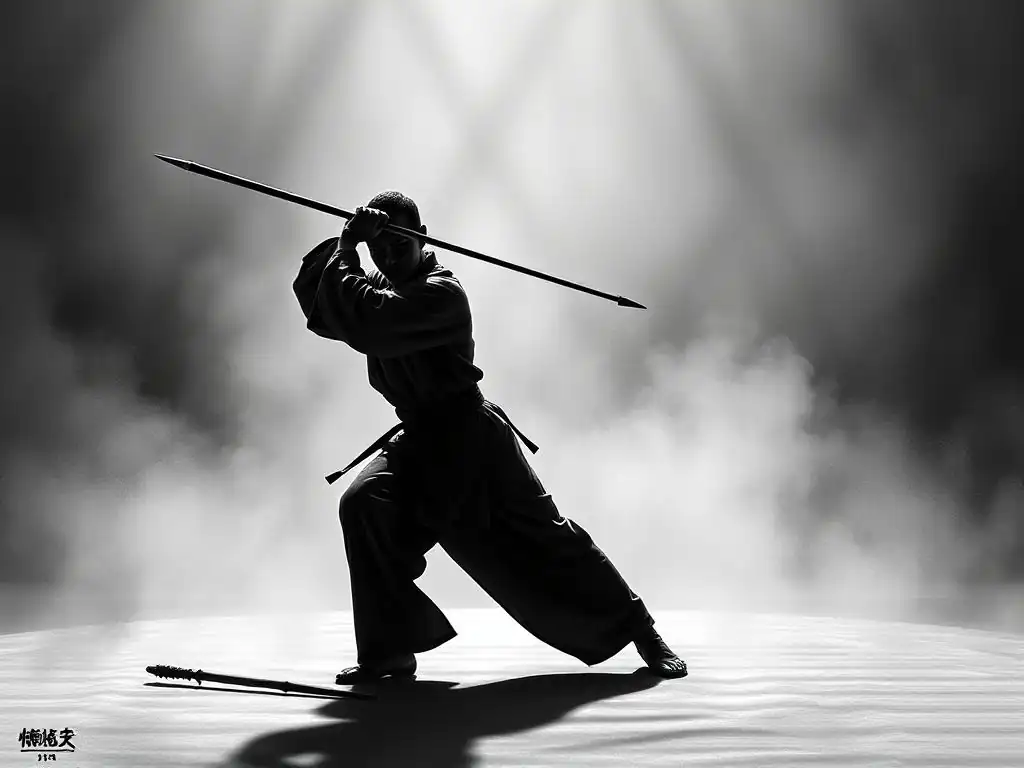
The true power of Choy Li Fut long range combat lies in the seamless integration of its diverse hand and foot techniques. Effective combinations transition fluidly between kicks and punches, using the strengths of each to create openings and overwhelm the opponent. The long reach of both types of techniques means that a CLF fighter can launch multi-stage attacks from a distance, making it difficult for an opponent to defend or counter effectively. A common strategy is to use a long-range kick to disrupt balance or create a momentary distraction, immediately followed by one or more long-arm hand techniques.
For example, a Choy Li Fut long range combination might start with a Tan Tek (springing kick) to the opponent's lead thigh, designed to momentarily check their movement or defense. As the opponent reacts to the kick, the practitioner immediately follows with a powerful Chang Kuen (long arm punch) to the head or body, utilizing the forward momentum generated by the kick's retraction.
Another example could be a Gwa Tek (whirling kick) aimed at the ribs, followed by a sweeping Gwa Kuen (outward punch) to the head as the leg is withdrawn, leveraging the rotational power generated by the kick for the subsequent hand strike.
Footwork and Evasion for Maintaining Long Range Advantage
Superior footwork is the engine that drives Choy Li Fut long range effectiveness. Without constant, intelligent movement, maintaining the optimal distance and delivering powerful techniques would be impossible. Choy Li Fut footwork is characterized by its fluidity, speed, and ability to generate power and change direction rapidly. It allows the practitioner to advance or retreat quickly, circle opponents, and create angles for attack while staying out of harm's way. The ability to move in and out of range seamlessly is crucial for both offense and defense at long range.
Evasion at long range in Choy Li Fut often involves subtle shifts, pivots, or quick steps to avoid incoming attacks while simultaneously setting up a counter. Because the distance is greater, there is often more time to react compared to close-quarters fighting. A skilled CLF fighter uses their footwork to make themselves a difficult target, constantly moving laterally or changing depth to frustrate an opponent attempting to close the gap. This constant movement is not random; it's a calculated effort to maintain the Choy Li Fut long range advantage.
Mastering the Choy Li Fut Step (Bui Ma) for Maneuverability
The Bui Ma, often translated as the "crab step" or "scissors step," is a foundational Choy Li Fut footwork technique essential for long range maneuverability. It involves advancing or retreating with a scuttling motion, where one foot slides forward or backward, and the other follows or steps past, maintaining a low, stable stance. This step allows for rapid, stable movement in any direction – forward, backward, or diagonally – without crossing the feet, which could compromise balance.
Mastering Bui Ma enables a Choy Li Fut practitioner to quickly cover distance to launch a long-range attack or rapidly retreat to avoid an incoming strike. For instance, to initiate a long-range combination, a fighter might use a quick Bui Ma forward to bridge the necessary distance for a kick or punch. Conversely, if an opponent lunges forward, a rapid Bui Ma backward can create instant separation, restoring the Choy Li Fut long range buffer. The stability provided by the low stance during Bui Ma ensures that the practitioner is always ready to strike or defend.
Pivoting and Angling to Control the Distance
Pivoting and angling are critical skills for controlling the distance and setting up Choy Li Fut long range attacks. Pivoting on the ball of the foot allows a fighter to quickly change the direction they are facing, enabling them to circle an opponent, avoid a linear attack, or align their body for a powerful rotational technique like a Gwa Tek or Gwa Kuen. Angling involves moving off the direct line of attack, creating a more advantageous position from which to strike while making it harder for the opponent to respond.
By constantly pivoting and angling, a Choy Li Fut practitioner can keep their opponent on the defensive, forcing them to constantly adjust their position. This disrupts the opponent's rhythm and makes them vulnerable to powerful Choy Li Fut long range techniques. For example, if an opponent advances directly, a quick pivot and side step can move the CLF fighter off the line, creating an angle for a long-range side kick or a sweeping hand strike to the opponent's exposed flank. This constant movement and angle creation is a hallmark of effective Choy Li Fut long range strategy.
Drills and Training Exercises for Choy Li Fut Long Range Mastery
Shadowboxing and Partner Drills for Long Range Combinations
Developing proficiency in Choy Li Fut long range combinations requires consistent and specific training. Shadowboxing is a fundamental drill where practitioners practice their techniques and combinations against an imaginary opponent, focusing on fluidity, speed, power generation, and maintaining proper distance. This allows for repetition of complex movements like transitioning from a Gwa Tek into a Chang Kuen sequence, refining body mechanics without the risk of injuring a partner.
Partner drills are essential for developing timing, distance judgment, and the ability to react to a live opponent. Drills might involve one partner maintaining a defensive distance while the other practices launching Choy Li Fut long range attacks, focusing on stepping in and out correctly. Other drills simulate specific scenarios, such as one partner attempting to close the distance while the other uses long-range techniques to keep them at bay. Controlled sparring at long range, focusing on landing techniques with touch rather than power, also helps develop tactical understanding and reaction speed.
Developing Speed and Power for Long Range Techniques
Speed and power are crucial for effective Choy Li Fut long range techniques. Speed ensures techniques land before the opponent can react, while power ensures they have impact even from a distance. Training methods include using focus mitts, heavy bags, and specialized equipment like the "wall bag" (Sa Bao) common in Southern Kung Fu. Hitting these targets with Choy Li Fut long range techniques helps develop explosive power and proper body mechanics.
Speed drills might involve throwing multiple techniques in rapid succession, focusing on quick hip rotation and limb extension. For example, practicing a series of Lin Wan Kuen on a focus mitt held at full arm's length emphasizes speed and continuous power generation. Power development involves exercises like squatting, lunging, and core strengthening, which directly contribute to the force generated by the legs and waist for both kicks and punches. Plyometric exercises can also enhance the explosive power needed for fast, hard strikes from a distance.
Conditioning for Sustained Long Range Fighting
Sustained long range fighting in Choy Li Fut is physically demanding, requiring significant stamina, muscular endurance, and flexibility. The constant movement, powerful kicks, and whipping hand techniques tax the body. Therefore, physical conditioning is a non-negotiable part of Choy Li Fut long range training. This includes cardiovascular exercises like running or skipping rope to build stamina, allowing a fighter to maintain a high pace of movement and attack.
Strength training, particularly focusing on the legs, core, and shoulders, is vital for generating power and withstanding the physical demands of long-range exchanges. Exercises like squats, lunges, push-ups, and various core exercises build the foundation for powerful kicks and punches. Flexibility training, through stretching and dynamic movements, is also crucial, especially for executing high and wide-ranging kicks safely and effectively. A well-conditioned body allows a Choy Li Fut practitioner to execute their long range strategy effectively throughout an entire fight.
Tactical Applications of Choy Li Fut Long Range in Self-Defense
Using Long Range to Control the Pace of the Fight
In a real-world self-defense scenario, controlling the pace and distance is often the key to survival, and Choy Li Fut long range techniques excel at this. By keeping an aggressor at a distance, a CLF practitioner minimizes the threat of grabs, tackles, or rapid close-range strikes common in street fights. The ability to strike effectively from outside typical grappling or boxing range allows the defender to dictate when and how contact occurs, if at all.
Using long-range kicks like a Tan Tek to the leg or a Gwa Tek to the body can deter an aggressor from closing in. Following up with long-arm punches keeps them off balance and prevents them from establishing their own offense. This constant threat from a distance forces the aggressor to either retreat or attempt a desperate lunge, both of which can be exploited by the CLF practitioner's footwork and counter-attacks. The goal is to create a safe zone and manage the interaction from the perimeter.
Exploiting Weaknesses in an Opponent's Stance from a Distance
Choy Li Fut long range techniques are excellent for exploiting openings that appear when an opponent is trying to close the gap or is standing in a vulnerable stance. From a distance, a practitioner has a better overview of the opponent's body mechanics and potential weaknesses. For instance, if an aggressor stands with their lead leg exposed, a quick Tan Tek or low Gwa Tek can target that leg, disrupting their balance and mobility.
If an opponent lunges forward with poor guard, a powerful Chang Kuen delivered with a forward step can intercept them. The wide, sweeping nature of some Choy Li Fut long range hand techniques like Gwa Kuen (outward punch) or Pek Kuen (chopping punch) can bypass a narrow guard from an angle. By maintaining distance, the CLF fighter can observe these openings and launch a targeted, powerful strike from their Choy Li Fut long range arsenal before the opponent can adjust.
Maintaining Safety and Distance in Real-World Scenarios
The primary advantage of Choy Li Fut long range in self-defense is maintaining safety by keeping potential threats at a distance. The objective is often not to engage in a prolonged fight but to create an opportunity to escape. Long-range techniques allow a defender to inflict pain or disruption from a relatively safe position, buying time to disengage and flee. For example, a powerful Gwa Tek to the thigh or a rapid series of Lin Wan Kuen aimed at the head can momentarily incapacitate an aggressor, allowing the defender to run to safety.
Furthermore, the circular footwork and pivoting common in Choy Li Fut allow a practitioner to avoid being cornered or surrounded. By constantly moving and using long-range techniques to manage threats, a CLF fighter can maintain space and situational awareness, crucial elements for safety in unpredictable real-world situations. The focus is on damage infliction from outside the immediate danger zone and creating opportunities for escape, leveraging the inherent advantages of Choy Li Fut long range capabilities.
The Legacy of Choy Li Fut Long Range: Historical Context
Chan Heung's Emphasis on Long Range Techniques
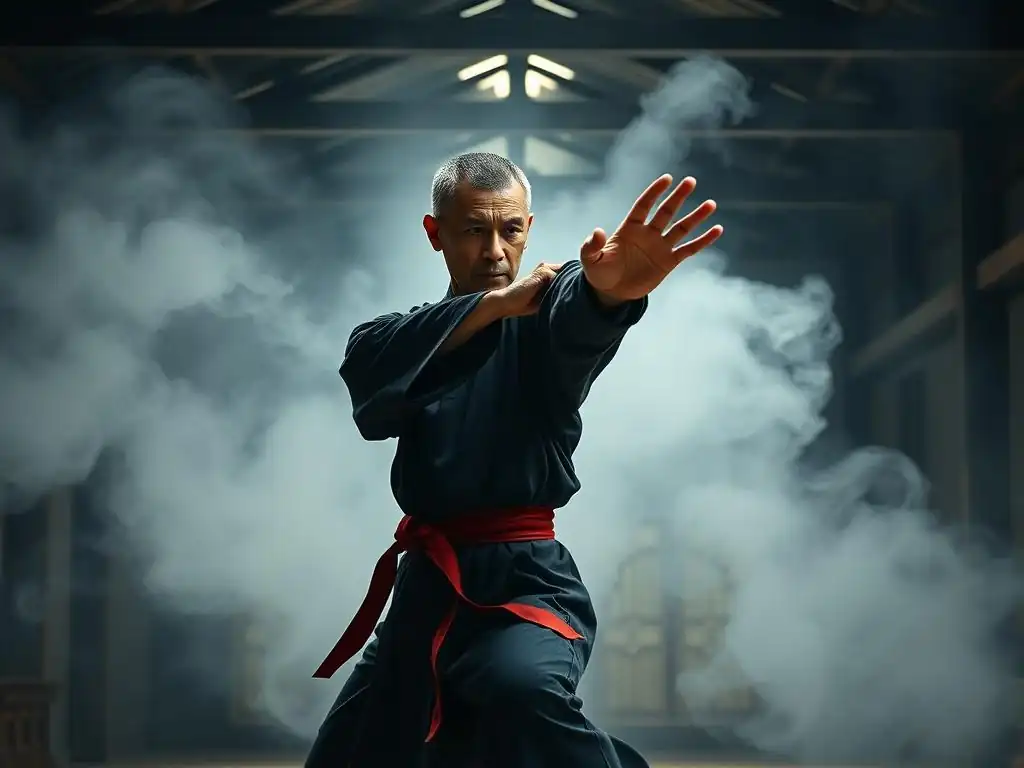
Chan Heung, the founder of Choy Li Fut, synthesized techniques from several martial arts masters, including Choy Fook, Li Yau-San, and Chan Cheung. A significant influence came from Choy Fook, a practitioner of Choy Gar, known for its long-arm techniques and sweeping movements. Li Yau-San, from Li Gar, contributed dynamic footwork and body mechanics. Chan Heung's genius lay in combining these elements, specifically adapting the long-range aspects of Choy Gar and the flexible movement of Li Gar into a cohesive system.
Chan Heung structured Choy Li Fut forms and training methods to heavily emphasize the development of power and speed in long-range techniques. Forms like the "Eighteen Lohan Hands" (Sap Baat Lohan Kuen) or the "Small Crossing Pattern" (Siu Sap Ji Kuen) contain numerous techniques that require full body extension and rotation, training practitioners to generate force from a distance.
His vision was to create a system capable of fighting effectively in various ranges, but the distinct emphasis on techniques like Gwa Tek, Chang Kuen, and dynamic footwork clearly points to the strategic importance he placed on overwhelming opponents from the outside in, defining the character of Choy Li Fut long range combat.
The Evolution of Long Range Tactics in Choy Li Fut
Over its history, Choy Li Fut has spread widely and evolved through various lineages (e.g., Hung Sing, Buk Sing, Fat San). While the core principles of Choy Li Fut long range combat remain consistent – power from the waist, dynamic footwork, and extended techniques – different branches have sometimes emphasized certain aspects more than others. Some lineages might favor wider, more sweeping long-range techniques, while others might incorporate slightly more linear or faster variations.
Despite these variations, the fundamental advantage of Choy Li Fut long range remains its ability to engage and control an opponent from a distance. In modern times, competitive Sanda (Chinese kickboxing) and Lei Tai (full-contact fighting platforms) have seen Choy Li Fut practitioners successfully apply their long-range arsenal against opponents from diverse backgrounds.
The adaptability of CLF's long-range kicks and punches, combined with its robust footwork, continues to make it a formidable style in modern martial arts, demonstrating the enduring relevance of Chan Heung's original emphasis on overwhelming opponents from the outside in with Choy Li Fut long range tactics.
Advanced Concepts in Choy Li Fut Long Range Fighting
Feinting and Deception at Long Range
At an advanced level, Choy Li Fut long range combat incorporates feints and deception to create openings against skilled opponents. Simply launching powerful techniques predictable is less effective against experienced fighters. Feinting involves making a convincing motion for one technique to draw a reaction, then immediately following up with a different, often more committed, attack. At long range, these feints need to be large enough to be believable but controlled enough not to compromise balance or positioning.
For instance, an advanced Choy Li Fut practitioner might throw a light, quick Tan Tek towards the opponent's head, intending for them to raise their guard, creating an opening in their lower body for a powerful Gwa Tek. Or they might initiate the motion for a sweeping Gwa Kuen (outward punch) to the head, causing the opponent to cover their head, only to redirect the energy into a penetrating Pek Kuen (chopping punch) aimed at the shoulder or neck.
These feints leverage the long reach to threaten multiple targets from a distance, forcing the opponent to guess and potentially overcommit their defense.
Reading Your Opponent's Movements and Intentions
Reading an opponent's movements and intentions is a critical skill that elevates Choy Li Fut long range fighting from simply throwing techniques to strategic engagement. From a distance, a skilled practitioner observes subtle cues: shifts in weight, changes in breathing, tension in the shoulders, or the initial twitch before a movement. Learning to recognize these tells allows the CLF fighter to anticipate their opponent's actions – whether they are about to lunge, kick, or attempt to retreat.
This reading ability enhances the effectiveness of Choy Li Fut long range techniques. If an opponent is about to step forward, a well-timed Chang Kuen can intercept them. If they show signs of wanting to retreat, a quick Bui Ma forward with a combination can cut off their escape. Developing this skill requires extensive sparring experience and dedicated practice focused on observation rather than just execution. It's about using the buffer of Choy Li Fut long range to gather intelligence and make informed tactical decisions.
Adapting Your Long Range Strategy to Different Fighting Styles
No two opponents fight the same way, and adapting the Choy Li Fut long range strategy is essential for success against varied fighting styles. Against a boxer who relies on close-range hand combinations, the CLF fighter emphasizes footwork to maintain distance and uses powerful long-range kicks to their legs and body to break them down before engaging with hand techniques. Against a grappler, the priority is strictly maintaining distance with kicks and long-arm techniques, avoiding any clinch situation at all costs.
Against a system with similar long-range capabilities, like certain Karate styles, the Choy Li Fut practitioner might focus on disrupting the opponent's rhythm with unpredictable combinations, utilizing the circular nature of CLF techniques and the versatility of its footwork to create angles the opponent isn't used to defending. Adapting involves selecting the most appropriate techniques from the vast Choy Li Fut long range arsenal, adjusting timing and distance control, and modifying combinations based on the opponent's strengths and weaknesses. This strategic flexibility makes Choy Li Fut long range a highly adaptable approach.
Conclusion: Achieving Mastery of Choy Li Fut Long Range Techniques
Mastery of Choy Li Fut long range techniques is a journey requiring dedication, rigorous training, and a deep understanding of the system's principles. It involves not just learning a series of movements but developing the power, speed, flexibility, balance, and strategic intelligence necessary to effectively control distance and overwhelm opponents from the outside in. From the foundational footwork of Bui Ma to the devastating power of the Gwa Tek and the overwhelming pressure of Lin Wan Kuen, each element plays a crucial role in the comprehensive Choy Li Fut long range arsenal.
Achieving proficiency means seamlessly integrating kicks and punches, using footwork to constantly manage distance and angle, and employing feints and timing to exploit openings. It requires countless hours of practice, from solo drills refining technique to partner work developing timing and reaction, and sparring applying skills under pressure. The legacy of Chan Heung's emphasis on powerful, long-reaching techniques continues to define Choy Li Fut, offering practitioners a formidable method for engaging and defeating opponents by mastering the art of Choy Li Fut long range combat.
Frequently Asked Questions
What makes Choy Li Fut unique in its long-range fighting capabilities?
Choy Li Fut utilizes whipping, circular movements and a wide stance to generate power and maintain distance. This allows practitioners to control the engagement and overwhelm opponents from afar.
What are some key stances used in Choy Li Fut to facilitate long-range attacks?
The ma bo (horse stance) and deng san bo (front stance) provide a stable base for powerful, extended strikes. These stances allow for efficient weight transfer and maximized reach.
How does Choy Li Fut incorporate footwork for maintaining and controlling distance?
Choy Li Fut emphasizes agile footwork and strategic positioning. This includes shifting, circling, and evasive movements to maintain the desired range and control the flow of combat.
What types of hand techniques are commonly used in Choy Li Fut's long-range strategies?
The system commonly uses whipping punches, long-range palm strikes, and hooking techniques. These techniques are designed to maximize reach and impact while maintaining a safe distance.
How can one effectively train for long-range combat in Choy Li Fut?
Training involves practicing stance work, footwork drills, and partner exercises focusing on range control. Sparring and developing timing and precision are also crucial for mastering long-range combat.
Final Reflection: Mastering Distance, Embracing Flow
The principles of Choy Li Fut's long-range combinations, as explored in this article, aren't just about martial arts techniques; they represent a broader philosophy of strategic engagement and controlled aggression. In a world increasingly defined by instant gratification and close-quarters conflict, the ability to anticipate, adapt, and overwhelm from a distance – whether physically or metaphorically – remains profoundly relevant. The art of "Choy Li Fut long range" is more than just fighting; it's a mindset.
The enduring appeal of Choy Li Fut lies in its fluidity and adaptability, qualities that resonate deeply in our ever-changing world. My own journey with martial arts has taught me that true strength isn't just about power, but about understanding and controlling space, time, and momentum. This is mirrored in life itself, where strategic planning and thoughtful action often yield greater results than brute force. Adapt what is useful, reject what is useless, and add what is specifically your own.
- Bruce Lee. This quote encapsulates the spirit of Choy Li Fut, constantly evolving and adapting to new challenges.
Now, consider how you can apply the principles of "Choy Li Fut long range" to your own life. How can you anticipate challenges, strategically position yourself for success, and overwhelm obstacles with a well-planned, flowing approach? Cultivate your awareness, hone your skills, and embrace the power of distance to achieve your goals. The art of mastering distance, both literally and figuratively, is a lifelong journey, and one that promises profound rewards.
Master the Distance: Ignite Your Choy Li Fut Potential!
Thank you for diving into the world of Choy Li Fut's long-range dominance! Now that you've unlocked these powerful concepts, it's time to put them into action and elevate your training.
- Prioritize drills focusing on expanding your reach: Dedicate at least 15 minutes per training session to perfecting your long-range punches and kicks.
- Share this article with a training partner and analyze each other's form, seeking improvement areas.
- Research the historical context of Choy Li Fut's development, connecting it with practical combat scenarios and its impact on modern martial arts.
What specific long-range combination will you focus on mastering this week to overwhelm your opponents?