
Countering Kicks in Sanda: Effective Methods, Drills, and Rules

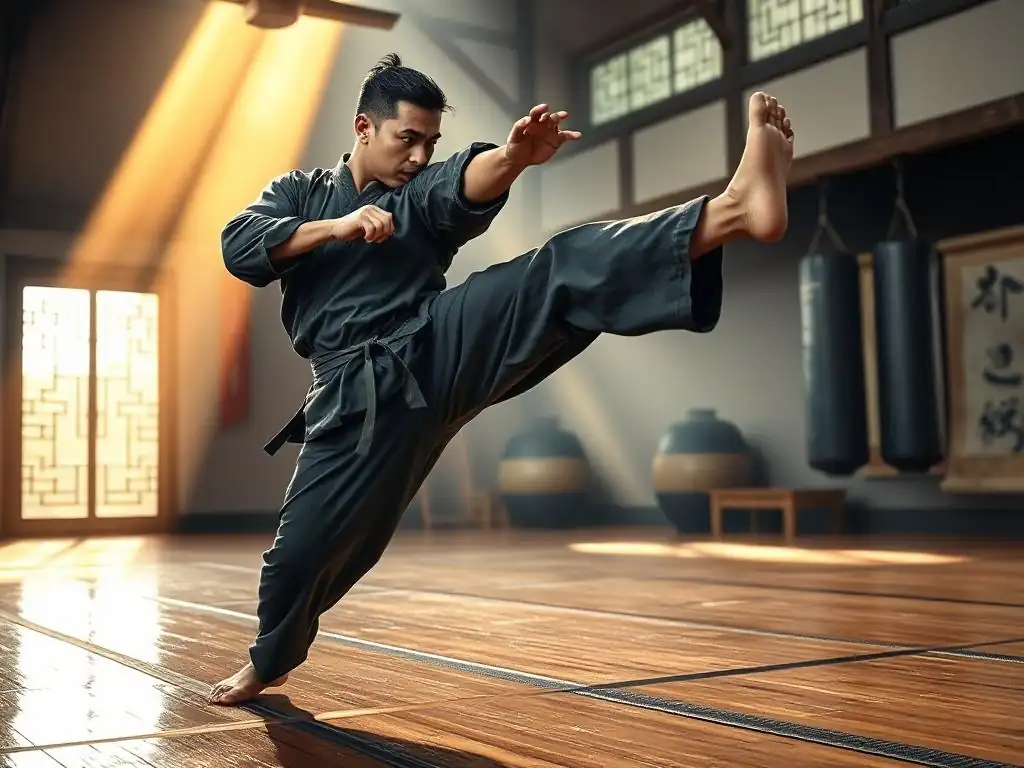
Welcome to Martial Arts Mastery, your portal to the world's fighting arts. Ever wondered how to effectively shut down a lightning-fast kick in the ring? This article delves into the crucial world of Sanda kick defense techniques. Uncover the secrets to anticipating, blocking, and countering kicks in this dynamic combat sport, and learn how to apply these principles to your own training regimen. Ready to elevate your Sanda game?
- Introduction to Sanda Kick Defense Techniques
- Fundamental Sanda Kick Defense Strategies
- Advanced Sanda Kick Countering Methods
- Effective Sanda Kick Defense Drills for Training
- Specific Kick Defense Scenarios and Solutions
- Conditioning and Footwork for Enhanced Kick Defense
- Common Mistakes in Sanda Kick Defense and How to Avoid Them
- Legal Considerations and Fair Play in Sanda Kick Defense
- Integrating Clinch Work with Kick Defense in Sanda
- Developing a Personalized Sanda Kick Defense System
- Conclusion: Mastering Sanda Kick Defense for Competitive Success
- Frequently Asked Questions
- Final Reflection: Mastering the Art of Evasive Action
- Dominate the Ring: Master Your Kick Defense!
Introduction to Sanda Kick Defense Techniques
The Importance of Kick Defense in Sanda/Sanshou
Kicks are a cornerstone of Sanda, comprising a significant portion of offensive attacks and scoring opportunities. Effective Sanda kick defense techniques are not merely supplementary skills but are fundamental requirements for success in competition. A fighter who cannot adequately defend against kicks is vulnerable to consistent point scoring by their opponent, potential knockouts (especially from head kicks), and cumulative damage that degrades performance throughout a bout.
Moreover, solid kick defense creates openings for counters. By forcing an opponent to commit to a kick that is then blocked, checked, or evaded, a Sanda fighter gains a crucial fraction of a second to launch their own attack while the opponent is off-balance or recovering. In a sport where point differentials can be narrow – a clean body kick might score 2 points, while a successful takedown after a defensive maneuver scores 3 – preventing the opponent from scoring with kicks and using defense to set up your own offense is paramount.
Understanding Sanda Rules Regarding Kicks and Defense
Sanda rules explicitly govern the use of kicks and permitted defensive actions. Kicks to the head or body often score 2 points, while kicks to the legs can score 1 point, provided the fighter remains standing and the kick is delivered with sufficient force and correct technique. This scoring structure highlights why effective Sanda kick defense techniques are crucial; failing to defend allows the opponent to accumulate points rapidly.
Permitted defensive techniques against kicks include blocking with arms or legs, evasive footwork, and catching the opponent's leg. However, there are strict rules regarding catching; holding the opponent's leg for more than a couple of seconds without attempting a throw or strike is typically considered a foul, leading to a warning or a point deduction. Illegal defensive actions, such as intentionally striking a downed opponent or using joint locks on a caught leg, can result in immediate disqualification. Understanding these rules ensures that a fighter employs legal and effective Sanda kick defense techniques while avoiding penalties.
Fundamental Sanda Kick Defense Strategies
Blocking High Kicks: Protecting the Head
Defending against high kicks, particularly roundhouse kicks aimed at the head, is critical due to their potential for knockout and high point value (typically 2 points). The most common Sanda kick defense techniques for high kicks involve using the arms and shoulders to absorb or deflect the impact.
A high guard, often involving bringing the forearms up to protect the sides of the head and the elbows close to the body, is a primary defense. The force of a powerful kick can still penetrate a guard, so adding a slight shoulder roll or turning into the block can help dissipate energy.
Another effective method within Sanda kick defense techniques is head movement. Slipping or rolling the head away from the line of the incoming kick can cause the opponent to miss entirely or significantly reduce the impact. This requires sharp reflexes and precise timing. While blocking absorbs force, evasion avoids it altogether, making it a highly efficient defensive strategy when executed correctly. Training these movements against realistic speed and power is essential for them to be effective under competitive pressure.
Defending Against Mid-Level Kicks: Targeting the Body
Mid-level kicks, primarily targeting the ribs, solar plexus, or abdomen, are frequently used in Sanda for their scoring potential (often 2 points) and ability to wear down an opponent. Effective Sanda kick defense techniques for these attacks include forearm blocks and elbow blocks. Bringing the forearm down across the target area or tucking an elbow tightly against the ribs can protect vital areas and potentially injure the opponent's shin or foot upon impact.
Body evasion is another key component of Sanda kick defense techniques against mid-level attacks. Leaning back slightly or stepping back and to the side can take the body out of the kick's path. This requires good balance and awareness to avoid being backed into a corner. Combining a block with slight evasion, such as blocking a body kick while simultaneously turning the torso away, further reduces the impact and protects the fighter.
Low Kick Defense: Checking and Evasion Techniques
Low kicks, typically aimed at the thigh (inside or outside) or calf, are used to score points (often 1 point) and accumulate damage, slowing down the opponent's movement and compromising their base. The primary Sanda kick defense technique against low kicks is the leg check. This involves lifting the lead leg slightly and turning the shin bone outwards to meet the opponent's incoming shin or instep. A properly executed check uses the harder part of the defender's shin to impact the softer part of the attacker's leg, potentially causing pain or injury to the attacker.
Alternatively, evasion is also a viable Sanda kick defense technique for low kicks. Stepping back out of range completely avoids the kick, though it concedes ground. Stepping laterally, especially off the line of attack, can also work and may create an angle for a counter. While checking is often favored in Sanda due to its potential to damage the opponent and immediate proximity for counters, mastering both checking and evasive footwork provides a more comprehensive low kick defense strategy.
Advanced Sanda Kick Countering Methods
Intercepting Kicks with Hand Techniques
Advanced Sanda kick defense techniques involve more than just passive blocking; they incorporate active interception and countering with hands. A well-timed parry can deflect an incoming kick, particularly mid or low kicks, disrupting the opponent's balance and opening them up for immediate hand strikes. For instance, parrying an outside low kick with the lead hand while simultaneously stepping in allows for a swift cross or hook to the head.
Catching a kick is another advanced Sanda kick defense technique that uses hand control. While risky and governed by strict time limits in competition (typically 2 seconds to act after the catch), successfully catching a leg provides a strong opportunity for a counter-attack, throw, or sweep. This requires excellent timing, hand-eye coordination, and the ability to absorb some initial impact. Combining a catch with a simultaneous punch or elbow strike is a sophisticated tactic seen at higher levels of Sanda.
Utilizing Footwork for Evasion and Counter-Attacks
Superior footwork is fundamental to advanced Sanda kick defense techniques and countering. Instead of just stepping back, advanced practitioners use lateral movement, circling, and stepping off-line (e.g., stepping to the outside of an opponent's roundhouse kick) to evade the attack entirely while simultaneously gaining a superior angle for their own offense. This type of movement requires constant awareness of distance and positioning.
Creating angles through footwork is a powerful counter-attacking strategy. For example, stepping to the outside of an opponent's lead leg as they throw a low kick allows you to avoid the kick and immediately land a powerful strike (like a cross or hook) or your own low kick to their exposed rear leg. This demonstrates how footwork isn't just about defense but is an integral part of offensive transitions, making it a core component of effective Sanda kick defense techniques.
Combining Blocking and Counter-Strikes
The true power of Sanda kick defense techniques lies in their integration with immediate counter-strikes. A successful block or check should ideally be followed milliseconds later by an offensive action. For example, checking a low kick should flow instantly into a punch combination or even a high kick of your own. Blocking a mid-level kick with the forearm should be immediately followed by a cross or a hook.
This requires extensive drilling to build muscle memory and timing. Fighters practice blocking a specific kick and then immediately executing a pre-determined counter sequence (e.g., block-cross-hook drill). More advanced training involves reacting to random kick types with appropriate defense and counter-attack combinations. The goal is to make the transition from defense to offense seamless, turning the opponent's attack into an opportunity for you to score points using Sanda kick defense techniques as a springboard.
Effective Sanda Kick Defense Drills for Training
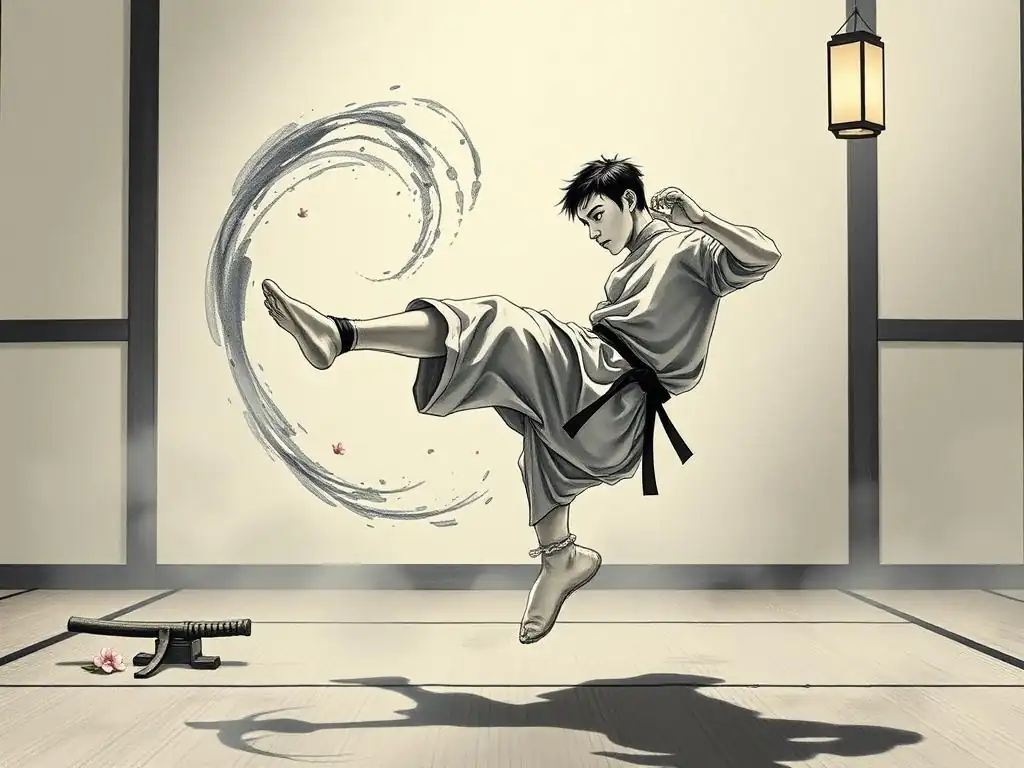
Reaction Drills for Blocking Different Kick Types
Improving reaction speed is paramount for effective Sanda kick defense techniques. Reaction drills often involve a partner throwing various types of kicks (high, mid, low, front kick, side kick) at light to moderate speed and power, with the defender focusing solely on executing the correct block or check. Drills might progress to the partner calling out the kick type just before throwing it, or eventually throwing kicks randomly to test the defender's ability to identify and react instantly.
Pad work can also serve as a reaction drill. The pad holder might throw kicks back at the fighter after they strike the pads, forcing the fighter to immediately transition from offense to defense. Using a kicking shield allows for more power to be absorbed during blocking practice. These drills build the fundamental reflexes needed to implement Sanda kick defense techniques effectively under pressure.
Counter-Attack Drills Following a Successful Block
Once basic reaction is established, drills must incorporate the counter-attack phase. These drills focus on the transition from defense to offense. A partner throws a specific kick (e.g., a mid-level roundhouse), the defender blocks it with the forearm, and immediately follows with a designated counter-attack (e.g., a two-punch combination). The drill repeats, emphasizing speed and fluidity in the transition.
Variations include drilling against different kicks and practicing different counter-attacks. For example, checking a low kick might be followed by a cross, a low kick to the opponent's other leg, or even a quick takedown attempt setup. These drills solidify the concept that Sanda kick defense techniques are not ends in themselves but are means to create scoring opportunities.
Sparring Drills Focusing on Kick Defense and Offensive Transitions
Integrating Sanda kick defense techniques into live practice is crucial. Specific sparring drills can isolate and enhance this skill. For instance, "kick-only" sparring allows fighters to focus purely on defending and countering kicks without the added complexity of hand strikes (though often light hand counters after a defense are allowed). Another drill involves one partner focusing heavily on throwing kicks, while the other focuses on defense and immediate counters.
Controlled sparring rounds with a specific focus, such as "defense-first" rounds where fighters are encouraged to prioritize blocking, checking, and evading before countering, help build good defensive habits. These drills, performed with appropriate protective gear and intensity, allow fighters to test their Sanda kick defense techniques against resisting opponents and refine their timing and distance management in a realistic setting.
Specific Kick Defense Scenarios and Solutions
Defending Against the Spinning Back Kick
The spinning back kick is a powerful, potentially fight-ending technique that requires specific Sanda kick defense techniques. Due to its circular and linear trajectory and significant force, stepping back completely out of range is often the safest defense. Reading the opponent's setup – the initial turn and chambering – is key to predicting this kick.
If stepping back isn't possible, blocking with a high forearm guard and turning slightly to absorb the impact with the shoulder can mitigate damage, though this is risky against a powerful kick. An advanced and risky Sanda kick defense technique is to step into the kick as the opponent spins, aiming to jam the technique before it fully extends. This requires precise timing and distance judgment and can result in being hit hard if mistimed.
Countering the Side Kick Effectively
The side kick is a linear, pushing kick often used to maintain distance or score points to the body or leg. Effective Sanda kick defense techniques against the side kick include stepping laterally off the line of the kick. Since the kick travels straight, moving to the side takes you out of its path and often creates an angle for a counter-attack, such as a hook or a lateral kick of your own.
Parrying the side kick with a hand can also be effective, pushing the extended leg off target. Blocking with a forearm to the body or a shin check to the leg are also options, similar to defending other kicks, but evasion is often preferred due to the linear nature of the side kick making lateral movement highly effective as a Sanda kick defense technique.
Neutralizing the Roundhouse Kick in Sanda
The roundhouse kick, thrown to the head, body, or legs, is arguably the most common and versatile kick in Sanda. Neutralizing it requires a range of Sanda kick defense techniques depending on the target height and the fighter's position. For high roundhouses, the high guard and shoulder roll are essential. For body roundhouses, the forearm/elbow block and body evasion are key. For low roundhouses, the shin check is primary, alongside stepping out of range.
An advanced Sanda kick defense technique against the roundhouse is stepping inside the arc of the kick to get into clinch range before the kick lands with full power. This is a high-risk, high-reward maneuver often used by fighters looking to transition to throws. Given the prevalence of the roundhouse, mastering multiple Sanda kick defense techniques against it is vital for competitive success.
Conditioning and Footwork for Enhanced Kick Defense
Strengthening Leg Muscles for Checking Kicks
Effective leg checking, a core Sanda kick defense technique, requires strong, conditioned legs. Exercises like squats, lunges, and calf raises build general leg strength and endurance. Plyometric exercises such as box jumps and jump squats improve explosive power, which helps in quickly lifting and positioning the leg for a check.
Specific conditioning for the shins themselves, while controversial, is sometimes practiced through light tapping or rolling a bottle along the shin bone to increase bone density and pain tolerance. However, this should be done with caution and under expert guidance. Stronger leg muscles not only make checks more effective but also improve balance when defending, preventing sweeps or being knocked over after absorbing an impact.
Improving Agility and Footwork for Evasion
Agility and nimble footwork are crucial for effective evasion, a key component of Sanda kick defense techniques. Drills like ladder drills, cone drills, and agility grid exercises improve foot speed, coordination, and ability to change direction quickly. Jump rope is excellent for developing light, quick footwork and stamina.
Shadow boxing with a strong focus on movement – practicing stepping, circling, and creating angles while visualizing incoming kicks – helps integrate footwork directly into defensive practice. Improving agility allows a fighter to react faster, cover distance more efficiently, and position themselves optimally to avoid or counter incoming kicks.
Developing Core Stability for Balance and Control
A strong core is essential for maintaining balance when executing Sanda kick defense techniques, whether blocking, checking, evading, or transitioning to counters or throws. Exercises like planks (front and side), crunches, leg raises, and Russian twists build core strength and stability. Medicine ball twists and throws improve rotational power, useful for generating force in counters and absorbing impact.
Good core stability prevents a fighter from being easily knocked off balance by the force of an incoming kick, especially when checking or blocking. It also provides a solid base for launching powerful counter-attacks immediately after a defensive action, ensuring that the Sanda kick defense techniques flow smoothly into offense.
Common Mistakes in Sanda Kick Defense and How to Avoid Them
Over-Reliance on Blocking Without Countering
A frequent error in Sanda kick defense techniques is passively blocking kicks without immediately following up with an offensive action. While blocking prevents the opponent from scoring with that specific kick, it doesn't score points itself and allows the opponent to reset and attack again. This leads to the defender being pressured and potentially overwhelmed.
To avoid this, fighters must drill the transition from defense to offense relentlessly. Every block or check should be viewed as an opportunity. Even a simple jab or a light low kick immediately after defending can deter the opponent's kicking frequency and potentially score points. The mindset should be active defense, always looking to counter.
Poor Footwork and Positioning Leading to Vulnerability
Standing flat-footed, crossing feet, or being backed into the ropes or corner are critical footwork mistakes that severely compromise Sanda kick defense techniques. Poor positioning limits mobility, making evasion difficult and blocks less effective as the fighter cannot shift weight or angle correctly. Being cornered makes it easy for the opponent to land kicks from multiple angles.
Maintaining a balanced stance, keeping feet ready to move, and actively managing distance and ring position are vital. Drills focusing on lateral movement, circling, and stepping off-line help build good footwork habits. Fighters should constantly be aware of their position in the ring to avoid being trapped.
Lack of Conditioning and Stamina Affecting Defense
Sanda bouts require high levels of stamina, and fatigue significantly degrades a fighter's ability to execute Sanda kick defense techniques effectively. Tired legs are slower to check or evade, tired arms are weaker in blocks, and overall reaction time decreases. This leads to being hit more often and less effectively countering.
Comprehensive sport-specific conditioning is necessary to maintain defensive integrity throughout all rounds of a fight. This includes cardiovascular training, strength training focused on explosive power and endurance, and drilling defensive techniques while fatigued. Simulating fight conditions in training ensures that Sanda kick defense techniques hold up under competitive pressure.
Legal Considerations and Fair Play in Sanda Kick Defense
Understanding Fouls and Illegal Techniques
While executing Sanda kick defense techniques, fighters must remain within the rules to avoid fouls. Common fouls related to defense include holding a caught leg for too long (usually defined as more than 2 seconds without attempting a throw or strike), using joint locks or hyper-extending a caught limb, and striking an opponent who is down or in the process of falling.
Committing such fouls can result in warnings, point deductions (typically 1 or 2 points per foul, depending on severity), or even disqualification in extreme cases. Knowing the specific rules regarding defensive actions, particularly concerning leg catches and clinch duration, is essential for any Sanda fighter to ensure their Sanda kick defense techniques are not only effective but also legal.
Maintaining Sportsmanship and Respect for the Opponent
Sanda, like other martial arts, emphasizes martial virtue (Wu De). While competitive, Sanda kick defense techniques should always be performed with respect for the opponent and within the spirit of fair play. This means avoiding intentional fouls designed to injure, refraining from showboating after a successful defense or counter, and adhering to the referee's commands at all times.
Bowing to the opponent and referee before and after the match is a traditional sign of respect that should be upheld. Demonstrating good sportsmanship, even in the heat of competition while executing Sanda kick defense techniques, is part of the martial arts ethos and is expected in Sanda.
Integrating Clinch Work with Kick Defense in Sanda
Closing the Distance After a Block
Sanda's unique blend of striking and throwing means that effective Sanda kick defense techniques can often transition directly into clinch work. Blocking or checking a kick frequently brings fighters into close proximity. Instead of just backing away after defending, a fighter can seize this moment to close the remaining distance and initiate the clinch phase.
This involves stepping in immediately after the defensive action, establishing grips, and securing control of the opponent's upper body. This rapid transition from defense to clinch prevents the opponent from resetting their distance and striking again, forcing them into a grappling exchange where the defender now has the initiative.
Utilizing Clinch Techniques to Control the Opponent After a Kick
Once in the clinch following a successful Sanda kick defense technique, a fighter can employ Sanda's extensive array of throwing and takedown techniques. Controlling the opponent's posture, off-balancing them, and executing a throw can score significant points (often 3 points for a clean throw off the platform) or even end the match if the opponent lands outside the platform.
Short strikes like knees or elbows may also be legal within the clinch depending on the specific ruleset, offering further offensive options before the referee typically breaks the clinch if no throw is attempted within a few seconds. Integrating clinch entries and techniques into Sanda kick defense techniques adds a powerful layer to a fighter's overall strategy.
Developing a Personalized Sanda Kick Defense System
Identifying Your Strengths and Weaknesses
Developing a personalized system for Sanda kick defense techniques begins with a honest assessment of your own abilities and tendencies, as well as those of your opponents. Do you have naturally fast reflexes, making evasion a strong option? Or are your legs exceptionally conditioned, making checking a primary defense? Are you vulnerable to low kicks but excel at blocking high kicks?
Getting feedback from experienced coaches and training partners is invaluable in identifying these strengths and weaknesses. Reviewing sparring and fight footage can also provide objective insights. This self-awareness allows you to focus your training on shoring up weaknesses while building upon your natural Sanda kick defense techniques strengths.
Tailoring Your Defense to Your Fighting Style
Your personalized Sanda kick defense techniques should complement your overall fighting style. If you are primarily an out-fighter who relies on distance and striking, your defense might lean more towards evasion and stepping out of range, using footwork to maintain distance and counter from the outside.
Conversely, if you are an in-fighter who prefers to work at close range and utilize throws, your Sanda kick defense techniques might prioritize checking low kicks and using blocks/catches as entries into the clinch. There is no single "best" defense; the most effective defense is one that integrates seamlessly with your offensive game plan.
Continuously Adapting and Improving Your Skills
Mastering Sanda kick defense techniques is an ongoing process. Opponents evolve, new techniques emerge, and your own physical capabilities change. Therefore, continuously adapting and improving your defensive skills is essential. This involves regularly drilling fundamental and advanced techniques, seeking out new training methods, and analyzing the Sanda kick defense techniques employed by high-level competitors.
Sparring against a variety of partners with different kicking styles helps you adapt to diverse attacks. Analyzing your own performance after training and competition, and being willing to modify your approach based on what works and what doesn't, ensures that your Sanda kick defense techniques remain sharp and effective over time.
Conclusion: Mastering Sanda Kick Defense for Competitive Success
Effective Sanda kick defense techniques are indispensable for any fighter aiming for competitive success. They involve a blend of fundamental strategies like blocking, checking, and evasion, coupled with advanced methods such as interception, sophisticated footwork, and seamless transitions into counter-attacks or clinch work. Understanding the rules governing defensive actions is crucial to avoid penalties.
Developing sharp reactions through dedicated drills, building physical conditioning (especially leg strength and core stability), and learning from common mistakes are all vital components. Ultimately, the most effective Sanda kick defense techniques are those that are personalized to the fighter's strengths, integrated with their overall fighting style, and continuously refined through dedicated practice and analysis. Mastering these defensive skills not only prevents the opponent from scoring but actively creates opportunities to win the fight.
Frequently Asked Questions
What is Sanda and why is kick defense important?
Sanda is a Chinese full-contact combat sport that incorporates striking, grappling, and throws. Effective kick defense is crucial in Sanda because kicks are a powerful and commonly used offensive weapon.
What are some basic principles of Sanda kick defense?
Key principles include maintaining a strong stance, utilizing proper footwork for evasion, and employing effective blocking techniques to minimize impact.
What are some specific techniques for defending against kicks in Sanda?
Common techniques include checking the kick with your shin, sweeping the opponent's supporting leg, and using intercepting strikes to disrupt their balance.
How does the Sanda rule set impact kick defense strategies?
The rules allow for leg kicks, body kicks, and head kicks, meaning defensive techniques need to address all three. Also, throws and takedowns following a kick defense can be very effective.
What drills can I use to improve my Sanda kick defense?
Drills should focus on reaction time and footwork, such as partner drills for blocking and countering kicks, and sparring with a focus on defensive techniques.
Final Reflection: Mastering the Art of Evasive Action
The techniques and drills explored in this article highlight not just the practicalities of Sanda kick defense, but also the deeper principles of adaptability and strategic thinking that are crucial in any combative situation. The ability to effectively counter kicks is more than just a physical skill; it's a testament to one's mental fortitude and ability to anticipate and react under pressure.
This intricate dance of offense and defense has profoundly shaped the landscape of Sanda, pushing practitioners to constantly refine their techniques and strategies. The relentless pursuit of mastery in kick defense underscores the importance of continuous learning and adaptation, not just in martial arts, but in all aspects of life. The best defense is a good offense, but a well-timed evasion is priceless.
This sentiment perfectly encapsulates the essence of Sanda kick defense, emphasizing the value of strategic avoidance and calculated counterattacks.
Now, consider how these principles of anticipation, adaptation, and strategic thinking can be applied beyond the Sanda ring. How can you cultivate a more proactive and resilient mindset in your own life? Embrace the challenge of mastering your own "evasive action" – not just in the face of physical threats, but also in navigating the complexities of daily life. The lessons learned in the dojo can empower you to face any obstacle with confidence and grace.
Dominate the Ring: Master Your Kick Defense!
Thanks for diving deep into the art of countering kicks in Sanda! We hope you’ve gained valuable insights to elevate your fighting prowess. Now, let’s put that knowledge into action and refine your defensive skills.
Here's how to continue your journey:
- Prioritize perfecting the "Catch and Counter" drill focusing on timing and precision with a training partner this week.
- Explore variations of the defensive techniques in sparring, adapting to different kicking styles and angles.
- Share your newfound knowledge! Teach a fellow martial artist one technique you learned from this article.
What's the first kick defense technique you're eager to test out in your next training session?