
The "Crushing Bridge" Concept in Southern Mantis CloseRange Applications

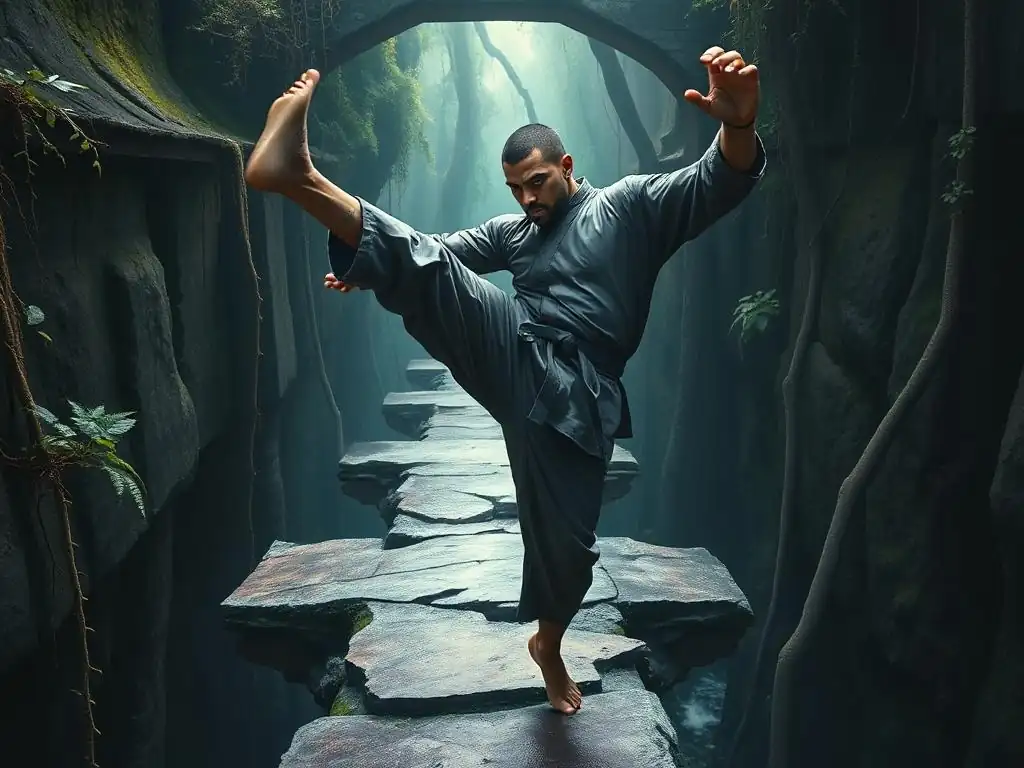
Welcome to Martial Arts Mastery, your gateway to unlocking the secrets of combat traditions worldwide. Delve into the rich history, nuanced techniques, and profound philosophies that shape the martial arts landscape. Today, we explore the fascinating "Crushing Bridge" concept in Southern Mantis close range applications. But what exactly makes this close-quarters strategy so devastatingly effective? Prepare to uncover the intricate details of this unique approach and discover how it can be applied in practical self-defense scenarios. Read on to master the art of close-range combat.
- Understanding the Crushing Bridge (Chun Kiu) in Southern Praying Mantis Kung Fu
- Southern Mantis Close Range: The Ideal Environment for Chun Kiu
- Practical Applications of the Crushing Bridge in Southern Mantis
- Integrating the Crushing Bridge into Your Southern Mantis Arsenal
- Advanced Concepts and Variations of the Crushing Bridge
- Southern Mantis Close-Range Combat: Mastering the Art of the Crushing Bridge
- The Legacy and Evolution of the "Crushing Bridge" in Southern Praying Mantis
-
Frequently Asked Questions
- What is the "Crushing Bridge" concept in Southern Mantis?
- How does the "Crushing Bridge" help in Southern Mantis close range combat?
- Why is close range combat important in Southern Mantis?
- What are some practical applications of the "Crushing Bridge" in self-defense scenarios?
- How does Southern Mantis differ from other martial arts in its approach to close range?
- Final Reflection: Embracing the Crushing Bridge in Close Combat
- Unleash Your Inner Mantis: Take Control Now!
Understanding the Crushing Bridge (Chun Kiu) in Southern Praying Mantis Kung Fu
Defining the Crushing Bridge: Core Principle of Southern Mantis
The "Crushing Bridge," known as Chun Kiu in Southern Praying Mantis (SPM) Kung Fu, is far more than just a simple point of contact between forearms. It embodies a fundamental strategic principle for engaging an opponent, particularly within the critical zone of Southern Mantis close range. At its core, Chun Kiu involves using the forearms and body structure to establish a connection with the opponent's limbs, exerting constant, directed pressure, and controlling the engagement while simultaneously creating opportunities for devastating short-range strikes.
This concept emphasizes rootedness, unified body power (likened to a single, forceful wave), and relentless forward intent. It's about maintaining a solid, yet adaptable, structural connection that allows the practitioner to feel the opponent's energy, intentions, and structure, while simultaneously disrupting their balance and posture. Unlike passive blocking, Chun Kiu is an active, aggressive tool for dominating the close-range exchange, making it indispensable for effective Southern Mantis close range combat.
The Role of Chun Kiu in Close Quarters Combat
In the tight confines of Southern Mantis close range, where techniques must be economical and explosive, the Crushing Bridge serves as the primary mechanism for control and power generation. As opponents close the distance, the ability to instantly establish and maintain a strong Chun Kiu connection dictates the flow of the fight. This connection allows the SPM practitioner to neutralize incoming attacks by absorbing, redirecting, or crushing through them, rather than simply meeting force with equal force.
Furthermore, Chun Kiu provides the stable platform from which the powerful, short-range techniques characteristic of Southern Mantis are launched. Techniques like phoenix eye fist strikes, palm strikes, elbow strikes, and various trapping methods all rely on the leverage and control gained through a solid bridge. It's the conduit that transfers the rooted power of the body into the limbs, enabling maximum impact within the limited space of Southern Mantis close range engagements.
How the Crushing Bridge Differs From Other Mantis Principles
While other praying mantis styles, including Northern variants, utilize bridge concepts (Kiu Sao), the "Crushing Bridge" in Southern Mantis carries a distinct emphasis rooted in its close-range focus. Northern Mantis styles often employ longer-range techniques and more expansive movements, utilizing their bridges for different purposes like connecting for follow-ups from a distance or controlling a withdrawing opponent.
In contrast, Southern Mantis Chun Kiu is specifically designed for the immediate, intense pressure found at phone-booth range. The "crushing" aspect highlights the active, disruptive force applied through the bridge – it's not just about making contact, but about applying structural pressure to collapse the opponent's guard, break their balance, and create openings within the close-range exchange. This relentless forward drive and structural integrity distinguish the Southern Mantis approach to bridging from styles less focused on this extreme close proximity.
Southern Mantis Close Range: The Ideal Environment for Chun Kiu
Why Close Proximity Enhances the Crushing Bridge Technique
Southern Mantis close range is the natural habitat for the Crushing Bridge concept. At this distance, traditional long-range strikes lose much of their power and effectiveness, while large, winding movements become liabilities. Chun Kiu thrives here because it leverages the inherent strengths of a compact structure and unified body power. The shorter distance allows for instantaneous connection and application of pressure, minimizing the opponent's reaction time.
Moreover, close proximity facilitates the transfer of power generated from the ground up through a rooted stance and into the bridge. Within inches, the practitioner can exert significant force by simply adjusting body weight and applying structural pressure through the forearms. This efficiency of movement and power generation is paramount in the tight, explosive exchanges characteristic of Southern Mantis close range combat.
Adapting the Crushing Bridge to Confined Spaces
The very nature of the Crushing Bridge makes it inherently adaptable to confined spaces. Unlike techniques requiring significant limb extension or large stances, Chun Kiu operates effectively within a small radius. The forearms become the primary tools for control and engagement, working within the practitioner's immediate personal space.
In situations like a crowded street, a narrow hallway, or even a grapple, the compact structure and focused pressure of Chun Kiu remain viable. The ability to generate power and disrupt an opponent's structure using minimal movement is crucial when space is limited. This adaptability ensures that the core principles of Southern Mantis close range remain effective even in challenging environments.
Maximizing Power Generation at Close Range with Chun Kiu
Maximizing power at Southern Mantis close range relies heavily on the efficient transfer of force via the Crushing Bridge. This is achieved not through muscular strength alone, but through proper body mechanics: rooting, maintaining a strong, unified structure from the ground through the core and into the bridging arm, and applying focused intent.
By establishing a solid Chun Kiu connection, the practitioner can utilize their entire body weight and structure to drive through the opponent's guard or limb. This allows for the delivery of explosive, short-impact strikes like palm heels or short uppercuts that require minimal wind-up but generate significant force due to the leveraged connection provided by the bridge. It's about applying 'short power' through a stable, connected structure, a hallmark of effective Southern Mantis close range technique.
Practical Applications of the Crushing Bridge in Southern Mantis
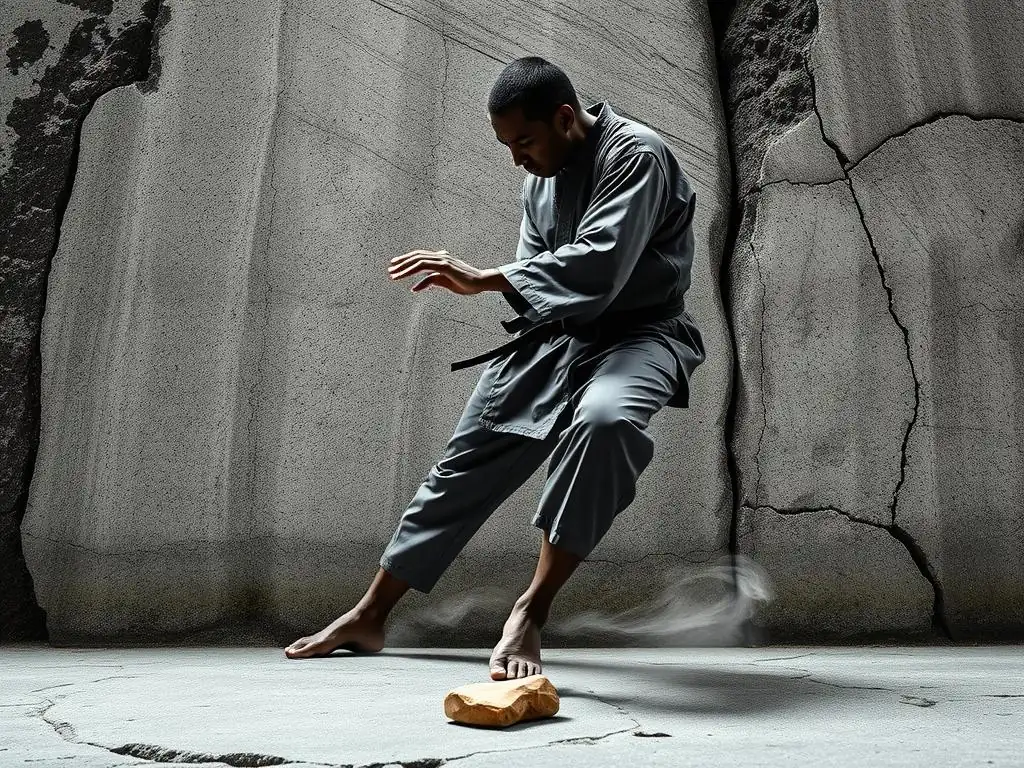
Executing the Crushing Bridge: A Step-by-Step Breakdown
Executing the Crushing Bridge effectively in Southern Mantis close range involves several key steps, often happening in rapid succession. First, establish contact with the opponent's limb, typically the forearm or wrist, as they attempt to strike or engage. This contact should be firm but sensitive, allowing you to feel their energy and direction.
Second, immediately apply forward pressure and maintain a strong, rooted structure from your stance up through your body and into the bridge. This isn't just pushing; it's applying directional force through a unified structure. Third, use this pressure to disrupt the opponent's balance or guard. As their structure is compromised, transition instantly from the bridge connection to a devastating short-range strike, leveraging the control and leverage gained through the Chun Kiu.
Common Mistakes to Avoid When Using the Crushing Bridge
Several common errors can diminish the effectiveness of Chun Kiu in Southern Mantis close range. One primary mistake is failing to maintain proper rooting and structure; if the body is not unified, the bridge becomes weak and easily collapsed. Another error is relying solely on muscular strength instead of structural integrity and body weight. Trying to push the opponent over with arm strength alone will exhaust the practitioner and is less effective than applying unified body pressure.
A third common mistake is lacking sufficient forward intent or aggression. The Crushing Bridge is an active, offensive principle, even when used defensively. Hesitation or a purely reactive approach will prevent the practitioner from dominating the close-range exchange. Finally, failing to transition quickly from the bridge to a strike means missing the opportunity created by disrupting the opponent's structure.
Drills and Exercises to Improve Your Crushing Bridge Technique
Improving Chun Kiu requires consistent partner drills focusing on sensitivity, structure, and pressure application.
- Single Arm Push Drill: Partners stand facing each other, forearms touching. One applies gentle, consistent forward pressure while the other maintains structure and rooting, resisting without moving their feet. Focus is on feeling the connection and maintaining body unity.
- Double Arm "Sticky Hands" (Modified Chi Sau): Similar to Wing Chun's Chi Sau but adapted for SPM principles. Partners keep forearms in contact, constantly sensing each other's movements while maintaining light pressure and structure. The goal is to feel openings and apply slight pressure variations.
- Bridge-to-Strike Drill: One partner feeds a simple attack (e.g., a straight punch). The other uses Chun Kiu to meet, control, and immediately transition into a predefined short-range strike (e.g., palm heel to the chest). Focus on the seamless transition.
- Pressure Testing: Partners apply varying degrees of pressure through the bridge connection, testing each other's structure and rooting. This helps identify weak points in posture or body unity.
These drills, practiced regularly, build the tactile sensitivity, structural integrity, and reflexive application necessary for effective Chun Kiu in Southern Mantis close range combat.
Integrating the Crushing Bridge into Your Southern Mantis Arsenal
Combining Chun Kiu with Other Southern Mantis Techniques
The Crushing Bridge is not an isolated technique but a foundational principle that integrates seamlessly with virtually every other technique in the Southern Mantis close-range arsenal. It acts as the setup, the control mechanism, and the transition point. For example, after establishing a strong Chun Kiu connection and feeling the opponent's limb structure, a practitioner might immediately transition into a trapping sequence (e.g., using Pak Sao or Lop Sao) to further control the limb before striking.
Alternatively, the pressure from the bridge can directly lead into specific strikes. A downward crushing bridge might expose the opponent's head for a phoenix eye strike, while inward pressure could create an opening for a devastating palm heel strike to the chest. The efficiency of Southern Mantis close range lies in this fluid, rapid transition from control via the bridge to explosive power delivery.
Using the Crushing Bridge for Offensive and Defensive Purposes
While the term "crushing" implies an offensive action, Chun Kiu is equally vital for both offensive and defensive applications within Southern Mantis close range. Offensively, it's used to aggressively enter an opponent's space, establish control, and break their structure to create striking opportunities. It's the driving force behind advancing into the opponent's guard.
Defensively, Chun Kiu is used to meet incoming force with structural integrity, absorbing and redirecting the energy while simultaneously disrupting the attack at its source. Instead of moving away from an incoming strike at close range, the SPM practitioner uses the bridge to meet it, control it, and instantly turn the defensive action into an offensive counter. This dual nature makes Chun Kiu a versatile and indispensable tool in any Southern Mantis close range encounter.
Using Chun Kiu to Intercept and Redirect a Jab
A classic example of Chun Kiu application in Southern Mantis close range is using it to intercept and redirect an incoming jab. As the opponent extends their lead hand, the SPM practitioner meets the incoming forearm or wrist with their own bridging arm (often using a forearm or a specific hand shape like a 'sticky hand' or 'hook hand' variation). The key is to meet the force slightly off-center and apply simultaneous forward and slightly angled pressure through the bridge.
This action doesn't just block the jab; it crushes through its structure, disrupting the opponent's line of force and balance. By applying pressure and potentially a slight twist or redirection through the Chun Kiu connection, the practitioner controls the opponent's lead arm, preventing follow-up techniques and creating an immediate opening for a counter-strike with their other hand or body. This demonstrates the principle of turning an opponent's attack into your own advantage at Southern Mantis close range.
Utilizing Chun Kiu to Break an Opponent's Balance During a Clinch
In a clinch situation, which is inherently Southern Mantis close range, Chun Kiu is invaluable for disrupting an opponent's balance and posture. When grappling or tied up at close quarters, the practitioner can use their forearms to establish Chun Kiu connections on the opponent's limbs, shoulders, or even neck area (depending on the specific clinch). By applying directed pressure through these points while maintaining a strong, rooted stance, the practitioner can subtly or overtly break the opponent's structure.
For instance, applying downward or inward pressure through a Chun Kiu connection on the opponent's bicep or shoulder can force them to lean or shift their weight, compromising their base. Once their balance is disturbed, even slightly, they are vulnerable to throws, takedowns, or short-range strikes. This application highlights how Chun Kiu extends beyond just striking range and is crucial for control and leverage in the tightest forms of Southern Mantis close range engagement.
Advanced Concepts and Variations of the Crushing Bridge
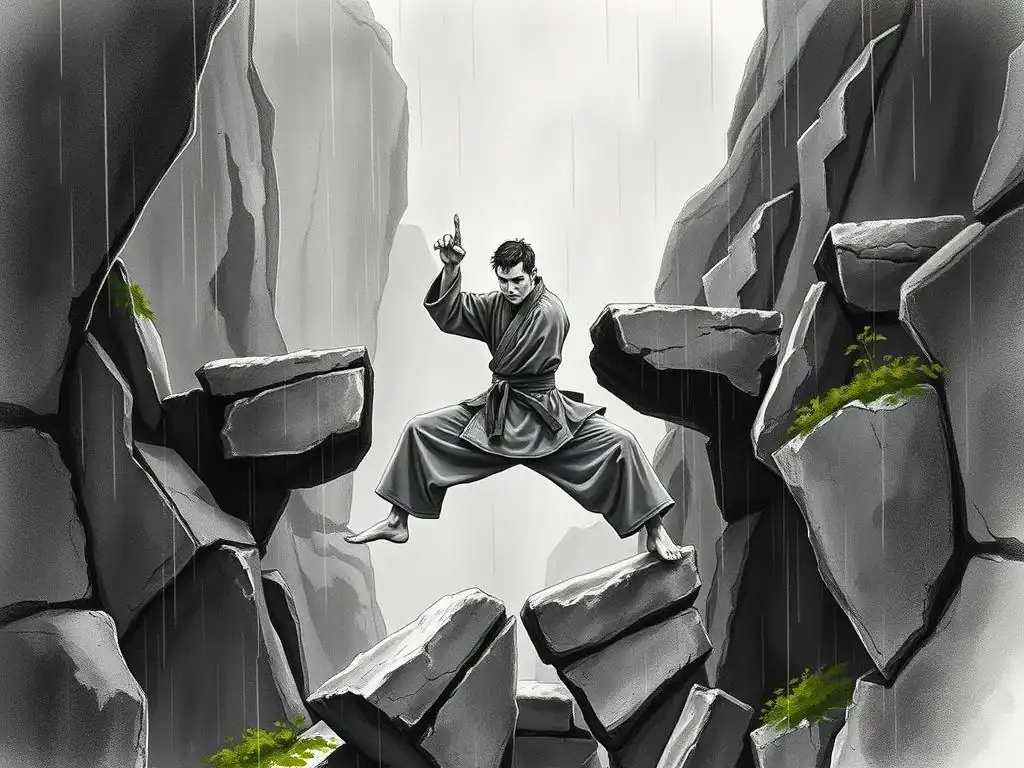
Exploring Different Hand Positions and Footwork
As practitioners advance in Southern Mantis close range training, they explore variations in the Crushing Bridge. The primary contact point might shift from the forearm to the wrist, elbow, or even shoulder, depending on the distance and angle. Hand positions used in conjunction with the bridge also vary; while a firm forearm is common, methods like the phoenix eye fist, palm heel, or even open hand shapes can be used to initiate or reinforce the bridge connection, transitioning instantly into a strike.
Footwork plays a critical role in supporting Chun Kiu. While a solid, rooted stance is fundamental, advanced practitioners learn to use subtle footwork adjustments (like stepping slightly offline, shifting weight, or taking small advancing steps) while maintaining the bridge connection. This allows them to follow the opponent's movement, maintain pressure, and position themselves optimally for strikes, all within the tight confines of Southern Mantis close range.
Adapting the Crushing Bridge to Different Body Types and Fighting Styles
Effective Chun Kiu application requires adaptation based on the opponent's body type and fighting style. Against a larger, stronger opponent, relying purely on brute pressure through the bridge is inefficient. Instead, the focus shifts to using their mass and momentum against them, employing sensitivity to feel their structure and redirecting their force using leveraged angles and subtle movements through the bridge.
Against a faster, lighter opponent, the emphasis might be on quicker, more reflexive Chun Kiu reactions to intercept their rapid attacks and prevent them from escaping the Southern Mantis close range. Adapting involves recognizing the opponent's strengths and weaknesses and modifying the pressure, angle, and transition speed of the Crushing Bridge accordingly, ensuring the principle remains effective regardless of the opponent.
The Mental Aspects of the Crushing Bridge: Aggression and Intent
Beyond the physical mechanics, the mental aspect of Chun Kiu is paramount in Southern Mantis close range. The concept embodies a relentless forward intent and a degree of controlled aggression. It's not just about making contact; it's about imposing your will through structural pressure. This requires confidence, decisiveness, and a willingness to engage intensely at close quarters.
The practitioner must develop a mindset that is calm yet alert, sensitive yet powerful. They must trust their structure and their ability to feel the opponent through the bridge connection. This mental fortitude allows them to maintain pressure even under duress, to transition instantly from sensing to acting, and to embody the aggressive spirit necessary to dominate the Southern Mantis close range fight.
Southern Mantis Close-Range Combat: Mastering the Art of the Crushing Bridge
The Importance of Sparring and Live Training
Mastering the Crushing Bridge, like any martial arts concept, requires extensive sparring and live training. While solo drills and static partner exercises build fundamental structure and sensitivity, only realistic, dynamic pressure can forge true proficiency in Southern Mantis close range. Sparring allows practitioners to test their Chun Kiu against unpredictable resistance, varying speeds, and different body types.
Live training scenarios, even light contact, reveal whether the practitioner can maintain structure, apply pressure, and transition effectively under the stress of an actual exchange. It highlights weaknesses in rooting, timing issues in transitions, and the ability to adapt the bridge in real-time. Without this vital component, the theoretical understanding of Chun Kiu remains incomplete, hindering mastery of Southern Mantis close range combat.
Developing Sensitivity and Reflexes for Effective Chun Kiu Application
Sensitivity and reflexes are the nervous system of effective Chun Kiu in Southern Mantis close range. Sensitivity, developed through drills like sticky hands and pressure testing, is the ability to feel the opponent's intention, force, and structure through the physical connection of the bridge. This allows for instantaneous recognition of openings or impending attacks.
Reflexes enable the practitioner to react instinctively based on this sensitivity. Instead of consciously deciding what to do, the body reacts automatically, adjusting pressure, transitioning to a strike, or adapting the bridge position based on the tactile information received. Cultivating this high level of sensitivity and these trained reflexes is essential for the split-second timing required to effectively utilize the Crushing Bridge in the dynamic environment of Southern Mantis close range encounters.
Continuing Your Journey in Southern Mantis Close-Range Mastery
Mastery of the Crushing Bridge and Southern Mantis close range combat is a continuous journey, not a destination. It requires ongoing practice, refinement, and dedicated training. Practitioners must constantly seek to deepen their understanding of body mechanics, enhance their sensitivity, sharpen their reflexes, and integrate Chun Kiu more fluidly into their overall martial strategy.
This journey involves revisiting foundational drills, exploring advanced applications, training with different partners, and applying the principles in increasingly realistic scenarios. The depth of the Crushing Bridge concept in Southern Praying Mantis offers a lifetime of study and refinement, promising greater efficiency, power, and control within the demanding world of Southern Mantis close range.
The Legacy and Evolution of the "Crushing Bridge" in Southern Praying Mantis
Historical Roots of Chun Kiu in Southern Mantis Lineages
The concept of the "Crushing Bridge" (Chun Kiu) is a fundamental pillar found across the various lineages of Southern Praying Mantis Kung Fu, including prominent branches like Chow Gar (Chow Family) and Kwong Sai Jook Lum (Jiangxi Bamboo Forest). While specific interpretations and applications might vary subtly between lineages, the core principle of using structural connection and pressure to control and dominate at close range remains consistent.
Historical accounts and oral traditions within these lineages emphasize the practical necessity of such a concept in the close-quarters fighting prevalent in Southern China's history. The focus on rootedness, short power, and controlling the immediate space points to origins rooted in pragmatic, effective combat rather than performance.
Masters throughout history, though their exact methods might differ, all relied heavily on a strong Chun Kiu to embody the power and efficacy of Southern Mantis close range fighting. For instance, stories recount masters using their bridges to instantly collapse an opponent's guard or structure with minimal visible effort, demonstrating the leverage gained through this principle.
Modern Interpretations and Applications of the Crushing Bridge
In the modern era, the Crushing Bridge concept in Southern Praying Mantis continues to be taught as a core principle, though its applications are often discussed in the context of self-defense and martial sports rather than historical battlefield combat. Today, practitioners analyze how Chun Kiu principles apply to modern street fighting scenarios, dealing with grappling attempts, or even in cross-training contexts with other martial arts, albeit often requiring adaptation.
While traditional forms and drills remain central to developing the necessary structure and sensitivity, modern interpretations might emphasize the psychological aspect of forward pressure or analyze the biomechanics of power generation through the bridge using contemporary understanding. Seminars and workshops often break down Chun Kiu into its constituent elements, making it accessible to new generations of practitioners interested in the unique efficacy of Southern Mantis close range combat. The principle remains timeless, adapted to contemporary challenges.
The Role of Technology in Modern Chun Kiu Training
While traditional partner drills are irreplaceable for developing the tactile sensitivity essential for Chun Kiu, technology plays a supplementary role in modern Southern Mantis close range training. Video analysis allows practitioners to review their posture, structure, and the application of pressure during drills and sparring, identifying subtle flaws that might be missed in the moment. Slow-motion playback can help visualize the precise timing and mechanics of the transition from bridge control to strike.
Some schools or individual practitioners might experiment with simple force sensors or pressure mats to gain objective data on the amount and direction of force being applied through the bridge connection during specific exercises, providing quantifiable feedback. While these technological aids cannot replace the feel and intuition gained through hands-on practice, they can offer valuable insights and accelerate the learning process for students striving to master the complex dynamics of the Crushing Bridge in Southern Mantis close range.
Frequently Asked Questions
What is the "Crushing Bridge" concept in Southern Mantis?
The "Crushing Bridge" (Bong Sau) is a fundamental technique in Southern Mantis. It focuses on deflecting and redirecting an opponent's attack at close range, using the forearm to "crush" their attacking limb and disrupt their structure. It creates an opening for a counter-attack.
How does the "Crushing Bridge" help in Southern Mantis close range combat?
It allows practitioners to gain control of the centerline. By controlling the opponent's arm, you disrupt their balance and create an advantage for striking and grappling at close quarters. This facilitates the execution of devastating close-range techniques.
Why is close range combat important in Southern Mantis?
Southern Mantis is designed for fighting in tight spaces. The system emphasizes efficient movements and powerful techniques that are most effective when distance is minimized, making close range proficiency crucial for its effectiveness.
What are some practical applications of the "Crushing Bridge" in self-defense scenarios?
The "Crushing Bridge" can be used to defend against punches, grabs, and even knife attacks. By quickly redirecting the force of the attack, it allows you to create space and deliver a counter-strike before the opponent can recover.
How does Southern Mantis differ from other martial arts in its approach to close range?
Unlike some martial arts that prioritize maintaining distance, Southern Mantis actively seeks to close the gap. The emphasis is on immediate control and overwhelming force once in close range, using techniques like the "Crushing Bridge" to dominate the engagement.
Final Reflection: Embracing the Crushing Bridge in Close Combat
The principles of Southern Mantis, particularly the "Crushing Bridge" concept, remain profoundly relevant in modern close-quarters combat scenarios. While technology evolves and fighting styles adapt, the core tenets of structure, power generation, and decisive engagement, as embodied by this technique, offer a timeless framework for effective self-defense and martial arts mastery.
The enduring influence of Southern Mantis is undeniable, shaping not only martial arts practice but also influencing our understanding of leverage, force application, and strategic thinking in various fields. My own exploration of this art has instilled a deep appreciation for its efficiency and adaptability. The best fighter is never angry,
as Bruce Lee famously said, and the Crushing Bridge exemplifies this calm precision, channeling energy with focused intent rather than relying on brute force.
Now, consider how you can apply the "Crushing Bridge" beyond the dojo. Reflect on the principles of structure, leverage, and decisive action in your own life. How can you build a stronger foundation, find the right fulcrum, and act with unwavering purpose to overcome obstacles and achieve your goals? The lessons of Southern Mantis, and the "Crushing Bridge" in particular, offer a pathway to empowerment, both in combat and in life.
Unleash Your Inner Mantis: Take Control Now!
Thank you for exploring the crushing bridge concept with us! We hope you've gained valuable insights into its close-range applications within Southern Mantis. Now, let's translate that knowledge into action and elevate your skills.
Here's how you can continue your journey:
- Commit to mastering the core stance and bridge hand techniques described. Practice diligently for 15 minutes daily to build a solid foundation.
- Explore partner drills, focusing on controlled pressure and sensitivity to refine your ability to apply the crushing bridge effectively. Can you adapt it to unexpected angles and movements?
- Consider researching historical texts or seeking guidance from experienced Southern Mantis practitioners to deepen your understanding of the strategy and its nuances.
What specific drill will you implement this week to bring the "crushing bridge" to life in your training?