
Escaping a Broken Guard: How to ReGuard Effectively in BJJ

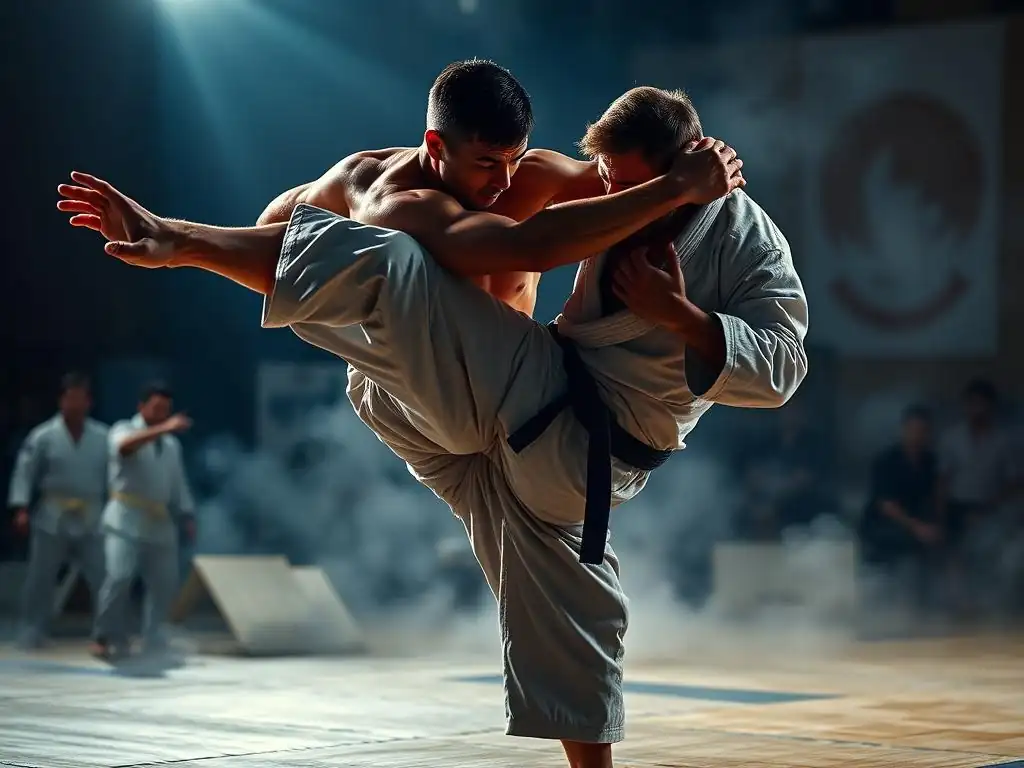
Welcome to Martial Arts Mastery, your ultimate resource for exploring the diverse world of combat arts. Delve into the intricacies of Brazilian Jiu-Jitsu and unlock the secrets of regaining control. Feeling trapped in a broken guard? This comprehensive BJJ reguard techniques tutorial offers a step-by-step guide to escaping compromised positions and re-establishing your dominance. Ready to turn defense into offense? Let's begin!
- Introduction to Re-Guarding in Brazilian Jiu-Jitsu
- Identifying a Broken Guard: Recognizing Vulnerable Positions
- Fundamental BJJ Re-Guarding Techniques: A Step-by-Step Tutorial
- Advanced BJJ Re-Guarding Strategies and Concepts
- Drills and Exercises for Improving Your BJJ Re-Guarding Skills
- Troubleshooting Common Re-Guarding Problems
- BJJ Re-Guarding Techniques Tutorial: Key Takeaways for Guard Retention
-
Frequently Asked Questions
- How important is re-guarding in Brazilian Jiu-Jitsu (BJJ)?
- What are some fundamental principles to keep in mind when attempting a BJJ re-guard?
- What are common mistakes people make when trying to re-guard in BJJ?
- How does the history of BJJ inform the re-guarding techniques we use today?
- Where can I find a comprehensive BJJ re-guard techniques tutorial?
- Final Reflection: Reclaiming Control on the Mat
- Reclaim Your Advantage: Dare to Re-Guard Now!
Introduction to Re-Guarding in Brazilian Jiu-Jitsu
The Importance of Effective Re-Guarding in BJJ
In Brazilian Jiu-Jitsu, the guard is often considered one of the most fundamental and powerful positions, allowing practitioners to control distance, initiate attacks, and prevent their opponent from achieving dominant top positions like side control or mount. However, maintaining a perfect guard against a skilled opponent is incredibly challenging. Guard breaks and passes are inevitable parts of the game.
When an opponent successfully compromises your guard structure, moving towards a pass, your ability to re-guard becomes paramount. Effective re-guarding isn't just about survival; it's about preventing your opponent from solidifying a dominant position, conserving energy, and creating opportunities to re-establish control or even launch counter-attacks. A strong BJJ reguard techniques tutorial emphasizes this crucial defensive skill.
The speed and efficiency with which you can transition from a compromised guard position back to a functional one often dictates the outcome of an exchange. Failing to re-guard quickly can lead to being pinned under significant pressure, making attacks difficult and defenses reactive.
Conversely, mastering BJJ reguard techniques allows you to frustrate your opponent's passing attempts, force them to expend more energy, and maintain a dynamic battle where you still have offensive potential. It's a core component of advanced guard play and essential for longevity and success in BJJ, particularly in competitive scenarios where positional control is highly valued.
Understanding Guard Retention vs. Re-Guarding
While often discussed together, guard retention and re-guarding are distinct but related concepts in BJJ. Guard retention refers to the ongoing process of maintaining your guard structure while your opponent is actively trying to break or pass it. This involves constant adjustments, framing, leg pummeling, and controlling grips to prevent the guard from being compromised in the first place. It's a proactive defense aimed at keeping the guard intact from the outset of the passing sequence.
Re-guarding, on the other hand, is the reactive process that occurs after your guard structure has been significantly compromised or broken. It's the act of recovering from a near-passed position, preventing the opponent from fully stabilizing a dominant position (like side control or mount), and fighting to bring your legs back between you and your opponent to re-establish a functional guard. A BJJ reguard techniques tutorial focuses heavily on these recovery methods used when initial retention efforts have failed or been bypassed. Both skills are vital for a well-rounded guard player.
Identifying a Broken Guard: Recognizing Vulnerable Positions
Common Scenarios Leading to a Broken Guard
A broken guard isn't a single static position but rather a state of vulnerability where your primary defensive structure (your legs and arms forming a barrier between you and your opponent) has been bypassed or neutralized. This can happen in numerous ways, often initiated by specific guard breaks or passing attempts. A common scenario involves the opponent achieving significant head and arm control on one side while simultaneously clearing one or both of your legs. For instance, in a closed guard break, if the opponent successfully stands up and breaks your grip, then starts to push one knee through, your closed guard is broken, and you are entering a re-guarding situation.
Another frequent path to a broken guard occurs during open guard exchanges. If your opponent manages to achieve an over-under pass grip, or clears your hooks and establishes cross-face and underhook control on one side (like in a knee cut pass attempt that gets deep), your open guard is effectively broken.
Your legs are no longer effectively screening or controlling the opponent's access to your body, and they are transitioning to a side control or mount entry. Recognizing these specific moments – when your frames are collapsing, your legs are cleared, and your opponent is gaining torso control – is the first step in knowing when to initiate BJJ reguard techniques.
Recognizing the Signs of a Successful Guard Pass
Identifying the specific indicators that an opponent is successfully passing your guard is critical for timely re-guarding. One of the most obvious signs is the opponent achieving significant hip-to-hip connection on your side, or establishing chest-to-chest pressure from a dominant angle. For example, if they complete a knee cut pass and settle into a tight side control, the guard pass is complete, and you are now in a defensive side control scenario, not a re-guarding one (though side control escapes share principles). However, the moment before they fully stabilize, when their hips are close but not yet locked in, or when they are transitioning from clearing your legs to establishing upper body control, is the window for re-guarding.
Key visual and tactile cues include feeling the opponent's weight shifting onto your torso, losing the ability to place your feet or knees effectively on their hips or shoulders, or seeing them establish a strong cross-face or underhook grip. If they have cleared your legs and are driving their shoulder into your chin while securing an underhook, they are very close to passing.
This is the critical point where a BJJ reguard techniques tutorial becomes relevant – you must immediately fight to create space, bring your legs back in, and prevent them from solidifying the pass into a dominant pin. Delaying even a second can make the difference between successfully recovering guard and being stuck under pressure.
Fundamental BJJ Re-Guarding Techniques: A Step-by-Step Tutorial
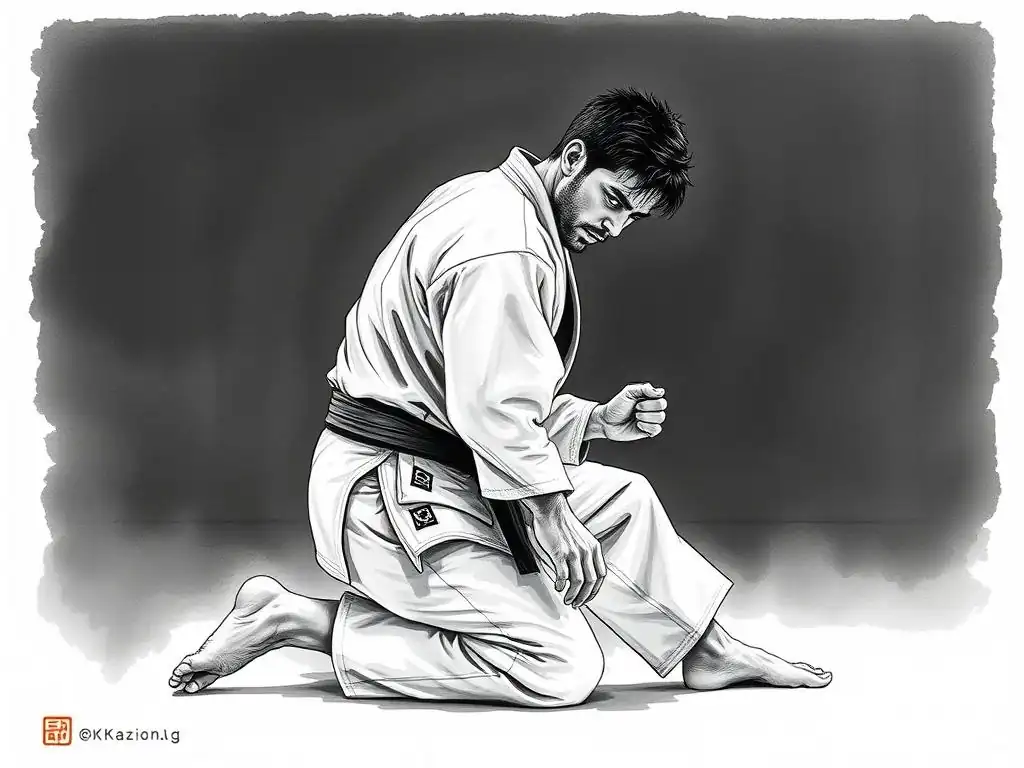
The Hip Escape (Shrimp) Re-Guard: A Foundational Technique
The hip escape, often called shrimping, is arguably the most fundamental movement in Brazilian Jiu-Jitsu and is indispensable for re-guarding. When your guard is broken and your opponent is starting to pass, creating space is the first priority, and the hip escape is the primary tool for this. It allows you to move your hips away from your opponent, creating the necessary distance to insert your legs back between their body and yours. Mastering this motion is essential; without a good shrimp, most other BJJ reguard techniques will be ineffective.
To perform a hip escape for re-guarding, turn onto one side, using your arm and leg on that side as posts to support your weight. Push off the mat with these limbs, lift your hips slightly, and then extend your body, moving your hips away from your opponent while your upper body remains relatively in place. This creates lateral space.
As you shrimp, use your free leg (the one not posting) to either push off the opponent's hip or knee, or to start bringing it back into position to frame or hook. Repeat the motion as needed to create sufficient space to recover your guard. This hip escape is the bedrock of any BJJ reguard techniques tutorial.
Mastering the Hip Escape for Re-Guarding
Mastering the hip escape for re-guarding involves developing fluidity, power, and directional control in the movement. Practice the basic motion repeatedly, both solo and with a partner applying light pressure. Focus on generating maximum hip movement with minimal effort from your upper body. Your supporting arm should be strong, and your posting leg should drive powerfully. The goal is to create a significant amount of space quickly and efficiently.
Beyond the basic movement, mastering the hip escape means understanding when and where to shrimp in a live situation. You need to shrimp in the direction that best facilitates bringing your legs back in, often away from the side your opponent is passing towards. Incorporate hip escapes into warm-ups and specific drills, focusing on linking them with the subsequent steps of inserting frames or hooks. A proficient hip escape allows you to recover guard from surprisingly tight spots, turning a seemingly successful pass into a broken attempt.
Common Mistakes in the Hip Escape and How to Fix Them
Several common errors can hinder the effectiveness of your hip escape for re-guarding. One is using too much upper body strength instead of relying on hip movement and leg drive. This tires you out quickly and generates less space. To fix this, focus on keeping your core engaged and driving primarily with your posting leg while turning your hips. Another mistake is not turning far enough onto your side, which limits the range of motion for your hips. Ensure you are fully turned, supported by your shoulder and posting arm.
A third common error is shrimping in the wrong direction or not creating enough space before attempting to insert your legs. If you don't create sufficient distance, your opponent will simply follow you and maintain pressure. Analyze the opponent's position and direction of pressure, then shrimp away from that pressure, creating a clear line for your legs to re-enter. Practice drills where a partner applies pressure from various angles, forcing you to adapt your hip escape direction. Consistent, mindful practice is key to overcoming these issues in your BJJ reguard techniques.
The Knee Shield Re-Guard: Creating Distance and Control
The knee shield, also known as the Z-guard or knee-and-shield, is an excellent re-guarding option when your opponent has passed your initial leg barrier and is attempting to get chest-to-chest. It involves placing one knee (typically the knee closer to your opponent's head) across their torso or hip, acting as a strong frame and distance-management tool. The other leg often acts as a hook or a secondary frame on their bicep or hip. This position is highly versatile, offering both defensive stability and offensive opportunities.
When re-guarding with the knee shield, the primary goal is to prevent your opponent from closing the distance and establishing chest-to-chest control. The knee shield creates a powerful frame that pushes their weight away. This space allows you time to adjust your position, hip escape further, or transition to a more dominant guard like butterfly or half guard. It's a critical component of many BJJ reguard techniques tutorials because it's effective against a wide range of passing styles, particularly pressure passing.
Establishing the Knee Shield for Effective Re-Guarding
Establishing the knee shield from a broken guard position requires timely action and proper framing. As your opponent passes your legs, before they fully settle, hip escape to create space. As you shrimp, bring the knee closer to their upper body across their midsection or hip. Ensure this knee is pointed towards the ceiling or slightly angled away from them, with the sole of your foot (on that same leg) planted on their hip or even inside their bicep.
Simultaneously, use your arms to frame against their neck and bicep to prevent them from collapsing your knee shield. The other leg can either hook behind their knee (creating half guard variations) or be used as a secondary frame on their hip or shoulder. The key is to use the structure of your leg and arms to create a strong, impenetrable barrier that prevents them from getting close enough to pass completely. This is a fundamental step in many BJJ reguard techniques.
Variations of the Knee Shield Re-Guard
The knee shield position itself offers several variations useful in re-guarding, depending on the opponent's reaction and your goals. The standard knee shield has the top leg's knee across the opponent's midsection. A common variation involves transitioning to a deep half guard by using the bottom leg to secure the opponent's leg and diving underneath their hips, often facilitated by the space created by the knee shield.
Another variation is the high knee shield, where the knee is placed higher on the opponent's chest or even shoulder. This creates immense pressure and can be used to off-balance them or set up sweeps. Some practitioners prefer to use the bottom leg as a hook inside the opponent's leg, creating a flexible platform. Understanding these variations enhances your BJJ reguard techniques repertoire, allowing you to adapt the knee shield based on the specific passing scenario.
The Underhook Re-Guard: Controlling the Opponent's Posture
The underhook re-guard is a powerful method used when the opponent has achieved a deep underhook on one side as they are passing your guard. While an underhook is usually a strong passing grip for the top player, the bottom player can turn it into a re-guarding opportunity by securing their own underhook on the opposite side of the opponent's underhook. This allows you to control their posture, prevent them from settling, and create space to bring your legs back in.
This technique often involves turning towards the opponent's underhook side and securing a deep underhook yourself, reaching across their back to grab their far shoulder or armpit. Simultaneously, you use your legs to disrupt their base – perhaps a butterfly hook on the far side, or simply using your legs to push and pull on their hips and legs. The goal is to use your underhook to keep their weight off you and create the necessary angle and space to recover guard.
Securing the Underhook for Re-Guarding Advantage
Securing the underhook for re-guarding requires fighting for the grip as your opponent establishes theirs. As they drive their shoulder into your chest and reach for the underhook on one side, you must immediately turn towards that side and fight to get your arm deep under their opposite armpit. Your grip should be strong, ideally grabbing their far shoulder or even their gi fabric high on their back.
Once you have secured your underhook, use it to pull them close while simultaneously using your other arm to frame against their neck or bicep. This combination of pulling with the underhook and pushing with the frame disrupts their balance and prevents them from settling their weight. Your legs are then free to work, pummeling to get back inside their frame or establishing hooks for a sweep or to create guard. This coordination is key in this BJJ reguard techniques approach.
Using the Underhook to Sweep or Submit
One of the major advantages of securing the underhook during a re-guarding sequence is the offensive potential it creates. By controlling the opponent's posture with the underhook, you can often off-balance them and transition directly into sweeps. For instance, combining the underhook with a butterfly hook on the opposite side allows you to elevate and sweep them towards the underhook side.
Alternatively, maintaining the underhook while recovering guard can set up immediate submissions. If you manage to recover a form of half guard or even closed guard with the underhook still secured, you are in an excellent position to attack with kimuras, armbars, or even transitions to the back. The underhook re-guard is not just about defense; it's a dynamic counter-offensive strategy within the realm of BJJ reguard techniques.
The Butterfly Guard Re-Guard: Creating Space and Offense
The butterfly guard is a dynamic open guard that is particularly effective at creating space and generating powerful sweeps. It involves sitting up and placing your feet inside the opponent's thighs, using your hooks to lift and off-balance them. When your guard is broken and you find yourself flattened out, transitioning to a seated butterfly guard is a potent re-guarding strategy that immediately puts you in an offensive posture.
This transition often occurs after a hip escape has created initial space. Instead of just inserting a single leg frame (like the knee shield), you use the momentum from your hip escape to sit up and place both feet inside the opponent's legs, establishing your butterfly hooks. This requires core strength and coordination but, when executed correctly, instantly changes the dynamic from defensive recovery to active offense, aligning perfectly with advanced BJJ reguard techniques tutorial principles.
Transitioning to Butterfly Guard from a Broken Position
Transitioning to butterfly guard from a broken position typically happens when your opponent is attempting to pass but hasn't fully committed their weight or secured deep control. As you hip escape and create space, use your hands to post on the mat or frame against the opponent to help you sit up. Simultaneously, bring your legs up and place your feet inside their thighs, ensuring your hooks are engaged.
It's crucial to sit up fully and establish good posture in your seated guard. If you remain flat on your back while attempting butterfly hooks, they will be ineffective. Use your frames and hip movement to create the opportunity to sit up, even if it's just for a moment, then quickly insert your hooks. This transition is a core element of dynamic BJJ reguard techniques, allowing you to recover guard and immediately look for sweeps or submissions.
Utilizing Butterfly Hooks for Sweeps and Stand-Ups
Once you have established butterfly hooks during the re-guarding process, you are in a strong position to attack. The primary function of butterfly hooks is to elevate and off-balance the opponent. By coordinating the lift from your hooks with upper body control (using grips on their sleeves, collar, or an underhook), you can execute powerful sweeps like the butterfly sweep or elevation sweep.
Moreover, the butterfly guard allows for easy transitions to standing. If your opponent stands to pass, you can use your hooks and grips to stand up with them, transitioning the exchange back to the feet. This ability to quickly shift from a defensive re-guarding posture to an offensive sweeping or standing position makes the butterfly guard a valuable tool in any comprehensive BJJ reguard techniques tutorial.
Advanced BJJ Re-Guarding Strategies and Concepts
Frame Creation for Re-Guarding Success
Frame creation is a fundamental concept in BJJ defense and absolutely critical for effective re-guarding. Frames are structures made with your arms and legs that create distance and prevent the opponent from applying crushing pressure or achieving chest-to-chest contact. When your guard is broken, establishing immediate, strong frames is the first line of defense against a completed pass.
These frames act as a barrier, pushing against the opponent's neck, shoulder, bicep, or hip, depending on their position. They buy you time and create the necessary space to execute hip escapes and bring your legs back into play. Without effective frames, your opponent can easily collapse your structure and solidify their top position. A BJJ reguard techniques tutorial must emphasize the proper use and placement of frames.
Using Frames to Prevent Guard Passing
Frames are used proactively during guard retention and reactively during re-guarding. In a re-guarding scenario, as soon as you feel your primary guard structure failing and the opponent advancing, your hands and arms should immediately go to work creating frames. Common frames include:
- An arm straight across the opponent's neck (cross-facing you).
- An arm pushing against their bicep or shoulder.
- Your knee pushing against their hip or midsection (as in the knee shield).
- Your foot pushing against their hip or bicep.
These frames must be strong, using bone structure (like the forearm or shin) rather than just muscle, and connected to your core for stability. They should push away from your body, creating leverage and preventing the opponent from gaining closer. This is a non-negotiable step in successful BJJ reguard techniques.
Common Framing Errors and Corrections
Several common errors weaken frames during re-guarding. One is bending your arms at the elbow, which allows the opponent to collapse your structure easily. Frames should be straight and strong, like pillars. Another error is framing too late, after the opponent has already achieved significant chest-to-chest contact. Frames are most effective when established the moment the guard is broken.
A third mistake is framing weakly, without connecting the frame to your core or using proper skeletal alignment. Your frame should feel solid and immovable. To correct these issues, practice positional sparring where the top player focuses solely on passing while the bottom player focuses only on framing and hip escaping to prevent the pass. This specific training helps develop the timing, strength, and structure needed for effective framing in your BJJ reguard techniques.
Using Leg Pummeling to Re-Establish Guard
Leg pummeling is the dynamic movement of your legs to insert them back between you and your opponent after they have been cleared during a guard pass attempt. It's a constant battle for inside position with your legs, using hooks, frames, and hip movement to thread your legs back into a functional guard position. This skill is crucial when the opponent has cleared your legs to one side and is trying to consolidate their position.
Effective leg pummeling requires flexibility, hip mobility, and timing. You use your legs to push off the opponent's hips or knees, create angles, and slide your legs underneath their arms or over their legs to re-establish hooks, frames, or a closed guard. It's a continuous, active process that works in conjunction with hip escapes and upper body frames as part of a comprehensive BJJ reguard techniques tutorial.
The Importance of Leg Positioning in Re-Guarding
Correct leg positioning is the ultimate goal of re-guarding. Your legs are your primary defensive and offensive weapons from the bottom. When they are cleared to the side, you lose your ability to control distance, prevent pressure, or initiate sweeps and submissions. Therefore, the entire purpose of hip escaping, framing, and pummeling is to get your legs back into a position where they can function as a guard.
This means getting your feet on the opponent's hips or biceps, your knees creating a barrier, or your legs wrapping around theirs for hooks or closed guard. The specific position you aim for will depend on the type of guard you prefer and the opponent's posture, but the principle remains the same: your legs must be between you and the opponent, controlling the engagement. Mastering leg pummeling is vital for executing effective BJJ reguard techniques.
Drills for Improving Leg Pummeling Speed and Accuracy
Improving leg pummeling requires dedicated drilling. A basic solo drill involves lying on your back and practicing the motion of bringing your knees to your chest, extending one leg, and then bringing the other leg through, mimicking the action of threading your legs past an obstacle. You can visualize an opponent's legs or arms and practice different pummeling paths.
Partner drills are even more effective. Have a partner kneel beside you as if they are starting to pass your guard. Practice hip escaping and pummeling your legs back inside their arms and legs to re-establish a frame or hook. Your partner can apply light resistance, gradually increasing it as you improve. Specific drills where the top player tries to keep your legs cleared while you focus solely on pummeling them back in are excellent for developing this critical re-guarding skill. This specific BJJ reguard techniques tutorial element needs constant refinement.
Dynamic Re-Guarding: Combining Techniques for Seamless Transitions
Dynamic re-guarding is the ability to seamlessly transition between different re-guarding techniques based on the opponent's reactions. It's not enough to know how to hip escape, frame, or knee shield in isolation. You must be able to combine these movements fluidly, adapting your strategy as the opponent attempts to counter your re-guarding efforts.
This involves linking hip escapes with frame adjustments, transitioning from a knee shield to butterfly hooks, or using an underhook to create space for leg pummeling. Dynamic re-guarding makes you much harder to pass because you are constantly presenting new problems for the top player and are not predictable. It's the hallmark of an experienced guard player and a key objective of an advanced BJJ reguard techniques tutorial.
Flow Drills for Linking Re-Guarding Techniques
Flow drills are excellent for developing dynamic re-guarding. In a flow drill, you and a partner move through a sequence of positions and techniques without full resistance, focusing on smooth transitions. For re-guarding, a flow drill might involve:
- Partner starts attempting a knee cut pass.
- You hip escape and establish a knee shield.
- Partner tries to collapse the knee shield.
- You transition to butterfly hooks while sitting up.
- Partner stands up.
- You stand up using the butterfly hooks.
- Reset and repeat, perhaps adding variations.
These drills build muscle memory and help you recognize opportunities to switch between different re-guarding methods. They are vital for making your BJJ reguard techniques fluid and reactive.
Anticipating Your Opponent's Movements
Anticipating your opponent's movements is crucial for dynamic re-guarding. As they attempt to pass, skilled practitioners look for cues in their posture, grips, and weight distribution to predict their next move. For example, if they are pushing your knee down, they might be setting up a knee cut pass. If they are pulling your ankles together, they might be going for a stack pass.
By recognizing these cues early, you can initiate your re-guarding efforts proactively rather than reactively. If you see them setting up a knee cut, you can prepare your hip escape and knee shield on that side. If you feel them trying to stack, you can prepare to use your arms to frame and create space. Anticipation allows your BJJ reguard techniques to be more timely and effective, shutting down passes before they gain momentum.
Drills and Exercises for Improving Your BJJ Re-Guarding Skills
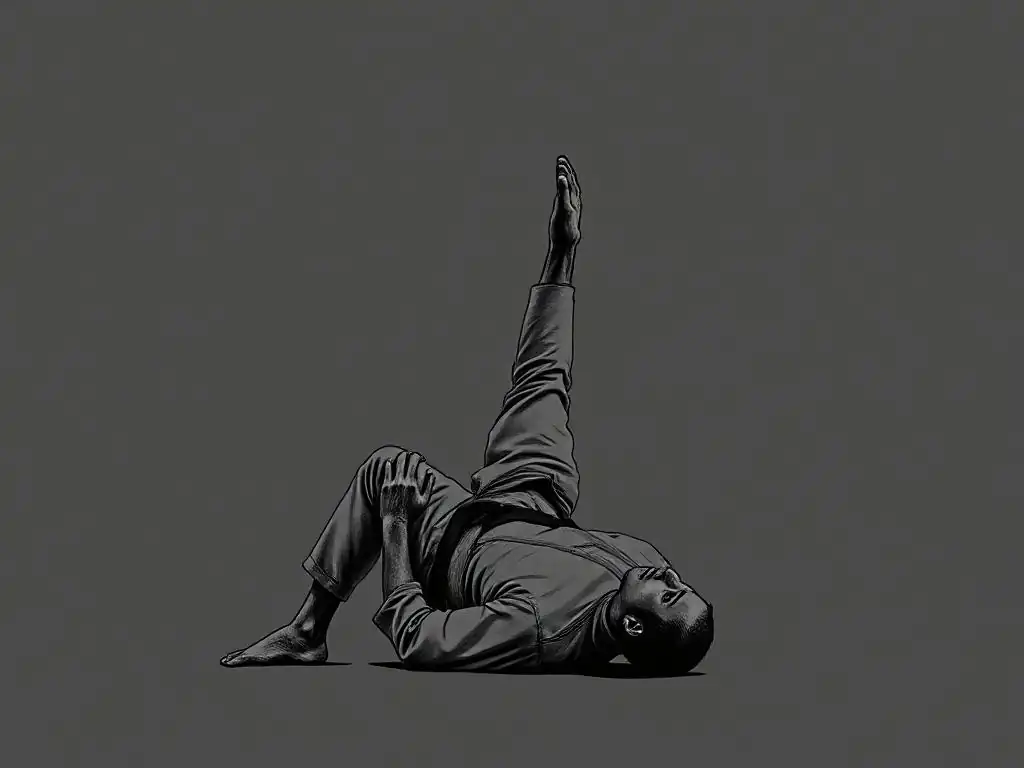
Solo Drills for Hip Escape and Frame Development
Consistent solo drilling is foundational for improving the core movements necessary for re-guarding. Spend time practicing your hip escapes (shrimping) in all directions – forward, backward, and sideways. Focus on making the movement powerful and efficient, covering distance with each shrimp. Aim for 50-100 repetitions per side several times a week.
Practice bridging and shrimping together, as bridging often helps create the initial space needed to turn and shrimp. Additionally, practice solo framing drills. Lie on your back and extend your arms as if framing against an imaginary opponent. Focus on keeping your arms straight and connecting the force through your core. You can also practice leg pummeling motions while lying down, visualizing threading your legs through tight spaces. These solo exercises build the fundamental body mechanics essential for effective BJJ reguard techniques.
Partner Drills for Re-Guarding from Common Guard Breaks
Partner drills are crucial for applying solo movements in a dynamic context. Have a partner start in a position where they have just broken your guard (e.g., standing over you after breaking closed guard, or having cleared one leg in open guard). Their goal is to pass slowly and with light resistance. Your goal is to use your hip escapes, frames, and leg pummeling to recover guard before they fully stabilize side control or mount.
Focus on specific passing scenarios. For example, drill re-guarding against a slow, methodical knee cut pass attempt, a stack pass, or an over-under pass. Your partner should provide just enough resistance to make you work, but not so much that you get stuck. The focus is on drilling the recovery process, not preventing the initial guard break. This targeted practice is invaluable for a BJJ reguard techniques tutorial.
Specific Sparring (Positional) for Re-Guard Improvement: Closed Guard
Positional sparring, also known as specific training, is perhaps the most effective way to improve your re-guarding in a live context. A highly beneficial positional sparring scenario for re-guarding starts with the person on top having just successfully broken the bottom player's closed guard. The top player's goal is to pass and stabilize side control or mount. The bottom player's goal is only to re-guard – to bring their legs back between themselves and the top player and re-establish some form of guard (closed, open, half guard, etc. ).
When the bottom player successfully re-guards, or the top player successfully passes and stabilizes, the round resets back to the starting position (broken closed guard). This allows for high-repetition practice of the critical moments where re-guarding is necessary. Dedicating rounds specifically to this scenario accelerates your learning curve for BJJ reguard techniques.
Troubleshooting Common Re-Guarding Problems
Dealing with Pressure Passing
Pressure passing is a significant challenge for re-guarding because the opponent uses weight and structure to smash your frames and flatten you out. When facing a pressure passer, effective framing and timely hip escapes are even more critical. You must establish strong frames immediately, using your bone structure against their pressure points (neck, shoulder, hip).
Focus on creating just enough space with small, precise hip escapes to insert a powerful frame like the knee shield. Against heavy pressure, the knee shield is often preferred over trying to recover open guards that rely on distance. Use your frames to create angles and off-balance them, looking for opportunities to transition to half guard or use underhooks to disrupt their base. Patience and strong fundamental frames are key when addressing this challenge in your BJJ reguard techniques.
Re-Guarding Against Larger Opponents
Re-guarding against larger and stronger opponents amplifies the challenges of pressure and weight. Their ability to flatten you and negate your frames is increased. When facing a size disparity, leverage and technique become paramount. Rely heavily on creating space with powerful hip escapes and establishing unbreakable frames using skeletal alignment.
Avoid getting into wrestling matches based purely on strength. Focus on using the opponent's weight against them by creating angles and off-balancing them. Techniques like the knee shield and half guard variations can be effective as they allow you to control one of their limbs and manage their weight. Look for opportunities to sweep rather than just recover guard, as sweeping a larger opponent can completely negate their size advantage. A BJJ reguard techniques tutorial for smaller practitioners would heavily emphasize leverage and timing.
Overcoming Common Re-Guarding Stalls
A common problem in re-guarding is getting stalled in a disadvantageous position, unable to create space or bring your legs back in. This often happens when the opponent has achieved significant upper body control (like a cross-face and underhook) but hasn't fully cleared your legs. You are stuck on your back, being pressured, without the ability to shrimp effectively or insert frames.
To overcome stalls, you must first fight the grips and control points that are pinning you. Use your hands to fight the cross-face and underhook. Create small amounts of space by bucking or bridging, then immediately turn to your side and attempt a hip escape, even a small one.
Look for opportunities to insert a knee or a foot as a frame, even if it's just temporarily. Sometimes, accepting a slightly worse position (like a shallow half guard) is necessary to break the stall and begin the re-guarding process anew. Persistence and fighting grips are vital elements of successful BJJ reguard techniques.
BJJ Re-Guarding Techniques Tutorial: Key Takeaways for Guard Retention
The Importance of Consistent Practice
Mastering BJJ reguard techniques is not something that happens overnight. It requires consistent, dedicated practice. The fundamental movements like hip escaping and framing need to be ingrained into your muscle memory through countless repetitions. Partner drills and positional sparring focused specifically on re-guarding scenarios are essential for developing timing and feel in a live context.
Make re-guarding a focus of your training. During open rolling, pay attention to the moments your guard gets broken and actively work to recover, rather than just accepting the pass. Ask training partners to work on specific re-guarding situations with you. The more you practice these techniques, the more instinctive and effective they will become, significantly improving your overall guard game.
Adapting Your Re-Guarding Game to Your Body Type and Style
Just as with guard retention, your personal BJJ reguard techniques should be adapted to your body type and overall game style. If you are flexible and enjoy dynamic movement, you might favor techniques like butterfly guard re-guards or open guard recoveries that rely on constant leg pummeling. If you are stronger and prefer pressure, half guard transitions and strong frames might be more suitable.
Experiment with different re-guarding techniques presented in any comprehensive BJJ reguard techniques tutorial and see which ones feel most natural and effective for you. Don't try to force techniques that don't suit your physical attributes or strategic preferences. Build a repertoire of 2-3 core re-guarding methods that you can rely on consistently, and refine those based on your individual strengths.
Continuing Your Journey to BJJ Guard Mastery
Re-guarding is a crucial piece of the larger puzzle of guard mastery in Brazilian Jiu-Jitsu. It complements guard retention, sweeping, and submission attacks from the bottom. By dedicating time to understanding and drilling BJJ reguard techniques, you significantly enhance your ability to survive and thrive from the guard position.
Continue to study different passing styles and how to re-guard against them. Seek out instruction from experienced practitioners and coaches who can provide personalized feedback on your movements and timing. Guard play is a constantly evolving aspect of BJJ, and a strong re-guarding ability is a hallmark of a resilient and effective guard player. Keep learning, keep drilling, and keep improving your ability to escape a broken guard.
Frequently Asked Questions
How important is re-guarding in Brazilian Jiu-Jitsu (BJJ)?
Re-guarding is extremely important in BJJ. It allows you to regain a defensive position and prevent your opponent from advancing their position or submitting you.
What are some fundamental principles to keep in mind when attempting a BJJ re-guard?
Maintaining proper posture is crucial. You must also create space and control distance before attempting to re-establish your guard.
What are common mistakes people make when trying to re-guard in BJJ?
A common mistake is being too passive and not creating enough space. Another is reaching without establishing grips, leaving you vulnerable to passes and submissions.
How does the history of BJJ inform the re-guarding techniques we use today?
The evolution of BJJ emphasizes positional control and submitting from guard. Therefore, regaining guard is vital to applying those principles.
Where can I find a comprehensive BJJ re-guard techniques tutorial?
MartialArtsMastery.org offers tutorials covering diverse martial arts. Look for resources specifically focused on BJJ guard retention and re-guarding strategies.
Final Reflection: Reclaiming Control on the Mat
The journey through the intricacies of reguarding in Brazilian Jiu-Jitsu, as explored in this tutorial, highlights a fundamental truth: resilience is paramount. Just as a broken guard can feel like a devastating setback, so too can life's unexpected challenges. But the techniques and strategies discussed here offer more than just a path back to a strong guard; they provide a framework for overcoming adversity in any domain.
The art of reguarding is not merely about physical technique; it's about mental fortitude, strategic thinking, and the unwavering belief in one's ability to recover. This resonates deeply with the broader human experience, where setbacks are inevitable, but the capacity to adapt and rebuild is what defines us. Fall seven times, stand up eight.
This Japanese proverb encapsulates the spirit of reguarding, reminding us that persistence and a willingness to learn from our mistakes are essential for growth, both on and off the mat.
Now, consider this: how can you apply the principles of effective reguarding – anticipation, leverage, timing, and adaptability – to the challenges you face in your own life? Embrace the broken guard moments, learn from them, and develop your own unique strategies for reclaiming control. The mat is a microcosm of life; the lessons learned there have the power to transform not only your BJJ game but also your approach to navigating the complexities of the world around you.
Reclaim Your Advantage: Dare to Re-Guard Now!
Thanks for exploring the secrets to effective re-guarding! You've gained valuable insights into turning a disadvantage into an opportunity to dominate on the mat. Now, it's time to put that knowledge into action and elevate your BJJ game.
Here's how to keep the momentum going:
- Prioritize Drilling: Dedicate at least 15 minutes in your next training session to specifically drilling your weakest re-guard technique. Consistent practice is key!
- Film yourself sparring and analyze your re-guard attempts. Identify patterns and adjust your technique accordingly.
- Share your biggest re-guard breakthrough this week with a training partner. Collaborative learning accelerates growth.
What’s one small tweak you can make to your re-guard game tomorrow that will have the biggest impact on your sparring?