
Spider Guard Basics: Controlling Your Opponent with Legs and Sleeves

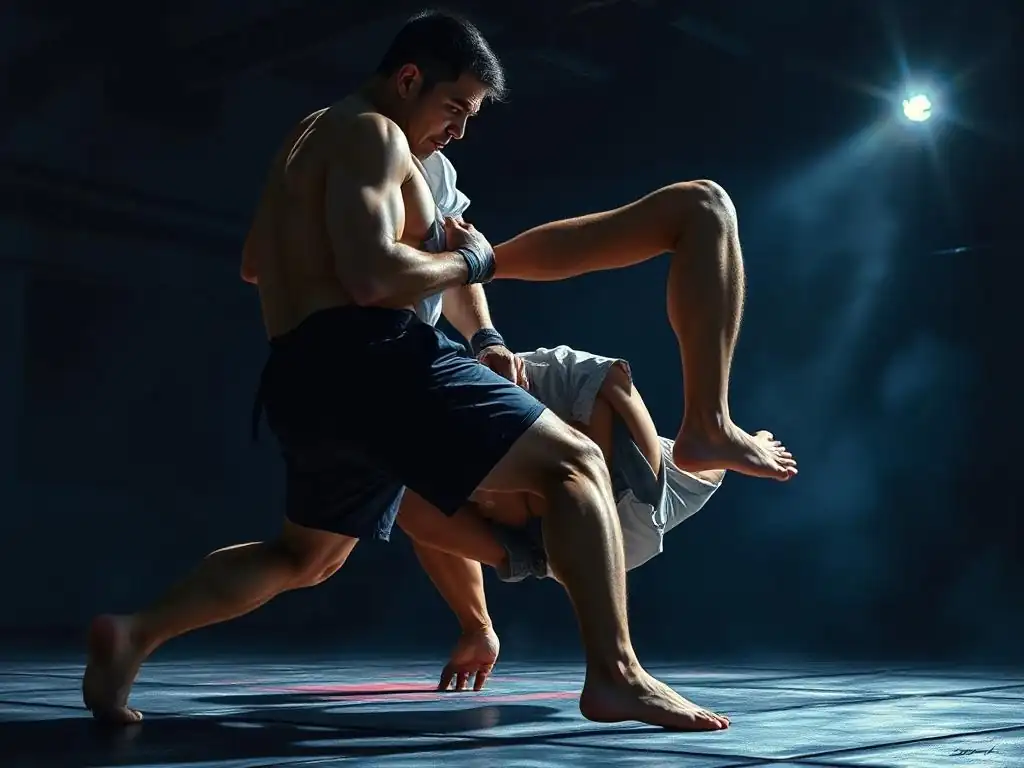
Welcome to Martial Arts Mastery, where the secrets of combat and self-discipline are unveiled!
Dive deep into the intricate world of grappling as we explore Spider Guard Basics. Ready to unravel the techniques that grant you unparalleled control over your opponent? Discover how mastering spider guard leg control can revolutionize your ground game, transforming defense into a potent offense. Prepare to be captivated by the strategies that await – let's begin!
The Spider Guard is a highly effective open guard in Brazilian Jiu-Jitsu, known for its ability to control distance, break posture, and set up numerous sweeps and submissions. It relies primarily on using your legs and feet against your opponent's arms, combined with strong sleeve grips. Mastering this guard allows you to negate an opponent's strength and leverage, making it a staple for many BJJ practitioners, particularly in gi competition. Its versatility makes it adaptable against various passing styles, from pressure passing to more dynamic, athletic approaches.
- Introduction to the Spider Guard in BJJ
- Establishing the Foundation: Grips and Posture for Effective Spider Guard
- Leg Placement and Control in the Spider Guard: The Key to Superior Positioning
- Controlling Your Opponent with Sleeve Grips: The First Line of Defense
- Utilizing the Spider Guard for Sweeps: Off Balancing Your Opponent
- Spider Guard Submissions: Attacking from a Dominant Position
- Troubleshooting Common Spider Guard Problems: Avoiding the Pass
- Drills and Training Exercises for Improving Your Spider Guard
- Advanced Spider Guard Techniques and Concepts
- Conclusion: Mastering the Spider Guard Through Consistent Practice
- Frequently Asked Questions
- Final Reflection: Weaving Control with Spider Guard
- Unlock Your Spider Guard Potential!
Introduction to the Spider Guard in BJJ
The Spider Guard distinguishes itself from other open guards like De La Riva or Lasso by placing one or both feet directly on the opponent's biceps or shoulders. This unique point of contact allows the guard player to dictate the distance and control the opponent's upper body posture with significant leverage. When executed correctly, it creates a frustrating barrier for the opponent, making it difficult for them to establish grips, apply pressure, or initiate their passing sequences effectively.
This guard is not merely a defensive shell; it is a dynamic system designed for offensive attacks. The control gained through the specific leg and grip placements provides the necessary stability and off-balancing opportunities to transition directly into sweeps or submissions. Understanding the fundamental principles behind the spider guard leg control and grip interaction is the first step towards unlocking its full potential as a powerful tool in your BJJ arsenal.
Understanding the Fundamentals of Spider Guard Leg Control
The core principle of spider guard leg control involves using the sole or ball of your foot to press against specific points on the opponent's arms, primarily the biceps or shoulders. This creates a frame that prevents the opponent from closing distance and allows you to manipulate their posture and balance. Think of your legs as extensions of your arms, using pressure and angles to disrupt their base.
Effective spider guard leg control relies on active, engaged feet and legs. The pressure is not static; it must constantly adjust based on the opponent's movement. By extending your leg, you push them away and create space; by bending your knee and pulling them, you break their posture or draw them into sweeps. This dynamic control is vital for maintaining the guard and preventing pass attempts.
The Importance of Sleeve Grips in Spider Guard
While spider guard leg control provides the structure and leverage, strong sleeve grips are equally crucial for the guard's effectiveness. Sleeve grips prevent the opponent from withdrawing their arms from your leg hooks or presses, allowing you to maintain the connection. They also give you direct control over the opponent's arms, preventing them from establishing their own grips on your pants or collar, which are essential for many pass attempts.
The synergy between spider guard leg control and sleeve grips is what makes the guard so potent. Your legs create the distance and leverage, while your grips prevent the opponent from escaping that leverage. For instance, if your foot is on the opponent's bicep, a strong sleeve grip on that same arm prevents them from pulling it back or turning their wrist to relieve the pressure. This integrated control system locks the opponent into your game.
Establishing the Foundation: Grips and Posture for Effective Spider Guard
Setting up a solid Spider Guard begins with securing the correct grips and maintaining an active posture. These initial steps are critical because they create the framework from which all subsequent techniques, including sweeps and submissions, are launched. Without proper grips and posture, the guard is easily defeated by a skilled opponent.
Setting Up Your Initial Grips: Sleeve and Collar Variations
The most common and fundamental grip for Spider Guard is the sleeve grip. You typically want a deep grip on the opponent's gi sleeve, with your thumb inside and fingers wrapped around the outside. This grip is powerful for pulling, pushing, and preventing the opponent from freeing their arm. To get these grips, you might need to engage in initial grip fighting, breaking your opponent's grips on your pants or lapels before establishing your own dominant sleeve controls.
While sleeve grips are paramount, collar grips can also be integrated or used in specific variations. A cross-collar grip, for example, allows you to pull the opponent's head and upper body forward, further breaking their posture in conjunction with spider guard leg control. Some practitioners also use a same-side collar grip to control the opponent's upper body while focusing their legs and other arm on the opposite side. The choice of grip variation often depends on the opponent's posture and your intended attack.
Maintaining Proper Posture to Avoid the Pass
Your posture as the guard player is not static; it's an active state of readiness. Ideally, your hips should be slightly off the mat, allowing for easy movement and rotation. Your knees should be bent, and your feet should be positioned to immediately engage the opponent's arms or hips. This coiled, active posture allows you to absorb pressure, shrimp, and adjust angles quickly to maintain distance and control.
Conversely, a flat back and hips glued to the mat are detrimental to maintaining Spider Guard. This passive posture makes you heavy, slow, and vulnerable to pressure passes. It becomes difficult to create space or use your legs effectively for spider guard leg control. Constantly thinking about keeping your hips mobile and ready to move is key to surviving and attacking from this position.
The Role of Strong Leg Control in Maintaining Guard
Strong and active spider guard leg control is the primary mechanism for preventing the opponent from passing your guard. By placing your feet on their biceps, shoulders, or hips, you create frames and levers that stop them from closing the distance needed to stabilize a passing position like side control or mount. Your legs become a dynamic shield, constantly pushing and pulling to disrupt their balance and movement.
Effective spider guard leg control requires sensitivity in your feet and legs. You need to feel your opponent's weight distribution and intentions to apply the correct pressure and direction. Pushing with one leg while pulling with the other sleeve, for example, can rotate their body, preventing a straight-on pass attempt. It's this continuous, intelligent application of leg pressure that makes the Spider Guard so difficult to pass.
Leg Placement and Control in the Spider Guard: The Key to Superior Positioning
The specific placement and action of your legs are fundamental to the effectiveness of the Spider Guard. The subtle differences in where your feet land and how you apply pressure can significantly alter the dynamics of the position and the opportunities available to you.
Basic Leg Positioning: On Biceps and Shoulders
The most fundamental spider guard leg control involves placing your feet on the opponent's biceps. This position is excellent for isolating their arms, preventing them from gripping your pants or lapels, and making it difficult for them to posture up effectively. By extending your legs, you push them away, creating space; by bending your knees and pulling with your grips, you can pull them forward and break their posture. This bicep control is a cornerstone of the guard.
Another common basic placement is with your feet on the opponent's shoulders. This position is particularly effective for breaking the opponent's posture down towards their knees, especially when combined with strong sleeve grips pulling downwards. Feet on shoulders control is often used to set up sweeps like the Pendulum Sweep, as it allows you to easily off-balance them forwards or sideways. Sometimes, a combination is used, with one foot on the bicep and the other on the shoulder, offering versatile control options.
Advanced Leg Placement for Enhanced Control
Beyond the basic bicep and shoulder placements, more advanced spider guard leg control involves using your feet on other parts of the opponent's body for different effects. Placing your feet on the opponent's hips, for instance, provides excellent distance control and is particularly useful against standing pass attempts. This high hip control prevents them from stepping in or driving forward effectively.
Further advanced techniques include threading your leg deep underneath the opponent's arm to establish a "spider lasso," where your foot hooks around their back or shoulder. This creates immense leverage on that side, making it very difficult for them to posture or move that arm. While requiring more flexibility and technical nuance, these advanced placements offer superior control and unique attack opportunities.
Utilizing Leg Leverage for Sweeps and Submissions
The leverage generated by effective spider guard leg control is the engine for offensive techniques. By simultaneously pushing with one leg (say, on a bicep) and pulling with the corresponding sleeve grip, while perhaps pulling with the opposite sleeve grip and bending that leg (say, off the shoulder), you can create powerful rotational forces that off-balance the opponent. This push-pull dynamic using your legs and arms is fundamental to executing sweeps.
Moreover, precise spider guard leg control can isolate an opponent's limb, making it vulnerable to submission attacks. For example, maintaining strong pressure on an opponent's bicep with your foot can help keep their arm extended, making it easier to transition to an armbar setup. Similarly, controlling their posture with feet on shoulders can open up opportunities for triangle chokes by bringing their head forward and creating the necessary angle.
Controlling Your Opponent with Sleeve Grips: The First Line of Defense
While the legs provide the framework for Spider Guard, the sleeve grips are the hands that steer the ship. They are your primary tool for controlling the opponent's upper body and ensuring they cannot escape the confines of your leg control.
Maintaining Tight Sleeve Grips for Maximum Control
Securing and maintaining tight sleeve grips is paramount. A loose grip allows the opponent to pull their arm free, neutralizing your spider guard leg control on that side and opening up a path for them to pass. Use a strong, deep grip with your thumb inside the sleeve and your fingers wrapped firmly around the outside. Your knuckles should be bent, creating a strong hook.
This requires significant forearm and grip strength, which is why specific grip training is often recommended for Spider Guard players. Constantly fight for your grips; if an opponent breaks one, immediately work to re-establish it or transition to an alternative grip or guard. The ability to maintain tight grips under pressure is a defining characteristic of a skilled Spider Guard player.
Using Sleeve Grips to Dictate Your Opponent's Movement
Sleeve grips allow you to actively manipulate your opponent's balance and direct their reactions. By pulling one sleeve grip towards you while pushing with the opposite leg, you can force the opponent to take a step in a particular direction, creating angles for sweeps. You can also use grips to prevent them from basing out effectively, keeping them light on their feet and susceptible to off-balancing.
For instance, pulling one sleeve grip hard towards your chest while maintaining spider guard leg control on the opposite side can twist the opponent's upper body, making it difficult for them to maintain a stable base and setting them up for a sweep in the direction they are being pulled. This active manipulation through grips is key to transitioning from control to attack.
Breaking Down Your Opponent's Posture with Sleeve Control
Breaking the opponent's posture is a critical objective in Spider Guard, and sleeve grips are essential for this. By simultaneously pulling both sleeve grips downwards towards your hips, you force the opponent to bend at the waist and round their back. This hunched posture makes it significantly harder for them to drive into you, apply pressure, or initiate passes effectively.
When combined with effective spider guard leg control (such as feet on shoulders or upper chest), pulling the sleeves creates a powerful force that collapses the opponent's structure. This broken posture is advantageous for the guard player, as it limits the opponent's mobility and exposes opportunities for submissions like the triangle choke.
Utilizing the Spider Guard for Sweeps: Off Balancing Your Opponent
The Spider Guard is renowned for its sweeping potential. The control and leverage gained through spider guard leg control and sleeve grips allow you to easily disrupt your opponent's balance and reverse the position.
Basic Spider Guard Sweeps: Pendulum Sweep and Hip Bump Sweep
A fundamental Spider Guard sweep is the Pendulum Sweep. This sweep is typically set up with one foot on the opponent's bicep or shoulder and the other foot on the mat or their hip. By pulling with the sleeve grips and swinging your free leg like a pendulum while using your spider guard leg control to off-balance the opponent, you rotate their body and sweep them over your extended leg. It's highly effective against kneeling or standing opponents.
Another common sweep accessible from Spider Guard (often transitioning slightly) is the Hip Bump Sweep. While perhaps more associated with closed guard or sit-up guard, the initial posture control and grip fighting from Spider Guard can easily transition into a position where a Hip Bump Sweep is viable, especially if the opponent tries to disengage by sitting back. By pulling their sleeves and using your hip drive, you can often catch them off guard.
Advanced Spider Guard Sweeps: Omoplata Sweep and Elevator Sweep
The Omoplata Sweep is a more advanced technique that can be launched effectively from Spider Guard. It involves using your spider guard leg control (often foot on bicep) and sleeve grips to isolate an arm, then transitioning your leg over the opponent's shoulder and rotating your body to sweep them over that shoulder. It's a powerful sweep that can also transition directly into the omoplata submission.
The Elevator Sweep is another versatile option, often utilizing one leg as a hook underneath the opponent while the other maintains spider guard leg control on the bicep or hip. Combined with sleeve grips pulling the opponent forward or sideways, the underhooking leg acts as a lever to lift and sweep them backwards or to the side. This sweep requires good coordination between leg leverage and grip control.
Creating Sweep Opportunities Through Leg and Sleeve Control
The beauty of Spider Guard is that effective control creates the sweep opportunities. When you maintain constant, intelligent spider guard leg control and tight sleeve grips, the opponent is forced to react. They might try to pull an arm free, shift their weight, or posture up. Each of these reactions creates a moment of imbalance that you can capitalize on with a timely sweep.
By constantly adjusting your leg pressure and grip tension, you can keep the opponent off-balance, making their base narrow or their weight too far forward or back. Learning to feel these moments of instability through your spider guard leg control and grips is key to executing sweeps effectively and proactively, rather than just reacting to the opponent.
Spider Guard Submissions: Attacking from a Dominant Position
Beyond sweeps, the Spider Guard provides excellent opportunities to attack with submissions, particularly upper body attacks like armbars and triangle chokes, leveraging the control over the opponent's arms and posture.
Common Submissions from Spider Guard: Triangle Choke and Armbar
The Triangle Choke is a frequent submission from Spider Guard. When you have strong posture control using spider guard leg control (feet on shoulders, breaking posture) and sleeve grips, the opponent's head and arm are often brought close together, creating the ideal angle to throw your leg over their shoulder and secure the choke. Pulling down on the sleeves further facilitates this entry.
The Armbar is another staple submission from Spider Guard. By using spider guard leg control on the opponent's bicep, you can help extend their arm. Combined with a tight sleeve grip preventing them from pulling it back, you can then transition your hips out and swing your leg over their head to secure the armbar, using your legs to maintain control of their body while you isolate the arm.
Setting Up Submissions Using Leg and Sleeve Control
Effective spider guard leg control and sleeve grips are not just for control; they are active tools for setting up submissions. For example, using leg pressure on the bicep can help keep an arm straight, creating the necessary extension for an armbar. Simultaneously, the sleeve grip on that arm prevents them from bending it or pulling it free to defend.
Similarly, using your feet on the shoulders to break posture, combined with sleeve grips pulling the opponent forward, makes it much easier to get the correct angle and proximity to attack the neck with a triangle choke. The control you establish limits the opponent's defensive options and creates openings for attacks.
Transitioning to Submissions from Sweeps
Often, a submission opportunity arises directly from a failed or defended sweep attempt. If you attempt a sweep and the opponent bases out by posting an arm, that arm becomes immediately vulnerable to an armbar. Your existing spider guard leg control and grip on that arm position you perfectly to transition the attack.
Alternatively, if a sweep lands you in a dominant position like side control or mount, maintaining control of the opponent's arms via sleeve grips (or transitioning to wrist/arm control) as you settle into the position can lead directly into armbars, kimuras, or other upper body submissions before the opponent has a chance to fully recover and defend.
Troubleshooting Common Spider Guard Problems: Avoiding the Pass
Despite its effectiveness, Spider Guard is not impenetrable. Skilled opponents will attempt various passes. Knowing how to defend against common attacks and maintain your spider guard leg control is crucial for survival.
Preventing the Stack Pass
The Stack Pass is a common threat against guard players with feet on the biceps or shoulders. The opponent drives forward and upward, trying to push your legs up towards your head and collapse your structure. The primary defense relies on strong spider guard leg control: keeping your feet high on their shoulders or upper chest and actively extending your legs to create space and prevent them from getting their hips close to yours.
Simultaneously, use your sleeve grips to pull the opponent's posture down, countering their upward drive. If they manage to start stacking, you must use your hips to shrimp out sideways and create space, potentially transitioning to a different guard or recovering your frames. Maintaining flexibility in your hips and hamstrings also helps resist the stack.
Defending Against the Knee Cut Pass
The Knee Cut Pass is another prevalent attack. The opponent tries to drive one knee across your body to establish side control. Effective spider guard leg control on the opponent's bicep and hip (or knee) on the side they are cutting to is essential. Use the leg on the hip/knee to push and create space, preventing them from bringing their knee across.
Combine this with a strong sleeve grip on the opposite side to prevent them from getting a cross-face or underhook, which are crucial for stabilizing the knee cut. Shrimping away from the cutting knee and using your free hand to frame against their neck or hip also provides layers of defense against this pass.
Dealing with Pressure and Maintaining Leg Control
Some opponents excel at pressure passing, trying to smash through your Spider Guard by driving their weight forward. Against a pressure passer, maintaining active, dynamic spider guard leg control is paramount. You must constantly adjust the pressure of your feet, extending to create space when they drive and bending to pull them off-balance when they pause.
If an opponent successfully slips an arm or leg past your initial spider guard leg control, you must immediately work to re-establish a frame or transition to a different form of leg control or guard. This requires quick reactions and the ability to recover your position under duress. Don't allow the opponent to settle in; constantly fight to maintain your distance and control with your legs.
Drills and Training Exercises for Improving Your Spider Guard
Consistent drilling is key to developing the physical attributes and technical precision required for an effective Spider Guard. Focus on exercises that build grip strength, leg flexibility, and control sensitivity.
Solo Drills for Grip Strength and Leg Flexibility
Improving your grip strength is vital. Practice hanging from a pull-up bar using only gi sleeves or towels wrapped around the bar. Perform towel pull-ups or dead hangs for time. Regularly stretch your forearms and hands. For leg flexibility and endurance, practice holding your legs extended in the air, mimicking the position of spider guard leg control, for increasing durations. Hamstring and hip flexor stretches also improve your ability to maintain the necessary leg positions.
Partner Drills for Spider Guard Implementation
Practice establishing and maintaining spider guard leg control and sleeve grips with a partner who offers light resistance. Have them try to pull their arms free or posture up while you focus solely on keeping your feet on their biceps/shoulders and maintaining tight grips. Increase the resistance gradually. Another drill involves the partner attempting a slow pass (like a standing pass), and your goal is just to use your spider guard leg control and grips to prevent them from getting past your legs, without attempting sweeps.
Specific Spider Guard Leg Control Training Exercises
A focused drill for spider guard leg control involves having your partner stand or kneel while you sit in front of them with your feet on their biceps. Your partner tries to move their arms or body slightly, and your objective is to keep your feet precisely on their biceps, adjusting pressure and position instantly. This builds sensitivity and quick footwork. Another exercise is simply maintaining pressure on the partner's biceps or shoulders for timed rounds (e.g., one minute), focusing on consistent pressure and leg endurance.
Advanced Spider Guard Techniques and Concepts
Once the fundamentals are solid, exploring advanced concepts and variations expands your Spider Guard game and makes it even more versatile.
The Lasso Guard Connection
The Lasso Guard is a natural progression or variation from the standard Spider Guard. It involves threading one leg deep through the opponent's arm and hooking it around their back or shoulder. This deep spider guard leg control variation creates immense leverage on that side, making sweeps and back takes highly effective. Mastering the transition from a standard foot-on-bicep Spider Guard to the Lasso Guard significantly enhances your offensive options.
De La Riva Guard Integration
Integrating Spider Guard with De La Riva Guard is a common strategy. This often involves using one leg for spider guard leg control on the opponent's bicep while the other leg executes a De La Riva hook behind the opponent's leg. This hybrid guard provides control over both the opponent's upper and lower body simultaneously, creating unique angles for sweeps and attacks that are difficult for the opponent to defend against.
Inverted Spider Guard Variations
For practitioners with good flexibility and body awareness, Inverted Spider Guard variations offer a high-level approach. This involves being inverted or semi-inverted while using your legs for spider guard leg control on the opponent's arms. This position requires significant core strength and spatial awareness but opens up unique attack pathways, including entries into leg locks and back takes from unconventional angles.
Conclusion: Mastering the Spider Guard Through Consistent Practice
The Spider Guard is a cornerstone of modern sport BJJ, offering unparalleled control and offensive potential when executed correctly. It is a guard that rewards precision, sensitivity, and consistent effort.
The Importance of Understanding Spider Guard Principles
Mastering Spider Guard is not just about memorizing techniques; it's about deeply understanding the principles of leverage, distance management, and off-balancing. It's about knowing why placing your foot on the bicep works and how it interacts with the sleeve grip to disrupt your opponent's base. A solid understanding of these principles makes your spider guard leg control adaptable against different body types and passing strategies.
Continuing Your Journey in Spider Guard Mastery
Achieving mastery in Spider Guard is an ongoing process. It requires dedicated drilling to build the necessary grip strength, leg endurance, and technical precision. Live rolling is essential for developing the timing and sensitivity needed to apply spider guard leg control and grips effectively against resisting opponents. Continuously seeking instruction, analyzing your rolls, and refining your technique will pave the way for true proficiency in this dynamic and powerful guard.
Frequently Asked Questions
What is the Spider Guard in martial arts?
The Spider Guard is a BJJ (Brazilian Jiu-Jitsu) guard technique where you use your legs and arms to control your opponent's distance and posture. It involves placing your feet on your opponent's biceps and gripping their sleeves.
Why is leg control so important in the Spider Guard?
Effective leg control is crucial for maintaining the Spider Guard. It allows you to dictate the range, disrupt your opponent's balance, and open up opportunities for sweeps and submissions.
What are the fundamental grips used in conjunction with leg control in Spider Guard?
The primary grips used are usually on the sleeves, but sometimes include collar or pant grips, depending on the variation and your strategy. These grips provide additional control and leverage.
How can I prevent my opponent from passing my Spider Guard?
By maintaining active leg control and strong grips, you prevent them from establishing a solid base. Continuously adjusting your position and utilizing sweeps also helps to disrupt their passing attempts.
What are some common sweeps from the Spider Guard?
Common sweeps include the scissor sweep, the pendulum sweep, and variations that exploit your opponent's reactions to your leg and arm control. These sweeps aim to off-balance and reverse your opponent.
Final Reflection: Weaving Control with Spider Guard
The techniques discussed in this article, focusing on Spider Guard leg control, are more than just a series of movements; they represent a fundamental shift in how we approach grappling. In a world where strength and aggression often dominate, the Spider Guard offers a pathway to control and leverage, allowing a smaller, more technical practitioner to dictate the pace and direction of the fight. This principle of strategic control is increasingly relevant in all aspects of life, where understanding leverage and influence can lead to more effective outcomes.
The Spider Guard's influence extends beyond the mats, teaching us the importance of connection, balance, and anticipating our opponent's movements. This art of weaving control, of using our limbs to create a web of defense and offense, has profoundly impacted my own understanding of strategy and problem-solving. The best fighter is never angry,
as Miyamoto Musashi wisely stated. This sentiment resonates deeply with the Spider Guard, emphasizing the need for calm calculation and precise execution over brute force.
Now, consider how you can apply these principles of connection and control in your own life. How can you use leverage to overcome obstacles? How can you anticipate the movements of others to achieve your goals? Embrace the Spider Guard mentality – not just on the mats, but in every challenge you face – and discover the power of weaving control into your own narrative.
Unlock Your Spider Guard Potential!
Thank you for exploring the fundamentals of Spider Guard with us! Now that you have a solid grasp of the basics, it's time to put your knowledge into action and elevate your Jiu-Jitsu game.
Here are a few ways to continue your Spider Guard journey:
- Immediately begin drilling the grip variations and positional control shown in the article with a training partner. Repetition is key!
- Explore advanced Spider Guard techniques, such as transitions to Omoplata or Triangle Choke, to expand your offensive options.
- Share this article with a training partner who is also looking to improve their Spider Guard game - collaboration accelerates progress!
Ready to wrap your opponent up like a spider? What's one small adjustment you can make to your grips today that will make a big difference in your control?