
Troubleshooting Your Americana: Common Pitfalls and How to Overcome Them in BJJ


Welcome to Martial Arts Mastery, your definitive resource for exploring the rich tapestry of martial arts! Ever feel like your Americana just isn't working in BJJ? This week we delve deep into the BJJ Americana technique troubleshooting, uncovering common pitfalls and providing actionable solutions to elevate your submission game. Get ready to refine your technique and unlock the full potential of this powerful hold. Read on to discover the secrets to a flawless Americana!
- Introduction to Armbar Submission Problems in Brazilian Jiu-Jitsu
- Common Armbar Problems and BJJ Troubleshooting Techniques
- Advanced Armbar Troubleshooting for BJJ Practitioners
- Drills and Training Exercises for a More Effective Armbar
- Mastering the Armbar: Final Thoughts on Troubleshooting and Improvement
-
Frequently Asked Questions
- What is the most common reason the Americana submission fails in BJJ?
- How can I improve my grip strength for a more effective Americana?
- What are some effective counters to the Americana submission that I should be aware of?
- What should I do if my opponent is significantly stronger than me and resisting the Americana?
- When is the best time to attempt an Americana submission during a BJJ match or sparring session?
- Final Reflection: Mastering the Americana's Nuances
- Embrace the Evolution: Unlock Your BJJ Potential!
Introduction to Armbar Submission Problems in Brazilian Jiu-Jitsu
The Armbar: A Fundamental Submission in BJJ
The armbar, or juji gatame in Japanese, stands as one of the foundational and most potent joint lock submissions in Brazilian Jiu-Jitsu. Its ubiquity stems from its presence in various positions – mount, guard, side control, and even standing. Mastering the armbar is often considered a benchmark in a BJJ practitioner's journey, offering a high-percentage finish when applied correctly. Its mechanics involve isolating an opponent's arm and extending it past its natural range of motion at the elbow joint, creating immense pressure that leads to submission.
Despite its fundamental status, the armbar is deceptively complex. Successful execution requires precise body positioning, correct leverage, timing, and the ability to counter an opponent's defenses. Beginners often learn the basic form from guard, but true mastery involves understanding the nuances of application from multiple angles and against varying levels of resistance. This makes effective BJJ armbar technique troubleshooting a critical skill for progression.
Why Armbar Submissions Fail: Identifying Common Issues
Numerous factors contribute to the failure of an armbar attempt in BJJ. Often, it's not a single glaring error but a combination of subtle missteps that allow an opponent to escape or defend effectively. Common issues include failing to control the opponent's posture and movement, applying the lock from an incorrect angle that reduces leverage, or simply being too slow in the transition from control position to the finishing mechanics.
Identifying why your BJJ armbar technique is failing is the first step in troubleshooting. Is your opponent consistently escaping by stacking? Are they pulling their arm free before you can secure the finish? Or are you losing the position entirely? Pinpointing the specific point of failure allows for targeted correction. For instance, if escapes are frequent, the issue might lie in hip control or failing to break the opponent's grip effectively before extending. Understanding these common failure points is essential for any BJJ armbar technique troubleshooting effort.
Common Armbar Problems and BJJ Troubleshooting Techniques
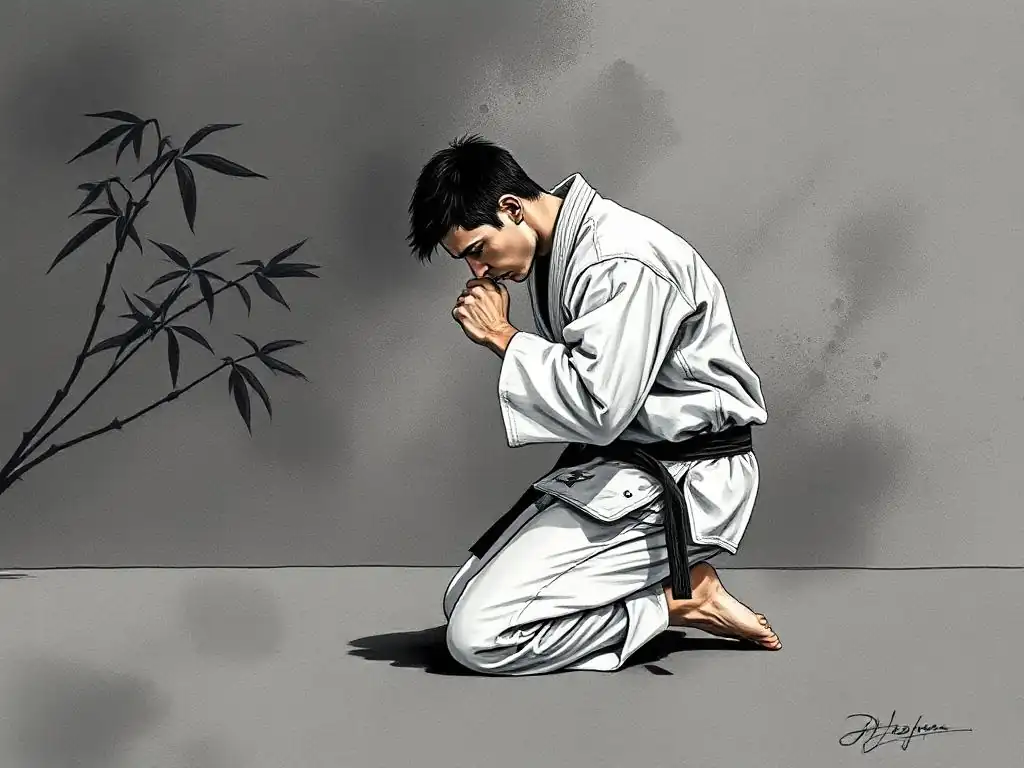
Problem 1: Poor Positioning and Control Leading to Armbar Failure
One of the most frequent reasons an armbar attempt fails is inadequate control over the opponent's body and posture. Without proper stabilization, the opponent can easily shift their weight, create space, or initiate a defense before the submission is fully locked. For example, attempting an armbar from guard without breaking the opponent's posture and controlling their hips often results in them stacking their weight onto you, neutralizing your leverage and making the finish nearly impossible.
Effective BJJ armbar technique troubleshooting starts with solidifying the position before attempting the submission. This means securing controls like head and arm control from mount, hip control and posture breaks from guard, or stabilizing the upper body from side control. A common drill involves maintaining a dominant position for a set time (e.g., 30 seconds from mount) before even thinking about initiating the armbar, reinforcing the importance of control over speed in the initial phase.
Maintaining a Dominant Position for Effective Armbar Application
Maintaining a dominant position is paramount for setting up and finishing an armbar. From mount, this involves keeping your weight heavy, hips low, and controlling the opponent's arms and head to prevent them from bridging or escaping. A key detail is often keeping your knees tight against their sides or even walking them up towards their shoulders to limit their lateral movement and make it harder for them to create space.
From the guard, maintaining control means consistently breaking posture, controlling sleeves or wrists, and using your hips and legs to prevent them from standing up or stacking. The goal is to create a situation where their arm is isolated and vulnerable, and their ability to defend or escape is severely limited by your control over their base and posture. This foundational control is a non-negotiable aspect of BJJ armbar technique troubleshooting.
Troubleshooting Positioning Issues: Securing and Maintaining Control
Troubleshooting positioning issues involves analyzing where control is being lost. If the opponent is stacking from guard, ensure you are actively using your legs to push their hips away and your hands to pull their head down, maintaining a diagonal tension that breaks their base. If attempting an armbar from mount, and they are bridging and escaping, check if your base is wide enough and if you are using your head and shoulder pressure effectively to keep them pinned.
Often, the problem is subtle, like not having your hips close enough to the opponent's shoulder when transitioning from mount or side control. This leaves a gap that allows them to pull their elbow free. Drills focusing purely on transitioning to armbar position without finishing, emphasizing tight hip-to-shoulder connection, can significantly improve this aspect of BJJ armbar technique troubleshooting.
Problem 2: Incorrect Angle and Leverage in the Armbar
Even with good positioning, an armbar can fail if the angle and leverage are incorrect. The armbar works by hyper-extending the elbow joint. This requires applying pressure directly against the joint's natural range of motion. If you are off-angle, applying pressure sideways or upwards away from the joint's axis, the force is dissipated, and the opponent can often tolerate the pressure or simply pull their arm free.
A classic example is attempting an armbar from the guard without properly rotating your body perpendicular to the opponent's arm. If you stay flat on your back, you lack the hip drive and optimal angle to extend the arm effectively. This is a common area for BJJ armbar technique troubleshooting, as even a slight adjustment in hip placement or body angle can dramatically increase the submission pressure.
Achieving the Optimal Angle for Armbar Submission in BJJ
The optimal angle for an armbar typically involves aligning your hips perpendicular to the opponent's trapped arm, with their elbow centered across your hips. This allows you to use your hips as a fulcrum and drive them upwards to create the necessary extension pressure. From guard, this means swiveling your body out to the side, bringing one leg over the head and the other across the chest, ensuring your hips are tight against their shoulder.
From mount or side control transitions, achieving the optimal angle involves pivoting around the opponent's arm, again ensuring your hips are positioned correctly relative to their elbow. Imagine drawing a straight line from their shoulder to their wrist; your hips should be directly under their elbow on that line, and your body should be perpendicular to it. This is fundamental for effective BJJ armbar technique troubleshooting.
Correcting Leverage Problems: Fine-Tuning Your Armbar Technique
Correcting leverage problems often involves fine-tuning the micro-adjustments within the armbar position. Are you pulling up on the opponent's wrist or pushing down on their shoulder while extending your hips? Both are crucial for maximizing leverage. Are you keeping their thumb pointing upwards towards the ceiling? This alignment helps isolate the elbow joint effectively.
Another common leverage issue is failing to control both sides of the opponent's head with your legs. If one leg is loose, they can often turn their body slightly, relieving pressure or setting up an escape. Ensuring both legs are tight, pinching their head, prevents this rotation and maintains the optimal angle and leverage needed for a successful BJJ armbar technique.
Problem 3: Opponent's Defense: Escapes and Counters to the Armbar
Skilled opponents will actively defend against armbar attempts. Common defenses include stacking, gripping their hands together (grip break defense), bridging and turning, or trying to create space by pulling their elbow inward. Recognizing these defenses early and having strategies to counter them is a significant part of advanced BJJ armbar technique troubleshooting.
For example, the stacked defense from guard is very common. If an opponent stacks hard, simply extending your hips might not work. You may need to transition to a different attack, like a triangle choke or an omoplata, or use your legs to create distance and re-establish a less vulnerable guard position. Anticipating these defenses and having follow-up options is crucial.
Recognizing and Preventing Common Armbar Escapes
Recognizing an escape attempt early is key to preventing it. If you feel the opponent starting to bridge and turn, tighten your legs around their head and pull their arm across your body to prevent the rotation. If they are gripping their hands together, focus on breaking that grip before attempting the final hip extension. Grip breaks can be achieved by using your hands, legs, or even shifting your weight.
Preventing escapes often comes down to maintaining relentless pressure and control throughout the transition and application. For instance, when transitioning from mount to armbar, maintaining control of the opponent's head with one hand while securing the arm with the other, before passing the leg over, minimizes the window for them to initiate a bridge or turn. Proactive BJJ armbar technique troubleshooting involves anticipating these defensive reactions.
Troubleshooting Armbar Defense: Adapting Your Approach
Troubleshooting armbar defense involves adapting your attack based on the opponent's reaction. If they consistently grip break, dedicate significant drilling time to various grip-breaking techniques from the armbar setup. If they always stack, practice using your legs to create space or transitioning to triangle or omoplata attacks from the stacked position.
Sometimes, the best defense troubleshooting is not forcing a low-percentage finish but transitioning to a more favorable attack. If the armbar is heavily defended, look for opportunities to sweep, take the back, or attack the neck. This adaptability makes your overall game more effective and prevents you from getting stuck in vulnerable positions while attempting a failing armbar.
Problem 4: Slow Application of the Armbar: Telegraphing the Submission
A slow or hesitant transition into the armbar position allows the opponent ample time to recognize the attack and set up their defense. If you pause too long between securing the arm and swinging your leg over the head, for instance, the opponent has a critical window to pull their arm out, grip up, or change their posture. Telegraphing the move is a common problem, especially for beginners.
Speed in submission application isn't about brute force, but about seamless transitions and commitment. It involves moving from a control position directly into the armbar setup with minimal hesitation, securing the necessary controls (like the arm and head) swiftly, and then executing the finish mechanics without delay. Improving this requires dedicated drilling focused on fluid movement.
Increasing Speed: Transitioning Smoothly from Position to Submission
Increasing the speed and smoothness of your armbar transitions comes from repetition and muscle memory. Practice moving from mount to armbar, or from guard to armbar, thousands of times. Focus on eliminating unnecessary movements or pauses. For example, when transitioning from mount, ensure your leg comes over the head in one fluid motion as you fall back, rather than a slow, segmented process.
Similarly, from guard, the sequence of breaking posture, securing the arm, swiveling the hips, and throwing the leg over should flow together. Drilling these sequences repeatedly, initially slowly focusing on precision, and then gradually increasing speed, is essential. This dedicated practice is key to effective BJJ armbar technique troubleshooting regarding timing.
Drilling Entries: Improving Reaction Time and Efficiency
Specific drilling focusing solely on armbar entries from various positions can significantly improve reaction time and efficiency. Partner drills where one person provides a specific opening (e.g., leaving an arm out from mount) and the other reacts instantly with the armbar entry help build this reactive speed.
Another effective method is drilling the setup of the armbar from different scenarios – from an opponent reaching in guard, from a failed pass attempt, from side control. Focus on recognizing the opportunity and initiating the first few steps of the armbar immediately. This kind of focused BJJ armbar technique troubleshooting drill builds the habit of acting decisively when the opportunity arises.
Advanced Armbar Troubleshooting for BJJ Practitioners
Troubleshooting Armbars Against Stronger Opponents
Applying armbars against opponents who are significantly stronger or more athletic presents unique challenges. Their ability to resist force, bridge with power, and explode out of positions can make standard armbar mechanics difficult. In these cases, relying purely on strength to finish the armbar is often futile; technique and leverage become even more critical.
Against stronger opponents, focus shifts towards creating inescapable angles and using their strength against them. This might involve using your legs and core more effectively to control their posture and base, employing tighter hip control to prevent bridging, and being absolutely precise with the elbow placement on your hips. It also often requires transitioning to the armbar at the earliest possible opportunity, before they can fully establish their base or grip strength defensively.
Adapting the Armbar for Different Body Types and Flexibility
Opponent body type and flexibility also necessitate adaptations in armbar technique. Applying an armbar to a very flexible opponent, for instance, might require you to extend their arm further or find alternative finishing mechanics, such as twisting the wrist slightly while extending the hip, or transitioning to a shoulder lock (like a modified Kimura grip armbar) if the elbow extension alone isn't sufficient.
Conversely, against very stocky opponents with short limbs, securing the arm can be challenging. This might require deeper control of the arm closer to the shoulder, ensuring your legs are high on their back/neck, and being meticulous about preventing them from tucking their elbow. Adapting your BJJ armbar technique troubleshooting to account for these physical differences is a sign of an experienced practitioner.
Troubleshooting Armbar Variations: Key Adjustments for Success
Beyond the standard armbar from guard or mount, BJJ includes numerous variations like the S-mount armbar, the straight armbar from side control, the triangle-armbar transition, or the belly-down armbar. Each variation has its own specific setup, control points, and common failure modes that require dedicated troubleshooting.
For example, troubleshooting the S-mount armbar often involves ensuring your top leg is correctly placed over the opponent's head and that your S-mount is stable before committing to the finish. Troubleshooting the belly-down armbar requires precise shoulder and hip alignment to generate the necessary torque. Mastering these variations requires understanding their unique mechanics and applying BJJ armbar technique troubleshooting principles specifically to their setups and finishes.
Drills and Training Exercises for a More Effective Armbar
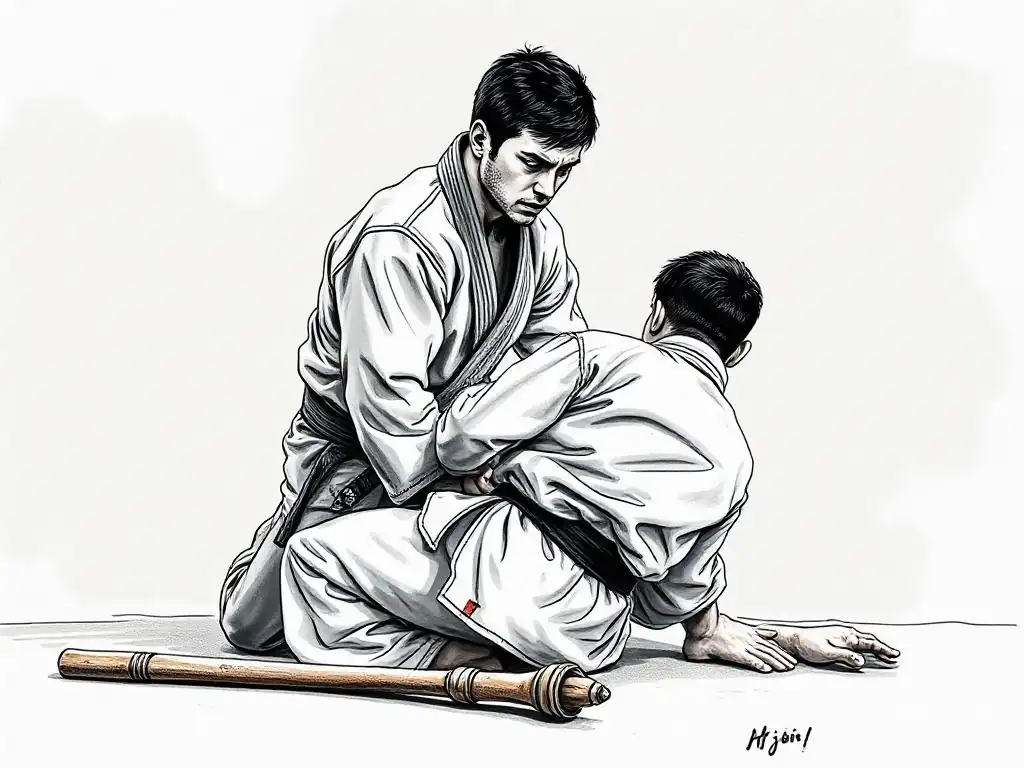
Armbar Isolation Drills: Building Muscle Memory and Precision
Armbar isolation drills focus on specific components of the technique, breaking it down into smaller, manageable steps. For instance, one drill might involve a partner holding an arm out while you practice securing the grip, placing the elbow on your hips, and aligning your body, without actually finishing. Another might focus solely on the hip extension and wrist control needed for the finish.
These drills help build muscle memory for the correct body mechanics, angles, and controls required for a successful armbar. By isolating elements like hip movement, leg placement, or grip breaking, practitioners can refine each part of the BJJ armbar technique before combining them into the full submission attempt. A common goal is performing each isolated step flawlessly 10-20 times per side.
Positional Sparring for Armbar Application: Testing Your Technique Under Pressure
Positional sparring is invaluable for BJJ armbar technique troubleshooting under live resistance. Instead of free rolling, start from a specific position where armbars are common, like mount or closed guard. The goal is not necessarily to get the submission every time, but to practice setting up and attempting armbars against a resisting opponent.
If starting from mount, for example, the top person tries to get an armbar, while the bottom person tries to defend and escape or sweep. This allows practitioners to test their setups, transitions, and troubleshooting skills in a dynamic environment, revealing common failure points that might not appear in compliant drilling. Positional sparring from mount or guard for 3-5 minute rounds is highly effective.
Troubleshooting Partner Drills: Identifying and Correcting Weaknesses
Specific troubleshooting partner drills involve one partner intentionally making a common armbar mistake or attempting a common defense, while the other partner practices the correct counter or adjustment. For instance, one partner might stack hard from guard while the other practices using their legs to create space or transition.
Another example could involve one partner gripping their hands together strongly from mount, and the other practices various grip breaks before attempting the armbar. These focused drills, guided by knowledge of common armbar failures, are excellent for targeted BJJ armbar technique troubleshooting. They allow practitioners to specifically address their known weaknesses against realistic resistance.
Mastering the Armbar: Final Thoughts on Troubleshooting and Improvement
The Importance of Consistent Training and Troubleshooting
Mastering the armbar, or any BJJ submission, is an ongoing process that requires consistent training and diligent troubleshooting. Simply learning the basic movement is just the beginning. True proficiency comes from thousands of repetitions, testing the technique against resisting opponents, identifying where it fails, and then actively working to fix those specific issues.
Regularly reviewing your rolls or sparring sessions to identify why your armbars are failing (e.g., "My armbar from mount always fails when they bridge right" or "I can't finish the armbar from guard when they stack") is crucial. Once identified, dedicate specific drilling time to addressing those weaknesses. This systematic approach to BJJ armbar technique troubleshooting is far more effective than simply drilling the same basic movement repeatedly.
Resources for Further Armbar Technique Development in BJJ
Beyond mat time, numerous resources can aid in further developing your armbar technique and troubleshooting skills in BJJ. Instructional videos from experienced black belts provide detailed breakdowns of setups, finishes, and common defenses. Books and articles offer insights into the underlying principles of leverage and body mechanics.
Discussing your armbar challenges with your instructors and training partners is also invaluable. They can often spot errors you might not see yourself and offer personalized advice based on their experience. Combining consistent mat practice with intelligent study and seeking feedback is the most effective path to truly mastering the armbar and becoming proficient in BJJ armbar technique troubleshooting.
Frequently Asked Questions
What is the most common reason the Americana submission fails in BJJ?
The most common reason is incorrect body positioning and lack of control over the opponent's wrist and shoulder. Adjust your angle and ensure tight control for a higher success rate.
How can I improve my grip strength for a more effective Americana?
Focus on grip-specific exercises like dead hangs and Gi chokes. Also, ensure you are using the correct grip placement to maximize leverage.
What are some effective counters to the Americana submission that I should be aware of?
Common counters include bridging and rolling to escape the pressure. Be aware of these and anticipate their movements to maintain your control.
What should I do if my opponent is significantly stronger than me and resisting the Americana?
Focus on technique over strength. Use your body weight and leverage to amplify the pressure, and consider transitioning to another submission if needed.
When is the best time to attempt an Americana submission during a BJJ match or sparring session?
The Americana is often effective when your opponent is postured up or exposing their arm. Look for these openings during transitions or when they are trying to escape a different position.
Final Reflection: Mastering the Americana's Nuances
The journey to mastering the Americana in BJJ is fraught with challenges, as we've explored throughout this article. The ability to troubleshoot common pitfalls is not just about improving technique; it's about cultivating a deeper understanding of leverage, control, and the subtle art of submission. In a sport where millimeters can mean the difference between victory and defeat, attention to detail in the Americana is paramount.
The Americana, seemingly simple, reveals layers of complexity upon closer inspection. Its effectiveness hinges not only on proper execution but also on adapting to the opponent's resistance and exploiting their weaknesses. This pursuit of perfection has profoundly influenced my own approach to BJJ, reminding me that even the most fundamental techniques demand continuous refinement. The more I practice, the luckier I get.
- Gary Player. This quote perfectly encapsulates the dedication required to truly master the Americana and any other aspect of BJJ.
Now, armed with these insights into BJJ Americana technique troubleshooting, I encourage you to step back onto the mats with renewed focus. Don't just drill the movements; analyze them. Feel the pressure points, understand the angles, and adapt your approach to each unique opponent. Embrace the challenge, learn from your mistakes, and unlock the full potential of this powerful submission. Your journey to mastering the Americana, and indeed all of BJJ, is just beginning.
Embrace the Evolution: Unlock Your BJJ Potential!
Thank you for diving deep into the world of Americana submissions and learning how to troubleshoot common challenges! We hope this exploration has empowered you to refine your technique and elevate your Jiu-Jitsu game. Now, it's time to put that knowledge into action.
- Master the Americana: Dedicate your next three training sessions solely to drilling and refining your Americana setups and escapes, focusing on the specific pitfalls we discussed.
- Share your insights! What are your favourite Americana tips that you did not found on our website?
- Explore related submissions. Don't limit yourself, try submissions from same position.
So, what small adjustment can you make to your Americana today that will yield the biggest improvement tomorrow?