
The Five Element Fists of Xing Yi Quan: A Comprehensive Overview

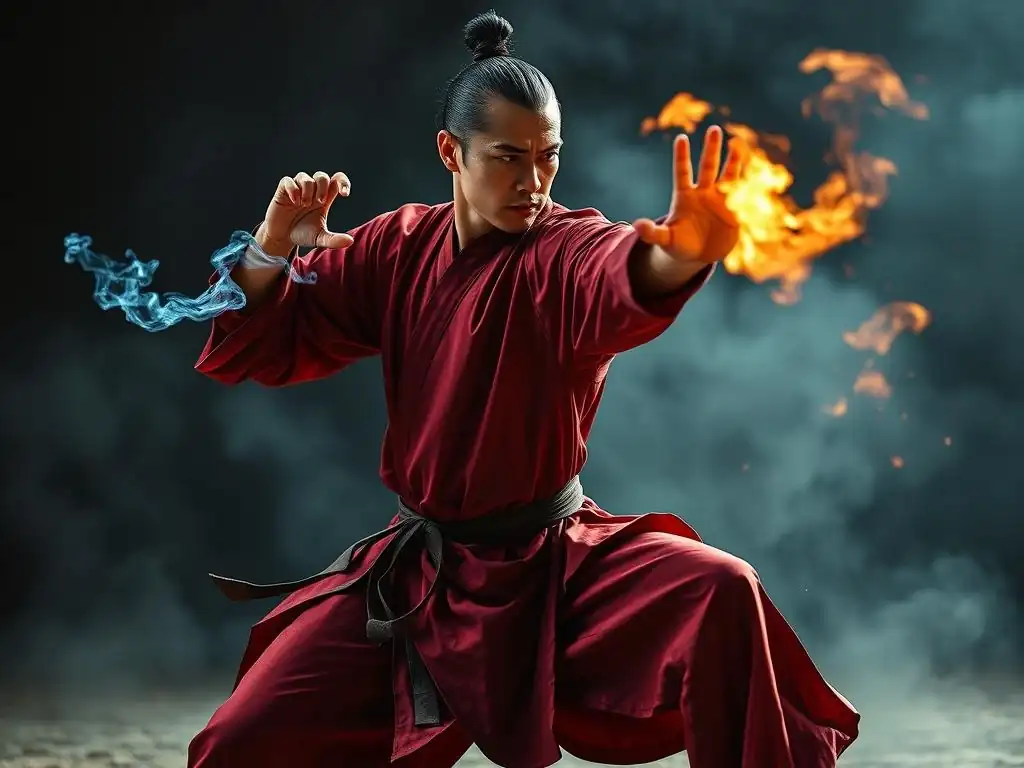
Welcome to Martial Arts Mastery, your gateway to unlocking the secrets of combat and self-discovery!
Delve into the rich tapestry of global martial arts traditions. Have you ever wondered about the inner workings of a fighting style that embodies the forces of nature itself? This article explores just that. Prepare to embark on a fascinating journey into the heart of Xing Yi Quan, where we unravel the profound principles and devastating power of its five elements. Discover how these elemental movements translate into a complete and effective system of combat. Intrigued? Read on to master the fundamentals and unlock the hidden potential within this ancient art.
- Introduction to Xing Yi Quan Five Elements Fists: Overview and Significance
- Detailed Breakdown of the Five Element Fists in Xing Yi Quan
- Training Principles and Methods for Xing Yi Quan Five Element Fists
- Philosophical and Energetic Foundations Behind Xing Yi Quan Five Element Fists
- Practical Applications and Self-Defense Strategies Using Xing Yi Quan Five Element Fists
- Comparison of Xing Yi Quan Five Element Fists with Other Internal Martial Arts Techniques
- Profiles of Legendary Xing Yi Quan Masters Specializing in Five Element Fists
- Conclusion: Mastering the Xing Yi Quan Five Elements for Martial Arts Excellence
-
Frequently Asked Questions
- What are the Five Elements in Xing Yi Quan and what do they represent?
- How do the Five Element fists correlate to practical self-defense?
- What is the historical significance of the Five Elements within Xing Yi Quan?
- How does training in the Five Elements improve overall martial arts skill?
- Where can I find more in-depth information about each of the Five Elements?
- Final Reflection: Embracing the Transformative Power of Xing Yi Quan's Five Elements
- Unleash Your Inner Xing Yi Master!
Introduction to Xing Yi Quan Five Elements Fists: Overview and Significance
Xing Yi Quan (Form-Intention Boxing) stands as one of the preeminent internal martial arts of China, renowned for its direct, explosive power and practical combat applications. Unlike the flowing, circular movements often associated with Tai Chi Chuan or the intricate footwork of Ba Gua Zhang, Xing Yi Quan emphasizes linear attacks and simultaneous offense and defense.
At the very heart of its foundational training lies the system of the Five Element Fists, or Wu Xing Quan. These five fundamental techniques—Pi (Splitting), Zuan (Drilling), Beng (Crushing), Pao (Pounding), and Heng (Crossing)—serve as the building blocks for all subsequent forms and applications within the style.
Mastering the Xing Yi Quan five elements is considered paramount for any serious practitioner. These five fists are not merely isolated techniques; they represent the elemental forces of Metal, Water, Wood, Fire, and Earth, respectively, and embody specific power generation methods and combat strategies. The theory behind the Xing Yi Quan five elements posits that these elemental powers interact with each other in both creative and destructive cycles, mirroring the natural world.
By training these elemental fists, practitioners develop core strength, rootedness, unified body power, and the ability to adapt to different combat situations based on the elemental interactions. This foundational understanding is crucial before progressing to the more complex Twelve Animal forms, which layer animalistic attributes and strategies upon the fundamental power generated by the Wu Xing Quan.
Historical Origins of the Five Element Fists in Xing Yi Quan
The precise historical origins of Xing Yi Quan are subject to some debate, but it is widely believed to have roots dating back several centuries, possibly to the Ming Dynasty (1368-1644). Legend often attributes the creation or compilation of the art to the famous general Yue Fei (1103-1142) of the Song Dynasty, though solid historical evidence linking him directly to the martial art as we know it is sparse.
What is more historically substantiated is its development and popularization in Shanxi and Hebei provinces during the Qing Dynasty (1644-1912) through figures like Ji Longfeng (also known as Ji Jike) in the 17th century. Ji Longfeng is often credited with linking the art to spear techniques and possibly refining the Five Element principles.
From Ji Longfeng, the art was passed down through various lineages. A significant branch traces through Ma Xueli in Shanxi, and another through Cao Jiwu. It was from the Shanxi lineage, particularly through masters like Li Luoneng (also known as Li Nengran, active mid-19th century), that the Xing Yi Quan five elements became firmly established as the core curriculum.
Li Luoneng is credited with transforming the art from primarily spear-based movements into a sophisticated empty-hand system, heavily emphasizing the Five Element Fists and the Twelve Animals. His students, including Guo Yunshen and Che Yizhai, further refined and spread the art, solidifying the Wu Xing as the essential entry point for all practitioners. For example, Guo Yunshen became particularly famous for his mastery of Beng Quan (Crushing Fist), demonstrating its devastating effectiveness.
Role of the Five Elements Theory in Xing Yi Quan Martial Arts
The Five Elements Theory ( Wu Xing), deeply rooted in traditional Chinese philosophy, cosmology, and medicine, provides the conceptual framework for the Xing Yi Quan five elements fists. These elements—Wood (木), Fire (火), Earth (土), Metal (金), and Water (水)—are not viewed as static substances but as dynamic phases or forces that are constantly interacting. In Xing Yi Quan, each of the five core fists is directly correlated with one of these elements: Pi (Splitting) is Metal, Zuan (Drilling) is Water, Beng (Crushing) is Wood, Pao (Pounding) is Fire, and Heng (Crossing) is Earth.
This correlation isn't arbitrary; it reflects the perceived nature and application of the power generated by each technique. For instance, Pi Quan's sharp, cutting power is likened to Metal, while Zuan Quan's penetrating, adaptable force is like Water.
Understanding the creative and destructive cycles of the elements is fundamental to applying the Xing Yi Quan five elements in combat and developing strategic thinking. The creative cycle (生成 - Sheng Cheng) describes how elements generate each other: Wood feeds Fire, Fire creates Earth (ash), Earth bears Metal, Metal collects Water, and Water nourishes Wood. The destructive or controlling cycle (克制 - Ke Zhi) describes how elements overcome each other: Wood separates Earth, Earth absorbs Water, Water extinguishes Fire, Fire melts Metal, and Metal chops Wood.
In practice, these cycles inform transitions between techniques; for example, a Pi Quan (Metal) might be followed by a Zuan Quan (Water), following the creative cycle (Metal creates Water), or used to counter a Beng Quan (Wood), following the destructive cycle (Metal chops Wood). Mastery involves fluidly moving through these elemental interactions, adapting techniques based on the opponent's actions.
Importance of Mastering Xing Yi Quan Five Element Techniques
Mastery of the Xing Yi Quan five elements is absolutely critical for developing the foundational internal power and structural integrity that defines the style. These five techniques, practiced diligently, forge the practitioner's body into a cohesive unit capable of generating "whole body power" ( Zheng Ti Jin). The fundamental posture, San Ti Shi (Three Body Posture), is the static root from which the dynamic power of the Wu Xing emerges.
Consistent training in San Ti Shi for significant durations—often recommended for 15-30 minutes or even longer daily—builds essential stability, alignment, and focused intent, preparing the body to execute the five fists effectively. Without a strong foundation in San Ti Shi and the Wu Xing, practitioners cannot truly embody the principles of Xing Yi Quan.
The benefits of mastering the Xing Yi Quan five elements extend beyond mere physical technique. The repetitive, focused practice cultivates internal energy ( Qi) and sharpens mental focus ( Yi). Each fist develops a specific type of power: Pi develops a splitting, downward force; Zuan develops a drilling, upward/forward force; Beng develops a crushing, forward force; Pao develops an explosive, upward/outward force; and Heng develops a horizontal, crossing force.
By training all five, the practitioner develops a versatile arsenal of power generation methods that can be applied in various situations. This comprehensive development of physical structure, internal energy, and mental intent through the Wu Xing makes them the indispensable core of Xing Yi Quan training, providing the necessary skills to progress to more advanced forms and practical applications.
Detailed Breakdown of the Five Element Fists in Xing Yi Quan
The Xing Yi Quan five elements are not just movements; they are specific methods of generating and directing power, each with unique characteristics and applications derived from their associated element. Understanding the mechanics of each fist is key to unlocking its potential.
Pi (Splitting) Fist: Characteristics and Applications
Pi Quan (劈拳), the Splitting Fist, is associated with the element Metal. Its primary characteristic is a sharp, cutting, and downward/forward power, much like an axe splitting wood or a sword cutting down. The movement typically involves one hand rising as the other descends in a coordinated, simultaneous action, often originating from the San Ti Shi posture.
The power is generated from the entire body, unified through the waist and rooted stance, culminating in a focused, cutting force directed slightly downwards or straight forward at the opponent's centerline or limbs. The lead hand 'splits' down, while the rear hand often guards or prepares for the next movement.
Applications of Pi Quan are numerous and highly effective in close-quarters combat. It is an excellent technique for breaking an opponent's guard, attacking downwards onto limbs (collarbones, arms), or striking the head. Because of its downward nature, it is also used defensively to deflect or 'split' incoming attacks.
A common drill involves practicing Pi Quan repeatedly, focusing on coordinating the rising and falling hands with the stepping motion, ensuring the body's power is channeled efficiently. In a self-defense scenario, a sudden, sharp Pi Quan can effectively disrupt an opponent's structure and create openings for follow-up techniques from the Xing Yi Quan five elements system or animal forms.
Zuan (Drilling) Fist: Technique and Combat Usage
Zuan Quan (鑽拳), the Drilling Fist, is linked to the element Water. This technique embodies a penetrating, upward, or forward spiral power, like water finding a path or a drill boring into a surface. The movement typically involves a fist rotating as it moves forward or upward, often targeting soft areas like the chin, throat, or solar plexus.
The power is characterized by its continuous, drilling motion, utilizing torque generated through the body's rotation and forward momentum. The hand may rotate palm-down to palm-up or vice versa, depending on the lineage and application, emphasizing the spiraling nature of the force.
In combat, Zuan Quan is used for direct, penetrating strikes, particularly effective against an opponent's head or body centerline. Its upward trajectory makes it useful for striking the chin or throat, while a more forward-driving application targets the solar plexus. The drilling motion allows the force to bypass or penetrate defenses more effectively than a blunt impact.
It can also be used defensively to redirect incoming force with its spiraling action. A common training method is practicing Zuan Quan in conjunction with stepping, focusing on the unified forward drive of the body and the rotational power in the arm. For instance, a rapid Zuan Quan can be deployed from a close distance to exploit a momentary opening in an opponent's guard, leveraging the upward, penetrating force.
Beng (Crushing) Fist: Mechanics and Strategy
Beng Quan (崩拳), the Crushing Fist, corresponds to the element Wood. This is arguably the most representative and widely practiced of the Xing Yi Quan five elements, often referred to as the "king" of the five fists. It embodies a fast, linear, and relentlessly forward-driving power, like an arrow shot from a bow or wood expanding with force.
The technique involves a rapid, straight punch delivered with full body power, often originating from the rear hand driving forward past the lead hand. The power is generated through a unified forward surge of the entire structure, with the lead leg often checking or pinning the opponent's stance.
Beng Quan's combat strategy is based on overwhelming the opponent with direct, unyielding forward pressure. It is primarily used as a devastating attacking technique aimed at the opponent's chest, solar plexus, or head. Its linear nature makes it ideal for closing distance quickly and disrupting the opponent's structure upon impact. Guo Yunshen's legendary ability to defeat opponents with a single Beng Quan striking the chest highlights its potential power.
Training focuses on developing maximum speed and structural integrity in the forward drive, ensuring the entire body's weight and power are behind the fist. A typical drill might involve striking a heavy bag or post with repeated Beng Quan, focusing on root, alignment, and explosive forward intent. In a self-defense context, a well-executed Beng Quan can deliver significant impact, capable of incapacitating an attacker or creating distance.
Pao (Pounding) Fist: Execution and Martial Effectiveness
Pao Quan (炮拳), the Pounding or Cannon Fist, is associated with the element Fire. This technique is characterized by its explosive, often rising and outward-expanding power, like a cannonball fired or a sudden burst of flame. While variations exist, Pao Quan often involves a simultaneous or near-simultaneous action of both hands, one rising and the other falling or striking outwards, creating a concussive, expansive force. The power is generated through a rapid release of tension and a unified body shockwave, often involving a stomping step to enhance rootedness and explosive force.
The martial effectiveness of Pao Quan lies in its ability to deliver a powerful, shocking impact that can disrupt an opponent's balance and structure. It can be used to strike the head, chest, or ribs with significant force. The expansive nature of the technique also makes it useful for breaking holds or creating space.
Some lineages emphasize a rising, uppercut-like motion, while others focus on a simultaneous outward strike with both hands. Training often involves coordinating the explosive release of power with a grounded stance and focused intent. For example, a sudden Pao Quan rising from a low guard can be used to strike an opponent's chin with surprising force, leveraging the explosive power characteristic of the element Fire.
Heng (Crossing) Fist: Movement and Tactical Advantage
Heng Quan (橫拳), the Crossing or Horizontal Fist, is linked to the element Earth. This technique embodies a stabilizing, crossing, or horizontal power, like the solid foundation of the earth or a barrier moving horizontally. The movement typically involves a horizontal or sweeping motion of the fist across the body or outwards, often accompanied by a shifting of weight or a sidestepping motion. The power is generated through rotation of the waist and a grounded stance, delivering a force that moves across the opponent's line of attack.
Heng Quan offers significant tactical advantages, particularly in defense and creating angles. It can be used to strike the sides of the opponent's head or body, or to block and redirect incoming linear attacks with a powerful, crossing force. The horizontal movement allows the practitioner to evade a direct attack while simultaneously countering.
It is also used to disrupt the opponent's balance by striking across their centerline or legs. Training emphasizes generating power through the waist and maintaining a solid, rooted structure while executing the horizontal motion. For instance, if an opponent launches a straight punch (like Beng Quan), a practitioner might use Heng Quan to simultaneously block the incoming arm and strike the opponent's head or ribs from the side, leveraging the Earth element's ability to control Water (Zuan Quan) or separate Wood (Beng Quan) in the destructive cycle.
Training Principles and Methods for Xing Yi Quan Five Element Fists
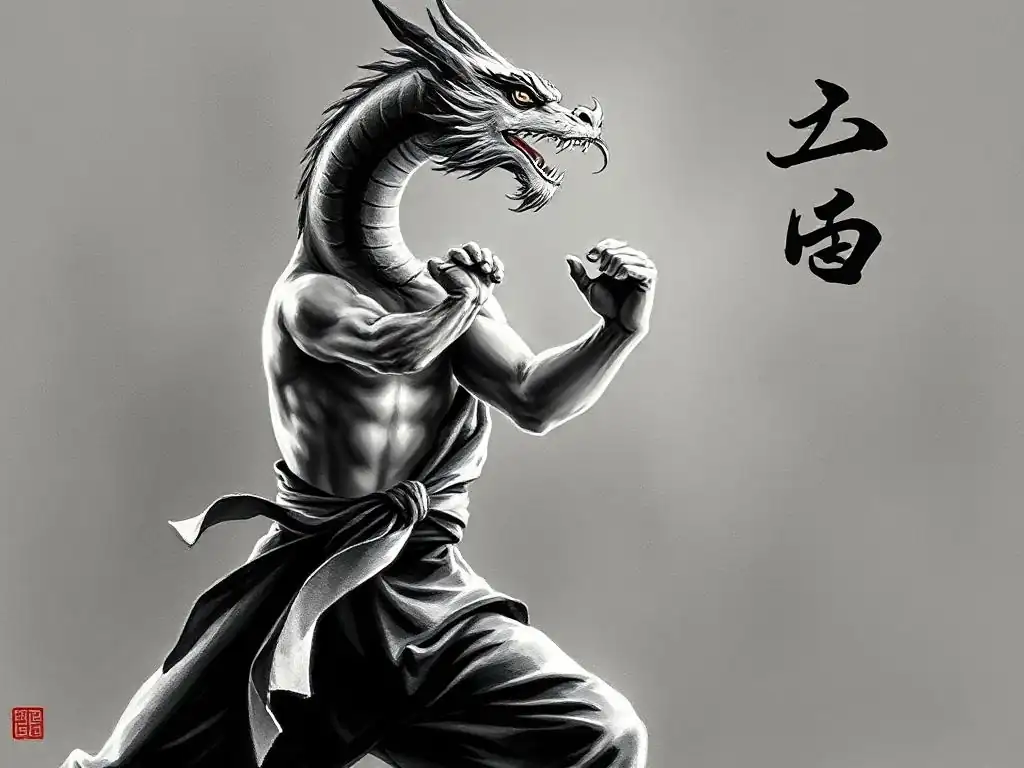
Effective training in the Xing Yi Quan five elements requires adherence to specific principles and consistent application of foundational methods. It's not just about the physical movements, but about cultivating the internal aspects of the art.
Foundational Drills to Develop Xing Yi Quan Five Element Power
The absolute cornerstone of Xing Yi Quan training is the San Ti Shi posture (三體勢 - Three Body Posture). Before practicing any of the Xing Yi Quan five elements fists dynamically, a student must spend considerable time holding San Ti Shi statically. This posture, characterized by specific alignment of the head, torso, and limbs, and a rooted, triangular stance, is designed to unify the body's structure, cultivate internal energy, and develop focused intent.
Beginners might start by holding the posture for just a few minutes, gradually increasing the duration over weeks or months to 20, 30, or even 60 minutes per session. This seemingly simple static practice is crucial for developing the necessary foundation of stability and unified power required for the dynamic Wu Xing.
Beyond San Ti Shi, the primary drill for the Xing Yi Quan five elements is practicing each fist individually, focusing on the specific power generation method and body mechanics. This is often done in place or with simple forward stepping. For example, practicing Pi Quan involves coordinating the rising and falling hands with a forward step, ensuring the power originates from the root and travels through the unified body.
Zuan Quan practice focuses on the spiraling motion and upward/forward drive. Beng Quan emphasizes the explosive linear surge. Pao Quan trains the simultaneous, expansive power release.
Heng Quan develops the horizontal force and body rotation. Repetition is key; practitioners might perform 50, 100, or even several hundred repetitions of each fist daily, striving for perfect form, rootedness, and focused intent with every movement. This dedicated practice of the Wu Xing drills is what builds the core power and understanding of the Xing Yi Quan five elements.
Breathing and Body Alignment Techniques in Five Element Fist Training
Proper breathing is integral to developing internal power in the Xing Yi Quan five elements. While initial training may focus on natural, deep abdominal breathing, more advanced practice often involves coordinating the breath with the movements. Generally, an inhale occurs during the preparatory or withdrawing phase of a technique, and a sharp, focused exhale coincides with the moment of impact or power release.
This coordinated breathing helps to gather and consolidate internal energy, focusing it into the strike. For instance, in Beng Quan, a practitioner might inhale as the rear fist is drawn back slightly, and exhale sharply as the fist drives forward, using the exhale to amplify the forward intent and power. Holding the breath or breathing shallowly restricts the flow of Qi and limits the potential for explosive power.
Body alignment is equally critical and is heavily emphasized from the initial San Ti Shi training. Correct alignment ensures that the body's structure is unified, allowing power to travel efficiently from the ground through the legs, waist, torso, and out through the striking limb. Key alignment principles include keeping the head "suspended" from above, aligning the shoulders and hips, maintaining a slight curve in the spine, dropping the elbows, and ensuring the knees are aligned over the feet.
Any break in this alignment creates a "leak" in the power chain. For example, if the shoulder is raised during a Beng Quan, the power generated from the legs and waist will be blocked at the shoulder joint instead of flowing smoothly to the fist. Training the Xing Yi Quan five elements meticulously involves constant attention to these alignment details, ensuring the body acts as a single, powerful unit.
Integrating Five Element Fists into Xing Yi Quan Forms and Combos
While practicing the Xing Yi Quan five elements individually is foundational, their true martial application comes from integrating them into dynamic forms and combinations. Xing Yi Quan forms, such as the Wu Xing Lian Huan Quan (Five Elements Linking Form), string together the five fists in specific sequences that demonstrate their interactive relationships based on the elemental cycles.
Practicing these forms helps practitioners transition smoothly between the different power generation methods and understand how one technique can flow into or set up another. The Sheng (creative) and Ke (destructive) cycles of the Xing Yi Quan five elements theory directly influence the transitions within these linking forms, showing how Metal (Pi) leads to Water (Zuan), which leads to Wood (Beng), and so on, or how Metal (Pi) can counter Wood (Beng).
Beyond formal sequences, practitioners learn to combine the Xing Yi Quan five elements fists in practical combat scenarios. This involves understanding which fist is appropriate for a given situation and how to chain them together effectively. For example, a Pi Quan might be used to clear a guard, followed immediately by a Zuan Quan to the chin.
Or, a Beng Quan might be met with a Heng Quan block and counter-strike. Training in combinations helps develop spontaneity and adaptability, moving beyond rote memorization to intuitive application. Sparring drills, often starting with pre-arranged sequences and progressing to more free-form exchanges, are crucial for learning to apply the Xing Yi Quan five elements under pressure, reacting to an opponent's movements by selecting the appropriate elemental force.
Philosophical and Energetic Foundations Behind Xing Yi Quan Five Element Fists
The Xing Yi Quan five elements are deeply intertwined with traditional Chinese philosophical concepts, particularly the Wu Xing theory and the cultivation of internal energy and intent.
The Five Elements Theory: Wood, Fire, Earth, Metal, Water in Martial Context
As previously mentioned, the Wu Xing theory (Wood, Fire, Earth, Metal, Water) provides the conceptual blueprint for the Xing Yi Quan five elements fists. In a martial context, these elements represent not just physical techniques but also qualities of power, strategic approaches, and even psychological states.
- Metal (Pi Quan): Represents sharpness, cutting, structure, and definition. In combat, this translates to a clear, decisive, splitting force used for direct attack or breaking structure.
- Water (Zuan Quan): Represents fluidity, penetration, adaptability, and overcoming obstacles by finding a path. In combat, this is the penetrating, drilling force that can bypass defenses or flow around resistance.
- Wood (Beng Quan): Represents growth, expansion, linear force, and unyielding forward momentum. This is the relentless, forward-driving power, like a tree pushing upwards or a spear thrusting.
- Fire (Pao Quan): Represents explosiveness, radiance, rapid expansion, and shocking power. This is the sudden, concussive force used for powerful strikes and disruption.
- Earth (Heng Quan): Represents stability, rootedness, grounding, and horizontal/crossing force. This is the solid, defensive, and counter-attacking power used to control space and disrupt the opponent's balance.
Understanding these elemental correspondences helps practitioners embody the characteristics of each fist more fully. It also provides a framework for understanding the strategic interactions; just as Water (Zuan) can extinguish Fire (Pao), the fluid, penetrating Zuan Quan can potentially overcome the explosive, expanding power of Pao Quan in a combat exchange, depending on the timing and execution.
Mind-Body Connection and Intent (Yi) in Five Element Fist Execution
In Xing Yi Quan, the mind ( Yi) leads the body ( Li). The concept of Yi (意), or focused intent, is paramount in executing the Xing Yi Quan five elements effectively. It is not enough to simply perform the physical movements; the practitioner must imbue each technique with conscious intention and focus.
This intent directs the Qi and unifies the body's power towards the target. For example, when performing Beng Quan, the intent should be that of an arrow flying straight and true, or a mountain collapsing forward. This mental focus helps to align the physical structure and channel the internal energy efficiently.
The mind-body connection is cultivated through dedicated practice of San Ti Shi and the Xing Yi Quan five elements drills. San Ti Shi trains the ability to hold focused intent for extended periods while maintaining physical structure. Practicing the Wu Xing dynamically requires coordinating this focused intent with the physical movement and the breath.
The aim is to reach a state where the intention arises, and the body responds instantly and powerfully, without conscious thought about the mechanics. This seamless integration of mind and body is what allows Xing Yi Quan practitioners to generate explosive, unified power. It's estimated that achieving a significant level of this mind-body unity through the Wu Xing can take several years of consistent, focused daily training.
Cultivating Internal Energy (Qi) Through Five Element Fist Practice
The cultivation of internal energy ( Qi - 氣) is a core objective of practicing the Xing Yi Quan five elements. While external martial arts often rely primarily on muscular strength ( Li), internal arts emphasize developing Qi and using the body's structure to generate Jin (勁 - trained, integrated power). The specific postures and movements of the Wu Xing, combined with proper breathing and focused intent, are designed to open the body's energy pathways, improve circulation, and accumulate Qi in the lower abdomen ( Dan Tian).
The repetitive, grounded movements of the Xing Yi Quan five elements, particularly the unified stepping and body coordination, build rootedness and harness the earth's energy. The focused intent directs this energy. Over time, consistent practice leads to a tangible feeling of internal fullness and power. This cultivated Qi is then expressed as explosive Jin through the execution of the five fists.
For instance, the "shocking" power of Pao Quan is not purely muscular; it involves a coordinated release of tension and a surge of internal energy from the Dan Tian through the limbs. Practitioners often describe feeling a wave of energy moving through their body as they execute a powerful Wu Xing technique. This internal development is a key differentiator of the Xing Yi Quan five elements compared to purely external striking methods.
Practical Applications and Self-Defense Strategies Using Xing Yi Quan Five Element Fists
While rooted in traditional combat, the principles and techniques of the Xing Yi Quan five elements are highly applicable to practical self-defense scenarios. Their directness and focus on simultaneous offense and defense make them remarkably effective.
Real-World Combat Scenarios Utilizing Five Element Techniques
The Xing Yi Quan five elements are designed for close-to-medium range combat, making them well-suited for many real-world self-defense situations that occur at conversational distance or in confined spaces.
- Against a Straight Punch: A common scenario. Beng Quan's linear forward drive is ideal for meeting the attack head-on, simultaneously striking and disrupting the opponent's structure. Alternatively, Heng Quan can be used to evade the line of attack while delivering a counter-strike to the side.
- Against a Grab or Hold: Pi Quan's downward splitting force can be used to break grips on the arms or shoulders. Heng Quan's horizontal power can create space or strike outwards to disrupt a hold. Zuan Quan's upward drilling motion can target vulnerable points like the chin or throat if in close range.
- Against a Kick: While Xing Yi Quan focuses on upper body and close range, the rooted stances developed through San Ti Shi and the Xing Yi Quan five elements training provide a strong base. A Pi Quan can be used to strike downwards onto an incoming leg, or a quick Beng Quan can close distance and strike the torso before the kick fully develops.
- Multiple Opponents: While challenging for any style, the ability to generate sudden, explosive power from a stable base and quickly transition between techniques (as trained in the linking forms) can be vital. A powerful Pao Quan might disrupt one attacker, creating space to deal with another using Beng Quan or Heng Quan.
The directness of the Xing Yi Quan five elements means there is little wind-up, making them fast and difficult for an untrained attacker to perceive or defend against. The focus is on overwhelming the opponent with sudden, unified force.
Combining Five Element Fists with Other Xing Yi Quan Animals for Versatility
After mastering the Xing Yi Quan five elements, practitioners progress to the Twelve Animal forms (十二形 - Shi Er Xing), which incorporate animalistic movements and characteristics onto the foundation of elemental power. Combining the Wu Xing with the Shi Er Xing creates a much more versatile and adaptable martial system. Each animal form often emphasizes or utilizes certain elemental powers more than others, but the core power generation remains based on the Wu Xing.
- Dragon: Often incorporates the coiling, spiraling power akin to Zuan Quan and the unpredictable expansion of Pao Quan. A Dragon form might use a drilling motion to penetrate a guard, followed by an expansive, coiling strike.
- Tiger: Characterized by pouncing, seizing, and crushing power, heavily utilizing the forward drive of Beng Quan and the splitting force of Pi Quan. A Tiger technique might involve a powerful forward leap combined with a Beng Quan strike.
- Bear: Emphasizes rootedness, solid structure, and heavy impact, drawing heavily on the grounding of Heng Quan and the crushing power of Beng Quan. A Bear movement might use a solid, rooted stance to absorb force and counter with a heavy, grounded strike.
Training involves learning how the elemental powers manifest within the animal movements and how to transition seamlessly between elemental fists and animal techniques. This integration allows practitioners to adapt their strategy based on the opponent's movement and structure, moving from the fundamental powers of the Xing Yi Quan five elements to more complex, animalistic applications.
Adapting Five Element Fist Movements for Modern Self-Defense
While traditional Xing Yi Quan training might involve deep stances and powerful, sometimes large movements, the principles of the Xing Yi Quan five elements can be adapted for modern self-defense in everyday clothing and environments. The core concepts of unified body power, rootedness, focused intent, and the specific power generation methods of each fist remain applicable.
- Reduced Stances: While San Ti Shi is crucial for training, in a self-defense situation, the practitioner might use a higher, less conspicuous stance while retaining the internal connection and rootedness developed through training. The principle of grounding remains, even if the stance looks different.
- Economy of Motion: The directness of the Xing Yi Quan five elements lends itself well to self-defense. Techniques like Beng Quan or Zuan Quan are already quite linear and efficient. Adaptation involves minimizing any unnecessary preparatory movements.
- Focus on Principles: Rather than executing a perfect, textbook Pi Quan, the self-defense application focuses on generating that sharp, splitting force through the body using whatever movement is available given the circumstances (e.g., a sharp downward palm strike or elbow). The principle of the element is applied, not just the exact traditional form.
Many modern Xing Yi Quan practitioners teach adaptations of the Wu Xing specifically for street defense, focusing on short-range power generation and targeting vulnerable areas. The core power and body mechanics developed through traditional Xing Yi Quan five elements training provide the raw material; adaptation tailors its expression to the realities of modern self-defense.
Comparison of Xing Yi Quan Five Element Fists with Other Internal Martial Arts Techniques
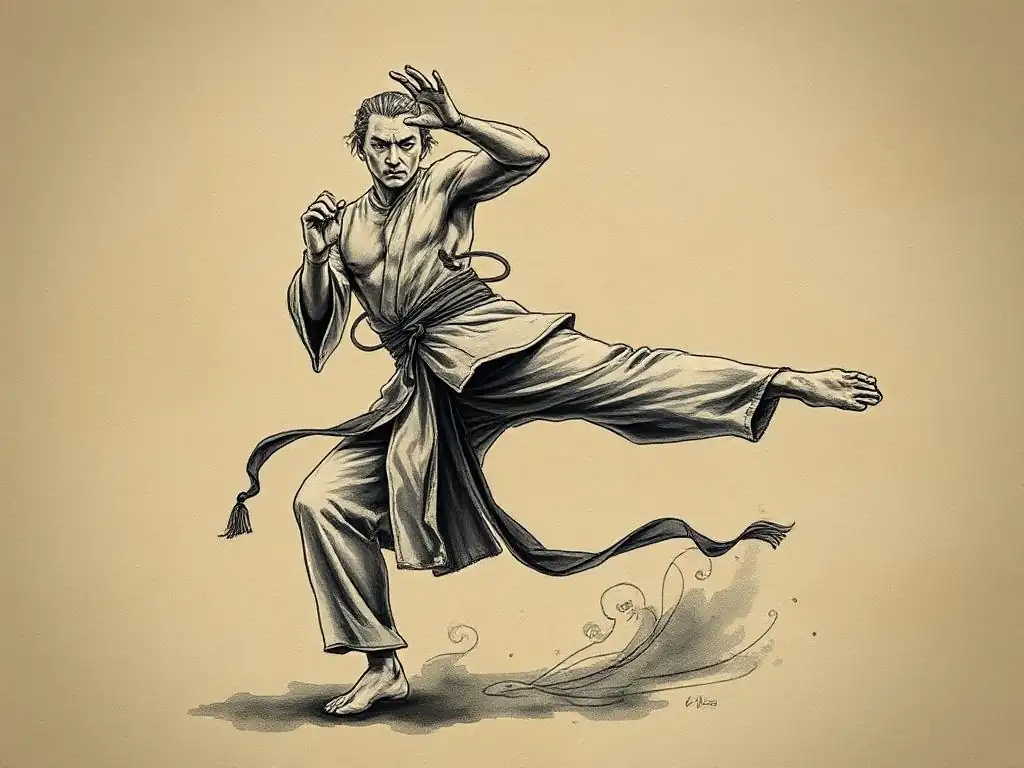
Comparing the Xing Yi Quan five elements to techniques found in other major internal martial arts like Tai Chi Chuan and Ba Gua Zhang highlights its unique characteristics and combat focus.
Distinctive Features of Xing Yi Quan Five Element Fists versus Tai Chi and Ba Gua
While all internal martial arts share principles like rootedness, unified body power, and the cultivation of Qi and Yi, their methodologies and primary expressions differ significantly. The Xing Yi Quan five elements are characterized by their linearity, directness, and explosive, short-range power.
- Versus Tai Chi Chuan: Tai Chi (e.g., Yang style) is often characterized by its circular, flowing, and yielding movements. Its power generation (often called "silk reeling energy" or Chan Si Jin) is spiraling and continuous, used for neutralizing force and issuing power at close range. While Tai Chi also utilizes rootedness and unified body power, its applications often involve redirecting force or using leverage. The Xing Yi Quan five elements, in contrast, are predominantly linear and direct attacks designed to penetrate or overwhelm, rather than yield and redirect. A Beng Quan is a direct forward strike, whereas a Tai Chi punch might involve a circular path to gain leverage or evade a block.
- Versus Ba Gua Zhang: Ba Gua (Eight Trigram Palm) is defined by its constant circular walking and intricate footwork. Its techniques often involve striking while moving around the opponent, using dynamic changes in direction and body rotation. Power generation is often rotational and spiraling, similar in some ways to Tai Chi's silk reeling, but combined with rapid footwork and evasive maneuvers. The Xing Yi Quan five elements are much more focused on meeting force directly or moving in simple linear or diagonal paths, relying on structural integrity and explosive forward momentum rather than constant circling and evasive footwork. While Ba Gua uses rotating palms and body turns, Xing Yi Quan's Zuan Quan is a linear drill with internal rotation, not a wide circling movement.
The distinction lies in the primary geometric emphasis: Tai Chi (circles), Ba Gua (circles and spirals with constant movement), and Xing Yi Quan five elements (lines and direct paths).
Advantages of the Five Element Fist System in Close-Quarter Combat
The inherent design of the Xing Yi Quan five elements system offers several advantages in close-quarter combat scenarios.
- Directness and Speed: The linear nature of techniques like Beng Quan and Pi Quan means the strike travels the shortest distance to the target, making them incredibly fast. There is minimal wind-up or telegraphing. This speed is crucial in close range where reaction time is minimal.
- Simultaneous Offense and Defense: Many Xing Yi Quan five elements techniques inherently combine defensive and offensive actions. For example, a Pi Quan can block an incoming strike while simultaneously attacking downwards onto the opponent's limb or head. Heng Quan blocks and counters in one motion. This simultaneous action is highly effective in tight spaces where there's no time for separate block-then-strike sequences.
- Rooted, Explosive Power: The emphasis on San Ti Shi and unified body power allows practitioners to generate significant force from a stable, grounded structure, even in restricted spaces. The explosive "fajin" (發勁 - issuing power) developed through the Xing Yi Quan five elements is designed for short-range impact.
- Structural Disruption: The specific forces of the Wu Xing (splitting, drilling, crushing, pounding, crossing) are effective at disrupting an opponent's structure and balance upon impact, making it difficult for them to counter or continue their attack. A solid Beng Quan to the chest can buckle an opponent, regardless of their muscular strength.
These characteristics make the Xing Yi Quan five elements a formidable and highly practical system for dealing with threats at very close range, where the elaborate movements of some other styles might be impractical.
Profiles of Legendary Xing Yi Quan Masters Specializing in Five Element Fists
The legacy of Xing Yi Quan and its Xing Yi Quan five elements system is carried forward by generations of dedicated masters, both historical and contemporary.
Historical Figures Who Advanced Xing Yi Quan Five Element Techniques
Several historical masters were instrumental in developing and popularizing the Xing Yi Quan five elements.
- Li Luoneng (c. 1807-1890): Considered the father of modern empty-hand Xing Yi Quan, Li Luoneng is credited with refining the Five Element Fists and Twelve Animal forms from earlier iterations. He was known for his exceptional skill and produced several highly influential students. His emphasis on the Wu Xing as the fundamental training was pivotal.
- Guo Yunshen (c. 1829-1898): A student of Li Luoneng, Guo Yunshen became legendary for his mastery of Beng Quan (Crushing Fist), earning the nickname "Half-Step Beng Quan Does Not Leave the World" (半步崩拳打遍天下). This moniker highlights the devastating effectiveness he achieved with just one of the Xing Yi Quan five elements, emphasizing the depth of power possible through dedicated practice of the fundamentals. His fame significantly boosted the reputation of the Xing Yi Quan five elements.
- Che Yizhai (c. 1833-1918): Another prominent student of Li Luoneng, Che Yizhai founded the Shanxi branch of Xing Yi Quan. While preserving the core Xing Yi Quan five elements, his lineage developed slightly different interpretations and forms compared to the Hebei branch popularized by Guo Yunshen's contemporaries. Che's emphasis on rootedness and refined internal mechanics further solidified the importance of the Wu Xing.
These masters, through their personal skill and teaching, demonstrated the profound depth and effectiveness contained within the seemingly simple Xing Yi Quan five elements, ensuring their place as the core of the art.
Modern Practitioners Preserving and Innovating Five Element Fist Training
Today, numerous practitioners around the world continue to preserve and teach the traditional Xing Yi Quan five elements. Many adhere closely to the classical methods passed down through lineages like those of Guo Yunshen, Che Yizhai, or Sun Lutang. These masters emphasize rigorous San Ti Shi training and repetitive practice of the Wu Xing drills as the path to developing true internal skill. Some prominent modern teachers, often heads of established associations or schools, have dedicated decades to mastering these fundamentals and guiding new generations.
Simultaneously, some modern practitioners are exploring ways to innovate within the framework of the Xing Yi Quan five elements, adapting training methods or applications for contemporary contexts, such as self-defense seminars or competitive martial arts (though traditional Xing Yi Quan is less geared towards modern sport fighting). However, even these innovations typically stress that effectiveness ultimately stems from the foundational power and principles embodied in the Wu Xing.
Whether teaching in traditional martial arts schools in China or through workshops and online resources globally, modern masters play a vital role in ensuring the knowledge and practice of the Xing Yi Quan five elements remains vibrant and accessible. For instance, some teachers might incorporate modern sports science principles to explain the body mechanics of a Beng Quan strike, while still maintaining the traditional focus on Yi, Qi, and Jin.
Conclusion: Mastering the Xing Yi Quan Five Elements for Martial Arts Excellence
The Xing Yi Quan five elements—Pi, Zuan, Beng, Pao, and Heng—represent the fundamental building blocks of this powerful internal martial art. Rooted in the ancient Chinese Five Elements Theory and refined over centuries by legendary masters, these five fists are far more than just physical techniques; they are embodiments of elemental forces, methods of generating unified body power, and keys to understanding the strategic interactions of combat. Mastering the Xing Yi Quan five elements provides practitioners with a direct, explosive, and highly practical martial skill set.
Summary of Key Takeaways About the Five Element Fists in Xing Yi Quan
The journey through the Xing Yi Quan five elements reveals several critical aspects of the art:
- They are the indispensable foundation, stemming from the static power of San Ti Shi.
- Each fist correlates with a specific element (Metal, Water, Wood, Fire, Earth) and embodies a unique power generation method (splitting, drilling, crushing, pounding, crossing).
- Their interactions follow the creative and destructive cycles of the Wu Xing theory, informing strategic transitions.
- Consistent, focused training develops unified body power ( Zheng Ti Jin), internal energy ( Qi), and focused intent ( Yi).
- They are highly effective for close-quarter combat due to their directness, speed, and ability to simultaneously attack and defend.
- Mastery of the Wu Xing is essential before effectively integrating the more complex Twelve Animal forms.
- The principles of the Xing Yi Quan five elements can be adapted for modern self-defense, even if the physical expression changes.
Ultimately, the Xing Yi Quan five elements represent a distillation of powerful martial principles into five core actions. Dedicated practice of these fundamentals is the path to developing genuine skill and understanding in Xing Yi Quan.
Pathways for Continued Learning and Skill Development in Xing Yi Quan Five Elements
For those seeking to deepen their understanding and skill in the Xing Yi Quan five elements, several pathways are available.
- Find a Qualified Instructor: The most traditional and often most effective method is learning directly from a master or experienced teacher within an established Xing Yi Quan lineage. Hands-on correction of posture, alignment, and power generation is invaluable.
- Consistent Solo Practice: Daily practice of San Ti Shi and the individual Xing Yi Quan five elements drills is non-negotiable. Dedicating specific time each day to these fundamentals is crucial for internal development. Aim for consistency over long periods, perhaps 30-60 minutes daily.
- Study the Linking Forms: Once the individual fists are understood, practice the Wu Xing Lian Huan Quan and other linking forms to learn transitions and strategic combinations.
- Explore Applications and Sparring: With a solid foundation, begin practicing applications of the Xing Yi Quan five elements with a training partner, starting with cooperative drills and gradually progressing to more dynamic sparring to test and refine skills under pressure.
- Research and Study: Read classical texts (if available in translation) and works by reputable modern practitioners to deepen your theoretical understanding of the Wu Xing theory, Qi, Yi, and Jin as they relate to the Xing Yi Quan five elements.
Mastering the Xing Yi Quan five elements is a lifelong journey, requiring dedication, patience, and persistent effort. It is through this fundamental practice that the true power and profound principles of Xing Yi Quan are unlocked.
Frequently Asked Questions
What are the Five Elements in Xing Yi Quan and what do they represent?
The Five Elements in Xing Yi Quan (Metal, Wood, Water, Fire, and Earth) are fundamental movements and energies. They are not just physical techniques, but represent different combat strategies and qualities.
How do the Five Element fists correlate to practical self-defense?
Each Five Element fist provides a unique approach to self-defense. For example, Metal (Pi Quan) is a chopping fist for direct attacks, while Water (Beng Quan) focuses on penetrating and overwhelming an opponent.
What is the historical significance of the Five Elements within Xing Yi Quan?
The Five Elements are deeply rooted in traditional Chinese philosophy and martial arts. They were incorporated into Xing Yi Quan to create a system that is both effective in combat and harmonious with nature's principles.
How does training in the Five Elements improve overall martial arts skill?
Practicing the Five Elements develops fundamental body mechanics, power generation, and tactical thinking. Mastering these elements enhances a practitioner's ability to adapt and react effectively in various combat situations.
Where can I find more in-depth information about each of the Five Elements?
MartialArtsMastery.org offers detailed articles on each Five Element fist, covering their specific techniques, applications, and training methods. Look under the Xing Yi Quan section for more information.
Final Reflection: Embracing the Transformative Power of Xing Yi Quan's Five Elements
The journey through the Five Element Fists of Xing Yi Quan reveals more than just a martial art; it unveils a profound system of self-cultivation and understanding of the natural world. The enduring relevance of Xing Yi Quan lies in its ability to connect us to fundamental principles of balance, adaptation, and continuous transformation, principles desperately needed in our rapidly changing world. Its emphasis on internal power and dynamic movement offers a pathway to resilience and inner peace amidst the chaos of modern life.
The influence of Xing Yi Quan extends beyond the dojo, shaping our perception of interconnectedness and the cyclical nature of existence. Personally, exploring the Five Elements has deepened my appreciation for the subtle interplay of forces within myself and the world around me. The highest form of warfare is to attack strategy itself.
This quote, often attributed to Sun Tzu, resonates deeply with Xing Yi Quan's emphasis on understanding the underlying principles rather than simply memorizing techniques. It's about embodying the elements and adapting to any situation with fluidity and grace.
As we conclude this exploration of Xing Yi Quan's Five Elements, I invite you to reflect on how these principles can enrich your own life. Consider how you can cultivate the strength of Metal, the fluidity of Water, the stability of Earth, the growth of Wood, and the fiery passion of Fire within yourself. Embrace the transformative power of these elements, and allow them to guide you towards a more balanced, resilient, and fulfilling existence.
Unleash Your Inner Xing Yi Master!
Thank you for exploring the profound depths of Xing Yi Quan's Five Element Fists. Now that you've grasped the foundational principles, it's time to translate knowledge into action.
Here are some immediate steps you can take to deepen your understanding and application:
- Commit to practicing one Five Element Fist for at least 15 minutes daily. Focus on proper form and intent.
- Explore how these elements relate to your own life and identify areas where you can incorporate their strengths for personal growth.
- Share your experience and insights with fellow martial arts enthusiasts in the comments below – let's build a community of Xing Yi practitioners!
Which of the Five Element Fists resonates most deeply with you, and how do you plan to integrate its principles into your training?