
Tewaza for Judo Competition: HighPercentage Throws and Tactics

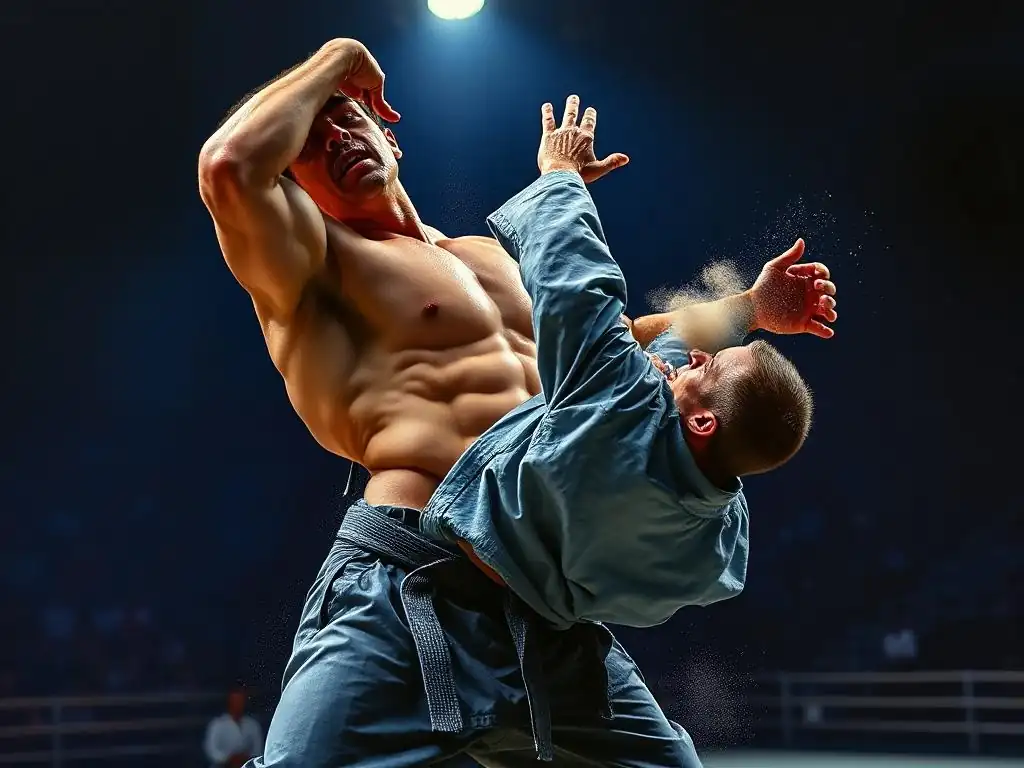
Welcome to Martial Arts Mastery, your ultimate resource for delving into the world's fighting arts! Prepare to unlock the secrets of Tewaza throws for Judo – not just techniques, but a pathway to high-percentage victories. Explore how these powerful hand techniques can elevate your Judo game and discover the tactical advantages that separate champions from contenders. Intrigued? Dive in and begin mastering the art of Tewaza.
- Mastering Tewaza: Hand Techniques for Judo Domination
- High-Percentage Tewaza Throws for Judo Competition
- Strategic Tewaza Combinations and Setups for Judo
- Tewaza Training Drills for Judo Excellence
- Tewaza Tactics in Judo Competition: Strategies for Victory
- Advanced Tewaza Concepts for Competitive Judoka
- Tewaza: A Path to Judo Throwing Mastery
-
Frequently Asked Questions
- What exactly are Tewaza throws in Judo?
- Why are Tewaza throws considered important for Judo competition?
- What are some examples of popular Tewaza throws used in Judo competition?
- How can I improve my Tewaza throwing technique for Judo?
- Where can I learn more about Tewaza throws and other Judo techniques?
- Final Reflection: Mastering Tewaza for Judo Excellence
- Master Your Mat: Start Throwing with Confidence!
Mastering Tewaza: Hand Techniques for Judo Domination
Understanding Tewaza in Judo: A Foundation for Success
Tewaza, literally translating to "hand techniques," forms one of the three primary categories of nage-waza (throwing techniques) in Kodokan Judo, alongside koshi-waza (hip techniques) and ashi-waza (foot/leg techniques). Unlike throws that rely heavily on hip rotation or sweeping/reaping legs, tewaza techniques primarily utilize the arms, hands, and upper body to lift, pull, push, and ultimately off-balance ( kuzushi) and throw an opponent.
Mastering tewaza throws for judo competition requires not only physical strength and technical precision but also a deep understanding of leverage, timing, and body mechanics. These techniques are often powerful and direct, making them potent tools for securing high scores, including ippon, on the competitive mat.
The historical development of tewaza is intertwined with the evolution of judo itself. Early forms of grappling included many hand-based techniques, and Jigoro Kano formalized these into the Kodokan system. Techniques like Ippon Seoi Nage and Tai Otoshi are foundational tewaza throws taught from the earliest stages of judo training.
In modern competition, proficiency in these hand techniques is crucial. According to analysis of high-level judo tournaments, tewaza throws, particularly variations of Seoi Nage and Tai Otoshi, consistently rank among the most frequently attempted and successful techniques leading to scores. For instance, data from IJF Grand Slam and World Championship events often shows variations of Seoi Nage contributing significantly to the total number of ippons scored, sometimes accounting for over 20% of successful throws in certain weight categories or during specific tournament cycles.
The Importance of Hand Techniques in Judo Throwing
Hand techniques are vital in competitive judo for several reasons. Firstly, they allow a judoka to attack from a relatively close range, often without needing to fully commit their hips or legs into the opponent's space until the final throwing motion. This can make them faster to execute and harder to defend against if applied with speed and precision. Grip fighting, a critical element of competitive judo, directly impacts the effectiveness of tewaza. Superior grip control enables a judoka to dictate the opponent's posture and movement, creating the necessary kuzushi for successful tewaza throws for judo.
Secondly, tewaza techniques offer versatility. Many tewaza throws can be initiated from various grips (e.g., standard lapel/sleeve, cross-grip, single-lapel) and against different opponent stances. This adaptability makes them essential tools in the dynamic environment of a judo match.
Furthermore, tewaza can be highly effective against opponents who have a strong defensive posture or who are attempting to drive forward. Techniques like Sukui Nage or variations of Seoi Nage can utilize the opponent's forward momentum against them. While specific statistical breakdowns vary year to year and by weight class, anecdotal evidence and coaching analysis consistently highlight that elite judoka possess strong tewaza arsenals, often employing them as primary attacks or as crucial components in complex combinations.
High-Percentage Tewaza Throws for Judo Competition
Ippon Seoi Nage: The Classic Tewaza Power Throw
Ippon Seoi Nage, or one-arm shoulder throw, is arguably the most iconic and frequently used tewaza throw in judo competition. It is a direct, powerful technique where the thrower turns under the opponent's arm, securing a strong grip on the opponent's arm (often the sleeve) while loading them onto their back/shoulder area before rotating and throwing.
Its effectiveness stems from its potential for generating significant power and achieving ippon quickly. Mastery involves precise timing, deep entry under the opponent's center of gravity, and a strong pull with the non-throwing arm (often gripping the lapel or back) to create the necessary kuzushi.
Success rates for Ippon Seoi Nage in elite competition remain high. While precise global statistics are difficult to aggregate real-time, analysis of major tournaments frequently shows Ippon Seoi Nage variations accounting for a substantial percentage of scored throws.
For example, during the 2016 Rio Olympics, various forms of Seoi Nage were among the most successful techniques utilized by medalists across several weight classes. The ability to execute a fast, committed Ippon Seoi Nage can break an opponent's posture instantly and lead to a decisive score, making it a cornerstone technique for any competitive judoka aiming for high-percentage tewaza throws for judo.
Ippon Seoi Nage variations for competitive Judo
Competitive judo demands adaptability, and Ippon Seoi Nage has several key variations that make it harder to defend against and applicable in diverse situations. The drop seoi nage variation involves the thrower dropping to one or both knees during the entry, lowering their center of gravity significantly.
This can be particularly effective against taller opponents or those with a strong defensive posture, allowing the thrower to get underneath their balance point. Another common variation is the sode tsurikomi goshi (sleeve lifting and pulling hip throw), which is often classified under tewaza or koshi-waza but shares mechanics with seoi nage, involving gripping both of the opponent's sleeves and using a lifting action before turning in.
Another crucial variation is the reverse seoi nage, where the thrower turns in the opposite direction compared to the standard technique, often attacking the opponent's back. This can catch an opponent off guard, especially if they are anticipating a standard forward turn. Each variation requires specific timing and kuzushi. For instance, drop seoi nage often relies on pulling the opponent forward and downward, while reverse seoi nage might exploit an opponent's lateral movement or stiffness. Elite competitors frequently drill these variations extensively to ensure they can transition between them seamlessly based on the opponent's reaction and grip fighting dynamics.
Drills to improve Ippon Seoi Nage Execution
Improving Ippon Seoi Nage execution requires dedicated and focused training. Uchi-komi (repetition training) is fundamental. Performing hundreds of repetitions of the entry movement – turning in, getting deep under the opponent's arm, and establishing the grip – is essential for developing muscle memory and speed. Practicing uchi-komi from various starting grips and against passive and slightly resisting partners helps simulate real competition scenarios. A common drill involves starting from a standard grip and practicing the entry, pull, and turn-in motion without completing the throw, focusing purely on the mechanics of the setup and entry.
Another effective drill is nage-komi (throwing practice), where the technique is performed fully, throwing a partner who is cooperating by falling safely. This allows the judoka to practice the complete motion, including the crucial off-balancing and finishing power. Randori (free practice) is where these techniques are tested under dynamic pressure.
Specific randori rounds can focus on attempting only tewaza throws for judo, forcing the judoka to find opportunities to apply Ippon Seoi Nage against a resisting opponent. Feedback from coaches and training partners on entry depth, hip position, and pulling action is critical during these drills to refine the technique.
Tai Otoshi: Body Drop Throw for Judo
Tai Otoshi is another foundational and highly effective tewaza throw, characterized by the thrower extending their leg across the opponent's path and using arm action to pull and rotate the opponent over the extended leg. Unlike hip throws, Tai Otoshi does not require the thrower to fully load the opponent onto their hips; instead, it relies heavily on creating a strong block or barrier with the leg while pulling the opponent's weight forward and sideways. This technique is powerful because it directly attacks the opponent's forward balance and can be executed with significant force, often leading to ippon.
Tai Otoshi is a staple in competitive judo across all weight categories. Its success rate is consistently high, particularly when executed with speed and proper kuzushi. Analysis from major IJF events shows Tai Otoshi frequently appearing in the highlight reels of successful throws. Its effectiveness often lies in its deceptive nature – the thrower uses arm action to initiate the pull, and the leg placement comes as a sudden barrier. A well-timed Tai Otoshi can send an opponent crashing down with impressive force, making it one of the most reliable high-percentage tewaza throws for judo competitors.
Tai Otoshi entry variations in Judo
Variability in entry is key to making Tai Otoshi a high-percentage throw in competition. A common entry involves a forward pulling action combined with a step-by-step movement that brings the thrower's blocking leg across the opponent's line of balance. Another variation utilizes a circular pulling action, drawing the opponent into a rotation before placing the leg and completing the throw. Some competitors prefer a "sliding" entry, where the blocking leg slides quickly into position rather than stepping. The choice of entry often depends on the opponent's reaction, posture, and the grip situation.
Aggressive grip fighting can create opportunities for Tai Otoshi. For example, securing a strong sleeve grip and a high lapel grip allows for powerful pulling and lifting actions necessary for effective kuzushi. Entering with a feinted attack like Ouchi Gari can sometimes cause the opponent to step back, creating the space needed for a Tai Otoshi entry. Elite judoka practice transitioning into Tai Otoshi from various grips and movements, such as following an opponent's backward step or interrupting their forward momentum.
Countering Tai Otoshi in Judo competition
Defending against Tai Otoshi requires good posture, awareness, and quick reactions. The primary defense is to avoid being pulled off balance forward and sideways. If an opponent attempts Tai Otoshi, resisting the forward pull and immediately stepping back and away from the blocking leg is crucial. Maintaining a strong, upright posture makes it harder for the thrower to break your balance and establish the necessary leverage. Pushing back into the opponent can also disrupt their entry and prevent them from getting their leg into position effectively.
Another counter-strategy involves recognizing the Tai Otoshi setup early and attempting a counter-throw. If the opponent commits heavily to the Tai Otoshi entry, they may become vulnerable to techniques like Harai Goshi or Uchi Mata if you can shift your weight and hip into their space. Some judoka also attempt to turn into the throw, completing a rotation to avoid landing flat on their back. However, this is a high-risk defense and requires significant skill and timing. Effective defense against Tai Otoshi relies on anticipating the attack and reacting decisively to maintain balance and posture.
Kata Guruma: Shoulder Wheel for Judo
Kata Guruma, or shoulder wheel, is a dynamic tewaza throw where the thrower lifts the opponent onto their shoulders before rotating and throwing them. This technique requires significant lifting strength and coordination. The thrower typically secures a grip, often on the opponent's arm and potentially the lapel or belt, then ducks under the opponent's arm and stands up, lifting the opponent onto their back/shoulders, and finally rotates to throw. It's a spectacular throw that often results in ippon due to the height and force generated.
While not as frequently attempted as Seoi Nage or Tai Otoshi, Kata Guruma is a high-percentage throw when successfully executed, particularly against opponents who are leaning forward or resisting strongly upwards. Its success rate in competition can be impressive for those who specialize in it. For instance, legendary judoka like Kosei Inoue were renowned for their devastating Kata Guruma. While precise global statistics are hard to pinpoint consistently across all events, it is recognized as a technique with high scoring potential when the setup and execution are perfect.
Kata Guruma set-ups and combinations
Setting up Kata Guruma effectively in competition often involves disrupting the opponent's posture and creating an opening to get underneath them. A common setup involves pulling the opponent strongly forward to break their balance and encourage them to resist by pushing back or stiffening up. This resistance can create a moment of upward tension that the thrower can exploit to duck under. Feinting other tewaza throws, like Seoi Nage, can also sometimes draw a reaction that opens the door for a Kata Guruma entry.
Combinations involving Kata Guruma are also effective. For example, attempting a Tai Otoshi or Ouchi Gari can sometimes cause the opponent to shift their weight or step back, creating an opportunity to transition into a Kata Guruma entry. Similarly, if an opponent defends against a Kata Guruma attempt by straightening up or pulling away, the thrower might transition into a different technique like Osoto Gari or Harai Goshi. Mastery of these combinations makes Kata Guruma a more viable and less predictable attack in the dynamic environment of a judo match.
Advanced Kata Guruma techniques
Advanced applications of Kata Guruma involve executing the technique from less conventional grips or against opponents who are actively defending. Some judoka specialize in belt Kata Guruma, securing a grip on the opponent's belt to enhance the lift. Others work on reverse Kata Guruma, similar in concept to reverse seoi nage, where the thrower turns in the opposite direction. Executing Kata Guruma from a standing position without dropping to the knees requires significant strength and timing, but can be faster and harder to defend against.
Another advanced concept is using Kata Guruma as a counter-attack, particularly when an opponent is driving in aggressively. By timing the entry perfectly as the opponent attacks, the thrower can utilize the opponent's momentum and forward pressure to facilitate the lift. Mastering these advanced techniques requires extensive practice and a deep understanding of body mechanics and leverage. Elite judoka who employ Kata Guruma often have specific training regimens focused on explosive lifting power and dynamic entry drills.
Sukui Nage: Belt Scooping Throw
Sukui Nage, or belt scooping throw, is a tewaza technique that involves scooping the opponent's leg or belt while pulling them forward and sideways to throw them. It often targets the opponent's forward-leaning posture or their attempt to drive forward. The thrower typically secures a grip on the opponent's upper body with one hand (lapel or back) and uses the other hand to scoop the opponent's near leg or belt from the outside, pulling them forward and rotating to throw them over the scooping arm/hand.
Sukui Nage can be a highly effective surprise attack, particularly against opponents who are constantly trying to push or drive forward. While perhaps not as universally high-percentage as Seoi Nage or Tai Otoshi across all situations, it holds a high success rate in specific contexts and against certain opponent types. Its effectiveness often comes from its unexpected nature and the fact that it directly attacks the opponent's base of support. Analysis of competitive judo shows Sukui Nage appearing periodically as a decisive scoring technique, often initiated from close-range grappling exchanges.
Sukui Nage grip variations
Effective Sukui Nage execution depends heavily on establishing the right grips. A common setup involves a strong grip on the opponent's lapel or shoulder with one hand to control their upper body and facilitate the necessary kuzushi. The other hand is then free to perform the scooping action on the opponent's leg or belt. Variations include securing a grip on the opponent's back or even a cross-grip on the far lapel, which can enhance the pulling power needed to break their balance forward.
The scooping hand can target different areas. Scooping the opponent's belt provides a very secure point of control for the lift and throw. Scooping the opponent's thigh or pant leg requires more precise timing but can be faster to execute. Some judoka also use a two-on-one grip on the opponent's arm to control their posture before transitioning into the scoop. Practicing Sukui Nage from various grip entries is crucial for making it a versatile attack option.
Using Sukui Nage effectively in Judo
Using Sukui Nage effectively in competition requires patience and timing. It is often most successful when the opponent is moving forward or is already slightly off-balance in that direction. The thrower must time the scoop precisely with the opponent's momentum. It can also be used as a counter-attack against certain leg techniques or forward attacks. For example, if an opponent attempts a weak Ouchi Gari or is driving forward for a hip throw, a well-timed Sukui Nage can turn their attack into your scoring opportunity.
Practicing Sukui Nage involves focusing on the coordinated action of the upper body pull and the lower body scoop. Drills should emphasize quick, deep penetration with the scooping hand and a powerful rotational pull with the upper body grip. Uchi-komi focusing on the entry and scoop motion, followed by nage-komi to practice the full throw, are essential. Integrating Sukui Nage into randori, specifically looking for opportunities when the opponent is pressuring forward, helps develop the tactical awareness needed to use this tewaza throw for judo effectively in competition.
Strategic Tewaza Combinations and Setups for Judo
Combining Tewaza with Other Judo Throwing Techniques (Nage-waza)
Elite judoka rarely rely on a single technique. Instead, they build complex attack sequences, often combining techniques from different nage-waza categories. Combining tewaza throws for judo with koshi-waza or ashi-waza makes attacks less predictable and creates openings that wouldn't exist with single attacks.
A common strategy is to feint one type of throw to draw a specific defensive reaction from the opponent, then immediately transition into a different type of throw that exploits that reaction. For example, attempting a strong Tai Otoshi can cause the opponent to instinctively step back, which might create the space needed for a follow-up Ashi-waza attack like De Ashi Harai or Sasae Tsurikomi Ashi.
Conversely, initiating an attack with Ashi-waza can set up a tewaza throw. A failed or defended Ouchi Gari attempt, for instance, might leave the opponent momentarily off-balance or focused on defending their legs, creating an ideal opportunity to transition into a quick Ippon Seoi Nage or Tai Otoshi. The key is seamless transition and understanding how different techniques affect the opponent's balance and posture. Coaches often emphasize drilling these specific combinations repeatedly so they become automatic responses in the heat of competition.
Tewaza to Koshi-waza combinations
Combining tewaza with koshi-waza is a potent strategy because hand techniques often attack the opponent's upper body and forward balance, while hip techniques require getting close and attacking their center of gravity. A classic combination is attempting Ippon Seoi Nage and transitioning to Harai Goshi or Uchi Mata.
If the opponent successfully defends the Seoi Nage by straightening up and resisting the turn, they often become vulnerable to a hip throw as their weight is high and their hips are accessible. The thrower pivots out of the Seoi Nage entry and immediately enters for the hip throw, utilizing the opponent's defensive posture against them.
Another example involves initiating with Tai Otoshi. If the opponent steps back to avoid the Tai Otoshi, they might be drawn into a position where their hips are exposed for a follow-up technique like Osoto Gari (though often classified as Ashi-waza, it shares principles with hip attacks) or even a quick O Goshi. The transition must be fluid, using the momentum from the first failed attack to power the entry into the second technique. Training these transitions involves specific renraku-waza (combination technique) drills.
Tewaza to Ashi-waza combinations
Combining tewaza with ashi-waza is equally effective and often relies on disrupting the opponent's footwork and balance. Attempting a tewaza throw like Ippon Seoi Nage can cause the opponent to widen their stance or step back defensively. This defensive reaction can leave their feet vulnerable to sweeps or reaps. For instance, after a failed Seoi Nage attempt, the thrower might immediately attack the opponent's retreating foot with De Ashi Harai or Okuri Ashi Harai. The timing is critical – the foot sweep must come right as the opponent's foot is vulnerable during their defensive step.
Similarly, initiating an attack with Tai Otoshi can set up Ashi-waza. If the opponent steps back to avoid the Tai Otoshi, their weight might shift onto one leg, making it a target for a sweep like Sasae Tsurikomi Ashi or even a major reaping technique like Ouchi Gari if they step inward. The principle is to use the first technique to create a moment of vulnerability in the opponent's base, which the second technique then exploits. Drills should focus on recognizing the opponent's defensive steps and reacting instantly with the appropriate foot technique.
Using Kuzushi (Off-Balancing) to Enhance Tewaza Effectiveness
Kuzushi, the art of off-balancing, is the fundamental principle underlying all judo throws, and it is absolutely critical for successful tewaza throws for judo. A technically perfect tewaza throw will fail if the opponent is not properly off-balanced. Tewaza techniques primarily rely on breaking the opponent's balance forward, sideways, or diagonally forward. This is achieved through a combination of pulling, pushing, lifting, and rotating actions with the hands and arms, coordinated with body movement and footwork.
Effective kuzushi for tewaza often involves manipulating the opponent's posture and center of gravity. For Ippon Seoi Nage, the goal is typically to pull the opponent forward and onto the balls of their feet, making them light and easy to load onto the shoulder. For Tai Otoshi, kuzushi involves pulling the opponent forward and slightly sideways, drawing them onto the extended blocking leg.
Developing a keen sense of the opponent's balance and knowing how to disrupt it through dynamic gripping and movement is paramount. Drills like uchi-komi should not just focus on the physical entry but also on the specific pulling and pushing actions required to achieve the necessary kuzushi against a partner offering slight resistance.
Reading Your Opponent: Adapting Tewaza Strategy
Success in competitive judo relies heavily on the ability to read your opponent's intentions, reactions, and physical attributes, and adapt your tewaza strategy accordingly. An opponent's stance (high vs. low, forward vs. backward leaning), preferred grips, and defensive habits all provide clues. For example, an opponent who consistently maintains a low, defensive posture might be harder to throw with a standard standing Seoi Nage but could be vulnerable to a drop Seoi Nage or Tai Otoshi that attacks their forward balance. An opponent who stiffens up and resists upward might be a good candidate for Kata Guruma.
Observing how an opponent reacts to your initial attacks or feints is also critical. Do they step back when you pull forward? Do they widen their base when you attempt to turn in? These reactions dictate which combination techniques or variations of your tewaza throws for judo are likely to be successful. A skilled judoka constantly probes the opponent's defenses, using grip fighting and movement to test their reactions and identify weaknesses. This requires developing tactical awareness and the ability to think several steps ahead during the match, constantly adjusting your planned attacks based on the opponent's real-time responses.
Tewaza Training Drills for Judo Excellence
Developing Grip Strength and Control for Tewaza
Strong grips and the ability to control the opponent's sleeve and lapel are fundamental to executing powerful and effective tewaza throws for judo. Grip strength is developed through specific physical conditioning, such as using grip trainers, doing towel pull-ups, or performing deadlifts with a thick bar or gi grips. However, functional grip strength for judo is best developed on the mat through extensive kumite (grip fighting) practice. Drilling specific grip exchanges – how to establish dominant grips, how to break the opponent's grips, and how to transition between grips – is crucial.
Drills can involve starting from a neutral grip and practicing establishing a strong standard grip (lapel and sleeve) or specific competition grips (e.g., cross-grip, single lapel) quickly and forcefully. Partner drills focusing solely on breaking the opponent's grips using various techniques (pulling, twisting, stripping) build the necessary hand and forearm endurance. Randori focused on grip fighting before attempting throws helps judoka understand how to gain and maintain control under resistance. For instance, spending several minutes in randori solely focused on securing and holding a strong grip suitable for Ippon Seoi Nage before attempting the throw is highly beneficial.
Agility and Footwork Drills for Effective Tewaza Execution
Effective tewaza throws for judo require dynamic footwork and agility to achieve the correct entry and positioning relative to the opponent. Drills should focus on developing quick, precise steps and the ability to pivot smoothly. Ladder drills, cone drills focusing on lateral movement and quick changes of direction, and partner drills emphasizing forward and backward stepping while maintaining connection are all useful.
Specific judo footwork drills for tewaza include practicing the entry steps for techniques like Ippon Seoi Nage or Tai Otoshi without a partner, focusing purely on the speed and accuracy of the feet and body turn. Partner drills where one person provides slight resistance while the other practices entering for a tewaza throw, focusing on getting their feet and hips into the correct position relative to the partner, are also essential. Uchi-komi performed with emphasis on rapid, precise foot placement reinforces the connection between footwork and technique execution.
Uchi-komi (Repetition Training) for Tewaza Mastery
Uchi-komi is the cornerstone of technical mastery in judo, and it is indispensable for developing high-percentage tewaza throws for judo competition. This drill involves practicing the entry and preparatory movements of a throw repeatedly with a partner, focusing on perfect form and speed without completing the throw. For tewaza, this means practicing the grip establishment, pulling/pushing action for kuzushi, the turn-in, and getting the body into the correct position relative to the opponent.
Performing uchi-komi from various starting positions, against partners of different sizes and stances, and at varying speeds helps build adaptability. For example, practicing Ippon Seoi Nage uchi-komi from a standard grip, then from a cross-grip, then against a defensive posture, helps refine the technique for different scenarios. Coaches often set repetition targets, such as 50-100 uchi-komi repetitions per technique per training session. This high volume builds the muscle memory and technical precision required to execute tewaza throws effectively under the pressure of competition.
Tewaza Tactics in Judo Competition: Strategies for Victory
Tewaza as a Counter-Attack Strategy
Tewaza throws, particularly Tai Otoshi and certain variations of Seoi Nage or Sukui Nage, can be highly effective as counter-attacks in competitive judo. When an opponent attacks, they often commit their weight and momentum in a specific direction, potentially creating a momentary vulnerability. A skilled judoka can recognize this opening and use the opponent's own energy against them by timing a tewaza counter. For example, if an opponent drives forward for a hip throw, a quick Tai Otoshi timed as they step in can use their forward momentum to throw them over your extended leg.
Similarly, if an opponent attempts a leg sweep and slightly overextends or loses their balance, a swift Ippon Seoi Nage can capitalize on their forward off-balance. Sukui Nage is also a classic counter-attack against opponents who are pushing forward or attempting certain leg techniques. Developing tewaza as a counter-attack requires excellent timing, reaction speed, and the ability to read the opponent's attack early. Drills focusing on reacting to common attacks with specific tewaza counters are essential training components.
Using Tewaza to Control the Pace of the Match
Tewaza throws can also be used strategically to control the pace and flow of a judo match. Aggressively attacking with powerful tewaza throws for judo, even if they don't immediately result in a score, forces the opponent to react defensively, disrupting their rhythm and preventing them from initiating their own attacks. Repeated strong attacks with techniques like Ippon Seoi Nage can wear down an opponent physically and mentally, forcing them to expend energy defending.
Furthermore, using tewaza to generate scores can put pressure on the opponent, forcing them to change their strategy and become more aggressive, which can create opportunities for further attacks or counters. Conversely, a well-timed tewaza attack can break a period of stalemate or passive gripping. Coaches often advise judoka to initiate attacks early and frequently, and tewaza throws provide excellent options for setting the tone of the match and maintaining offensive pressure.
Exploiting Opponent Weaknesses with Tewaza
Identifying and exploiting an opponent's specific weaknesses with tewaza is a hallmark of high-level competitive judo. Weaknesses can include poor posture, predictable reactions to certain grips or movements, difficulty defending specific directions of kuzushi, or a lack of proficiency against particular types of throws. For example, an opponent who consistently leans forward might be particularly vulnerable to Tai Otoshi or Sukui Nage. An opponent who struggles to defend against attacks from a cross-grip might be susceptible to Ippon Seoi Nage initiated from that position.
Scouting opponents before a match can provide valuable insights into their preferred techniques and defensive tendencies. During the match, a judoka should constantly be looking for these tells. If an opponent repeatedly steps back in a specific way when you pull, that retreat might be the setup for a follow-up tewaza or combination. Tailoring your tewaza attacks to target these observed weaknesses significantly increases the probability of scoring. This tactical application of tewaza distinguishes experienced competitors from novices.
Advanced Tewaza Concepts for Competitive Judoka
Understanding the Biomechanics of Effective Tewaza Throws
Moving beyond basic execution, advanced judoka delve into the biomechanics of tewaza throws to optimize power, efficiency, and safety. This involves understanding how leverage works during the throw, how force is generated through coordinated body movement (legs, hips, torso, arms), and how to maximize rotational power. For example, in Ippon Seoi Nage, understanding the precise angle of the turn-in, the depth of the entry under the opponent's arm, and the coordinated action of the pulling arm and the driving legs is crucial for generating maximum lifting and rotating force.
For Tai Otoshi, biomechanical analysis focuses on the timing and placement of the blocking leg relative to the opponent's center of gravity and the synergistic action of the pulling arms to rotate the opponent over the leg barrier. Advanced study might involve using video analysis to break down elite judoka's technique frame by frame or consulting with sports scientists. The goal is to refine technique by understanding the underlying physics and physiology, making tewaza throws for judo not just movements but optimized systems of force application.
Developing a Personalized Tewaza Strategy
While foundational tewaza techniques are taught universally, elite judoka develop personalized tewaza strategies tailored to their own physical attributes, strengths, and style, as well as the specific demands of their weight class. A taller, stronger judoka might favor powerful, standing Tai Otoshi or Kata Guruma, while a shorter, faster judoka might specialize in rapid drop Seoi Nage variations or dynamic combinations ending in tewaza.
Developing a personalized strategy involves identifying your most effective tewaza throws for judo, refining them to a high-percentage level, and building combinations and setups around them. It also involves understanding which tewaza techniques are most effective against common opponent types in your weight class and practicing specific game plans. This is not a static process but evolves over time through training, competition experience, and analysis of successes and failures. Coaches play a vital role in helping judoka identify their strengths and build a coherent, personalized tewaza system.
Mental Preparation for Tewaza Execution in Judo Competition
Executing high-percentage tewaza throws for judo under the intense pressure of competition requires significant mental fortitude. This includes confidence in your technique, the ability to stay focused amidst chaos, and the resilience to keep attacking even after failed attempts. Mental preparation involves visualization techniques, picturing successful execution of your key tewaza throws during training and competition.
Developing a strong competitive mindset also includes managing anxiety, maintaining composure after setbacks (like a defended attack or receiving a penalty), and staying present in the moment. Rituals, positive self-talk, and working with sports psychologists are tools competitive judoka use. The ability to remain calm and decisive allows a judoka to recognize opportunities for tewaza attacks and execute them with the necessary speed and precision, even when fatigued or under pressure. Ultimately, mental strength unlocks the full potential of physical and technical skill in competitive judo.
Tewaza: A Path to Judo Throwing Mastery
Frequently Asked Questions
What exactly are Tewaza throws in Judo?
Tewaza throws are a category of Judo techniques that primarily utilize the arms and hands to execute the throw. They are often high-percentage throws due to their reliance on leverage and grip control.
Why are Tewaza throws considered important for Judo competition?
Tewaza techniques are important because they can be executed quickly and efficiently, making them valuable for scoring points and controlling the opponent in a match. They often require less overall strength than other throw types.
What are some examples of popular Tewaza throws used in Judo competition?
Examples include Tai-otoshi (body drop), Seoi-nage (shoulder throw), and Kata-guruma (shoulder wheel). These throws rely on proper grip and body positioning.
How can I improve my Tewaza throwing technique for Judo?
Focus on drilling the fundamentals, practicing proper grip fighting, and developing a strong understanding of body mechanics and balance breaking. Consider working with an experienced Judo instructor.
Where can I learn more about Tewaza throws and other Judo techniques?
Websites like MartialArtsMastery.org offer a wealth of information on various martial arts disciplines, including Judo, covering historical overviews, training tips, and self-defense strategies. You can also consult books and videos.
Final Reflection: Mastering Tewaza for Judo Excellence
The meticulous breakdown of Tewaza techniques in Judo competition underscores their enduring relevance in modern Judo. While flashy throws and powerful groundwork often dominate highlight reels, the subtle art of Tewaza, executed with precision and timing, remains a crucial pathway to victory. The strategies outlined in this article demonstrate that mastering these techniques is not just about adding to one's arsenal, but about cultivating a deeper understanding of Judo principles and exploiting opportunities often overlooked by opponents.
This exploration of Tewaza has profoundly influenced my own appreciation for the nuanced beauty of Judo. It's a reminder that true mastery lies not just in brute force, but in the intelligent application of technique and strategy. The essence of Judo is nothing other than the perfection of the human character. It demands constant effort to improve oneself.
- Jigoro Kano. This quote encapsulates the spirit of continuous improvement that Tewaza embodies, pushing us to refine our skills and elevate our understanding of the art.
Now, consider how you can integrate these Tewaza principles into your own Judo practice. Embrace the challenge of mastering these seemingly simple techniques, and observe how they transform your approach to competition. Let the pursuit of Tewaza excellence be a catalyst for growth, not only as a Judoka, but as an individual striving for perfection in all aspects of life.
Master Your Mat: Start Throwing with Confidence!
Thank you for diving into the world of high-percentage Judo throws! We hope you've gained valuable insights to elevate your competition game. Now, it's time to put that knowledge into action and truly master your mat.
Here's how to take the next step:
- Focus on mastering just one new throw from this article this week. Repetition is key!
- Explore our Martial Arts Mastery video library for detailed tutorials and variations on these throws.
- Share your progress and ask questions within your Judo dojo or online community – collaboration accelerates learning!
Which of these throws are you most excited to integrate into your Judo arsenal, and what drills will you use to perfect it?