
Hatakikomi: The Art and Timing of the Deceptive SlapDown Technique


Welcome to Martial Arts Mastery, your gateway to the world's fighting arts!
Delve into the captivating realm where discipline meets deception. Ever heard of a technique so subtle, so swift, it can turn the tide of battle in an instant? Prepare to unravel the secrets of Hatakikomi, a deceptively simple yet devastating slap-down technique explored in depth within this article. Discover its origins, applications, and the precise timing required to master this skill. Are you ready to elevate your understanding of martial arts strategy? Read on to learn more about the art and timing of the deceptive slap-down technique and unlock a new dimension of combat prowess.
- Hatakikomi: The Art and Timing of the Slap-Down Technique
- Understanding Hatakikomi: A Sumo Technique
- Training: Mastering the Art of Execution
- History and Evolution
- Analyzing the Mechanics
- Hatakikomi vs. Other Sumo Techniques
- Training Drills
- The Psychological Aspect: Deception and Timing
- Legendary Sumo Wrestlers and Hatakikomi
- Advanced Techniques and Variations
- Mastering Hatakikomi: A Path to Victory
- Frequently Asked Questions
- Final Reflection: Mastering Deception, Embracing Opportunity
- Master the SlapDown: Elevate Your Technique!
Hatakikomi: The Art and Timing of the Slap-Down Technique
Understanding Hatakikomi: A Sumo Technique
What is Hatakikomi in Sumo Wrestling?
Hatakikomi is a fundamental winning technique (kimarite) in professional sumo wrestling. It involves striking the opponent's back or shoulder with an open hand, typically while simultaneously withdrawing or stepping to the side, aiming to force them off balance and down to the clay ring (dohyo). Unlike a push or a thrust, the emphasis is on a sharp, downward slap or tap designed to disrupt the opponent's forward momentum or stability, often when they are fully committed to an attack. This technique relies heavily on timing and positioning rather than brute force alone.
The execution of Hatakikomi requires precise coordination between the hand strike and body movement. A wrestler performing Hatakikomi usually waits for their opponent to drive forward aggressively. As the opponent commits their weight and momentum, the defender quickly steps to the side or pivots while delivering the decisive slap. The goal is to exploit the opponent's forward lean, causing them to fall face-first or sideways onto the dohyo. It's a deceptive technique because it often appears sudden and reacts to the opponent's action rather than initiating a direct power struggle.
The Strategic Significance of Hatakikomi
Hatakikomi holds significant strategic importance in sumo, particularly against opponents who favor aggressive, head-on attacks or relentless pushing (oshi). It serves as an effective counter-measure, turning the attacker's own momentum against them. By yielding slightly or sidestepping, the defender creates an opening and uses the slap to exacerbate the opponent's imbalance. This technique is less about overpowering the opponent and more about leveraging physics and timing. It is often employed by wrestlers who possess good agility and defensive instincts.
Historically, Hatakikomi has been a reliable kimarite, though perhaps less celebrated than powerful throws or pushes. Statistics from recent tournaments often show Hatakikomi accounting for a notable percentage of winning techniques, sometimes ranging between 5-10% of all kimarite used by top-division wrestlers, varying year to year and tournament to tournament based on the prevalent styles of rikishi.
Its effectiveness lies in its surprise element and the fact that it requires minimal sustained physical contact, making it useful for avoiding prolonged, strength-sapping contests in the center of the ring. Training for the Hatakikomi deceptive slap technique is a crucial part of a versatile rikishi's repertoire.
Training: Mastering the Art of Execution
Developing Speed and Power
Mastering the Hatakikomi deceptive slap technique requires developing both speed and power in the striking hand, coupled with explosive lateral movement. Training regimens often include drills focused on fast-twitch muscle fibers. Plyometric exercises like box jumps or explosive push-ups help build the lower body power needed for the quick side step or pivot. For the hand strike itself, resistance band training, focusing on rapid, snapping motions, can improve speed and impact force. Striking pads held by a partner, emphasizing the sharp, downward motion, is also crucial.
Beyond isolated exercises, integrated drills are essential. Practicing quick directional changes while mimicking the hand motion is vital. Wrestlers might work on reacting to a partner's simulated charge, focusing on the instantaneous transition from absorbing pressure to executing the side-step and slap. Repetition is key to building muscle memory, allowing the technique to be performed instinctively under pressure. A typical session might involve dozens of repetitions, focusing on the speed and coordination of the entire movement chain, from footwork to the final hand strike.
Footwork and Positioning
Precise footwork and positioning are arguably more critical than raw power for a successful Hatakikomi. The ability to quickly shift your weight and position relative to your opponent dictates whether the technique creates an opening or leaves you vulnerable. Training focuses on agility drills, such as ladder drills, cone weaving, and shadow sumo, where wrestlers practice rapid changes in direction and maintaining a low center of gravity. The goal is to be able to instantly pivot or step to the side as the opponent drives forward, creating an angle where their momentum carries them past you.
Specific drills involve a partner driving forward while the trainee practices the side-step, focusing on keeping their base solid and their body angled correctly. This isn't just about moving away from the opponent, but moving to a position where the slap can be delivered effectively to their side or back, capitalizing on their forward lean. Maintaining balance throughout the quick movement is paramount; a poorly executed step can lead to falling or being pushed down yourself. This aspect of Hatakikomi training emphasizes reactive movement and spatial awareness within the limited confines of the dohyo.
Hand Placement and Trajectory
Effective Hatakikomi execution hinges on the precise placement and trajectory of the slap. The target area is typically the opponent's upper back or shoulder blade, aiming to disrupt their balance at a high point. Training involves repetitive practice of the striking motion, focusing on an open hand with fingers slightly spread for maximum surface area and impact distribution, delivered with a sharp, downward angle. It's not a push, but a whip-like motion designed to generate a sudden shock.
Partners often wear padded vests or use focus mitts to allow trainees to practice hitting the correct spot with the proper force and angle. Feedback on hand shape and contact point is crucial. The trajectory is primarily downward, leveraging gravity and the opponent's forward lean. Practicing this motion in isolation, then integrating it with the footwork, helps refine the timing. The slap must connect just as the opponent's weight is fully committed forward, maximizing the disruptive effect. This specific aspect of Hatakikomi deceptive slap technique training ensures the strike is effective, not just a glancing blow.
History and Evolution
Historical Roots
Sumo wrestling, and by extension techniques like Hatakikomi, has roots stretching back over a thousand years in Japanese history, evolving from ritualistic performances and military training into a professional sport. While specific names for techniques might have varied in ancient times, the fundamental principles of using an opponent's momentum and disrupting balance were undoubtedly present.
Early forms of sumo likely involved a more direct, primitive struggle, but as the art developed, more refined and strategic maneuvers emerged. The concept of a 'slap-down' or deflection technique would naturally arise as a counter to aggressive forward pushes, which have always been a core element of sumo combat.
Historical scrolls and depictions of sumo bouts from the Edo period and earlier often show wrestlers engaging in close-quarters combat with various holds, pushes, and trips. While detailed breakdowns of every technique's origin are scarce, the principles behind Hatakikomi – reactive defense and using the opponent's force – are timeless martial concepts. The formal cataloging of kimarite, including Hatakikomi, became standardized much later, particularly with the establishment of professional sumo organizations. This formalization helped define and preserve the technique as a distinct winning move.
Evolution: From Ancient Sumo to Modern Bouts
The evolution of Hatakikomi in modern sumo reflects changes in training, strategy, and the physical attributes of wrestlers. As rikishi have grown larger and more powerful over the centuries, the speed and precision required for Hatakikomi have increased. In ancient sumo, where wrestlers might have been smaller and less specialized, a simple slap might have been sufficient. Today, against opponents weighing 150-200 kg (330-440 lbs) or more, the Hatakikomi must be executed with exceptional timing and explosiveness to be effective. The margin for error is much smaller.
Modern Hatakikomi deceptive slap technique training incorporates scientific principles of biomechanics and conditioning, aiming to maximize the speed of reaction and the force of the strike while maintaining stability. Wrestlers analyze opponents' tendencies using video analysis to predict when a Hatakikomi might be most effective. While the core principle remains the same – a deceptive slap to disrupt balance – the execution has become highly refined, a testament to the continuous development within the sport. Its prevalence fluctuates depending on the dominant styles of top rikishi; some eras see it used more frequently by champions than others.
Analyzing the Mechanics
Breaking Down the Movement
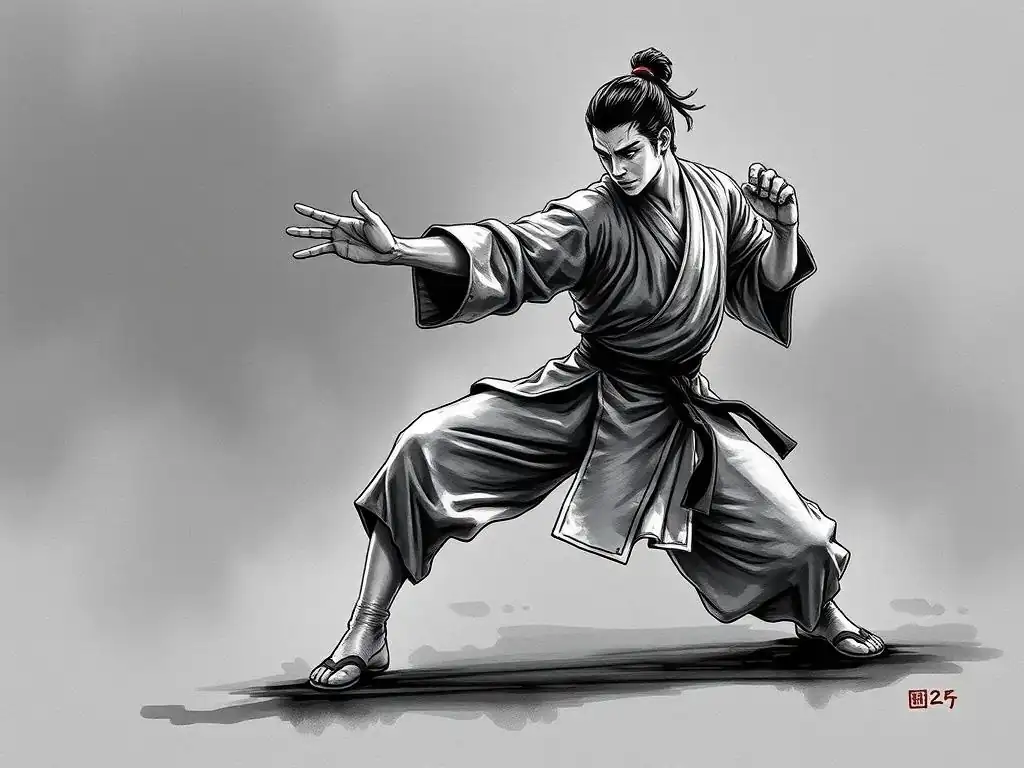
Analyzing the mechanics of Hatakikomi reveals a sequence of coordinated actions. It typically begins with the wrestler absorbing or yielding slightly to the opponent's forward drive. This is followed by a rapid lateral step or pivot, moving the defender's body out of the line of the opponent's attack. Simultaneously, the hand on the side corresponding to the direction of movement (or sometimes the opposite hand) is whipped downwards to strike the opponent's back or shoulder. The power doesn't come from a prolonged push, but a sharp, percussive impact.
The critical elements are the timing of the step relative to the opponent's momentum and the synchronization of the hand strike with the body's movement. A successful Hatakikomi leverages the opponent's forward lean; the slap simply provides the final impetus to break their balance. The defender must maintain a strong base throughout the movement, often keeping a low stance to prevent being pulled or pushed over themselves. The entire sequence usually unfolds in a fraction of a second, highlighting the need for explosive speed and reaction time.
Identifying Vulnerabilities
While effective, Hatakikomi also presents vulnerabilities for the executing wrestler. The primary risk is mistiming the technique. If the opponent is not fully committed forward, or if the defender's side-step is too slow, the opponent can easily adjust, maintain their balance, and continue driving, potentially pushing the defender out of the ring. Stepping too far to the side can also leave the defender exposed to a quick pull or throw (hikiotoshi or tsukiotoshi) from the opponent who manages to retain their balance.
Furthermore, if the slap is delivered weakly or misses the target, it provides no disruptive effect, and the defender is left in a disadvantageous off-balance position. A skilled opponent who anticipates the Hatakikomi can also use the defender's lateral movement to their advantage, perhaps by quickly changing direction or attempting a grapple as the defender shifts their weight. Therefore, Hatakikomi is a high-risk, high-reward technique that requires precise execution against a specific type of opponent's attack.
Common Mistakes to Avoid
Several common mistakes can render a Hatakikomi ineffective or even lead to defeat. One major error is attempting the technique without the opponent having sufficient forward momentum; the slap will simply bounce off without causing imbalance. Another frequent mistake is failing to execute the side-step or pivot quickly enough, allowing the opponent to stay connected and continue driving. Poor hand placement, such as striking too low or with insufficient force, is also a common issue.
Maintaining balance during the lateral movement is crucial; leaning too far back or losing one's footing makes the defender vulnerable. Finally, telegraphing the movement – making it obvious you are preparing for a Hatakikomi – allows the opponent to anticipate and counter. Effective Hatakikomi deceptive slap technique training focuses heavily on correcting these common errors through repetition, video analysis, and feedback from coaches and training partners.
Hatakikomi vs. Other Sumo Techniques
Contrasting Hatakikomi with Hikiotoshi
Hatakikomi and Hikiotoshi (pull-down) are both techniques that involve forcing the opponent down, often by targeting their upper body, but they differ significantly in execution. Hatakikomi uses a sharp, percussive slap to the back or shoulder while stepping to the side, aiming to disrupt balance through impact and lateral movement. It's typically a quicker, sharper action. Hikiotoshi, on the other hand, involves pulling the opponent downwards, often by the arm, shoulder, or mawashi (belt), while simultaneously stepping away or turning. It's more of a sustained pulling force combined with body movement to unbalance.
Think of it this way: Hatakikomi is like a sudden jolt to make someone trip while they are running forward, whereas Hikiotoshi is like yanking them down while they are trying to push you. Hatakikomi relies more on the opponent's forward momentum and the sudden shock of the slap, while Hikiotoshi relies more on the defender's pulling strength and leverage applied to a specific point of contact. While both result in the opponent falling, the mechanics and the type of force applied are distinct.
When to Choose Hatakikomi Over Other Techniques
Choosing Hatakikomi depends heavily on the opponent's style and the specific situation within the bout. It is particularly effective against wrestlers who favor aggressive, straight-line pushing attacks (oshi-zumo). When an opponent is driving relentlessly forward with their head down and body committed, they create the ideal scenario for a Hatakikomi. Their forward momentum makes them inherently unstable to a sudden lateral disruption and downward force.
Conversely, Hatakikomi is less effective against opponents who fight primarily from a belt grip (yotsu-zumo) or those who are more defensive and reactive. If the opponent is not driving forward aggressively, a Hatakikomi attempt might simply lead to a loss of balance for the attacker. It's also risky against opponents known for quickly changing direction or skilled at counter-pulling techniques. A wrestler might choose Hatakikomi over a technique like Hikiotoshi when the opponent's forward push is overwhelming and immediate, demanding a quick, reactive counter rather than establishing a sustained pull.
Training Drills
Agility and Reaction Time Drills
Effective Hatakikomi deceptively slap technique training heavily incorporates drills focused on agility and reaction time. Ladder drills are fundamental, improving foot speed and coordination for quick lateral movements. Cone drills, involving shuffling and changing direction around cones, help practice the necessary side-stepping and pivoting. Reaction ball drills or partner-led drills where a partner provides a visual or auditory cue for the trainee to execute a quick step and simulated slap are also vital for building the instantaneous response needed in a bout.
Another effective drill involves a partner simulating a forward push using a padded shield or their body weight, and the trainee's task is to react instantly with the appropriate step and slap motion. This drill emphasizes timing and reacting to external force. Incorporating variations in the partner's speed and angle of attack helps the trainee adapt to different scenarios they might face in a real match. These drills are performed repeatedly to embed the required quick reactions into muscle memory.
Partner Drills
Partner drills are indispensable for mastering Hatakikomi. One common drill involves one partner acting as the attacker, driving forward with moderate force, while the other practices the defensive side-step and slap. The attacker can vary their speed and angle to make the defender practice reacting to different types of pushes. Another drill focuses specifically on the timing of the slap, with the partner wearing a padded target on their back or shoulder, allowing the trainee to practice hitting the correct spot at the precise moment of the simulated forward commitment.
More advanced partner drills might involve starting from a tachi-ai (initial charge) simulation, with the attacker initiating a push and the defender attempting the Hatakikomi counter. This integrates the technique into the full context of a sumo engagement. Feedback from the partner is crucial, assessing the timing, angle of the step, and effectiveness of the slap. These drills simulate the dynamic environment of a bout, making the Hatakikomi training highly practical.
Conditioning Exercises
While Hatakikomi isn't solely a strength-based technique, specific conditioning supports its execution. Explosive leg strength is needed for the quick step or pivot, developed through squats, lunges, and plyometrics. Core strength is vital for maintaining stability during the rapid movement and delivering a powerful, controlled slap; exercises like planks, Russian twists, and medicine ball slams are beneficial. Shoulder and arm conditioning, focusing on speed and snap rather than just brute force, can be improved through resistance band exercises and light, fast weight training movements.
Cardiovascular conditioning is also important, as the ability to execute explosive techniques repeatedly throughout a tournament requires stamina. High-intensity interval training (HIIT) can mimic the short bursts of intense effort in a sumo bout. Overall, conditioning for Hatakikomi focuses on developing explosive power, agility, and the endurance to maintain speed and precision even when fatigued, which is a key component of comprehensive Hatakikomi deceptive slap technique training.
The Psychological Aspect: Deception and Timing
Utilizing Feints and Misdirection
The "deceptive" part of the Hatakikomi deceptive slap technique is heavily psychological. Skilled rikishi often use feints and misdirection to set up the Hatakikomi. This might involve initially appearing to engage in a direct pushing match (oshi) or attempting to secure a belt grip (yotsu), only to suddenly switch to the side-step and slap when the opponent commits to their expected counter. A subtle shift in weight, a momentary pause, or a slight change in head position can all be used to draw a specific reaction from the opponent that opens them up for the Hatakikomi.
For example, a wrestler might feint a strong forward thrust at the tachi-ai, anticipating the opponent's equally strong counter-push. As the opponent drives forward to meet the feinted thrust, the Hatakikomi is executed. This requires reading the opponent's intentions and reflexes. The element of surprise is critical; if the opponent anticipates the Hatakikomi, they can brace, change direction, or attempt a counter-technique. Therefore, training includes developing the ability to mask intentions and make movements look like something else until the last possible moment.
Reading Your Opponent
Successfully executing Hatakikomi relies heavily on the ability to read your opponent's movements, intentions, and tendencies. Experienced rikishi can often sense when an opponent is about to commit their weight forward, recognizing subtle cues in their stance, breathing, or initial drive. Understanding an opponent's preferred techniques is also crucial; if they are known for relentless pushing attacks, Hatakikomi becomes a more viable option.
Observing past bouts and analyzing an opponent's tachi-ai habits provides valuable insight. Does the opponent always lead with the same foot? Do they tend to drive straight forward or angle off? Do they react strongly to initial contact? Answering these questions helps predict the opportune moment for the Hatakikomi. This aspect of training involves studying opponents, practicing reaction drills against unpredictable stimuli, and developing intuitive timing based on experience in the ring. Reading the opponent allows a rikishi to deploy the deceptive slap technique at the moment of maximum vulnerability.
Legendary Sumo Wrestlers and Hatakikomi
Case Studies: Famous Victories
Numerous legendary sumo wrestlers have effectively employed Hatakikomi to secure victories, often against larger or seemingly stronger opponents. Yokozuna Chiyonofuji, known for his incredible strength and technique, occasionally used a lightning-fast Hatakikomi, particularly in later stages of his career, to defeat opponents who expected a direct power struggle. His execution was renowned for its speed and precision, turning an opponent's charge into their downfall in an instant.
Another prominent example is Yokozuna Hakuho Sho, who, despite being a master of many techniques, frequently utilized Hatakikomi, especially against aggressive pushers. His strategic timing and ability to read opponents allowed him to deploy the deceptive slap technique with remarkable success throughout his record-breaking career. Analyzing specific bouts where these grand champions won with Hatakikomi provides valuable insight into its application at the highest level, demonstrating how timing and deception can overcome raw power.
Analyzing the Style of Hakuho Sho
Hakuho Sho's use of Hatakikomi is particularly noteworthy. While he possessed immense strength and was dominant in yotsu-zumo (belt grappling), he was also highly adept at reactive techniques like Hatakikomi and Hikiotoshi. Hakuho often used his initial charge (tachi-ai) to gauge his opponent's reaction. If the opponent drove forward aggressively, Hakuho could instantly pivot or step aside and deliver a sharp Hatakikomi. His ability to transition seamlessly from offense (like a powerful initial push) to a defensive counter-technique made him incredibly difficult to predict and defeat.
Hakuho's Hatakikomi was characterized by minimal wasted movement and perfect timing, often delivered with surprising force given the apparent ease of execution. He didn't just slap; he channeled his body weight into the strike while simultaneously moving out of the opponent's path. His success with this technique highlights that it's not just a move for smaller wrestlers avoiding contact, but a sophisticated tool used by even the most dominant champions to exploit specific opponent vulnerabilities. His mastery serves as a prime example for anyone undergoing Hatakikomi deceptive slap technique training.
Advanced Techniques and Variations
Incorporating the Morote-zuki Grip
While Hatakikomi is typically executed with an open hand slap, advanced practitioners might subtly incorporate elements from other techniques or grips to enhance its effectiveness or set it up. One such variation could involve briefly establishing a two-handed push (morote-zuki) at the tachi-ai to provoke a strong forward reaction from the opponent. As the opponent commits to pushing back against the morote-zuki, the wrestler can suddenly release the grip, step to the side, and execute the Hatakikomi.
This variation uses the initial push as a form of misdirection, forcing the opponent to focus on resisting the forward pressure. When that pressure is suddenly removed and replaced by a lateral movement and slap, it can be even more disorienting than a standard Hatakikomi. This requires seamless transition and excellent timing, ensuring the release of the morote-zuki and the execution of the Hatakikomi are perfectly synchronized with the opponent's reaction. It's a more complex setup than a simple reaction to an opponent's push.
Combining Hatakikomi with Other Sumo Moves
Skilled rikishi rarely rely on a single technique in isolation; they often combine moves or use one technique to set up another. Hatakikomi can be effectively combined with or used in conjunction with other techniques. For instance, a wrestler might initiate a series of pushes (tsuki/oshi) to force the opponent back. If the opponent digs in and starts pushing back strongly, creating forward momentum, the wrestler can then suddenly switch to a Hatakikomi. This combination uses the pushing exchange to create the ideal scenario for the slap-down.
Alternatively, a failed Hatakikomi attempt where the opponent maintains balance might transition into another technique. If the opponent manages to stay upright, the wrestler might immediately follow up with a pull-down (hikiotoshi) using the same hand, or attempt to secure a belt grip (yotsu) as the opponent is slightly off-balance from avoiding the initial slap. Advanced Hatakikomi deceptive slap technique training includes practicing these transitions and combinations, making the wrestler's attack less predictable and more adaptable during the fluid chaos of a bout.
Mastering Hatakikomi: A Path to Victory
Mastering the Hatakikomi deceptive slap technique is a valuable asset for any sumo wrestler. It represents the triumph of timing, speed, and strategy over brute force alone. While seemingly simple, its effective execution requires years of dedicated training, focusing on explosive power, precise footwork, impeccable timing, and the psychological ability to read and deceive an opponent. The path to mastery involves countless repetitions of drills, rigorous conditioning, and careful analysis of both successful and failed attempts.
From its historical roots as a fundamental counter-technique to its modern application by legendary champions, Hatakikomi remains a potent weapon in the rikishi's arsenal. For those undergoing Hatakikomi deceptive slap technique training, understanding its nuances – the crucial timing, the deceptive nature, the importance of positioning – is key.
When executed perfectly, the Hatakikomi is a swift, decisive technique that can instantly turn the tide of a bout, embodying the strategic depth and artistry inherent in the sport of sumo wrestling. It is a testament to the fact that in sumo, victory often belongs to the wrestler who can best leverage their opponent's own strength and momentum against them.
Frequently Asked Questions
What is Hatakikomi?
Hatakikomi is a deceptive slap-down technique often used to disrupt an opponent's balance or create an opening for a subsequent attack. It requires precise timing and understanding of leverage.
Where does Hatakikomi originate from?
While variations exist across multiple martial arts, Hatakikomi is often associated with traditional Japanese martial arts, particularly Judo, where it is used as a throwing setup.
What are the key elements of effective Hatakikomi training?
Effective training focuses on footwork, hand placement, and timing. It also involves developing a strong understanding of your opponent's balance and reactions to pressure.
How can Hatakikomi be used in self-defense?
In self-defense, Hatakikomi can be used to momentarily destabilize an attacker, creating an opportunity to escape or deliver a more decisive blow. It's a tool for disruption and control.
Is Hatakikomi a purely physical technique, or does it involve mental aspects?
Hatakikomi involves both physical skill and a strong mental component. Reading your opponent's intentions and anticipating their movements are crucial for successful execution.
Final Reflection: Mastering Deception, Embracing Opportunity
The intricacies of Hatakikomi, as explored in this article, are not merely about mastering a specific sumo technique; they represent a broader understanding of deception as a strategic tool applicable far beyond the dohyo. In a world increasingly defined by rapid change and unexpected challenges, the ability to anticipate, mislead, and capitalize on an opponent's vulnerabilities becomes an invaluable asset, whether in sports, business, or even personal interactions.
The enduring appeal of Hatakikomi lies in its elegant simplicity and its profound psychological impact. It reminds us that true strength is not always about brute force, but about leveraging intelligence and timing to achieve victory. As the article has demonstrated, the deceptive slap-down technique requires not only physical prowess but also a deep understanding of human behavior and the ability to exploit an opponent's expectations. The supreme art of war is to subdue the enemy without fighting.
- Sun Tzu. This quote perfectly encapsulates the essence of Hatakikomi, highlighting the power of strategic deception.
Now, as you reflect on the principles of Hatakikomi – the art of timing, the power of misdirection, and the importance of exploiting vulnerabilities – consider how these lessons can be applied to your own life. Are there areas where a more strategic approach, a touch of calculated deception, could lead to greater success? Embrace the spirit of Hatakikomi, not as a means of malicious manipulation, but as a tool for navigating complexity and seizing opportunities with grace and precision.
Master the SlapDown: Elevate Your Technique!
Thanks for diving into the world of Hatakikomi and its deceptive timing! We hope you've gained a deeper understanding of this fascinating technique. Now, it's time to put that knowledge into action.
- Practice the Hatakikomi entry: Dedicate at least 15 minutes per training session to drilling the initial movement until it becomes second nature. Visualize your opponent's reaction as you practice.
- Share this article with a training partner and challenge them to a "slap down" spar focusing on timing and deception. Record the session and review together for areas of improvement.
- Research other less-known takedown techniques and compare them to Hatakikomi; what unexpected similarities or differences do you find?
What subtle adjustments can you make to your training regime to integrate this technique effectively?