
Historical Longsword Tournaments: The Spectacle of Pas d'Armes and Judicial Duels

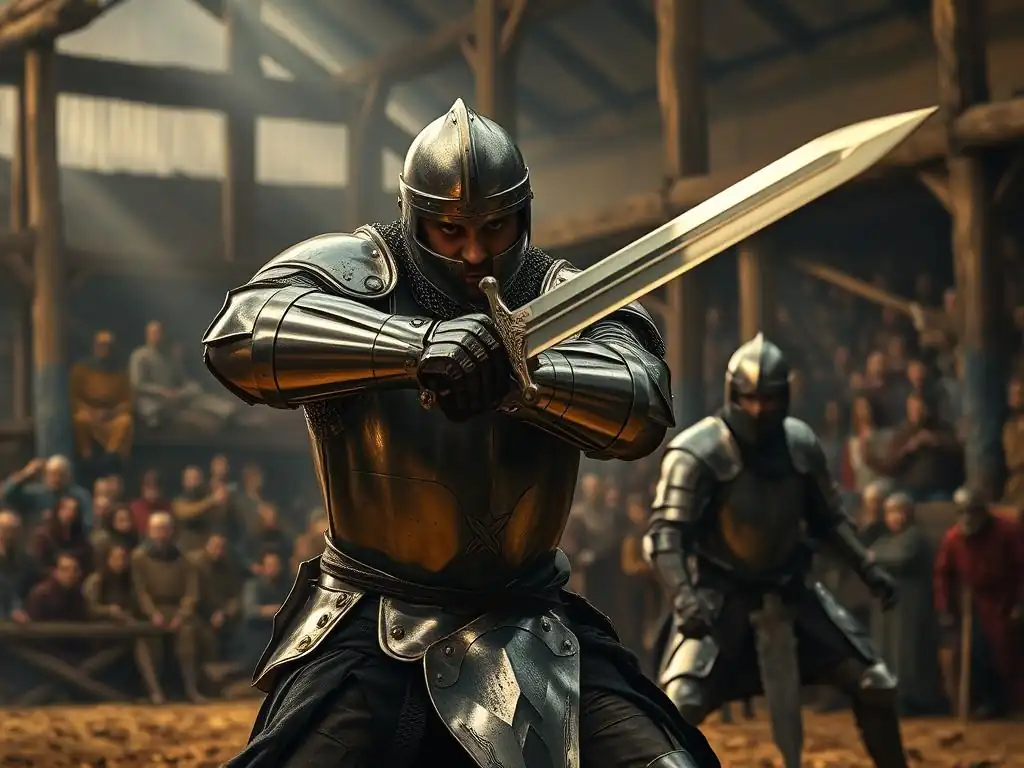
Welcome to Martial Arts Mastery, your gateway to the fascinating world of combat arts! Dive deep into the heart of martial traditions, from ancient philosophies to modern techniques. Ever wondered about the historical significance of longsword tournaments? Prepare to be captivated. Uncover the spectacle of Pas d'Armes and judicial duels in our latest exploration, and discover the rich tapestry of skill, honor, and history woven into the very fabric of this iconic martial art. What secrets will you unearth?
- Longsword Tournament Armor and Equipment: A Historical Overview
-
Frequently Asked Questions
- What were Pas d'Armes events in historical longsword tournaments?
- How did judicial duels contribute to the historical significance of longsword tournaments?
- What is the historical significance of studying longsword tournaments today?
- What types of skills were most valued in historical longsword tournaments?
- Beyond martial prowess, what other factors contributed to the historical spectacle of longsword tournaments?
- Final Reflection: Echoes of Steel, Lessons of Honor
- Unleash Your Inner Warrior: Step into History!
Longsword Tournament Armor and Equipment: A Historical Overview
Evolution of Armor in Longsword Competitions
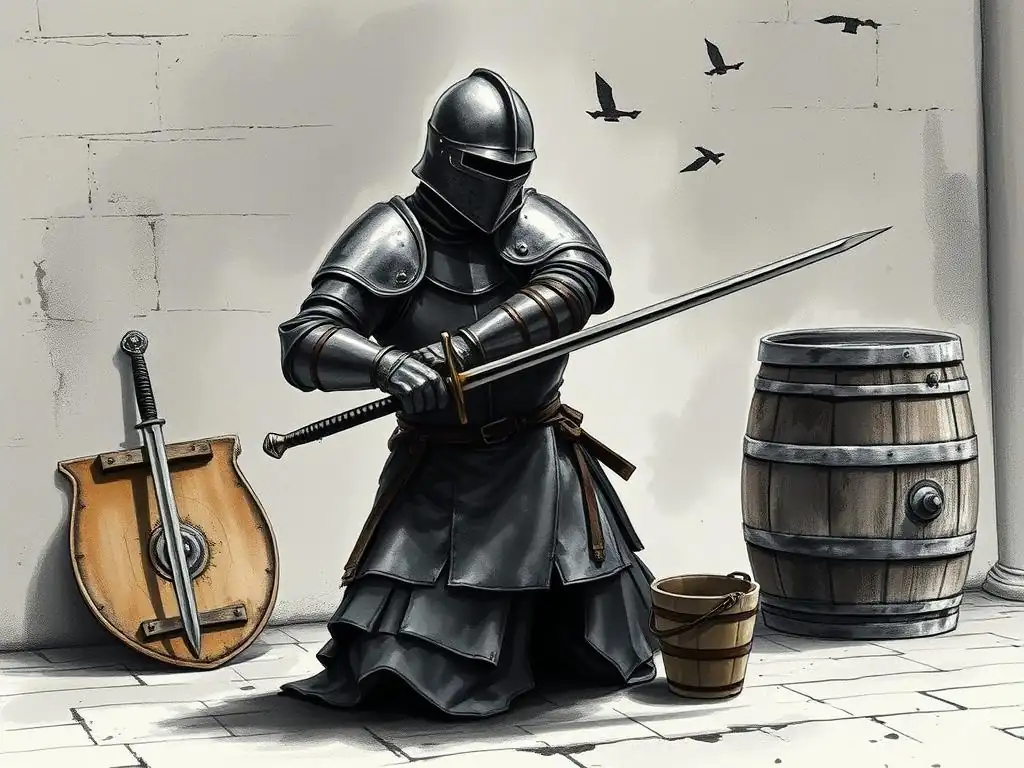
The armor worn in historical longsword tournaments evolved significantly over the medieval and Renaissance periods, reflecting advancements in metallurgy and armor design. Early forms of combat included mail armor, sometimes reinforced with partial plate elements like breastplates or limb guards. However, as tournaments became more formalized, particularly in the later Middle Ages for events like Pas d'Armes, participants often wore full plate harness.
This provided comprehensive protection against the powerful cuts and thrusts of the longsword, distributing impact and mitigating injury. A full plate harness from the 15th century could weigh between 25 and 35 kilograms (approximately 55-77 lbs), designed to allow reasonable mobility for fighting on foot.
Specific armor configurations varied depending on the type of historical longsword tournament. In judicial duels, the armor prescribed often depended on the social standing of the combatants or specific local ordinances. Sometimes, simple reinforced clothing, mail, or partial plate was mandated. For the spectacle of Pas d'Armes, the goal was often display as well as protection, leading to highly articulated and aesthetically elaborate harnesses. Specialized tournament armor, sometimes heavier and less flexible than field armor, was also developed to withstand the specific rigors of blunt-weapon impact in controlled settings, further highlighting the specialized nature of historical longsword tournament combat.
The Anatomy of a Historical Longsword: Design and Construction
The historical longsword, also known as a hand-and-a-half sword, was the primary weapon in many medieval and Renaissance tournaments. Its design typically featured a double-edged blade ranging from approximately 85 to 110 centimeters (about 33 to 43 inches) in length, coupled with a hilt long enough for two hands, usually 20 to 30 cm (about 8 to 12 inches). Blades often had a lenticular or diamond cross-section, optimized for both cutting and thrusting.
The steel used was generally of high quality for the period, tempered to provide a balance of hardness for edge retention and flexibility to resist breaking. The tang extended through the grip and was peened or threaded to a pommel, providing counterweight and securing the hilt components.
The weight of a historical longsword designed for combat or realistic training typically fell between 1.2 and 1.8 kilograms (roughly 2.6 to 4 lbs). While heavier swords existed, this range represents the practical weight for effective two-handed use, allowing for swift handling, powerful strikes, and intricate guards.
The guard (crossguard) was usually straight, preventing the opponent's blade from sliding down onto the hands, though more complex forms also existed. This careful balance of length, weight, and construction elements made the longsword a versatile and formidable weapon, central to the techniques and tactics employed in historical longsword tournaments and judicial duels.
Other Essential Equipment: Shields, Helmets, and Protective Gear
Beyond the main body armor and the longsword itself, several other pieces of equipment were crucial for protection in historical longsword tournaments. Helmets were paramount, ranging from bascinets with visors in earlier periods to great helms and later close helms. These provided vital head protection but often limited visibility and breathing, impacting fighting strategy. Gauntlets, offering protection to the hands and wrists, were also essential. These evolved from simple mail mittens to fully articulated plate gauntlets, capable of deflecting blows and protecting the fingers, which were particularly vulnerable in longsword exchanges.
Leg and foot protection, such as greaves for the shins and sabatons for the feet, completed the full harness. While large shields were not typically used in conjunction with the two-handed longsword (as both hands were needed for the weapon), smaller parrying devices or specific tournament shields might appear in certain contexts or rule sets, though this was less common in standard longsword duels or Pas d'Armes focusing solely on the sword.
The combination of a strong helmet, comprehensive limb protection (especially gauntlets), and robust body armor was critical for surviving the often brutal exchanges characteristic of historical longsword tournaments, highlighting the intense physical demands and inherent risks involved.
Frequently Asked Questions
What were Pas d'Armes events in historical longsword tournaments?
Pas d'Armes were organized challenges where a knight or group of knights would defend a specific location or set of rules against all comers. These events served as both martial skill displays and social gatherings, often with elaborate staging.
How did judicial duels contribute to the historical significance of longsword tournaments?
Judicial duels, or trials by combat, were legally sanctioned duels where the outcome was believed to determine guilt or innocence. They demonstrate the longsword's role in legal and social conflict resolution, adding to its historical importance.
What is the historical significance of studying longsword tournaments today?
Studying these tournaments provides insights into historical combat techniques, weaponry, and the social values of the time. It helps us understand the evolution of martial arts and their place in history.
What types of skills were most valued in historical longsword tournaments?
Skills like precise cutting, effective parrying, and maintaining distance were highly valued. Demonstrating strategic thinking and adaptability during combat were also crucial for success.
Beyond martial prowess, what other factors contributed to the historical spectacle of longsword tournaments?
Factors like elaborate armor, heraldry, and the presence of nobility contributed to the spectacle. The social and political context surrounding the tournaments also played a significant role.
Final Reflection: Echoes of Steel, Lessons of Honor
The echoes of clashing steel, once confined to the lists of historical longsword tournaments, resonate even today, reminding us of the enduring human fascination with skill, courage, and the pursuit of justice. The historical significance of these events extends far beyond mere spectacle; they were complex social rituals that shaped notions of honor, law, and martial prowess. Understanding these tournaments offers a unique window into the values and beliefs of past societies, providing invaluable context for appreciating the evolution of combat sports and the enduring allure of the sword.
The impact of these tournaments on the cultural landscape is undeniable. They served as both entertainment and a means of resolving disputes, influencing artistic expression, literature, and even legal practices. My own fascination with these events stems from the realization that they were not simply displays of violence, but carefully orchestrated performances with deep symbolic meaning. The sword was not merely a weapon, but a symbol of power, justice, and the knightly ideal.
This quote encapsulates the profound significance of the longsword in the medieval and Renaissance world, a significance that continues to captivate our imaginations.
As we reflect on the historical significance of longsword tournaments, let us consider the lessons they offer us today. How can we apply the principles of discipline, respect, and the pursuit of excellence, so evident in these historical contests, to our own lives? Let us strive to embody the spirit of the longsword tournament – not in literal combat, but in the pursuit of our own personal battles, facing challenges with courage, integrity, and a commitment to honor. Let the echoes of steel inspire us to forge our own paths with purpose and conviction.
Unleash Your Inner Warrior: Step into History!
Thank you for exploring the fascinating world of historical longsword tournaments. Now that you've glimpsed the spectacle of pas d'armes and judicial duels, it's time to connect with this rich martial heritage.
Here's how to take your passion further:
- Reignite the Past: Research a specific historical figure known for their participation in longsword tournaments. Discover their story and share a short biography with a martial arts community.
- Find a local HEMA (Historical European Martial Arts) group and attend a beginner's class. Experience the weight and balance of a longsword firsthand.
- Explore the visual arts of the period – paintings, illuminated manuscripts – and identify depictions of tournament combat. Share your findings on social media with the hashtag #LongswordLegacy.
What historical longsword technique are you most eager to learn and adapt to your training?