
The Importance of Footwork in HEMA Longsword: Foundation for Victory

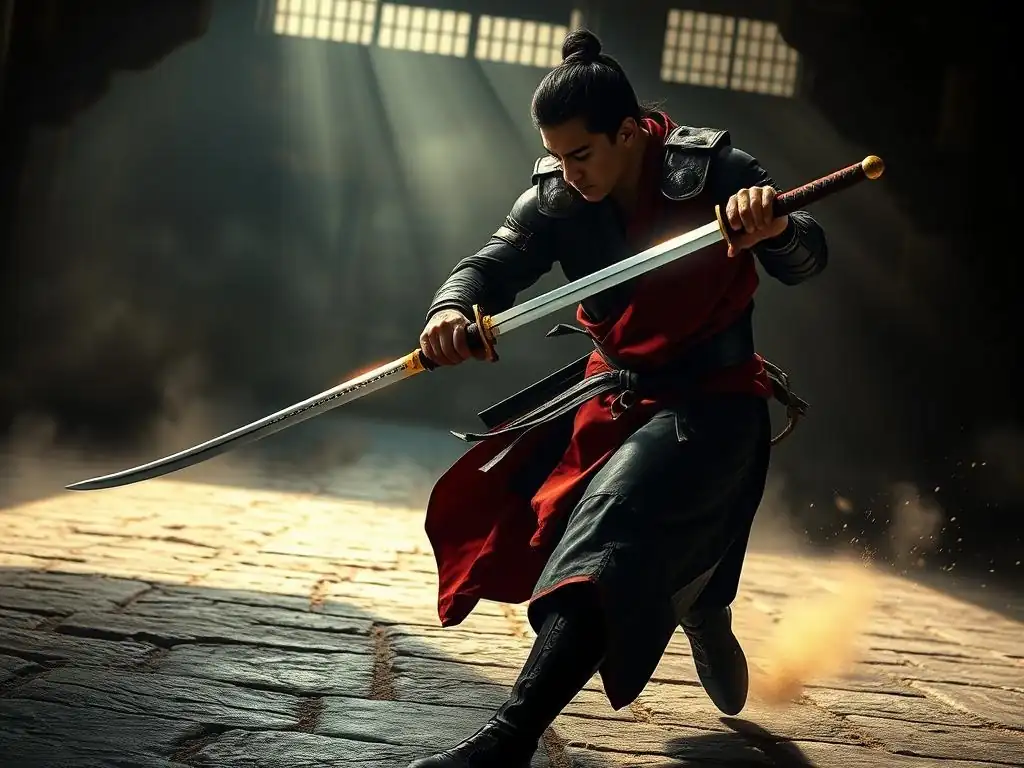
Welcome to Martial Arts Mastery, your definitive resource for unlocking the secrets of combat traditions worldwide. Ever wondered how a solid foundation can transform your martial arts practice? Dive into our exploration of HEMA longsword footwork technique and discover how mastering this essential element can be the key to achieving victory. Prepare to step into a world of historical precision and strategic movement – the journey to mastery starts now!
- Introduction: Footwork as the Cornerstone of HEMA Longsword Fencing
- Understanding the Fundamentals of HEMA Longsword Footwork Technique
- Advanced Footwork Techniques for HEMA Longsword
- Integrating Footwork with Longsword Techniques
- The Impact of Footwork on Tactical Decision-Making in HEMA Longsword
- Common Mistakes in HEMA Longsword Footwork and How to Avoid Them
- Training Exercises to Improve Your HEMA Longsword Footwork
- Footwork in HEMA Longsword: The Key to Victory
-
Frequently Asked Questions
- What makes footwork so crucial in HEMA longsword fencing?
- How does HEMA longsword footwork differ from other martial arts footwork?
- What are some basic footwork drills for beginners in HEMA longsword?
- How can I improve my footwork speed and agility in HEMA longsword?
- What role does proper footwork play in HEMA longsword self-defense scenarios?
- Final Reflection: Dancing with Steel
- Ignite Your Footwork: Forge Your Victory!
Introduction: Footwork as the Cornerstone of HEMA Longsword Fencing
Why Mastering Footwork is Crucial for Longsword Success
In the dynamic world of Historical European Martial Arts (HEMA), particularly when wielding the longsword, victory often hinges not just on powerful strikes or intricate guards, but fundamentally on effective movement. The ability to control distance, dictate the tempo of the exchange, and position oneself advantageously relies almost entirely on proficient footwork. Without a solid foundation in HEMA longsword footwork technique, even the most technically perfect cut or thrust can be negated by an opponent's superior positioning or evasion. It's the silent language of the duel, communicating intent and creating opportunities before steel ever truly clashes.
Consider a common scenario: an opponent initiates a strong Oberhau (overhead cut). A practitioner with poor footwork might attempt to block statically or step straight back, potentially staying within range or losing balance. In contrast, someone with well-practiced HEMA longsword footwork technique could employ a diagonal step offline, simultaneously evading the power of the blow and potentially entering a favorable angle for a counter-attack or bind, perhaps targeting the opponent's opening side or arm.
This simple example illustrates how movement dictates the available tactical responses and significantly increases the chances of success while minimizing risk. Mastery of HEMA longsword footwork technique is not an accessory skill; it is the core engine driving all other offensive and defensive actions.
Setting the Stage: The Role of Movement in Historical European Martial Arts
Historical fencing treatises, from masters like Johannes Liechtenauer to Joachim Meyer, place significant emphasis on the importance of proper stance and movement. While they detail complex techniques involving cuts, thrusts, and grappling, the underlying assumption is always that the practitioner is capable of moving effectively within the fighting space.
Concepts like Indes (the 'in-between time' or moment of opportunity) are often exploited through precise timing and positioning achieved via footwork. The ability to cover ground rapidly, retreat safely, or circle to a flank was as vital in a historical duel or battlefield context as it is in modern HEMA sparring.
Movement in HEMA is not merely about traversing distance; it's about managing the spatial relationship with your opponent, controlling the initiative, and creating openings. A fencer who can subtly shift their weight to feint an attack, then explode forward with a passing step into a thrust, demonstrates a sophisticated understanding of HEMA longsword footwork technique. Conversely, predictable or hesitant movement makes a fencer an easier target, allowing the opponent to anticipate actions and prepare defenses or counter-attacks. Thus, understanding and diligently practicing the fundamental principles of movement is the essential prerequisite for engaging effectively in any HEMA longsword encounter.
Understanding the Fundamentals of HEMA Longsword Footwork Technique
Basic Stances: Ox, Pflug, and Alber
The foundational elements of HEMA longsword footwork technique begin with understanding and comfortably occupying the primary guards or stances. Three of the most commonly referenced in the Liechtenauer tradition are Ox (Ochs), Plow (Pflug), and Fool (Alber).
Each stance has inherent defensive properties and facilitates specific offensive actions, but their true utility is realized only when they are fluidly transitioned between using correct footwork. For instance, transitioning from Pflug (sword point low, angled towards the opponent) to Ochs (sword point high, near the head) might involve a subtle shift of weight or a small adjusting step, depending on the immediate tactical need.
Mastering these stances involves more than just holding the sword in the correct position; it requires proper body alignment, weight distribution, and balance, all of which are components of fundamental HEMA longsword footwork technique. In Pflug, approximately 60-70% of the weight might be on the back leg, allowing for a strong thrust or a rapid retreat. In Ochs, weight might be more centered or slightly forward, poised for cuts from above or defense against high attacks.
Alber, often a lower, more deceptive guard, typically places more weight forward, inviting an attack to exploit an opening. The ability to hold these positions stably and transition smoothly is the bedrock upon which all other movement is built.
Forward and Backward Steps: The Foundation of Movement
The most fundamental components of HEMA longsword footwork technique are simple forward and backward steps. While seemingly basic, executing these steps correctly is paramount. A proper forward step involves moving the lead foot first, followed by the trailing foot closing the distance, maintaining a stable base. The distance covered should be controlled – typically less than a full stride – to avoid overextension and loss of balance. The body should remain largely facing the opponent, with minimal unnecessary lateral motion.
Similarly, a backward step begins with the trailing foot moving first, followed by the lead foot adjusting. This allows the fencer to retreat while maintaining guard and facing the threat. Hesitation or incorrect execution, such as stepping the wrong foot first or letting the feet cross, can lead to instability and vulnerability. These simple steps are the building blocks for closing distance to attack, creating distance to defend, or resetting the engagement. Consistent practice of these basic forward and backward movements, focusing on balance and control, is essential before progressing to more complex HEMA longsword footwork techniques.
Lateral Movement: Sidestepping and Angling in Longsword Fencing
While forward and backward movement controls linear distance, lateral movement—sidestepping and angling—adds a crucial dimension to HEMA longsword footwork technique, allowing the fencer to move offline. Sidestepping involves moving directly left or right relative to the opponent, often to evade a linear attack or create a new angle of attack. Angling involves moving diagonally forward or backward, changing both distance and line simultaneously.
Effective lateral movement allows a fencer to step out of the direct line of an incoming attack, placing them in a safer position while potentially creating a favorable angle for a counter-attack. For example, against an opponent's powerful central cut, a fencer might perform a diagonal backward-lateral step (often called a "fleeing step" in some traditions) that takes them out of the strike's path and allows them to riposte into the opponent's exposed side.
Mastery of these lateral and angled steps provides significant tactical flexibility, enabling the fencer to control the engagement space and exploit the opponent's linear movement. This aspect of HEMA longsword footwork technique transforms a simple exchange of blows into a dynamic dance of position and opportunity.
Advanced Footwork Techniques for HEMA Longsword

Passing Steps: Closing the Distance and Creating Opportunities
Passing steps are a dynamic and powerful element of advanced HEMA longsword footwork technique, involving one foot passing beyond the other. Unlike the basic forward step where the feet remain in their lead-trail relationship, a passing step changes which foot is forward. For instance, a forward passing step might involve stepping the back foot forward past the lead foot. This technique allows for rapid closing of distance and often accompanies strong, committed attacks like the Zornhau (wrath cut) or certain thrusts, leveraging the body's momentum.
The primary advantage of a passing step is the ability to generate significant forward momentum and cover a substantial amount of ground quickly, often in a single motion integrated with a strike. This can overwhelm an opponent or allow the fencer to enter into grappling range. However, passing steps require careful timing and commitment.
Executing a passing step without proper cover or against a prepared opponent can leave the fencer temporarily vulnerable, especially during the brief moment when the feet are close together. Therefore, integrating passing steps effectively into one's HEMA longsword footwork technique requires significant practice and situational awareness.
Gathering Steps: Maintaining Balance and Recovering Position
Gathering steps, also known as closing steps or adjusting steps, are small movements used to maintain balance, recover from an off-balance position, or subtly adjust distance and angle without committing to a large movement. These steps involve bringing the trailing foot closer to the lead foot (or vice-versa) without significantly changing the overall position or lead. They are crucial for maintaining stability after a large movement, absorbing the recoil of a powerful strike, or making minor positional corrections during a bind or close-quarters exchange.
For example, after delivering a strong cut that carries the body's momentum slightly forward, a small gathering step with the trailing foot can quickly re-establish a stable base, preventing overextension and preparing for the next action, be it defense or a follow-up attack. Similarly, in a bind, small adjustments using gathering steps allow a fencer to maintain pressure, shift weight, or create leverage without disrupting their balance. While less dramatic than passing steps, mastering these subtle gathering movements is a vital part of refined HEMA longsword footwork technique, contributing significantly to control, recovery, and prolonged engagement stability.
Changing Direction: Pivoting and Turning for Tactical Advantage
Beyond linear and lateral movement, the ability to quickly and efficiently change direction through pivoting and turning is a key aspect of advanced HEMA longsword footwork technique. Pivoting involves rotating the body on the ball of one foot, while turning involves rotating the entire body, often using multiple small steps or a more pronounced spin. These techniques are used to reorient oneself towards a moving opponent, avoid being flanked, or launch an attack from an unexpected angle.
A common application is the use of a pivot to quickly turn and face an opponent who has circled or disengaged and is attempting to attack from a new direction. A well-executed pivot allows the fencer to maintain their guard and defensive structure while re-establishing the frontal engagement.
Turning can also be used offensively, for example, a controlled turn combined with a cut (like a Krumphau or crooked cut) to bypass an opponent's guard or attack their side. These rotational movements, while requiring careful balance and control, add a layer of complexity and deception to a fencer's HEMA longsword footwork technique, making them harder to predict and counter.
Integrating Footwork with Longsword Techniques
Footwork Drills for Improved Agility and Coordination
Developing effective HEMA longsword footwork technique requires dedicated, repetitive practice, often through specific drills designed to improve agility, speed, and coordination. Simple drills like ladder drills, cone drills, and shadow fencing are invaluable. Ladder drills, for instance, can help improve foot speed and coordination through patterns like single-foot steps, double-foot steps, and lateral movements within the ladder rungs. Cone drills can focus on changing direction rapidly, practicing pivoting and angled steps around markers.
Shadow fencing involves practicing stances, steps, and techniques individually, without a partner. This allows the practitioner to focus solely on their form, balance, and the integration of movement with sword actions. For example, practicing a Zornhau with a passing step repeatedly, or transitioning between Pflug and Ochs while stepping backward and forward. These solo drills build muscle memory and refine the mechanics of HEMA longsword footwork technique before the added complexity of an opponent is introduced.
Combining Footwork with Attacks: Delivering Powerful Strikes
Effective strikes in HEMA longsword fencing are rarely delivered from a static position; they are typically launched in conjunction with specific footwork. The force and reach of a cut or thrust are significantly amplified by the momentum generated through coordinated body movement and stepping. For example, a powerful Oberhau often involves stepping forward with the lead foot as the cut descends, transferring body weight into the strike. A thrust from Pflug is frequently accompanied by a forward step or lunge, extending the reach and driving the point home.
Integrating footwork seamlessly with offensive techniques is a critical aspect of mastering HEMA longsword footwork technique. Drills focusing on specific attack-footwork combinations are essential. For instance, practicing the Zornhau with a passing step until the movement is fluid and powerful, or repeatedly practicing the thrust from Pflug with a controlled forward step. The goal is for the footwork to become an automatic, integrated part of the attack, maximizing power, reach, and maintaining balance for follow-up actions.
Footwork and Defense: Evading and Countering Opponent's Actions
Just as footwork enhances attacks, it is equally vital for defense in HEMA longsword. Evasion, deflection, and counter-attacks are all heavily reliant on proper positioning achieved through movement. Stepping offline is a primary defensive technique, moving the body out of the path of an incoming strike. This is often more effective and safer than relying solely on static blocks. For example, a diagonal backward step can evade an Oberhau, or a lateral step can avoid a horizontal cut.
Furthermore, footwork is essential for executing effective counter-attacks. Often, a counter-attack is launched simultaneously with or immediately following a defensive movement. Stepping offline to evade an attack can simultaneously place the fencer in an advantageous position to deliver a riposte into an opening created by the opponent's committed action. Drills that combine defensive footwork with immediate counter-actions are crucial for developing reactive and integrated HEMA longsword footwork technique for defensive scenarios. This dynamic interplay of evasion, positioning, and counter-attack defines skilled defensive HEMA longsword fencing.
The Impact of Footwork on Tactical Decision-Making in HEMA Longsword
Footwork for Controlling Distance and Tempo
Controlling the distance ( Menz) and tempo ( Indes) of the fight are fundamental tactical goals in HEMA longsword, and they are achieved primarily through footwork. By stepping forward, backward, or laterally, a fencer constantly adjusts the distance between themselves and their opponent, seeking to be at the optimal range for their preferred techniques while keeping the opponent outside of theirs. The ability to rapidly close distance for an attack or create distance to avoid danger dictates the flow and intensity of the exchange.
Moreover, footwork influences the tempo – the timing and rhythm of the fight. A fencer with fast, decisive footwork can impose a rapid tempo, pressuring the opponent and forcing reactions. Conversely, slower, more deliberate footwork can be used to create a hesitant tempo, inviting the opponent to commit first. Mastering the variations in speed and rhythm of one's HEMA longsword footwork technique allows a fencer to manipulate the fight's timing, creating opportunities or frustrating the opponent's plans. This active management of distance and tempo is a hallmark of advanced HEMA longsword strategy, underpinned entirely by skilled movement.
Footwork and Ringcraft: Utilizing the Fighting Space
Ringcraft refers to the tactical use of the available fighting area, and it is intrinsically linked to HEMA longsword footwork technique. A fencer who understands ringcraft uses their movement to control the space, potentially cornering an opponent, preventing them from retreating, or using the boundaries of the fighting area to their advantage. Effective footwork allows a fencer to maintain a central position, dictate the direction of movement, and avoid being pushed into a disadvantageous corner.
Consider a scenario in a defined sparring ring, perhaps 8x8 meters. A fencer with good ringcraft and HEMA longsword footwork technique will use lateral and diagonal steps to maintain control of the center, subtly pushing their opponent towards the edge. This limits the opponent's options for retreat and maneuverability, making them more predictable targets. Conversely, poor ringcraft might see a fencer constantly retreating linearly and being easily pushed to the boundary. Utilizing the full fighting space effectively through conscious footwork is a key tactical layer in HEMA longsword.
Recognizing and Exploiting Opponent's Footwork Weaknesses
A skilled HEMA longsword practitioner not only focuses on their own footwork but also constantly observes and analyzes their opponent's HEMA longsword footwork technique. Recognizing patterns, habits, and weaknesses in an opponent's movement provides crucial tactical insights. Does the opponent always step straight back when pressured? Do they cross their feet when trying to change direction? Do they lean heavily on one leg before executing a specific attack?
Identifying such tells allows a fencer to anticipate actions and plan counter-strategies. For instance, if an opponent consistently steps straight back when you press forward, you might feint a frontal attack and then immediately transition into a rapid closing step and thrust to exploit their linear retreat. If they cross their feet during turns, you might time an attack during that moment of instability. Actively observing and exploiting weaknesses in an opponent's HEMA longsword footwork technique is a sophisticated tactical skill that can significantly increase the chances of success in a bout.
Common Mistakes in HEMA Longsword Footwork and How to Avoid Them

Overstepping and Losing Balance
One of the most prevalent errors in HEMA longsword footwork technique is overstepping – taking steps that are too large. While large steps might seem necessary to cover distance, they often lead to the fencer becoming extended, losing balance, and being slow to recover or change direction. An overextended position leaves the fencer vulnerable, as their weight is committed, making it difficult to parry effectively or initiate a timely counter-attack.
To avoid overstepping, focus on taking smaller, controlled steps. Think in terms of maintaining a consistent, athletic base throughout your movement. Practice drills that emphasize short, quick steps rather than long strides. When practicing techniques that involve larger movements like passing steps, ensure the movement is integrated with the body mechanics of the technique and that balance is quickly regained upon completion. Consistent self-correction and feedback from training partners or instructors are key to identifying and rectifying this common flaw in HEMA longsword footwork technique.
Telegraphing Movements and Giving Away Intentions
Telegraphing occurs when a fencer makes subtle, unnecessary movements that signal their intentions before executing a technique. This can include shifting weight dramatically, making a large preparatory movement with the sword or body, or having a predictable footwork pattern. Telegraphing makes one's HEMA longsword footwork technique easy to read, allowing the opponent to anticipate the attack or defense and prepare accordingly.
Avoiding telegraphing requires self-awareness and focused practice. Film yourself to identify unintentional tells. Practice executing techniques with minimal preparatory movement, focusing on initiating the action from a relaxed but ready stance. Ensure your footwork flows smoothly and is integrated with your upper body, rather than being a separate, preceding action. Varying your HEMA longsword footwork technique – sometimes stepping forward without attacking, sometimes attacking without a large step – can also help make your intentions less predictable.
Ignoring Footwork and Relying on Arm Strength
A critical mistake, particularly for beginners, is neglecting the importance of footwork and attempting to rely solely on arm strength and upper body movement to deliver power or defend. This leads to static fencing, where the fencer stands largely still, attempting to reach the opponent with arm extensions or generate power purely from the shoulders and arms. This approach is inefficient, tiring, and tactically unsound in HEMA longsword.
Power in longsword techniques comes from the coordinated movement of the entire body, driven by the legs and core, and channeled through the sword. Defensive effectiveness comes from positioning the body safely, not just blocking with the arms. To overcome this, consciously integrate footwork into every technique you practice. Focus on drills that link stepping with cutting and thrusting actions. Understand that your HEMA longsword footwork technique is the engine; your arms and sword are merely the tools that deliver the action. Consistent practice emphasizing full-body integration is essential to break the habit of static fencing.
Training Exercises to Improve Your HEMA Longsword Footwork
Agility Ladder Drills for Speed and Coordination
- Single steps: Step into each square with one foot, then the other.
- Double steps: Step into each square with both feet before moving to the next.
- Lateral steps: Move sideways through the ladder, stepping in and out of the squares.
- Icky Shuffle: Step into each square with lead foot, trail foot, then lead foot out, trail foot out, repeating down the ladder.
Agility ladder drills are excellent for improving the quickness, coordination, and precision of your HEMA longsword footwork technique. They force you to make rapid, controlled movements with your feet, enhancing your ability to change direction and accelerate quickly. Incorporate variations with and without holding your longsword simulator to practice maintaining guard while moving.
Cone Drills for Changing Direction and Agility
- Square drill: Place four cones in a square (e.g., 3x3 meters). Practice moving between cones using specific steps (forward, backward, lateral, diagonal).
- Figure-eight drill: Practice moving in a figure-eight pattern around two cones, focusing on smooth transitions and changes of direction.
- Attack/Retreat drill: Set up a starting cone and a target cone. Practice stepping rapidly forward to the target cone (as if attacking) and then retreating rapidly back to the start cone.
Cone drills allow you to practice changing direction, accelerating, and decelerating in a controlled environment, simulating the need to move around an opponent. By practicing different stepping patterns around the cones, you refine your ability to angle, pivot, and move laterally, crucial components of effective HEMA longsword footwork technique.
Partner Drills for Practicing Footwork in a Dynamic Environment
- Mirror drill: Stand facing a partner. One person leads, moving forward, backward, and laterally. The other person mirrors their movements, maintaining a consistent distance (e.g., long edge distance).
- Pressure drill: One partner applies light, controlled pressure by stepping forward. The other partner practices retreating safely using backward and diagonal steps, maintaining distance and guard.
- Targeting drill: One partner holds a padded target (e.g., a pool noodle or focus mitt). The other partner practices stepping into range with the appropriate footwork to deliver a specific strike to the target, then retreating safely.
Partner drills introduce the dynamic element of an opponent, forcing you to react and adapt your HEMA longsword footwork technique in real-time. These drills help bridge the gap between solo practice and free sparring, teaching you to apply your movement skills under pressure and in response to external stimuli.
Footwork in HEMA Longsword: The Key to Victory
Consistent Training and Dedicated Practice
Mastering HEMA longsword footwork technique is not something achieved overnight; it requires consistent, dedicated practice. Like any physical skill, proficiency in movement degrades without regular reinforcement. Integrating footwork drills into every training session, even for a short period, is crucial. This includes solo drills focusing on mechanics and balance, as well as partner drills that introduce reaction and timing.
Think of footwork training as building the foundation of a house. Without a strong base, the structure above (your techniques and tactics) will be unstable. Dedicate specific time to practicing basic steps, transitions between guards, and more advanced movements. Record yourself to identify areas for improvement and seek feedback from more experienced practitioners. The commitment to consistent footwork practice is a defining characteristic of serious HEMA longsword practitioners.
Adapting Footwork to Different Opponents and Styles
Effective HEMA longsword footwork technique is not a one-size-fits-all approach; it must be adaptable to different opponents and their fighting styles. An opponent who favors linear attacks might require more lateral evasion, while an opponent who circles extensively might necessitate more pivoting and turning. A tall opponent might require different distance management via footwork than a shorter one.
Learning to read your opponent's preferred range, tempo, and movement patterns allows you to adjust your own footwork accordingly. This might involve changing the length or speed of your steps, altering your primary stance, or favoring certain types of movement (e.g., prioritizing passing steps against a static opponent, or focusing on gathering steps in a close-quarters exchange). Developing this adaptability in your HEMA longsword footwork technique is a continuous process learned through diverse sparring experience.
Footwork: A Lifelong Pursuit of Mastery
The journey to mastering HEMA longsword footwork technique is, for many, a lifelong pursuit. There are always nuances to refine, new levels of efficiency to achieve, and new tactical applications to explore. Even experienced practitioners continue to work on their movement, seeking greater fluidity, speed, and control. The subtle interplay of weight shifts, timing, and spatial awareness offers endless opportunities for improvement.
Embracing footwork as a fundamental and ongoing aspect of your HEMA longsword training will yield significant benefits. It enhances the power and effectiveness of your techniques, improves your defensive capabilities, expands your tactical options, and contributes to overall longevity and safety in the art. Ultimately, a deep understanding and skilled execution of HEMA longsword footwork technique is not just a path to victory in a single exchange, but the foundation for continuous growth and mastery in Historical European Martial Arts.
Frequently Asked Questions
What makes footwork so crucial in HEMA longsword fencing?
Footwork is the foundation for all other actions in HEMA longsword. It allows for effective distance management, creating opportunities for attacks and defenses, and ensuring proper body mechanics for power generation.
How does HEMA longsword footwork differ from other martial arts footwork?
HEMA longsword footwork emphasizes linear movement and closing the distance quickly and safely, often involving passing steps and changes of guard. This contrasts with more circular or evasive movements found in some other martial arts.
What are some basic footwork drills for beginners in HEMA longsword?
Beginner drills often include forward and backward steps, passing steps, and triangular footwork patterns. These drills help develop balance, coordination, and spatial awareness, all crucial for more complex techniques.
How can I improve my footwork speed and agility in HEMA longsword?
Practice footwork drills regularly and focus on maintaining a low center of gravity. Incorporate exercises like ladder drills and cone drills to improve agility and coordination, leading to faster and more responsive footwork.
What role does proper footwork play in HEMA longsword self-defense scenarios?
Proper footwork allows you to maintain a safe distance from an opponent, quickly close the distance for an attack, or evade an incoming strike. It is essential for controlling the engagement and creating opportunities for a successful defense.
Final Reflection: Dancing with Steel
The intricate dance of HEMA longsword footwork is more than just a means of movement; it's the very foundation upon which victory is built. As we've explored the nuances of stance, stepping, and strategic repositioning, it becomes clear that mastering these techniques is paramount, not just for success in the salle, but for understanding the deeper principles of balance, control, and adaptability that resonate far beyond the martial arts.
The influence of HEMA, and specifically its emphasis on precise footwork, extends beyond the historical reenactment community. It's a reminder that even in the most chaotic situations, a solid foundation and deliberate movement can provide the edge needed to overcome challenges. The art of war teaches us to rely not on the likelihood of the enemy's not attacking, but rather on our own readiness to receive him; not on the chance of his not attacking, but rather on the fact that we have made our position unassailable.
- Sun Tzu. This quote, though ancient, perfectly encapsulates the spirit of HEMA footwork: preparation and positioning are key to defense and offense.
Now, consider how the lessons of HEMA longsword footwork – the importance of balance, the power of deliberate movement, and the necessity of a strong foundation – apply to your own life. Where can you improve your "footwork" in the face of challenges? What foundations need strengthening? Take the principles we've discussed and apply them to your own battles, both literal and metaphorical. Embrace the dance, find your balance, and forge your own path to victory.
Ignite Your Footwork: Forge Your Victory!
Thank you for exploring the crucial role of footwork in your HEMA longsword journey. Now that you understand its power, it's time to translate that knowledge into action.
- Master the Basics: Dedicate at least 15 minutes each training session to solo footwork drills. Focus on smooth transitions and maintaining balance in all stances.
- Record and Review: Film yourself during a footwork drill or sparring session. Analyze your movements. Are you telegraphing your attacks? Are you maintaining a consistent guard?
- Share the Knowledge: Discuss your footwork challenges and successes with your training partners or online HEMA community. You might be surprised at the valuable insights you gain.
What specific footwork drill will you focus on mastering this week, and how will you track your progress?