
Judo and Stoicism: Parallels in Ancient Wisdom and Kano's Teachings


Welcome to Martial Arts Mastery, your gateway to understanding the profound world of combat traditions!
Delve into the fascinating intersection of physical prowess and mental fortitude. In this article, we explore the surprising connections between Judo, Stoicism, and the timeless wisdom they share. Are you ready to discover how Kano Jigoro's teachings resonate with ancient philosophical principles? Continue reading to unlock the secrets of resilience, discipline, and the unwavering spirit.
- Judo and Stoicism: Parallels in Principles and Practice
- Introduction: Exploring the Intersection of Physical and Mental Discipline
- Jigoro Kano's Vision: More Than Just a Martial Art
- Stoicism: Cultivating Virtue and Resilience
- Parallels: Finding Common Ground in Judo and Stoicism
- Practical Applications: Judo as a Pathway to Stoic Virtues
- Overcoming Adversity: Lessons from the Dojo and the Stoic Perspective
- Enduring Relevance: The Legacy of Judo and Stoicism
- Conclusion: Integrating Judo and Stoicism for a Meaningful Life
-
Frequently Asked Questions
- What are the core principles of Stoicism, and how do they relate to Judo?
- How does Judo training reflect Stoic principles of accepting what you cannot control?
- What aspects of Jigoro Kano's teachings align with Stoic philosophy?
- How can the practice of Judo help cultivate Stoic virtues like courage and resilience?
- What role does mindfulness play in both Judo and Stoicism?
- Final Reflection: Embracing Resilience Through Judo and Stoicism
- Embrace Resilience: Transform Your Life with Judo & Stoicism!
Judo and Stoicism: Parallels in Principles and Practice
Introduction: Exploring the Intersection of Physical and Mental Discipline
Judo, founded by Jigoro Kano in 1882, is renowned globally not just as a competitive sport or martial art, but as a comprehensive system for physical, mental, and moral development. Often less discussed are the profound philosophical underpinnings that resonate deeply with ancient wisdom traditions. One compelling parallel emerges when examining Judo through the lens of Stoicism, a school of Hellenistic philosophy founded by Zeno of Citium in Athens in the early 3rd century BC.
Both disciplines, despite originating from vastly different cultures and eras, champion core values such as self-control, resilience, adaptability, and the pursuit of virtue. This shared emphasis on inner strength and ethical conduct forms a fascinating bridge between the physical discipline of the dojo and the philosophical discipline of the Stoic sage.
Exploring this intersection reveals that the principles guiding a judoka's training and life mirror the tenets advocated by Stoic thinkers like Epictetus, Seneca, and Marcus Aurelius. While Judo focuses on mastering physical techniques like throws (nage-waza) and grappling (katame-waza), its ultimate aim, according to Kano, was the cultivation of character and contribution to society. Similarly, Stoicism, while offering guidance on navigating external challenges, primarily concerns itself with the development of inner virtue (arete) as the sole good.
Both systems offer a path to a more fulfilling and resilient life by emphasizing what lies within our control – our actions, judgments, and character – rather than fixating on external outcomes. The convergence of Judo and Stoicism thus provides a powerful framework for understanding how ancient wisdom remains relevant in modern pursuits of self-mastery.
Judo's Emphasis on Respect, Discipline, and Self-Control
At the heart of Judo training lies an unwavering emphasis on respect, discipline, and self-control. From the initial bow upon entering the dojo (rei) to the strict adherence to etiquette during practice (randori), respect is paramount. Students are taught to respect their instructor (sensei), their training partners (ukemi), and the art itself.
This foundation of respect fosters a disciplined environment where practitioners learn to manage their impulses and emotions. For instance, during a heated randori session, a judoka must maintain composure and focus, resisting the urge to react aggressively or with frustration when thrown or held. This requires significant self-control, a skill honed through consistent, rigorous training.
Discipline in Judo extends beyond the physical techniques. It involves adhering to a training schedule, pushing past physical discomfort, and accepting constructive criticism. A typical Judo class incorporates structured warm-ups, technical instruction, repetition drills (uchi-komi), and free practice (randori), demanding sustained effort and focus.
This structured approach instills a deep sense of discipline. Furthermore, the concept of shoshin, or 'beginner's mind,' encourages practitioners, regardless of rank or experience, to approach each training session with humility and an openness to learn, reinforcing both respect and self-control. These core values are not merely supplementary to learning throws; they are integral to the very philosophy of Judo, shaping the practitioner's character both on and off the mat.
Jigoro Kano's Vision: More Than Just a Martial Art
Kano's Philosophy of Self-Improvement and Societal Contribution
Jigoro Kano envisioned Judo as far more than just a collection of fighting techniques derived from older forms of Jujutsu. His foundational philosophy centered on two core principles: Seiryoku Zenyo (maximum efficiency, minimum effort) and Jita Kyoei (mutual welfare and benefit). Kano believed that Judo training was a means to perfect oneself (self-improvement) and, through that perfection, contribute positively to society (societal contribution).
He saw the dojo as a microcosm of the world, where individuals could learn to interact effectively, resolve conflict constructively, and develop the moral character necessary for good citizenship. For example, the practice of randori, a dynamic free-form sparring, teaches practitioners to adapt, problem-solve under pressure, and interact cooperately with an opponent even in a competitive scenario. This goes beyond mere physical skill, fostering mental agility and social intelligence.
Kano's educational background and his role in the Japanese education system heavily influenced his vision. He integrated Judo into schools, believing it was an unparalleled method for physical education, moral training, and intellectual development.
He argued that the principles learned in the dojo – such as perseverance, strategic thinking, and ethical conduct – were directly transferable to other aspects of life, including academics, business, and personal relationships. This holistic approach positioned Judo not just as a sport or self-defense system, but as a complete educational method aimed at cultivating well-rounded individuals capable of making significant contributions to their communities, embodying a form of applied ancient wisdom for modern life.
Seiryoku Zenyo: Efficiency and Adaptability in Judo and Everyday Life
Seiryoku Zenyo, the principle of "maximum efficiency, minimum effort," is fundamental to Judo's technical execution and philosophical application. In a physical sense, it dictates using an opponent's weight and movement against them, applying leverage and timing rather than brute force. A successful throw often relies on disrupting the opponent's balance (kuzushi) and timing the technique precisely as they are off-balance, requiring minimal physical exertion compared to a head-on struggle. This principle is demonstrated vividly when a smaller judoka effectively throws a much larger opponent by utilizing their momentum and structure.
Beyond the physical, Seiryoku Zenyo is a powerful life principle. It encourages finding the most efficient and effective way to achieve goals in any endeavor, whether problem-solving at work, managing personal finances, or navigating complex social situations.
It promotes adaptability and strategic thinking, urging practitioners to assess situations calmly and apply the most suitable approach rather than resorting to force or inefficient methods. This resonates strongly with Stoic philosophy, which advocates for applying reason and wisdom to life's challenges, conserving mental and emotional energy by focusing on what is within one's control and choosing the most virtuous path – a form of efficiency in living.
Jita Kyoei: Mutual Benefit and Welfare as a Core Judo Principle
Jita Kyoei, meaning "mutual welfare and benefit," is the highest principle in Judo, representing the ultimate goal of Kano's system. It emphasizes that the practice of Judo should lead to the betterment of oneself and others. Training partners learn together, helping each other improve through mutual practice (sore-komi) and honest effort. When one partner throws another, the ukemi (person being thrown) learns how to fall safely, while the tori (person throwing) refines their technique. Both benefit from the interaction. This cooperative aspect, even within a competitive framework, is crucial; without a willing partner, effective Judo training is impossible.
This principle extends far beyond the dojo. Kano intended Jita Kyoei to guide practitioners in their interactions with the wider community. It encourages actions that contribute to the well-being of others and society as a whole.
For instance, a judoka demonstrating patience and offering guidance to a beginner embodies this principle. In a broader sense, it calls for living ethically, contributing positively to one's community, and seeking solutions that benefit all involved. This principle of communal responsibility and shared prosperity aligns remarkably with Stoic ideals of justice and cosmopolitanism, viewing all humans as part of a single community and advocating for virtuous action that benefits the whole.
Stoicism: Cultivating Virtue and Resilience
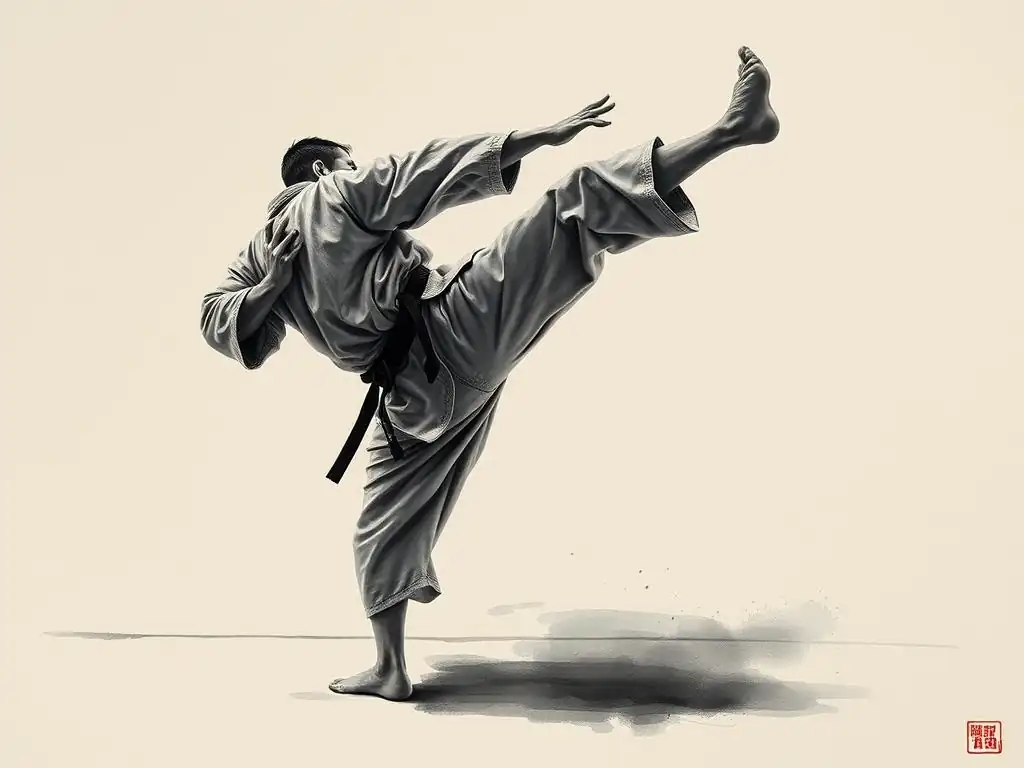
The Four Cardinal Virtues: Wisdom, Justice, Courage, and Temperance in Stoicism
Stoicism posits that the only true good is virtue, and that living in accordance with nature (which, for the Stoics, included human reason) is the path to eudaimonia, or flourishing. The philosophy centers on four cardinal virtues, originally derived from Plato but central to Stoic practice: Wisdom, Justice, Courage, and Temperance. Wisdom (sophia) involves practical knowledge, the ability to discern good from bad, and understanding what is within and outside our control.
Justice (dikaiosyne) encompasses fairness, kindness, and treating others equitably. Courage (andreia) is not just physical bravery but also moral courage – facing difficulties, fear, and pain with integrity. Temperance (sophrosyne) involves moderation, self-control, and discipline in desires and actions.
These virtues are considered interconnected and indispensable. A Stoic strives to act in accordance with these virtues in all circumstances, believing that virtuous action is the only thing truly good and that external things like wealth, health, or reputation are merely preferred indifferents. This focus on internal character and moral excellence provides a robust framework for navigating life's inevitable challenges and setbacks. For example, facing a difficult situation with Courage and applying Wisdom to find the most just and temperate course of action is the Stoic path to resilience and inner peace, reflecting a deep well of ancient wisdom.
Applying Stoic Principles to Enhance Judo Performance and Mental Fortitude
Applying Stoic principles can significantly enhance a judoka's performance and mental fortitude. The Stoic emphasis on focusing only on what is within one's control is particularly relevant. In Judo, a practitioner cannot control their opponent's strength, skill, or the referee's decision, but they can control their own effort, technique execution, attitude, and response to setbacks. By internalizing this Stoic lesson, a judoka can reduce anxiety about outcomes and focus entirely on the process of training and competing – applying Seiryoku Zenyo to their technique, maintaining Jita Kyoei in their interactions, and embodying the virtues in their conduct.
Furthermore, Stoicism teaches the importance of premeditation of adversity ( premeditatio malorum). By mentally preparing for potential difficulties – being thrown heavily, losing a match, sustaining a minor injury – a judoka can build mental resilience. When these challenges inevitably occur, they are less likely to be overwhelmed.
Instead, they can draw upon their training and Stoic mindset to accept the reality of the situation (acceptance of what is outside their control) and respond virtuously (with courage, discipline, and a focus on learning). This fusion of physical training and mental preparation fosters a profound level of mental toughness essential for high-level performance and personal growth, highlighting the practical power of Judo Stoicism ancient wisdom.
Emotional Regulation and Mental Toughness in the Face of Adversity
Both Judo and Stoicism place a high value on emotional regulation and mental toughness when facing adversity. In Judo, the demanding nature of training, the physical discomfort, and the experience of being repeatedly thrown or submitted teach practitioners to manage pain, frustration, and fear. Learning to fall safely ( ukemi) is a prime example; it requires overcoming the natural fear of impact and trusting the technique, building both physical and mental resilience. Similarly, enduring strenuous ground-work drills ( newaza) demands perseverance and the ability to push past physical and mental fatigue.
Stoicism provides a philosophical framework for understanding and managing emotions. Stoics are not emotionless, but they strive to regulate their passions (pathē) by examining their judgments. Negative emotions like fear, anger, and excessive desire are seen as resulting from faulty judgments about external things.
By correcting these judgments – for instance, recognizing that being thrown is not inherently 'bad,' but merely an event to learn from – a judoka can mitigate the emotional impact. This mental discipline, cultivated through Stoic reflection and applied within the challenging environment of the dojo, builds a deep reservoir of mental toughness, enabling the judoka to remain calm, focused, and effective even under extreme pressure, embodying the resilience sought in Judo Stoicism ancient wisdom.
Parallels: Finding Common Ground in Judo and Stoicism
Acceptance of Reality and Adaptability to Change in Judo and Stoicism
A striking parallel between Judo and Stoicism is the emphasis on accepting reality and adapting to change. In Judo, randori is a dynamic exchange where the situation is constantly shifting. An opponent's grip, posture, or attack creates a new reality that the judoka must immediately assess and adapt to.
Attempting to force a pre-planned technique when the conditions are not right is inefficient and often leads to failure. The successful judoka is the one who can read the situation, accept the opponent's action, and adapt their response fluidly, embodying Seiryoku Zenyo. This requires a non-resistant acceptance of the present moment – acknowledging the opponent's strength or advantage without complaint or emotional turmoil.
Stoicism similarly teaches the importance of accepting what is outside of our control, often summarized by the Serenity Prayer-like concept attributed to Epictetus: "Make the best use of what is in your power, and take the rest as it happens." Life, like randori, is full of unpredictable events and changes. Attempting to resist or lament these external circumstances is futile and a source of suffering.
Instead, the Stoic focuses on their internal response – their judgments and actions. By accepting reality as it is and adapting their internal state and subsequent actions, they maintain their inner peace and effectiveness. Both Judo and Stoicism provide a powerful methodology for navigating the unpredictable flow of life with grace and efficacy through acceptance and adaptation.
Self-Discipline and Mental Fortitude as Cornerstones of Both Philosophies
Self-discipline and mental fortitude are not merely desirable traits but foundational requirements in both Judo and Stoicism. Judo demands rigorous physical and mental discipline: adhering to training schedules, pushing through physical pain and exhaustion, controlling impulses during randori, and maintaining focus under pressure. It requires consistent, deliberate effort over years to develop proficiency. Missing training sessions, giving in to laziness, or losing control of emotions during practice directly hinders progress and violates the spirit of the art. The structure of Judo training itself is a masterclass in building discipline through repetition and incremental challenge.
Stoicism equally emphasizes self-discipline as essential for cultivating virtue and achieving a flourishing life. It calls for discipline over desires (not being enslaved by pleasure), a disciplined approach to judgments (evaluating thoughts rationally), and disciplined action (acting virtuously regardless of external outcomes).
Stoic practices like journaling (e.g., Marcus Aurelius's Meditations), negative visualization (contemplating potential losses to appreciate what one has), and morning routines focused on setting intentions are all forms of self-discipline aimed at strengthening the mind and character. Both disciplines understand that true freedom and mastery come not from external control, but from internal discipline and the fortitude to persevere through difficulty, solidifying the connection between Judo Stoicism ancient wisdom.
Developing Moral Character and Ethical Conduct
A primary goal of both Jigoro Kano's Judo and Stoic philosophy is the development of strong moral character and ethical conduct. Kano explicitly stated that the ultimate objective of Judo was the cultivation of character and contribution to society through Jita Kyoei. The principles of respect, humility, honesty, and perseverance are woven into the fabric of Judo training.
Cheating during practice or competition, showing disrespect, or using Judo techniques outside the dojo for aggression (unless in genuine self-defense) are considered violations of the Judo code of ethics. Training provides numerous opportunities to practice ethical behavior, such as acknowledging a clean throw from an opponent or helping a training partner who is struggling.
Stoicism, as a virtue ethic, places moral character at the absolute center of life. The Four Cardinal Virtues – Wisdom, Justice, Courage, and Temperance – provide a clear ethical compass. A Stoic strives to act justly in all interactions, exhibit courage in the face of fear or difficulty, apply wisdom to their judgments, and maintain temperance in their desires.
They believe that developing this inner character is the only thing that truly matters and is the source of genuine happiness. Both philosophies, therefore, offer not just a system of physical or mental techniques, but a comprehensive ethical framework for living a life of integrity and positive contribution.
Practical Applications: Judo as a Pathway to Stoic Virtues
Building Resilience and Mental Strength Through Judo Training
Judo training is an intensely practical method for building resilience and mental strength, directly supporting the cultivation of Stoic virtues. The constant cycle of attacking and defending, winning and losing, throwing and being thrown, provides repeated exposure to physical discomfort and emotional challenges. Learning ukemi (breakfalls) teaches the body and mind to absorb impact and recover quickly – a literal and metaphorical lesson in resilience. Getting back up after being thrown, analyzing what went wrong, and immediately re-engaging requires significant mental fortitude and perseverance.
Furthermore, the competitive aspect of Judo, while not the ultimate goal according to Kano, serves as a crucible for testing mental toughness. Stepping onto the mat for a match requires courage, managing anxiety, and maintaining focus despite pressure. Losing teaches humility and provides valuable feedback, demanding temperance in handling disappointment and the wisdom to learn from mistakes. Winning requires temperance in celebration and continued discipline. This continuous process of facing physical and mental adversity in a controlled environment makes Judo an exceptional practical pathway for developing the resilience and mental strength championed by Stoicism.
Cultivating Inner Peace and Focus Through Judo's Rigorous Discipline
The rigorous discipline of Judo training can be a powerful tool for cultivating inner peace and focus, aligning with Stoic goals. The physical demands of Judo, including strenuous warm-ups, repetitive drills, and intense randori, require complete presence and concentration. When engaged in a throw or grappling exchange, the mind must be fully focused on the immediate task, leaving little room for extraneous worries or distractions. This enforced mindfulness, born out of necessity for safety and effectiveness, can translate into a greater ability to focus in other areas of life and quiet the mental chatter that often disrupts inner peace.
Moreover, the structured nature of Judo practice, with its emphasis on ritual and etiquette, provides a sense of order and grounding. The bowing, the specific movements, the rhythm of training – all contribute to a meditative-like state for some practitioners.
Learning to accept physical discomfort and push through fatigue cultivates a form of mental toughness that allows one to remain calm and focused even when things are difficult. This disciplined engagement with the present moment, so central to effective Judo, mirrors the Stoic practice of focusing on what is within one's immediate control and finding tranquility in the present, demonstrating the practical synergy of Judo Stoicism ancient wisdom.
Discovering Purpose and Meaning Through Judo's Ethical Framework
Judo, through its ethical framework and principles like Jita Kyoei, offers practitioners a path to discovering purpose and meaning, a key aspect of a flourishing life in both Judo and Stoicism. By striving for self-improvement and contributing to the mutual welfare of others, judokas engage in a pursuit that transcends mere physical activity.
The dedication required, the overcoming of challenges, and the positive impact one can have on training partners and the wider community provide a sense of purpose. For example, a senior student taking the time to patiently guide a beginner is not just teaching a technique; they are embodying Jita Kyoei and finding meaning in helping others grow.
Stoicism similarly provides a framework for finding meaning by living a life aligned with virtue and reason, contributing to the common good. The Stoic concept of living in accordance with nature includes fulfilling one's role in the human community. By focusing on developing their character and acting justly and wisely, Stoics find meaning in the process of living virtuously, regardless of external success or recognition. Both philosophies guide individuals towards a purpose-driven life centered on ethical development and positive contribution, illustrating how Judo and Stoicism ancient wisdom can provide a blueprint for a meaningful existence.
Overcoming Adversity: Lessons from the Dojo and the Stoic Perspective
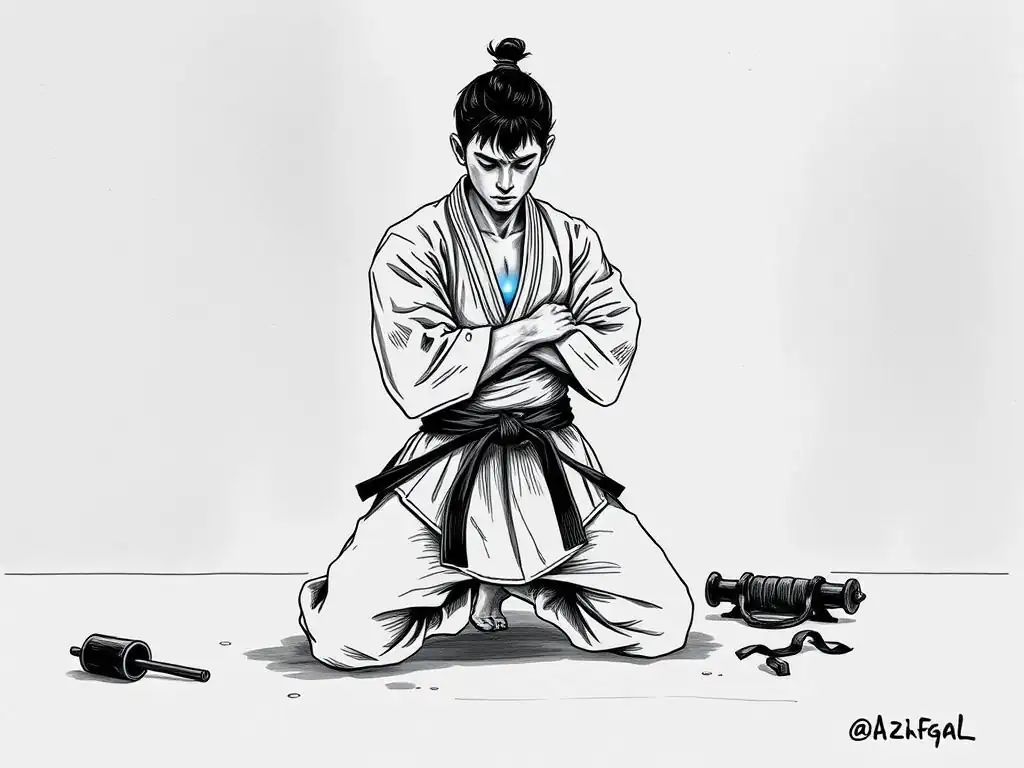
Ukemi (Breakfalls) as a Metaphor for Resilience in the Face of Challenges
Ukemi, the art of breakfalls in Judo, is perhaps one of the most profound practical lessons in resilience and a potent metaphor for navigating life's inevitable challenges. Learning to fall safely is one of the first and most crucial skills taught in Judo. It involves relaxing the body, distributing the impact, and controlling the fall to minimize injury. Initially, falling can be scary and uncomfortable, but with practice, it becomes second nature. A judoka who has mastered ukemi can be thrown hard onto a mat and quickly recover, ready to continue.
This physical skill translates directly to mental and emotional resilience. Life will inevitably "throw" us – with setbacks, failures, losses, and disappointments. Just as a judoka learns to absorb the shock of a throw and get back up, the practice of ukemi teaches the mental fortitude to absorb the impact of adversity, mitigate the damage (emotional or otherwise), and recover quickly.
Instead of being defeated by the fall, the judoka, like the Stoic, learns to accept it, learn from it, and prepare for the next exchange. Ukemi is not just about falling; it's about the essential skill of recovery, a core component of both Judo and Stoic resilience.
Stoic Techniques for Managing Stress and Anxiety in Judo and Life
Stoicism offers several practical techniques for managing stress and anxiety, highly applicable to the pressures of Judo competition and the stresses of everyday life. One key technique is the "Dichotomy of Control," distinguishing between things within our power (our judgments, desires, actions) and things outside our power (external events, other people's actions, outcomes). By focusing energy only on what is controllable, a judoka can reduce anxiety about winning or losing and instead concentrate solely on executing their techniques effectively and giving their best effort.
Another technique is cognitive reframing, examining and challenging the judgments that lead to negative emotions. If a judoka feels anxious before a match, a Stoic might analyze the thought: "I am afraid of losing." They would then reframe it: "Losing is an external event outside my control. What is in my control is my preparation, my effort during the match, and my attitude regardless of the outcome.
I will focus on these things." Premeditation of adversity ( premeditatio malorum) also helps; by mentally rehearsing difficult scenarios, the actual experience becomes less daunting. These Stoic practices, applied to the demanding world of Judo, enhance mental composure and the ability to perform under stress, demonstrating the practical application of Judo Stoicism ancient wisdom.
Osaekomi-waza (Holding Techniques) and the Stoic concept of "Amor Fati" (Love of Fate)
Osaekomi-waza, Judo's holding techniques, where one pins an opponent to the mat, can offer an interesting parallel to the Stoic concept of Amor Fati ("Love of Fate"). When caught in a strong hold, a judoka faces a difficult situation. They must either endure the pressure and attempt to escape, or, if escape is impossible and the hold is secure (indicated by the referee calling osaekomi), they are effectively bound by the reality of the situation until the hold is broken or the time limit expires.
Resisting futilely or panicking expends energy and is often counterproductive. The skilled judoka in a hold remains calm, assesses options, and, if escape isn't immediately possible, endures with composure while looking for the slightest opening.
Amor Fati is the Stoic practice of not just accepting fate, but actively loving it – embracing everything that happens, including adversity, as necessary for one's growth and part of the rational order of the universe. It's about accepting the present reality, however difficult, without complaint and seeing it as an opportunity. Being held in osaekomi is a physical representation of being constrained by circumstances outside immediate control.
The Stoic approach, like the skilled judoka's, isn't passive resignation but an active acceptance of the present reality combined with a calm, rational search for the best possible response within those constraints. It's about finding strength and opportunity even within limitation, embodying a profound aspect of Judo Stoicism ancient wisdom.
Enduring Relevance: The Legacy of Judo and Stoicism
Enhancing Personal Growth and Well-being Through Judo and Stoicism
Both Judo and Stoicism offer powerful frameworks for enhancing personal growth and well-being, demonstrating their enduring relevance in the modern world. Judo's comprehensive system of physical, mental, and moral training provides a structured path for self-improvement. The physical benefits are clear – improved strength, flexibility, and cardiovascular health. But the mental and emotional benefits are equally significant: increased confidence, better emotional regulation, enhanced focus, and greater resilience. The ethical framework encourages positive social interaction and contribution, fostering a sense of connection and purpose.
Stoicism, as a philosophy for living, directly addresses the human condition and the pursuit of a good life. By focusing on virtue, rationality, and acceptance, it provides tools to navigate stress, anxiety, and adversity, leading to greater tranquility and psychological well-being.
It encourages introspection, self-awareness, and the development of a strong inner core independent of external circumstances. When combined, the physical discipline and ethical principles of Judo complement the mental training and philosophical insights of Stoicism, creating a holistic approach to personal development that addresses both body and mind, offering a potent synthesis of Judo Stoicism ancient wisdom for modern well-being.
Modern Interpretations of Judo's Philosophical Foundations
In contemporary Judo, while the competitive sport aspect often receives the most attention (with millions practicing globally and Judo being an Olympic sport since 1964 for men and 1992 for women), there is a growing movement to re-emphasize Kano's original philosophical underpinnings. Many instructors and organizations are actively working to integrate the principles of Seiryoku Zenyo and Jita Kyoei more explicitly into training, particularly for younger students. There's a recognition that the benefits of Judo extend far beyond winning medals, cultivating qualities like respect, discipline, and resilience that are vital for success and well-being in life.
Modern interpretations highlight Judo as a form of embodied cognition and a practical application of philosophical principles. The physical techniques are seen not just as movements but as lessons in efficiency, balance, and leverage, applicable to problem-solving beyond the mat. Jita Kyoei is promoted as a model for cooperation and ethical interaction in an increasingly interconnected world. These interpretations seek to ensure that Judo remains a path for holistic development, staying true to Kano's vision of using the art to build better individuals and contribute to a better society, preserving the ancient wisdom embedded within the practice.
Potential for Further Research: Combining Judo and Stoicism for Enhanced Mental Performance
The parallels between Judo and Stoicism suggest a fertile ground for further research, particularly concerning enhanced mental performance and psychological resilience. Studies could explore the specific psychological benefits of Judo training, such as its impact on stress reduction, emotional intelligence, and executive functions, and how these benefits align with outcomes observed in individuals who actively practice Stoic principles. Research could also investigate the effectiveness of explicitly integrating Stoic concepts into Judo instruction – teaching breakfalls alongside discussions of accepting adversity, or teaching randori with an emphasis on focusing only on one's own actions and judgments.
For example, a study might compare the stress response and performance under pressure of Judokas who receive standard training versus those who receive training augmented with Stoic principles and exercises (like journaling or negative visualization). The hypothesis would be that the combined approach leads to greater mental toughness and more consistent performance.
Furthermore, research could explore how the physical practice of Judo facilitates the internalization of abstract Stoic concepts, providing a unique embodied pathway to philosophical understanding and application. This interdisciplinary approach holds significant potential for developing new methodologies for mental and physical training, leveraging the combined power of Judo Stoicism ancient wisdom.
Conclusion: Integrating Judo and Stoicism for a Meaningful Life
Achieving Self-Mastery Through Judo's Principles and Stoic Philosophy
Achieving self-mastery is a central goal in both Judo and Stoic philosophy. Judo provides a physical and ethical discipline that trains the body and mind to act with efficiency, control, and respect. Through consistent practice, a judoka learns to manage their physical reactions, control their emotions under pressure, and adhere to a code of conduct. This process of mastering techniques and oneself within the structured environment of the dojo builds a strong foundation of self-control and confidence.
Stoicism offers a complementary philosophical framework for self-mastery, focusing on mastering one's internal world – judgments, desires, and aversions. By applying reason and virtue, a Stoic learns to distinguish what is truly important (character) from what is indifferent (external circumstances) and to respond to life's events with equanimity. Integrating the physical and ethical discipline of Judo with the mental and philosophical rigor of Stoicism creates a powerful synergy.
The physical challenges of Judo provide a real-world laboratory for practicing Stoic principles, while Stoicism offers a deeper understanding and motivation for the discipline required in Judo. Together, they form a comprehensive path towards self-mastery, fostering resilience, virtue, and inner peace.
The Enduring Power of Ancient Wisdom in Shaping Martial Arts and Personal Development
The parallels between Judo and Stoicism underscore the enduring power of ancient wisdom in shaping not only martial arts but also personal development. Jigoro Kano, in creating Judo, drew upon centuries of martial tradition but imbued it with a modern educational and philosophical purpose, echoing timeless principles found in various wisdom traditions, including Stoicism. The emphasis on self-discipline, resilience, ethical conduct, and contributing to the greater good are not unique to one philosophy or martial art; they are universal tenets for living a good life.
Martial arts like Judo provide a practical, embodied pathway to understanding and applying these ancient concepts. They offer a physical and social context where virtues can be actively practiced and tested. Stoicism provides a rich intellectual and ethical framework for understanding the 'why' behind the 'what' of such practices, offering guidance on mindset and judgment.
The continued relevance of both Judo and Stoicism in the 21st century speaks to humanity's ongoing search for meaning, resilience, and self-improvement. Exploring the connection between Judo Stoicism ancient wisdom offers a compelling example of how timeless principles can be integrated into modern life for profound personal growth and well-being.
Frequently Asked Questions
What are the core principles of Stoicism, and how do they relate to Judo?
Stoicism emphasizes virtue, reason, and self-control as the keys to happiness. These principles align with Judo's focus on mental discipline, respect, and ethical conduct, promoting a balanced and resilient character.
How does Judo training reflect Stoic principles of accepting what you cannot control?
Judo involves facing opponents and situations that are often unpredictable. Learning to accept defeat gracefully and focus on improving one's own actions and reactions are key parallels with Stoic acceptance.
What aspects of Jigoro Kano's teachings align with Stoic philosophy?
Kano emphasized "Seiryoku Zenyo" (maximum efficiency, minimum effort) and "Jita Kyoei" (mutual welfare and benefit). These principles resonate with Stoic values of reason, justice, and contributing to the greater good.
How can the practice of Judo help cultivate Stoic virtues like courage and resilience?
The physical and mental challenges of Judo training build courage in the face of adversity and foster resilience against setbacks. Repeatedly overcoming obstacles on the mat translates to greater emotional fortitude in life.
What role does mindfulness play in both Judo and Stoicism?
Both Judo and Stoicism emphasize present moment awareness. Being mindful of your body, your opponent's movements, and your own thoughts allows for more effective action and emotional regulation.
Final Reflection: Embracing Resilience Through Judo and Stoicism
The exploration of Judo and Stoicism reveals a profound connection between physical discipline and mental fortitude, a synergy that resonates deeply in our modern, often chaotic world. The pursuit of inner peace and unwavering resilience, as embodied by both Judo's principles and Stoic philosophy, offers a powerful antidote to the anxieties and uncertainties of contemporary life. Understanding this connection allows us to approach challenges with a renewed sense of purpose and control.
This synthesis of ancient wisdom and martial art continues to shape not only the individual practitioner but also the broader cultural understanding of strength and virtue. The enduring appeal of both Judo and Stoicism lies in their emphasis on self-improvement, acceptance, and the pursuit of excellence, irrespective of external circumstances. This resonates deeply with my own journey, highlighting the importance of internal discipline in navigating life's inevitable trials. The impediment to action advances action. What stands in the way becomes the way.
- Marcus Aurelius. This quote perfectly encapsulates the spirit of both Judo and Stoicism, reminding us that obstacles are opportunities for growth.
Now, I invite you to consider how the principles of Judo and Stoicism can be integrated into your own life. Reflect on the challenges you face and ask yourself: how can I approach them with the same calm, disciplined, and resilient spirit as a Judoka on the mat or a Stoic philosopher in the face of adversity? Embrace the wisdom of these ancient traditions, and discover the strength within you to overcome any obstacle and live a life of purpose and meaning.
Embrace Resilience: Transform Your Life with Judo & Stoicism!
Thank you for exploring the profound connection between Judo's philosophy and Stoic wisdom. Now, take the next step to cultivate inner strength and a resilient spirit.
Here are a few actions you can take today:
- Begin your journey by practicing Judo principles in everyday challenges: Focus on what you can control, accept what you cannot, and strive for constant improvement.
- Delve deeper by researching the core tenets of Stoicism, such as virtue, reason, and acceptance, and find how they resonate with Judo values.
- Share this article with friends and fellow martial artists, sparking a conversation about the powerful synergy between physical discipline and mental fortitude.
How will you apply the combined wisdom of Judo and Stoicism to overcome obstacles and live a more meaningful life?