
Krav Maga Drills You Can Practice at Home (Safely!)


Welcome to Martial Arts Mastery, your gateway to unlocking the secrets and skills of combat traditions worldwide!
Ever wondered if you could sharpen your self-defense skills without stepping into a dojo? Dive into our comprehensive guide on Krav Maga drills at home and discover how to build practical, life-saving techniques in the comfort of your own space. We'll explore safe and effective methods to get you started, leaving you ready to take control of your personal safety and perhaps even sparking a deeper journey into this powerful martial art. Prepare to be empowered!
- Introduction to Home Krav Maga Training
- Essential Krav Maga Drills for Home Practice
- Krav Maga Self-Defense Scenarios for Home Practice
- Equipment-Free Krav Maga Training Exercises
- Progressing Your At-Home Krav Maga Training
- Taking Your Krav Maga Skills Further
- Conclusion: Mastering Krav Maga Fundamentals at Home
-
Frequently Asked Questions
- How can I start learning Krav Maga drills at home without prior experience?
- What essential equipment do I need to practice Krav Maga drills at home?
- How can I ensure my safety while practicing Krav Maga drills at home?
- What are some effective Krav Maga drills I can practice alone at home?
- How can I progress my Krav Maga training at home beyond basic drills?
- Final Reflection: Empowering Self-Defense
- Ignite Your Inner Warrior: Start Your Krav Maga Journey Today!
Introduction to Home Krav Maga Training
Why Practice Krav Maga Drills at Home?
Practicing Krav Maga drills at home offers significant advantages for dedicated students looking to supplement their regular training or maintain skills when access to a gym is limited. The convenience of being able to work on specific techniques or physical conditioning in a familiar environment can greatly accelerate progress. Many fundamental Krav Maga drills at home require minimal space and no specialized equipment, making them highly accessible. This allows practitioners to increase their training volume and frequency beyond scheduled class times, reinforcing muscle memory and improving technique refinement.
Furthermore, focusing on Krav Maga drills at home provides an opportunity for introspective practice. Without the pressure of performing in front of peers or an instructor, individuals can focus on their own body mechanics, identify weaknesses, and correct minor errors at their own pace. This personalized attention to detail in practicing Krav Maga at home is crucial for developing solid fundamentals. It also fosters a deeper understanding of the principles behind each movement, transitioning from simply performing a technique to truly understanding its purpose and application in a real-world self-defense scenario.
Safety First: Essential Precautions for At-Home Krav Maga
Safety is paramount when performing Krav Maga drills at home to prevent injuries. Before starting any session, it is critical to ensure your training area is completely clear of obstacles. This includes furniture, sharp corners, slippery rugs, and anything else you might trip over or hit. A minimum clear space of roughly 6x6 feet (about 2x2 meters) is often recommended for basic movement and striking drills, but more space is better if available. Always check the floor surface; it should be stable and preferably provide some cushioning, though hard surfaces can be managed carefully.
Additionally, proper warm-up and cool-down routines are non-negotiable steps for safe at-home Krav Maga training. A dynamic warm-up of 5-10 minutes, including light cardio and mobility exercises, prepares muscles and joints for activity. Stiff muscles are prone to pulls and tears. After training, a cool-down with static stretches helps improve flexibility and aids recovery.
Listen to your body; do not push through sharp pain. If practicing strikes, ensure you are not hitting hard, immovable objects unless specifically designed for it (like a heavy bag, which isn't always available at home). The focus for solo Krav Maga drills at home is on technique and repetition, not maximum power.
Essential Krav Maga Drills for Home Practice
Drill 1: Striking Combinations for Self-Defense
Developing powerful and accurate strikes is a core component of Krav Maga. Practicing striking combinations alone allows for focused repetition on form, speed, and targeting. While you can't hit a partner, you can visualize a target and work on generating power from the ground up, through the hips and core, into the strike. Focus on proper hand/foot positioning, body rotation, and recovery. This consistency in practicing Krav Maga drills at home builds essential muscle memory.
One effective approach is to break down common combinations into individual components and perfect each one before linking them. For instance, practicing the jab repeatedly, focusing on extension and snap, then the cross with hip rotation, and finally the hook with body pivot. Once comfortable with individual strikes, you can then chain them together smoothly. This analytical approach to Krav Maga drills at home ensures that bad habits aren't reinforced.
Practicing Punches, Elbows, and Knees
Solo striking practice is fundamental for developing technique, speed, and power generation without needing a partner. For punches, focus on the straight punches (jab, cross), hooks, and uppercuts. Stand in your fighting stance, visualize a target at eye level or solar plexus, and execute the strike, ensuring your hand is properly aligned and protected (knuckles forward for straight punches, heel of the hand for palm strikes). Rotate your hips and pivot your feet to generate power, rather than just using arm strength. Perform sets of 10-20 repetitions for each strike, focusing purely on form.
Elbow strikes are incredibly powerful at close range. Practice horizontal, vertical, and diagonal elbow strikes. Imagine an attacker is very close, perhaps grabbing you. Practice striking to the head, neck, or ribs with force, ensuring the elbow is leading and the body is rotating into the strike. Knee strikes are similarly devastating, particularly to the groin, thighs, or abdomen. Practice bringing your knee up forcefully, driving your hips forward, imagining lifting your opponent slightly or striking into their body. Repeat these Krav Maga drills at home focusing on the explosive movement and target visualization.
Jab-Cross-Hook Combination
The jab-cross-hook is a foundational striking combination in many combat systems, including Krav Maga, due to its versatility and effectiveness. Practice this combination in your fighting stance: a quick jab (lead straight punch) to gauge distance or distract, followed immediately by a powerful cross (rear straight punch) driven by hip rotation, and finishing with a hook (lead circular punch) pivoting on the lead foot. The power for the cross comes from rotating the back hip forward, and the power for the hook comes from pivoting the lead foot and rotating the lead hip.
Perform this combination slowly at first, focusing on the smooth transition between strikes, the proper body mechanics for power generation, and maintaining balance throughout. As your comfort and technique improve, gradually increase speed and snap. Repeat the combination numerous times, perhaps 20-30 repetitions per round, for several rounds. This is one of the most crucial Krav Maga drills at home for developing fluid offensive capability. Visualize hitting different targets with each strike within the combination.
Drill 2: Defenses Against Common Attacks
Practicing defenses against common attacks like grabs and chokes is challenging solo but not impossible. The focus shifts from resisting a real force to practicing the movement and principles of the defense. Visualization is key: imagine the attacker's grip, their position relative to you, and the direction of force. Then, execute the escape technique with full commitment, as if the threat were real. This mental engagement is vital for effective Krav Maga drills at home.
Even without a partner, you can work on the initial reaction, body positioning, and counter-attack mechanics. For example, when practicing a defense against a frontal choke, you can simulate bringing your hands up forcefully, tucking your chin, and executing the body movement needed to disrupt the grip, followed by a counter-strike. The goal is to make the defensive response automatic through repetition.
Defending Against Grabs and Chokes
Defending against grabs and chokes in Krav Maga focuses on breaking the attacker's grip quickly and immediately counter-attacking. While solo practice lacks the resistance of a real grip, you can perfect the mechanics. For a two-hand choke from the front, the principle is often to bring both hands up forcefully and explosively, striking downwards or outwards at the attacker's wrists or forearms to break the grip, while simultaneously tucking your chin for protection. Practice this explosive hand movement and body positioning.
For a grab, such as a wrist grab, the technique often involves using leverage and body rotation. For example, if your right wrist is grabbed by the attacker's right hand, you might step forward with your right foot, rotate your body strongly to the left, and pull your wrist in a specific direction (often towards your thumb side) while simultaneously striking with your free hand or knee. Practice the coordination of the step, rotation, pull, and strike. These Krav Maga drills at home build the necessary coordination and speed.
Two-Hand Wrist Grab Escape
A common grab is the two-hand wrist grab from the front. To practice this Krav Maga drill at home solo, extend one arm as if an attacker is gripping it with both hands.
The technique typically involves stepping forward with the foot on the same side as the grabbed wrist, rotating your body strongly away from the attacker, and pulling your wrist through their weakest point of grip (often towards your thumb side) while simultaneously striking with your free hand. For example, if your right wrist is grabbed, step forward with your right foot, rotate your body sharply to the left, pull your right wrist towards your right thumb, and strike with your left hand (e.g., a palm strike to the face).
Practice this sequence of movements repeatedly. Focus on the explosive step and body rotation, which generates the force needed to break the grip. The pull is a sharp, quick motion, not a sustained tug. Visualize the attacker's hands and the point where their grip would be weakest. Perform this drill 10-15 times per wrist, ensuring the coordination of step, rotation, pull, and strike becomes seamless. This is one of the fundamental Krav Maga drills at home for developing escape reflexes.
Drill 3: Ground Fighting Fundamentals (Simplified)
While full ground fighting requires a partner, you can practice fundamental ground escape techniques alone. Krav Maga emphasizes getting off the ground as quickly and safely as possible, as the ground is a disadvantageous position in a real fight, especially against multiple attackers. Solo practice focuses on mobility, creating space, and transitioning back to your feet. These Krav Maga drills at home build the necessary body control and movement patterns.
Key techniques include creating distance using your legs (guard retention principles, though simplified), hip escapes (shrimping), and bridging. Practicing these movements improves your ability to maneuver on the ground, which is essential for escaping bad positions or recovering from a fall. Consistency in performing these ground-based Krav Maga drills at home will significantly improve your confidence and capability should a conflict go to the ground.
Introduction to Ground Escape Techniques
Krav Maga's approach to ground fighting is pragmatic: survive, create space, and stand up. Solo practice focuses on developing the body mechanics for these actions. Imagine you are on your back with an attacker on top or nearby. Your immediate goals are often to protect your head, keep the attacker away with your legs (maintaining distance), and create angles to move or stand up. Practicing pushing movements with your legs and feet against an imaginary target helps build the explosive power needed to create space.
Body movement drills on the ground are crucial. The hip escape (shrimping) and bridging are primary examples. These movements allow you to shift your body relative to the attacker, create distance, or set up an opportunity to recover your guard or stand. Practice rolling from your back to your side, using your elbows and hands for support, and transitioning smoothly. These are essential Krav Maga drills at home for anyone concerned about ground survival.
Hip Escape (Shrimping)
The hip escape, or shrimping, is a fundamental ground movement used to create distance or change position when on your back. To perform this Krav Maga drill at home, lie on your back, bend your knees, and place your feet flat on the floor. Lift your hips slightly, shift your weight to one shoulder (e.g., your left shoulder), and push off the floor with the opposite foot (your right foot) while extending your hips away from your left shoulder.
This causes your body to "shimmy" or "shrimp" away. Use your arms to help base and support your weight, pushing off the ground.
After shrimping in one direction, return to the starting position and shrimp in the other direction. Practice shrimping forwards (moving your head away from your feet) and backwards (moving your feet away from your head). Perform sets of 10-15 repetitions in each direction. This seemingly simple movement is vital for creating space against an opponent, recovering from being mounted, or maneuvering to stand up. It's a cornerstone of ground-based Krav Maga drills at home.
Drill 4: Reaction Time and Reflex Drills
Developing quick reaction time is critical in self-defense, as real attacks are sudden and unexpected. While you can't replicate the surprise of an attack perfectly alone, you can perform Krav Maga drills at home designed to improve your reflexes and ability to respond quickly to visual or auditory cues. These drills help bridge the gap between knowing a technique and applying it instantaneously under pressure.
These drills often involve reacting to a signal with a specific defensive or offensive movement. The goal is to reduce the hesitation between recognizing a threat (simulated) and initiating the appropriate Krav Maga response. Consistent practice hones your ability to react instinctively, which is invaluable in a high-stress situation.
Improving Reaction to Simulated Threats
Improving reaction time for self-defense involves training your brain and body to respond rapidly to unexpected stimuli. One simple method for Krav Maga drills at home is to have a friend or family member (standing at a safe distance) call out a simple command like "Hands up! ", "Move! ", or "Strike!" unexpectedly, and you react instantly with the corresponding Krav Maga principle (e.g., hands up in a defensive posture, evasive step, or a basic strike).
Alternatively, you can use visual cues. Stand facing away from a wall. Have someone stand behind you and lightly tap the wall or clap their hands. As soon as you hear the sound, spin around into a defensive stance or execute a predetermined strike. The key is the speed of the transition from passive to active. Practice this drill for short, intense bursts, focusing on reacting immediately without overthinking.
Reacting to a Dropped Object
A classic drill to improve general reaction time, adaptable for Krav Maga drills at home, involves reacting to a dropped object. Hold a soft object (like a rolled-up sock or a small towel) in one hand at chest height. Relax your body slightly. Without a count or warning, let the object drop. Your goal is to react as quickly as possible by bringing both hands up into a protective guard position before the object hits the floor.
As you get better, you can increase the challenge by starting with your hands lower or adding a step backward or to the side as you bring your hands up. This drill trains your body to respond instantly to a sudden visual stimulus (the falling object) with a protective action (raising your guard). It directly translates to the need for instantaneous reaction when facing a sudden threat in a self-defense situation.
Krav Maga Self-Defense Scenarios for Home Practice
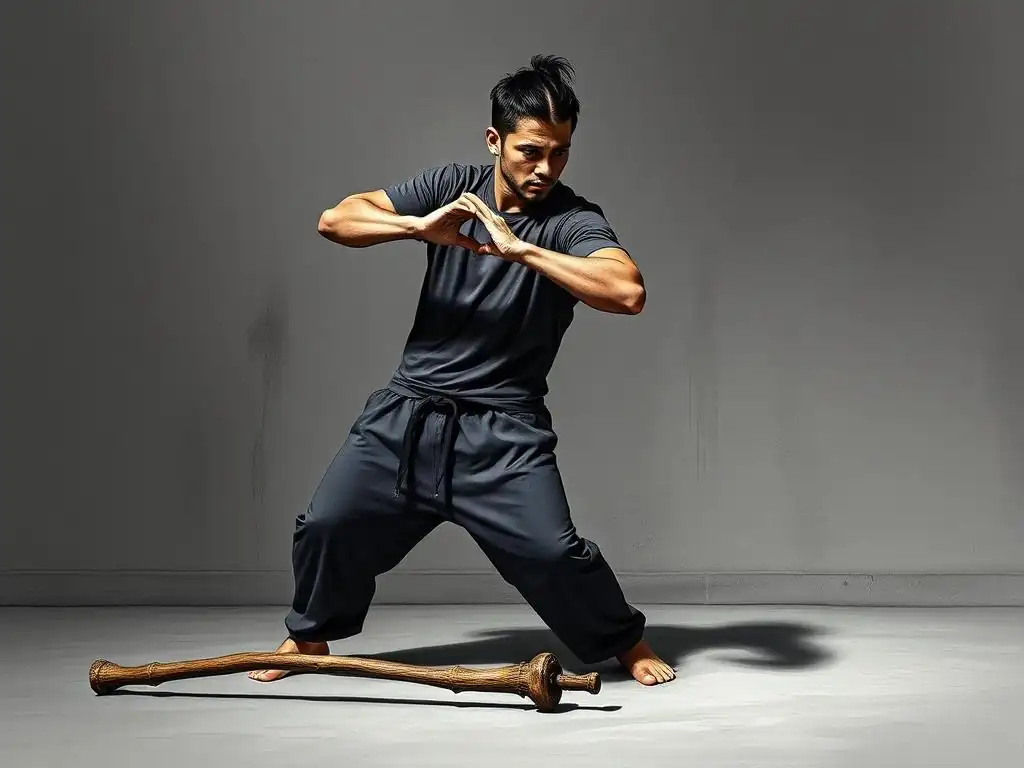
Creating Realistic Training Scenarios
While not a substitute for partner or class training, you can enhance your solo Krav Maga drills at home by incorporating scenario-based visualization. This involves mentally placing yourself in a specific, plausible self-defense situation and practicing your response as if it were real. This adds a layer of psychological training, helping you think through responses under simulated pressure. Choose scenarios that align with common real-world threats.
To make it realistic, visualize the environment (e.g., a dimly lit parking garage, a crowded street), the potential aggressor (their stance, distance, potential weapon), and your state (e.g., carrying groceries, talking on the phone). Walk through the scenario step-by-step, from initial awareness and de-escalation attempts to physical defense and escape. These mental Krav Maga drills at home improve your situational awareness and decision-making process.
Scenario 1: Confrontation in a Parking Garage
Parking garages can be vulnerable locations due to limited visibility and potential isolation. A common scenario involves being approached as you are getting into or out of your vehicle. For this Krav Maga drill at home, simulate the environment: stand next to a large object representing your car door. Practice maintaining awareness as you approach your "car."
Visualize someone appearing from behind a pillar or parked car. What is your initial reaction? Do you freeze, try to talk, or get into a defensive stance? Practice quickly assessing the threat level and positioning yourself defensively while keeping your hands free. If the threat escalates, practice your response: executing a preemptive strike or a quick defense followed by an escape route towards a safer area (e.g., back towards the entrance, towards other people if visible). Repeat the scenario, trying different responses based on how the threat might evolve.
Responding to a Threat While Entering Your Car
Specifically addressing the moment of entering your car, practice having your keys ready before reaching the car door. As you approach, look around constantly (360-degree check). Simulate unlocking the door and quickly getting inside. What if someone approaches as you open the door? Practice quickly turning to face the threat, getting into a fighting stance, and being ready to deploy immediate defenses or counter-attacks if necessary.
If you are already partially in the car, practice using the car door as a barrier while preparing to defend yourself or quickly get fully inside and lock the doors. This Krav Maga drill at home emphasizes situational awareness and rapid transitions between non-combative actions (entering a car) and defensive readiness. Visualize the tight space and how it affects your movement and available techniques.
Scenario 2: Dealing with an Aggressive Panhandler
Encountering aggressive individuals, such as panhandlers, is a common urban scenario that can potentially escalate into a physical threat. This scenario focuses on de-escalation and creating space before any physical contact occurs. For this Krav Maga drill at home, visualize walking down a street and being aggressively approached.
Practice maintaining a safe distance (typically 6-10 feet if possible) and using verbal commands. Practice saying "No thank you," "Please leave me alone," or "I don't have anything" clearly and firmly, while keeping your hands visible and in a non-threatening but ready position (e.g., hands open, slightly raised). Practice backing away while keeping the person in sight. If they close the distance aggressively, practice quickly adopting a defensive stance and being ready to use preemptive strikes if they attempt to grab you or attack.
Verbal De-escalation and Preemptive Defense
This Krav Maga drill at home combines verbal strategies with physical readiness. Practice using a strong, confident voice while maintaining calm body language. Avoid appearing weak or overly aggressive initially. The goal of verbal de-escalation is to avoid a physical confrontation if possible. Practice phrases that set boundaries without inviting further conflict.
However, be prepared for verbal de-escalation to fail. Simultaneously, practice having your hands in a position where they can quickly transition to a protective guard or launching a preemptive strike (like a palm strike or groin kick) if the aggressor lunges or attempts physical contact. The principle is to react before they can successfully execute their attack. Practice the sudden, explosive movement of a preemptive strike from a neutral or de-escalation posture, followed by creating distance and escaping.
Equipment-Free Krav Maga Training Exercises
Many essential physical attributes for Krav Maga can be developed without any equipment, using only your body weight. These exercises build the strength, endurance, and explosive power necessary for effective self-defense techniques. Incorporating these into your routine complements the technical Krav Maga drills at home.
Consistency in these physical conditioning exercises improves your overall fitness, which is a critical component of real-world survival. Being stronger, faster, and having more stamina allows you to execute techniques more effectively and sustain effort during a confrontation or while escaping.
Bodyweight Exercises for Krav Maga Strength and Conditioning
Bodyweight exercises are excellent for building functional strength relevant to Krav Maga movements. Squats build powerful legs and hips for striking and movement. Push-ups develop chest, shoulder, and tricep strength crucial for striking and defending against pushes or grabs. Lunges improve balance and leg strength for dynamic movement. Planks and other core exercises are vital for stability, power transfer from the lower to upper body, and protecting your midsection.
Incorporate these exercises into circuits. For example, perform 3 sets of 15-20 squats, 10-15 push-ups, 10-12 lunges per leg, and hold a plank for 30-60 seconds, with minimal rest between exercises. This type of circuit training improves both strength and muscular endurance, mimicking the demands of a physical confrontation. Regular inclusion of these in your Krav Maga drills at home routine will yield tangible physical benefits.
Push-ups, Squats, and Core Work
- Push-ups: Start on your hands and knees, hands slightly wider than shoulder-width, or in a plank position on your hands and toes. Lower your chest towards the floor by bending your elbows, keeping your body in a straight line from head to heels. Push back up to the starting position. Focus on controlled movement. Aim for 3 sets of as many repetitions as you can maintain good form.
- Squats: Stand with feet shoulder-width apart, toes slightly turned out. Keep your back straight and chest up. Lower your hips as if sitting into a chair, until your thighs are parallel to the floor or slightly lower. Ensure your knees track over your toes. Push back up through your heels to standing. Perform 3 sets of 15-20 repetitions, focusing on depth and control.
- Core Work (e.g., Plank): Get into a push-up position, then lower onto your forearms. Keep your body in a straight line from head to heels, engaging your core muscles. Avoid letting your hips sag or rise too high. Hold this position for 3 sets of 30-60 seconds. Other core exercises like crunches, leg raises, and Russian twists are also beneficial.
These exercises, performed consistently as part of your Krav Maga drills at home, build the foundational strength needed for more dynamic movements and techniques.
Shadow Boxing for Technique Refinement
Shadow boxing is an invaluable tool for practicing Krav Maga drills at home without equipment. It involves performing strikes, defenses, and movements against an imaginary opponent. This allows you to focus purely on technique, body mechanics, balance, and footwork without the impact or resistance of pads or a partner. Visualize an opponent of varying size and skill level, moving around them, attacking, defending, and countering.
Use shadow boxing to work on specific aspects: perhaps a round focusing solely on footwork and movement, another on striking combinations, and a third on defensive maneuvers followed by counters. Pay attention to your stance, guard, hip rotation, and weight transfer. Record yourself if possible to identify areas for improvement. Regular shadow boxing, even for 10-15 minutes a day, significantly refines your technique and flow.
Progressing Your At-Home Krav Maga Training
Setting Realistic Goals for Home Practice
Approaching your at-home Krav Maga drills with clear, realistic goals is essential for motivation and progress. Instead of vague aims like "get better at Krav Maga," set specific, measurable goals. Examples include "Practice the jab-cross-hook combination for 10 minutes daily this week," "Perform 3 sets of hip escapes 4 times this week," or "Improve plank hold time by 10 seconds over the next two weeks."
Break down larger goals into smaller, manageable steps. For instance, if your goal is to improve striking power, start by focusing on hip rotation during shadow boxing, then add resistance band work (if available), and later incorporate bag work if you get access to one. Celebrate achieving small milestones to maintain momentum. Realistic goal-setting ensures your Krav Maga drills at home are structured and purposeful.
Tracking Your Progress and Identifying Weaknesses
Tracking your progress provides tangible proof of improvement and helps identify areas that need more attention. Keep a simple training journal. Note down the drills you performed each session, the number of repetitions or duration, and any observations about your technique or how you felt. For physical conditioning, record the number of reps or the hold time.
Review your journal periodically (e.g., weekly or monthly) to see where you've improved and where you're stagnant. If you notice your balance is consistently off during striking combinations, dedicate more time to balance drills. If your hip escapes feel weak, focus on the pushing motion with your feet. This systematic approach to analyzing your Krav Maga drills at home ensures your training remains effective and targeted.
Taking Your Krav Maga Skills Further
Finding a Qualified Krav Maga Instructor
While practicing Krav Maga drills at home is highly beneficial for supplementing training and maintaining skills, it is not a complete substitute for learning under a qualified instructor. An experienced instructor provides crucial feedback on your technique, corrects errors that you might not notice on your own, and safely introduces partner drills and sparring. They can assess your understanding of principles and application in dynamic situations.
Look for instructors certified by reputable Krav Maga organizations. Visit a few schools if possible, observe classes, and talk to students. A good instructor emphasizes safety, proper technique, and the underlying principles of Krav Maga. Live instruction is invaluable for learning timing, distance management, and reacting to a non-compliant partner.
Supplementing Home Training with Partner Drills
Once you have access to a training environment with partners, combine your solo Krav Maga drills at home with partner practice. Solo practice builds muscle memory and technique mechanics; partner drills introduce resistance, movement, and the unpredictable nature of a real person. For example, after perfecting the two-hand wrist grab escape solo, practice it with a partner who applies varying degrees of realistic resistance.
Partner drills also allow you to practice controlling distance, managing multiple threats (under supervision), and applying techniques under light stress. Your home practice provides the foundation of movement and strength, while partner drills teach you how to apply those skills effectively against resistance. This combination is key to developing practical self-defense ability.
Conclusion: Mastering Krav Maga Fundamentals at Home
The Importance of Consistent Practice
Consistency is the bedrock of mastering any skill, and Krav Maga is no exception. Regular practice of Krav Maga drills at home, even for short durations (e.g., 15-30 minutes several times a week), is far more effective than infrequent, long sessions. Consistent repetition builds muscle memory, refines technique, and improves physical conditioning gradually and sustainably.
Making at-home Krav Maga training a habit ensures that your skills remain sharp and continue to develop. It reinforces the principles learned in class and allows for deeper internalization of movements. Whether you focus on striking, defenses, ground escapes, or physical conditioning, regular, dedicated practice is the most critical factor in achieving proficiency.
Continuing Your Krav Maga Journey with Continued Learning
Practicing Krav Maga drills at home is a valuable part of a larger journey in self-defense. It complements formal training but does not replace the need for expert guidance and partner practice. View your home training as a way to accelerate your learning, maintain your edge, and deepen your understanding of the fundamentals.
Commit to continuous learning. Attend classes regularly, seek feedback from instructors, and explore resources that enhance your understanding of Krav Maga principles and applications. Your dedication to practicing Krav Maga at home, combined with structured training, will significantly enhance your ability to protect yourself and others. Embrace the ongoing process of learning and refinement.
Frequently Asked Questions
How can I start learning Krav Maga drills at home without prior experience?
Start with the basic stances and movements. There are many online resources that can guide you through the fundamentals. Focus on mastering those before moving on to more complex drills.
What essential equipment do I need to practice Krav Maga drills at home?
Initially, you need very little. Comfortable clothing and adequate space are key. As you progress, consider investing in training equipment like a heavy bag or focus mitts.
How can I ensure my safety while practicing Krav Maga drills at home?
Prioritize proper warm-up and cool-down routines. Start slowly and gradually increase intensity. Ensure you have enough space to avoid collisions and injuries.
What are some effective Krav Maga drills I can practice alone at home?
Focus on striking techniques, like punches, kicks, and knees against a heavy bag. Also, practice evasion and footwork drills to improve agility and reaction time.
How can I progress my Krav Maga training at home beyond basic drills?
Consider supplementing your home training with online courses or instructional videos. Eventually, seek out a qualified Krav Maga instructor for personalized guidance and sparring.
Final Reflection: Empowering Self-Defense
The ability to defend oneself is a fundamental human right, and Krav Maga's accessibility through at-home drills empowers individuals to take control of their safety. This article has aimed to provide practical, safe methods for honing these skills, recognizing that self-defense is not just a physical act, but a mindset of awareness and preparedness.
The impact of accessible self-defense training extends far beyond the individual. It fosters a sense of confidence and resilience that ripples through communities, creating a safer and more empowered society. The best weapon is one you never have to use, but knowing how to defend yourself is the best way to ensure you never have to.
This quote encapsulates the essence of Krav Maga – not aggression, but prevention and skillful response.
Now, take a moment to reflect on your own sense of security and preparedness. How can you incorporate these drills into your routine to cultivate a stronger sense of self-reliance? Embrace the power of Krav Maga, not just as a set of techniques, but as a path towards a more confident, empowered, and secure you.
Ignite Your Inner Warrior: Start Your Krav Maga Journey Today!
Thanks for exploring the world of Krav Maga with us! We hope you've discovered some valuable techniques to enhance your self-defense skills. Now, let's put that knowledge into action!
Here are a few ways to take your Krav Maga training to the next level:
- Dedicate 15 minutes daily to practicing the fundamental strikes and blocks you learned. Consistency is key!
- Explore resources such as instructional videos on our website, martialartsmastery.org, to enhance your technique.
- Share your training experiences and challenges with other enthusiasts in the comments below – let's build a supportive community.
What's one self-defense scenario you're now better prepared for after reading this article?