
Geopolitics and the Mat: How NorthSouth Korean Relations Impacted Taekwondo

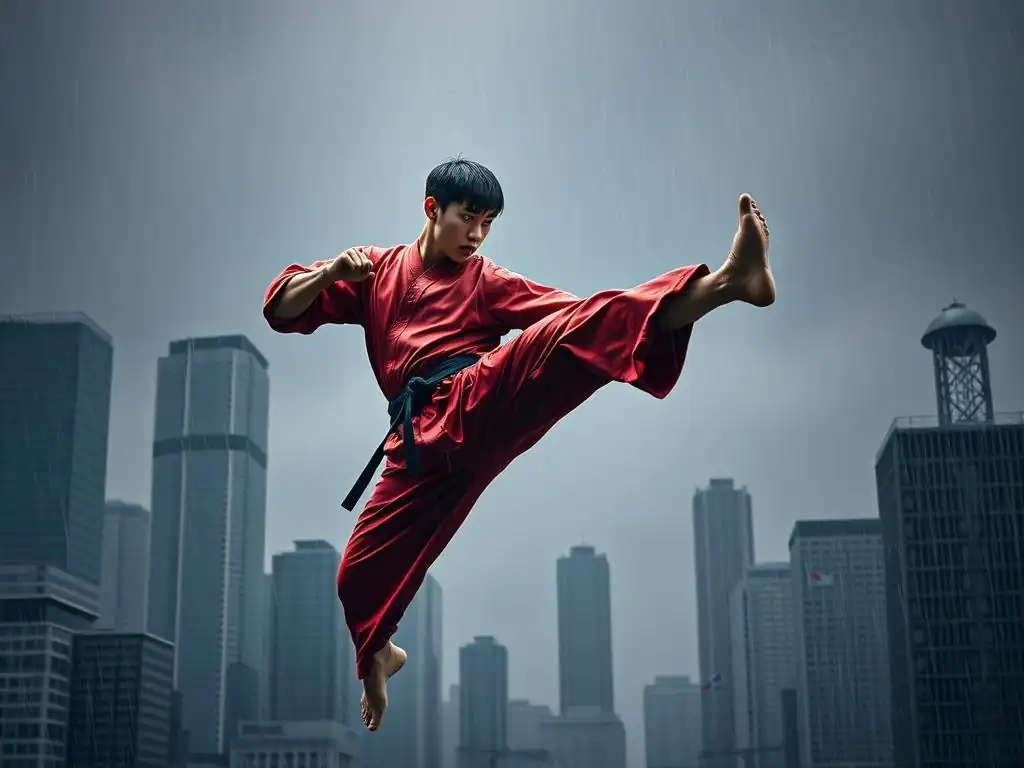
Welcome to Martial Arts Mastery, where we delve into the rich tapestry of martial arts history, philosophy, and technique.
Ever wondered how political tensions can shape the very fabric of a martial art? In this article, we explore the fascinating intersection of sport and state, uncovering how Taekwondo became deeply intertwined with Korean geopolitical relations. Prepare to discover the surprising ways North and South Korea's complex history has impacted this iconic martial art, leaving you pondering the powerful connections between physical discipline and global politics. Keep reading to unravel the untold story!
Overview of Taekwondo as a Martial Art and Cultural Symbol
Taekwondo stands as one of the world's most widely practiced martial arts, renowned globally for its dynamic kicking techniques and emphasis on physical fitness and discipline. Originating in Korea, its name translates roughly to "the way of the foot and the fist," highlighting its core techniques.
Beyond its physical curriculum of forms (patterns), sparring, and breaking, Taekwondo embodies a philosophy rooted in principles such as courtesy, integrity, perseverance, self-control, and indomitable spirit. This blend of physical prowess and moral guidance has allowed it to transcend geographical boundaries, establishing a presence in an estimated 200+ countries and engaging tens of millions of practitioners worldwide.
Its inclusion as an official sport in the Olympic Games, beginning with the 2000 Sydney Olympics for the World Taekwondo (WT) style, further solidified its status on the international stage, showcasing its evolution from a traditional practice to a modern competitive sport, though this global journey is inextricably linked to the complexities of Taekwondo Korean geopolitical relations.
As a cultural symbol, Taekwondo holds significant weight within Korea, representing resilience, national identity, and a spirit of self-improvement that resonated deeply in the post-war era. It emerged from a complex history, integrating elements from traditional Korean martial arts like Taekkyeon and Gwonbeop, alongside influences from Japanese karate during the colonial period. Following Korea's liberation in 1945, efforts were made to consolidate various martial arts schools (Kwans) under a unified banner, aiming to forge a distinct Korean identity.
This drive was not merely about standardizing techniques but also about projecting a strong, unified national image to the world. Taekwondo became a vehicle for instilling discipline and patriotism among the populace and military, viewed as a tangible expression of Korean heritage and strength. This deep connection to national identity meant that any shifts in Taekwondo Korean geopolitical relations would inevitably reverberate through the martial art's structure, organization, and international representation.
- ### How did the division of Korea influence the development of Taekwondo?
- ### What role did the Cold War play in the global spread of Taekwondo?
- ### How did the political ideologies of North and South Korea affect the philosophical underpinnings of their respective Taekwondo styles?
- ### What are some examples of how Taekwondo has been used to promote dialogue or reconciliation between North and South Korea?
- ### How does the history of Taekwondo reflect the ongoing geopolitical tensions between North and South Korea?
Frequently Asked Questions
### How did the division of Korea influence the development of Taekwondo?
The division led to competing styles and narratives surrounding Taekwondo's origins. Each Korea sought to establish its version as the true representation of the martial art. This created distinct political and martial identities.
### What role did the Cold War play in the global spread of Taekwondo?
Taekwondo's spread was accelerated by the Cold War as both North and South Korea used it as a form of cultural diplomacy. Each side promoted their version to gain influence and project soft power internationally.
### How did the political ideologies of North and South Korea affect the philosophical underpinnings of their respective Taekwondo styles?
South Korean Taekwondo often emphasized nationalism and discipline, reflecting its pro-Western alignment. North Korean Taekwondo incorporated Juche ideology, focusing on self-reliance and revolutionary spirit in its training.
### What are some examples of how Taekwondo has been used to promote dialogue or reconciliation between North and South Korea?
Joint Taekwondo demonstrations at international events have served as symbolic gestures of unity. These events offer a platform for cultural exchange and potential for future political cooperation, although often fraught with tension.
### How does the history of Taekwondo reflect the ongoing geopolitical tensions between North and South Korea?
The history of Taekwondo remains deeply intertwined with the Korean peninsula's division. The martial art serves as a microcosm of the broader geopolitical struggle, showcasing both division and potential for unity on the Korean peninsula.
Final Reflection: Bridging Divides Through the Art of Taekwondo
The intricate dance between Taekwondo and Korean geopolitical relations reveals a powerful truth: even amidst deep-seated division, shared cultural heritage can offer a pathway to understanding. The article has explored how the North-South Korean conflict has shaped the evolution and global dissemination of Taekwondo, highlighting the sport's complex role as both a symbol of national identity and a potential bridge across ideological divides. This delicate interplay continues to resonate today, reminding us that cultural expressions are never truly isolated from the political landscapes that nurture them.
The enduring influence of Taekwondo on the global stage underscores the profound impact of Korean culture, even in the face of persistent tensions. My own understanding of Taekwondo has been deeply enriched by recognizing its geopolitical roots, transforming it from a mere martial art into a potent symbol of resilience and reconciliation. Peace is not merely the absence of war, but the presence of justice.
This quote, often attributed to Albert Einstein, perfectly encapsulates the aspiration embedded within Taekwondo's philosophy – a hope for a future where shared values triumph over political discord.
As you reflect on the journey of Taekwondo, consider its broader implications. How can we, in our own lives, leverage shared passions and cultural understanding to bridge divides and foster empathy? Let the spirit of Taekwondo – its discipline, respect, and pursuit of harmony – inspire you to seek common ground, build bridges of understanding, and contribute to a world where cultural heritage serves as a catalyst for peace.
Ignite Your Taekwondo Journey: Beyond the Mat!
Thank you for delving into the fascinating story of Taekwondo and its connection to Korean geopolitics. Now that you understand the deeper context, let's translate that knowledge into action and further enrich your martial arts experience.
- Deepen your understanding: Research a specific figure like General Choi Hong Hi and how their vision shaped the evolution of Taekwondo.
- Share your insights: Discuss the article's impact with your dojang, inviting a conversation on the art's heritage and sociopolitical influence.
- Explore similar martial arts: Compare and contrast Taekwondo with other Korean martial arts like Hapkido, considering how their histories diverge or converge.
How will you integrate this newfound knowledge into your practice and appreciation of Taekwondo?