
KuzureKamiShihoGatame: The Modified Upper FourCorner Hold

Welcome to Martial Arts Mastery, your comprehensive guide to the world's fighting traditions. Delve into the intricate details of each discipline, from historical roots to cutting-edge techniques. Ever wondered how to transform a seemingly vulnerable position into a powerful defense? Our exploration of KuzureKamiShihoGatame, a modified upper four-corner hold, reveals just that. Prepare to unlock the secrets behind this effective control technique and discover how it fits within the broader landscape of martial arts mastery. Let's begin your journey into this fascinating art!
- KuzureKamiShihoGatame: The Modified Upper Four Corner Hold - A Martial Arts Mastery Guide
- Introduction to KuzureKamiShihoGatame in Judo
- KuzureKamiShihoGatame Self Defense Applications
- KuzureKamiShihoGatame: Breakdown of the Technique
- Variations of KuzureKamiShihoGatame
- Common Mistakes and How to Avoid Them in KuzureKamiShihoGatame
- KuzureKamiShihoGatame: Drills and Training Exercises
- KuzureKamiShihoGatame vs. Other Pinning Techniques
- Advanced KuzureKamiShihoGatame Strategies
- KuzureKamiShihoGatame: Safety Considerations
- The Role of KuzureKamiShihoGatame in Judo Competition
-
Frequently Asked Questions
- What is KuzureKamiShihoGatame?
- How does KuzureKamiShihoGatame differ from traditional KamiShihoGatame?
- Is KuzureKamiShihoGatame an effective self-defense technique?
- What martial arts disciplines commonly utilize KuzureKamiShihoGatame?
- What are some key considerations when practicing KuzureKamiShihoGatame for self-defense?
- Final Reflection: Embracing Adaptability in Self-Defense
- Unleash Your Inner Grappler: Master KuzureKamiShihoGatame!
KuzureKamiShihoGatame: The Modified Upper Four Corner Hold - A Martial Arts Mastery Guide
Introduction to KuzureKamiShihoGatame in Judo
Understanding the Core Principles of KuzureKamiShihoGatame
Kuzure Kami Shiho Gatame, often translated as "Modified Upper Four Corner Hold," is a fundamental pinning technique within the katame-waza (grappling techniques) of Judo. Its core principle revolves around establishing dominant control over an opponent who is lying supine (on their back) by pinning their upper body to the ground.
Unlike the standard Kami Shiho Gatame where the practitioner grips the opponent's belt or Gi pants from the head-on position, the 'Kuzure' or 'modified' aspect typically involves variations in gripping, often utilizing an arm trap or different hand placements on the opponent's collar or arms rather than solely relying on the belt. The goal is to negate the opponent's ability to bridge, turn, or insert their legs to escape.
The effectiveness of Kuzure Kami Shiho Gatame lies in its ability to distribute the practitioner's weight across the opponent's chest and shoulders, creating significant pressure and limiting mobility. Proper execution requires the pinning practitioner to maintain a low center of gravity, keep their hips heavy, and use their legs for base and stability. This control not only prevents the opponent from escaping but also sets up opportunities for transitions to other pins, control positions, or even submissions, making it a versatile technique in both competitive Judo and potential KuzureKamiShihoGatame self defense scenarios where ground control is necessary.
KuzureKamiShihoGatame: A Powerful Pinning Technique
As a osaekomi-waza (pinning technique), Kuzure Kami Shiho Gatame is recognized in competitive Judo as a means to secure a hold-down and score ippon (full point) if maintained for the required duration, typically 20 seconds under current IJF rules. Even holding for shorter durations, such as 10-19 seconds, results in a waza-ari (half point). Its power stems from the mechanical advantage gained by pinning the opponent's upper body, which is typically less flexible and mobile than the hips and legs when trapped from this angle.
The versatility of Kuzure Kami Shiho Gatame allows it to be applied from various positions, including directly after a throw or during ground transitions. Its modified nature, allowing for different grips, makes it adaptable against opponents with varying body types or those who are actively defending the standard grips. A well-applied Kuzure Kami Shiho Gatame creates a suffocating pressure that can exhaust an opponent and limit their options for escape, solidifying its status as a powerful and reliable pinning technique in the Judo repertoire.
KuzureKamiShihoGatame Self Defense Applications
Adapting KuzureKamiShihoGatame for Real-World Scenarios
While Judo pins are primarily associated with sport competition, the principles behind Kuzure Kami Shiho Gatame can be highly relevant in KuzureKamiShihoGatame self defense situations, particularly if an encounter goes to the ground. Unlike the structured environment of a dojo or competition mat, a real-world scenario might involve varied surfaces, obstacles, and an opponent who may not be trained in grappling. Adapting Kuzure Kami Shiho Gatame involves focusing less on maintaining a strict 20-second hold for a score and more on achieving temporary control, creating space, or securing a position that allows for escape or transition.
In a self-defense context, securing a position like Kuzure Kami Shiho Gatame can serve several purposes. It neutralizes the opponent's ability to stand up or strike effectively from the ground, provided the practitioner maintains proper head and arm control. The pressure applied can also help subdue a struggling aggressor.
However, adaptation is key: grips might need to be adjusted if the opponent isn't wearing a Gi, focusing instead on limb control or clothing. The primary objective shifts from scoring a point to ensuring personal safety, which might mean using the pin to recover balance, assess the situation, or facilitate standing up safely.
Effective Self Defense Techniques with KuzureKamiShihoGatame
Applying KuzureKamiShihoGatame self defense effectively means understanding its limitations and strengths outside the sport context. Its strength lies in controlling the opponent's upper body and hips from a dominant top position. If you find yourself on top of an aggressor on the ground, establishing a form of Kuzure Kami Shiho Gatame can prevent them from turning into you, kicking effectively, or posturing up to strike. For instance, trapping one or both of their arms while maintaining heavy hip pressure can significantly reduce their threat.
Consider a scenario where you've taken an aggressor to the ground and landed in a top position. Instead of trying to score a pin, you might use a modified Kuzure Kami Shiho Gatame grip – perhaps controlling their wrists or securing an arm under your armpit – combined with heavy chest-to-chest pressure. This allows you to maintain control, potentially buying time for help to arrive or creating an opportunity to safely disengage and stand up. The principle of pinning the shoulders and hips remains, but the application becomes about temporary control and safety rather than a prolonged hold.
KuzureKamiShihoGatame: Breakdown of the Technique
Step-by-Step Guide to Executing KuzureKamiShihoGatame
Executing Kuzure Kami Shiho Gatame effectively requires attention to detail in positioning and grip. Assuming the opponent is lying flat on their back, the practitioner positions themselves across the opponent's chest, perpendicular to their body.
Here is a basic sequence:
- Approach and Position: Position yourself with your chest across the opponent's sternum, facing their head. Your knees should be wide for base, close to their sides.
- Secure the Grips (Modified): This is where the 'Kuzure' comes in. Instead of just the belt, you might secure one of the opponent's arms, perhaps trapping it under your armpit. Your hands then typically reach under the opponent's shoulders and grip their collar, belt, or even the back of their Gi pants on the opposite side, or you might link your hands (like a Gable grip) under their back if possible. A common variation involves trapping one of their arms under your arm and reaching for their opposite collar or belt.
- Lower Your Hips: Drop your hips low towards the ground, ensuring your weight is heavy on the opponent's chest and upper body. Avoid sitting up tall, which allows them space to move.
- Maintain Base and Pressure: Keep your legs wide and use them for stability. Your feet can be flat or on the balls of your feet, depending on preference and the need to adjust. Maintain constant downward pressure through your chest and hips.
- Control the Head/Shoulders: Ensure the opponent's shoulders remain flat on the mat. Your head should ideally be low, potentially resting on their chest or side, making it harder for them to bridge effectively.
Mastering these steps allows for a solid foundation in applying Kuzure Kami Shiho Gatame. The key is the combination of effective gripping, low hips, and constant pressure to negate the opponent's ability to generate force or create angles for escape. Consistent practice of this sequence builds the muscle memory needed for effective application.
Key Control Points in KuzureKamiShihoGatame
Effective control in Kuzure Kami Shiho Gatame relies on dominating specific points of the opponent's body to nullify their movement and escape attempts. The primary control points are the opponent's shoulders, hips, and head. By pinning the shoulders flat to the mat, you prevent them from turning or creating rotational force. Heavy hip pressure, combined with your own low center of gravity, makes it extremely difficult for the opponent to bridge (lift their hips) or shrimp (move their hips laterally).
Furthermore, controlling the opponent's arms, often by trapping one under your armpit in the 'Kuzure' variation, removes their ability to push, frame, or use their arms to initiate an escape. Maintaining control over their head, often by keeping your own head low and close to theirs, hinders their ability to turn their head and neck, which can be a precursor to bridging or rolling escapes. Focusing on these key control points simultaneously ensures a secure and dominant hold, whether aiming for a competition pin or utilizing KuzureKamiShihoGatame self defense principles for control.
Variations of KuzureKamiShihoGatame
Exploring Different KuzureKamiShihoGatame Setups
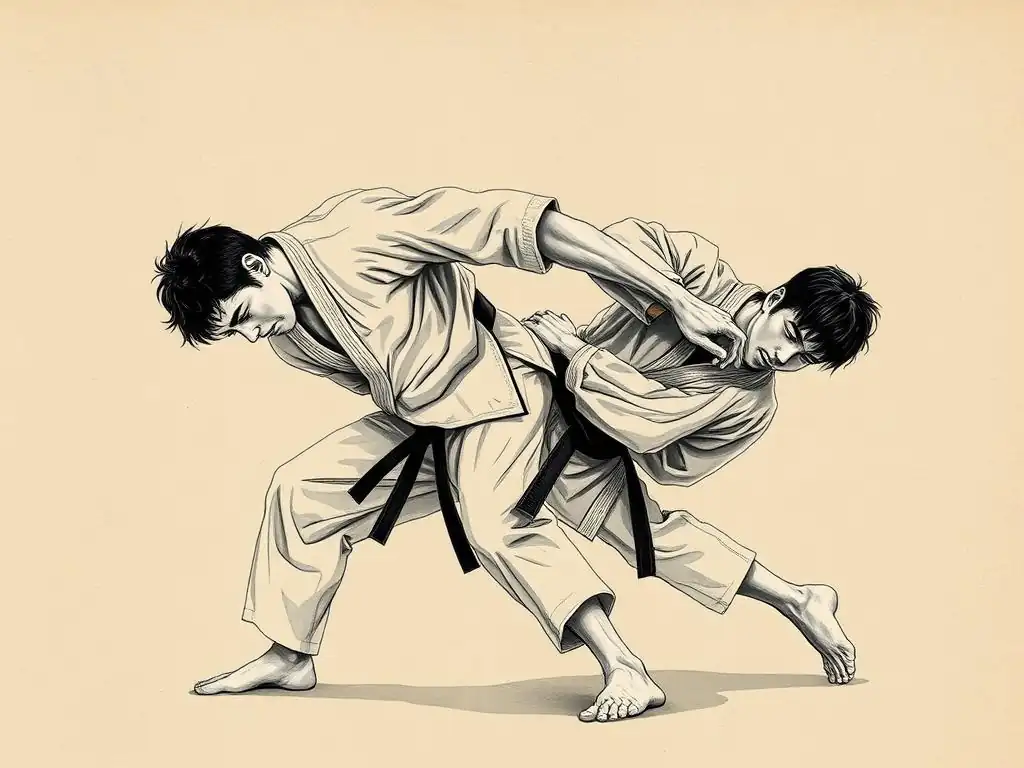
The beauty of Kuzure Kami Shiho Gatame lies in its inherent adaptability, leading to numerous setups and variations. The 'Kuzure' aspect specifically refers to breaking from the standard form, which typically means altering the grip or arm control. One common variation involves securing an underhook on one of the opponent's arms before settling into the pin, using that underhook to maintain tight control and prevent them from turning into you. Another involves pinning both of the opponent's arms to their sides with your knees or elbows before establishing your chest pressure and grips.
Other setups might arise depending on how you transitioned to the ground. If you ended up perpendicular to the opponent after a failed throw or scramble, you might immediately secure a grip on their far collar and belt, pulling them tight towards you as you drop your weight.
The key is understanding that Kuzure Kami Shiho Gatame is not a single rigid technique but a family of holds centered around the perpendicular upper-body pin, allowing practitioners to adapt their grips and initial positioning based on the dynamic situation unfolding on the mat or in a potential KuzureKamiShihoGatame self defense scenario.
Adapting KuzureKamiShihoGatame to Opponent's Reactions
A skilled practitioner must be able to adapt their Kuzure Kami Shiho Gatame based on the opponent's reactions. If the opponent tries to bridge aggressively, the pinning practitioner must immediately drop their hips lower, widen their base, and potentially adjust their chest pressure to follow the opponent's movement and neutralize their force. If the opponent attempts to shrimp away, the practitioner must use their legs and grips to follow, maintaining pressure and preventing them from creating space.
Should the opponent manage to free an arm, the practitioner might transition their grip to re-secure the arm or shift their weight distribution to compensate. For example, if the trapped arm comes free, you might switch to a double-collar grip or transition to a different pin like Yoko Shiho Gatame (side control) or even Tate Shiho Gatame (mount), depending on the angle and control available.
This constant adaptation is crucial; holding a static Kuzure Kami Shiho Gatame against a resisting opponent will likely lead to their escape. Understanding how to flow with their movements while maintaining dominant control is essential for success and for making KuzureKamiShihoGatame self defense applications viable.
Common Mistakes and How to Avoid Them in KuzureKamiShihoGatame
Troubleshooting KuzureKamiShihoGatame Performance Issues
Several common errors can diminish the effectiveness of Kuzure Kami Shiho Gatame. One frequent issue is having your hips too high, which reduces the pressure on the opponent and allows them space to bridge or insert their legs. To troubleshoot this, consciously focus on dropping your weight and hips down towards the mat as soon as you establish your grips. Another problem is allowing the opponent to turn onto their side; this breaks the flat pin and allows them to start escaping. Prevent this by keeping your chest heavy on their sternum and controlling their head and shoulders.
Poor grip selection or weak grips are also significant performance issues. If your grips are loose, the opponent can easily free their arms or create space to move. Ensure your grips are tight – whether on the Gi, belt, or limbs – and that they are actively pulling the opponent towards you. Finally, failing to maintain a wide base with your legs can make you unstable and susceptible to being rolled. Keep your knees wide, close to the opponent's body, providing a solid foundation from which to apply pressure and control.
Improving KuzureKamiShihoGatame Efficiency
Improving the efficiency of Kuzure Kami Shiho Gatame involves refining your technique and physical conditioning. Firstly, focus on optimizing your body mechanics: ensure your weight is channeled downwards through your chest and hips, maximizing pressure with minimal muscular effort. Practice maintaining a low posture and heavy hips consistently throughout the hold. Secondly, develop grip strength and endurance; strong hands are essential for maintaining tight control against a struggling opponent.
Thirdly, work on seamless transitions into Kuzure Kami Shiho Gatame from various positions, such as side control or after a throw. The quicker you can establish a strong pin, the less time the opponent has to defend. Finally, practice adapting to different body types and resistance levels. A lanky opponent might require different grips or weight distribution than a stockier one. Regularly drilling with partners of different sizes and skill levels will help you refine your feel for the technique and improve your ability to apply KuzureKamiShihoGatame self defense principles effectively under pressure.
KuzureKamiShihoGatame: Drills and Training Exercises
Effective Drills for Mastering KuzureKamiShihoGatame
Mastering Kuzure Kami Shiho Gatame requires dedicated practice through specific drills. A fundamental drill is the "Static Hold" drill, where one partner assumes a passive role, allowing the other to practice entering and maintaining Kuzure Kami Shiho Gatame for set durations (e.g., 30-60 seconds). This helps the practitioner develop positional awareness, learn to settle their weight, and build endurance in the holding position.
Another effective drill is the "Resisted Hold" drill, where the bottom partner actively tries to escape using common methods like bridging and shrimping, while the top partner focuses solely on maintaining the Kuzure Kami Shiho Gatame. This teaches the practitioner how to react to resistance, adjust their base, and counter escape attempts. A third drill involves transitioning into Kuzure Kami Shiho Gatame from common scenarios, such as after passing the guard or securing side control. Practicing these entries makes the technique more applicable in dynamic situations, including potential KuzureKamiShihoGatame self defense applications where positions are less predictable.
Integrating KuzureKamiShihoGatame into Your Judo Training Regimen
Integrating Kuzure Kami Shiho Gatame into your regular Judo training regimen is crucial for developing proficiency. It should be practiced during uchikomi (repeating entries without completing the technique) to refine the entry mechanics and grip setup. Include it in randori (free practice), specifically focusing on ground fighting ( ne-waza). Aim to transition into Kuzure Kami Shiho Gatame whenever the opportunity arises after a throw or during ground scrambles.
Beyond specific drills and randori, positional sparring is highly beneficial. Start sparring from the position where one person is already in a compromised ground position, and the other attempts to secure and maintain Kuzure Kami Shiho Gatame. This allows for focused practice on the nuances of the hold without the intensity of full randori. Regularly reviewing and refining the technique with experienced instructors will also ensure correct form and maximize its effectiveness in both sport and potential KuzureKamiShihoGatame self defense situations.
KuzureKamiShihoGatame vs. Other Pinning Techniques
Comparing KuzureKamiShihoGatame to KamiShihoGatame
The primary difference between Kuzure Kami Shiho Gatame and the standard Kami Shiho Gatame lies in the grip and arm control. Kami Shiho Gatame typically involves reaching under the opponent's arms and gripping their belt or Gi pants from the head-on position, with both of the opponent's arms usually free but pinned by the practitioner's chest and arms. Kuzure Kami Shiho Gatame, on the other hand, signifies a modification, most commonly involving trapping one or both of the opponent's arms, often securing an arm under the practitioner's armpit or pinning it to the ground with their leg.
This difference in arm control significantly impacts the techniques. Standard Kami Shiho Gatame can feel very secure if the opponent's arms are effectively neutralized by chest pressure, but a strong opponent might be able to use their free arms to push or frame. Kuzure Kami Shiho Gatame, by specifically controlling an arm, can offer tighter control of that side and limit the opponent's ability to use that arm for escape. However, the grip setup might be slightly less stable initially compared to the symmetrical grip of the standard version, requiring more dynamic adjustment.
Advantages and Disadvantages of KuzureKamiShihoGatame
Kuzure Kami Shiho Gatame offers several advantages. Its primary benefit is the ability to specifically control one or both of the opponent's arms, which greatly reduces their options for pushing, framing, or initiating escapes using their upper body. The modified grips can also be easier to establish against a strongly resisting opponent compared to trying to secure the standard belt grip under their arms. It allows for variation, making it harder for opponents to predict and defend consistently. Furthermore, the arm control can sometimes open up opportunities for arm-based submissions.
However, it also has disadvantages. Depending on the specific variation, the control might be slightly less symmetrical than the standard Kami Shiho Gatame, potentially leaving one side slightly more vulnerable if not executed perfectly. Trapping an arm might require more initial effort or expose you slightly during the transition. Against a very flexible opponent, even with an arm trapped, maintaining pressure and preventing hip movement can still be challenging. Despite these points, its adaptability makes it a highly valuable technique in both competitive Judo and for applying KuzureKamiShihoGatame self defense control.
Advanced KuzureKamiShihoGatame Strategies
Transitions into KuzureKamiShihoGatame from Guard Passes
For advanced practitioners, Kuzure Kami Shiho Gatame is often not an isolated technique but part of a larger ground strategy, frequently transitioning into it from successful guard passes. After passing an opponent's guard, you often end up in side control or a similar dominant position. From side control, transitioning to Kuzure Kami Shiho Gatame is a natural progression. You can use your side control pressure to flatten the opponent, then slide your knee across their belly to transition to the North-South position, from which Kuzure Kami Shiho Gatame is typically applied.
Alternatively, if you pass the guard and end up slightly higher towards the opponent's head, you can immediately secure your grips and settle into Kuzure Kami Shiho Gatame. A common sequence involves using a cross-face and underhook from side control, then rotating your body to face the opponent's head while maintaining the underhook (which becomes the trapped arm in Kuzure). This seamless transition from guard passing directly into a dominant pin is a hallmark of advanced ground fighting and makes KuzureKamiShihoGatame self defense applications from a controlling top position more feasible.
Submissions from KuzureKamiShihoGatame
While Kuzure Kami Shiho Gatame is primarily a pinning technique, the control it offers can create opportunities for submissions, particularly armlocks and chokes, especially in contexts like BJJ or submission grappling where such techniques are standard. If you have trapped one of the opponent's arms securely under your armpit in the modified grip, you are in a strong position to attack that arm.
One common submission is an Americana (figure-four armlock) on the trapped arm. By controlling the wrist with one hand and securing your own wrist with the other, you can apply pressure to the shoulder joint.
Another possibility, depending on grip and posture, is a straight armlock (Juji Gatame) if the opponent extends their arm while trying to escape. While less common directly from the pin in traditional Judo competition due to rule sets, understanding these potential follow-ups makes Kuzure Kami Shiho Gatame a more dangerous position overall and adds layers to its application, including potential use in KuzureKamiShihoGatame self defense if the situation warrants neutralizing an arm.
KuzureKamiShihoGatame: Safety Considerations
Preventing Injuries During KuzureKamiShihoGatame Practice
Safety is paramount when practicing any martial arts technique, including Kuzure Kami Shiho Gatame. For the person applying the pin (Uke), the main risk is strain from improper posture or excessive force. Ensure you maintain a low, stable base and distribute your weight evenly rather than relying on muscular strength alone. Avoid sudden jerking movements. For the person being pinned (Tori), the primary risks are shoulder or neck strain from resisting forcefully or improper bridging.
To prevent injuries, both partners must communicate clearly. The pinning partner should apply pressure gradually and be sensitive to their partner's discomfort. The pinned partner should tap immediately if they feel excessive pressure or pain, especially in the shoulders or neck. Practicing on appropriate mats designed for grappling significantly reduces impact. Always warm up thoroughly before practicing pinning techniques to ensure muscles and joints are prepared for the pressure and resistance involved.
Safe Execution of KuzureKamiShihoGatame for Both Training Partners
Safe execution of Kuzure Kami Shiho Gatame involves mutual respect and technical understanding between partners. The pinning partner should focus on control rather than crushing pressure, especially during drills. Their weight should be heavy but distributed, not concentrated painfully on one spot like the sternum. Avoid putting direct, heavy pressure on the opponent's throat or neck.
The pinned partner should understand how to resist intelligently and safely. Instead of explosive, uncontrolled bridging, focus on technical escapes like shrimping or creating frames with the free limbs. If an arm is trapped, avoid twisting forcefully against the trap, which can injure the shoulder or elbow. Both partners should be aware of their surroundings to avoid colliding with walls, other people, or obstacles. Safe practice ensures longevity in training and makes the lessons learned, including KuzureKamiShihoGatame self defense applications, practical and sustainable.
The Role of KuzureKamiShihoGatame in Judo Competition
KuzureKamiShihoGatame in Judo Tournament Strategies
Kuzure Kami Shiho Gatame plays a significant role in competitive Judo strategy, particularly in ne-waza. Successfully transitioning to and maintaining this pin is a direct path to scoring. Competitors often aim to secure Kuzure Kami Shiho Gatame after a successful throw that lands the opponent on their back or during ground exchanges following a failed throw or submission attempt. Its modified nature makes it a go-to pin when the standard Kami Shiho Gatame grips are difficult to obtain due to the opponent's defense.
Strategic use involves not just applying the pin but also anticipating and countering the opponent's escape attempts. Elite judoka are highly skilled at maintaining heavy pressure, adjusting their base, and switching grips or variations (the 'Kuzure' aspect) to thwart bridging, shrimping, or arm-freeing efforts. Holding Kuzure Kami Shiho Gatame for the required 20 seconds for ippon is a sought-after outcome, as it immediately ends the match. Even securing it for 10-19 seconds for waza-ari can provide a crucial advantage on the scoreboard.
Maximizing Your Score with KuzureKamiShihoGatame
To maximize your score with Kuzure Kami Shiho Gatame in competition, focus on rapid and secure entry. The quicker you can establish the hold after a transition, the less time your opponent has to set up their defense. Practice transitioning from common positions like side control, North-South, or directly from a throw. Once the pin is secured, prioritize maintaining constant, heavy pressure through your chest and hips.
Develop strong, adaptable grips that are difficult for your opponent to break. This is where the 'Kuzure' variations shine; being able to effectively trap an arm or secure non-standard grips can make your pin harder to escape. Learn to react instantly to your opponent's escape attempts, adjusting your weight and base to follow their movement and neutralize their force. Consistent practice in randori and positional sparring focused on hold-downs will build the endurance and technical proficiency needed to maintain Kuzure Kami Shiho Gatame for the full scoring duration and significantly increase your chances of winning matches via osaekomi.
Frequently Asked Questions
What is KuzureKamiShihoGatame?
KuzureKamiShihoGatame is a modified version of the KamiShihoGatame hold, often translated as the upper four-corner hold in martial arts like Judo. It emphasizes a more dynamic and controlling position over the opponent.
How does KuzureKamiShihoGatame differ from traditional KamiShihoGatame?
The Kuzure (崩れ) in the name indicates a variation or broken form. This usually involves slightly different hand and body positioning compared to the traditional KamiShihoGatame, often for better control or a quicker submission.
Is KuzureKamiShihoGatame an effective self-defense technique?
Yes, when applied correctly, KuzureKamiShihoGatame can be a highly effective self-defense technique. It allows for superior control of an opponent on the ground, potentially leading to submission or a chance to escape.
What martial arts disciplines commonly utilize KuzureKamiShihoGatame?
While originating in Judo, KuzureKamiShihoGatame and its variations are used in various grappling arts including Brazilian Jiu-Jitsu (BJJ), Mixed Martial Arts (MMA), and other styles that emphasize ground control and submission techniques.
What are some key considerations when practicing KuzureKamiShihoGatame for self-defense?
Focus on maintaining a strong base, controlling the opponent's posture, and preventing escapes. Regularly practice the technique with a willing partner to develop proficiency and adapt it to different body types and resistance levels.
Final Reflection: Embracing Adaptability in Self-Defense
The exploration of KuzureKamiShihoGatame self defense highlights the crucial need for adaptability in real-world scenarios. While traditional techniques offer a foundation, the modified upper four-corner hold demonstrates that true mastery lies in understanding and adjusting to the unpredictable nature of conflict. This isn't just about learning a technique; it's about cultivating a mindset of resourcefulness and improvisation when faced with danger.
This principle of adaptability extends far beyond the dojo. It underscores the importance of critical thinking and creative problem-solving in all aspects of life. The ability to assess a situation, identify opportunities, and modify your approach is invaluable. The only constant is change.
This ancient wisdom reminds us that rigidity is a weakness, and the capacity to evolve is the key to resilience, whether in self-defense or navigating the complexities of modern life.
Now, consider how you can apply this lesson of adaptability to your own life. Are you clinging to outdated strategies or beliefs? Are you open to learning new approaches and modifying your tactics when faced with challenges? Embrace the spirit of KuzureKamiShihoGatame – not just as a self-defense technique, but as a philosophy for navigating the ever-changing landscape of life. Cultivate your ability to adapt, and you will find yourself better equipped to overcome any obstacle that comes your way.
Unleash Your Inner Grappler: Master KuzureKamiShihoGatame!
Thank you for exploring the intricacies of KuzureKamiShihoGatame! We hope you’ve gained valuable insights into this modified upper four-corner hold. Now it's time to take your knowledge to the mat.
Ready to elevate your grappling game?
- Drill the KuzureKamiShihoGatame entry and control variations at least 15 minutes a day for the next week. Focus on smooth transitions and maintaining dominant positioning.
- Share your newfound knowledge! Teach a training partner the KuzureKamiShihoGatame and explain the key control points.
- Research other variations of the KamiShihoGatame, or other control positions that can be entered from it, to broaden your expertise.
What small adjustment will you make in your next training session to make KuzureKamiShihoGatame an effective part of your grappling arsenal?