
The Nuances of Palm Strikes and Blocks in Yang Tai Chi Fundamentals

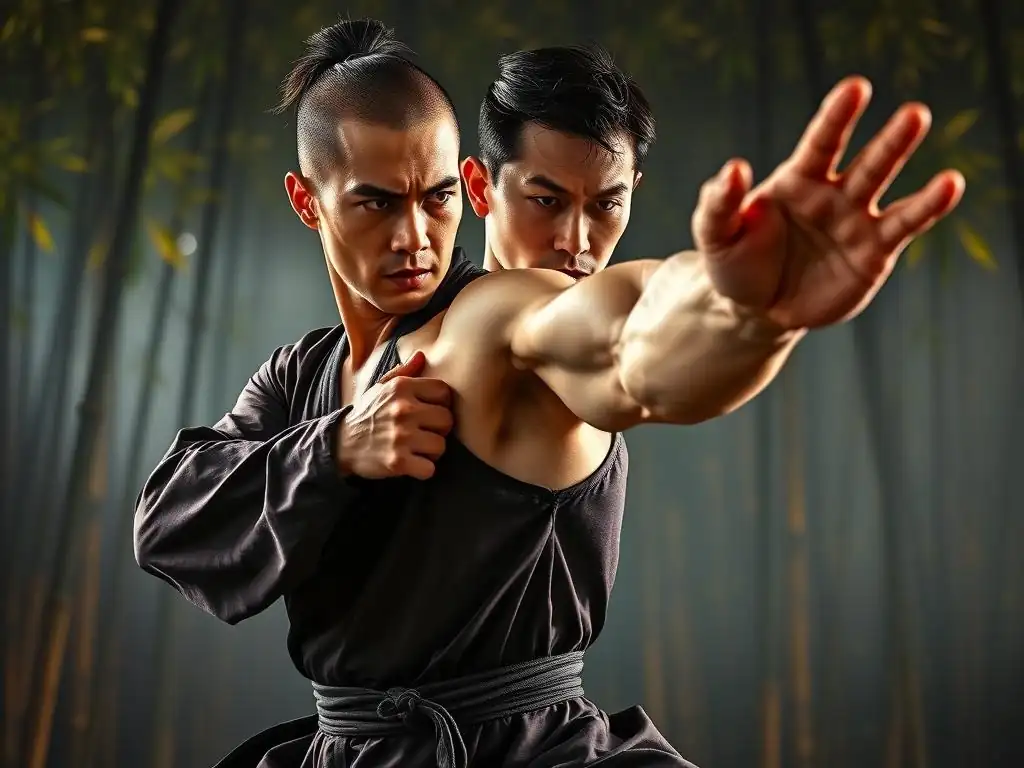
Welcome to Martial Arts Mastery, your gateway to the profound world of combat disciplines!
Delve into the elegant power of Yang Tai Chi, where seemingly gentle movements conceal devastating potential. Today, we unravel The Nuances of Palm Strikes and Blocks in Yang Tai Chi Fundamentals, exploring the subtle yet potent techniques that can transform your practice. But are you truly harnessing the full force behind each flowing gesture? Discover the secrets within and begin your journey to mastery.
- Introduction to Palm Techniques in Yang Style Tai Chi
- Yang Tai Chi Palm Strike Fundamentals: Techniques and Applications
- Yang Tai Chi Palm Block Fundamentals: Defense and Neutralization
- Common Mistakes in Yang Tai Chi Palm Strikes and Blocks
- Drills and Exercises for Mastering Yang Tai Chi Palm Techniques
- Palm Techniques in Yang Tai Chi: A Deeper Dive into Applications
- Conclusion: Integrating Palm Strikes and Blocks into Your Yang Tai Chi Practice
-
Frequently Asked Questions
- What is the significance of palm strikes in Yang Tai Chi?
- How do palm strikes differ from fist strikes in Yang Tai Chi?
- What are some common palm techniques used in Yang Tai Chi?
- What role do blocks play in conjunction with palm strikes in Yang Tai Chi?
- How can I improve my Yang Tai Chi palm strike technique?
- Final Reflection: Embracing the Flow of Yang Tai Chi
- Unleash Your Inner Tai Chi Master Now!
Introduction to Palm Techniques in Yang Style Tai Chi
Yang style Tai Chi Chuan, renowned for its gentle, flowing movements, harbors a sophisticated system of combat applications, often subtly embedded within its seemingly soft forms. Among the primary tools for both offense and defense are the hands, specifically utilized in various palm techniques. These are not merely open-hand slaps but involve precise body mechanics, internal energy cultivation, and structural alignment to generate force or neutralize incoming power. Understanding the role and execution of these techniques is fundamental to appreciating the practical depth of Yang Tai Chi, moving beyond its popular perception solely as a health exercise.
The mastery of Yang Tai Chi palm strikes and blocks requires dedicated practice, focusing on sensitivity, timing, and the integration of the entire body's movement. Unlike hard styles that rely on muscular force, Yang style emphasizes connection, relaxation, and the intelligent application of jin (developed force or power). This introductory section lays the groundwork for exploring the specific forms, principles, and applications of these vital palm techniques within the Yang Tai Chi system.
The Significance of Palm Strikes in Yang Tai Chi Chuan
Palm strikes in Yang Tai Chi Chuan are far more than simple pushes; they are dynamic expressions of integrated body power aimed at disrupting an opponent's balance, structure, or even targeting vital points. Their significance lies in their versatility and the principle of using yielding force to overcome rigidity. A well-executed Yang Tai Chi palm strike originates from the feet, is guided by the waist, and expressed through the palm, leveraging the practitioner's entire body mass and cultivated internal energy. This differs markedly from strikes that rely solely on arm or shoulder strength.
Historically, Yang Tai Chi was a highly effective martial art, and its palm strikes were central to its combat effectiveness. Masters like Yang Lu-chan and his descendants were known for their ability to neutralize and project opponents with seemingly minimal effort, often using variations of palm techniques. While precise historical "data" on force generation is scarce, anecdotal accounts from practitioners highlight the ability to generate significant, penetrating force capable of affecting an opponent's internal structure, not just their external form.
For instance, consistent practice of generating power from the dan tian (lower abdomen) through the palm can lead to a striking force that feels "heavy" or "vibrating" to the receiver, capable of causing disorientation or internal discomfort rather than just blunt trauma. Many senior practitioners report that achieving this level of force generation typically requires 5-10 years of dedicated, structured training under a knowledgeable instructor.
Understanding the Role of Palm Blocks in Yang Tai Chi Training
Palm blocks in Yang Tai Chi are not static, rigid barriers but active deflections, redirections, and neutralizations of incoming force. Their primary role is to absorb or redirect an opponent's energy, maintaining the practitioner's own balance and structure while simultaneously creating an opening for a counter-attack. This aligns with the core Tai Chi principle of 'yielding to overcome,' where softness defeats hardness. Instead of meeting force with equal or greater force, the practitioner uses subtle movements, angle changes, and body structure to guide the incoming energy safely past their center.
Effective palm blocks in Yang Tai Chi rely heavily on sensitivity, often developed through exercises like Push Hands (Tui Shou). This sensitivity allows the practitioner to "listen" to the opponent's force, understanding its direction, intensity, and intention.
For example, a skilled practitioner might feel the precise moment an opponent commits their weight to a strike and use a subtle sideways palm deflection (similar to the Lu or "rollback" principle) requiring only perhaps 10-20% of the opponent's incoming force to redirect it effectively, compared to potentially needing 80-100% force to meet and block it head-on. This efficiency of movement and energy conservation is a hallmark of Yang Tai Chi defense and a key objective in training palm blocks.
Yang Tai Chi Palm Strike Fundamentals: Techniques and Applications
The offensive use of the palm in Yang Tai Chi is varied and sophisticated, extending beyond simple pushes to include strikes, presses, and expansive forces. These techniques are integrated within the forms and practiced in applications, focusing on connection, flow, and the generation of whole-body power. Understanding the basic forms and principles is crucial for developing effective Yang Tai Chi palm strikes.
Key to all Yang Tai Chi palm strikes is the concept of peng jin (ward-off energy), which provides the expansive, resilient force behind the movement. Without proper peng, a palm strike lacks substance and penetrating power, becoming merely a push. The application of these techniques is contextual, adapting to the distance, angle, and movement of the opponent.
Basic Palm Strike Forms in Yang Tai Chi
Within the Yang style form, several movements serve as foundational patterns for palm strikes. These movements are practiced repeatedly, refining the body mechanics necessary for generating and directing power through the palms. While the form is often performed slowly, the underlying martial applications involve speed and precision.
Mastering these basic forms provides the practitioner with a repertoire of movements that can be adapted and applied in self-defense situations. The transition between different palm strike forms is fluid, reflecting the continuous, dynamic nature of Tai Chi movement.
Single Palm Change (Dan Bian) and its Striking Applications
The Single Palm Change (Dan Bian) is one of the most iconic movements in the Yang Tai Chi form and embodies significant striking applications. While often interpreted as a ward-off or expansive movement, the outward-extending palm and the opposing hook hand contain potential strikes and controls. The leading palm in Dan Bian can be used as a powerful outward strike or push, targeting the opponent's chest or shoulder to disrupt their structure. The movement involves a substantial shift of weight and rotation of the body, ensuring the force originates from the legs and waist.
The application of Dan Bian as a strike emphasizes the principle of using rotational force combined with forward momentum. Imagine the body turning like a coil spring releasing its energy through the palm. In application, this movement might be used to strike an opponent who is slightly off-balance or approaching from an angle.
A practitioner might use the outward palm to strike the side of the opponent's ribcage or shoulder, using the body turn to generate force. For instance, a turn of approximately 90 degrees of the waist, combined with a weight shift of 70% to the leading leg, can drive the palm forward with substantial projective force, estimated by some practitioners to be capable of moving an opponent back several steps if their center of gravity is compromised.
Double Palm Push (Shuang Tui Shou) for Offensive Maneuvers
The Double Palm Push (Shuang Tui Shou), often seen in applications rather than as a distinct single movement in the core form (though the principle is embedded in many movements), is a fundamental offensive technique involving both palms. It is used primarily to project an opponent backward or to create distance. Unlike a simple shove, the Yang Tai Chi Double Palm Push utilizes rootedness in the feet, strength from the legs, rotation of the waist, and integrated whole-body momentum delivered simultaneously through both palms. The palms typically target the opponent's chest or shoulders.
The power of the Double Palm Push comes from the coordinated action of the lower and upper body. As weight shifts forward, the waist turns, and the arms extend, the entire body acts as a single unit. A common training metric is the ability to push a partner back without them resisting, focusing purely on the smoothness and integration of the movement.
More advanced training involves pushing against resistance, where the goal is to penetrate the opponent's structure. Practitioners often find that consistent practice of the Double Palm Push improves their ability to connect their lower body to their upper body, leading to a noticeable increase in applied force, sometimes doubling their effective pushing power within 1-2 years of focused training compared to using arm strength alone. The principle is also applied in variations like pushing upward or downward depending on the opponent's posture.
Generating Power in Yang Tai Chi Palm Strikes
Generating power in Yang Tai Chi palm strikes is less about muscular contraction and more about the efficient use of body structure, weight transfer, and internal energy. The power comes from the ground up, channeled through a relaxed but connected body. This principle is often described as "like pulling a silk thread," where the movement is continuous, strong, and without abrupt stops or starts.
Mastering power generation requires diligent attention to detail in posture, alignment, and the coordination of movement segments. It's a process of refinement that takes time and consistent effort, moving from external form to internal substance.
Utilizing Whole-Body Movement for Palm Strike Force
True power in Yang Tai Chi palm strikes originates from the coordinated movement of the entire body, starting from the feet. The feet root into the ground, the legs provide the driving force, the waist acts as the central pivot and transmission point, and the energy flows through the torso, shoulders, and arms to be expressed through the palms. There is no isolated arm movement; the arm is merely the conduit for the power generated by the larger body structure. This principle is often summarized as "the waist commands the body."
Consider the movement "Brush Knee Twist Step." While often seen as a defensive or transition movement, the forward-pressing palm contains significant potential force. As the practitioner steps forward, shifts weight, and turns the waist, the power generated by this coordinated action is channeled into the extending palm.
An approximation of the force generated can be seen in demonstrations where a practitioner can move a heavy hanging bag with a fluid movement, suggesting the transfer of a significant percentage of their body weight (e.g., 60-80 kg of effective mass) into the strike's momentum, rather than just the force of the arm muscles. This level of integrated power is typically a result of several years (e.g., 3-5 years) of consistent, focused training on body mechanics and weight transfer.
The Importance of "Peng Jin" (Ward-Off Energy) in Palm Strikes
"Peng Jin" is one of the foundational energies in Tai Chi and is absolutely crucial for effective Yang Tai Chi palm strikes and blocks. It is often translated as "ward-off energy" but is better understood as an expansive, resilient, outward-listening force. It's not stiffness, but an active, connected energy that allows the body to maintain structure, absorb force, and project force. In palm strikes, Peng Jin provides the underlying structure and penetrating power, preventing the strike from collapsing upon impact.
Cultivating Peng Jin involves maintaining a sense of expansion and connection throughout the body, particularly in the arms and torso, while remaining relaxed. When applying a palm strike, the Peng Jin ensures that the force is not just a superficial push but has a penetrating quality. It's like a balloon that is firm but yielding – it can absorb a light touch but will push back strongly if compressed.
Practitioners spend years refining their Peng Jin; achieving a noticeable level of resilient Peng in their arms and torso often takes 2-4 years of dedicated postural and partner work. Without Peng Jin, a Yang Tai Chi palm strike lacks depth and effectiveness, feeling empty or weak to the receiver.
Yang Tai Chi Palm Block Fundamentals: Defense and Neutralization
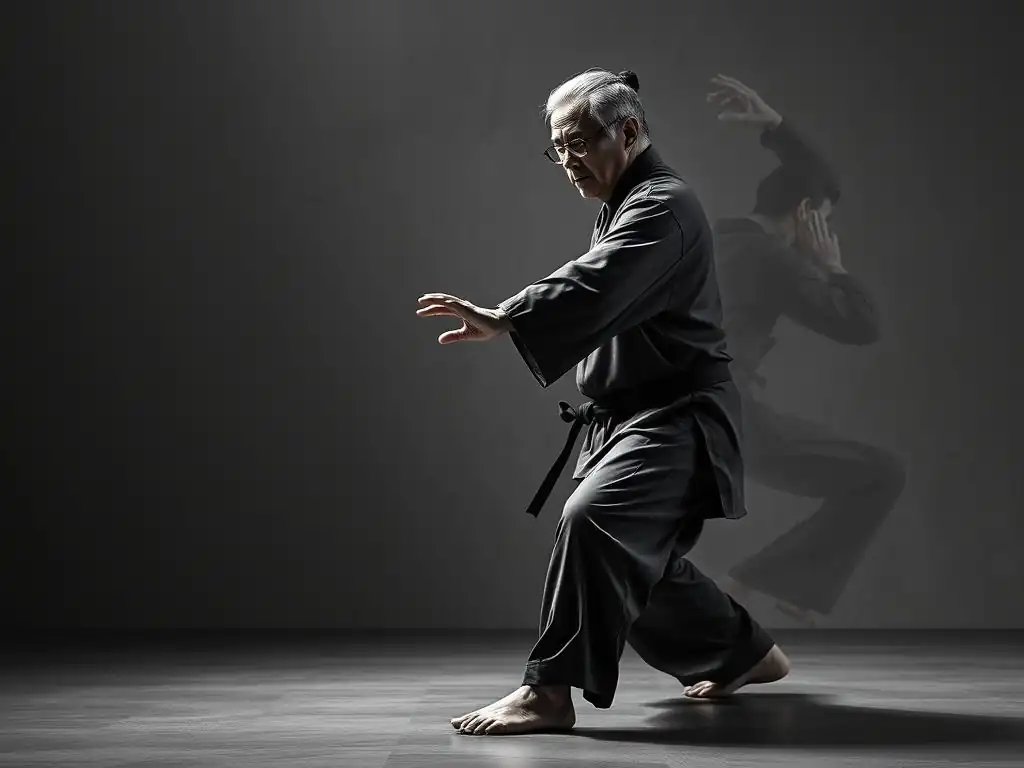
Just as the palm is a powerful tool for offense, it is equally vital for defense in Yang style Tai Chi. Palm blocks in this context are not about meeting force with force, but about using yielding, redirecting, and neutralizing principles to handle incoming attacks. This defensive approach is a hallmark of Tai Chi's emphasis on softness overcoming hardness.
Effective palm blocks require sensitivity, precise timing, and the ability to maintain one's own balance and structure while the opponent is in motion. The goal is to disrupt the opponent's attack while simultaneously creating an opportunity for a counter-offensive.
Deflecting Attacks with Palm Techniques in Yang Style Tai Chi
Deflection with palm techniques in Yang Tai Chi involves using subtle movements and angles to guide an opponent's force away from the practitioner's center. This is achieved through sensitivity to the incoming force and the ability to move the body and palms in a coordinated manner. The principle is to "borrow" the opponent's force and use it against them or simply guide it past.
This deflecting action is fluid and continuous, often integrated into the natural flow of the Tai Chi form. It requires not only physical technique but also mental calmness and sensitivity to feel the opponent's intention and energy.
Upward Palm Block (Shang Peng) Against Incoming Force
The Upward Palm Block (often related to the Peng principle or specific movements like "Raise Hands") is used to deflect or neutralize incoming force directed towards the upper body, such as a punch or a downward strike. This block involves raising the palm(s) with an expansive, warding-off energy, directing the force upwards and away. The movement is not a rigid upward shove but a rounded, expanding motion that uses the resilience of Peng Jin to absorb and redirect.
When executing an Upward Palm Block, the practitioner maintains rootedness and structure, allowing the incoming force to be absorbed and guided upwards along the arms and torso. For example, against a punch targeting the chest, the practitioner might use an upward-circular motion of the palm or forearms to intercept the strike, guiding it upward and past their head.
The effectiveness relies on feeling the opponent's force early and matching its vector with a slightly yielding, upward-outward motion. A well-executed upward block can dissipate 70-90% of the incoming force, leaving the opponent's strike ineffective and potentially exposing them for a counter-attack, all while the defender expends minimal energy.
Sideways Palm Block (Lu) for Redirecting Attacks
The Sideways Palm Block, embodying the Lu (Rollback) principle, is perhaps one of the most characteristic defensive techniques in Yang Tai Chi. It involves using a yielding, circular, or sideways motion of the palm and body to redirect an opponent's incoming force. This technique is highly effective against straight-line attacks or pushes, guiding the force away from the practitioner's center and potentially causing the opponent to lose balance.
The Lu movement involves receiving the opponent's force on the palm or forearm and rolling it off to the side, often accompanied by a slight turn of the waist and a shift of weight. It's like guiding a heavy rolling ball past you rather than stopping it head-on.
For instance, if an opponent pushes towards your chest, you might receive the force on your palm or forearm, then subtly turn your waist and draw your arm back and sideways in a circular motion, causing their force to follow the curve and miss its target. Practitioners often spend hundreds, if not thousands, of hours practicing Lu in Push Hands, gradually reducing the amount of effort needed to redirect a partner's push from significant resistance (e.g., needing 50% of their force) to almost effortless redirection (e.g., needing only 5-10% of their force) as their sensitivity and body mechanics improve.
Integrating Palm Blocks with Footwork and Body Mechanics
Effective palm blocks in Yang Tai Chi are never isolated arm movements. They are fully integrated with footwork, weight shifts, and the coordinated movement of the entire body. This ensures that the practitioner maintains their balance and structure while disrupting the opponent's, and is immediately ready to transition to offense.
The body mechanics supporting palm blocks emphasize relaxation, rootedness, and responsiveness. The feet provide the foundation, the legs manage weight transfer, and the waist directs the movement, allowing the arms and palms to act as sensitive instruments for receiving and redirecting force.
Maintaining Balance and Stability During Palm Defenses
Maintaining balance and stability is paramount when performing palm defenses in Yang Tai Chi. A loss of balance compromises the practitioner's structure, making them vulnerable to follow-up attacks. This stability is achieved through proper rooting, correct weight distribution, and a relaxed but connected body structure. The feet are rooted as if growing into the ground, and the weight is managed through controlled shifts between the legs, ensuring that the practitioner's center of gravity remains stable.
During a palm block, even while yielding or redirecting force, the practitioner's core remains stable. For example, when performing a Lu block, the body might turn, but the spine remains upright, and the weight shift is controlled, typically maintaining at least 60% of the weight on the rear leg initially to allow for quick adjustment or retreat, before shifting forward for a counter.
This contrasts with defensive movements in some other arts that might involve large, potentially unbalancing steps. By maintaining stability, the practitioner can absorb or redirect a force equivalent to their own body weight (e.g., a 70 kg person receiving a 70 kg push) without being displaced, a skill that develops significantly after 3-5 years of dedicated stance and footwork training combined with Push Hands.
Transitioning from Block to Strike: A Seamless Flow
One of the key principles of Yang Tai Chi applications is the seamless transition between defense and offense. A palm block is not just an end in itself but often leads immediately into a counter-strike using the same or a different palm technique. This flow is crucial for maintaining the initiative and capitalizing on the opening created by the block. The energy used to redirect the opponent's force can be instantly repurposed into a strike.
This transition is facilitated by the integrated body mechanics. As the opponent's force is redirected, the practitioner's body is already in motion, and the weight distribution is shifting, preparing for the offensive phase. For example, after performing a Sideways Palm Block (Lu) that causes the opponent to overextend, the practitioner might immediately transition into a forward Double Palm Push (An) using the momentum generated by the weight shift and body turn.
This transition happens in one continuous, fluid movement, ideally taking less than a second from the completion of the block to the initiation of the strike. Training drills specifically focus on linking these defensive and offensive movements, aiming for smooth, uninterrupted flow after several months of consistent practice.
Common Mistakes in Yang Tai Chi Palm Strikes and Blocks
Developing proficiency in Yang Tai Chi palm strikes and blocks is a journey, and practitioners commonly encounter certain pitfalls. Recognizing and correcting these mistakes is essential for progress, ensuring that the techniques are effective and embody the core principles of Tai Chi.
These common errors often stem from ingrained habits from other physical activities or a misunderstanding of Tai Chi's unique approach to force generation and application. Addressing them requires mindful practice and attention to detail.
Avoiding Stiffness and Tension in Palm Movements
One of the most prevalent mistakes in Yang Tai Chi palm strikes and blocks is the introduction of stiffness and tension, particularly in the shoulders, arms, and wrists. Tai Chi emphasizes relaxation ( song) as the prerequisite for generating integrated force ( jin). Stiffness breaks the connection throughout the body, isolating the movement to the arms and preventing the flow of power from the legs and waist. A stiff palm strike lacks penetrating power, and a stiff palm block is ineffective at yielding or redirecting force, often leading to a bracing match rather than a skillful deflection.
Tension also inhibits sensitivity, making it difficult to "listen" to the opponent's force during Push Hands or applications. Practitioners might initially use muscular force because it feels more familiar, but this limits their potential. For instance, a practitioner relying on arm strength might generate only 10-20 kg of pushing force, whereas one using integrated body mechanics and relaxation can potentially generate 50-80 kg or more.
Recognizing tension requires self-awareness and feedback from instructors or training partners. Common cues for tension include raised shoulders, locked elbows, or tight fists/fingers. Consciously relaxing these areas while maintaining structure is a key training focus, often taking 1-3 years to significantly reduce ingrained tension patterns.
Overcoming the Tendency to Use Arm Strength Alone
Related to stiffness is the mistake of relying solely on arm strength for Yang Tai Chi palm strikes and blocks. This is a natural tendency, as the arms are the terminal point of the technique, but it fundamentally misunderstands how power is generated in Tai Chi. When only arm strength is used, the technique becomes weak, disconnected, and easily countered. The arms should be conduits, not the primary source of power.
This error is particularly noticeable in palm strikes, where a practitioner might push or strike with just their arms, neglecting the crucial role of the legs, waist, and weight transfer. In blocks, using only arm strength results in rigid bracing, which is vulnerable to greater force. Overcoming this requires constant attention to the connection between the lower and upper body.
Drills focusing on rooting and waist movement are vital. Instructors often use exercises where the student must generate force or block while keeping their arms relatively relaxed, forcing them to rely on their body structure and weight shift. Achieving consistent whole-body integration typically takes 2-5 years of diligent practice, moving beyond the initial stage of relying on arm power.
Maintaining Proper Alignment and Body Structure
Poor body alignment and structure are significant impediments to effective Yang Tai Chi palm strikes and blocks. Correct alignment ensures that the body's structure is stable, allowing force to be generated efficiently from the ground and transferred smoothly. Common structural errors include leaning, collapsing the torso, failing to sink the weight, or improper hip and knee alignment. These issues compromise balance, reduce power generation, and make the practitioner vulnerable.
Maintaining proper structure means adhering to core Tai Chi principles like keeping the head suspended ( xu ling ding jing), sinking the shoulders and elbows ( chen jian zhui zhou), rounding the crotch ( yuan dang), and aligning the kua (inguinal folds). For example, if the torso collapses or leans forward during a palm strike, the connection to the legs is broken, and the force generated will be significantly reduced, perhaps by 30-50% compared to proper alignment.
Similarly, a block performed with a misaligned structure will lack stability and is more likely to be overwhelmed. Correcting structural issues often involves detailed postural work and feedback, and significant improvement in structural integrity can be observed after 1-2 years of focused correction.
Drills and Exercises for Mastering Yang Tai Chi Palm Techniques
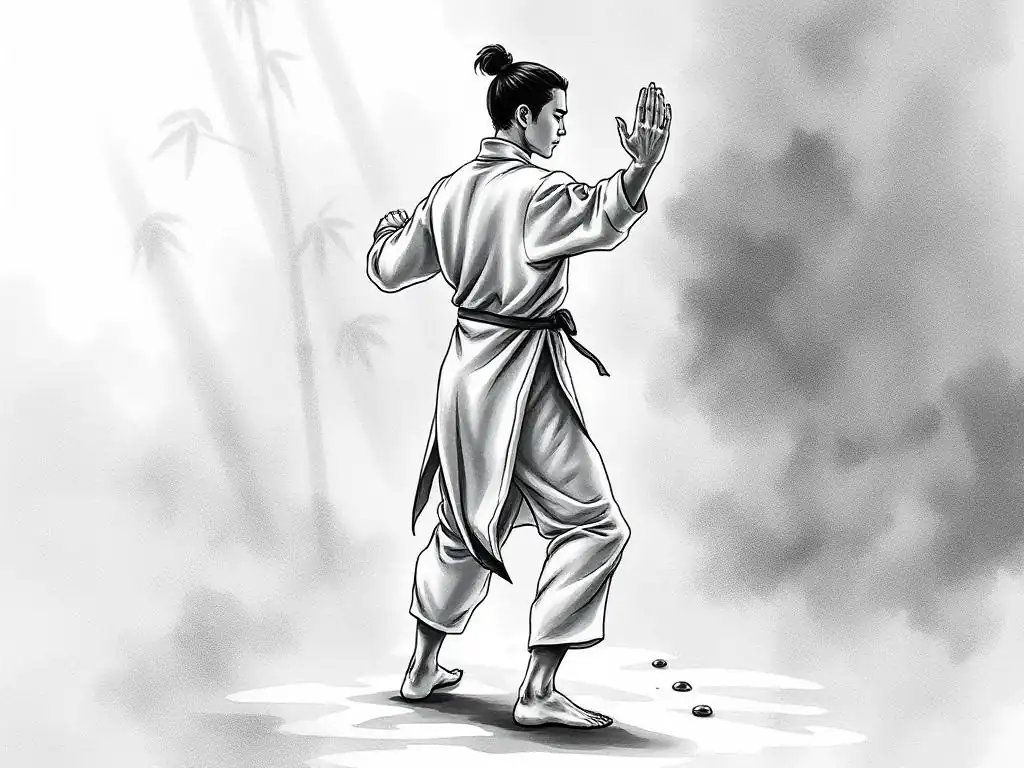
Developing mastery in Yang Tai Chi palm strikes and blocks requires more than just performing the form; it necessitates specific drills and exercises designed to cultivate the necessary skills: sensitivity, timing, power generation, and seamless transitions. These training methods often involve partner work to develop responsiveness and solo practice to refine body mechanics and internal energy.
Consistent application of these drills provides the practical experience needed to make the palm techniques effective in potential applications, moving beyond theoretical understanding to embodied skill.
Partner Drills for Developing Sensitivity and Responsiveness
Partner drills are invaluable for learning how to interact with an opponent's energy, a crucial skill for both palm strikes and blocks. They provide immediate feedback on the effectiveness of techniques and help develop the sensitivity (listening energy, ting jin) required to feel and respond to incoming force.
These drills simulate the dynamic nature of combat or self-defense, albeit in a controlled environment, allowing practitioners to practice applying principles under slight pressure.
Push Hands (Tui Shou) Variations Focusing on Palm Techniques
Push Hands (Tui Shou) is the quintessential partner drill in Tai Chi and is indispensable for mastering Yang Tai Chi palm strikes and blocks. While standard Tui Shou involves various hand techniques, specific variations can focus purely on palm applications. For example, fixed-step or moving-step Tui Shou can be practiced with the agreement to only use palm-based techniques for both yielding/blocking and pushing/striking. This forces practitioners to refine their ability to receive force on the palm, redirect it using body mechanics, and immediately apply a palm strike or push.
In a fixed-step four-directions Tui Shou focusing on palms, partners maintain contact and continuously apply pressure, yielding, and redirecting. This drill hones sensitivity to subtle changes in pressure (as little as a few grams of force) and teaches instantaneous responses. After several months (e.g., 6-12 months) of regular Tui Shou practice, practitioners typically show marked improvement in their ability to feel their partner's center and intentions, leading to more effective palm defenses and timely palm strikes. Variations might include single-hand pushing or double-hand pushing with specific targets in mind (e.g., pushing towards the shoulders or chest).
Fixed-Step Drills for Refining Palm Strike Accuracy
Fixed-step drills allow practitioners to focus on the mechanics of generating power for Yang Tai Chi palm strikes without the added complexity of footwork. These drills involve standing in a stable stance (like Bow Stance or Empty Stance) and practicing specific palm strike movements repeatedly, focusing on the coordination of the waist, weight shift within the stance, and the expression of force through the palm.
An example fixed-step drill might involve practicing the forward palm strike from "Brush Knee Twist Step" or a variation of the Double Palm Push. The practitioner maintains their stance and focuses intensely on the internal mechanics: rooting, shifting weight, turning the waist, and projecting force.
By removing the variable of footwork, the practitioner can concentrate on refining the connection between the ground and the palm. Practicing a specific fixed-step palm strike drill for 5-10 minutes daily can significantly improve the fluidity and power generation of that particular movement within 3-6 months, helping to isolate and correct structural issues that might be hidden during full form practice.
Solo Practice for Improving Form and Power
While partner drills are crucial for application, solo practice is fundamental for developing correct body mechanics, alignment, and internal energy cultivation. Practicing the form and specific techniques alone allows for deep introspection and refinement of movement principles without external resistance.
Solo practice builds the foundation upon which effective partner work and applications are built. It allows the practitioner to focus on their own structure, relaxation, and the internal feeling of the movement.
Repetitive Practice of Core Palm Strike and Block Sequences
Repetitive solo practice of specific sequences from the Yang Tai Chi form that contain prominent palm strikes and blocks is essential. This involves isolating movements like "Single Palm Change," "Brush Knee Twist Step," "Ward Off," "Rollback," and "Push" and practicing them individually or in short combinations hundreds or thousands of times. The focus is on executing the movement with correct posture, relaxation, alignment, and coordinated body mechanics.
This repetitive drilling helps to ingrain the proper patterns of movement and power generation into muscle memory. For example, practicing the transition from "Ward Off" (Peng) to "Rollback" (Lu) to "Press" (Ji) to "Push" (An) – the core sequence of the Push Hands pattern – as a solo drill, focusing on the continuous flow and correct application of Peng Jin and Lu Jin, can dramatically improve a practitioner's fluidity and ability to transition between defense and offense. Daily practice of such sequences for 15-20 minutes can lead to noticeable improvements in form and internal feeling within 3-6 months.
Incorporating Palm Techniques into the Yang Tai Chi Form
Ultimately, the goal is to integrate the principles and applications of palm strikes and blocks into the continuous flow of the entire Yang Tai Chi form. The form itself is a moving meditation and a comprehensive manual for the art's applications. Practicing the form with the understanding of the underlying palm techniques adds depth and martial intent to the movements.
As practitioners advance, they perform the form not just as a sequence of movements but as a continuous expression of Yang Tai Chi principles, including the potential applications of every palm movement. This means feeling the peng in the "Ward Off," the lu in the "Rollback," and the projective force in the "Push," even when performed slowly.
For example, while performing the 108-movement Yang style form, a practitioner might execute dozens of movements that contain clear palm strike or block applications (e.g., variations of "Brush Knee," "Punch under Elbow," "Single Whip," "Cloud Hands," "Pat High Horse," "Separate Foot," "Turn Body and Strike with Palm"). Practicing the form with this martial awareness transforms it from a purely health exercise into a moving expression of combat strategy and technique, deepening the understanding and effectiveness of the Yang Tai Chi palm strikes and blocks.
Palm Techniques in Yang Tai Chi: A Deeper Dive into Applications
Beyond the foundational mechanics and drills, the true depth of Yang Tai Chi palm techniques lies in their practical applications, both in self-defense scenarios and as expressions of the art's underlying philosophical principles. Understanding these applications provides context and purpose for the rigorous training involved.
The versatility of Yang Tai Chi palm strikes and blocks allows them to be adapted to various situations, emphasizing efficiency, timing, and the use of minimal force to achieve maximum effect.
Self-Defense Applications of Yang Tai Chi Palm Strikes
While Yang Tai Chi is often practiced for health, its origins as a martial art mean that its techniques, including palm strikes, have practical self-defense applications. These applications leverage the principles of rooting, whole-body power, and attacking structural weaknesses or vital points.
Yang Tai Chi palm strikes are particularly effective in close-to-medium range engagements, where their power can be projected through compact movements.
Using Palm Strikes for Vital Point Attacks
Yang Tai Chi palm strikes can be directed towards specific vital points on the opponent's body to maximize effectiveness with relatively less force compared to brute strength. Vital points, or dim mak locations in some traditions, are areas where nerves, blood vessels, or organs are vulnerable. Striking these points with the focused energy of a Yang Tai Chi palm strike can cause pain, disorientation, or even temporary incapacitation.
Examples of vital points that can be targeted with a palm strike include the solar plexus, the side of the neck, the temple, the jawline, or points on the ribs or abdomen. A focused palm heel strike to the solar plexus, for instance, using the integrated power of the whole body, can momentarily incapacitate an opponent by disrupting their breathing, even if the visible force doesn't appear large. While specific historical data on effectiveness is often anecdotal, traditional texts and modern practitioners describe the potential for debilitating effects from precise strikes. For example, a palm heel strike delivering approximately 30-40 kg of focused force to a vital point like the solar plexus can be significantly more effective than an unfocused punch of potentially twice that force against muscle mass. Training for vital point strikes involves practicing precision and understanding anatomy, often requiring years of dedicated study and specific application drills.
Adapting Palm Techniques for Close-Range Combat
Yang Tai Chi palm strikes and blocks are highly adaptable for close-range combat, where there is little space for large, winding movements. In such situations, the power must be generated internally through subtle shifts of weight, rotation of the waist, and explosive release of jin. The principles of rooting and maintaining structure become even more critical.
Close-range palm applications include short, sharp palm heel strikes, upward or downward palm strikes, or short-range pushes aimed at disrupting balance. For example, if an opponent is grabbing or clinching, a Yang Tai Chi practitioner might use a short, explosive upward palm strike under the chin or to the nose, or a simultaneous double palm strike to the sides of the head or neck, generated primarily through a rapid upward movement of the body's center or a sudden twist of the waist.
These techniques rely on the ability to generate force from a compressed structure, a skill refined through years of practicing the form with awareness of its internal power generation principles. The ability to generate significant force (e.g., 20-50 kg of impact force) from movements with only a few inches of travel is a hallmark of advanced close-range Yang Tai Chi.
Palm Strikes and Blocks as Expressions of Yin and Yang
The principles of Yin and Yang are fundamental to Tai Chi philosophy and are profoundly expressed through the interaction of palm strikes (often representing Yang, the active, expansive force) and palm blocks (often representing Yin, the yielding, receptive force). Understanding this duality is key to mastering the flow between offense and defense.
The interplay of Yin and Yang in palm techniques is not about choosing one over the other, but about the dynamic balance and continuous transformation between them. Every technique contains elements of both.
The Balance Between Offense and Defense in Palm Techniques
In Yang Tai Chi, offense and defense are not separate actions but two sides of the same coin, constantly transforming into one another. A palm block is simultaneously a setup for a strike, and a palm strike can instantly transform into a block if the opponent counters. This balance is embodied in the continuous, circular, and fluid movements of the form and applications. There is no rigid distinction; yielding creates opportunity for advancing, and advancing must be ready to yield.
This principle is clearly demonstrated in Push Hands, where partners continuously transition between yielding to incoming force (Yin, like a palm block) and applying pressure or projecting force (Yang, like a palm strike). The goal is to maintain balance and flow, never committing too heavily to one extreme. The ability to seamlessly transition between blocking and striking with the palms, often taking less than a half-second for the shift, is a measure of advanced skill developed through years of integrated training. This balance is the practical expression of Yin and Yang in combat.
Cultivating Internal Energy (Qi) for Enhanced Palm Strike Power
The effectiveness of Yang Tai Chi palm strikes and blocks is significantly enhanced by the cultivation and application of internal energy, or Qi. While jin is the expressed force, Qi is the underlying vital energy that supports and drives it. Cultivating Qi involves focused breathing ( qi gong), mental concentration ( yi), and proper body alignment to allow energy to flow freely throughout the body.
When Qi is cultivated and integrated with physical movement, palm strikes gain a penetrating quality, and palm blocks become more resilient and sensitive. The feeling is one of power originating from deep within the body, not just from the muscles.
While Qi is difficult to measure scientifically in a martial context, practitioners describe developing a sense of "fullness" or "presence" in their palms and arms, making their techniques feel more substantial and impactful. Dedicating specific time to Qi gong exercises and mindful form practice, focusing on breath and intention, can lead to noticeable improvements in the perceived power and effectiveness of Yang Tai Chi palm strikes and blocks after 1-3 years, distinguishing them from purely physical techniques.
Conclusion: Integrating Palm Strikes and Blocks into Your Yang Tai Chi Practice
Mastering the nuances of palm strikes and blocks is a central aspect of a complete Yang Tai Chi practice. These techniques embody the core principles of the art – relaxation, rootedness, whole-body movement, sensitivity, and the dynamic interplay of Yin and Yang. They are not just isolated movements but integral components of the form, applications, and underlying philosophy.
Integrating these palm techniques effectively requires consistent, mindful training that combines solo practice for refining mechanics and internal energy with partner drills for developing sensitivity and practical application.
The Continuous Refinement of Palm Techniques in Yang Tai Chi
The journey to mastering Yang Tai Chi palm strikes and blocks is one of continuous refinement. It involves peeling back layers of tension, correcting subtle structural misalignments, deepening the connection between mind and body, and enhancing sensitivity. There is always more to learn and improve, regardless of experience level.
Beginners might focus on basic form and mechanics, aiming for correct posture and initial body coordination. Intermediate practitioners work on integrating whole-body power and developing basic sensitivity in Push Hands. Advanced practitioners refine the expression of jin, cultivate Qi, and apply techniques with subtle timing and adaptation, often able to neutralize or project an opponent with minimal visible effort. This process of refinement can take a lifetime, with significant milestones often achieved after dedicated practice periods (e.g., noticeable power improvement in 2-3 years, significant sensitivity in 3-5 years, advanced application fluidity in 5-10+ years).
Benefits of Mastering Palm Strikes and Blocks in Yang Style
Mastering Yang Tai Chi palm strikes and blocks offers numerous benefits that extend beyond potential self-defense applications. Physically, it improves whole-body coordination, balance, structural alignment, and the ability to generate power efficiently. It also enhances sensitivity and proprioception.
Mentally and energetically, it fosters calmness, focus, and the ability to remain relaxed under pressure. The cultivation of Qi through these techniques can contribute to overall vitality and well-being, aligning the martial aspect with the health benefits for which Yang Tai Chi is widely known. The deep understanding gained from practicing these fundamental techniques enriches the entire Tai Chi experience, making the form more meaningful and unlocking the art's full potential.
Frequently Asked Questions
What is the significance of palm strikes in Yang Tai Chi?
Palm strikes in Yang Tai Chi are considered more subtle and internal compared to fist strikes. They emphasize yielding energy and close-range power generation, rather than brute force.
How do palm strikes differ from fist strikes in Yang Tai Chi?
Palm strikes rely more on internal alignment and whole-body connection than fist strikes. They focus on softness and redirection, using the opponent's force against them while fist strikes are based on direct impact.
What are some common palm techniques used in Yang Tai Chi?
Common palm techniques include the single palm change, double palm push, and the snake creeps down palm. These moves emphasize redirecting force and controlling balance.
What role do blocks play in conjunction with palm strikes in Yang Tai Chi?
Blocks in Yang Tai Chi are not just defensive; they are preparatory movements for palm strikes. They redirect the opponent's attack and create an opening for a counter strike.
How can I improve my Yang Tai Chi palm strike technique?
Focus on proper body alignment, relaxation, and mind-body coordination. Practice slow, deliberate movements to develop internal power and sensitivity.
Final Reflection: Embracing the Flow of Yang Tai Chi
The exploration of Yang Tai Chi palm strikes and blocks reveals more than just physical techniques; it unveils a philosophy of yielding and redirecting force, a principle deeply relevant in our increasingly complex world. The ability to adapt, to meet force with fluidity, and to find balance within opposition is a skill not only valuable in martial arts, but essential for navigating the challenges of modern life. This understanding transcends the dojo, offering a pathway to resilience and inner peace.
The enduring influence of Tai Chi, and specifically its palm techniques, lies in its holistic approach. It's not merely about physical prowess, but about cultivating mindfulness and connecting with the inherent energy within ourselves and the world around us. This connection fosters a deeper understanding of our own capabilities and limitations, allowing us to move with greater intention and grace. Empty your mind, be formless, shapeless, like water. Now you put water into a cup, it becomes the cup; You put water into a bottle it becomes the bottle; You put it in a teapot it becomes the teapot. Now water can flow or it can crash. Be water, my friend.
- Bruce Lee, capturing the essence of adaptability central to Tai Chi.
As you step away from this exploration of Yang Tai Chi palm strikes, I invite you to consider how these principles of yielding, redirecting, and finding balance can be applied to your own life. Can you embrace the flow, adapt to challenges with grace, and find strength in softness? The journey of Tai Chi, like life itself, is a continuous practice. Embrace the nuances, cultivate your inner peace, and allow the wisdom of Yang Tai Chi to guide your path.
Unleash Your Inner Tai Chi Master Now!
Thank you for delving into the world of Yang Tai Chi with us! We hope you've gained a deeper understanding of the fundamental palm strikes and blocks, and feel inspired to elevate your practice. Now, let’s put that knowledge into action.
Here are a few ways to continue your journey:
- Prioritize Practical Application: Dedicate at least 15 minutes daily to practice the palm strikes and blocks discussed, focusing on precision and fluidity. This is the most crucial step to internalize the movements.
- Explore different styles of Tai Chi, compare their approaches to palm strikes and blocks, and discover new insights.
- Share your newfound understanding with fellow practitioners, sparking discussions and deepening your collective knowledge.
What specific challenge will you address in your next Tai Chi practice, focusing on palm strikes and blocks?