
The Philosophical Depth of Chi Sao: Harmony, Balance, and Adaptation

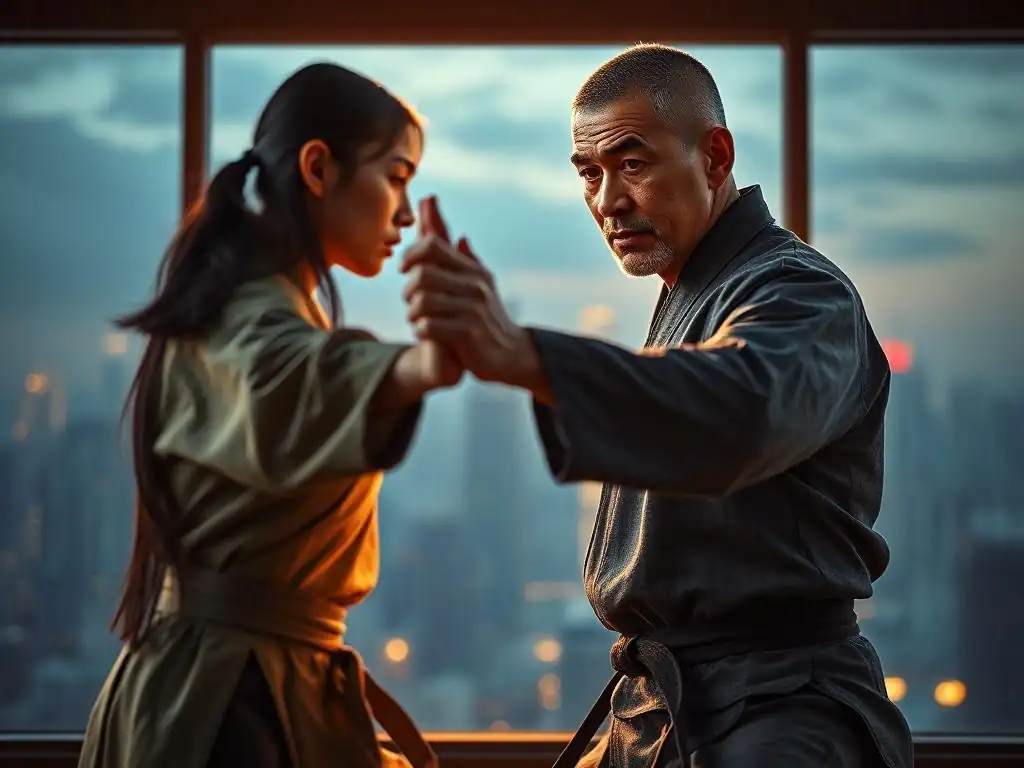
Welcome to Martial Arts Mastery, your gateway to the world's fighting arts!
Delve into the intricate tapestry of martial arts philosophy and practical application. Ever wondered how Chi Sao transcends mere technique to become a profound expression of harmony and balance? Our exploration into the Chi Sao philosophy martial arts unlocks the secrets of adaptation and sensitivity crucial to Wing Chun and beyond. Prepare to deepen your understanding and elevate your practice – the journey begins here.
- Understanding Chi Sao Philosophy in Wing Chun Kung Fu
- The Concept of Harmony in Chi Sao Training
- Balance as a Cornerstone of Chi Sao Philosophy
- Adaptation and Fluidity: The Essence of Chi Sao Philosophy
- Chi Sao Philosophy: Bridging Theory and Practical Application
- Chi Sao's Influence on Wing Chun Strategy and Tactics
- The Deeper Meaning of Chi Sao: A Pathway to Self-Mastery
- The Enduring Legacy of Chi Sao Philosophy in Martial Arts
-
Frequently Asked Questions
- What is Chi Sao and its primary focus within martial arts training?
- How does the philosophy of Chi Sao relate to concepts like harmony and balance?
- What role does adaptation play in the practical application of Chi Sao techniques?
- How can the principles of Chi Sao be applied beyond physical combat situations?
- What are some key historical and philosophical influences that shaped the development of Chi Sao?
- Final Reflection: Embracing the Flow of Chi Sao
- Embrace the Flow: Unlock Your Inner Chi Sao Master!
Understanding Chi Sao Philosophy in Wing Chun Kung Fu
Chi Sao, often translated as "sticking hands," is a fundamental training exercise in Wing Chun Kung Fu. While superficially appearing as a simple two-person drill, its true value lies in its profound philosophical underpinnings, which extend far beyond mere physical technique. The Chi Sao philosophy martial arts practitioners embrace is centered on cultivating sensitivity, maintaining structure, and developing the ability to adapt instantaneously to an opponent's energy and movement. It's a living, breathing dialogue between practitioners, where the goal is not to overpower but to understand and flow.
At its heart, Chi Sao training serves as a practical laboratory for Wing Chun principles. It's where theoretical concepts like the centerline theory, simultaneous blocking and striking, and efficient force generation are tested and refined in a dynamic, close-range environment. This constant interaction provides immediate feedback, allowing practitioners to feel pressure, understand angles, and learn to respond instinctively rather than relying on pre-programmed sequences. The Chi Sao philosophy emphasizes developing this intuitive response, making it a cornerstone for applying Wing Chun effectively in real-world situations.
Exploring the Core Principles of Chi Sao Martial Arts Training
The core principles underpinning Chi Sao martial arts training are numerous but can be distilled into a few key concepts: sensitivity, simultaneous action, economy of motion, and structural integrity. Sensitivity, often referred to as 'listening energy' (Ting Jing), is paramount. It is the ability to feel the opponent's intention, direction of force, and pressure through physical contact, primarily via the arms and hands. This tactile feedback loop informs the practitioner's response in real-time, allowing for immediate adjustments.
Simultaneous action, or Lin Wan Kuen (continuous punching) and simultaneous blocking and striking, is another vital principle reinforced by Chi Sao training. Instead of a distinct block followed by a strike, Wing Chun emphasizes combining defense and offense into unified actions. Chi Sao philosophy teaches practitioners to execute techniques like Pak Sau (slapping hand) and Lop Sau (pulling hand) in conjunction with strikes, ensuring that defense is always integrated with attack. This efficiency in motion is a direct result of the refined sensitivity developed through countless hours of sticky hands practice.
Chi Sao: More Than Just Sticky Hands - A Philosophical Overview
To view Chi Sao merely as "sticky hands" is to miss its deeper significance within Wing Chun Kung Fu. It is a sophisticated methodology for developing crucial martial attributes that transcend physical technique. Philosophically, Wing Chun Chi Sao embodies the principles of Taoism, particularly the concepts of yielding to overcome hardness and flowing like water. It encourages practitioners to avoid meeting force with force directly, opting instead to redirect or absorb the incoming energy, much like water flowing around an obstacle.
This philosophical approach extends to the mental state required for effective Chi Sao training. It demands a calm, centered mind, free from tension and ego. The goal is not to "win" the drill in a competitive sense, but to learn, feel, and understand the dynamics of close-range combat. This focus on internal cultivation and self-awareness, rather than external victory, is a hallmark of the Chi Sao philosophy martial arts emphasize, making it a powerful tool for personal development alongside martial skill acquisition.
The Concept of Harmony in Chi Sao Training
Harmony in Chi Sao is not merely about avoiding conflict; it's about achieving a state of dynamic equilibrium with your training partner. It's the ability to blend with their energy, finding points of connection and flow rather than resistance. This harmonious interaction allows both practitioners to learn and improve their sensitivity and reaction time. The Chi Sao philosophy views the training partner not as an adversary, but as a collaborator in the learning process, where mutual development is the ultimate goal.
Achieving harmony requires a deep understanding of one's own structure and energy, as well as the ability to perceive and respond to that of the other person. It's a constant negotiation of pressure, angle, and timing. When harmony is achieved in Chi Sao training, the movements feel fluid and connected, almost like a single entity with four arms. This state allows for effortless transitions between techniques and a heightened sense of awareness of the opponent's impending actions.
Achieving Harmony Through Sensitivity and Awareness
Sensitivity is the primary vehicle for achieving harmony in Chi Sao martial arts. By developing the ability to 'listen' with the arms, practitioners can feel the slightest changes in pressure, direction, and intention. This acute tactile awareness allows them to stay connected without using excessive force. For example, feeling a slight increase in forward pressure from the partner signals the opportunity to yield and redirect, maintaining contact while disrupting their structure.
Awareness complements sensitivity by providing the broader context. This includes spatial awareness – knowing the distance and angles – and psychological awareness – sensing the partner's tension or relaxation. In Wing Chun Chi Sao, heightened awareness allows practitioners to anticipate potential attacks or shifts in strategy before they fully manifest. This combination of tactile sensitivity and overall awareness fosters a state of dynamic harmony, enabling fluid, responsive movements that are key to effective close-range combat.
Yielding and Redirecting: Harmonizing with Opponent's Force
A cornerstone of the Chi Sao philosophy is the principle of yielding (Lau Sau) and redirecting (Jut Sau). Instead of meeting an incoming force head-on, which often leads to a clash of strength, the practitioner learns to 'melt away' from the pressure while maintaining contact. This yielding is not passive retreat but an active redirection of energy. For instance, if a partner applies strong forward pressure in Tan Sau (dispersing hand), the practitioner might yield slightly backward or to the side while simultaneously changing the angle, causing the partner's force to dissipate harmlessly or even work against them.
This ability to yield and redirect is fundamental to achieving harmony in Chi Sao training. It allows the practitioner to stay connected and control the interaction without engaging in a strength-versus-strength battle. By harmonizing with the opponent's force, the practitioner conserves their own energy and creates opportunities for counter-attack. This principle is a direct application of the Taoist concept of using softness to overcome hardness, central to the Chi Sao philosophy martial arts tradition values.
The Role of Balance in Maintaining Harmony During Chi Sao
Maintaining balance is absolutely critical for achieving and sustaining harmony in Chi Sao martial arts. Both physical and mental balance are essential. Physically, a solid, rooted stance (like the Biu Ma or 'arrow stance' in Wing Chun) provides the stable base needed to absorb, redirect, and generate force without being easily disrupted. Without proper physical balance, yielding can turn into collapsing, and redirecting becomes ineffective.
Mentally, maintaining calmness and focus is equally important for harmony in Chi Sao training. A practitioner who is agitated or overly aggressive will tend to tense up and resist the flow, breaking the harmonious connection. A calm mind allows for clearer perception, quicker reactions, and the ability to stay relaxed and sensitive. The Chi Sao philosophy teaches that true harmony arises from the integration of a balanced body and a balanced mind, allowing for effortless interaction with the training partner.
Balance as a Cornerstone of Chi Sao Philosophy
Balance is not just a desirable attribute in Chi Sao martial arts; it is a fundamental requirement. It permeates every aspect of the practice, from the physical stance to the mental state. The Chi Sao philosophy emphasizes balance because it is the foundation upon which sensitivity, harmony, and effective technique are built. Without balance, any attempt to yield, redirect, or apply force will be compromised, leading to instability and vulnerability.
Consider the practical application: in Chi Sao training, if one practitioner is physically off-balance, even slightly, the other practitioner can easily exploit this by applying minimal pressure or changing the angle, causing them to stumble or exposing an opening. Similarly, if a practitioner is mentally unbalanced – perhaps overly anxious or focused on winning – they lose the sensitivity needed to feel their partner's energy and react appropriately, disrupting the flow and harmony of the drill.
Physical Balance: Rooting and Stability in Wing Chun's Chi Sao
Physical balance in Wing Chun Chi Sao is primarily achieved through proper rooting and structural alignment. The stance, while appearing simple, is designed to distribute weight evenly and provide a stable, yet mobile, base. Concepts like keeping the knees slightly bent and angled inward, and maintaining a relaxed lower body, contribute to this rootedness. This allows the practitioner to absorb incoming force through their structure and channel it down into the ground, preventing them from being pushed around.
Furthermore, maintaining correct posture and alignment through the torso and arms is crucial for physical balance during Chi Sao training. The elbows should be down and slightly forward, the shoulders relaxed. This alignment ensures that the structure is connected and strong, allowing for efficient transmission of force and maintaining stability even when pressure is applied from different angles. For example, a well-rooted Tan Sau can absorb significant forward pressure while maintaining balance, which is a key aspect of Chi Sao philosophy martial arts practitioners strive for.
Mental Balance: Cultivating Calmness Under Pressure
Mental balance in Chi Sao philosophy refers to the ability to remain calm, centered, and focused despite the dynamic and sometimes intense nature of the drill. The constant contact and pressure can be stressful, but practitioners are trained to maintain a relaxed state of mind. This involves letting go of tension, both physical and mental, and cultivating a state of mindful presence. Instead of reacting with panic or aggression to unexpected pressure or movement, the practitioner aims to observe and respond with composure.
Cultivating mental balance during Chi Sao training is an ongoing process. It involves practicing detachment from outcomes and focusing purely on the process of feeling and responding. Techniques like focused breathing and maintaining a soft gaze can help achieve this state. A mentally balanced practitioner can think clearly under pressure, make rapid assessments, and execute techniques effectively, which is essential for progressing in Chi Sao martial arts and applying its principles in self-defense.
Emotional Balance: Managing Reactions in Close-Range Combat
Emotional balance is closely linked to mental balance and is particularly important in the high-pressure environment of Chi Sao training. It involves managing instinctive emotional reactions like fear, frustration, or anger that can arise during physical contact and perceived conflict. Allowing these emotions to take over leads to tension, poor decision-making, and a loss of sensitivity and harmony.
The Chi Sao philosophy encourages practitioners to observe their emotional responses without judgment and learn to remain calm. This isn't about suppressing emotions but about not letting them dictate actions. For instance, feeling frustrated when a technique isn't working or fearful when the partner applies strong pressure can lead to rigid, ineffective responses. Through consistent Chi Sao training, practitioners learn to maintain emotional equilibrium, allowing them to stay relaxed, focused, and responsive, which is crucial for effective close-range combat and embodies a core aspect of Chi Sao philosophy martial arts teach.
Adaptation and Fluidity: The Essence of Chi Sao Philosophy
Adaptation and fluidity are perhaps the most dynamic aspects of Chi Sao philosophy. Chi Sao is not a static drill; it is a constant, flowing exchange where circumstances change instantaneously. The ability to adapt quickly and seamlessly to these changes is paramount. This requires not only physical flexibility and smooth transitions between techniques but also mental agility to process information and adjust strategy on the fly. The essence of effective Chi Sao training lies in this continuous, fluid adaptation.
Fluidity in Chi Sao martial arts means moving without stiffness or hesitation. It's about blending one technique into the next, transitioning smoothly between defense and offense, and responding instinctively to the partner's movements. This fluidity is a direct result of developing sensitivity and maintaining balance and harmony. When these elements are present, the practitioner can adapt effortlessly, flowing with the changes in pressure and position like water finding its path.
Adapting to Changing Circumstances in Chi Sao Drills
Chi Sao training drills are specifically designed to simulate the unpredictable nature of close-range combat, forcing practitioners to adapt constantly. Unlike pre-arranged forms, Chi Sao involves live, unscripted interaction. The partner might suddenly change the angle of attack, apply varying degrees of pressure, or transition between different hand techniques. For example, a partner might switch from Tan Sau to Bong Sau (wing arm) or suddenly attempt a Lop Sau and strike.
Successfully navigating these changes requires continuous adaptation. The practitioner must feel the shift in energy and immediately adjust their own structure and technique to maintain connection and control. This might involve subtly shifting weight, changing the angle of their arm, or transitioning to a different hand technique simultaneously with a strike. The Chi Sao philosophy emphasizes that this ability to adapt in real-time is far more valuable than having a vast repertoire of fixed techniques.
Developing Sensitivity to Anticipate Opponent's Movements
Sensitivity, cultivated through Chi Sao martial arts, is the key to anticipating an opponent's movements before they fully materialize. By maintaining constant contact, the practitioner receives subtle tactile cues about the partner's intentions. A slight increase in tension in the shoulder, a subtle shift in weight, or a change in arm pressure can all indicate an impending action. For instance, feeling the partner's forearm muscles tense slightly might signal an incoming punch.
This heightened sensitivity allows for pre-emption or simultaneous reaction. Instead of waiting for the attack to be fully committed, the practitioner can begin their defensive or offensive action the moment they feel the initial intention. This significantly reduces reaction time and allows for more efficient and effective responses. The Chi Sao philosophy views this developed sensitivity as a form of intuition, enabling practitioners to 'read' their opponent through touch, a skill refined through consistent Chi Sao training.
The Importance of Continuous Adjustment and Refinement
Adaptation in Chi Sao training is not a one-time event but a process of continuous adjustment and refinement. Every interaction provides new information, and the practitioner must constantly fine-tune their response. This might involve micro-adjustments to posture, angle, or pressure based on the partner's actions. For example, if yielding to a certain pressure results in losing connection, the practitioner refines the degree or direction of the yield in the next exchange.
This iterative process of adjustment is central to the learning methodology of Chi Sao philosophy. It encourages practitioners to be mindful of their actions and their partner's reactions, constantly seeking to improve their efficiency and effectiveness. This focus on continuous refinement ensures that Wing Chun Chi Sao remains a dynamic and evolving practice, pushing practitioners towards greater mastery of harmony, balance, and adaptation.
Chi Sao Philosophy: Bridging Theory and Practical Application
The true power of Chi Sao philosophy lies in its ability to bridge the gap between theoretical Wing Chun principles and their practical application in dynamic situations. Forms (like Siu Lim Tao, Chum Kiu, and Biu Jee) teach the foundational shapes and concepts, but Chi Sao provides the environment to test and apply these concepts against live, resisting pressure. It's where the abstract becomes concrete, and the practitioner learns how to make the principles work under pressure.
Chi Sao training is essentially applied physics and psychology in motion. It teaches practitioners about levers, angles, force vectors, and the psychological impact of pressure and contact. The principles of structure, simultaneous action, and economy of motion, learned theoretically, are ingrained through repetitive, reactive drills. This practical application solidifies understanding and builds the instinctive reflexes necessary for effective self-defense.
Applying Chi Sao Principles in Sparring and Self-Defense Scenarios
The skills developed through Chi Sao martial arts training are directly transferable to sparring and real-world self-defense scenarios. The sensitivity cultivated allows practitioners to feel an opponent's intention and movement during a live exchange, even without continuous contact. The ability to maintain balance and structure under pressure, honed in Chi Sao, is vital when facing unexpected force or attacks.
Furthermore, the principles of yielding and redirecting, central to Chi Sao philosophy, are highly effective in managing aggressive opponents. Instead of meeting a powerful punch head-on, the practitioner can use their sensitivity to deflect or redirect the force, creating openings for counter-attack. The fluid adaptation learned in Chi Sao training enables seamless transitions between defensive and offensive actions, making Wing Chun highly practical in close-quarters self-defense situations.
Integrating Chi Sao Concepts into Daily Life: A Mindful Approach
The Chi Sao philosophy extends beyond the physical practice and can be integrated into daily life, fostering a more mindful and balanced existence. The emphasis on sensitivity translates to greater awareness in interactions, both physical and emotional. Learning to feel and respond without excessive force or resistance applies equally well to navigating interpersonal relationships or dealing with challenges.
The cultivation of balance – physical, mental, and emotional – through Chi Sao training promotes overall well-being. Staying grounded under pressure, managing emotional reactions, and maintaining a calm focus are invaluable skills in any aspect of life. The continuous adjustment and refinement inherent in Chi Sao martial arts encourages a mindset of lifelong learning and adaptation, fostering resilience and personal growth far beyond the training hall.
Using Bong Sau to Illustrate Harmony, Balance, and Adaptation in Chi Sao
The Bong Sau (wing arm) technique is an excellent illustration of harmony, balance, and adaptation within Chi Sao philosophy. Bong Sau is typically used to deflect or redirect incoming force, particularly against straight punches or forward pressure. It is not a rigid block but a relaxed, rounded structure that allows force to roll off.
When executing Bong Sau in Chi Sao training, harmony is achieved by blending with the incoming force, using the structure to guide it away rather than stopping it. Balance is maintained by staying rooted while the arm forms the yielding structure, preventing the practitioner from being pushed over.
Adaptation is demonstrated by the subtle adjustments made to the angle and pressure of the Bong Sau based on the opponent's changing force, seamlessly transitioning back to other techniques like Tan Sau or Fook Sau (bridging arm) as needed. This dynamic interplay within a single technique encapsulates the core tenets of Chi Sao philosophy martial arts practitioners embody.
Chi Sao's Influence on Wing Chun Strategy and Tactics
Chi Sao training profoundly influences the strategic and tactical approach of Wing Chun Kung Fu. It is not just a sensitivity drill; it is a method for developing the fundamental skills needed to apply Wing Chun effectively in combat. The continuous contact allows practitioners to instantly feel openings, control angles, and execute techniques with precision and efficiency. The principles honed in Chi Sao form the basis of Wing Chun's unique close-range fighting strategy.
The tactical advantage gained from Chi Sao martial arts lies in the ability to stay connected to the opponent, feeling their energy and intentions. This connection allows the Wing Chun practitioner to dominate the center line, disrupt the opponent's structure, and create opportunities for rapid, simultaneous attacks. The fluid transitions and instinctive reactions developed in Chi Sao training are crucial for executing Wing Chun's short-range power and trapping techniques effectively.
Utilizing Chi Sao Sensitivity to Control the Centerline
Controlling the centerline is a core strategic principle in Wing Chun, and Chi Sao training is the primary method for developing the sensitivity and skill needed to achieve this. The centerline is the imaginary line running vertically down the center of the body, considered the most direct line to vital targets. In Chi Sao, maintaining contact allows the practitioner to feel when their own centerline is exposed or when the opponent's centerline is vulnerable.
Through Wing Chun Chi Sao, practitioners learn to use subtle pressure and positioning to protect their own centerline while simultaneously encroaching upon or controlling the opponent's. For instance, using Fook Sau pressure to feel and control the opponent's arm allows the practitioner to keep their own centerline clear for striking. This constant awareness and manipulation of the centerline, refined through the tactile feedback of Chi Sao philosophy martial arts practice, is a key tactical advantage.
Developing Trapping Skills Through Chi Sao Training
Trapping is a signature element of Wing Chun's close-range tactics, and Chi Sao training is indispensable for developing these skills. Trapping involves using techniques to control or 'trap' the opponent's limbs, preventing them from blocking or counter-attacking while simultaneously striking. This requires exquisite timing, sensitivity, and control, all of which are honed in Chi Sao.
Drills within Chi Sao martial arts, such as Lop Sau (pulling hand) drills or multiple hand exchanges, specifically train the ability to feel an opening, quickly control the opponent's arm, and deliver a strike. The sensitivity developed allows the practitioner to feel the moment the opponent's limb is committed or out of position, creating the opportunity to trap. The fluidity and simultaneous action practiced in Chi Sao training enable the seamless transition from trapping to striking, making it a highly effective tactic.
Enhancing Biu Jee (Thrusting Fingers) with Chi Sao Principles
While Biu Jee (thrusting fingers) is often considered an emergency technique used when structure is lost, its effectiveness is significantly enhanced by the principles learned in Chi Sao philosophy. Biu Jee relies on generating power from a compromised position and targeting vulnerable points. The sensitivity and adaptability cultivated in Chi Sao are crucial for recognizing the moments where Biu Jee is appropriate and executing it effectively.
In Chi Sao training, practitioners sometimes find themselves in positions where their primary structure is momentarily compromised. The sensitivity allows them to feel the pressure and angle of the opponent, identifying the precise moment and direction for an emergency counter. The ability to generate sudden, explosive force from close range, practiced in Wing Chun Chi Sao through short-range power drills, is essential for making Biu Jee effective. Thus, even this 'emergency' form benefits greatly from the core Chi Sao philosophy martial arts training provides.
The Deeper Meaning of Chi Sao: A Pathway to Self-Mastery
Beyond its practical applications in combat, Chi Sao philosophy offers a profound pathway to self-mastery. The rigorous and introspective nature of the training forces practitioners to confront their physical limitations, mental habits, and emotional reactions. It is a mirror reflecting one's own tendencies under pressure, providing a unique opportunity for self-discovery and personal growth. The discipline and focus required for effective Chi Sao training build character and cultivate valuable life skills.
The journey through Chi Sao martial arts is not just about learning techniques; it's about refining oneself. It teaches patience, perseverance, and humility. Facing constant challenges and receiving immediate feedback, practitioners learn to let go of ego and embrace the learning process. This dedication to self-improvement, central to Chi Sao philosophy, makes it a powerful tool for developing not just a skilled fighter, but a more balanced and self-aware individual.
Cultivating Self-Awareness Through Chi Sao Practice
Chi Sao training is inherently a practice of self-awareness. The constant physical contact and the need for precise, instinctive reactions force practitioners to pay close attention to their own body, mind, and emotions. They learn to feel their own tension, recognize their habitual responses to pressure, and understand how their emotional state affects their physical performance. For instance, becoming aware of stiffening the shoulders under pressure is the first step to learning to relax and maintain sensitivity.
This heightened self-awareness cultivated through Chi Sao martial arts extends beyond the training hall. Practitioners become more attuned to their physical posture, their stress levels, and their emotional state in daily life. This understanding allows for greater control and conscious choice in how they respond to challenging situations, both inside and outside of martial arts practice. The Chi Sao philosophy emphasizes this introspection as a vital component of true mastery.
Developing Patience and Perseverance in Chi Sao Training
Mastering Chi Sao training requires immense patience and perseverance. Progress is often slow and non-linear. There will be days when techniques don't feel right, sensitivity seems elusive, and frustration sets in. The nature of the drill means constant feedback on what isn't working, demanding resilience to continue practicing and refining. For example, it can take months or even years of consistent practice to truly develop the 'listening energy' needed for advanced sensitivity.
The Chi Sao philosophy teaches the value of consistent, dedicated effort over time. It instills a mindset that setbacks are part of the learning process, not failures. By showing up consistently and putting in the work, practitioners build mental fortitude and the ability to push through challenges. This perseverance developed in Chi Sao martial arts is a valuable trait that translates directly into tackling difficulties in any area of life.
Finding Inner Peace and Harmony Through the Art of Chi Sao
Paradoxically, the dynamic and sometimes intense practice of Chi Sao training can lead to a profound sense of inner peace and harmony. The focus required during the drill acts as a form of moving meditation, clearing the mind of external distractions. The emphasis on yielding, flowing, and finding harmony with the partner fosters a sense of connection and non-resistance.
As practitioners become more proficient and comfortable in the close-range interaction, fear and tension diminish, replaced by a calm focus and enjoyment of the flow. The physical and mental discipline involved helps to regulate the nervous system and reduce stress. The Chi Sao philosophy ultimately guides practitioners towards a state where they are balanced, adaptable, and at ease, even in challenging circumstances, finding a unique form of peace through the art of Chi Sao martial arts.
The Enduring Legacy of Chi Sao Philosophy in Martial Arts
The Chi Sao philosophy martial arts world, particularly within Wing Chun, holds in high regard is not confined to history. Its principles of sensitivity, balance, harmony, and adaptation remain incredibly relevant in modern martial arts and beyond. While Wing Chun continues to evolve, Chi Sao remains a foundational pillar, preserving the core methodology for developing essential close-range skills. Its influence can even be seen indirectly in other combat systems that emphasize sensitivity and flow.
The legacy of Chi Sao training is also evident in its continued role as a tool for personal development. In an increasingly fast-paced and unpredictable world, the ability to stay centered, adapt quickly, and find harmony in interaction is more valuable than ever. The Chi Sao philosophy offers a timeless framework for cultivating these qualities, making it a practice with enduring significance.
The Continued Relevance of Chi Sao in Modern Wing Chun
Despite the evolution of Wing Chun and the emergence of different lineages and interpretations, Chi Sao training remains universally recognized as a critical component. While the specific drills or emphasis might vary slightly, the core practice of developing sensitivity and applying principles through tactile contact is non-negotiable. Modern Wing Chun practitioners continue to dedicate significant time to Chi Sao because there is simply no other method that replicates its unique benefits for developing close-range feel and timing.
In modern Chi Sao martial arts classes, the drill is still the primary method for teaching students how to connect their structure, generate short-range power, and react instantaneously to pressure. It is the laboratory where techniques from the forms are brought to life and tested against live, non-compliant energy. The continued emphasis on Wing Chun Chi Sao underscores its irreplaceable role in producing skilled and adaptable practitioners.
Chi Sao as a Tool for Personal Growth and Self-Discovery
The Chi Sao philosophy ensures its legacy extends beyond martial application into the realm of personal development. The practice is a continuous process of self-discovery. Practitioners learn about their own physical limitations, their mental barriers, and their emotional triggers. The constant feedback loop of Chi Sao training forces introspection and encourages honest self-assessment.
This journey of self-discovery through Chi Sao martial arts leads to greater self-awareness, humility, and resilience. It teaches the importance of process over outcome and the value of consistent, mindful effort. The lessons learned about managing pressure, adapting to change, and finding harmony in interaction are directly applicable to navigating the complexities of modern life, solidifying Chi Sao's legacy as a powerful tool for holistic personal growth.
Evolving Interpretations of Chi Sao for Cross-Training and Mixed Martial Arts
While deeply rooted in Wing Chun, the core principles of Chi Sao philosophy – sensitivity, flow, adaptation, and managing pressure in close quarters – have relevance in other martial arts and even in the context of mixed martial arts (MMA). While direct Chi Sao drills might not be performed in an MMA class, the underlying concepts of tactile sensitivity and maintaining connection are vital in grappling, clinching, and even managing distance in striking exchanges.
Some martial artists from other disciplines or those involved in cross-training recognize the unique benefits of Chi Sao training for developing 'feel' and close-range reaction time. While adapting the practice to fit different contexts, the fundamental idea of using tactile contact to learn about an opponent's energy and intentions remains valuable. This evolving interpretation and application of Chi Sao philosophy martial arts principles demonstrate its enduring value and adaptability beyond its original Wing Chun context.
Frequently Asked Questions
What is Chi Sao and its primary focus within martial arts training?
Chi Sao, meaning "sticky hands," is a Wing Chun training method focusing on close-range sensitivity and developing the ability to react to an opponent's movements through tactile feedback. It emphasizes structural integrity and efficient energy usage.
How does the philosophy of Chi Sao relate to concepts like harmony and balance?
Chi Sao philosophy stresses yielding to force rather than meeting it head-on, promoting harmony by adapting to the opponent's energy. This creates balance by maintaining a stable structure while redirecting incoming force.
What role does adaptation play in the practical application of Chi Sao techniques?
Adaptation is central to Chi Sao, requiring practitioners to continuously adjust their movements and strategy based on the opponent's actions. This fluid responsiveness is key to overcoming resistance and controlling the encounter.
How can the principles of Chi Sao be applied beyond physical combat situations?
The core principles of Chi Sao, like sensitivity, yielding, and adaptation, can be applied to various aspects of life, such as communication, negotiation, and problem-solving, fostering greater understanding and flexibility.
What are some key historical and philosophical influences that shaped the development of Chi Sao?
Chi Sao's development is influenced by Taoist principles emphasizing naturalness and yielding, as well as the practical needs of close-quarters combat. It integrates these elements to create a unique and effective martial art.
Final Reflection: Embracing the Flow of Chi Sao
The principles explored throughout this article, from harmony and balance to adaptation and sensitivity, aren't merely techniques confined to the training hall; they represent a profound philosophy that resonates far beyond the realm of martial arts. The essence of Chi Sao lies in cultivating a dynamic equilibrium, a constant state of adjustment that mirrors the ever-changing nature of life itself. This understanding, deeply rooted in ancient wisdom, offers invaluable lessons for navigating the complexities of the modern world.
The impact of Chi Sao philosophy extends beyond physical prowess, influencing our approach to relationships, problem-solving, and personal growth. Its emphasis on yielding and redirecting force, rather than meeting it head-on, provides a powerful metaphor for conflict resolution and emotional intelligence. Empty yourself of everything. Let your mind become still. The ten thousand things rise and fall as the mind watches them. They grow and flourish, and then return to the source. Returning to the source is stillness, which is the way of nature.
- Lao Tzu. This quote encapsulates the core of Chi Sao's adaptability, urging us to find strength in yielding and wisdom in observing.
As we conclude this exploration of Chi Sao's philosophical depth, I invite you to consider how these principles can enrich your own life. Embrace the flow, find balance amidst chaos, and cultivate the sensitivity to perceive the subtle shifts around you. Let the lessons of Chi Sao guide you towards a more harmonious, adaptable, and ultimately, more fulfilling existence.
Embrace the Flow: Unlock Your Inner Chi Sao Master!
Thank you for diving into the philosophical depths of Chi Sao with us. We hope you've gained a new appreciation for the art of harmony, balance, and adaptation it embodies. Now, let's translate this understanding into action.
- Commit to One Dedicated Chi Sao Session This Week: Focus on cultivating sensitivity and responsiveness in your touch.
- Share this article with a fellow martial artist and discuss how Chi Sao's principles can enhance their practice.
- Reflect on one area in your life outside of martial arts where you can apply the principles of yielding and adapting, as taught by Chi Sao.
How will you weave the philosophical essence of Chi Sao into your next training session?