
Developing "Listening Jin" (Ting Jin) Through Baguazhang Palm Change Drills

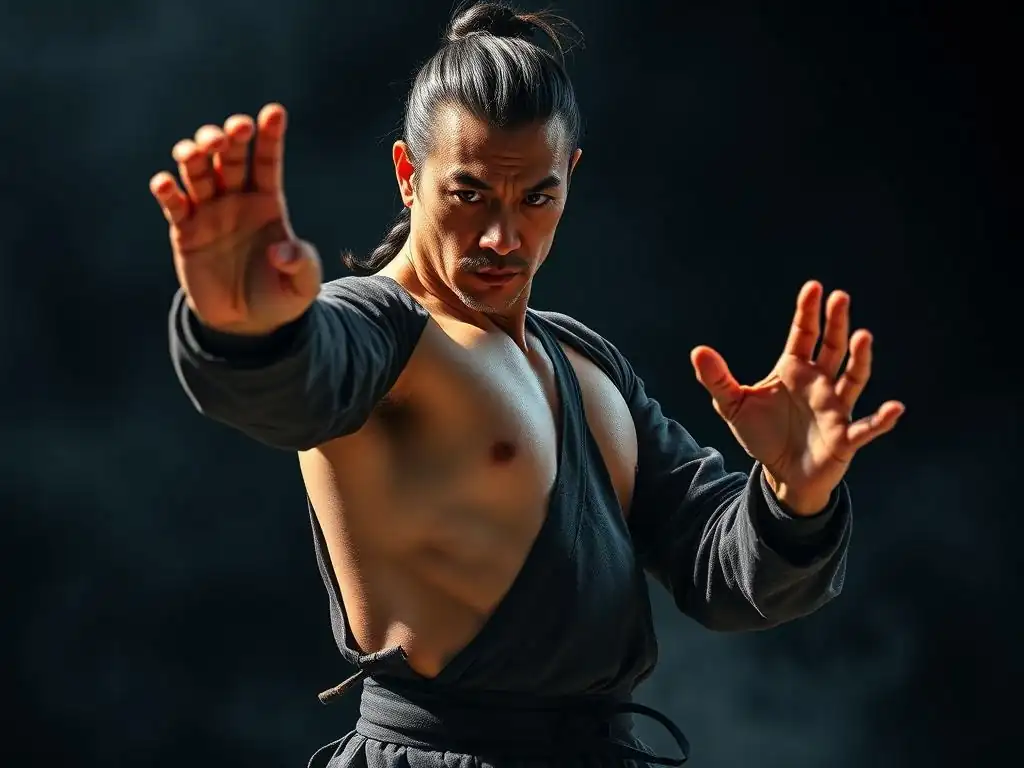
Welcome to Martial Arts Mastery, your portal to unlocking the profound depths of martial arts. Ever wondered how a skilled practitioner seems to anticipate your every move? Dive into this exploration of Baguazhang palm change drills and begin to unravel the secrets of "listening jin" (Ting Jin) – a subtle, yet powerful, sensitivity that elevates technique to an art form. Discover how these circular movements can transform your understanding of force and connection, and unlock a new dimension in your training. Intrigued? Then keep reading to embark on your journey to mastery.
- Introduction to Baguazhang, Listening Jin (Ting Jin), and Palm Changes
- Foundation: Essential Baguazhang Palm Change Drills for Ting Jin
- Refining Ting Jin Through Specific Baguazhang Palm Changes
- Drills for Cultivating Specific Aspects of Ting Jin with Palm Changes
- Integrating Ting Jin into Baguazhang Applications
- Common Mistakes and How to Correct Them in Ting Jin Training
- The Importance of Mindful Practice for Developing Listening Jin
- Conclusion: The Path to Baguazhang Mastery Through Ting Jin and Palm Changes
-
Frequently Asked Questions
- What is "Listening Jin" (Ting Jin) in Baguazhang, and why is it important?
- How do Baguazhang palm changes help develop "Listening Jin"?
- What are some key elements to focus on during Baguazhang palm change drills to improve "Listening Jin"?
- How long does it typically take to develop a usable level of "Listening Jin" through Baguazhang practice?
- Besides palm changes, what other aspects of Baguazhang training contribute to the development of "Listening Jin"?
- Final Reflection: Cultivating Awareness Through Movement
- Unleash Your Inner Ear: Take Your Ting Jin Further!
Introduction to Baguazhang, Listening Jin (Ting Jin), and Palm Changes
Understanding Baguazhang's Core Principles
Baguazhang, or Eight Trigram Palm, stands as a unique and profound internal martial art originating in China. Unlike many martial arts that emphasize linear movements and direct confrontation, Baguazhang is fundamentally based on circular walking and continuous, flowing changes. Its practice centers around walking a circle while executing complex hand changes and body movements, embodying the philosophy of the I Ching (Book of Changes). This constant motion is designed to cultivate internal power, known as jin, which is distinct from mere muscular strength.
Key principles permeate Baguazhang training, guiding practitioners towards mastery. These include maintaining a relaxed yet connected body, rooting firmly to the ground while remaining mobile, yielding to incoming force rather than opposing it directly, and integrating the entire body – from the feet through the waist to the hands – into a unified structure. Historically attributed to Dong Haichuan in the 19th century, Baguazhang's methods aim to develop adaptability, balance, and explosive power through its characteristic dynamic movement and constant transformation, reflecting the ever-changing nature of the Eight Trigrams.
What is Listening Jin (Ting Jin) in Baguazhang?
Listening Jin, or Ting Jin (聽勁), is a critical concept in internal martial arts like Baguazhang, translating literally to "listening force" or "sensing force." It refers to the highly refined ability to feel, perceive, and understand an opponent's intention, structure, and force through physical contact. This sensitivity allows a practitioner to know the direction, intensity, and quality of an incoming force the moment contact is made, often even sensing the opponent's readiness or unreadiness before they fully commit.
Cultivating Ting Jin is paramount because it provides the necessary information to respond effectively without relying on visual cues or brute strength. Instead of meeting force with equal or greater force, Ting Jin enables the practitioner to neutralize, redirect, or exploit the opponent's energy. This subtle skill is developed over years of dedicated partner practice, starting with simple, light-contact drills focused purely on sensing, gradually progressing to more complex exchanges where the practitioner must 'listen' to the opponent's body dynamics to find openings or dissolve attacks. It is the foundation for effective yielding and counter-application in Baguazhang.
The Role of Palm Changes in Cultivating Ting Jin
Palm Changes ( Zhang Shi) are the core techniques and transitions within Baguazhang, serving as the dynamic links between different postures and directions while walking the circle. Each Palm Change involves intricate footwork, body rotation, and specific hand movements, allowing the practitioner to navigate space, evade attacks, and position themselves advantageously. They are not merely static poses but fluid transformations that embody the art's principle of continuous change.
These fundamental movements are indispensable tools for cultivating Baguazhang palm change listening jin. The constant shifting of weight, turning of the waist, and precise coordination of the entire body required in Palm Changes naturally train the proprioceptive sense and tactile sensitivity. By repeatedly practicing these transitions with awareness, especially in partner drills, the practitioner learns to feel the subtle pressures, resistances, and intentions transmitted through contact. The inherent yielding and circularity of Palm Changes provide the perfect framework for developing the ability to 'stick' and 'follow' an opponent's movement, which are direct manifestations of refined Ting Jin.
Foundation: Essential Baguazhang Palm Change Drills for Ting Jin
Single Palm Change: Building Sensitivity
The Single Palm Change ( Dan Huan Zhang) is arguably the most fundamental and frequently practiced movement in Baguazhang, forming the basis for all subsequent variations and applications. It involves walking the circle with one palm extended towards the center, then executing a turn inward, changing the lead hand, and continuing the circle walk in the opposite direction. This drill emphasizes maintaining a connected structure, sinking the body, and coordinating the lower and upper halves seamlessly.
Practicing the Single Palm Change slowly and mindfully is crucial for building foundational Ting Jin. The repetitive nature of the drill trains the practitioner's internal awareness – sensing weight shifts, the connection from feet through the legs and waist to the hands, and the flow of energy within their own body.
This internal sensitivity is the prerequisite for external sensitivity. By focusing on the feeling of the ground through the feet, the rotation originating from the kua (hips), and the extension through the palm, the practitioner develops a subtle awareness of their own structure, which then allows them to feel how an external force interacts with that structure when contact is made.
Double Palm Change: Refining Awareness of Force
The Double Palm Change ( Shuang Huan Zhang) typically involves both hands working in a coordinated manner during the transition, often embodying complementary or opposing forces, such as one hand pressing down while the other lifts, or one hand covering while the other reaches. This change is often more complex than the Single Palm Change and may involve larger body rotations or shifts in level. It introduces the dynamic interplay of forces within a single movement.
Training the Double Palm Change refines Ting Jin by requiring the practitioner to manage and sense forces involving both sides of the body simultaneously. In partner practice, this drill helps develop the ability to feel pressure from multiple points of contact or sense the direction and intensity of forces applied by both of the opponent's hands. The coordinated action of one's own hands and body during the change enhances the awareness of how forces can be absorbed, neutralized, or redirected through simultaneous yielding and counter-pressure, deepening the understanding of force dynamics essential for Baguazhang palm change listening jin.
Continuous Palm Changes: Developing Flow and Responsiveness
Moving beyond individual Palm Changes, continuous practice involves linking multiple changes together seamlessly while maintaining the circle walk. This might involve executing a sequence of Single, Double, and other specific Palm Changes without stopping, flowing from one transition to the next. The focus shifts from perfecting individual movements to achieving smooth, uninterrupted transitions and adapting to the continuous motion.
Practicing continuous Palm Changes is vital for developing flow and responsiveness, key aspects of applied Baguazhang palm change listening jin. This constant movement trains the body and mind to remain adaptable and sensitive throughout a dynamic exchange. In partner drills, continuous changes allow practitioners to feel how an opponent's force or structure changes as they move, teaching them to adjust their own movements and reactions instantly based on felt information. The goal is to achieve a state where the practitioner is constantly 'listening' and responding, like a boat navigating changing currents, never rigid but always adjusting.
Refining Ting Jin Through Specific Baguazhang Palm Changes
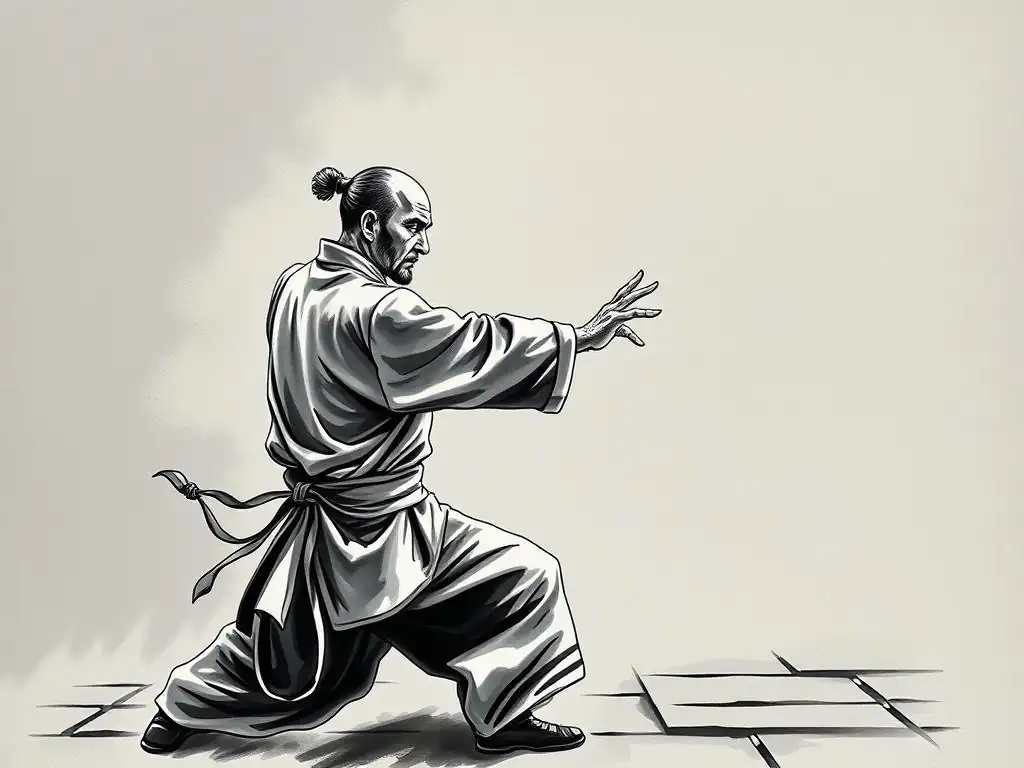
Lion Palm (Shi Zhang) and Feeling Incoming Force
The Lion Palm change in Baguazhang is characterized by a strong, stable posture, often involving a powerful forward or downward press with the palm, coupled with a deep connection to the ground. It embodies rooted strength and the ability to meet force head-on while maintaining structural integrity. The feeling is often one of solidity and powerful presence.
Practicing Lion Palm is excellent for developing the ability to feel strong incoming force. The rooted structure allows the practitioner to absorb or receive pressure without collapsing. When a partner applies force against a stable Lion Palm posture, the practitioner can sense the direction and intensity of that force traveling through their bones and muscles down into the earth. This direct feedback trains the sensitivity to discern the opponent's power and line of attack upon initial contact, providing the crucial information needed to decide whether to yield, redirect, or counter, thereby refining Baguazhang palm change listening jin.
Snake Palm (She Zhang) and Redirecting Energy
Snake Palm movements are fluid, coiling, and often deceptive, characterized by winding hand movements, subtle body shifts, and strikes or presses to vital points. It emphasizes yielding, flexibility, and the ability to move around an opponent's force rather than against it. The feeling is one of slipperiness and adaptability.
Training Snake Palm refines Ting Jin by focusing on the subtle art of redirecting energy. The circular, yielding movements train the body to sense the path of an incoming force and guide it away from the practitioner's center or structure. This develops a sensitive 'following' ability, allowing the practitioner to adhere to the opponent's limb or body and neutralize their power by leading it off-line. It teaches how to 'listen' to the flow of energy and subtly alter its course, embodying the soft power aspect of Baguazhang palm change listening jin.
Swallow Palm (Yan Zhang) and Following the Opponent's Movement
Swallow Palm movements are light, agile, and evasive, often involving upward or outward clearing motions, quick changes in direction, and striking with the palm or fingertips. It emphasizes agility, speed, and the ability to evade or move around an opponent's attack. The feeling is one of lightness and quick responsiveness.
Practicing Swallow Palm helps develop the ability to 'follow' the opponent's movement and intention. The quick, evasive footwork and hand movements train the practitioner to stay connected to the opponent's momentum, sensing their trajectory and balance to evade or reposition. This type of Baguazhang palm change listening jin focuses on sensing the movement rather than just the force, allowing the practitioner to adhere closely and mirror or counter the opponent's changes, much like a swallow darts and turns in the air, constantly adjusting its path based on subtle environmental cues.
Bear Palm (Xiong Zhang) and Rooting Against Pressure
Bear Palm is characterized by heavy, sinking, and powerful movements, often involving downward presses, splits, or inward collapsing forces. It emphasizes sinking the weight, connecting deeply to the earth, and using rooted power to overcome an opponent's structure. The feeling is one of grounded power and immovable stability.
Training Bear Palm enhances rooting and the ability to sense pressure through the connection to the ground. The practice of sinking the body and maintaining a strong connection from the feet upwards through the core allows the practitioner to effectively receive and manage downward or inward pressure.
When a partner applies force, the Bear Palm posture enables the practitioner to feel how that pressure travels through their body and is absorbed or redirected into the ground. This trains a specific type of Baguazhang palm change listening jin focused on sensing the opponent's attempt to disrupt one's root and using one's own structure to neutralize or rebound that force from the earth.
Drills for Cultivating Specific Aspects of Ting Jin with Palm Changes
Sensing Intention: Partner Drills with Prearranged Palm Changes
To specifically cultivate the ability to sense intention, structured partner drills are invaluable. One simple approach involves one partner performing a specific Baguazhang Palm Change or a small sequence, perhaps subtly adding a slight push, pull, or change in pressure at a predetermined point within the movement. The other partner, maintaining light contact (e.g., hand on forearm or shoulder), focuses solely on feeling these subtle cues without resistance, trying to identify the timing and nature of the intended action.
These prearranged drills isolate the sensing aspect of Baguazhang palm change listening jin. By knowing roughly what to expect, the practitioner can relax and focus entirely on the tactile information received through contact. This trains the nervous system to recognize the subtle muscular tensions, weight shifts, or structural changes in the partner's body that precede or accompany a movement, allowing the practitioner to perceive the intention behind the action before it fully manifests, a crucial skill for advanced application.
Responding to Changes in Force: Free-Flowing Palm Change Exercises
Once basic sensing is developed, more dynamic, free-flowing exercises are necessary to train real-time responsiveness. This involves partners engaging in continuous, light contact while one or both execute Palm Changes or move around the circle. The 'attacking' partner might apply varying amounts of gentle pressure, change direction subtly, or shift their weight unpredictably. The 'defending' partner's task is to constantly 'listen' to these changes through contact and adjust their own Palm Changes or movements accordingly, yielding when pushed, following when pulled, and maintaining connection.
These exercises directly develop the ability to respond instantaneously to external forces using Baguazhang palm change listening jin. There is no prearrangement; the practitioner must rely entirely on their felt sense to guide their actions. This trains the body to move naturally and efficiently in response to external stimuli, flowing around obstacles (the partner's force) and maintaining balance and connection throughout the dynamic exchange, mirroring the adaptability required in actual combat or sparring.
Neutralizing Attacks: Using Palm Changes to Deflect and Redirect
Applying Ting Jin to neutralize attacks involves using the sensitivity developed through Palm Changes to manage an opponent's incoming force. A common drill involves a partner initiating a simple, slow attack, such as a lunge punch or a grab. The defending practitioner, using their Baguazhang palm change listening jin, feels the direction and energy of the attack upon contact and employs a suitable Palm Change movement – perhaps a circular deflection with Snake Palm, an evasive step with Swallow Palm, or a sinking redirection with Bear Palm – to neutralize or guide the force harmlessly away.
This type of drill bridges the gap between sensitivity training and practical application. It requires the practitioner to not only sense the force but also to use that information to select and execute an appropriate Baguazhang Palm Change technique. The emphasis is on yielding and redirecting the opponent's energy rather than meeting it with force, demonstrating how cultivated sensitivity allows for efficient and effective defense, turning the opponent's momentum against them or creating opportunities for counter-attack.
Integrating Ting Jin into Baguazhang Applications
Applying Listening Jin in Push Hands (Tui Shou)
Push Hands ( Tui Shou) is a partner drill found in many internal martial arts, serving as a primary method for developing and testing sensitivity and application principles. In Baguazhang Tui Shou, practitioners typically maintain contact while walking the circle or standing in place, using Palm Change principles to sense, yield, and issue force. Unlike some styles, Baguazhang Tui Shou often involves more dynamic footwork and body movement, incorporating the art's characteristic evasiveness and circularity.
Ting Jin is the absolute core of effective Baguazhang Tui Shou. Through continuous, soft contact, practitioners use their refined sensitivity to feel the partner's structural integrity, balance, and intention.
By 'listening' to the pressure points, weight shifts, and subtle muscular tensions, they can identify moments when the partner is rooted or unrooted, balanced or off-balance, committed to a direction or transitioning. This felt information guides the practitioner's response, allowing them to neutralize incoming pushes or pulls by yielding and redirecting through circular Palm Change mechanics, or to issue their own force (Fa Jin) when an opening is sensed, all without relying on brute strength.
Ting Jin in Baguazhang Self-Defense Scenarios
While Baguazhang training can seem abstract with its circle walking and forms, the Ting Jin developed through Palm Changes is highly practical for self-defense. In a real-life encounter, the ability to instantly sense how an attacker is grabbing, pushing, or striking provides precious milliseconds of warning and information. This allows for a more intelligent and efficient response than simply reacting with force.
For example, if an attacker grabs an arm, cultivated Baguazhang palm change listening jin allows the practitioner to feel the direction and intensity of the grip and the attacker's balance. This information guides a response using a circular Palm Change movement – perhaps spiraling out of the grip while stepping offline, using the attacker's own force to facilitate the escape or counter.
Similarly, sensing the trajectory and power of an incoming strike through a brief touch enables the practitioner to evade or redirect it using fluid, yielding Palm Change footwork and hand techniques, demonstrating that Ting Jin is not just a training concept but a vital survival skill.
Advanced Palm Change Strategies for Practical Application
Beyond basic Palm Changes, Baguazhang encompasses complex sequences, variations, and linking movements designed for practical application. These might involve rapid transitions between different Palm types, incorporating strikes, joint locks, throws, and ground techniques seamlessly within the characteristic circular movement. Mastery of these advanced strategies hinges entirely on highly developed Ting Jin.
In a dynamic exchange, the practitioner must constantly 'listen' to the opponent's ever-changing state – their structure, balance, and intention – through continuous physical contact. This refined Baguazhang palm change listening jin allows them to instantly recognize opportunities to apply a specific Palm Change strategy.
It's not about pre-planning but about sensing the moment and responding instinctively with the appropriate technique. For instance, sensing a slight shift in the opponent's weight might trigger a swift Swallow Palm evasion and counter, while sensing a strong forward push might lead to a Bear Palm rooting and splitting action, illustrating the direct link between sensitivity and effective combat application.
Common Mistakes and How to Correct Them in Ting Jin Training
Over-Reliance on Strength vs. Sensitivity
One of the most common pitfalls when learning Baguazhang palm change listening jin is the tendency to revert to using muscular strength instead of relying on sensitivity and structure. Beginners often try to resist a partner's force with tension or push back directly, which hinders the development of Ting Jin, as tension blocks the ability to feel subtle pressures and flows of energy.
To correct this, practitioners must consciously focus on relaxation during all drills, especially partner work. Practice drills very slowly, emphasizing the feeling of yielding and following the partner's energy without resistance. The goal is to become like water, which conforms to any container and flows around obstacles. Use exercises that specifically isolate sensitivity, such as gently feeling a partner's pulse or breath through light contact. Remind yourself that power in Baguazhang comes from integrated structure and flow, not brute muscular force.
Lack of Rooting and Stability During Palm Changes
Another frequent mistake is losing connection to the ground or becoming unstable during Palm Changes, particularly when transitioning or interacting with a partner. If the practitioner is easily pushed off balance or their structure collapses under pressure, their ability to effectively 'listen' and respond using Baguazhang palm change principles is severely compromised.
Correcting instability requires diligent attention to foundation training. Ensure the feet are properly weighted and connected to the earth throughout the circle walk and transitions. Focus on sinking the body by relaxing the hips and knees, allowing the weight to drop. Practice maintaining connection between the lower body and the upper body, ensuring movements originate from the waist and kua. Drills focusing on standing post (Zhan Zhuang) and slow, precise solo Palm Changes emphasizing sinking and rooting are essential to build the stable base required for effective Baguazhang palm change listening jin.
Failing to Maintain Continuous Flow and Awareness
A less obvious but equally detrimental mistake is practicing Palm Changes or partner drills in a jerky, disconnected manner, losing the continuous flow and failing to maintain constant awareness of one's own body and the partner's energy. This interrupts the 'listening' process and prevents the development of seamless responsiveness inherent in Baguazhang palm change listening jin.
To address this, focus on smoothing out transitions between movements. Practice continuous Palm Changes with the intention of maintaining an unbroken flow of energy. In partner drills, emphasize maintaining light, constant contact, treating any loss of connection as a signal to adjust and re-establish sensitivity. Use the breath to help regulate rhythm and maintain internal focus. Visualize the movement as a continuous, flowing stream, ensuring that attention remains present throughout the entire practice session, not just during specific moments of contact.
The Importance of Mindful Practice for Developing Listening Jin
Cultivating Presence and Awareness During Drills
Developing deep Baguazhang palm change listening jin is as much a mental discipline as a physical one. It requires cultivating a state of heightened presence and awareness during every drill, whether solo or with a partner. This means being fully in the moment, paying attention not just to the external form of the movement but to the internal sensations within one's own body and the subtle tactile information received from a partner.
To cultivate presence, eliminate distractions during practice. Turn off phones, find a quiet space, and dedicate your full attention to the task at hand. During circle walking and Palm Changes, focus on the feeling of your feet on the ground, the rotation of your waist, the extension of your palm. In partner drills, focus solely on the feeling of contact, the direction of pressure, the texture of the interaction. This dedicated, mindful attention trains the mind to perceive the subtle cues that constitute Ting Jin, making the physical movements truly effective.
Connecting Breath and Movement for Enhanced Sensitivity
The connection between breath and movement is fundamental in all internal martial arts and plays a significant role in enhancing sensitivity for Baguazhang palm change listening jin. Natural, deep abdominal breathing helps to relax the body, sink the Qi (vital energy), and stabilize the structure. When breath is consciously coordinated with physical movement, it promotes a unified, integrated action.
Practice coordinating your inhale and exhale with the expanding and contracting, opening and closing movements within your Palm Changes. For instance, you might exhale as you sink and issue force, and inhale as you rise or yield. This conscious connection helps to regulate the flow of energy within the body and makes you more attuned to subtle internal shifts. When interacting with a partner, this relaxed, coordinated breathing also makes you more receptive to feeling their energy and intention transmitted through contact, enhancing your ability to 'listen'.
Visualization Techniques for Improving Ting Jin
Visualization is a powerful tool that can complement physical practice and accelerate the development of Baguazhang palm change listening jin. By mentally rehearsing or visualizing specific principles and sensations, practitioners can deepen their understanding and improve their physical execution.
For instance, visualize your body as being empty or hollow, allowing an opponent's force to pass through you without resistance. Visualize your connection to the earth as deep roots, providing unshakeable stability. When practicing with a partner, visualize feeling their energy like water flowing against your hand, learning to guide it effortlessly. These mental images can help bypass habitual tension and force, reinforcing the principles of yielding, following, and sensing, making the physical practice of Baguazhang palm change listening jin more effective and intuitive.
Conclusion: The Path to Baguazhang Mastery Through Ting Jin and Palm Changes
Continued Practice and Exploration of Baguazhang Principles
Developing profound Baguazhang palm change listening jin is not a destination reached after completing a specific set of drills, but rather an ongoing journey of refinement deeply intertwined with the dedicated practice and exploration of all Baguazhang's core principles. Mastery of Palm Changes provides the technical framework, while the cultivation of Ting Jin provides the essential sensitivity to make these movements truly effective in real-world applications. Consistent, mindful practice of the circle walk, fundamental Palm Changes, and their variations is non-negotiable.
Furthermore, understanding how Ting Jin connects to other crucial Baguazhang concepts – such as rooting, yielding, issuing jin, body unity, and the philosophical underpinnings of the Eight Trigrams – enriches the practitioner's skill. It's a holistic process where improving one aspect, like sensitivity through Palm Changes, positively impacts all others. True Baguazhang mastery involves integrating these elements into a seamless, intuitive whole, guided by the ability to 'listen'.
The Ongoing Journey of Refining Listening Jin
Listening Jin is a subtle skill that deepens over years, even decades, of dedicated training. It is refined through countless repetitions of solo forms, extensive partner drills with practitioners of varying skill levels and styles, and thoughtful reflection on one's experiences. There is always more to feel, more to understand, and more to refine in the ability to sense and respond to external forces.
The path to refining Baguazhang palm change listening jin requires patience, persistence, and a willingness to remain a perpetual student. Embrace the challenges of partner practice as opportunities to learn. Seek feedback, both from instructors and training partners, and from the subtle information your own body provides. The depth of your Baguazhang skill will be directly proportional to the depth of your ability to 'listen', making the continuous refinement of Ting Jin through diligent Palm Change practice a lifelong and rewarding pursuit.
Frequently Asked Questions
What is "Listening Jin" (Ting Jin) in Baguazhang, and why is it important?
"Listening Jin" (Ting Jin) is the ability to sense and understand an opponent's force and intent through touch. It's crucial for anticipating movements and responding effectively in Baguazhang.
How do Baguazhang palm changes help develop "Listening Jin"?
The constant shifting and turning in palm changes cultivates sensitivity to subtle shifts in balance and pressure. This heightened awareness allows practitioners to "listen" to the opponent's energy and predict their actions.
What are some key elements to focus on during Baguazhang palm change drills to improve "Listening Jin"?
Focus on maintaining a relaxed and connected body, paying attention to weight distribution and subtle changes in your opponent's structure. Practice slow, deliberate movements to enhance sensitivity.
How long does it typically take to develop a usable level of "Listening Jin" through Baguazhang practice?
Developing a usable level of Ting Jin is a long-term process. It can take several years of dedicated practice and focused attention to truly master this skill.
Besides palm changes, what other aspects of Baguazhang training contribute to the development of "Listening Jin"?
While palm changes are fundamental, fixed-step drills, partner exercises, and applications against resistance all contribute. These practice methods help refine sensitivity and apply Ting Jin in practical combat scenarios.
Final Reflection: Cultivating Awareness Through Movement
The exploration of Baguazhang palm change drills as a means to develop "Listening Jin" (Ting Jin) is more than just a martial arts exercise; it's a profound journey into self-awareness and heightened sensitivity. In a world increasingly dominated by digital noise and superficial interactions, the ability to truly listen, to feel, and to understand subtle shifts in energy becomes an invaluable asset, not just in combat, but in all aspects of life.
This practice has deeply resonated with me, highlighting the importance of mindful movement and the cultivation of inner stillness. The constant refinement of posture, the precise execution of palm changes, and the unwavering focus on sensing the slightest resistance have fostered a deeper connection to my own body and a greater understanding of the interconnectedness of all things. The quieter you become, the more you can hear.
This ancient wisdom echoes through every step of the Baguazhang circle, reminding us that true understanding comes not from force, but from receptive awareness.
As you conclude this exploration of Baguazhang palm change drills and their potential to unlock "Listening Jin," I invite you to consider how you can cultivate this same quality of receptive awareness in your own life. Can you slow down, quiet your mind, and truly listen – not just to the words being spoken, but to the unspoken energies that surround you? Embrace the practice of mindful movement, and discover the profound wisdom that lies within the subtle shifts of your own being.
Unleash Your Inner Ear: Take Your Ting Jin Further!
Thanks for exploring the power of listening energy, or Ting Jin, through the Baguazhang palm change drills. You've unlocked valuable insights into developing this crucial martial skill. Now, let's translate that knowledge into tangible action.
- Prioritize your daily practice: Commit to at least 15 minutes of dedicated Baguazhang palm change drills, focusing specifically on feeling subtle shifts in your balance and opponent's energy.
- Explore different partner drills. Start with gentle pushes and gradually increase resistance to deepen your sensitivity and enhance your Ting Jin.
- Share your experiences and challenges with fellow practitioners in the Martial Arts Mastery forum to foster mutual growth and insight!
What subtle changes in your body awareness did you notice during your first Ting Jin focused practice?