
The Piercing Crane Beak (Hok Jui): Techniques, Vital Targets, and Drills

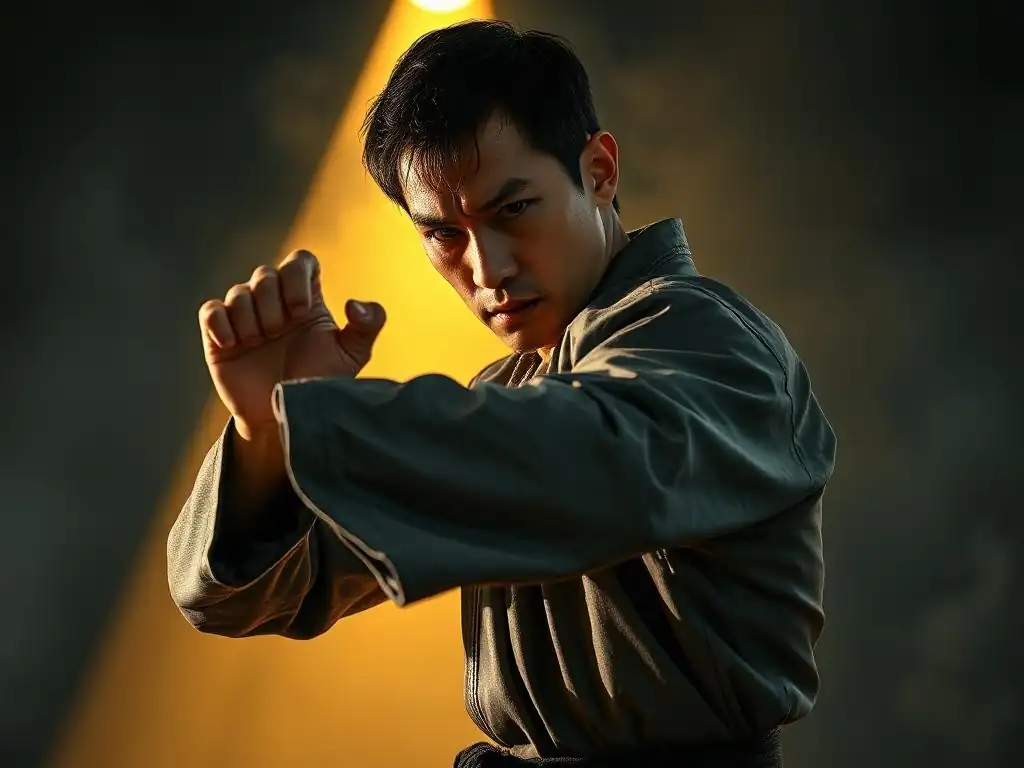
Welcome to Martial Arts Mastery, where the ancient wisdom of combat meets modern understanding. Ever wondered how a single, precisely aimed strike could cripple an opponent? In this exploration, we delve into the Hok Jui Crane Beak Strike, a devastating technique refined over centuries. Prepare to uncover its secrets: from targeting vital points to mastering the precise hand formation. Discover the power behind this iconic strike and how it fits within the broader landscape of martial arts mastery. Intrigued? Read on to unlock the secrets of the piercing crane.
- Introduction to the Hok Jui Crane Beak Strike in Hung Gar Kung Fu
- Hok Jui Crane Beak Strike: Essential Techniques & Forms
- Vital Targets for the Hok Jui Strike: Precision & Effectiveness
- Crane Beak Strike Drills for Enhanced Skill and Precision
- Advanced Hok Jui Techniques and Combinations
- Hok Jui in Self-Defense Scenarios: Practical Applications
- The History and Lineage of the Hok Jui in Hung Gar
- Conditioning for the Hok Jui Crane Beak Strike: Strengthening the Hands and Fingers
- Conclusion: Mastering the Crane Beak for Martial Arts Mastery
-
Frequently Asked Questions
- What is the Hok Jui Crane Beak Strike, and what makes it unique?
- What are some of the key vital targets that the Hok Jui is designed to attack?
- How does the Hok Jui Crane Beak Strike differ from a standard punch or open-hand strike?
- What are some drills and training methods recommended for developing proficiency in the Hok Jui?
- Is the Hok Jui Crane Beak Strike primarily intended for self-defense, or does it have other applications?
- Final Reflection: Mastering the Piercing Crane Beak
- Unleash the Crane Within!
Introduction to the Hok Jui Crane Beak Strike in Hung Gar Kung Fu
Understanding the Crane Style in Hung Gar
Hung Gar Kung Fu is renowned for its powerful stances and integration of the Five Animal styles: Tiger, Crane, Dragon, Snake, and Leopard. The Crane style, or Hok Kuen, within Hung Gar is characterized by its emphasis on agility, precision, balance, and deflections. While the Tiger style focuses on raw power and strong bone-breaking techniques, the Crane style employs whipping, snapping movements, and precise striking, often targeting vulnerable points.
The Crane's principles are embodied in its unique hand forms and footwork, which mimic the bird's natural movements – standing on one leg, extending its wings, and pecking with its beak. This duality of hard (Tiger) and soft (Crane) within Hung Gar makes it a comprehensive and effective martial art.
The Crane elements are not merely aesthetic; they represent a sophisticated approach to combat. The high, narrow stances and quick steps allow for rapid repositioning and evasion, contrasting with the Tiger's deep, grounded postures. Techniques like wing blocks ( Hok Wing) and the signature Hok Jui Crane Beak Strike exemplify the Crane's strategy of using speed and accuracy to overcome brute force.
Mastery of the Crane style provides Hung Gar practitioners with versatility, enabling them to adapt to different opponents and situations. It teaches the importance of generating force through internal rotation and snapping actions rather than relying solely on muscular strength, a key principle for developing a devastating Hok Jui.
The Significance of the Hok Jui (Crane Beak) Hand Form
The Hok Jui, or Crane Beak, is arguably the most distinctive and iconic hand form within the Crane style of Hung Gar. It is created by bringing the five fingertips together to form a pointed 'beak' or cone shape, with the wrist slightly bent but firm.
This seemingly simple hand shape is a highly specialized weapon designed for piercing or striking small, vulnerable targets with concentrated force. Unlike a fist or palm strike which disperses impact over a larger area, the Hok Jui focuses all the energy onto a very small point, making it incredibly effective for targeting pressure points or delicate anatomical structures.
The significance of the Hok Jui extends beyond its physical application; it embodies the precision and focus central to the Crane's philosophy. Training the Hok Jui Crane Beak Strike requires developing not just hand strength but also fine motor control and the ability to channel power through the entire body into this small point.
It represents the principle of 'one inch force' or Dim Mak (pressure point striking), where minimal movement can generate significant impact when applied correctly to a vital area. This hand form is prominently featured in key Hung Gar forms such as the Fu Hok Seung Ying Kuen (Tiger Crane Double Pattern Fist), highlighting its integral role in the system.
Hok Jui Crane Beak Strike: Essential Techniques & Forms
Mastering the Basic Crane Beak Hand Shape
Developing the correct hand shape for the Hok Jui Crane Beak Strike is fundamental. The fingers – thumb, index, middle, ring, and pinky – are brought together tightly at the tips, forming a sturdy point. The palm is slightly cupped, and the wrist is held firm, not rigid, to allow for snapping power.
The key is to ensure there are no gaps between the fingers, creating a solid, unified striking surface. Initially, many students struggle with keeping the fingers together under pressure, especially the pinky and ring fingers. Regular conditioning exercises are crucial to build the necessary strength and control in the finger flexors and extensors.
Practice involves holding the shape firmly for extended periods, applying pressure against a surface like a wall (gently at first), and performing slow-motion striking movements to feel the muscle engagement. The goal is to make the Hok Jui shape feel natural and strong, like a solid piece of bone.
A common error is having a weak wrist or allowing the fingers to splay upon impact, which can lead to injury and dissipate the striking force. Proper formation ensures that the energy generated by the body is concentrated precisely at the 'beak' tip, ready for the Hok Jui Crane Beak Strike.
Variations of the Crane Beak Strike: Gung Gee Fook Fu Kuen, Fu Hok Seung Ying Kuen
The Hok Jui Crane Beak Strike appears in various Hung Gar forms, each utilizing it in specific contexts and combinations. In the foundational form, Gung Gee Fook Fu Kuen (Subduing the Tiger in I-Shaped Stance), the Hok Jui is often used in quick, linear strikes, targeting the opponent's center line or head. These applications are typically straightforward, emphasizing directness and penetration. For example, a sequence might involve a block followed immediately by a sharp Hok Jui thrust to the throat or eye area from a stable stance.
The Fu Hok Seung Ying Kuen (Tiger Crane Double Pattern Fist) elevates the use of the Hok Jui Crane Beak Strike. Here, it is integrated with more complex footwork, body movements, and combinations that blend Tiger's power with Crane's precision. The form includes techniques like the "Crane Stands on One Leg" ( Hok Lap Gerk), from which a rapid downward or forward Hok Jui can be launched.
The form also features combinations where a Tiger claw or punch is followed by a swift Hok Jui, demonstrating the seamless transition between the two animal styles. The variations in Fu Hok Seung Ying Kuen often involve whipping motions and strikes from unexpected angles, leveraging the Crane's agility.
Generating Power in the Hok Jui: Focus on Waist Rotation and Body Mechanics
Generating significant power in the Hok Jui Crane Beak Strike relies heavily on proper body mechanics, not just arm strength. The primary engine for power generation in Hung Gar, including the Hok Jui, is the rotation of the waist and hips. As the strike extends, a sharp, explosive turn of the waist drives the force through the core, shoulder, elbow, and wrist, culminating at the fingertips forming the beak. This rotational power, often described as 'snapping' or 'whipping', allows for a rapid, penetrating strike even from a short distance.
Beyond waist rotation, grounding through the stances is crucial. A stable, rooted posture allows the practitioner to transfer energy from the ground up through the legs and torso. Techniques like the Sei Ping Ma (Four Level Stance) provide a solid base from which to launch powerful Hok Jui strikes. The coordination of breath, body structure, and explosive muscle contraction is refined through diligent practice of forms and specific drills. A well-executed Hok Jui Crane Beak Strike feels like the entire body's energy is focused into that single point, capable of causing significant localized damage.
Vital Targets for the Hok Jui Strike: Precision & Effectiveness
Targeting Pressure Points with the Crane Beak
The precise, pointed nature of the Hok Jui Crane Beak Strike makes it ideal for targeting pressure points ( Dim Mak). These are specific points on the body that, when struck with the right force and angle, can cause pain, disorientation, temporary paralysis, or even unconsciousness by disrupting the nervous system or blood flow. Examples include points on the temple, behind the ear, along the jawline, or on the collarbone. While mastery of Dim Mak is an advanced study, basic understanding of accessible points enhances the effectiveness of the Hok Jui.
Targeting pressure points requires extreme precision and control, emphasizing the 'science' aspect of martial arts. A strike that is off by even an inch may be less effective or miss the intended effect entirely. Hung Gar training often includes anatomical study to understand the location and effects of striking different points. The Hok Jui's small surface area allows for this focused application of force, distinguishing it from broader strikes like a palm or fist. The power generated through body mechanics is channeled into this tiny point, maximizing the potential impact on the targeted pressure point.
Vulnerable Areas for Hok Jui Attacks: Eyes, Throat, and Groin
Beyond specific pressure points, the Hok Jui Crane Beak Strike is exceptionally effective against general vulnerable areas of the human body due to its piercing nature. The eyes are perhaps the most obvious target; a quick, sharp strike can cause severe pain, temporary or permanent vision impairment, and immediate incapacitation, providing a critical advantage in a self-defense situation. The throat, specifically the trachea or larynx, is another highly vulnerable area. A strike here can disrupt breathing, cause coughing fits, or even lead to collapse.
The groin area is also a prime target, particularly with a low, upward-snapping Hok Jui Crane Beak Strike. This strike can cause immediate, debilitating pain and incapacitate an assailant quickly. Other vulnerable areas include the temple, the philtrum (area above the upper lip), the sternum, and the solar plexus. These areas are often less protected than others and are susceptible to focused, penetrating force. Training involves practicing striking these areas on padded dummies or focus mitts to develop accuracy and power generation.
Safe Training Practices When Targeting Vital Areas
Given the potential danger of targeting vital areas with the Hok Jui Crane Beak Strike, safe training practices are paramount. Live sparring using the Hok Jui is generally avoided or conducted with extreme caution, using heavy padding and focusing only on non-vital targets. Partner drills should be performed with control, starting very slowly, and gradually increasing speed only when precision is absolute. Protective gear, such as eye protection and groin guards, is essential.
Training on equipment like focus mitts, heavy bags, and specialized dummies allows practitioners to practice targeting vulnerable points with full power without risking injury to a partner. For example, a drill might involve a partner holding a small focus mitt precisely where a pressure point or vulnerable area would be, allowing the student to practice hitting that exact spot with speed and power. Verbal cues and immediate feedback between partners are critical to ensure safety and reinforce proper technique. The emphasis is always on developing control and accuracy before adding speed or power.
Crane Beak Strike Drills for Enhanced Skill and Precision
Solo Hok Jui Form Practice: Refining Technique
Solo practice of Hung Gar forms, particularly those featuring the Hok Jui like Gung Gee Fook Fu Kuen and Fu Hok Seung Ying Kuen, is the foundation for refining the Hok Jui Crane Beak Strike. Practicing the forms slowly allows the practitioner to focus on the intricate details of the hand shape, wrist angle, body alignment, and the coordination of breath with movement. This helps internalize the correct mechanics for generating power and ensures the Hok Jui is formed correctly every time.
Speed and power can be gradually added as the technique becomes more natural. Shadow boxing incorporating Hok Jui strikes helps develop flow and movement. Repetitive drilling of specific Hok Jui sequences from the forms, such as a block followed by a strike, helps build muscle memory. Practicing in front of a mirror can provide visual feedback on hand shape and body posture. A dedicated practitioner might spend 15-20 minutes per session solely on refining the Hok Jui within different form contexts.
Partner Drills for Crane Beak Application: Pak Sau, Hok Jui Counter Drill
Partner drills are essential for learning to apply the Hok Jui Crane Beak Strike against a moving target and in response to an opponent's actions. A basic drill involves one partner extending their arm (representing an incoming attack or a target area) while the other practices a Pak Sau (slapping block) followed immediately by a Hok Jui strike to the simulated target area (e.g., the wrist or forearm). This drill emphasizes speed and the transition from defense to offense.
A more advanced drill is a dedicated Hok Jui counter drill. Partner A might throw a simple jab or grab attempt. Partner B uses a Hung Gar block (like an outer gate block or a wing block) and immediately counters with a Hok Jui strike to a designated safe target area on Partner A's arm or shoulder. The drill can evolve to include multiple strikes or more complex attack scenarios. Safety equipment and controlled speed are mandatory. These drills help develop timing, distance management, and the ability to land the Hok Jui Crane Beak Strike effectively under pressure.
Sparring Applications of the Hok Jui: Controlled Sparring Exercises
Integrating the Hok Jui Crane Beak Strike into sparring must be done with extreme caution and under strict supervision. Full-contact sparring where the Hok Jui is used to target vital areas is not typical or recommended in standard training due to the high risk of injury. Instead, controlled sparring exercises focus on practicing the setups and entry points for the Hok Jui, as well as defensive responses to it.
One type of controlled sparring might involve partners agreeing beforehand that certain areas (e.g., chest protector, padded arms) are designated targets for light-contact Hok Jui strikes. Another approach is to focus on flow drilling where partners practice specific attack-and-defense sequences involving the Hok Jui without full power or contact. The emphasis is on timing, distance, footwork to create openings, and transitioning into the Hok Jui technique.
For instance, a drill might focus on using a feint to draw a reaction, creating an opening for a quick Hok Jui Crane Beak Strike to a padded area. This allows practitioners to understand the practical application without the inherent dangers of vital point targeting in live sparring.
Advanced Hok Jui Techniques and Combinations
Integrating the Crane Beak with Other Hung Gar Techniques
The true power of the Hok Jui Crane Beak Strike is unlocked when integrated seamlessly with the broader repertoire of Hung Gar techniques. This involves combining the precise, piercing nature of the Hok Jui with the powerful blocks, stances, and other strikes (like the Gwa Cheung - backfist, or Fook Sau - bridging hand) of Hung Gar. For example, a powerful Tiger claw could be used to control an opponent's limb, immediately followed by a rapid Hok Jui strike to a vulnerable point on their body or head.
Another integration involves using Hung Gar's strong blocks or bridging hands to create openings. A solid Tit Kiu (Iron Bridge) block might deflect an incoming attack, leaving the opponent momentarily exposed for a quick, snapping Hok Jui Crane Beak Strike. The advanced practitioner learns to transition fluidly between the hard, external techniques of the Tiger and the soft, internal, and precise techniques of the Crane, using the Hok Jui as a sharp, decisive finishing tool in a combination. This level of integration requires deep understanding of Hung Gar principles and extensive practice.
Chain Punching and Crane Beak Follow-Ups
While chain punching is often associated with styles like Wing Chun, Hung Gar also utilizes rapid, successive strikes, and the Hok Jui Crane Beak Strike can be an effective follow-up or even part of a chain. Imagine a rapid series of straight punches (similar to chain punching) aimed at the opponent's upper body to occupy their guard. As their hands are busy defending the punches, a sudden, precise Hok Jui can be launched, potentially targeting the eyes, throat, or temple, slipping through their defense.
Alternatively, a chain could consist of alternating hand forms, such as a series of fast, light palm strikes or finger jabs to create openings, followed by a more committed Hok Jui Crane Beak Strike aimed at a specific target. This requires incredible speed and coordination. The idea is to overwhelm the opponent's defenses with volume and speed, then exploit the resulting opening with the focused power of the Hok Jui. This type of combination drill is advanced and requires significant training in speed and precision.
Using Footwork to Enhance the Crane Beak Strike
Effective footwork is paramount for maximizing the impact and utility of the Hok Jui Crane Beak Strike. Hung Gar's footwork, while known for its stable stances, also includes agile movements like side-stepping, shuffling, and the characteristic 'Crane steps' ( Hok Bu). Using footwork allows the practitioner to close or manage distance, create angles, and position themselves optimally for a precise Hok Jui strike. For example, a quick side-step might evade an attack and simultaneously put the practitioner in a perfect flanking position to strike a vulnerable point on the opponent's side or back of the head.
The 'Crane Stands on One Leg' posture ( Hok Lap Gerk) is a specific example of footwork integrated with the Hok Jui. While maintaining balance on one leg, the free leg can be used for a low kick or feint, or the posture itself can serve as a platform for a sudden, downward Hok Jui Crane Beak Strike from a higher angle.
Mastering the coordination of rapid, stable footwork with the precise timing of the Hok Jui strike significantly enhances its effectiveness and makes the practitioner a more elusive and dangerous opponent. Drills focusing on movement patterns combined with strike execution are crucial at this stage.
Hok Jui in Self-Defense Scenarios: Practical Applications
Adapting the Crane Beak for Real-World Self-Defense
In real-world self-defense scenarios, the Hok Jui Crane Beak Strike can be a highly effective, albeit potentially dangerous, tool. Its strength lies in its ability to cause immediate, debilitating pain and disorientation, providing a window of opportunity to escape. Unlike sport combat, self-defense does not have rules, and striking vital targets is a legitimate means of stopping a threat. The Hok Jui's small profile also makes it less obvious than a clenched fist, potentially allowing for a surprise strike.
Adapting the Hok Jui for self-defense means focusing on gross motor skills and high-probability targets under stress. While pressure point accuracy is difficult in a chaotic situation, targeting the eyes, throat, or groin with a sharp, committed strike is more achievable and likely to be effective. The technique must be practiced not just in isolation but within realistic scenarios, simulating grabs, shoves, or swings, and practicing the immediate application of the Hok Jui Crane Beak Strike as a primary or secondary response. Speed and decisiveness are key.
Crane Beak Against Common Attacks: Defending a Grab
The Hok Jui Crane Beak Strike is particularly useful when defending against common grabs, such as a wrist grab or a lapel grab. If an assailant grabs your wrist, a quick, snapping Hok Jui to their exposed forearm (potentially targeting a pain compliance point) or even their face (eyes, nose) can break their grip and create distance. If grabbed by the lapel, a short-range Hok Jui thrust to the throat or sternum can be devastating.
Consider a scenario where an assailant uses a two-hand grab on your shirt. A potential defense involves simultaneously using a Hung Gar bridging technique to manage their arms while delivering a rapid, upward Hok Jui Crane Beak Strike to the philtrum or chin. The proximity in a grab situation often makes the short, sharp nature of the Hok Jui ideal. Training drills should simulate these specific grab scenarios, focusing on escaping the grab while simultaneously applying the Hok Jui Crane Beak Strike to a vulnerable target.
Maintaining Control and Awareness in a Self-Defense Situation
While the Hok Jui Crane Beak Strike is a powerful tool for stopping an immediate threat, effective self-defense is about more than just the strike itself. It requires maintaining situational awareness and control throughout the encounter. After delivering the Hok Jui, the goal is typically not to engage further but to create space and escape. This means being aware of the environment, potential additional threats, and having an exit strategy.
Using the Hok Jui should be part of a larger self-defense plan. Once the strike has incapacitated or disoriented the assailant, the practitioner must immediately assess the situation: Is the threat stopped? Are there other attackers? Is there a clear path to safety? Training should emphasize transitioning from the strike to disengaging and escaping, rather than staying and fighting. The Hok Jui Crane Beak Strike provides the critical moment needed to regain control and remove oneself from danger.
The History and Lineage of the Hok Jui in Hung Gar
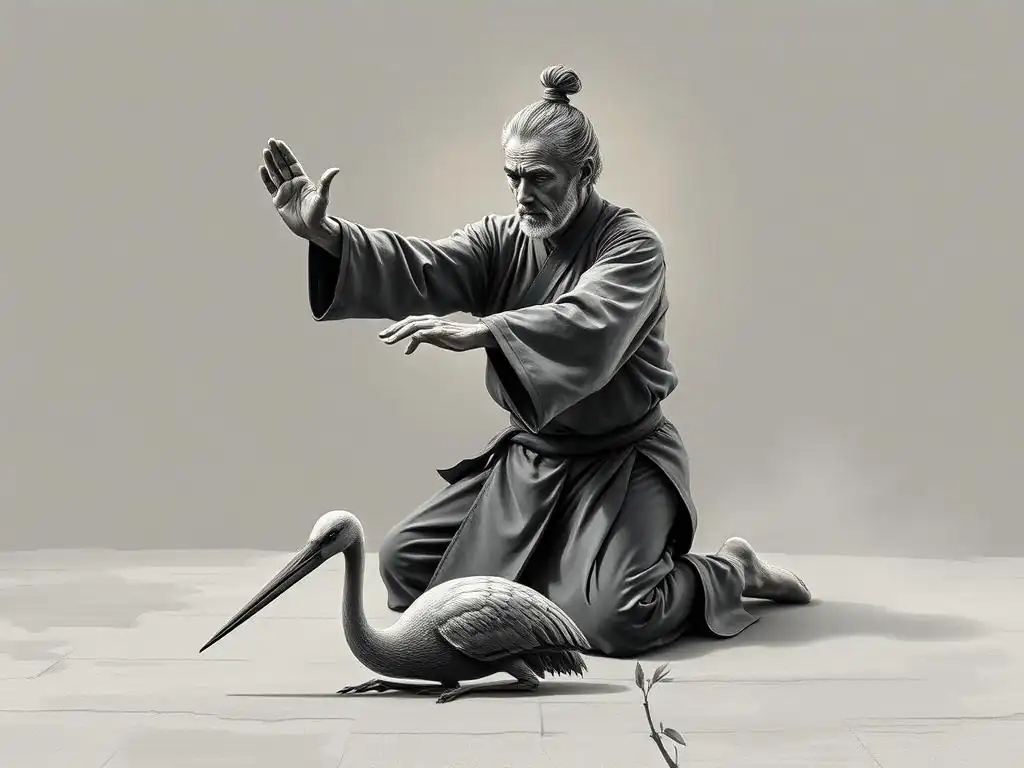
Tracing the Origins of the Crane Beak in Hung Gar
The origins of the Hok Jui Crane Beak Strike within Hung Gar are deeply intertwined with the history of the style itself, particularly its development by figures like Wong Kei-Ying and his son, Wong Fei-Hung. While the Tiger style traces roots back to the Southern Shaolin Temple, the Crane elements are often attributed to figures like "Beggar So" (So Hat) or Lam Fok-Sing, who were incorporated into the Hung Gar system by Wong Kei-Ying or Wong Fei-Hung. The Crane style itself is believed to have originated from Fujian province in Southern China.
Legend attributes the integration of the Crane to observations of the bird's fighting movements and its unique ability to use its beak with precision. The Crane style, and thus the Hok Jui, represents the softer, more evasive, and precise aspects that complement the powerful, direct methods of the Tiger.
The Fu Hok Seung Ying Kuen, the form most famously associated with the integration of Tiger and Crane, is widely credited to Wong Fei-Hung, solidifying the Hok Jui's place as a core technique within the Hung Gar system. Historical records and lineage charts trace the transmission of this form and its techniques, including the Hok Jui Crane Beak Strike, through prominent masters.
Influential Practitioners of the Hok Jui Style
Throughout the history of Hung Gar, numerous masters have been renowned for their mastery of the Crane style and particularly the Hok Jui Crane Beak Strike. Wong Fei-Hung (1847-1924) himself was a pivotal figure, not only in refining the Fu Hok Seung Ying Kuen but also in popularizing the system. His depictions in folklore and film often showcase the elegance and deadliness of his Crane techniques.
Following Wong Fei-Hung, masters like Lam Sai-Wing (1861-1942), one of Wong Fei-Hung's most famous students, played a crucial role in disseminating the Hung Gar system and its Crane techniques through his teaching and published books. His detailed explanations of forms like Fu Hok Seung Ying Kuen provided generations of practitioners with insights into the proper execution and application of the Hok Jui.
In more recent times, figures like Lam Cho (1910-2012), Lam Sai-Wing's nephew, continued to teach and preserve the traditional Hung Gar system, passing down the intricate details of the Hok Jui Crane Beak Strike and its related conditioning. These masters ensured the lineage and knowledge of this unique hand form were maintained.
Preserving the Tradition of the Crane Beak Strike
Preserving the tradition of the Hok Jui Crane Beak Strike involves more than just teaching the physical technique; it includes passing down the history, philosophy, and conditioning methods associated with it. Traditional Hung Gar schools emphasize learning the forms accurately, understanding the applications within the forms, and undertaking rigorous conditioning to prepare the hands and body. The oral tradition, where masters share insights and corrections passed down through their lineage, is vital.
Modern practitioners contribute to preservation by documenting the techniques, teaching new generations, and sometimes adapting training methods while staying true to the core principles. For instance, while traditional hand conditioning might involve striking hard surfaces, modern schools might use specialized equipment or less damaging methods to achieve similar results while minimizing injury risk. Conferences, seminars, and publications by leading Hung Gar practitioners worldwide help ensure that the knowledge and application of the Hok Jui Crane Beak Strike remain alive and accessible to serious students dedicated to martial arts mastery.
Conditioning for the Hok Jui Crane Beak Strike: Strengthening the Hands and Fingers
Hand and Finger Strengthening Exercises for Hok Jui
Developing a strong, resilient Hok Jui Crane Beak Strike requires specific conditioning exercises to build strength in the fingers, hand, and wrist. A basic exercise involves holding the Hok Jui shape firmly, squeezing the fingertips together with maximum tension for sets of 30-60 seconds. Another is using a bucket of sand or beans; plunge the hand in, form the Hok Jui, and twist or push through the material to build resistance. Graduating to harder materials like gravel or pebbles can increase the challenge, but this must be done gradually and cautiously to avoid injury.
Grip strength exercises, while not specific to the Hok Jui shape, are also beneficial as overall hand strength contributes to the power of the strike. Using hand grippers or squeezing a tennis ball helps build general hand and forearm strength. Finger tip push-ups (initially against a wall, then on the floor) also directly strengthen the fingers and condition the tips, though this must be approached with extreme care to avoid hyperextension injuries. Consistency is key; short, regular conditioning sessions are more effective than infrequent, intense ones.
Wrist Flexibility and Power Drills
A strong and flexible wrist is crucial for both generating power and preventing injury when performing the Hok Jui Crane Beak Strike. Wrist flexibility exercises, such as gentle rotations, flexion, and extension stretches, help maintain range of motion and prevent stiffness. Power drills focus on developing the explosive snapping action of the wrist and forearm that drives the Hok Jui.
One power drill involves holding the Hok Jui shape and rapidly extending the hand forward from a retracted position, focusing on the whip-like action of the wrist. This can be done in the air or against a padded surface.
Using light weights (like a small dumbbell or weighted stick) while performing controlled wrist snapping motions can also help build explosive power, but this should be done with proper guidance to avoid strain. The goal is to have a wrist that is both stable upon impact and capable of generating speed through a snapping motion for the Hok Jui Crane Beak Strike.
Integrating Conditioning into Your Training Routine
Conditioning for the Hok Jui Crane Beak Strike should be a regular part of a Hung Gar training routine, not an occasional add-on. It can be incorporated into warm-ups or cool-downs, or dedicated time slots can be allocated several times a week. For example, a practitioner might spend 5-10 minutes on hand and wrist conditioning exercises before or after practicing forms.
Consistency is more important than intensity, especially when starting out. Begin with lighter resistance or shorter durations and gradually increase as strength and resilience improve. Listening to your body and avoiding overtraining is vital to prevent injuries like sprains or stress fractures. Proper conditioning not only enhances the power and effectiveness of the Hok Jui Crane Beak Strike but also builds the physical resilience necessary for long-term practice of this unique and powerful technique, contributing significantly to overall martial arts mastery.
Conclusion: Mastering the Crane Beak for Martial Arts Mastery
Mastering the Hok Jui Crane Beak Strike is a journey that encapsulates many core principles of Hung Gar Kung Fu. It requires not just physical strength and conditioning, but also precision, control, and a deep understanding of body mechanics. From forming the perfect hand shape to integrating it into complex forms and applying it effectively in self-defense scenarios, the Hok Jui demands dedication and diligent practice. Its history within the Hung Gar lineage highlights the integration of the agile, precise Crane with the powerful Tiger, creating a balanced and formidable martial art.
Achieving true martial arts mastery involves refining individual techniques like the Hok Jui Crane Beak Strike to the highest possible level while understanding their place within the broader system. The ability to generate focused power, target vulnerable areas with precision, and apply the technique appropriately in different contexts distinguishes a skilled practitioner. Through consistent training, including solo practice, partner drills, controlled application, and dedicated conditioning, the practitioner can unlock the full potential of the piercing Crane Beak, making it a devastatingly effective tool in their arsenal.
Frequently Asked Questions
What is the Hok Jui Crane Beak Strike, and what makes it unique?
The Hok Jui Crane Beak Strike is a striking technique mimicking a crane's beak, primarily targeting vulnerable areas like the eyes, throat, and groin. Its uniqueness lies in its precision and focused power delivery.
What are some of the key vital targets that the Hok Jui is designed to attack?
This strike is specifically designed to target vulnerable areas of the body. Key targets include the eyes, throat, solar plexus, and groin, aiming to quickly incapacitate an opponent.
How does the Hok Jui Crane Beak Strike differ from a standard punch or open-hand strike?
Unlike a punch, the Hok Jui uses fingertips for a concentrated, piercing attack. Compared to open-hand strikes, it offers greater precision for targeting specific vital points.
What are some drills and training methods recommended for developing proficiency in the Hok Jui?
Training involves finger strengthening exercises, practicing the precise hand formation, and utilizing focused striking drills on padded targets to improve accuracy and power.
Is the Hok Jui Crane Beak Strike primarily intended for self-defense, or does it have other applications?
While effective in self-defense scenarios due to its targeting of vital points, the Hok Jui is also a part of traditional martial arts forms and training, emphasizing discipline and control.
Final Reflection: Mastering the Piercing Crane Beak
The techniques and vital targets explored within this article on the Hok Jui Crane Beak Strike are not merely historical relics; they represent a living martial art tradition that continues to offer profound insights into biomechanics, precision, and the focused application of force. Understanding the nuances of the Hok Jui, from its unique hand formation to its strategic targeting, provides practitioners with a powerful tool for self-defense and a deeper appreciation for the art of Kung Fu.
The enduring appeal of the Hok Jui lies in its efficiency and adaptability. Its principles transcend mere physical technique, fostering mental discipline and a heightened awareness of one's own body and the surrounding environment. The best fighter is never angry,
as Bruce Lee famously said, and the Hok Jui embodies this philosophy, demanding a calm, calculated approach to combat. This focus on precision and control resonates deeply in a world often characterized by chaos and impulsivity.
Now, consider the implications of mastering such a focused and powerful technique. How can the principles of precision, control, and strategic thinking, honed through the practice of Hok Jui, be applied to other areas of your life? Embrace the discipline required to perfect the Crane Beak Strike, and you will find that the same dedication and focus can unlock your potential in any endeavor. Let the spirit of the Hok Jui guide you toward a path of strength, awareness, and unwavering resolve.
Unleash the Crane Within!
Thanks for delving into the art of Hok Jui! We hope you found valuable insights into the techniques and vital targets. Now, put that knowledge into action and elevate your martial arts journey!
- Commit to consistent practice: Dedicate at least 15 minutes daily to refining your Hok Jui techniques through targeted drills. Focus on precision and power.
- Explore related styles:Investigate other crane-style martial arts to broaden your understanding and adapt new principles to your existing skill set.
- Share your progress: Document your Hok Jui journey and discuss your discoveries in martial arts forums or with fellow practitioners to spark new discussions.
How will you incorporate the principles of Hok Jui into your current training routine?