
The Psychology of SelfDefense: WadoRyu's Approach to Awareness and Response


Welcome to Martial Arts Mastery, your gateway to unlocking the secrets of combat and self-discovery!
Delve into the captivating world where ancient traditions meet modern application. Ever wondered how a martial art transcends mere physical technique to encompass the very psychology of self-defense? This week, we explore just that with a deep dive into WadoRyu self defense psychology, uncovering how its practitioners cultivate not just physical prowess, but also a heightened state of awareness and strategic response. Discover how WadoRyu's unique approach can transform your understanding of self-preservation and empower you in ways you never imagined...
- Understanding Wado-Ryu Self-Defense Psychology
- Cultivating Awareness: A Key Element in Wado-Ryu Self-Protection
- The Wado-Ryu Response: Bridging Mind and Body
- Cognitive Processes in Wado-Ryu Self-Defense Decision-Making
- Wado-Ryu's Emphasis on Harmony and Non-Resistance: A Psychological Perspective
- Enhancing Self-Confidence Through Wado-Ryu Training
- Applying Awareness and De-escalation: Real-World Scenarios
- The Role of Mental Imagery in Wado-Ryu Self-Defense Training
- Conclusion: The Enduring Value of Wado-Ryu's Psychological Approach to Self-Defense
-
Frequently Asked Questions
- What is the central psychological principle behind WadoRyu self-defense?
- How does WadoRyu training cultivate awareness for self-defense?
- Does WadoRyu's self-defense philosophy focus on aggression or de-escalation?
- How does understanding an attacker's psychology benefit WadoRyu practitioners?
- How does WadoRyu's emphasis on natural movement contribute to its self-defense effectiveness?
- Final Reflection: Embracing Awareness, Mastering Response
- Embrace Your Inner Strength: Start Your Wado-Ryu Journey Now!
Understanding Wado-Ryu Self-Defense Psychology
The Unique Psychological Foundation of Wado-Ryu Karate
Wado-Ryu, founded by Hironori Ōtsuka, distinguishes itself from many other karate styles through its deep roots in Shindo Yoshin Ryu jujutsu. This lineage imparts a psychological foundation centered not merely on forceful confrontation, but on principles of harmony, natural movement, and non-resistance. While many martial arts emphasize meeting force with equal or greater force, Wado-Ryu's approach, often summarized by the term Wa (harmony), seeks to neutralize aggression with minimal conflict.
This psychological underpinning encourages practitioners to avoid unnecessary engagement, prioritize safety through evasive movement ( taisabaki), and leverage an opponent's energy rather than directly opposing it. This differs significantly from styles that might instill a primary psychological drive towards immediate, overwhelming offense.
The emphasis on fluidity and adapting to circumstances rather than rigid technique fosters a psychological flexibility crucial for real-world self-defense. Ōtsuka Sensei's philosophy integrated not just physical techniques but also a mental discipline focused on calmness and strategic thinking under duress. This WadoRyu self defense psychology aims to cultivate a state of mind where reactions are not purely instinctual or aggressive, but measured and aligned with the principle of Wa. This involves understanding distance, timing, and the psychological state of a potential aggressor, requiring a level of mental processing beyond simple fight-or-flight responses.
Integrating Mental Fortitude in Wado-Ryu Training
Developing mental fortitude is an intrinsic part of Wado-Ryu training, going hand-in-hand with physical conditioning. Beyond the repetitive practice of kihon (basics) and kata (forms), which build discipline and focus, Wado-Ryu incorporates paired drills ( kumite) designed to simulate real-life pressure. Early training involves controlled yakusoku kumite (prearranged sparring), which helps students internalize defensive movements and timing in a predictable environment, reducing initial fear of confrontation. As students advance, they progress to more dynamic and less predictable sparring methods, forcing them to make rapid decisions and adapt mentally.
This gradual exposure to pressure, coupled with constant emphasis on maintaining composure and strategic thinking, is key to building resilience. Practitioners learn to manage the adrenaline surge that accompanies perceived threats, preventing panic from overriding learned responses. The psychological aspect of Wado-Ryu training prepares individuals not just to perform techniques, but to think clearly and apply principles like taisabaki or inashi (dodging/weaving) even when stressed. This integration of mental and physical discipline is fundamental to the WadoRyu self defense psychology, ensuring that techniques can be executed effectively when they are most needed.
Cultivating Awareness: A Key Element in Wado-Ryu Self-Protection
Heightened Sensory Perception in Wado-Ryu Practice
Wado-Ryu training inherently cultivates heightened sensory perception, a cornerstone of effective self-defense psychology. Practitioners are taught to be acutely aware of their surroundings, not just visually, but also through auditory and even tactile cues (sensing shifts in balance or pressure during close quarters). Drills often emphasize peripheral vision, requiring students to maintain awareness of space and potential threats beyond their immediate focus. For instance, practicing kihon in a crowded dojo requires navigating around others safely, fostering spatial awareness.
This increased sensory input is processed to provide a more complete picture of a situation. Instead of tunnel vision induced by fear, Wado-Ryu aims for a broader, more relaxed state of awareness. This allows practitioners to notice subtle cues – a change in someone's posture, a sudden noise, or the dynamics of a crowd – which are critical indicators of potential danger. The psychological shift is from being reactive to being proactively aware, constantly scanning and assessing the environment without appearing overtly vigilant or paranoid.
Recognizing Pre-Attack Indicators: A Psychological Advantage
Recognizing pre-attack indicators is a crucial psychological advantage in Wado-Ryu self-defense. Training often touches upon understanding common signs of aggression or intent to harm. These indicators are not just physical (like clenching fists or adopting a bladed stance) but also psychological and behavioral. They can include shifts in demeanor, escalation of verbal aggression, or invasion of personal space. While Wado-Ryu itself might not have a formal "threat assessment curriculum" like some modern self-defense systems, its emphasis on observing and understanding an opponent's energy and movement naturally leads to recognizing these cues.
A practitioner trained in Wado-Ryu is psychologically prepared to look for these subtle signals. They learn to trust their intuition, which is often a subconscious processing of multiple small indicators. For example, noticing someone repeatedly glancing at your valuables or exhibiting excessive fidgeting in a confined space can trigger a heightened sense of awareness, prompting the individual to adjust their position or prepare for potential conflict before it fully materializes. This proactive recognition, rooted in sharpened observation skills, is a vital component of effective WadoRyu self defense psychology, allowing for early disengagement or strategic positioning.
Developing Situational Awareness for Effective Self-Defense
Situational awareness is the practical application of heightened sensory perception and threat recognition, forming a critical layer of Wado-Ryu self defense psychology. It involves understanding the context of a situation – the location, time of day, number of people involved, potential escape routes, and available objects that could be used for defense or by an aggressor. Wado-Ryu training encourages practitioners to think strategically about their environment, not just their immediate opponent.
This mental mapping of the environment is constantly updated. For example, walking down a street, a Wado-Ryu practitioner might subconsciously note the distance to potential cover, the presence of others, or the proximity of obstacles. In a crowded place, they might position themselves with their back to a wall to limit angles of attack.
This isn't paranoia, but a practical application of awareness principles honed through training. The psychological benefit is a sense of preparedness and control, reducing the likelihood of being caught off guard and increasing the ability to choose the most effective response, whether that's avoidance, de-escalation, or physical defense.
The Wado-Ryu Response: Bridging Mind and Body
Mental Preparation for Physical Confrontation
Mental preparation is paramount in bridging the gap between recognizing a threat and responding physically in Wado-Ryu. This involves cultivating a state of mental readiness that is calm yet alert, often referred to in martial arts as Mushin (no mind) or a state of flow. While achieving true Mushin is an advanced concept, the goal in Wado-Ryu self defense psychology is to minimize hesitation and allow trained reflexes to operate under conscious guidance. This preparation involves mentally rehearsing responses to potential scenarios, visualizing effective techniques, and building confidence in one's ability to act.
This mental readiness reduces the cognitive load during a crisis, allowing the practitioner to bypass analysis paralysis. Instead of thinking "What technique should I use? ", the trained mind-body connection allows for a more intuitive response based on the principles of evasion, redirection, and minimal force. This preparedness is not about being aggressive, but about being decisive and efficient when physical action is unavoidable. It's the psychological foundation that allows the Wado-Ryu practitioner to transition from awareness to action seamlessly.
Controlling Fear and Anxiety in High-Stress Situations
Controlling fear and anxiety is perhaps one of the most challenging psychological aspects of self-defense, and Wado-Ryu training provides tools to manage it. The physical exertion and controlled sparring inherent in training help practitioners become familiar with the physiological effects of stress – elevated heart rate, tunnel vision, shaking. By experiencing these sensations in a relatively safe environment, they learn to recognize them and develop coping mechanisms. Techniques like controlled breathing, focusing on a single point, or mentally repeating key principles can help regain composure.
The Wado-Ryu emphasis on fluid, natural movement also plays a psychological role in managing fear. Rigid, tense movements are often a product of anxiety. By training the body to move naturally and evasively ( taisabaki, nagashi - flowing), the practitioner reduces physical tension, which in turn can help alleviate mental stress. The confidence gained from mastering techniques and successfully navigating challenging training scenarios also builds a psychological buffer against debilitating fear, fostering a belief in one's ability to handle difficult situations.
The Importance of De-escalation Strategies in Wado-Ryu
De-escalation is a core, albeit sometimes understated, psychological strategy within Wado-Ryu self-defense. Consistent with the principle of Wa, the first and best "technique" is often to avoid conflict entirely or reduce its intensity. While Wado-Ryu is known for its physical techniques, the psychological emphasis is on avoiding the need for them. This involves using calm body language, maintaining a non-threatening posture, and employing verbal communication to defuse aggression.
A Wado-Ryu practitioner understands that engaging in a physical fight, even if victorious, carries inherent risks. Therefore, the psychological preference is always towards resolution without violence. Training implicitly encourages this by prioritizing evasion and control over brute force. Learning to create distance, use a calm voice, and avoid direct confrontation are psychological skills honed alongside physical ones. This strategic retreat or verbal deflection is not seen as weakness, but as a smart application of Wado-Ryu self defense psychology, preserving safety and adhering to the principle of harmony.
Cognitive Processes in Wado-Ryu Self-Defense Decision-Making
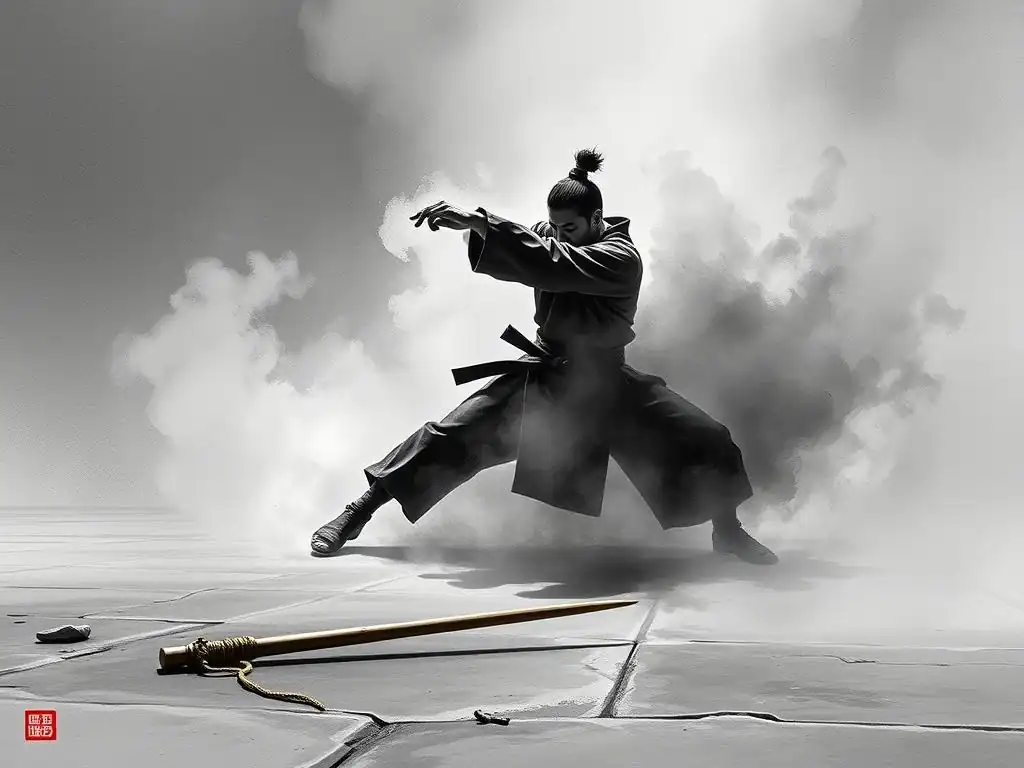
Assessing Threat Levels: A Psychological Evaluation
Assessing threat levels is a rapid psychological evaluation process that Wado-Ryu training helps refine. Based on the gathered sensory information and recognized indicators, the mind quickly evaluates the potential danger. This assessment isn't a conscious, step-by-step analysis in a high-stress moment, but a near-instantaneous judgment based on training and experience. Factors assessed include the aggressor's demeanor, physical cues, verbal threats, proximity, and the surrounding environment.
Wado-Ryu's emphasis on dynamic movement and adaptability prepares the practitioner to make quick judgments based on incomplete information. The psychological goal is to accurately determine if a situation requires avoidance, de-escalation, or physical response, and to gauge the necessary level of force. An inaccurate assessment – either overestimating or underestimating the threat – can have severe consequences. Training under pressure helps sharpen this intuitive psychological process, allowing for a more accurate "read" of the situation.
Reacting Under Pressure: Wado-Ryu's Mental Agility
Reacting under pressure requires significant mental agility, a trait fostered through consistent Wado-Ryu practice. The ability to shift strategies instantaneously based on an opponent's actions is crucial. Unlike static techniques, Wado-Ryu emphasizes fluid transitions and responses that adapt to the flow of conflict. This demands a psychological flexibility – the ability to abandon a planned technique if the situation changes and immediately transition to another.
Sparring ( kumite) is particularly effective in developing this mental agility. The unpredictable nature of a resisting opponent forces rapid problem-solving and adaptation. The Wado-Ryu principles of nagashi (flowing) and inashi (dodging) are physical manifestations of this mental agility, allowing the practitioner to yield, redirect, and counter rather than rigidly block or attack. This psychological adaptability means the practitioner isn't locked into a single course of action but can fluidly respond to the evolving dynamics of a confrontation.
Post-Incident Psychological Considerations in Wado-Ryu
While often overlooked, post-incident psychological considerations are important in self-defense, and Wado-Ryu's philosophy implicitly addresses them. Successfully navigating a confrontation, whether through avoidance, de-escalation, or physical means, can still leave psychological residue. The Wado-Ryu emphasis on minimal force and non-aggression can help mitigate potential trauma or guilt associated with having to use physical techniques. The principle of Wa encourages a mindset focused on restoring harmony, even after conflict.
Training also builds psychological resilience, helping individuals process stressful events. Reflecting on the incident, identifying what went well and what could be improved, is a natural extension of the learning process encouraged in Wado-Ryu. Furthermore, the supportive community often found in dojos provides a space for processing these experiences. While not formal therapy, the structured environment and shared practice can contribute to psychological recovery and growth after a high-stress event. This holistic view is part of the broader WadoRyu self defense psychology, acknowledging the mental impact of confrontation.
Wado-Ryu's Emphasis on Harmony and Non-Resistance: A Psychological Perspective
Minimizing Conflict Through Mental Discipline
Minimizing conflict is a primary psychological objective in Wado-Ryu, achieved through rigorous mental discipline. This discipline involves controlling one's own ego and emotional reactions. An untrained individual might react to provocation with anger or fear, escalating the situation. Wado-Ryu training cultivates a psychological distance from such immediate emotional responses, enabling a more strategic assessment and reaction. The principle of Wa is not just about physical movement but about a mental state that seeks equilibrium and avoids unnecessary friction.
This mental discipline allows the practitioner to choose de-escalation or strategic withdrawal over confrontation, even when physically capable of engaging. It requires suppressing the natural instinct to fight back aggressively when challenged. This psychological control is arguably more difficult than mastering physical techniques and is a hallmark of advanced Wado-Ryu self defense psychology. It reflects a deeper understanding that true mastery lies in avoiding the battle altogether when possible.
Utilizing Aiki Principles for Psychological Advantage
Wado-Ryu incorporates principles from Aiki (harmony of energy), primarily derived from its jujutsu roots. Psychologically, this involves understanding and influencing an opponent's intent and balance without direct opposition. Instead of bracing against force, the Wado-Ryu practitioner learns to blend with it, redirecting the aggressor's energy. This has a profound psychological impact on both parties.
For the practitioner, blending reduces the physical and psychological shock of impact and allows for more efficient use of energy. For the aggressor, their expected resistance is met with yielding, disrupting their psychological momentum and physical balance simultaneously. This unexpected lack of opposition can be disorienting and psychologically disarming. Techniques like nagashi (flowing) and inashi (dodging/weaving) are physical expressions of these Aiki principles, creating psychological confusion and opportunity by not being where the opponent expects resistance.
The Psychological Impact of Wado-Ryu's Fluid Movements
The fluid, natural movements characteristic of Wado-Ryu have a significant psychological impact on both the practitioner and an observer or aggressor. For the practitioner, these movements feel efficient and less draining than rigid, forceful techniques, contributing to a sense of control and sustainability in a prolonged encounter. The emphasis on natural body mechanics reduces unnecessary tension, allowing for clearer thinking.
From the perspective of an aggressor, the fluid, evasive movements can be psychologically frustrating. Meeting solid blocks or unmoving targets is expected; encountering someone who seems to disappear from where you aimed, or who redirects your force effortlessly, can be psychologically demoralizing and confusing. This unpredictability and elusiveness, rooted in Wado-Ryu's physical principles, create a psychological advantage by disrupting the aggressor's plan and confidence. It's a key aspect of the WadoRyu self defense psychology in action.
Enhancing Self-Confidence Through Wado-Ryu Training
Building Resilience and Mental Toughness
Building resilience and mental toughness is a direct outcome of consistent Wado-Ryu training, significantly enhancing self-confidence. Facing physical challenges, overcoming plateaus in learning, and sparring with more experienced partners teaches perseverance. Students learn to push past discomfort and frustration, developing a 'never give up' attitude that extends beyond the dojo. This process of overcoming physical and mental obstacles builds a deep-seated belief in one's ability to handle adversity.
The structured progression of Wado-Ryu, from basic movements to complex applications, provides a clear path of achievement. Each successfully learned technique, each belt promotion, reinforces the practitioner's capabilities. This cumulative experience of setting and achieving goals, coupled with learning to manage stress in sparring, cultivates mental toughness. This resilience is a critical component of WadoRyu self defense psychology, enabling individuals to remain calm and effective when faced with real-world threats.
Overcoming Mental Barriers in Self-Defense Scenarios
Wado-Ryu training helps practitioners overcome common mental barriers in self-defense scenarios, such as the freeze response or hesitation. Through repeated practice under simulated pressure, the gap between recognizing a threat and initiating a response is reduced. The physical techniques become ingrained through muscle memory, allowing for quicker reactions, but it is the psychological training that ensures these techniques can be accessed under stress.
Sparring, in particular, forces practitioners to make split-second decisions and act decisively. This repeated exposure to simulated conflict helps desensitize them to the fear that causes hesitation. The Wado-Ryu emphasis on natural movement and adapting to the opponent also reduces the psychological burden of trying to remember complex sequences; the focus is on applying principles (like evasive body movement or redirecting force) rather than executing a specific, rigid technique, which is easier to access under pressure. This systematic approach helps dismantle psychological blocks.
The Psychological Benefits of Mastering Wado-Ryu Techniques
Mastering Wado-Ryu techniques provides significant psychological benefits, primarily a profound increase in self-confidence. Knowing that you possess the skills to potentially defend yourself, coupled with the physical conditioning and mental discipline acquired through training, instills a quiet confidence. This isn't arrogance, but a realistic self-efficacy – a belief in one's own capabilities.
This enhanced self-confidence changes how an individual carries themselves. They are often more aware, project a less vulnerable demeanor, and are less likely to be targeted by potential aggressors who often look for signs of fear or weakness. Furthermore, this confidence empowers the individual to attempt de-escalation or avoidance strategies more readily, as they know they have physical options available if those fail. The psychological impact of competence gained through mastering Wado-Ryu is a powerful deterrent and a vital part of WadoRyu self defense psychology.
Applying Awareness and De-escalation: Real-World Scenarios

Consider a scenario on a crowded subway train where an individual exhibiting aggressive behavior begins to escalate verbally. Applying Wado-Ryu self defense psychology, the trained individual's first response is heightened awareness. They would assess the layout of the train car, identify potential exits or areas of relative safety, and observe the aggressor's body language and focus. They would avoid making direct eye contact that could be perceived as a challenge but maintain peripheral awareness.
The next step, consistent with Wado-Ryu principles, would be de-escalation and avoidance. This might involve subtly changing position to increase distance, moving towards an exit if feasible, or positioning other passengers or physical barriers (like poles or seats) between themselves and the aggressor.
If verbal aggression is directed at them, they might use calm, non-confrontational language or simply avoid engaging, demonstrating mental discipline by not reacting emotionally. Physical techniques are an absolute last resort, considered only if personal space is violated and there is an imminent threat of physical harm, and even then, the Wado-Ryu preference would be for control or escape rather than a full-blown fight.
Scenario: Responding to Verbal Aggression in a Professional Setting
In a professional environment, physical self-defense is rarely appropriate or necessary, making the psychological aspects of Wado-Ryu self-defense even more relevant. Imagine a colleague or client becoming verbally aggressive during a meeting. The Wado-Ryu practitioner would apply awareness by recognizing the escalating tone and body language as a potential pre-attack indicator, even if the "attack" is purely verbal or reputational in this context. They would mentally note the dynamics of the interaction and the presence of others.
De-escalation strategies are paramount here. This involves maintaining composure (mental discipline), using calm and measured language, actively listening without interrupting, and avoiding mirroring the aggressor's tone or intensity. The Wado-Ryu principle of non-resistance translates psychologically to not meeting aggression with counter-aggression, thus minimizing conflict. The goal is to defuse the situation using communication skills honed by the mental control developed in the dojo, preserving professional relationships and personal dignity without escalating to confrontation.
Scenario: Managing a Confrontation While Protecting Loved Ones
Protecting loved ones introduces a complex psychological dynamic, often overriding personal safety instincts. In a scenario where an aggressor threatens family members, Wado-Ryu self defense psychology guides the response towards strategic action driven by the principle of Wa – seeking the safest outcome for all. Awareness is critical: assessing the threat to each person, identifying escape routes for loved ones, and understanding the aggressor's focus.
The response would prioritize getting loved ones out of harm's way, potentially using verbal commands or physical shielding while attempting to de-escalate the aggressor if possible. If physical intervention is unavoidable to protect others, the Wado-Ryu practitioner would use techniques aimed at creating an opportunity for escape or controlling the aggressor with minimal necessary force, rather than engaging in a prolonged fight. The psychological shift is from self-preservation to protecting others, leveraging trained skills under immense emotional pressure, demonstrating resilience and decisive action rooted in the psychological preparedness fostered by training.
The Role of Mental Imagery in Wado-Ryu Self-Defense Training
Visualizing Successful Self-Defense Outcomes
Mental imagery, or visualization, plays a significant role in enhancing Wado-Ryu self defense psychology. Practitioners are encouraged to mentally rehearse techniques and scenarios. This involves vividly imagining successfully applying Wado-Ryu principles – seeing themselves calmly assessing a potential threat, smoothly evading an attack using taisabaki, effectively de-escalating a verbal confrontation, or executing a control technique to escape.
This practice helps build confidence and reinforces the learned responses. When faced with a real situation, the mind has already "practiced" a successful outcome, reducing hesitation and improving the likelihood of a positive response. It's a psychological tool that complements physical training, making the learned skills more accessible under pressure. Research in sports psychology supports the effectiveness of visualization in improving performance, and its application in martial arts is a natural extension, particularly for the unpredictable nature of self-defense.
Improving Reaction Time Through Mental Rehearsal
Mental rehearsal directly contributes to improving reaction time, a critical component of Wado-Ryu self defense psychology. By repeatedly visualizing responses to various stimuli – an aggressor's lunge, a grab, a verbal threat – the neural pathways associated with those responses are strengthened. This speeds up the recognition-response cycle.
While physical repetition builds muscle memory, mental rehearsal builds neurological memory, allowing the brain to process incoming information and trigger the appropriate physical or psychological response more quickly. In Wado-Ryu, this might involve visualizing the subtle shift in weight that precedes a punch and mentally triggering the appropriate taisabaki or redirection. This practice reduces the lag time between perceiving a threat and initiating a defensive action, making the practitioner more responsive and effective in critical moments.
Developing a Stronger Mental Game in Wado-Ryu
Ultimately, the integration of mental imagery and rehearsal helps develop a stronger "mental game" in Wado-Ryu. This encompasses not just technique recall but also emotional regulation, strategic thinking, and confidence under pressure. It's the psychological framework that supports the physical skills. A strong mental game means being able to stay calm when others panic, think clearly in chaotic situations, and trust one's training.
This psychological strength is arguably as important as physical prowess in self-defense. It allows the practitioner to make smart decisions, choose the most appropriate response (which is often non-physical), and persevere through difficult encounters. The WadoRyu self defense psychology, with its emphasis on awareness, de-escalation, and fluid adaptation, is deeply intertwined with cultivating this resilient and strategic mental state.
Conclusion: The Enduring Value of Wado-Ryu's Psychological Approach to Self-Defense
Integrating Mind, Body, and Spirit for Complete Self-Protection
Wado-Ryu offers a holistic approach to self-defense that integrates mind, body, and spirit, going beyond mere physical technique to achieve complete self-protection. The physical training builds strength, coordination, and muscle memory. The psychological principles cultivate awareness, mental discipline, emotional control, and strategic thinking. The philosophical underpinnings, particularly the principle of Wa, guide the practitioner towards harmony and minimizing conflict, fostering a peaceful spirit.
True WadoRyu self defense psychology recognizes that a physical confrontation is often the outcome of a failure in awareness, de-escalation, or psychological preparedness. By training all three aspects – mind, body, and spirit – the practitioner is equipped to handle potential threats at multiple levels, making physical techniques the last resort rather than the first. This integrated approach provides a more robust and sustainable form of self-protection.
Wado-Ryu as a Path to Personal Empowerment and Mental Well-being
Beyond its practical applications in self-defense, Wado-Ryu serves as a path to personal empowerment and mental well-being. The challenges overcome in training, the discipline acquired, and the skills mastered contribute significantly to self-esteem and confidence. Learning to manage fear and stress in a controlled environment translates to increased resilience in daily life.
The philosophical emphasis on harmony and self-improvement fosters a positive mental outlook. Practitioners often report reduced stress levels, improved focus, and a greater sense of calm. The physical activity itself is beneficial for mental health, and the supportive community aspect provides social connection. Thus, the WadoRyu self defense psychology is not just about surviving an attack, but about thriving in life with increased awareness, confidence, and mental fortitude.
Frequently Asked Questions
What is the central psychological principle behind WadoRyu self-defense?
WadoRyu emphasizes tai sabaki, or body shifting, not just as a physical technique, but as a way to avoid direct confrontation and disorient an attacker. This relies on understanding the attacker's intent and using awareness to preemptively neutralize threats.
How does WadoRyu training cultivate awareness for self-defense?
WadoRyu training incorporates kihon (basic techniques) and kata (forms) that are designed to develop heightened situational awareness and improve reaction time. Students learn to observe subtle cues and anticipate potential threats.
Does WadoRyu's self-defense philosophy focus on aggression or de-escalation?
WadoRyu prioritizes de-escalation and avoidance whenever possible. The ultimate goal is to resolve the situation peacefully, resorting to physical self-defense only as a last resort.
How does understanding an attacker's psychology benefit WadoRyu practitioners?
By understanding an attacker's motivations and thought processes, WadoRyu practitioners can anticipate their actions and exploit their weaknesses. This knowledge allows for more effective defensive strategies and proactive avoidance.
How does WadoRyu's emphasis on natural movement contribute to its self-defense effectiveness?
WadoRyu stresses natural and fluid movements, allowing practitioners to react quickly and efficiently without telegraphing their intentions. This emphasis on efficiency and adaptability is crucial in a self-defense situation.
Final Reflection: Embracing Awareness, Mastering Response
The principles of WadoRyu self-defense, as explored throughout this article, are not merely techniques confined to a dojo; they represent a profound philosophy of awareness and response that resonates deeply in our modern world. Cultivating a heightened sense of our surroundings and developing the mental fortitude to react decisively are skills that transcend physical combat, empowering us to navigate the complexities and potential dangers of everyday life with greater confidence and resilience. This is the enduring legacy of WadoRyu's approach to self-defense psychology.
The impact of WadoRyu extends beyond physical prowess, shaping a mindful approach to conflict resolution and personal safety. This journey into understanding the psychology behind WadoRyu has personally reinforced the importance of proactive awareness and the power of a calm, focused mind in the face of adversity. As Bruce Lee eloquently stated, Absorb what is useful, discard what is not, add what is uniquely your own.
This sentiment perfectly encapsulates the WadoRyu philosophy of adapting and evolving, not just in self-defense, but in all aspects of life.
Now, I invite you to reflect on the principles we've discussed. How can you integrate the concepts of awareness, controlled response, and mental preparedness into your daily routine? Consider how cultivating a more mindful approach to your surroundings can enhance your personal safety and overall well-being. Embrace the spirit of WadoRyu – not just as a martial art, but as a pathway to a more empowered and resilient you.
Embrace Your Inner Strength: Start Your Wado-Ryu Journey Now!
Thanks for diving into the psychology of self-defense and learning about Wado-Ryu's unique approach. We hope you've gained valuable insights into how awareness and thoughtful responses can empower you. Now, let's put that knowledge into action!
- Find a local Wado-Ryu dojo and attend a trial class – experience the art firsthand!
- Reflect on your daily routines and identify potential situations where increased awareness could improve your safety.
- Share this article with a friend or family member who might benefit from understanding the psychology of self-defense.
What's one small step you can take today to enhance your personal safety and peace of mind?