
ShitoRyu vs. Shotokan Kata: A Deep Dive into Lineage & Technical Nuances

Welcome to Martial Arts Mastery!
Ever wondered how two seemingly similar karate styles can express the same foundational kata in such different ways? This article delves into the fascinating world of karate lineage with a detailed ShitoRyu Shotokan kata comparison, exploring the subtle yet significant technical nuances that distinguish these two prominent styles. Prepare to uncover the historical roots and practical applications that shape the execution of these fundamental forms, leaving you with a deeper understanding of karate's rich tapestry. Continue reading to unlock the secrets!
- Understanding the Historical Lineage of Shito-Ryu and Shotokan Karate
-
Frequently Asked Questions
- What are the primary differences in the lineage of Shito-Ryu and Shotokan Karate katas?
- How do the stances generally differ between Shito-Ryu and Shotokan katas?
- What are some key technical nuances that distinguish Shito-Ryu kata from Shotokan kata?
- Are there any specific katas that are unique to either Shito-Ryu or Shotokan?
- How does the philosophy behind kata training differ in Shito-Ryu versus Shotokan?
- Final Reflection: The Enduring Legacy of Kata
- Evolve Your Kata: Embrace the Journey!
Understanding the Historical Lineage of Shito-Ryu and Shotokan Karate
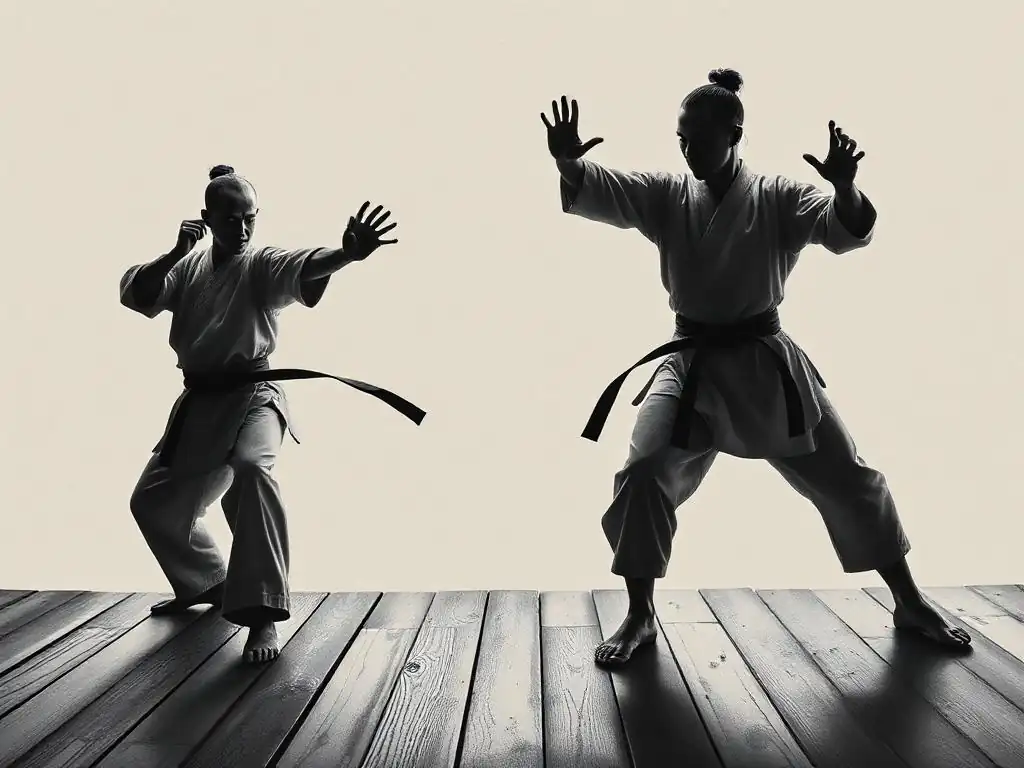
The Founding Fathers: Mabuni Kenwa (Shito-Ryu) and Funakoshi Gichin (Shotokan)
The distinct paths of Shito-Ryu and Shotokan karate, and consequently their kata repertoires, are intrinsically linked to the visions and training backgrounds of their founders. Mabuni Kenwa (1889–1952) is recognized as the architect of Shito-Ryu. Hailing from Shuri, Okinawa, Mabuni was a smaller man who dedicated his life to preserving and synthesizing the diverse martial traditions of the island.
He was a student of two of Okinawan karate's most prominent figures: Anko Itosu (a master of Shuri-te, known for developing Pinan/Heian kata) and Kanryo Higaonna (a master of Naha-te, focusing on powerful, internal styles like Sanchin). This dual tutelage provided Mabuni with an exceptionally broad understanding of Okinawan martial arts, forming the foundation for Shito-Ryu's extensive and varied kata collection.
Simultaneously, across the island, Funakoshi Gichin (1868–1957), a contemporary of Mabuni and also a student of Anko Itosu (and Anko Azato), was developing what would become Shotokan. Funakoshi, while deeply rooted in Shuri-te traditions, played a pivotal role in introducing Okinawan karate to mainland Japan in the early 20th century. His focus was initially on promoting karate as a form of physical and moral development, adapting techniques and kata for a broader audience.
Unlike Mabuni's goal of comprehensive preservation, Funakoshi streamlined and systematized the Okinawan forms he taught, emphasizing strong, linear movements and a limited, albeit rigorously practiced, set of kata. Understanding these founders' differing objectives is crucial for any ShitoRyu Shotokan kata comparison.
Tracing the Development of Kata in Each Style's History
The historical development of kata within Shito-Ryu directly reflects Mabuni Kenwa's encyclopedic approach to karate. He meticulously collected and documented kata from numerous Okinawan masters, resulting in a repertoire estimated to include over 60 formal kata, potentially reaching 100 when considering variations and kobudo forms. This vast collection includes forms originating from both Shuri-te (like Bassai Dai, Kanku Dai, Jion) and Naha-te (like Seienchin, Seipai, Sanchin), as well as forms Mabuni himself developed or synthesized (like Nipaipo).
The development wasn't just about quantity; Mabuni sought to understand the bunkai (application) of each kata, ensuring their practical relevance. This historical emphasis on breadth and detail shapes the unique character of Shito-Ryu kata practice, offering practitioners a deep dive into the diverse history of Okinawan karate.
In contrast, the historical trajectory of Shotokan kata development shows a different emphasis. Funakoshi Gichin, upon arriving in mainland Japan, initially renamed many Okinawan kata (e.g., Pinan became Heian, Kushanku became Kanku) and adapted them to fit a more standardized, physical education model prevalent at the time. He simplified some movements and emphasized strong, stable stances.
The core Shotokan kata curriculum, often cited as around 26 forms, evolved further through his son Yoshitaka Funakoshi and later generations, particularly within the Japan Karate Association (JKA) under figures like Nakayama Masatoshi. This development focused on refining power generation, expanding hip rotation, and standardizing performance criteria. While based on Okinawan roots, Shotokan kata developed a distinct aesthetic and execution style, prioritizing powerful, committed movements, which is a key point in any ShitoRyu Shotokan kata comparison.
Frequently Asked Questions
What are the primary differences in the lineage of Shito-Ryu and Shotokan Karate katas?
Shito-Ryu katas draw from both Naha-te and Shuri-te lineages, resulting in a more diverse kata syllabus. Shotokan katas are primarily derived from Shuri-te influence, with a more streamlined and standardized approach. This difference in origin affects the overall styles and techniques.
How do the stances generally differ between Shito-Ryu and Shotokan katas?
Shotokan katas often emphasize longer, lower stances for power generation, such as zenkutsu dachi. Shito-Ryu katas tend to utilize higher, more mobile stances, reflecting the influence of both Naha-te and Shuri-te. This allows for quicker transitions and adaptability.
What are some key technical nuances that distinguish Shito-Ryu kata from Shotokan kata?
Shito-Ryu kata often incorporate more circular movements and grappling techniques, reflecting its Naha-te roots. Shotokan kata generally focus on linear techniques and powerful strikes, emphasizing a direct and forceful approach. These fundamental differences impact the execution of each kata.
Are there any specific katas that are unique to either Shito-Ryu or Shotokan?
Yes, many katas are unique to each style. Shotokan features katas like Gojushiho Sho, while Shito-Ryu includes katas like Sochin which are not commonly found in the other style. The kata syllabus differences are a significant distinguishing factor.
How does the philosophy behind kata training differ in Shito-Ryu versus Shotokan?
Both styles emphasize self-discipline and character development, but the focus differs. Shotokan places emphasis on perfecting form and power, whilst Shito-Ryu focuses on adaptability and practical application of techniques. This shapes the training methodology.
Final Reflection: The Enduring Legacy of Kata
The preceding exploration of Shito-Ryu and Shotokan kata reveals more than just technical differences; it highlights the dynamic evolution of martial arts traditions and their continued relevance in a rapidly changing world. These forms, passed down through generations, are not static relics but living embodiments of philosophy, history, and physical prowess, offering invaluable lessons applicable far beyond the dojo.
The subtle nuances in stance, technique, and breathing, while seemingly minor, represent profound shifts in emphasis and intent. Understanding these distinctions allows us to appreciate the richness and diversity within karate, fostering a deeper respect for the art form and its practitioners. The ultimate aim of Karate lies not in victory nor defeat, but in the perfection of the character of its participants.
- Gichin Funakoshi. This quote underscores the importance of kata as a tool for self-improvement and character development, a principle that resonates deeply in today's world.
As you reflect on the Shito-Ryu Shotokan kata comparison, consider how the principles of discipline, precision, and mindful movement can be integrated into your own life. Whether you are a seasoned martial artist or simply seeking personal growth, embrace the spirit of continuous learning and strive to embody the dedication and perseverance exemplified by these timeless traditions. Let the legacy of kata inspire you to cultivate strength, focus, and a deeper understanding of yourself and the world around you.
Evolve Your Kata: Embrace the Journey!
Thank you for exploring the nuanced world of Shito-Ryu and Shotokan kata! We hope this deep dive has sparked a new appreciation for the history and technique within these distinct styles. Ready to take your understanding to the next level?
- Master a signature kata from the opposite style – Shito-Ryu if you're Shotokan, or vice versa – focusing on its historical context and unique applications.
- Share your own insights and interpretations of these kata in a video analysis on your preferred martial arts forum.
- Research and document the lineage of your own kata, tracing its origins and the masters who shaped its evolution.
Which subtle technique will you now focus on refining to deepen your understanding of your chosen style?