
Sport MMA vs. Street Reality: The Philosophical Divide in Martial Application

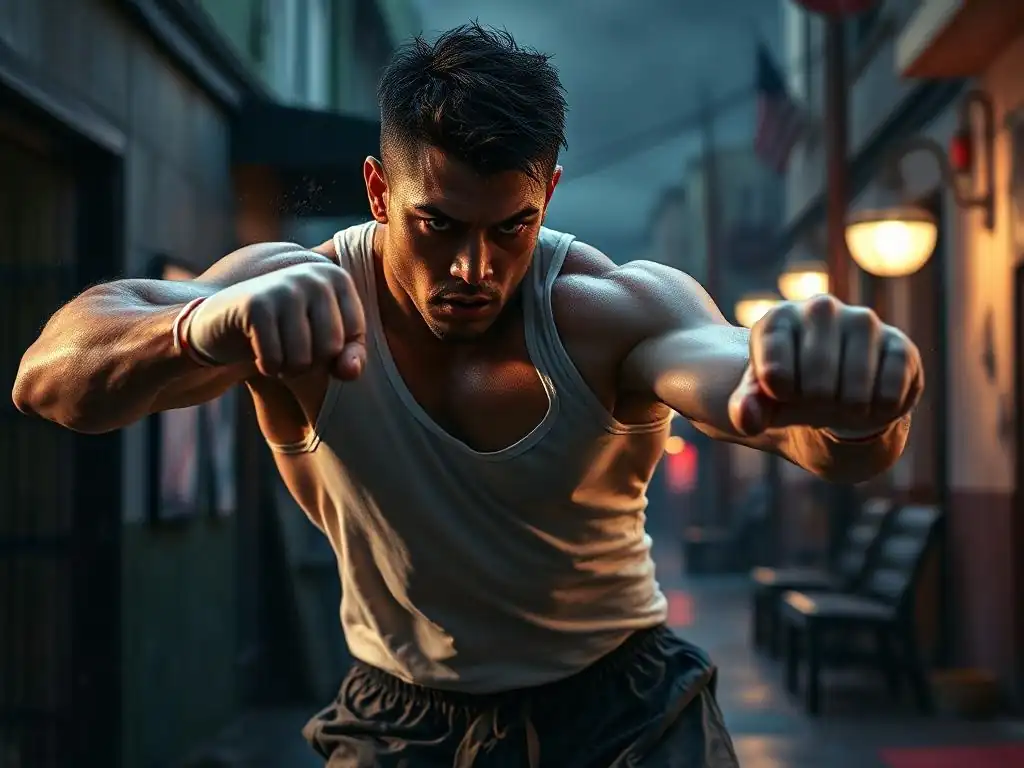
Welcome to Martial Arts Mastery, your gateway to understanding the rich tapestry of fighting traditions worldwide. Dive into the fascinating debate explored in our latest article: " Sport MMA vs. Street Reality:" What are the MMA philosophical application differences when comparing the controlled environment of the ring to the unpredictable chaos of real-world self-defense? Uncover the crucial distinctions that could reshape your training and understanding of martial arts effectiveness.
- Introduction: Bridging the Gap Between MMA and Real-World Self-Defense
- The Sport of MMA: Philosophical Underpinnings and Practical Applications
- Street Self-Defense: A Different Philosophical Landscape
- Training Methodologies: MMA vs. Street Preparedness
- Technique Adaptation: Translating MMA Skills to Street Scenarios
- The Psychological Dimension: Mental Fortitude in MMA and Self-Defense
- Case Studies: Examining Real-World Applications of MMA Principles
- The Importance of Context: A Philosophical Synthesis
- Conclusion: The Enduring Debate on MMA Philosophical Application Differences
-
Frequently Asked Questions
- What are the primary philosophical differences between sport MMA and real-world self-defense applications of martial arts?
- How does the training in sport MMA differ from training for practical self-defense scenarios?
- To what extent does the historical context of a martial art influence its philosophical application in either sport MMA or self-defense?
- Are there specific martial arts that lend themselves more readily to the philosophical underpinnings of sport MMA versus practical self-defense?
- How does understanding the philosophical divide between sport MMA and self-defense impact one's martial arts journey?
- Final Reflection: Bridging the Gap Between Ring and Reality
- Unleash Your Inner Warrior: Transform Knowledge into Action!
Introduction: Bridging the Gap Between MMA and Real-World Self-Defense
Mixed Martial Arts (MMA) has exploded in popularity over the past few decades, showcasing a dynamic blend of striking, grappling, and wrestling techniques within a regulated competitive environment. This evolution has undeniably advanced the technical understanding of combat sports. However, a significant discussion persists within the martial arts community regarding the extent to which skills honed for the sport of MMA translate directly to the unpredictable and often brutal realities of street self-defense. This debate highlights fundamental MMA philosophical application differences, revealing distinct objectives, mindsets, and methodologies inherent to each domain.
The core distinction lies not just in the techniques themselves, but in the underlying philosophy governing their application. Sport MMA operates within a framework designed for fair competition, safety (relative to unregulated combat), and entertainment. Street self-defense, conversely, is solely focused on survival, often against multiple attackers, weapons, or in adverse environmental conditions. Understanding this philosophical divide is crucial for practitioners seeking a comprehensive approach to martial application, whether their primary goal is competition, personal safety, or a blend of both.
The Core Philosophical Differences in Martial Arts Training
At its heart, the philosophy behind training for sport MMA is centered on mastering a diverse skill set to overcome an opponent under specific, agreed-upon conditions. Success is measured by winning bouts, adhering to rules, and demonstrating technical proficiency within those constraints. Training regimens are highly structured, focusing on performance metrics like striking accuracy, takedown defense percentage, or submission success rates. The entire process is geared towards peak performance on a specific date, against a known or anticipated opponent profile.
In stark contrast, the philosophical foundation of street self-defense training is rooted in immediate risk mitigation and survival. There are no rules, no referees, and no weight classes. The objective is not to win a match, but to escape harm, ideally without engaging in prolonged physical conflict. Training emphasizes awareness, de-escalation, pre-emption if necessary, and the brutal efficiency required to create distance or incapacitate a threat quickly. This philosophy prioritizes adaptation to chaos over adherence to structure, focusing on worst-case scenarios rather than controlled exchanges.
MMA: A Sport Evolved Under Rules and Regulations
The evolution of MMA from its early, less-regulated forms has been heavily shaped by the introduction and refinement of rules. Sanctioning bodies like the Unified Rules of Mixed Martial Arts dictate everything from round duration (typically three or five five-minute rounds) and allowed techniques (no eye gouging, groin strikes, etc.) to required safety equipment (gloves, mouthguards). This regulatory framework fundamentally influences strategy and technique. For example, the presence of rounds and judges encourages fighters to manage their energy and potentially fight for points if a finish isn't imminent.
The competitive structure also fosters specific tactical approaches. Fighters develop detailed game plans based on their opponent's strengths and weaknesses, often focusing on exploiting specific technical matchups. Training camps involve specialized coaching for striking, wrestling, and jiu-jitsu, tailored to the demands of a professional fight against a particular individual. The financial incentives and career progression within the sport further reinforce this performance-oriented philosophy, driving athletes to specialize and optimize their skills for the competitive arena.
Street Reality: Unpredictability and the Absence of Rules
Street reality operates entirely outside the confines of rules and regulations. An attack can occur anywhere – in a dark alley, a crowded public space, or even one's own home. The attacker may be under the influence of substances, armed with a weapon (knife, gun, blunt object), or acting as part of a group. There are no weight classes, no time limits, and no expectation of fair play. This inherent unpredictability demands a philosophy centered on adaptability, improvisation, and survival by any means necessary.
Unlike the one-on-one structure of an MMA bout, street encounters often involve multiple assailants, environmental hazards (concrete, stairs, obstacles), and the element of surprise. A self-defense scenario might begin with a verbal confrontation that escalates rapidly, or a sudden, unprovoked assault. The priority shifts from executing complex techniques perfectly to doing whatever is required to escape or neutralize the immediate threat as quickly as possible. This could involve striking vulnerable targets, using improvised weapons, or simply running away – actions often penalized or disallowed in sport.
The Sport of MMA: Philosophical Underpinnings and Practical Applications
The philosophy underpinning sport MMA is intrinsically linked to the pursuit of athletic excellence and strategic dominance within a defined combat system. It's about proving superiority through skill, conditioning, and tactical execution under pressure. This philosophy drives specific practical applications in training and competition, creating a distinct martial discipline separate from traditional or self-defense-focused arts. The MMA philosophical application differences are most evident in how practitioners view engagement and victory.
Training is a rigorous, scientific process. Athletes track metrics like heart rate variability, power output in strikes, and recovery times. Nutritional plans and strength and conditioning are meticulously managed. The focus is on maximizing physical attributes and technical efficiency for a specific type of engagement – a consensual, observed fight against a similarly trained opponent. This environment allows for deep specialization in areas like cage wrestling, guard passing from a sporting perspective, or setting up specific knockout combinations, all within the context of anticipating an opponent who is also operating under the same rule set.
The Competitive Spirit: How MMA Philosophies Drive Training
The competitive spirit is the engine of MMA training philosophy. It instills a drive to constantly improve, analyze performance, and adapt to evolving strategies within the sport. Athletes are motivated by the goal of winning titles, earning recognition, and building a professional career. This fosters a culture of intense dedication, often involving multiple training sessions per day, focusing on different aspects of the game – striking drills in the morning, grappling in the afternoon, strength and conditioning in the evening.
This drive for competition also shapes the tactical philosophy. Fighters and coaches spend countless hours studying opponents, identifying patterns, and developing specific game plans. They analyze fight footage, track statistics (e.g., opponent's takedown defense is 65%, preferred striking range is 3-4 feet), and simulate scenarios they expect to encounter in the cage. The entire training cycle is dictated by the upcoming fight, emphasizing opponent-specific preparation over generalized combat readiness. This highly focused approach is a direct result of the competitive philosophy.
The Role of Rules in Shaping MMA Strategy and Technique
Rules are not merely constraints in MMA; they are fundamental architects of its strategy and technique. The unified rules, for instance, significantly impact grappling exchanges. The allowance of ground and pound changes the dynamics of being in certain positions compared to pure sport jiu-jitsu. The prohibition of knees or kicks to a downed opponent's head alters offensive and defensive strategies on the ground. Similarly, the standing eight count (though less common now) or mandatory standing after a period of inactivity on the ground influences fighters' urgency and positional choices.
Consider the clinch game. In MMA, the presence of the cage wall becomes a crucial element. Fighters train extensively in using the cage for control, takedowns, and defense. This is a technique and strategic layer completely absent in arts like wrestling or Muay Thai when practiced outside an enclosed space. Furthermore, the scoring system (10-point must system in most promotions) encourages fighters to prioritize actions that judges value, such as effective striking, grappling, control, and aggression. This shapes everything from when a fighter attempts a takedown to how they manage the final minute of a round.
Analyzing the MMA Mindset: Adaptation and Game Planning
The MMA mindset is a complex blend of discipline, resilience, and strategic thinking. Fighters must be adaptable, capable of switching between striking, wrestling, and grappling seamlessly, often within seconds. They train to handle adversity, whether it's being dropped by a punch, caught in a submission attempt, or simply being exhausted in the later rounds. This requires immense mental toughness, cultivated through rigorous training and sparring that simulates fight conditions.
Beyond resilience, the MMA mindset is defined by its emphasis on game planning. Elite fighters don't just react; they execute strategies developed long before the cage door closes. This involves anticipating an opponent's moves, setting traps, and exploiting weaknesses. For example, a fighter might train extensively on defending leg kicks if their opponent is known for them, or practice specific entries for takedowns if they identify a weakness in the opponent's stance. This level of analytical preparation and tactical execution is a hallmark of the modern MMA philosophy.
Street Self-Defense: A Different Philosophical Landscape
Street self-defense operates under a completely different philosophical banner than sport. Its sole purpose is survival and escape, not victory or points. This fundamental difference shapes every aspect of training and application, revealing profound MMA philosophical application differences when compared to real-world threats. The landscape is defined by unpredictability, asymmetry, and the absolute absence of rules or fair play.
The philosophy of street self-defense prioritizes awareness, avoidance, and de-escalation as the primary lines of defense. Physical confrontation is the last resort. When physical engagement is unavoidable, the philosophy dictates using overwhelming force to end the encounter as quickly as possible, focusing on vulnerable targets and utilizing any available means, including improvised weapons or environmental factors. This pragmatic, results-oriented approach stands in stark contrast to the structured, performance-based philosophy of sport.
The Primacy of Survival: A No-Holds-Barred Approach
The core philosophical tenet of street self-defense is the primacy of survival. Everything else is secondary. This means that techniques or actions that would be illegal or frowned upon in sports – like eye gouges, groin strikes, biting, or striking a downed opponent repeatedly – are not only permissible but potentially necessary for survival. The objective is simply to stop the threat by any means, allowing the defender to escape to safety.
This no-holds-barred approach influences training significantly. While sport fighters might focus on technical submissions, a self-defense practitioner might prioritize breaking grips to escape or using strikes to create space. The concept of "winning" the fight is irrelevant; the goal is to survive the encounter. This might mean temporarily incapacitating an attacker to run away, rather than attempting to control or submit them. The philosophy is purely defensive and survival-oriented, accepting that the 'fight' is over when the threat is neutralized or the defender has safely escaped.
Understanding the Improvised Nature of Street Combat
Street combat is inherently improvised. Unlike a scheduled MMA bout in a controlled environment, a street attack can happen anywhere – a slippery sidewalk, a narrow hallway, inside a vehicle. The attacker's intent, skill level, and physical state are unknown. They may be armed, high on drugs, or simply much larger or stronger than the defender. This unpredictable nature demands a philosophy of adaptability and resourcefulness.
Training for street reality often involves scenario-based drills that simulate these chaotic conditions. Practitioners learn to use their surroundings to their advantage – using objects as improvised weapons (a chair, a bottle), using walls for leverage, or navigating uneven terrain while defending themselves. The focus is less on executing perfect, textbook techniques and more on applying principles under duress, adapting to whatever the environment and the attacker present. This emphasis on improvisation is a key differentiator in the street self-defense philosophy.
The Ethical Considerations of Self-Defense Philosophies
While survival is paramount, street self-defense also involves significant ethical and legal considerations that are largely absent in sport. The philosophy must include understanding the appropriate level of force required to stop a threat and the potential legal consequences of using force, especially lethal force. This adds a layer of complexity that sport combat doesn't require.
Philosophically, self-defense teaches the responsible use of force. It's not about aggression or seeking confrontation, but about protecting oneself and others from harm. Training often includes discussions about de-escalation, verbal judo, and the legal framework surrounding self-defense in one's jurisdiction. The ethical philosophy is to use the minimum force necessary to neutralize the threat and ensure safety, understanding the gravity of potentially causing serious harm or death. This nuanced understanding is a critical component of a comprehensive self-defense philosophy.
Training Methodologies: MMA vs. Street Preparedness
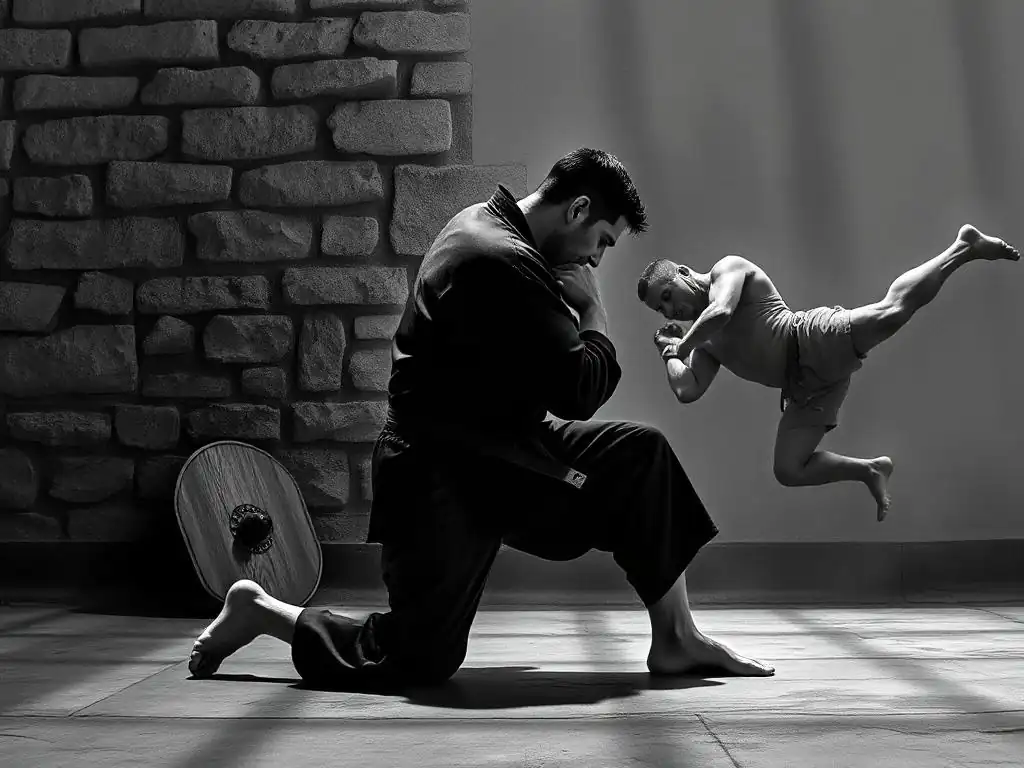
The divergent philosophies of sport MMA and street self-defense naturally lead to different training methodologies. While there can be overlap in fundamental techniques (striking, grappling), the emphasis, context, and specific drills differ significantly. Examining these methodologies further highlights the MMA philosophical application differences and how they manifest in practical training.
MMA training is characterized by structured sparring, specialized coaching, and a focus on performance metrics within the rule set. Street self-defense training, conversely, often incorporates scenario-based drills, awareness exercises, and a focus on gross motor skills and immediate threat neutralization. Both approaches aim to prepare the practitioner for combat, but the nature of that combat dictates the training priorities and methods.
Structured Sparring in MMA: Honing Skills Within a Framework
Structured sparring is the cornerstone of MMA training. It allows practitioners to test techniques, timing, and strategy against live, resisting opponents in a relatively safe environment. Sparring sessions are typically conducted with protective gear (gloves, shin guards, mouthguards, headgear) and under the supervision of coaches who monitor intensity and ensure adherence to training goals. This methodology allows fighters to refine their skills, improve conditioning, and develop fight IQ within the constraints of the sport's rules.
Sparring rounds often simulate fight conditions, lasting for the same duration as a competitive round. Coaches might provide specific instructions, such as focusing on takedown defense, working from the clinch, or practicing specific striking combinations. While intense, the presence of rules (no illegal strikes, stopping when a submission is locked in) and the understanding that it is training, not a real fight, allow for a focus on technical execution and strategic development without the immediate, high-stakes consequences of a real-world attack.
Scenario-Based Training: Preparing for Unpredictable Street Encounters
Scenario-based training is a critical methodology for street self-defense preparedness. Instead of structured rounds with clear objectives, these drills simulate real-world attack scenarios, often starting from unexpected positions or situations. This might involve defending against an ambush from behind, dealing with multiple attackers, or handling a threat while seated or in a confined space. The goal is to train reaction time, decision-making under stress, and the application of gross motor skills in chaotic, unpredictable conditions.
These scenarios often incorporate elements like low light, uneven surfaces, or the presence of simulated weapons. Practitioners learn to identify threats, create distance, use their environment, and apply techniques with the necessary aggression and finality to stop the attack and escape. This methodology emphasizes psychological preparation – managing fear and adrenaline – as much as physical technique, acknowledging that the mental aspect is crucial in a real-life confrontation.
Bridging the Gap: Incorporating Street Awareness into MMA Training
While distinct, there is a growing recognition within the martial arts community of the value in bridging the gap between sport and self-defense training. Some MMA gyms are beginning to incorporate elements of street awareness and scenario-based drills into their programs, particularly for those interested in self-protection beyond competition. This involves acknowledging the MMA philosophical application differences and actively working to address the limitations of a purely sport-focused approach.
This might include training without gloves occasionally to understand the impact of bare-knuckle strikes, practicing defenses against common street weapons (simulated), or incorporating drills that involve dealing with multiple opponents. While the primary focus for competitive fighters remains the sport, adding these elements can provide a more holistic understanding of martial application and improve overall combat readiness, recognizing that even the most skilled athlete is not immune to a real-world threat.
Technique Adaptation: Translating MMA Skills to Street Scenarios
Many fundamental techniques found in MMA have roots in traditional martial arts and can be highly effective in self-defense. However, their application often requires significant adaptation when transitioning from the controlled environment of the cage to the unpredictable reality of the street. Understanding these necessary modifications is key to leveraging MMA skills for self-protection and navigating the MMA philosophical application differences in practical terms.
A powerful cross or a well-timed double-leg takedown are valuable skills, but their execution and follow-up must change dramatically when the ground isn't a padded mat and the opponent might have friends or a weapon. Adapting techniques involves considering factors like footwear, clothing, environmental hazards, and the potential for escalation beyond a one-on-one physical exchange.
Striking: Modifying Techniques for Maximum Impact in Self-Defense
MMA striking techniques, such as jabs, crosses, hooks, uppercuts, elbows, knees, and kicks, are powerful tools. However, in a street fight, the goal isn't to score points or set up a later combination; it's to stop the threat immediately. This often requires targeting vulnerable areas that are illegal in sport, such as the eyes, throat, or groin. Strikes might also need to be delivered with maximum force in the first instance, rather than setting up a knockout blow through a series of exchanges.
Furthermore, considerations like hitting someone with shoes on (risking foot injury with kicks) or the danger of falling onto a hard surface after throwing a powerful strike become critical. Self-defense striking emphasizes gross motor movements under stress and using strikes to create distance or escape, rather than engaging in prolonged exchanges. Simple, powerful tools like palm heel strikes or hammer fists might be prioritized over complex boxing combinations due to their reliability under duress and potential for immediate effect.
Grappling: Adapting Ground Game for Concrete and Multiple Attackers
MMA ground grappling is highly sophisticated, involving complex transitions, positional control, and submission chains. However, taking a fight to the ground on concrete or asphalt is extremely dangerous due to the risk of head injury from impact. Furthermore, being on the ground makes a defender highly vulnerable to multiple attackers who can kick or stomp without fear of being tangled in the ground fight.
Therefore, adapting MMA grappling for the street means prioritizing techniques that keep the fight standing or allow for rapid return to the feet. Takedown defense becomes paramount. If a takedown occurs, the focus shifts from achieving dominant position for ground and pound or submissions to escaping the ground as quickly and safely as possible.
Submissions might be used only as a last resort to create a momentary opening for escape, and techniques like guard retention from the sport context are less viable when facing stomps from multiple angles. The philosophy shifts from control and submission to immediate disengagement from the ground.
Weaponry: Addressing the Threat of Weapons in Street Combat
One of the most significant MMA philosophical application differences compared to street reality is the near-total absence of weapon threats in sport. While MMA fighters train extensively to defend against unarmed attacks, they rarely, if ever, drill against knives, guns, or blunt objects – common elements in street assaults. Addressing the threat of weaponry requires a completely different philosophical and technical approach.
Self-defense training includes recognizing potential weapons, understanding attack vectors (e.g., common knife attack angles), and practicing defenses specifically designed for weapon threats. This might involve using improvised shields, employing disarming techniques (which are extremely high-risk and often a last resort), or using striking/grappling to create space to escape rather than engaging directly with the weapon. A skilled MMA fighter's technical prowess is significantly challenged by the introduction of a weapon, highlighting the need for specialized training outside the sport context.
The Psychological Dimension: Mental Fortitude in MMA and Self-Defense
Beyond technique and strategy, the psychological aspect is a critical component of both MMA and street self-defense, though the nature of the mental challenge differs based on the context. Understanding these psychological MMA philosophical application differences is crucial for practitioners to be truly prepared for either scenario.
MMA demands mental toughness to endure grueling training camps, manage fight-day pressure, and overcome adversity within a competitive structure. Street self-defense requires a different kind of mental fortitude: the ability to manage intense fear, make rapid life-or-death decisions under extreme stress, and react effectively to unexpected violence.
Mental Toughness in Competition: Overcoming Adversity in the Ring
MMA fighters cultivate mental toughness to push through physical exhaustion, absorb strikes, escape bad positions, and maintain focus over multiple rounds. This is honed through intense sparring, conditioning drills that push physical limits, and the psychological pressure of performance in front of crowds and cameras. Fighters learn to silence self-doubt, maintain composure when hurt, and stick to a game plan even when things aren't going their way.
This mental resilience allows fighters to recover from knockdowns, survive submission attempts, and dig deep in championship rounds. It's a toughness built for sustained, high-intensity effort against a single, similarly trained opponent within a controlled environment. The pressure is immense, but it's a pressure related to performance and outcome within a sporting context.
Fear Management in Self-Defense: Controlling Panic and Reacting Effectively
Fear management is perhaps the most critical psychological skill in street self-defense. Unlike the controlled anxiety of competition, a real-world attack triggers a primal fear response (fight, flight, or freeze) that can overwhelm rational thought and physical capability. Training aims to inoculate individuals against this panic, allowing them to access their training under extreme stress.
This involves scenario-based training that simulates the adrenaline dump and cognitive impairment caused by fear. Practitioners learn to recognize their physiological response (tunnel vision, auditory exclusion, trembling) and push through it to take action. The philosophy is not to eliminate fear, but to control it and channel the adrenaline into effective action – whether that's running, screaming, or fighting back with explosive force.
Cultivating Situational Awareness: Proactive Self-Defense Strategies
Situational awareness is a proactive psychological skill paramount in street self-defense, less emphasized in the reactive environment of the MMA cage. It involves constantly observing one's surroundings, identifying potential threats before they materialize, and recognizing pre-cursors to violence. This allows a person to avoid dangerous situations entirely or be prepared to act if avoidance is impossible.
This mental discipline involves scanning environments, noticing anomalies, trusting intuition, and having an exit strategy. While MMA fighters have "cage awareness" – knowing their position relative to the fence and opponent – street awareness is broader, encompassing people, objects, environmental factors, and potential escape routes in any given public or private space. It's a defensive mindset that prioritizes avoiding the fight altogether, a core philosophical difference from the competitive mindset of MMA.
Case Studies: Examining Real-World Applications of MMA Principles

Examining real-world incidents, even approximated or generalized cases, can provide valuable insights into the practical application of MMA principles in self-defense scenarios and highlight the existing MMA philosophical application differences when theory meets reality. While specific documented cases of professional MMA fighters using their skills in street altercations are relatively rare and often legally complex, hypothetical or generalized scenarios based on common street threats offer illustrative examples.
These case studies can demonstrate where MMA skills prove highly effective (e.g., dealing with an untrained aggressor) and where they might fall short or even be detrimental (e.g., attempting complex ground work on concrete against multiple opponents). Analyzing these situations helps refine our understanding of how techniques and philosophies translate across these distinct domains.
Analyzing MMA Fighters in Self-Defense Situations
While difficult to cite specific, legally verified cases without risking misrepresentation or privacy issues, general scenarios discussed in martial arts circles involve professional fighters intervening in altercations. For example, a common hypothetical involves a trained fighter facing a single, untrained aggressor in a standing confrontation. In such a scenario, the fighter's superior striking technique, timing, distance management, and ability to generate power are likely to be overwhelmingly effective, potentially ending the confrontation quickly with minimal force relative to their full capability. Their ability to maintain composure under pressure, honed in competition, also plays a crucial role.
Conversely, consider a scenario where a fighter is ambushed by multiple attackers. Their high-level, one-on-one striking and grappling skills, developed for single opponents, are immediately challenged. Attempting to engage one attacker might leave them vulnerable to others. Taking the fight to the ground, a strength in MMA, becomes a significant liability. This highlights that while the athleticism and toughness of an MMA fighter are assets, the specific techniques and strategies optimized for sport require significant adaptation or may be inappropriate for a multiple-attacker scenario.
Examining Cases Where Specific MMA Techniques Proved Effective
Certain fundamental MMA techniques, when adapted, can be highly effective in self-defense. A strong defensive stance and fundamental boxing or Muay Thai defense (blocking, slipping) can mitigate incoming strikes from an untrained attacker. A basic level change and double-leg takedown, while risky on hard surfaces, can be used to drive an aggressor away or into an obstacle, creating space to escape. Simple, powerful strikes like a cross or hook, aimed at vulnerable targets (if necessary for survival), can quickly incapacitate a threat.
Even basic jiu-jitsu principles, like maintaining posture or achieving a basic mount, can be useful if the fight goes to the ground, but the application must be adapted – focusing on quick escapes or creating opportunities to stand up, rather than securing a submission or advancing position for sport points. For example, using a basic guard to create space and stand up is far more relevant than attempting a complex sweep or submission chain. The effectiveness lies in the principle of the technique (e.g., generating power, controlling posture, escaping grips), adapted for the brutal reality of the street.
Learning from Failures: Identifying Limitations of MMA in Uncontrolled Environments
Just as important as understanding successes is recognizing the limitations of a purely MMA skillset in uncontrolled environments. Attempting complex submissions that require control and time (like an armbar from guard) is generally impractical and dangerous on the street. Engaging in prolonged ground fighting leaves one exposed to environmental hazards and multiple threats. Relying solely on sport-specific striking defenses (like rolling with punches without protecting the head from hard surfaces) can be disastrous.
Furthermore, the lack of training against weapons is a critical gap. An elite striker's ability to defend against punches is largely irrelevant against a knife thrust or a gun. The philosophical reliance on a fair, one-on-one contest in MMA does not prepare practitioners for an aggressor who doesn't respect rules, uses weapons, or attacks from ambush. These potential points of failure underscore the MMA philosophical application differences and the necessity of augmenting a sport background with self-defense specific training and mindset.
The Importance of Context: A Philosophical Synthesis
Ultimately, the debate over sport MMA versus street reality is not about which is "better," but about understanding the importance of context and the inherent MMA philosophical application differences. Both domains offer valuable lessons and skills, but they serve distinct purposes and demand different approaches. A comprehensive understanding of martial application requires recognizing the strengths and weaknesses of each and developing a holistic philosophy that integrates relevant aspects of both.
This synthesis involves appreciating the technical depth and physical conditioning fostered by sport while simultaneously embracing the survival-oriented mindset, awareness, and pragmatic techniques necessary for self-protection. It's about being a well-rounded martial artist, capable of performing in a competitive arena or defending oneself effectively in a dangerous situation, understanding that the rules of engagement and the definition of success change entirely between the two.
Recognizing the Strengths and Weaknesses of Both Approaches
Sport MMA's strengths lie in developing incredible physical conditioning, technical proficiency across multiple ranges (striking, wrestling, grappling), mental toughness under pressure, and strategic game planning against a skilled opponent. Its weaknesses, from a self-defense perspective, include its reliance on rules, the absence of weapon defense training, the danger of ground fighting on hard surfaces, and the potential for techniques optimized for sport to be impractical or dangerous in a chaotic, unpredictable environment.
Street self-defense's strengths are its focus on awareness, avoidance, de-escalation, immediate threat neutralization, and adaptability to unpredictable conditions, including weapons and multiple attackers. Its weaknesses can include a lack of emphasis on structured sparring (which hones timing and technique against resistance), less focus on peak physical conditioning compared to elite athletes, and potentially less technical depth in specific ranges compared to specialized sport practitioners. Recognizing these trade-offs is essential for any martial artist.
Developing a Holistic Martial Arts Philosophy
Developing a holistic martial arts philosophy means drawing valuable lessons from both sport and self-defense perspectives. It involves appreciating the discipline and skill refinement of MMA while integrating the pragmatism and survival focus of street preparedness. This philosophy acknowledges that martial arts are tools, and the effective use of those tools depends entirely on the situation and the goal.
A holistic philosophy might emphasize:
- Fundamental, high-percentage techniques applicable in multiple contexts.
- Physical conditioning for resilience.
- Mental preparedness for both competition pressure and survival stress.
- Awareness and de-escalation as the first lines of defense.
- Understanding the legal and ethical implications of using force.
- Continuous learning and adaptation.
This integrated approach moves beyond the binary of sport versus street, seeking a deeper understanding of combat applicable to various challenges.
Integrating MMA Skills and Street Smarts for Comprehensive Self-Protection
True comprehensive self-protection comes from integrating the physical skills honed in disciplines like MMA with the awareness, mindset, and tactics specific to street safety. A skilled MMA fighter possesses a formidable physical base, but needs to layer on "street smarts" – the ability to read situations, avoid danger, and apply their skills with a survival-first mentality, adapting techniques for the harsh realities of concrete, weapons, and multiple opponents.
Conversely, someone trained primarily in self-defense can benefit immensely from incorporating structured training against resisting opponents (sparring) to test techniques under pressure and improve timing and conditioning. The goal is to be physically capable and mentally prepared, combining the athletic prowess and technical depth often found in sport with the practical awareness and brutal efficiency required for survival. This integration represents a powerful synthesis of the different philosophical applications of martial arts.
Conclusion: The Enduring Debate on MMA Philosophical Application Differences
The discussion surrounding the MMA philosophical application differences relative to street self-defense is an enduring and vital one within the martial arts community. It highlights the fundamental divergence between a discipline evolved for competitive sport under rules and a approach solely focused on survival in chaotic, unregulated environments. While MMA provides incredible physical and technical skills, its translation to street reality is not direct and requires significant adaptation of techniques, strategy, and mindset.
Ultimately, the most effective approach for personal safety involves understanding the strengths and weaknesses of both philosophies. Sport provides a rigorous framework for developing peak physical performance and technical mastery against resisting opponents. Self-defense provides the crucial context of awareness, avoidance, de-escalation, and the pragmatic application of force when necessary, acknowledging the unpredictable and dangerous nature of real-world threats.
Integrating the physical prowess and mental toughness of MMA with the situational awareness and survival philosophy of street self-defense offers the most comprehensive path to martial application and personal security. The debate continues to refine how practitioners train, ensuring martial arts remain relevant and effective tools for both sport and survival.
Frequently Asked Questions
What are the primary philosophical differences between sport MMA and real-world self-defense applications of martial arts?
Sport MMA prioritizes rules-based competition and athletic performance, while self-defense focuses on survival and neutralizing threats quickly and effectively, often outside the bounds of formalized rules.
How does the training in sport MMA differ from training for practical self-defense scenarios?
Sport MMA training emphasizes sparring and competition-specific drills, while self-defense training focuses on realistic scenarios, threat assessment, and de-escalation techniques, often with less emphasis on prolonged engagements.
To what extent does the historical context of a martial art influence its philosophical application in either sport MMA or self-defense?
The historical context shapes the underlying principles and intent of a martial art. This historical foundation can influence its application, with some arts being more readily adapted to sport while others retain a stronger self-defense focus based on their original purpose.
Are there specific martial arts that lend themselves more readily to the philosophical underpinnings of sport MMA versus practical self-defense?
Yes, styles like Brazilian Jiu-Jitsu and Wrestling are often adapted well to sport due to their emphasis on grappling and control. Arts such as Krav Maga and Wing Chun emphasize rapid neutralization and self-preservation in unpredictable environments.
How does understanding the philosophical divide between sport MMA and self-defense impact one's martial arts journey?
Understanding this divide allows for informed training choices, enabling practitioners to align their training with their personal goals and desired application of martial arts, be it competition, self-protection, or personal development.
Final Reflection: Bridging the Gap Between Ring and Reality
The exploration of MMA's philosophical application differences, as we've seen, reveals a crucial distinction between the controlled environment of sport and the unpredictable chaos of real-world self-defense. This distinction, often overlooked, highlights the inherent limitations of any single martial art system when faced with the complexities of genuine conflict. Understanding these limitations is not a condemnation of MMA, but rather an acknowledgment of the diverse contexts in which martial skills are employed.
The ongoing debate surrounding MMA's effectiveness in street scenarios has profoundly impacted the way we perceive martial arts training. It forces us to confront the uncomfortable truth that technique alone is insufficient; adaptability, awareness, and a deep understanding of human psychology are equally vital. This realization has led to a resurgence of interest in more holistic approaches to self-defense, emphasizing de-escalation, situational awareness, and the ethical considerations of using force. The best fight is the one you avoid.
This timeless wisdom underscores the importance of prioritizing prevention and de-escalation over physical confrontation whenever possible.
Now, consider the implications of this philosophical divide in your own life. How can you cultivate a more nuanced understanding of martial application, one that transcends the limitations of any single system? Embrace the spirit of continuous learning, seeking knowledge from diverse sources and challenging your own assumptions. By fostering a mindset of adaptability and ethical responsibility, you can transform your martial arts journey into a path of personal growth and empowerment, both inside and outside the ring.
Unleash Your Inner Warrior: Transform Knowledge into Action!
Thank you for diving deep into the philosophical nuances of MMA and street self-defense. Now that you understand the distinctions, let's translate that insight into tangible improvements in your training and approach.
Here's how to make the most of this newfound understanding:
- Reflect on your current training: Identify 2-3 techniques you've learned primarily for sport and consider how you might adapt them for a real-world self-defense scenario. Focus on practicality and efficiency.
- Explore the applications of grappling: Look beyond takedowns and submissions. Research unconventional grappling-based escape and control techniques suitable for chaotic environments.
- Share your insights: Discuss your reflections on MMA and self-defense with training partners. Creating a dialogue can help you refine your approach to training.
What specific technique are you most eager to adapt for real-world self-defense, and why?