
Strength Training Regimen for Shaolin Long Fist Martial Artists

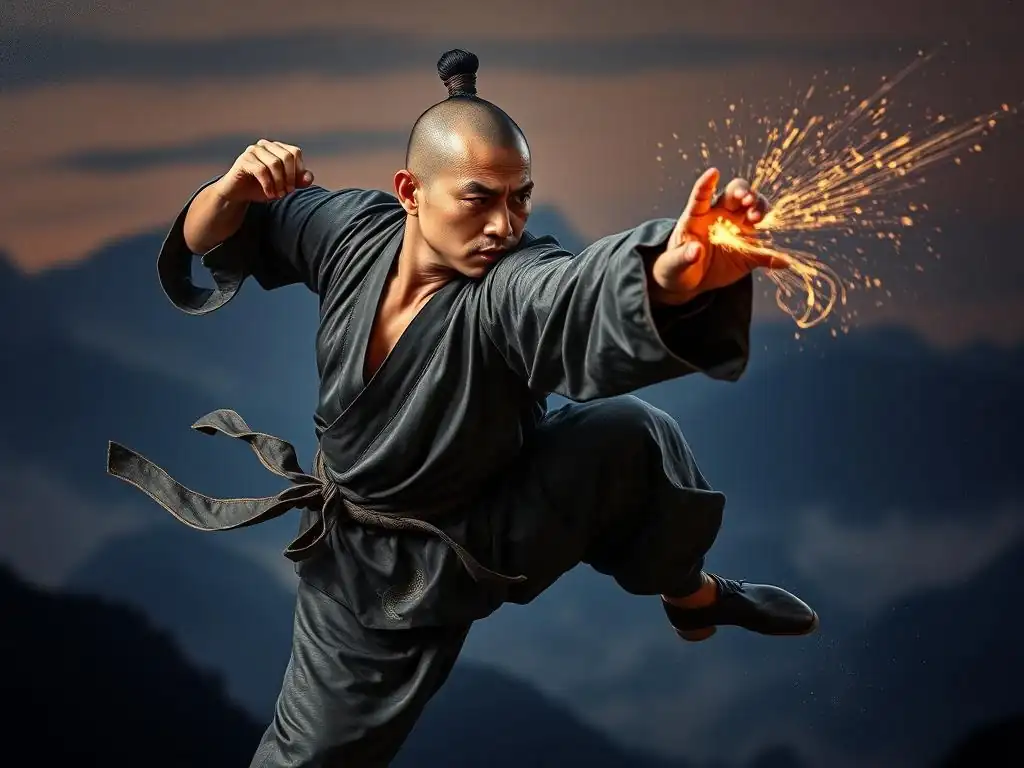
Welcome to Martial Arts Mastery!
Delve into the world of disciplined strength and fluid power. Ever wondered how Shaolin monks cultivate the explosive force behind the iconic Long Fist style? This article unveils the secrets of a specialized Shaolin Long Fist strength training regimen, exploring time-tested techniques that build not just muscle, but true martial prowess. Discover the exercises, philosophies, and dedication required to unlock your inner potential and elevate your practice. Prepare to be inspired!
- Introduction to Shaolin Long Fist and Strength Training
- Key Principles of Strength Training for Long Fist Practitioners
- Core Strength Exercises for Shaolin Long Fist
- Upper Body Strength Training for Long Fist Kung Fu
- Lower Body Strength Training for Powerful Long Fist Kicks and Stances
- Grip Strength Training for Shaolin Long Fist
- Sample Shaolin Long Fist Strength Training Program
- Nutrition and Recovery for Optimal Strength Gains in Long Fist
- Advanced Strength Training Methods for Elite Long Fist Practitioners
- Conclusion: Mastering Strength for Shaolin Long Fist Excellence
-
Frequently Asked Questions
- What is the primary focus of Shaolin Long Fist strength training?
- How does Shaolin Long Fist strength training differ from general strength training?
- What types of exercises are typically included in a Shaolin Long Fist strength training regimen?
- How often should a Shaolin Long Fist martial artist incorporate strength training into their routine?
- What are the potential benefits of strength training for Shaolin Long Fist practitioners?
- Final Reflection: Forging Strength, Honoring Tradition
- Unleash Your Inner Dragon: Take the Next Step!
Introduction to Shaolin Long Fist and Strength Training
The Importance of Strength in Shaolin Long Fist Kung Fu
Shaolin Long Fist (Changquan) is renowned for its expansive, dynamic movements, long-range techniques, and acrobatic elements. While often emphasizing speed and flexibility, a solid foundation of physical strength is absolutely critical for executing these techniques with power, stability, and endurance. Without adequate strength, practitioners struggle to maintain deep stances for extended periods, generate explosive force in strikes and kicks, or execute complex transitions smoothly.
Strength training for Shaolin Long Fist is not about building bulky muscles that hinder movement, but rather developing functional power that enhances the art's inherent characteristics. It provides the underlying engine that drives the whip-like speed and penetrating force characteristic of skilled Long Fist practitioners.
Developing strength in key areas supports the unique demands of Shaolin Long Fist. For instance, leg strength is paramount for deep stances like the horse stance (Mabu) and bow stance (Gongbu), which require significant isometric and dynamic strength to hold and transition between. Core strength stabilizes the body during rapid movements and serves as the central link for transferring power from the lower body through the torso to the upper body for punches and blocks.
Upper body strength is needed for powerful strikes, joint locks, and defensive techniques. Integrated Shaolin Long Fist strength training ensures that the practitioner can perform forms and applications effectively and repeatedly without premature fatigue, significantly enhancing overall proficiency and resilience.
Understanding the Physical Demands of Long Fist Forms and Techniques
Shaolin Long Fist forms, such as Lian Huan Quan (Linking Fists) or Shi Zi Tang (Cross Pattern), are long, complex sequences that demand continuous, dynamic movement across a wide range of motion. Executing a full Long Fist form often requires several minutes of sustained physical effort, involving rapid changes in direction, level, and speed. This necessitates not only muscular strength but also significant muscular endurance.
Deep stances are held low to the ground, requiring quadriceps, gluteal, and hamstring strength endurance. High, powerful kicks require explosive strength from the legs and hips, alongside flexibility. Extended arm techniques, like the characteristic long-range punches, rely on shoulder and back strength for power and stability, as well as core engagement.
Beyond the individual techniques, the transitions within Long Fist forms are highly demanding. Leaps, sweeps, rolls, and dynamic turns all require a blend of strength, power, balance, and coordination. For example, executing a successful jump kick requires powerful leg muscles for the leap, core strength for mid-air stability, and precise timing and control.
Holding a low, stable stance while delivering a powerful punch simultaneously tests leg, core, and upper body strength coordination. Therefore, effective Shaolin Long Fist strength training must address these multifaceted demands, building a body capable of performing these dynamic actions with both power and grace, supporting the practitioner's journey towards mastery in this demanding martial art.
Key Principles of Strength Training for Long Fist Practitioners
Functional Strength Development for Long Fist
Functional strength, in the context of Shaolin Long Fist, refers to building muscular capacity that directly translates to improved performance in stances, techniques, and movements. This is less about isolating individual muscles with machine weights and more about training the body as an integrated unit, mimicking or supporting the complex, multi-joint actions found in Long Fist. Exercises should emphasize stability, balance, and power transfer across the kinetic chain.
Think of movements that involve pushing, pulling, squatting, hinging, rotating, and carrying, performed through a full range of motion. For example, a deep squat builds the leg strength needed for low stances, while a medicine ball throw develops the rotational power used in many Long Fist strikes.
Developing functional strength for Shaolin Long Fist involves prioritizing compound movements that engage multiple muscle groups simultaneously, much like the techniques themselves. Bodyweight exercises are particularly valuable as they require controlling one's own mass through space, directly applicable to forms and sparring. Examples include push-ups, pull-ups, squats, lunges, and burpees.
Incorporating tools like kettlebells, resistance bands, and sandbags can add resistance while still allowing for dynamic, functional movement patterns. The goal is to build strength that enhances the fluidity, power, and resilience required to perform Long Fist techniques effectively and safely, making Shaolin Long Fist strength training a cornerstone of comprehensive practice.
Avoiding Overtraining and Injury in Long Fist Training
Overtraining is a significant risk for dedicated martial artists, potentially leading to diminished performance, chronic fatigue, increased susceptibility to illness, and a higher likelihood of injury. Recognizing the signs of overtraining—such as persistent muscle soreness, elevated resting heart rate, difficulty sleeping, decreased motivation, or plateaued progress—is crucial. Preventing overtraining requires careful planning, ensuring adequate rest between intense training sessions, and periodizing your Shaolin Long Fist strength training program to include cycles of higher and lower intensity. Listening to your body is paramount; pushing through pain or extreme fatigue is counterproductive and significantly increases injury risk.
Injury prevention is equally vital and is closely tied to proper strength training practices. This includes performing all exercises with correct form, which protects joints and muscles and ensures the target muscles are effectively worked. Gradual progression is key; do not attempt too much weight or too many repetitions too soon.
Always include a thorough warm-up before any strength or Long Fist training session to prepare muscles and joints, and a cool-down afterwards. Addressing muscle imbalances through targeted strengthening and stretching can also prevent common issues. Prioritizing recovery through sleep, nutrition, and active rest (like light stretching or walking) allows the body to repair and adapt, making your Shaolin Long Fist strength training efforts safe and effective.
The Role of Mobility and Flexibility in Shaolin Long Fist Strength
While strength provides the power, mobility and flexibility are the essential complements that allow that power to be expressed through the full, expansive range of motion characteristic of Shaolin Long Fist. Flexibility refers to the ability of muscles and connective tissues to lengthen, allowing joints to move through a full range. This is critical for executing high kicks, deep stances, and complex joint manipulations without strain or injury.
Mobility is the ability of a joint to move actively through its full range of motion, which requires both flexibility and control from the surrounding muscles. Good hip mobility, for instance, is vital for both deep stances and dynamic leg techniques.
Neglecting flexibility and mobility can actually limit strength development and application in Long Fist. Tight muscles restrict movement, forcing the body to compensate in ways that can lead to inefficient technique and increased injury risk. For example, tight hamstrings can make it difficult to achieve a deep, stable bow stance or execute a high front kick effectively.
Integrating mobility and flexibility work into your Shaolin Long Fist strength training routine—through dynamic stretching before training and static stretching or foam rolling afterwards—improves movement quality, reduces muscle soreness, and increases the elasticity of tissues. This synergistic approach ensures that strength gains contribute optimally to the fluid, powerful execution of Long Fist techniques.
Core Strength Exercises for Shaolin Long Fist
Strengthening the Core for Power Generation in Long Fist
The core muscles—including the abdominals, obliques, lower back, and hips—are the body's powerhouse and central stabilizing unit. In Shaolin Long Fist, a strong core is essential for generating explosive power in punches and kicks, maintaining balance during dynamic movements and stances, and absorbing force effectively. All power originates from the ground, travels through the legs and hips, is transmitted and amplified by the core, and delivered through the extremities. Without a strong and stable core, this power transfer is inefficient, leading to weaker techniques and increased risk of injury, particularly to the lower back.
Developing core strength for Long Fist goes beyond simply doing crunches. It involves training the core's ability to resist movement (anti-extension, anti-flexion, anti-lateral flexion) and to produce rotational force. Exercises should challenge the core's stability under dynamic conditions, mimicking the demands of Long Fist movements. A strong core allows practitioners to transition quickly between stances, maintain a low center of gravity, and deliver strikes with maximum force by efficiently transferring energy from the lower body. Integrating specific core work into your Shaolin Long Fist strength training program is thus non-negotiable for enhancing overall performance.
Specific Core Exercises for Long Fist Techniques: Dragon Flag, Hanging Leg Raises, Russian Twists
Several exercises are particularly effective for building the type of core strength beneficial for Shaolin Long Fist. The Dragon Flag, a challenging exercise popularized by Bruce Lee, builds immense anti-extension strength throughout the entire anterior core and hip flexors. It requires lifting the entire body, supported only by the upper back and shoulders, into a rigid plank-like position, then slowly lowering it. This mimics the body control needed for dynamic movements and ground techniques in Long Fist.
Hanging Leg Raises target the lower abdominals and hip flexors, crucial for generating power in knee strikes and lifting the legs for kicks and sweeps. Performed while hanging from a bar, raising the legs towards the chest or even the bar itself challenges grip strength simultaneously.
Russian Twists, especially when performed with weight, build rotational strength in the obliques and core, directly applicable to generating torque for powerful punches and strikes that originate from hip rotation. Incorporating these and similar exercises into your Shaolin Long Fist strength training regimen will significantly enhance your core's ability to support and power your techniques.
Integrating Core Work into Your Long Fist Training Routine
Core training doesn't need to be a separate, lengthy session. It can be efficiently integrated into your existing Shaolin Long Fist strength training schedule. A common approach is to perform 2-3 core-focused workouts per week. These sessions could be short, intense circuits performed at the end of a main strength workout or even after a Long Fist practice session, provided you are not overly fatigued. For instance, you could perform 3 sets of 8-12 repetitions for exercises like Russian Twists, and hold for time (e.g., 3 sets of 30-60 seconds) for exercises like planks or hollow body holds.
Alternatively, core exercises can be sprinkled throughout your training week. Performing Hanging Leg Raises on upper body days and Dragon Flags on lower body days ensures consistent core stimulus. Another effective method is to incorporate core activation drills as part of your warm-up before Long Fist practice. Simple exercises like bird-dogs, dead bugs, and planks activate the core muscles and prepare them for the demands of forms and sparring. Consistency is key; regular, focused core work as part of your Shaolin Long Fist strength training will yield significant improvements in power, stability, and injury prevention.
Upper Body Strength Training for Long Fist Kung Fu
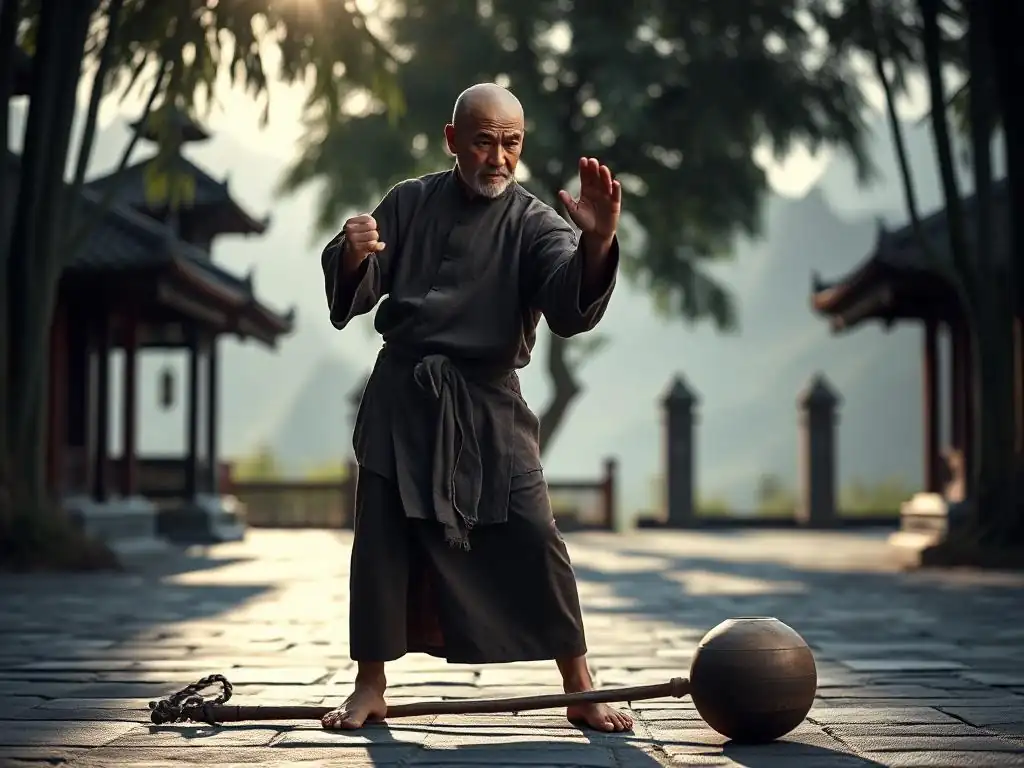
Building Upper Body Power for Strikes and Blocks
While Long Fist is known for leg techniques and stances, powerful upper body strikes (like straight punches, hooks, and palm strikes) and effective blocks are equally vital. Upper body strength provides the raw power behind these techniques and the resilience needed to absorb impacts. Shoulder strength is crucial for extending the arms fully and maintaining structure, while back and chest strength contribute to the force generation of punches and the stability required for blocking and parrying. Strong arms (biceps and triceps) are also necessary for executing techniques with speed and control.
Developing balanced upper body strength ensures that punches have snap and power, blocks are solid, and transitions involving arm movements are fluid. It also supports movements like push-ups, which are often incorporated into traditional Long Fist conditioning. Focusing on compound movements that work multiple upper body muscles simultaneously is the most efficient way to build this functional strength. This type of Shaolin Long Fist strength training ensures that the upper body is not a weak link but a powerful engine supporting the dynamic art.
Recommended Upper Body Exercises for Long Fist: Overhead Press, Pull-ups, Barbell Rows
Several foundational upper body exercises are highly beneficial for Shaolin Long Fist practitioners. The Overhead Press (shoulder press) is excellent for building shoulder and triceps strength, directly translating to the power and stability needed for punches and overhead blocks. It trains the ability to generate force upwards, a common vector in many Long Fist movements. Aim for 3-4 sets of 6-10 repetitions with a challenging weight.
Pull-ups are a fantastic exercise for developing back (lats, rhomboids) and biceps strength. A strong back is essential for retracting the shoulder blades for powerful punches and maintaining good posture, which is key to efficient movement in Long Fist. If standard pull-ups are too difficult, start with assisted pull-ups or negative pull-ups. Work towards multiple sets of as many repetitions as possible.
Barbell Rows target the upper back, lats, and biceps, complementing pull-ups by training horizontal pulling strength, important for controlling an opponent or executing certain techniques. Perform 3-4 sets of 8-12 repetitions. Integrating these into your Shaolin Long Fist strength training helps build a powerful and resilient upper body.
Adjusting Weight and Repetitions for Optimal Strength Gains in Long Fist
The optimal approach to adjusting weight and repetitions for strength gains in Shaolin Long Fist strength training depends on your current goals and training phase. Generally, to build maximal strength, focus on heavier weights with lower repetitions (e.g., 3-5 sets of 3-6 repetitions). This method primarily targets the nervous system and muscle fibers responsible for generating high levels of force. This is beneficial for developing the explosive power needed for single, strong techniques.
For muscular hypertrophy (muscle growth), which contributes to strength potential and endurance, use moderate weights with moderate repetitions (e.g., 3-4 sets of 8-12 repetitions). This range is effective for increasing muscle size and improving endurance for sustained efforts like performing long forms. For muscular endurance, use lighter weights with higher repetitions (e.g., 2-3 sets of 15+ repetitions) or bodyweight exercises for time or high volume.
A well-rounded Shaolin Long Fist strength training program will often cycle through these rep ranges over time (periodization) to develop a balanced profile of strength, power, and endurance. As you get stronger, gradually increase the weight or repetitions to continue challenging your muscles.
Lower Body Strength Training for Powerful Long Fist Kicks and Stances
Developing Leg Strength for Stability and Explosiveness
The legs are arguably the most critical component for power generation and stability in Shaolin Long Fist. Deep, stable stances provide the foundation for all techniques, and powerful kicks are a hallmark of the style. Developing significant lower body strength is non-negotiable for any serious Long Fist practitioner. This involves strengthening the quadriceps, hamstrings, gluteals, and calves. Strong legs allow you to maintain low stances for longer periods without fatigue, generate explosive power for leaps and kicks, and absorb the impact of landings.
Leg strength contributes directly to both the static stability required for stances and the dynamic power needed for kicks and transitions. Exercises that train the legs through a full range of motion, mimicking the movements used in Long Fist, are particularly effective. This focus on functional leg strength ensures that the power you build in the gym translates directly to improved performance in your forms and applications, making lower body work a cornerstone of Shaolin Long Fist strength training.
Essential Lower Body Exercises for Long Fist: Front Squats, Walking Lunges, Box Jumps
Several lower body exercises are highly effective for building the strength and power needed for Shaolin Long Fist. Front Squats challenge the quadriceps and core stability significantly, mirroring the demands of holding low stances like the horse stance or bow stance while maintaining an upright torso. They also improve hip mobility. Aim for 3-4 sets of 6-10 repetitions with a weight that allows you to maintain good form throughout.
Walking Lunges work the legs unilaterally, improving balance and targeting the quadriceps, hamstrings, and gluteals. They mimic the stepping patterns found in many Long Fist forms and improve stability during transitions. Perform 3-4 sets of 10-12 repetitions per leg.
Box Jumps are a plyometric exercise that develops explosive power in the legs and hips, directly translating to higher, more powerful kicks and leaps. Start with a lower box and focus on landing softly; perform 3-5 sets of 3-6 repetitions, focusing on maximal effort and recovery between jumps. Incorporating these into your Shaolin Long Fist strength training routine will build a powerful lower body foundation.
Focusing on Single-Leg Strength for Improved Balance in Long Fist
While bilateral exercises like squats are essential, single-leg strength is equally important for Shaolin Long Fist practitioners. Many techniques, particularly kicks and transitions, require generating force and maintaining balance on one leg. Developing strength and stability unilaterally (one leg at a time) improves balance, coordination, and helps address potential strength imbalances between legs, which can lead to inefficient movement and injury.
Exercises like Walking Lunges, Bulgarian Split Squats, and Single-Leg Deadlifts are excellent for building single-leg strength. Bulgarian Split Squats, performed with one foot elevated behind you, are particularly challenging and effective for targeting the quadriceps and glutes while demanding significant balance. Aim for 3-4 sets of 8-12 repetitions per leg.
Single-Leg Deadlifts improve hamstring and glute strength while also enhancing balance and core stability. Perform 3-4 sets of 8-12 repetitions per leg using a dumbbell or kettlebell. Integrating these unilateral exercises into your Shaolin Long Fist strength training program will significantly improve your stability and power on one leg, crucial for dynamic Long Fist movements.
Grip Strength Training for Shaolin Long Fist
The Significance of Grip Strength in Long Fist Techniques
While Shaolin Long Fist is primarily known for open-hand techniques, stances, and kicks, grip strength plays a subtle yet important role in overall physical capability and certain applications. A strong grip contributes to forearm strength and stability, which is beneficial for executing powerful blocks and parries that require a firm structure. In self-defense applications, grip strength is vital for controlling an opponent, whether through wrist locks, joint manipulations, or holding onto clothing.
Furthermore, a strong grip enhances performance in many strength training exercises themselves, such as pull-ups, rows, and deadlifts, allowing you to lift heavier weights and thus build more overall strength. While perhaps not as central as leg or core strength, neglecting grip strength can be a limiting factor in both your general physical development and specific martial applications. Including grip work in your Shaolin Long Fist strength training contributes to a well-rounded physical foundation.
Exercises to Enhance Grip Strength for Long Fist Practitioners: Farmer's Walks, Dead Hangs
Several simple yet effective exercises can significantly improve grip strength relevant to Shaolin Long Fist. Farmer's Walks involve holding heavy dumbbells, kettlebells, or specialized farmer's walk handles in each hand and walking for a set distance or time. This exercise builds crushing grip strength, endurance in the forearms and traps, and improves core stability. Start with a weight you can carry for 30-60 seconds and work up to longer durations or heavier weight. Perform 3-4 sets.
Dead Hangs are another excellent exercise, requiring you to simply hang from a pull-up bar for as long as possible. This primarily targets crushing and support grip strength and also helps improve shoulder mobility and decompression. Start with short hangs (e.g., 20-30 seconds) and gradually increase the duration. Perform 3-4 sets. For variety, you can also use thick bars or towel hangs to challenge your grip differently. Incorporating these exercises into your Shaolin Long Fist strength training routine will build resilient forearms and a powerful grip.
Integrating Grip Training into Your Regular Long Fist Workout
Grip training can be easily integrated into your existing Shaolin Long Fist strength training schedule without requiring a separate session. One simple method is to add grip exercises as a finisher at the end of your regular strength workouts, performing 2-3 sets of Farmer's Walks or Dead Hangs. This ensures that your grip is worked after the main lifts, where grip might be a limiting factor.
Another approach is to incorporate grip challenges into your existing exercises. For instance, use thicker barbells or dumbbells if available, or wrap towels around the bar during pull-ups or rows. Holding the top position of a pull-up for a few extra seconds also challenges grip endurance. Even carrying heavy objects during functional movements within your Shaolin Long Fist strength training can contribute. Consistency is more important than high volume; adding a few sets of dedicated grip work 2-3 times per week is sufficient for noticeable improvements.
Sample Shaolin Long Fist Strength Training Program
A Weekly Strength Training Schedule for Long Fist Martial Artists
Designing a weekly Shaolin Long Fist strength training schedule requires balancing strength work with your Long Fist practice to avoid overtraining. A common approach is a 3-day per week strength training split, allowing for rest days and days dedicated primarily to Long Fist forms and techniques. Here is a possible structure:
- Monday: Long Fist Practice (Forms, Drills, Basics)
- Tuesday: Strength Training - Lower Body Focus (Squats, Lunges, Box Jumps, Single-Leg Work)
- Wednesday: Rest or Active Recovery (Light stretching, mobility work)
- Thursday: Long Fist Practice (Sparring Drills, Applications, Flexibility)
- Friday: Strength Training - Upper Body & Core Focus (Pull-ups, Rows, Overhead Press, Core Exercises)
- Saturday: Strength Training - Full Body Functional / Power (Kettlebell Swings, Medicine Ball Throws, Farmer's Walks, Plyometrics)
- Sunday: Rest or Active Recovery
This schedule ensures that major muscle groups are trained with adequate recovery time. Adjust the intensity and volume of both strength and Long Fist training based on how your body feels. The goal of this Shaolin Long Fist strength training plan is to complement, not detract from, your martial arts practice.
Incorporating Long Fist Forms and Drills into Your Strength Training
While dedicated strength exercises are crucial, aspects of Shaolin Long Fist training itself can also contribute to strength and conditioning. Performing Long Fist forms with focused intent, emphasizing deep stances, powerful extensions, and controlled movements, builds muscular endurance and functional strength specific to the art. Holding challenging stances like Mabu (Horse Stance) or Gongbu (Bow Stance) for extended periods is an excellent form of isometric strength training for the legs and core.
Many traditional Long Fist conditioning drills, such as repetitive power punches against a heavy bag, sustained kicking drills, or bodyweight exercises like push-ups and squats performed within a circuit, inherently build strength and endurance. Integrating short bursts of these high-intensity, Long Fist-specific movements into your strength workouts (e.g., performing a set of power punches between sets of pull-ups) or using them as part of a dynamic warm-up can enhance the functional carryover of your Shaolin Long Fist strength training.
Periodization and Progression in Your Long Fist Strength Program
Periodization is the systematic planning of training over a period of time (e.g., a year) to achieve peak performance at specific times and prevent overtraining. For Shaolin Long Fist strength training, this means varying the focus of your training over cycles. For example, you might spend several weeks focusing on building maximal strength (lower reps, heavier weight), followed by a phase focused on hypertrophy (moderate reps/weight), and then a phase emphasizing power and endurance (higher reps/lighter weight, plyometrics).
Progression is the gradual increase in training stress over time to ensure continuous adaptation and improvement. This can involve increasing the weight lifted, performing more repetitions or sets, reducing rest times, increasing the difficulty of exercises (e.g., moving from bodyweight squats to weighted squats), or increasing the volume or intensity of your workouts. Consistent progression, carefully monitored alongside your Long Fist practice, is essential for long-term strength gains and continued development in your Shaolin Long Fist strength training journey. Avoid dramatic jumps in intensity; gradual, consistent increases are safer and more effective.
Nutrition and Recovery for Optimal Strength Gains in Long Fist
Fueling Your Body for Intense Long Fist Training
Proper nutrition is the foundation upon which strength gains and performance improvements in Shaolin Long Fist are built. Intense physical training, including strength work and martial arts practice, depletes energy stores and causes muscle breakdown. Consuming adequate calories from nutrient-dense foods provides the energy needed to perform effectively and the building blocks required for muscle repair and growth. Prioritize lean proteins (chicken, fish, beans, tofu) to support muscle synthesis, complex carbohydrates (whole grains, vegetables, fruits) for sustained energy, and healthy fats (avocado, nuts, seeds) for hormonal balance and overall health.
Timing your nutrient intake can also be beneficial. Consuming carbohydrates before training provides energy, while consuming protein and carbohydrates after training helps replenish glycogen stores and initiate muscle repair. Staying well-hydrated throughout the day is equally crucial for performance and recovery. Think of nutrition as the fuel for your Shaolin Long Fist strength training engine; without the right fuel, performance will suffer, and progress will stall. Aim for balanced meals and snacks that support your training volume and intensity.
The Importance of Rest and Recovery for Muscle Growth and Injury Prevention
Strength gains don't happen during the workout itself; they occur during the recovery period when muscles repair and adapt to the stress placed upon them. Sufficient rest is therefore just as important as the training itself in any Shaolin Long Fist strength training program. Aim for 7-9 hours of quality sleep per night, as this is when the body releases growth hormone and performs significant repair processes. Lack of sleep impairs muscle recovery, reduces performance, and increases injury risk.
Active recovery, such as light stretching, foam rolling, or gentle walking on rest days, can also aid recovery by promoting blood flow and reducing muscle soreness. Avoiding back-to-back days of intense training on the same muscle groups is also a key principle of recovery. Allowing muscles 24-48 hours to recover before working them intensely again helps prevent overtraining and allows for optimal adaptation. Prioritizing rest and recovery ensures that your body can effectively benefit from your Shaolin Long Fist strength training efforts.
Supplementation Considerations for Long Fist Strength Training: Protein, Magnesium
While a balanced diet should be the primary source of nutrients, certain supplements may be considered to support Shaolin Long Fist strength training goals, though they are not strictly necessary and should be discussed with a healthcare professional. Protein powder (whey, casein, or plant-based) can be a convenient way to ensure adequate protein intake, particularly around training times, to support muscle repair and growth, especially if dietary protein is insufficient.
Magnesium is an essential mineral involved in over 300 biochemical reactions in the body, including muscle and nerve function, energy production, and protein synthesis. Athletes, particularly those engaged in intense training like Shaolin Long Fist strength training, may have increased magnesium needs or experience depletion through sweat. Supplementing with magnesium may help reduce muscle cramps, improve sleep, and support recovery. Other supplements like Creatine Monohydrate (for power and strength) or Beta-Alanine (for endurance) might be considered depending on specific goals, but prioritize whole foods, adequate rest, and consistent training first.
Advanced Strength Training Methods for Elite Long Fist Practitioners
Plyometrics and Explosive Power Training for Long Fist
For elite Shaolin Long Fist practitioners, moving beyond foundational strength to develop explosive power is crucial. Plyometrics are exercises that involve rapid stretching and contracting of muscles to produce a powerful, quick movement, like jumping or throwing. This type of training bridges the gap between pure strength and speed, developing the ability to apply force rapidly, which is essential for the whip-like power of Long Fist strikes and the height and speed of its jumps and kicks. Examples include box jumps, depth jumps, medicine ball throws, and clap push-ups.
Implementing plyometrics requires a solid strength foundation to prevent injury. These exercises should be performed with maximum effort and focus on quality over quantity, allowing for adequate rest between sets. Integrating plyometrics into your Shaolin Long Fist strength training a couple of times a week, perhaps after a dynamic warm-up or before your main strength lifts, can significantly enhance your ability to generate power quickly, making your Long Fist techniques faster and more potent.
Isometrics for Strength and Stability in Long Fist Stances
Isometric exercises involve holding a static position under tension without movement, such as holding a deep horse stance or holding an arm out in a blocking position. While dynamic strength is key for movement, isometric strength is vital for maintaining stable stances, absorbing impact, and creating a solid base from which to launch techniques. In Shaolin Long Fist, the ability to hold low, challenging stances for extended periods requires significant isometric endurance and strength in the legs and core.
Incorporating dedicated isometric holds into your Shaolin Long Fist strength training can improve your capacity in these areas. This could involve holding a horse stance or bow stance for time (e.g., 60 seconds or longer), performing wall sits, or holding plank variations. Isometrics can also be used to strengthen specific joint angles relevant to your techniques. For example, holding an arm out at full extension against resistance can build the static strength needed for holding punches.
Integrating Resistance Bands for Enhanced Long Fist Technique Development
Resistance bands are a versatile tool that can be incorporated into advanced Shaolin Long Fist strength training to add resistance in unique ways. They provide accommodating resistance, meaning the tension increases as the band is stretched, challenging muscles more through their full range of motion. Bands can be used to add resistance to standard exercises like squats or push-ups, or used for dynamic movements that mimic Long Fist techniques.
For example, attaching a band to a stationary object and performing punches or kicks against the resistance helps build speed and power through the specific movement pattern. Bands can also be used for mobility and activation work, preparing the body for training. Their portability and variable resistance make them an excellent addition to an advanced practitioner's Shaolin Long Fist strength training toolkit, allowing for targeted strength and power development specific to the demands of the art.
Conclusion: Mastering Strength for Shaolin Long Fist Excellence
The Path to Increased Power and Proficiency Through Strength Training
Mastering Shaolin Long Fist requires dedication across multiple facets: technique, forms, flexibility, and physical conditioning. Strength training is not an optional add-on but a fundamental pillar supporting all other aspects of the art. By systematically developing functional strength, explosive power, core stability, and muscular endurance, practitioners build a body capable of executing Long Fist techniques with greater power, precision, and resilience. A well-designed Shaolin Long Fist strength training program enhances stance stability, increases kicking height and power, improves striking force, and reduces the risk of injury, allowing for more consistent and effective practice.
The journey to excellence in Shaolin Long Fist is continuous, and your strength training should evolve alongside your martial arts skills. As you progress in your forms and techniques, your physical demands will also change, requiring adjustments to your strength program. Embrace the process of building a stronger, more capable body as an integral part of your martial arts path. Consistent, intelligent Shaolin Long Fist strength training will unlock new levels of performance, enabling you to express the dynamic and powerful nature of this incredible martial art more fully.
Resources for Further Learning in Shaolin Long Fist and Strength Conditioning
To deepen your understanding of both Shaolin Long Fist and strength conditioning, seek out qualified instructors for hands-on guidance in both disciplines. Look for martial arts schools with experienced teachers who understand the importance of physical conditioning. For strength training, consider consulting with a certified strength and conditioning coach who has experience working with athletes or martial artists. They can help design a program tailored to your specific needs and goals within the context of your Shaolin Long Fist practice.
Numerous reputable books and online resources (websites, academic articles on sports science) provide valuable information on strength training principles, exercise techniques, nutrition, and recovery. Focus on resources that emphasize functional strength and athletic development rather than bodybuilding. Continuously learning and applying sound principles of Shaolin Long Fist strength training will be a powerful asset in your pursuit of martial arts mastery.
Frequently Asked Questions
What is the primary focus of Shaolin Long Fist strength training?
The primary focus is on developing explosive power and full-body strength. This training aims to enhance the practitioner's ability to execute long-range techniques effectively.
How does Shaolin Long Fist strength training differ from general strength training?
Shaolin Long Fist strength training emphasizes functional strength and kinetic chain development. It's tailored to movements specific to Long Fist, unlike general strength training focused on isolated muscle building.
What types of exercises are typically included in a Shaolin Long Fist strength training regimen?
Exercises often include bodyweight exercises like push-ups, squats, and planks. Additionally, training may involve weighted exercises and traditional Shaolin conditioning methods.
How often should a Shaolin Long Fist martial artist incorporate strength training into their routine?
Typically, 2-3 sessions per week, allowing for adequate recovery between sessions, is recommended. The training should be tailored to the individual's skill level and training goals.
What are the potential benefits of strength training for Shaolin Long Fist practitioners?
Strength training can improve power generation, endurance, and overall martial arts performance. It also reduces the risk of injuries related to the demanding techniques.
Final Reflection: Forging Strength, Honoring Tradition
The journey through the principles and practices of Shaolin Long Fist strength training reveals more than just a physical regimen; it unveils a pathway to embodying the spirit of this ancient martial art. In a world increasingly disconnected from tradition, the dedication to mastering Long Fist, coupled with a focused strength program, offers a powerful connection to heritage and a tangible expression of discipline.
The impact of this training extends far beyond the dojo. The commitment to consistent effort and the resilience cultivated through rigorous practice translate into a profound sense of self-mastery and unwavering focus in all aspects of life. As Bruce Lee eloquently stated, Absorb what is useful, discard what is not, add what is uniquely your own.
This philosophy resonates deeply with the Long Fist approach, encouraging practitioners to adapt and evolve while staying true to the core principles.
Now, consider how you can integrate the spirit of Shaolin Long Fist strength training into your own life. Embrace the discipline, the perseverance, and the unwavering commitment to self-improvement. Let the principles of balance, power, and fluidity guide not only your physical endeavors but also your mental and spiritual growth. The path to mastery is a lifelong journey; begin yours today.
Unleash Your Inner Dragon: Take the Next Step!
Thanks for delving into the strength training secrets of Shaolin Long Fist! Now that you've absorbed these ancient principles, it's time to forge your own path to mastery.
Here’s how you can put your newfound knowledge into action:
- Immediately integrate one new exercise from the regimen into your existing training routine. Start small and focus on form.
- Explore variations of Long Fist techniques to adapt the strength exercises for dynamic, flowing movements.
- Share your insights and progress with fellow martial artists in our community forum – let's learn and grow together!
What Long Fist principle will you focus on embodying in your next training session?