
Unveiling Wing Chun's Centerline Theory: The Secret to Ip Man's Directness

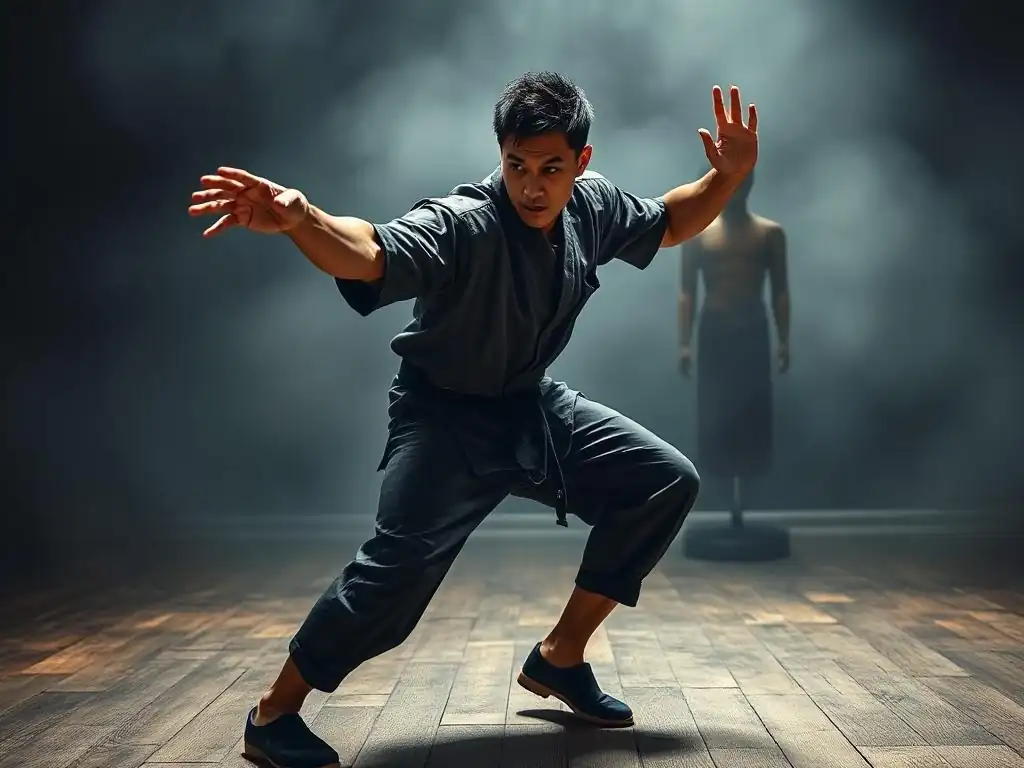
Welcome to Martial Arts Mastery, your gateway to the world's most compelling combat traditions!
Delve into the heart of Wing Chun and discover the Centerline Theory, the very principle that fueled Ip Man's legendary directness. But what is this core concept, and how can understanding it unlock your own potential? Prepare to unravel its secrets and explore practical training methodologies that will revolutionize your understanding of this powerful art. The journey to mastery begins now...
- Introduction to Wing Chun's Centerline Theory
- Defining the Wing Chun Centerline
- The Theoretical Underpinnings of the Centerline Theory
- Wing Chun Centerline Theory Training: Practical Applications
- Centerline Drills and Exercises for Wing Chun Practitioners
- Ip Man's Mastery of the Centerline: Examples from his Fighting Style
- Common Mistakes in Centerline Training and How to Avoid Them
- Advanced Centerline Concepts and Applications
- Integrating the Centerline Theory into Your Wing Chun Training
- Conclusion: The Enduring Legacy of Wing Chun's Centerline
-
Frequently Asked Questions
- What is the Wing Chun centerline theory, and why is it so important?
- How does centerline theory relate to Ip Man's fighting style?
- What are some practical drills for training the Wing Chun centerline theory?
- How does the centerline theory differ from strategies in other martial arts?
- What are the benefits of mastering the Wing Chun centerline theory for self-defense?
- Final Reflection: Embracing the Power of Directness
- Embrace the Centerline: Start Your Wing Chun Journey Now!
Introduction to Wing Chun's Centerline Theory
The Importance of the Centerline in Wing Chun Kung Fu
The centerline is arguably the most fundamental principle in the martial art of Wing Chun. It represents an imaginary line running vertically down the center of the body, from the top of the head, through the nose, sternum, navel, and groin. This line is considered the most vulnerable area of the human body, containing vital organs and major nerve centers. Therefore, a core objective in Wing Chun is to protect one's own centerline while simultaneously attacking the opponent's. This strategic focus dictates everything from stance and structure to hand techniques and footwork.
Mastering the centerline is not merely a theoretical concept; it is the practical foundation for effective Wing Chun self-defense. By understanding and utilizing the centerline, practitioners learn to generate maximum force with minimal effort, control the fighting space, and execute techniques with unparalleled directness. This principle is so central that it influences the structure of all Wing Chun forms and the application of techniques like the straight punch, which travels directly along the centerline. Effective Wing Chun centerline theory training emphasizes developing sensitivity and control over this crucial line.
Understanding the Core Principles of Wing Chun
Wing Chun Kung Fu is built upon a set of interconnected principles designed for efficiency, directness, and simultaneous attack and defense. Beyond the centerline, key principles include simultaneous blocking and striking (Lin Wan Kuen), economy of motion, yielding to superior force, and using the opponent's energy against them. The art prioritizes close-range combat, utilizing short, powerful movements and a stable, rooted stance.
These principles work in harmony with the centerline theory. For instance, simultaneous attack and defense is most effectively applied when controlling the centerline; a defensive movement along the centerline naturally transitions into an offensive one. Economy of motion dictates that the shortest distance between two points is a straight line, aligning perfectly with striking directly along or adjacent to the centerline. Wing Chun centerline theory training integrates these principles, teaching practitioners to apply techniques not in isolation, but as part of a cohesive, principles-driven system.
Defining the Wing Chun Centerline
What Exactly is the Centerline?
In Wing Chun, the centerline is conceptualized as a vertical line that divides the body symmetrically into left and right halves. It extends from the crown of the head down through the throat, chest, abdomen, and groin. This central axis is perceived as the most direct route to an opponent's vital targets and, conversely, the most vulnerable area to protect on one's own body. It's less about a single point and more about a critical zone of engagement.
Visualizing the centerline helps practitioners understand optimal positioning and attack angles. Any technique moving along or directly towards this line is considered more efficient and powerful in Wing Chun theory. Conversely, techniques or positions that leave one's own centerline exposed are considered weaknesses to be avoided. This focus differentiates Wing Chun from many other martial arts that might emphasize circular movements or attacks from wider angles.
The Anatomical Centerline vs. The Conceptual Centerline
It's important to distinguish between the anatomical centerline and the conceptual centerline in Wing Chun. The anatomical centerline is the literal midline of the body. The conceptual centerline, however, is a dynamic principle that extends beyond just one's own body. It also refers to the imaginary line between the practitioner's centerline and the opponent's centerline. The goal is often to dominate or control this shared conceptual line.
This conceptual centerline shifts and moves depending on the relative positions of the two individuals. Effective Wing Chun centerline theory training involves understanding how to maintain control of both your own centerline and the space between you and your opponent's centerline. This dynamic control allows the practitioner to intercept attacks early and launch strikes along the most direct path, exploiting the opponent's vulnerable central line.
Why the Centerline is Crucial for Wing Chun Self-Defense
The centerline is crucial for Wing Chun self-defense because it represents the most direct and efficient path for both attack and defense in close-quarters combat, which is Wing Chun's specialty. Attacking along the centerline allows strikes to reach vital targets quickly and with maximum linear force, minimizing exposure time. Protecting one's own centerline safeguards the most vulnerable areas from an incoming assault.
Consider a scenario where an opponent throws a straight punch. A Wing Chun practitioner, focused on the centerline, would typically intercept this attack along its trajectory, simultaneously defending their own centerline while potentially launching a counter-attack along the opponent's. This direct, simultaneous action is significantly more efficient than evading widely and then counter-attacking from an angle, which takes more time and movement. Wing Chun centerline theory training instills this immediate, central response.
The Theoretical Underpinnings of the Centerline Theory
Protecting the Centerline: A Primary Defensive Goal
Protecting one's own centerline is not just a defensive tactic; it's a fundamental structural principle in Wing Chun. The basic stance, known as Yee Jee Kim Yeung Ma (Character Two Adduction Stance), inherently positions the practitioner to face the opponent squarely, presenting the narrowest profile while keeping the arms positioned to guard the central line. Hand techniques like Tan Sao (Palm Up Hand) and Bong Sao (Wing Arm) are specifically designed to deflect or redirect force away from the centerline.
This defensive strategy is active and preemptive. Rather than waiting for an attack to fully develop, Wing Chun practitioners are trained to control the space in front of their centerline, intercepting threats as they emerge. The principle is to occupy or control the central line before the opponent can. This constant vigilance and structural integrity along the centerline minimizes openings and maximizes defensive readiness against direct attacks.
Exploiting the Opponent's Centerline: The Key to Offensive Success
Offensively, the centerline represents the primary target zone. Strikes aimed at the opponent's centerline, such as the straight punch to the chest or face, travel the shortest distance and are typically the most difficult to defend against directly once penetration is achieved. Wing Chun's emphasis on simultaneous attack and defense often involves using a technique to control or occupy the opponent's arms (which guard their centerline) while simultaneously striking along the open path to their central line.
The chain punching technique is a classic example of exploiting the opponent's centerline. By delivering a rapid series of straight punches down the center, the practitioner overwhelms the opponent's defenses along their central axis, making it difficult for them to block effectively or counter-attack. This offensive strategy, rooted in the centerline principle, aims to collapse the opponent's structure and defenses by attacking their most vulnerable and direct line.
Efficiency of Movement: Minimizing Distance and Maximizing Impact
The centerline theory is intrinsically linked to the principle of efficiency. By operating along the most direct line, Wing Chun minimizes unnecessary movement. Every step, every hand technique, is ideally aimed at either controlling or attacking the centerline. This directness reduces the time it takes for a technique to land and conserves energy.
Consider two identical forces applied. One moves along a curved path, while the other moves along a straight line (the centerline). The force moving along the straight line reaches its target faster and maintains more focused energy. This efficiency translates directly into maximizing impact. Wing Chun centerline theory training emphasizes this streamlined approach, teaching practitioners to deliver power directly forward from a stable base, focusing energy along the central axis towards the target.
Wing Chun Centerline Theory Training: Practical Applications
Stance and Structure: Building a Solid Foundation
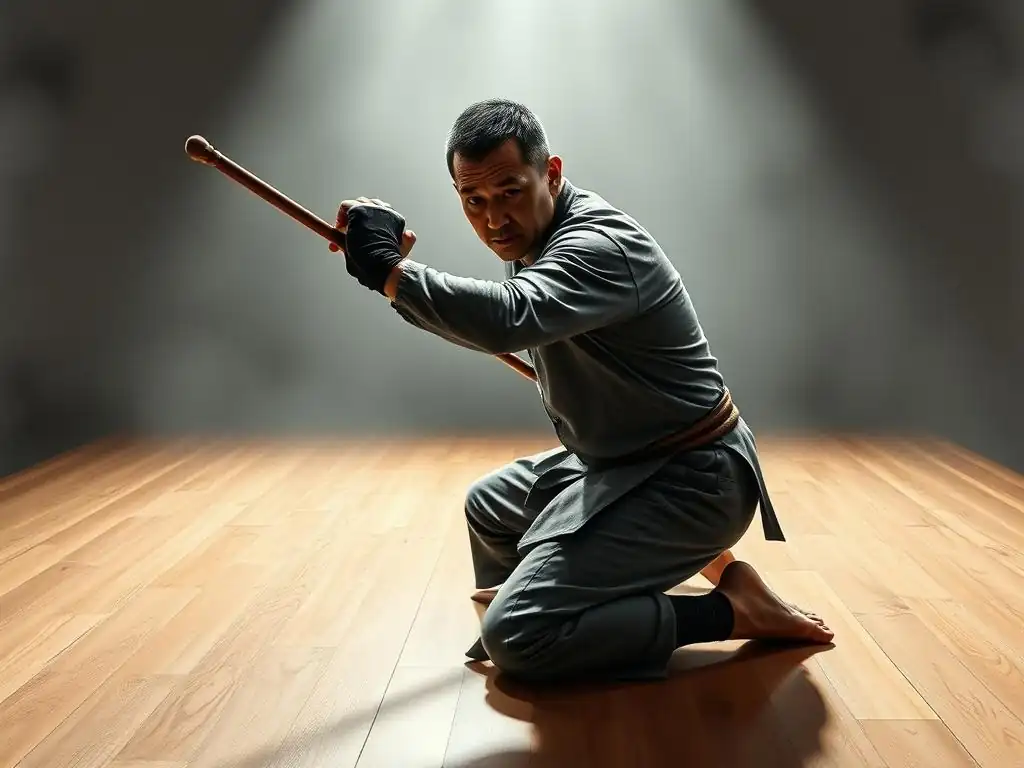
Proper stance and structure are the bedrock of effective Wing Chun centerline theory training. The Yee Jee Kim Yeung Ma stance, with its slightly inward-pointing knees and rooted feet, provides a stable base from which to generate power and protect the lower centerline. The body faces forward, presenting a narrow profile while keeping both arms forward to guard the central line.
Beyond the stance, the entire body structure is aligned to support the centerline principle. The elbows are kept close to the body (the "elbow energy" principle), protecting the ribs and allowing techniques to originate from a stable, central core. The shoulders are relaxed, allowing energy to flow freely. This integrated structure ensures that power is generated efficiently from the ground up and directed along the centerline, whether for defense or attack. Without a solid structural foundation, attempts to apply centerline principles will be significantly weakened.
Hand Techniques Focused on Centerline Control
Wing Chun's hand techniques are predominantly designed to operate along or control the space around the centerline. They are typically short, direct, and utilize leverage and structure over brute force.
Pak Sao (Slapping Hand) and Centerline Defense
Pak Sao is a technique used to deflect an incoming limb, typically an arm, away from your centerline. It's a short, sharp, slapping motion that uses structure and timing to redirect the opponent's force. By redirecting the attack just off your central line, Pak Sao simultaneously clears a path for your own counter-attack along their centerline.
This technique is a prime example of simultaneous defense and offense. As you perform the Pak Sao, your other hand is often simultaneously launching a strike towards the opponent's now-exposed centerline. Effective Pak Sao training emphasizes sensitivity to the opponent's energy and precise timing to disrupt their forward momentum along their attack line.
Tan Sao (Palm Up Hand) and Redirecting Force
Tan Sao is another crucial centerline defense technique. It involves holding the forearm with the palm facing upwards, creating a yielding structure that can receive and redirect incoming force. Used against straight attacks aimed at the upper centerline, Tan Sao acts like a ramp, guiding the opponent's limb upwards and away from your vital areas.
Like Pak Sao, Tan Sao is rarely used in isolation. As the opponent's force is deflected upwards by the Tan Sao, the other hand is free to strike downwards along the opponent's centerline. This principle of using one hand to control the opponent's force off the centerline while the other hand attacks the centerline is fundamental to Wing Chun strategy and heavily integrated into Wing Chun centerline theory training.
Punching Along the Centerline: The Straight Blast
The Wing Chun straight punch is the art's primary offensive weapon and is designed to travel directly along the centerline. Unlike punches in many other styles that may involve rotation or wider arcs, the Wing Chun punch is linear, originating from the chest and extending straight forward. Power is generated from the ground and channeled efficiently through the structure and along the central axis.
The "straight blast" (Lin Wan Kuen) is the application of rapid-fire straight punches down the centerline. This overwhelming barrage aims to penetrate the opponent's guard and land multiple strikes on their vulnerable central targets. Training involves developing the ability to deliver these punches quickly, powerfully, and continuously while maintaining structure and protecting one's own centerline. It's a direct, aggressive application of exploiting the opponent's most vulnerable line.
Footwork for Centerline Positioning
Wing Chun footwork, while seemingly simple, is specifically designed to maintain balance, generate power, and, critically, control positioning relative to the centerline. Footwork is not just about moving around; it's about adjusting angles and distance to protect your own centerline and gain advantageous access to your opponent's.
Maintaining Centerline Control Through Footwork
Footwork techniques like the "shifting stance" (Jyun Ma) allow the practitioner to pivot and adjust angles while maintaining a stable base and keeping the centerline oriented towards the opponent. Steps like the "advance step" (Jin Choi Ma) or "retreat step" (Tui Ma) are executed while maintaining the core structure and protecting the central line, enabling movement directly forward or backward along the line of engagement.
The goal of Wing Chun footwork is often to "take the centerline" – positioning oneself such that the opponent's centerline is directly in front, while yours is optimally defended. This might involve slight adjustments to angle or closing distance directly. Effective Wing Chun centerline theory training incorporates extensive footwork drills to develop this crucial positional control.
Closing the Distance While Protecting Your Centerline
Closing the distance in Wing Chun is done with efficiency and minimal exposure. The advance step, for instance, involves moving the lead foot forward and then bringing the rear foot up to maintain the stance, all while keeping the body facing forward and the hands guarding the centerline. This method minimizes the time spent off-balance and ensures that the practitioner remains structurally sound and defensively oriented even while advancing.
This direct forward movement along the line of engagement is a hallmark of Wing Chun. It allows practitioners to intercept opponents early and engage them in close range, where Wing Chun techniques are most effective. Training focuses on coordinating hand techniques with footwork to ensure that as distance is closed, centerline control is maintained, and offensive opportunities along the opponent's central line are immediately exploited.
Centerline Drills and Exercises for Wing Chun Practitioners
Chi Sao (Sticky Hands) and Centerline Sensitivity
Chi Sao is a unique two-person training exercise that is absolutely essential for developing sensitivity to force and movement along the arms and, by extension, the centerline. Practitioners maintain contact with each other's forearms, constantly feeling for pressure, openings, and intentions. This drill teaches practitioners to respond instinctively to incoming force, redirecting it off their centerline while simultaneously attacking the opponent's.
Through repetitive Chi Sao practice, practitioners develop "listening energy" (Ting Jing) and learn to flow with the opponent's movements, adhering to them while seeking opportunities to penetrate their structure and attack their centerline. It's a tactile conversation that hones reflexes and teaches the application of Wing Chun principles, including centerline control, in a dynamic, live environment. Many hours of Wing Chun centerline theory training are dedicated to Chi Sao.
Centerline Punching Drills for Power and Accuracy
Specific drills are used to develop power, speed, and accuracy when punching along the centerline. These often involve striking a wall bag or focus mitt held directly in front of the practitioner.
One-Inch Punch Drill
The famous One-Inch Punch, while often demonstrated as a feat of power, is fundamentally a drill about generating explosive force over an extremely short distance, typically aimed directly along the centerline. Training involves developing the ability to relax the body, connect the structure from the ground up, and release energy forward with a sudden, focused burst, often striking from a distance of zero to one inch.
Practicing the One-Inch Punch hones the ability to generate power purely through structure, relaxation, and focused intent, delivering it directly along the central axis. It teaches the principle of "short power" and its application to penetrating an opponent's defenses along their centerline.
Three-Gate Drill
The Three-Gate Drill involves practicing striking to three different levels along the opponent's centerline: the upper gate (head/neck), middle gate (chest/solar plexus), and lower gate (abdomen/groin). This drill can be practiced solo against a wall bag or with a partner holding mitts.
The drill emphasizes the ability to quickly shift targets vertically along the central line while maintaining proper structure and power generation. It trains the practitioner to exploit openings at different levels of the opponent's centerline as they appear, reinforcing the concept that the entire central axis is the primary target zone. This is a key component of practical Wing Chun centerline theory training.
Ip Man's Mastery of the Centerline: Examples from his Fighting Style
Analyzing Ip Man's Techniques Through the Lens of Centerline Theory
Grandmaster Ip Man, the most famous proponent of Wing Chun, exemplified mastery of the centerline principle in his fighting style. His techniques were characterized by their directness, efficiency, and simultaneous application. Historical accounts and film depictions, while sometimes exaggerated, often highlight his ability to overwhelm opponents with rapid, linear attacks launched directly down their central line.
Ip Man's approach was not about flashy movements but about getting the job done quickly and effectively in close quarters. His focus on structure, relaxation, and forward intent allowed him to generate significant power with minimal visible effort, all directed along the crucial central axis. His fighting philosophy was deeply rooted in the practical application of Wing Chun's core principles, with the centerline at the forefront.
Ip Man's Chain Punching Technique
Perhaps the most iconic example of Ip Man's application of the centerline theory is his devastating chain punching technique. He was renowned for his ability to deliver a rapid-fire barrage of straight punches, one after the other, aimed squarely at the opponent's chest or face.
This technique is a direct assault on the opponent's centerline. By generating continuous forward pressure and striking along the most direct line, the chain punches overwhelm the opponent's ability to block or defend effectively. Each punch supports the next, maintaining forward momentum and keeping the opponent under constant pressure along their most vulnerable axis. This technique perfectly illustrates the offensive application of exploiting the opponent's central line.
Ip Man's Use of Simultaneous Attack and Defense
Ip Man's fighting style masterfully integrated the principle of simultaneous attack and defense, always with an eye on the centerline. He wouldn't typically block and then strike; instead, his defensive movements were also offensive, and vice versa.
For example, if an opponent attacked his centerline, Ip Man would use a technique like Tan Sao or Bong Sao to simultaneously deflect the incoming force away from his centerline while his other hand was already launching a strike towards the opponent's centerline. This "two-way energy" or simultaneous action is only truly efficient when operating along or controlling the central line, minimizing wasted motion and maximizing the speed and effectiveness of the response.
Common Mistakes in Centerline Training and How to Avoid Them
Over-Reliance on Strength vs. Proper Structure
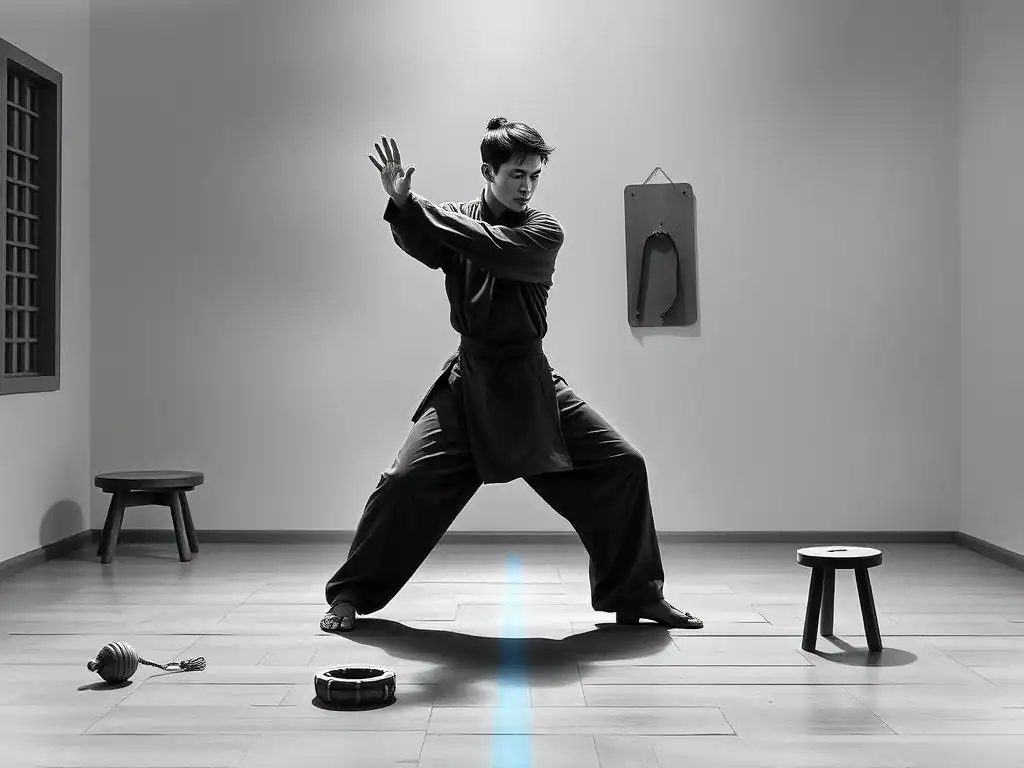
A common mistake in Wing Chun centerline theory training is relying too much on physical strength rather than proper structure and leverage. The power of Wing Chun techniques, particularly those aimed at the centerline, comes from aligning the body correctly, relaxing, and using the skeletal structure to transmit force from the ground. Trying to muscle through techniques against an opponent's force along the centerline is inefficient and quickly leads to fatigue and openings.
- To Avoid: Focus on maintaining correct posture and alignment in all techniques and drills. Practice relaxing your muscles while maintaining structural integrity. Chi Sao is invaluable for developing sensitivity to pressure and learning to yield and redirect force using structure rather than brute strength.
Neglecting Footwork and Centerline Positioning
Another significant error is neglecting the crucial role of footwork in maintaining and gaining centerline control. Beginners sometimes focus solely on hand techniques, forgetting that optimal striking and defending along the centerline requires being in the right place at the right time. Poor footwork leaves you off-balance, unable to generate power effectively, and vulnerable along your own central line.
- To Avoid: Dedicate significant training time to footwork drills. Practice moving forwards, backwards, and pivoting while maintaining your stance and keeping your body oriented towards the opponent's perceived centerline. Integrate footwork into hand technique practice, ensuring that movement supports the application of centerline principles.
Failing to Adapt to Different Opponents and Situations
While the centerline is a core principle, rigidly applying it without adaptation is a mistake. Opponents of different sizes, strengths, and fighting styles will present unique challenges. Relying solely on a single approach along the centerline without considering angles or varying defenses can make you predictable and vulnerable.
- To Avoid: Train with a variety of partners. Practice applying centerline principles against different attack angles and forces. Learn how to use angles yourself to gain an advantage on the opponent's centerline, especially when a direct frontal assault is not feasible. Develop sensitivity to the opponent's intentions and adapt your centerline strategy accordingly. Wing Chun centerline theory training must include dynamic sparring and varied partner drills.
Advanced Centerline Concepts and Applications
Centerline and Wing Chun Forms (Siu Nim Tao, Chum Kiu, Biu Jee)
The Wing Chun forms are living repositories of the art's principles, including the centerline theory. Siu Nim Tao ("Little Idea") establishes the fundamental structure, relaxation, and forward intent, all centered around the vertical axis. Every movement, even those seemingly off-center, is designed to return to or protect the centerline.
Chum Kiu ("Seeking the Bridge") introduces movement, footwork, and turning, teaching the practitioner how to maintain centerline control while moving and bridging the gap to the opponent. Biu Jee ("Darting Fingers") deals with emergency situations and recovering the centerline when it has been lost, emphasizing urgent, direct attacks to vital points along the opponent's central line. The forms provide a solo method for practicing Wing Chun centerline theory training, internalizing the principles through repetitive movement.
Centerline Applications in Wing Chun Wooden Dummy Training (Muk Yan Jong)
The Wooden Dummy is a specialized training tool designed to simulate a human opponent's limbs and body, providing a structured way to practice techniques, footwork, and body mechanics. Training on the Muk Yan Jong heavily reinforces centerline principles. The positions and angles of the dummy's arms and leg are set up to force the practitioner to engage along specific lines, often requiring simultaneous attack and defense techniques aimed at clearing the dummy's "limbs" (representing the opponent's guard) while striking its "body" (representing the opponent's centerline).
Working on the dummy develops sensitivity to structure, flow, and the application of force and redirection around a central point. It teaches the practitioner how to maintain their own structure and centerline integrity while dealing with incoming forces and simultaneously attacking the opponent's central axis. It's a crucial part of advanced Wing Chun centerline theory training.
Using Angles to Control the Centerline Against Multiple Attackers
While Wing Chun emphasizes facing the opponent squarely to control the centerline, dealing with multiple attackers requires adapting this principle. Against multiple opponents, maintaining a purely frontal orientation towards one attacker leaves you vulnerable to others attacking your flanks.
Advanced Wing Chun teaches how to use angles and footwork to constantly re-orient your body and centerline towards the most immediate threat while using techniques to manage the space and control the closest opponent's centerline. The goal is to keep attackers lined up as much as possible, effectively turning a multi-directional threat into a series of one-on-one engagements along your controlled central line. This involves sophisticated footwork and body positioning to maintain the strategic advantage of the centerline principle in a complex scenario.
Integrating the Centerline Theory into Your Wing Chun Training
Developing a Personalized Centerline Training Regimen
Integrating the centerline theory into your daily Wing Chun practice is key to mastery. This isn't just about doing extra drills but viewing all your training through the lens of the centerline.
Consider incorporating the following into your regimen:
- [ ] Daily solo practice of Siu Nim Tao, focusing on relaxation and forward intent along the centerline.
- [ ] Regular centerline punching drills (wall bag, mitts) emphasizing structure and directness.
- [ ] Frequent Chi Sao practice to develop sensitivity and dynamic centerline control.
- [ ] Footwork drills specifically focused on maintaining stance and orientation towards a perceived centerline.
- [ ] Application practice with a partner, focusing on simultaneous attack and defense along the central line.
Tailor the frequency and intensity based on your current level and training goals, but ensure centerline principles are consciously applied in every session.
Seeking Guidance from a Qualified Wing Chun Instructor
While articles and videos can introduce concepts, the nuances of the centerline theory and its practical application are best learned under the guidance of an experienced and qualified Wing Chun instructor. An instructor can provide personalized feedback on your structure, alignment, power generation, and sensitivity during drills and partner work.
They can correct subtle errors in your posture or technique that might be hindering your ability to effectively protect your centerline or exploit the opponent's. They can also guide you through the forms and applications, explaining how each movement relates back to the core principles. Proper Wing Chun centerline theory training is traditionally passed down through direct lineage instruction.
The Ongoing Journey of Mastering the Centerline
Mastering the centerline is not a destination but an ongoing journey that evolves with your practice. As you progress, your understanding deepens, and your ability to apply the principles becomes more instinctive. What starts as a conscious effort to keep elbows in or face forward becomes a natural part of your movement and structure.
The centerline principle remains relevant whether you are practicing basic forms, engaging in Chi Sao, or applying techniques in self-defense scenarios. Continuously refining your understanding and application of the centerline will lead to greater efficiency, power, and effectiveness in all aspects of your Wing Chun. This dedication to constant improvement in Wing Chun centerline theory training is the mark of a serious practitioner.
Conclusion: The Enduring Legacy of Wing Chun's Centerline
Wing Chun's Centerline Theory: A Timeless Principle for Self-Defense
The centerline theory is more than just a strategic concept; it is the unifying principle that underpins the entire system of Wing Chun Kung Fu. Its focus on directness, efficiency, and simultaneous action along the body's most vulnerable axis makes it a remarkably effective and timeless principle for self-defense. In a chaotic confrontation, the ability to instinctively protect your own central line while simultaneously attacking the opponent's offers a powerful advantage.
This core principle has remained consistent through generations of practitioners, from its legendary origins to the teachings of Grandmaster Ip Man and his students. It provides a clear, logical framework for understanding combat mechanics and developing practical skills. Whether facing a single attacker or multiple opponents, the centerline remains the critical reference point for positioning, defense, and offense. The effectiveness of Wing Chun centerline theory training lies in its practical, no-nonsense approach to combat efficiency.
The Importance of Consistent Practice and Dedication.
Understanding the centerline theory is only the first step; true mastery comes through consistent, dedicated practice. The principles must be internalized through countless repetitions of forms, drills, and partner exercises like Chi Sao. It is through this diligent Wing Chun centerline theory training that the theoretical concept becomes a practical, instinctive application.
The journey requires patience and perseverance. There will be challenges in developing the necessary structure, sensitivity, and timing. However, with consistent effort and proper guidance, the principles of the centerline will become second nature, transforming your movements and enhancing your ability to effectively apply Wing Chun for self-defense. The enduring legacy of Wing Chun's centerline is carried forward by dedicated practitioners who commit to this rigorous path of training and self-improvement.
Frequently Asked Questions
What is the Wing Chun centerline theory, and why is it so important?
The centerline theory in Wing Chun is the strategic concept of controlling and defending the vertical line that runs down the center of the body. It's crucial because it offers the most direct path for attack and defense.
How does centerline theory relate to Ip Man's fighting style?
Ip Man, a renowned Wing Chun master, heavily emphasized the practical application of the centerline theory. His directness in combat stemmed from his focus on protecting his own centerline while simultaneously attacking his opponent's.
What are some practical drills for training the Wing Chun centerline theory?
Common drills include Siu Nim Tao (the first form), Chi Sau (sticking hands), and practicing direct punches and blocks along the centerline. These exercises help develop sensitivity and control.
How does the centerline theory differ from strategies in other martial arts?
While many martial arts recognize the importance of a central axis, Wing Chun's centerline theory prioritizes its control and exploitation with unparalleled directness. This distinguishes it from circular or more indirect approaches.
What are the benefits of mastering the Wing Chun centerline theory for self-defense?
Mastering the centerline theory allows for efficient and powerful attacks and defenses. It offers a strong advantage in close-quarters combat, maximizing impact while minimizing exposure.
Final Reflection: Embracing the Power of Directness
The exploration of Wing Chun's Centerline Theory, as we've seen, is not merely an academic exercise in martial arts history; it's a revelation of efficiency and directness applicable far beyond the training hall. The principles of protecting and exploiting the centerline, of minimizing wasted movement and maximizing impact, resonate deeply in a world increasingly demanding agility and precision.
This concept of directness, of cutting through the noise to reach the core, has profoundly influenced my understanding of not just martial arts, but also communication and problem-solving. The ability to identify and defend one's own "centerline," be it physical or metaphorical, is crucial for navigating the complexities of modern life. Simplicity is the ultimate sophistication.
- Leonardo da Vinci. This quote encapsulates the essence of Wing Chun's centerline theory, reminding us that the most effective solutions are often the most direct.
Now, consider how you can apply this principle of centerline defense and attack in your own life. Where are you vulnerable? What are your core values that need protecting? How can you move with greater directness and efficiency towards your goals? Embrace the spirit of Wing Chun's centerline theory, and discover the power of focused intention and unwavering commitment in your own journey.
Embrace the Centerline: Start Your Wing Chun Journey Now!
Thanks for exploring the core of Wing Chun with us! We hope you’ve gained a deeper understanding of how the centerline theory fuels this art’s effectiveness and directness. Now, it's time to put this knowledge into action.
Here are a few ways to further your understanding and application of the centerline principle:
- Commit to Mastering Basic Forms: Dedicate this week to practicing Siu Nim Tao, focusing solely on maintaining a stable and protected centerline throughout each movement. Feel the difference.
- Share your insights!: Discuss your newfound appreciation for the centerline with fellow martial arts enthusiasts on our forum and help spread its importance.
- Consider recording yourself practicing your Wing Chun form, analyze the video for centerline alignment and identify improvement areas.
Ready to feel the power of the centerline in your own Wing Chun practice?