
Wall Choke Nightmare: Krav Maga Survival Techniques When Trapped


Welcome to Martial Arts Mastery, where we delve into the heart of combat disciplines. Are you prepared to confront the brutal reality of a wall choke? In this article, we dissect the devastating Krav Maga wall choke defense, revealing survival techniques that could save your life. Explore the practical application of this Israeli martial art and unlock the secrets to escaping this terrifying scenario. Will you learn the crucial steps to break free? Let's find out.
- Krav Maga Defense Against Rear Naked Choke from Standing: A Comprehensive Guide
- Introduction: Understanding the Rear Naked Choke Threat in Krav Maga
- Krav Maga Rear Naked Choke Defense: Immediate Reactions and Principles
- Krav Maga Techniques for Escaping a Standing Rear Naked Choke
- Advanced Krav Maga Rear Naked Choke Escapes: When Initial Defenses Fail
- Preventing the Rear Naked Choke: Situational Awareness and Positioning
- Training Drills for Krav Maga Rear Naked Choke Defense
- Real-World Application: Case Studies of Krav Maga Rear Naked Choke Defenses
- The Mental Aspect of Krav Maga Rear Naked Choke Defense
- Conclusion: Mastering Krav Maga Rear Naked Choke Defense for Self-Preservation
-
Frequently Asked Questions
- How does Krav Maga specifically address wall choke situations?
- What are the primary goals of Krav Maga wall choke defense?
- What types of strikes are typically employed in Krav Maga's wall choke defense?
- How does Krav Maga training prepare individuals for the psychological stress of a wall choke?
- What is the importance of situational awareness in preventing wall choke attacks, according to Krav Maga philosophy?
- Final Reflection: Embracing Resilience Under Pressure
- Unleash Your Inner Warrior: Take Control!
Krav Maga Defense Against Rear Naked Choke from Standing: A Comprehensive Guide
Introduction: Understanding the Rear Naked Choke Threat in Krav Maga
The Reality of Rear Naked Chokes in Street Fights
The rear naked choke is not merely a technique confined to competitive grappling arenas; it represents a significant and potentially deadly threat in real-world street confrontations. Its prevalence stems from its deceptive simplicity and high effectiveness. An attacker approaching from behind can quickly apply this hold, cutting off blood flow to the brain within seconds, leading to unconsciousness, or, if maintained, potentially causing severe injury or death.
Unlike many other attacks which might offer a window of opportunity to react, a properly applied rear naked choke applied quickly and with force provides an extremely limited timeframe for defense, often less than 10-15 seconds before the victim loses consciousness. Data from law enforcement encounters and self-defense reports consistently indicate chokes from behind as a common tactic used by assailants seeking to subdue or incapacitate a victim rapidly and quietly.
Furthermore, the rear naked choke often occurs when the victim is unaware or distracted, making the initial moments of defense critical. While discussions about defenses might sometimes touch upon Krav Maga wall choke defense, the standing rear naked choke is arguably more common in the initial stages of an ambush before any environmental factors like walls come into play. The attacker gains a significant leverage advantage from behind, using the victim's own carotid arteries against them. This makes the attack extremely dangerous, demanding an immediate, aggressive, and instinctual response rooted in principles designed for survival under extreme duress.
Why Krav Maga Prioritizes Rear Naked Choke Defense
Krav Maga's core philosophy is centered on practical, no-nonsense self-defense techniques designed for real-world survival situations. Given the immediate and severe danger posed by a rear naked choke, defense against this specific attack is a fundamental and heavily emphasized component of Krav Maga training from the earliest levels. The system recognizes that panic is a primary inhibitor of effective defense under such stress, and therefore, techniques are taught to be simple, repeatable, and executable even with elevated adrenaline levels and impaired motor skills.
Training in Krav Maga for rear naked choke defense goes beyond just learning a physical escape; it includes stress inoculation, scenario training, and developing the mental fortitude to react decisively when seconds count. While Krav Maga wall choke defense techniques exist for situations where environmental factors are present, the foundation is built upon escaping the initial standing attack.
The principles learned, such as immediate counter-aggression and targeting vulnerable points, are universal across various choke defenses, including those applied against a wall. Krav Maga drills simulate the pressure of the attack to build muscle memory and reduce reaction time, ensuring that practitioners can respond effectively when faced with this life-threatening scenario.
Krav Maga Rear Naked Choke Defense: Immediate Reactions and Principles
Principle 1: Preventing the Lock - Head and Arm Control
The most effective defense against a rear naked choke is to prevent the lock from being fully applied in the first place. This requires immediate recognition of the attacker's intent and position. As soon as an attacker attempts to secure their arms around your neck from behind, your primary, instinctual reaction must be to tuck your chin down firmly against your chest.
This action protects your windpipe and makes it significantly harder for the attacker to get their arm under your chin and across your throat effectively. Simultaneously, you must work to control the attacker's arms, specifically the arm that is attempting to go under your chin, by trapping it or grabbing it with your own hands.
By tucking the chin and controlling the arm, you buy yourself precious seconds. This disrupts the ideal mechanics of the rear naked choke, forcing the attacker to work harder and potentially allowing you to create space or initiate an escape technique.
This initial defensive posture is critical; failure to tuck the chin immediately can result in the choke being locked in almost instantaneously. Krav Maga training emphasizes this immediate, simultaneous action – chin down and hands up to trap/control the attacker's arm – as the absolute first line of defense, applicable whether standing, on the ground, or even attempting a Krav Maga wall choke defense where the wall might aid the attacker's leverage.
Principle 2: Creating Space and Disrupting the Grip
Once the initial lock prevention is underway, the next crucial principle is to create space and actively disrupt the attacker's grip. A rear naked choke relies on the attacker's arms being tightly locked around your neck. Your goal is to break that connection or at least loosen it enough to breathe and maneuver. This is often achieved by turning your body aggressively into the attacker, attempting to turn your head and shoulder inside their choking arm. This turning action puts pressure on their grip and can create a slight gap.
Simultaneously, your hands, which were initially used to trap the arm, now transition to peeling or prying at the attacker's hands or wrists where they are locked together. Using a two-on-one grip (your two hands on one of their hands), you apply downward and outward pressure to break their hold.
This combination of turning the body and actively peeling at the hands is designed to disrupt the mechanical advantage the attacker has. Even a slight disruption can provide the necessary fraction of a second to initiate a more complete escape or counter-attack, a principle just as vital in a Krav Maga wall choke defense scenario.
Principle 3: Aggressive Counter-Attacking for Disengagement
A hallmark of Krav Maga is the principle of immediate and aggressive counter-attack as a means of defense and disengagement. Escaping a rear naked choke is not just about freeing yourself from the hold; it's about creating an opportunity to neutralize the threat and escape the situation. Once you have initiated steps to prevent the lock or disrupt the grip, you must simultaneously launch aggressive strikes against vulnerable targets on the attacker's body.
These counter-attacks are not merely distractions; they are intended to cause significant pain and discomfort, forcing the attacker to loosen their grip or react defensively, thereby creating the opening you need to escape. Primary targets include the groin, eyes, ears, and knees. Techniques like hammer fists to the groin, eye gouges, or stomps to the instep are highly effective and require minimal fine motor skills under stress. This aggressive, simultaneous counter-attack is what differentiates Krav Maga's approach – you don't just defend; you attack back immediately to ensure your survival and create distance for disengagement.
Krav Maga Techniques for Escaping a Standing Rear Naked Choke
Technique 1: The Chin Tuck and Shoulder Roll Escape
The chin tuck and shoulder roll is a fundamental Krav Maga escape technique taught early in training. It leverages body mechanics to slip out from under the attacker's arm. This technique is initiated immediately upon sensing the rear naked choke attempt. The key is to tuck your chin hard against your chest, making your neck less accessible and protecting your windpipe. This isn't just a slight nod; it's a forceful action that makes your head a solid block rather than an easy target for the choking arm.
Once the chin is tucked, you quickly turn your head as far as possible towards one of the attacker's armpits – specifically, the armpit of the arm that is going under your chin. While turning your head, you simultaneously drop the shoulder on that same side. This combination of tucking the chin, turning the head, and dropping the shoulder creates space around your neck on that side and aligns your body to roll under the attacker's arm. This technique requires rapid execution and commitment to be successful before the choke is fully tightened.
Step-by-Step Breakdown of the Chin Tuck and Roll
- Immediate Chin Tuck: As soon as you feel the attacker's arm around your neck, forcefully tuck your chin down to your chest. Ensure your chin is pressed firmly against your sternum area.
- Turn Head and Drop Shoulder: Rapidly turn your head towards the attacker's armpit on the side of the arm going under your chin. Simultaneously, drop the shoulder on that same side significantly lower than the other shoulder.
- Roll Under: With your chin tucked, head turned, and shoulder dropped, drive your body forward and slightly downward in the direction of the dropped shoulder, aiming to roll your head and upper body under the attacker's choking arm. Use your legs and hips to generate momentum.
- Create Space and Disengage: As you roll out, immediately create space by pushing off the attacker or continuing your movement away. Prepare for follow-up defenses or escape.
Common Mistakes to Avoid During the Roll
A common mistake is failing to tuck the chin aggressively enough. A loose chin leaves the windpipe exposed and allows the attacker to get the choking arm deeper. Another frequent error is turning the head and dropping the wrong shoulder – you must turn towards the armpit of the arm that is under your chin and drop the corresponding shoulder. Hesitation is also detrimental; the roll needs to be a committed, explosive movement.
Attempting to roll straight down or back instead of forward and under the arm will likely fail. Finally, neglecting to create space or follow up after the roll leaves you vulnerable to the attacker re-establishing the grip or transitioning to another attack. Proper practice involves executing these steps with speed and power.
Technique 2: The Standing Hammer Fist to the Groin
While attempting to escape the chokehold, simultaneous, aggressive counter-attacks are crucial. The standing hammer fist to the groin is one of the most effective strikes in Krav Maga for creating an immediate opening. The groin is a highly vulnerable target, and a solid strike there will almost invariably cause the attacker to react, often involuntarily loosening their grip as they flinch or bend over. This strike is delivered with a closed fist, using the bottom part of the fist (the hammer part) to strike upwards or outwards into the attacker's groin area.
This technique is simple, powerful, and requires minimal motor skills under stress, making it ideal for a high-adrenaline situation like escaping a choke. It can be delivered even while the choke is being applied, as it doesn't require significant space or complex movement. The pain compliance achieved provides the critical window needed to fully break the grip and escape. While practicing Krav Maga wall choke defense, striking vulnerable areas like the groin or knees remains a primary tactic.
Generating Power with the Hammer Fist
To generate maximum power for the hammer fist to the groin from a standing rear naked choke, you don't have the luxury of a full wind-up. Instead, power comes from a sharp, explosive hip drive and trunk rotation combined with the downward or outward motion of your arm. Imagine you are driving your hips slightly forward and rotating your torso as you snap the hammer fist strike. The strike path is typically an upward arc if striking from beneath, or a diagonal path if striking outwards.
Even a short, sharp strike with body weight behind it can be devastating to the groin. The goal isn't necessarily a knockout blow but rather an incapacitating strike that forces the attacker to release their grip due to pain. Practice drills focus on generating this explosive power quickly from a constrained position, emphasizing the hip snap and the speed of the strike rather than a large, telegraphic movement.
Follow-up Strikes After the Groin Strike
Successfully landing a hammer fist to the groin creates an immediate reaction from the attacker, providing your window of opportunity. This is not the time to pause; you must capitalize instantly with follow-up strikes to ensure your escape and neutralize the threat. As the attacker bends over or flinches, targets like the head (face, ears, back of the head), neck, or even repeated strikes to the groin or knees become available.
Effective follow-up strikes include knees to the head (if they are bent over), elbows to the head or neck, or rapid-fire hammer fists or palm heel strikes to the head. The principle is overwhelming the attacker with pain and disorientation to facilitate your escape. You must continue striking until you have created enough distance and the attacker is no longer an immediate threat, or until you can transition to a more dominant position or safely flee the area.
Technique 3: The Foot Stomp and Break
Attacking the attacker's lower body, specifically their feet or shins, is another effective pain compliance technique used in Krav Maga to break a standing rear naked choke. While the attacker is focused on maintaining the chokehold around your neck, their lower body is often exposed and vulnerable. A hard stomp to the instep of their foot or a sharp kick to their shin can cause significant pain, disrupting their balance and potentially forcing them to loosen their grip.
This technique works well because it targets an area far from where their hands are engaged in the choke. It requires minimal lifting of the leg, making it executable even when being lifted slightly off the ground or pulled backward. The pain generated is often immediate and sharp, causing an involuntary reaction that can buy you the critical seconds needed to escape. This is a fundamental tactic applicable in various standing attacks, including potential Krav Maga wall choke defense scenarios.
Creating an Opening for the Foot Stomp
Often, no specific "opening" needs to be created for a foot stomp other than the attacker's feet being accessible. However, sometimes a slight shift in your weight or body position can make the target clearer. If you are being pulled backward, using that momentum to drive one foot down hard can be effective. If you are relatively stable, a quick, sharp lift and stomp is sufficient. The key is the speed and force of the stomp, not necessarily a large wind-up.
Your focus must remain on protecting your neck and initiating other escape methods simultaneously, but the foot stomp can be performed concurrently. It's often done while simultaneously attempting to peel the hands or tuck the chin. The surprise and pain of the strike to an unprotected foot can be highly effective in breaking the attacker's concentration and grip.
Targeting the Instep and Shin
The primary targets for this technique are the instep (the top of the foot) and the shin bone. The instep is vulnerable because it contains many small bones and nerves, and a hard stomp can cause intense pain and potentially break bones, severely impacting the attacker's mobility. The shin bone is also a very sensitive area, and a sharp kick or stomp to it can be debilitating.
When performing the stomp, aim the heel of your foot directly down onto the attacker's instep with as much force as possible, using your body weight. If kicking the shin, use the hard part of your shoe or the bottom edge of your foot in a sharp, snapping motion. The goal is to cause immediate, sharp pain that disrupts the attacker's ability to maintain the chokehold.
Technique 4: The Peel and Turn Escape
The peel and turn escape focuses directly on attacking the attacker's grip around your neck. This technique involves using your hands to actively pry or 'peel' the attacker's hands apart, followed by a rapid turn into their body to create space and escape. It's often used in conjunction with the chin tuck and potentially other strikes.
As the attacker's arm goes around your neck and they attempt to lock their hands (often palm-to-palm or palm-to-wrist), you immediately bring your hands up to attack their locked grip. Using a two-on-one grip (both your hands grabbing one of their hands or wrists), you apply strong downward and outward pressure to break their connection. This requires significant hand and arm strength, especially against a determined attacker.
Disrupting the Grip with a Two-Handed Peel
To effectively disrupt the grip using the peel, you must get your hands onto the attacker's locked grip as quickly as possible. Aim for their thumbs or wrists where their hands meet. Secure a strong, two-on-one grip with your own hands. Then, simultaneously apply force: pull down and out on their hand/wrist while driving your elbow down on the same side. This creates leverage against their grip.
While peeling, keep your chin tucked and your body tight. The goal is to create even a small amount of space or loosen the grip slightly. This technique is physically demanding, particularly against a larger, stronger attacker, and is often combined with pain compliance strikes (like the foot stomp or groin strike) to make the peel more effective by causing a distraction or momentary weakening of their hold.
Establishing Dominant Position After the Turn
Once you have successfully peeled the grip or created enough space by turning your body into the attacker, the goal is to escape the immediate danger and potentially gain a dominant position. As you break the grip and turn, you should aim to end up either facing the attacker with distance between you, or ideally, positioned behind them (their back facing you).
If you turn into the attacker and break the grip, you might find yourself side-by-side or even slightly behind them. Immediately follow up with strikes (elbows, knees) and work to secure a dominant position, such as getting behind them to control their movement, or creating enough distance to run away. The turn and peel is not just about escaping the choke; it's about reversing the situation or creating an opportunity for safe disengagement.
Advanced Krav Maga Rear Naked Choke Escapes: When Initial Defenses Fail
Addressing a Deeply Locked Choke
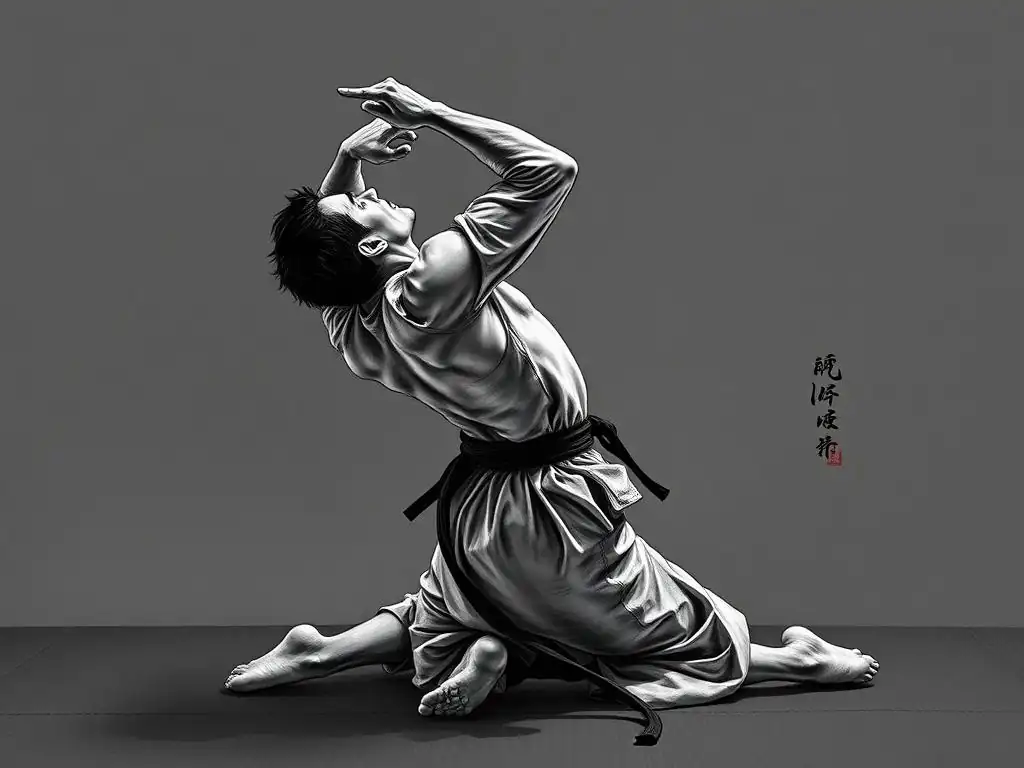
When a rear naked choke is deeply locked, with the attacker's arm fully under your chin and their hands tightly secured, the situation becomes extremely critical. At this point, the initial techniques like the chin tuck and roll may be much harder or impossible to execute due to the lack of space and pressure. Time is running out rapidly – you have mere seconds before losing consciousness. In this dire scenario, Krav Maga emphasizes resorting to more aggressive, often brutal, techniques that target the attacker's most vulnerable points to force an immediate release.
The focus shifts from subtle body mechanics to causing immediate, unbearable pain or completely disrupting the attacker's balance and structure. These techniques are considered advanced not because they are complex, but because they are last-ditch efforts for survival when less aggressive methods are no longer viable. They require a strong mental commitment to cause harm and are only used when facing imminent, severe threat. Training for this includes understanding the extreme urgency and overcoming the natural hesitation to inflict serious injury.
Using Pain Compliance Techniques (e.g., Finger Break)
Against a deeply locked choke, pain compliance becomes a primary tool. The goal is to inflict such sudden and intense pain that the attacker involuntarily releases their grip or is significantly incapacitated. Targeting small, vulnerable areas is key. Examples include striking or gouging the eyes, biting, attacking the ears (cupping and striking simultaneously), or attempting to break fingers.
A common technique is to grab the attacker's fingers where their hands are locked together and attempt to bend them back forcefully to break them. While difficult to execute perfectly under extreme pressure, even bending the fingers back hard can cause enough pain to create a momentary opening. Similarly, biting down hard on the attacker's arm or hand that is around your neck can be effective. These methods are not guaranteed but offer a chance when other escapes are failing. They are high-risk, high-reward strategies employed when facing loss of consciousness.
Transitioning to a Takedown for Escape
Another advanced strategy against a deeply locked standing rear naked choke is to use your body weight and momentum to force a takedown, disrupting the attacker's balance and potentially breaking their grip. If you cannot break the grip directly, you might be able to make it untenable for the attacker to maintain the hold while staying on their feet. This can involve dropping your weight suddenly, driving forward into the attacker's legs like a tackle, or pulling them off balance while simultaneously attempting to escape the choke.
For instance, if you can secure a grip on the attacker's leg or waist, you can drive forward or sideways, forcing both of you to the ground. The impact of the fall, especially if you can control the angle to make the attacker fall awkwardly, can loosen or break the chokehold.
Alternatively, if you can step back and pull the attacker forward while dropping your weight, you might pull them off balance, forcing them to release the choke to catch themselves. This requires significant physical effort and can be risky, as you both end up on the ground, but it offers another avenue for escape when the choke is locked tight.
Preventing the Rear Naked Choke: Situational Awareness and Positioning
Identifying Pre-Attack Indicators
The best defense is always prevention. In the context of potential attacks like a rear naked choke, this starts with recognizing pre-attack indicators. Assailants planning such attacks often exhibit specific behaviors before making their move. These can include looking around excessively (scanning for witnesses or escape routes), focusing intently on a potential target, closing distance rapidly, attempting to get behind you, or displaying aggressive body language (clenched fists, squared stance, thousand-yard stare).
Being aware of these subtle cues in your environment can give you precious seconds to react before the attack is initiated. If someone is trying to position themselves directly behind you in an unusual manner, or if you notice someone following you too closely, these are significant warning signs. Recognizing these indicators allows you to change your path, create distance, or adopt a defensive posture before the attacker has a chance to apply the choke.
Maintaining Awareness of Your Surroundings
Situational awareness is a cornerstone of Krav Maga and crucial for preventing attacks like the rear naked choke. This means actively observing your environment rather than being distracted by phones or thoughts. Pay attention to who is around you, where they are positioned, and what they are doing. Avoid walking in isolated or poorly lit areas where an attacker can easily approach from behind unnoticed.
Regularly scanning your surroundings, checking behind you, and being aware of potential ambush points (like corners, doorways, or parked cars) significantly reduces the likelihood of being surprised by an attacker attempting a rear naked choke. This proactive mindset is vital; it's much easier to avoid or defend against an attack you see coming than one that takes you completely by surprise. This is equally important for preventing a potential Krav Maga wall choke defense scenario, where awareness can help you avoid being cornered in the first place.
Maintaining Balance and a Strong Base
An attacker attempting a standing rear naked choke often relies on pulling you off balance to make applying and maintaining the hold easier. Maintaining good balance and a strong, stable base makes you a harder target. This involves standing with your feet shoulder-width apart, knees slightly bent, ready to move in any direction. Avoid standing with your feet too close together or in a way that makes you easily pushed or pulled off balance.
If you feel someone getting too close behind you, slightly shifting your weight or turning your body can make it harder for them to secure the initial grip. Being stable allows you to resist being pulled backward or lifted, giving you more time and stability to execute your defensive techniques like the chin tuck, peel, or strikes. Training in Krav Maga emphasizes maintaining a ready stance and understanding how weight distribution affects your vulnerability to takedowns and controls from behind.
Training Drills for Krav Maga Rear Naked Choke Defense
Partner Drills: Practicing Grip Breaking and Escapes
Consistent partner drills are essential for developing effective rear naked choke defense skills in Krav Maga. These drills typically start with a partner applying a light, non-threatening rear naked choke grip. The defender practices the immediate response: tucking the chin, controlling the arm, and attempting the primary escapes like the chin tuck and roll or the peel and turn. The partner provides minimal resistance initially, allowing the defender to focus on the mechanics and sequence of the technique.
As proficiency increases, the partner gradually adds more resistance, simulating a more determined attacker. These drills help build muscle memory for the escape movements and improve the speed and efficiency of the techniques. They also help the defender get accustomed to the feeling of pressure around the neck, which is vital for managing panic in a real situation. Drills progress from static positions to dynamic scenarios where the "attacker" moves or attempts to secure the grip from different approaches.
Resistance Drills: Building Strength and Endurance
Beyond practicing the mechanics, resistance drills are crucial for building the physical strength and endurance needed to execute Krav Maga rear naked choke defenses effectively, especially the peel escape. In these drills, the partner applies a significant, but safe, amount of pressure with the choke grip (ensuring the defender can still breathe and tap out immediately). The defender then focuses on using maximum force to peel the hands apart, drive elbows down, or generate power for strikes like the hammer fist.
These drills are physically demanding and simulate the effort required to break a strong person's grip. They build forearm and hand strength for peeling, core strength for generating power in strikes, and overall endurance for continuing the defense under duress. Resistance drills are performed with strict safety protocols, including clear communication and immediate tapping, as the risk of losing consciousness is real if not managed carefully.
Scenario-Based Training: Simulating Real-World Attacks
To truly prepare for a real-world rear naked choke attack, Krav Maga incorporates scenario-based training. These drills simulate realistic attack situations under increased stress. The attacker might approach from an unexpected angle, during a distraction, or in an environment like a narrow hallway (potentially leading to Krav Maga wall choke defense scenarios). The defender is often put under mild physiological stress (e.g., after light exercise) to simulate the effects of adrenaline.
In these scenarios, the defender must not only apply the physical techniques but also make decisions under pressure, such as whether to strike, escape, or transition to a different defense. The attacker might not apply a perfect rear naked choke initially, forcing the defender to adapt their response. This type of training is invaluable for integrating all aspects of defense – physical technique, mental fortitude, situational awareness, and decision-making – into a cohesive, survival-oriented response.
Real-World Application: Case Studies of Krav Maga Rear Naked Choke Defenses
Case Study 1: Successful Escape in a Mugging Scenario
A report from a Krav Maga school in London highlighted a student's successful defense against a standing rear naked choke attempt during a mugging last year. The student, walking home late at night, was grabbed from behind by an assailant attempting to apply a chokehold. Reacting instantly based on training, the student tucked their chin forcefully, preventing the full lock, and simultaneously drove a sharp hammer fist backward into the attacker's groin.
The attacker immediately recoiled in pain, loosening their grip just enough for the student to execute a rapid peel of the remaining grip and spin away. The student then created distance and ran to safety. This case underscores the importance of immediate, aggressive counter-attack combined with grip disruption, a core principle of Krav Maga rear naked choke defense. The student's training provided the instinctual reaction needed under extreme stress, turning a potentially life-threatening situation into a successful escape.
Case Study 2: Utilizing Situational Awareness to Prevent the Choke
Another instance, documented by a Krav Maga instructor in New York, involved a practitioner who avoided a potential rear naked choke scenario entirely through situational awareness. While walking through a less-trafficked area, the practitioner noticed a man loitering who seemed to be paying excessive attention to them and attempting to subtly position himself behind them as they approached. Recalling training on pre-attack indicators, the practitioner immediately changed direction, crossed the street, and increased their pace, while maintaining visual contact with the individual.
The potential assailant did not pursue once the practitioner made it clear they were aware and changing course. This example demonstrates that the most effective Krav Maga defense is often prevention. By recognizing the warning signs and proactively removing themselves from the potential danger zone before the physical attack could be initiated, the practitioner successfully defended themselves without needing to engage physically. This highlights the critical role of awareness alongside physical techniques.
The Mental Aspect of Krav Maga Rear Naked Choke Defense
Overcoming Panic and Maintaining Focus
Facing a rear naked choke is terrifying. The feeling of being unable to breathe, the loss of control, and the rapid onset of dizziness can trigger intense panic, which severely impairs rational thought and motor skills. A critical component of Krav Maga training for this scenario is overcoming this panic and maintaining focus on the task at hand: survival. This is achieved through stress inoculation drills, where practitioners experience the physical sensations of being choked in a controlled environment, allowing them to become accustomed to the feeling and learn to manage their fear response.
By repeatedly practicing techniques under increasing levels of stress and pressure, the practitioner trains their body and mind to bypass the panic response and access the ingrained defensive reactions. Maintaining focus means concentrating solely on executing the immediate, necessary steps – tucking the chin, striking, peeling – rather than being overwhelmed by the perceived hopelessness of the situation. This mental resilience is as vital as the physical techniques themselves.
Developing a Proactive Mindset
Krav Maga instills a proactive, rather than reactive, mindset. When caught in a rear naked choke, this means immediately taking aggressive action to defend yourself, rather than passively waiting or hoping the attacker will stop. The moment you feel the hands come around your neck, your mind must shift into survival mode, ready to fight back with everything you have. This proactive approach is about recognizing that you are in a fight for your life and that hesitation can be fatal.
This mindset is cultivated through training that emphasizes immediate, explosive responses and the principle of simultaneously defending and attacking. It's about refusing to be a victim and taking immediate steps to regain control of the situation, even from a position of extreme disadvantage. This is crucial whether dealing with a standard standing choke or potentially a Krav Maga wall choke defense scenario where the environment adds complexity.
Visualizing Successful Escapes Under Pressure
Mental rehearsal and visualization are powerful tools in Krav Maga training. Regularly visualizing yourself successfully executing rear naked choke defenses under pressure can help reinforce the techniques and build confidence. Imagine the feeling of the choke, the surge of adrenaline, and then calmly and effectively performing the chin tuck, strikes, and escape.
This mental practice helps solidify the sequence of actions and builds a positive mental script for dealing with the threat. It prepares your mind to access the trained responses automatically, even when your conscious thought is impaired by stress. Visualizing success under pressure helps override the natural instinct to freeze or panic, replacing it with a programmed response focused on effective action and survival.
Conclusion: Mastering Krav Maga Rear Naked Choke Defense for Self-Preservation
The Importance of Consistent Training and Repetition
Mastering Krav Maga rear naked choke defense, or any self-defense technique, is not a one-time achievement but an ongoing process that demands consistent training and repetition. The techniques, while simple in principle, require significant practice to become automatic responses executable under the extreme stress of an actual attack. Muscle memory is built through countless repetitions, ensuring that your body knows what to do even when your mind is reeling from panic.
Regular training sessions, including partner drills, resistance work, and scenario practice, are vital to keep these skills sharp. Techniques can degrade over time without reinforcement. Therefore, committing to consistent training is paramount for anyone serious about being able to defend themselves effectively against a rear naked choke or similar threats, including adapting skills for Krav Maga wall choke defense situations.
Continuous Improvement and Adaptation
The world of self-defense is dynamic. Attackers adapt, and situations vary. Therefore, continuous improvement and the ability to adapt are key aspects of mastering Krav Maga rear naked choke defense. This involves not only refining the core techniques but also understanding how they might need to be modified based on the attacker's size, strength, or environmental factors (like being against a wall, which requires specific Krav Maga wall choke defense adjustments).
Staying engaged with training, seeking feedback from instructors, and practicing variations of techniques helps ensure that your skills remain relevant and effective against a range of potential threats. The goal is to develop a deep understanding of the principles of defense – creating space, disrupting the grip, aggressive counter-attack – which can then be applied and adapted to various standing choke scenarios, ensuring the highest chance of survival and self-preservation.
Frequently Asked Questions
How does Krav Maga specifically address wall choke situations?
Krav Maga focuses on immediate threat neutralization and escape techniques. In a wall choke situation, this involves creating space, disrupting the attacker's grip, and delivering strikes to vulnerable areas.
What are the primary goals of Krav Maga wall choke defense?
The main goals are survival and escape. This means preventing unconsciousness, creating an opportunity to disengage, and transitioning to a more advantageous position for self-defense.
What types of strikes are typically employed in Krav Maga's wall choke defense?
Krav Maga utilizes close-quarters strikes like palm strikes, elbows, and knees. These are aimed at vulnerable targets such as the groin, eyes, and throat to disrupt the attacker's hold.
How does Krav Maga training prepare individuals for the psychological stress of a wall choke?
Krav Maga training emphasizes realistic scenario drills under simulated stress. This helps practitioners develop the mental fortitude and instinctive responses needed to react effectively under pressure.
What is the importance of situational awareness in preventing wall choke attacks, according to Krav Maga philosophy?
Situational awareness is crucial for proactive self-defense. By recognizing potential threats and vulnerabilities in your surroundings, you can avoid being caught in a position where a wall choke is possible, and minimize the risk of attack.
Okay, here's a final reflection tailored for your "Wall Choke Nightmare: Krav Maga Survival Techniques When Trapped" article, designed to resonate with readers and encourage further engagement with the topic of self-defense:
Final Reflection: Embracing Resilience Under Pressure
The techniques explored in this article, detailing Krav Maga's wall choke defenses, are not merely theoretical exercises; they represent a vital lifeline in situations where survival hinges on split-second reactions. In a world where personal safety can be unexpectedly threatened, understanding and practicing these defenses empowers individuals to reclaim control and potentially escape life-threatening scenarios.
This exploration of Krav Maga's wall choke defense underscores the profound impact that proactive self-defense training can have on our sense of security and well-being. The ability to react decisively under duress is a skill that transcends physical combat, fostering mental resilience and a heightened awareness of our surroundings. The best fight is the one you avoid, but you must be prepared for the one you cannot.
This quote encapsulates the essence of Krav Maga: a pragmatic approach to self-preservation that prioritizes awareness, prevention, and, when necessary, decisive action.
As you reflect on the techniques presented, consider how you can integrate them into your own life. Take the initiative to learn, practice, and refine your self-defense skills. By embracing the principles of Krav Maga, you not only equip yourself with the tools to survive a wall choke nightmare, but you also cultivate a mindset of resilience, empowerment, and unwavering self-reliance that will serve you well in all aspects of life.
Unleash Your Inner Warrior: Take Control!
Thanks for diving into the world of Krav Maga and learning how to escape a wall choke! We hope you've gained valuable insights into protecting yourself in a dangerous situation. Now it's time to put that knowledge into action and strengthen your defenses.
- Practice these techniques with a qualified instructor. Your safety and proficiency are paramount, and hands-on guidance is crucial.
- Share this article with friends and family to help them become more aware of self-defense tactics. Empower others to stay safe!
- Explore other Krav Maga techniques on Martial Arts Mastery and consider attending a local seminar to expand your knowledge.
What's one specific Krav Maga move you're excited to master this week?