
Integrating Ukemi into Aikido Techniques: A Seamless Transition

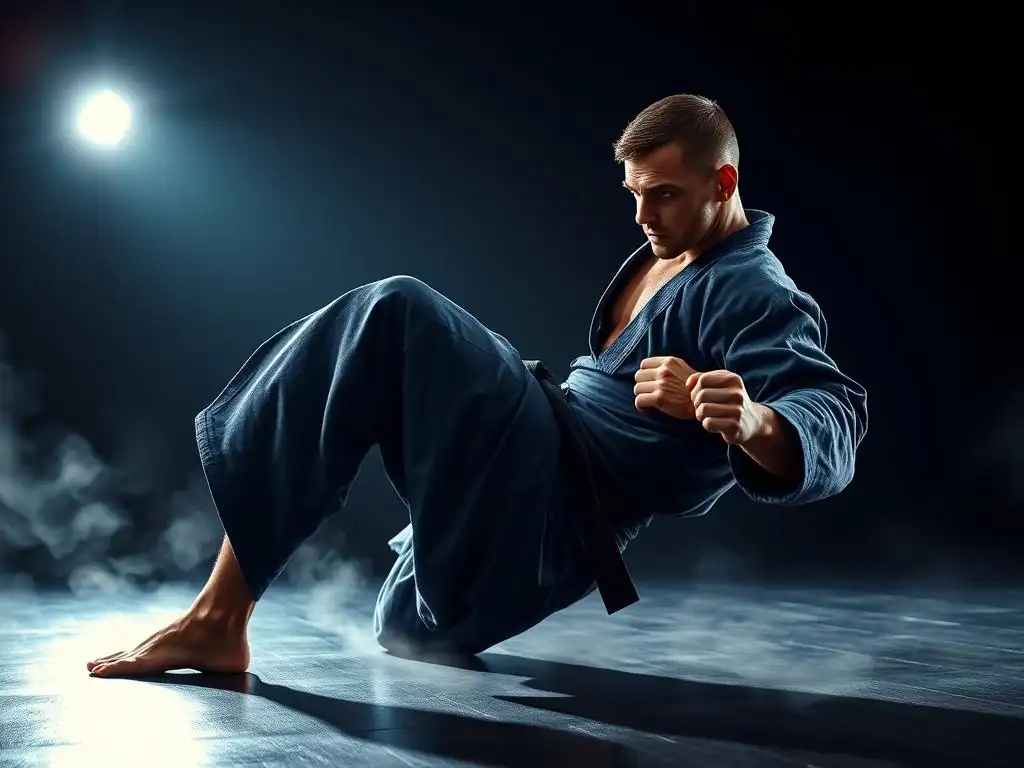
Welcome to Martial Arts Mastery, where we delve into the rich tapestry of martial arts traditions!
Ever wondered how to seamlessly blend defense and offense in Aikido? This article explores the crucial role of ukemi – breakfalling – not just as a reaction to a technique, but as an integral part of its execution. Discover how mastering Aikido ukemi transition techniques can elevate your practice and unlock a new level of fluidity and control. Are you ready to transform your understanding of Aikido?
- Understanding Ukemi and its Importance in Aikido
-
Mastering Fundamental Aikido Ukemi Techniques
- Front Ukemi (Forward Breakfall): Execution and Drills
- Back Ukemi (Backward Breakfall): Ensuring Safety and Control
- Side Ukemi (Sideways Breakfall): Maintaining Balance and Awareness
- Zempo Kaiten Ukemi (Forward Rolling Breakfall): Developing Smooth Transitions
- Ushiro Kaiten Ukemi (Backward Rolling Breakfall): Mastering Circular Motion
- Integrating Ukemi into Aikido Techniques: Practical Applications
- Advanced Ukemi and Aikido Technique Integration
- Common Mistakes to Avoid When Integrating Ukemi into Aikido
- The Benefits of Consistent Ukemi Practice for Aikido Practitioners
- Ukemi Training Exercises for Seamless Aikido Transitions
- Refining Your Aikido Through Ukemi Mastery
-
Frequently Asked Questions
- What is ukemi in the context of Aikido and why is it important?
- What does "seamless transition" mean in the context of ukemi and Aikido techniques?
- How can I improve my ukemi so that it enhances my Aikido performance?
- What are some common mistakes people make when learning ukemi and how can I avoid them?
- Are there specific ukemi transition techniques that are more important for self-defense applications of Aikido?
- Final Reflection: Embracing the Flow of Ukemi
- Embrace the Fall: Elevate Your Aikido Now!
Understanding Ukemi and its Importance in Aikido
What is Ukemi? The Foundation of Aikido Safety and Technique
Ukemi, often translated as "receiving the technique," is the art of knowing how to fall or roll safely when thrown or unbalanced in Aikido. It is not merely about hitting the mat without injury; it is a dynamic response that allows the practitioner (uke) to safely absorb the energy of a technique applied by their partner (nage). Mastery of ukemi is fundamental because Aikido techniques often involve projections and pins that disrupt the uke's balance and structure. Without reliable ukemi, training partners risk serious injury, making consistent practice impossible.
Beyond simple safety, ukemi is deeply intertwined with the technical understanding of Aikido. A well-executed ukemi provides immediate feedback on the effectiveness and direction of nage's technique. It allows uke to feel the vectors of force, the points of imbalance, and the timing of the movement. This sensory information is crucial for uke to learn the technique from the receiving end, contributing significantly to their overall Aikido development. It transforms falling from a passive consequence into an active part of the learning process.
Why Ukemi is Crucial for Effective Aikido Practice
Effective Aikido practice relies heavily on mutual trust and safety between partners. When uke is confident in their ability to perform ukemi, they can commit fully to receiving nage's technique without hesitation or stiffness born of fear. This allows nage to practice techniques with appropriate speed and power, leading to more realistic and dynamic training. Without solid ukemi skills across the dojo, training sessions would be limited to slow, tentative movements, hindering the development of spontaneous and powerful Aikido.
Furthermore, ukemi develops essential physical attributes critical for Aikido: body awareness, coordination, relaxation under pressure, and resilience. Practitioners learn to distribute impact, maintain a relaxed core while extremities are in motion, and recover quickly. These are not just skills for falling; they are integral to executing Aikido techniques as nage as well. The ability to relax and move fluidly under stress, honed through countless ukemi repetitions, directly translates to improved tai sabaki (body movement) and more effective technique application. A dojo where students prioritize ukemi typically exhibits higher overall technical proficiency and fewer training-related injuries.
The Link Between Ukemi and Fluid Aikido Movements
Ukemi is not an isolated skill; it is the receiving end of a continuous flow of energy and movement that characterizes Aikido. The transition from being the recipient of a technique to performing ukemi should be seamless, almost an extension of nage's movement rather than an abrupt reaction. This seamless Aikido ukemi transition is vital for maintaining the harmony and non-resistance principles central to the art. When uke resists or anticipates poorly, the movement becomes jerky and inefficient.
Mastering ukemi allows the uke to blend with the force, utilizing rolling or falling motions to dissipate energy and regain stability. This requires a deep understanding of momentum and balance, skills directly applicable to executing techniques as nage. For instance, the ability to control one's own center during a roll enhances the ability to control a partner's center during a throw. The fluidity developed through performing numerous Aikido ukemi transition techniques allows practitioners to move with grace and power, making their Aikido more effective and aesthetically pleasing.
Mastering Fundamental Aikido Ukemi Techniques
Front Ukemi (Forward Breakfall): Execution and Drills
Front ukemi, or mae ukemi, is a fundamental breakfall used when falling directly forward, often from techniques like ikkyo or sankyo. The key principle is to absorb the impact across a large surface area rather than a single point. Typically, this involves extending one arm forward and slightly to the side, striking the mat with the forearm and hand simultaneously with the impact of the body, specifically the side of the torso and hip.
The head should be tucked to protect it from hitting the ground. Proper execution requires relaxation and a slight curve in the body to roll out some of the energy.
Drills for front ukemi often start from a kneeling position, practicing the forward fall and slap motion to build confidence and correct form. As proficiency increases, the drill progresses to standing height, and eventually incorporates a step forward before falling. A common practice involves walking forward and initiating the breakfall, focusing on timing the slap with the body's impact. Repetition, perhaps 20-30 repetitions per side in a typical warm-up, is crucial to make this response instinctive and safe.
Back Ukemi (Backward Breakfall): Ensuring Safety and Control
Back ukemi, or ushiro ukemi, is used when falling directly backward, frequently encountered in techniques like iriminage or kokyunage. The goal is to protect the spine and head by rolling the impact across the back and shoulders. This is achieved by tucking the chin tightly to the chest and rounding the back. As the body falls backward, one or both arms strike the mat out to the sides at an angle (approximately 45 degrees) to help dissipate the energy and control the fall. The strike should occur simultaneously with the main body impact.
Training for back ukemi often begins from a seated position, practicing rocking backward and striking the mat. This helps beginners get used to the feeling of rolling on the back and the timing of the arm strike. Progressions involve falling from a kneeling position, then from standing. A common drill is simply falling backward from a standing posture, ensuring the chin is tucked and the strike is effective. Practicing this multiple times, perhaps 15-20 repetitions per session, builds muscle memory for a safe backward fall.
Side Ukemi (Sideways Breakfall): Maintaining Balance and Awareness
Side ukemi, or yoko ukemi, is used when falling to the side, often occurring during techniques like kotegaeshi or when swept off balance laterally. This breakfall involves falling onto the side of the body, absorbing the impact along the outer leg, hip, and torso. Similar to other breakfalls, the arm on the side of the fall strikes the mat to help absorb energy and prevent head impact. The head should be lifted slightly off the mat or turned away from the direction of the fall.
Drills for side ukemi can start from a seated position, leaning to the side and practicing the fall and strike. From kneeling, practitioners can practice falling sideways, ensuring the strike is strong and the body is aligned to distribute the impact. Standing drills involve stepping sideways and initiating the fall, or being gently pushed off balance to the side by a partner. Focusing on keeping the body relatively straight (not twisting) during the fall and striking firmly are key points. Regular practice, maybe 10-15 times on each side per session, enhances lateral stability awareness.
Zempo Kaiten Ukemi (Forward Rolling Breakfall): Developing Smooth Transitions
Zempo kaiten ukemi is the forward rolling breakfall, a hallmark of seamless Aikido ukemi transition techniques. It is used when the force applied by nage causes uke to roll forward, often seen in techniques like shihonage or certain iriminage variations.
The goal is to roll smoothly from one shoulder diagonally across the back to the opposite hip, dissipating energy through the motion rather than a hard impact. The head is tucked throughout the roll, and the lead arm is used to initiate and guide the roll, while the trailing arm may strike the mat at the end of the roll to help stand up or regain balance.
Training begins from a kneeling or squatting position, practicing the roll over the shoulder, ensuring the head stays tucked and the body rolls smoothly along the diagonal line. As students become comfortable, they practice from standing, stepping forward and rolling. Partner drills involve receiving a gentle push or being led through a technique like shihonage slowly to practice the rolling ukemi. The key is to maintain a relaxed, rounded shape and avoid collapsing or rolling directly over the spine. Aim for 15-20 rolls per side during practice sessions to build fluidity.
Ushiro Kaiten Ukemi (Backward Rolling Breakfall): Mastering Circular Motion
Ushiro kaiten ukemi is the backward rolling breakfall, essential for receiving techniques that send uke backward in a circular path, such as certain kokyunage applications or when recovering from a forward motion. This roll involves going backward over one shoulder, rolling diagonally across the back to the opposite hip or knee. Like the forward roll, the head must be tucked, and the body should maintain a rounded shape. The movement often starts from a standing or kneeling position and involves sitting back and initiating the roll over one shoulder.
Practicing ushiro kaiten ukemi often starts from a seated position, rocking backward and rolling over the shoulder. From standing, practitioners step backward or simply drop their weight to initiate the roll. Partner drills involve receiving techniques like ushiro tekubidori kokyunage (rear wrist grab breath power) where the backward roll is the natural response. Mastering this roll requires overcoming the natural inclination to resist backward movement and trusting the rounded shape to protect the body. Consistent practice, perhaps 10-15 rolls per side, improves comfort and control with backward motion.
Integrating Ukemi into Aikido Techniques: Practical Applications
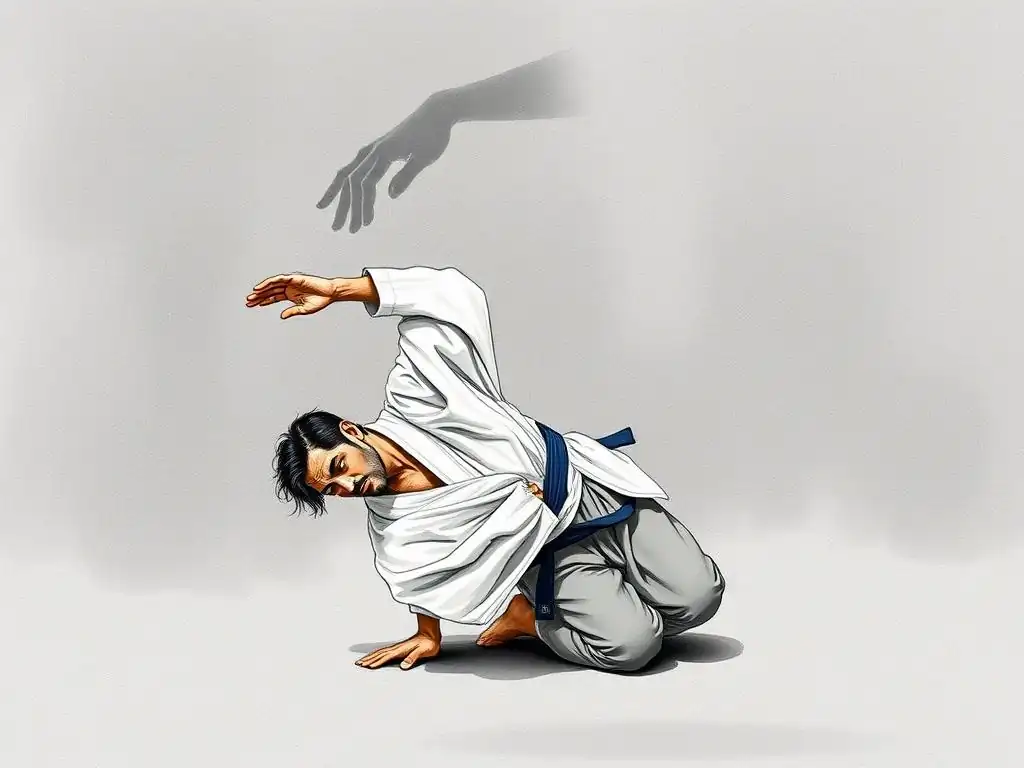
Drills for Seamless Ukemi Transitions in Aikido
Drills specifically designed for seamless Aikido ukemi transition techniques bridge the gap between practicing ukemi in isolation and applying it within the context of a full technique. One effective drill is the 'flow drill,' where nage applies a technique very slowly, guiding uke through the entire movement cycle, including the breakfall or roll, and then immediately transitioning into the next repetition or a different technique. This helps uke feel the connection between nage's action and their own ukemi response.
Another drill involves practicing the recovery from ukemi. After performing a roll or breakfall, uke immediately practices getting back to their feet safely and efficiently, preparing to receive the next technique or move. This emphasizes that ukemi is not the end of the interaction but a point of transition. Practicing 10-15 full technique-to-ukemi-to-recovery cycles with a partner, focusing on smoothness rather than speed, significantly improves the flow and integration of ukemi.
Combining Ukemi with Tai Sabaki (Body Movement) for Enhanced Flow
The synergy between ukemi and tai sabaki is crucial for dynamic Aikido. Tai sabaki allows uke to adjust their position and balance before the point of being completely thrown, often turning a hard fall into a softer roll or even avoiding the full force of the technique. Integrating ukemi with tai sabaki means learning to use body movement to facilitate the ukemi, making it less of a breakfall and more of a continuation of the technique's energy.
For example, when receiving shihonage, uke's tai sabaki (often an irimi or tenkan movement) can help guide the body into the forward roll (zenpo kaiten ukemi) rather than just falling stiffly. By yielding and turning with the technique's direction, uke can transition smoothly into the roll. Drills that focus on uke's movement during nage's application, encouraging uke to step or turn into the roll or fall, are invaluable for developing this integrated awareness. Practicing specific techniques slowly, with explicit attention to uke's footwork and body alignment leading into ukemi, is a key training method.
Integrating Ukemi into Shihonage
Shihonage (four-direction throw) is a classic technique where integrating ukemi is paramount. When nage applies shihonage, the uke is typically led upward and then rotated, causing them to lose balance and be projected forward. The most common ukemi response is zenpo kaiten ukemi (forward rolling breakfall). The seamless Aikido ukemi transition techniques here involve uke relaxing their arm and shoulder, allowing the energy of the rotation to guide them into a forward roll over the extending arm.
A common training scenario involves nage executing shihonage, guiding uke's arm high and turning. As uke's balance is broken and they are led forward, they initiate the zenpo kaiten ukemi, rolling diagonally over the shoulder corresponding to the held arm. A good transition means uke's body forms a rounded shape, rolling smoothly over the back, protecting the spine and head. Practicing shihonage with a focus solely on uke's relaxed arm and smooth roll, perhaps 10-15 repetitions per side, refines this specific ukemi transition in Aikido.
Integrating Ukemi into Iriminage
Iriminage (entering throw) is another foundational Aikido technique that demands effective ukemi, often ushiro ukemi (backward breakfall) or sometimes zenpo kaiten ukemi depending on the specific entry and application. In a standard iriminage where nage enters past uke and throws them backward, uke is typically sent off balance backward or diagonally. The seamless Aikido ukemi transition here involves uke tucking their chin, rounding their back, and performing ushiro ukemi, striking the mat to dissipate force.
Alternatively, some iriminage variations lead uke in a circular path, resulting in a forward roll. The key ukemi transition in Aikido here is uke recognizing the direction of force and initiating the appropriate roll or breakfall without resistance. Drills for iriminage ukemi often involve nage controlling uke's head or neck area and guiding them into the fall or roll, emphasizing relaxation and proper head position. Practicing 10-15 repetitions of iriminage focusing on uke's safe and responsive ukemi builds essential defensive reflexes.
Integrating Ukemi into Kotegaeshi
Kotegaeshi (forearm return) is a wrist lock and throw that typically results in uke being projected forward or sideways, often requiring yoko ukemi (sideways breakfall) or occasionally zenpo kaiten ukemi (forward roll). The technique breaks uke's balance using leverage on the wrist and forearm, causing them to fall in the direction of the twist. The seamless Aikido ukemi transition techniques here involve uke yielding to the wrist control and using their body to roll or fall safely, rather than resisting the painful joint lock.
When receiving kotegaeshi, uke must relax the wrist and allow the force to travel up the arm and through the body, initiating a sideways fall or forward roll. The yoko ukemi is common, where uke falls to the side, striking the mat with the free arm while protecting the head and allowing the body to absorb impact. Practicing kotegaeshi slowly, focusing on uke's ability to relax the wrist while initiating ukemi, is critical. Around 10-15 repetitions per side helps uke develop the coordination needed for this specific ukemi transition in Aikido.
Advanced Ukemi and Aikido Technique Integration
Reacting to Unforeseen Circumstances with Adaptive Ukemi
Advanced ukemi is not just about executing perfect basic forms; it's about adapting those forms to imperfect or unforeseen circumstances. In a dynamic interaction, a technique might not be applied cleanly, or the environment might be uneven. Adaptive ukemi involves adjusting the angle of the fall, the timing of the slap, or even transitioning from one type of ukemi to another mid-fall. This requires a deep understanding of body mechanics and the ability to make split-second decisions based on how balance is being lost.
Consider a scenario where uke expects a forward roll from shihonage but is slightly off-balance laterally. Instead of forcing a perfect roll, adaptive ukemi might involve transitioning into a combination of a roll and a side breakfall (yoko ukemi) to distribute the impact effectively. Training for this involves practicing techniques in less controlled environments (with permission and supervision), or having nage apply techniques with slight variations in angle or timing to encourage uke's spontaneous adaptation. This level of Aikido ukemi transition techniques comes only after years of consistent practice and body awareness.
Using Ukemi to Create Opportunities for Counter-Attacks
While primarily defensive, advanced ukemi can also be used offensively. By performing ukemi efficiently and recovering quickly, uke can immediately transition from receiving a technique to initiating one of their own. This requires not just a safe fall but a controlled recovery that places uke in a position of advantage relative to nage, who may be momentarily off-balance or focused on completing their technique. The speed and control of the Aikido ukemi transition are key here.
An example might be receiving a weak or incomplete throw, performing ukemi, and immediately springing back up or rolling into a position to apply a pin or throw on the original nage. This isn't about resisting the initial technique but about using the momentum of the fall and the efficiency of the recovery to create a new opportunity. Practicing randori (free practice) is essential for developing this skill, as it allows for spontaneous reactions and the exploration of these transitionary moments. Drills focused on rapid recovery and immediate follow-up after ukemi are also beneficial.
Ukemi as a Form of Deception and Control in Aikido
In highly advanced practice, ukemi can even become a tool of deception or control. By performing ukemi in a certain way, uke might subtly influence nage's balance or create an opening. This is not about faking a fall but about using the natural dynamics of the fall and recovery to guide or misdirect nage's energy. It requires exquisite timing and sensitivity to nage's movement and intention. The seamless Aikido ukemi transition techniques become almost invisible, blending completely into the interaction.
For instance, in response to a technique, uke might initiate a roll that slightly pulls nage off-center, or recover in a way that forces nage to adjust their posture, potentially exposing a weakness. This level of integration is rare and requires a deep, intuitive understanding of Aikido principles and partner dynamics. It highlights how ukemi is far more than just falling safely; it is an integral, dynamic, and potentially proactive element within the overall flow of Aikido technique.
Common Mistakes to Avoid When Integrating Ukemi into Aikido
Neglecting Proper Form in Ukemi Drills
A critical error is practicing ukemi with poor form, especially during isolated drills. While it might feel sufficient at slow speeds or with gentle partners, incorrect habits become dangerous when techniques are applied with more energy or surprise. Common mistakes include failing to tuck the chin, striking the mat incorrectly (e.g., with a locked elbow or flat palm), or landing stiffly instead of rolling or distributing impact. Forgetting the basic principles learned during solo ukemi practice is detrimental when attempting Aikido ukemi transition techniques within a technique.
For example, failing to tuck the chin during ushiro ukemi risks serious head or neck injury, regardless of how smoothly the technique leading to the fall was applied. Similarly, landing with a stiff, outstretched arm during mae ukemi can result in wrist or elbow injuries. Consistent, mindful practice of fundamental ukemi drills, even for experienced practitioners, is essential to reinforce correct, safe patterns of movement. Regularly reviewing the basics prevents the development of unsafe habits that undermine the effectiveness and safety of integrated ukemi.
Rushing the Transition Between Technique and Ukemi
Another frequent mistake is rushing the ukemi transition in Aikido, attempting to fall or roll before the technique has fully broken balance or guided the movement. This often results from anticipation or fear. Rushing can lead to resisting nage's energy, creating stiffness, or executing the ukemi at the wrong angle or time, which increases the risk of injury and disrupts the flow of the technique. The transition should be a natural consequence of the technique's application, not a premature reaction.
Instead of rushing, uke should strive to remain relaxed and centered for as long as possible, allowing nage's technique to naturally lead them into the fall or roll. This requires trust in both nage's skill and one's own ukemi ability. Practicing techniques at a slower tempo, with nage explicitly guiding uke through the transition point, helps uke learn to feel the moment when ukemi is the appropriate and natural response. Focusing on smoothness over speed in Aikido ukemi transition techniques is key.
Ignoring the Importance of Partner Communication
Effective ukemi and seamless integration into techniques rely heavily on non-verbal communication and sensitivity between partners. Ignoring cues from nage, such as the direction of force or the timing of a movement, leads to mistiming the ukemi. Conversely, nage must also be sensitive to uke's ability and limitations, applying techniques in a way that allows uke to perform ukemi safely. A lack of this mutual sensitivity undermines the safety and learning potential of the practice.
For instance, nage should avoid applying techniques with excessive force or speed that prevents uke from executing ukemi properly, especially with less experienced partners. Uke, in turn, should provide clear, albeit non-verbal, feedback through their body dynamics. This continuous loop of action and reaction, guided by sensitivity, makes the Aikido ukemi transition techniques truly seamless and safe. Consciously focusing on maintaining connection and responding to the partner's energy during practice is vital.
The Benefits of Consistent Ukemi Practice for Aikido Practitioners
Increased Confidence and Reduced Fear of Falling
Perhaps the most immediate and significant benefit of consistent ukemi practice is the reduction of the fear of falling. Falling is an inherent part of Aikido training, and initial apprehension is natural. By repeatedly practicing safe falling techniques, practitioners build confidence in their ability to protect themselves. This increased confidence allows them to train more freely, commit more fully to receiving techniques, and explore more dynamic movements without the paralyzing fear of injury.
This reduced fear is not just psychological; it has a tangible impact on physical performance. When fear is present, the body tenses up, which makes falling more dangerous and ukemi less effective. By replacing fear with confidence, practitioners remain more relaxed, allowing their bodies to move fluidly into the ukemi, distributing impact effectively. This positive feedback loop – better ukemi leads to less fear, which leads to more relaxed practice, which leads to even better ukemi – is crucial for progress.
Improved Body Awareness and Coordination
Ukemi demands a high degree of body awareness. Practitioners must know where their limbs are in space, how to orient their body relative to the ground, and how to coordinate multiple actions simultaneously (tucking the chin, rounding the back, striking the mat, controlling breath). This constant focus on bodily mechanics significantly enhances proprioception and overall coordination. The ability to move different parts of the body independently yet harmoniously, developed through ukemi, is a cornerstone of effective Aikido technique as both uke and nage.
Consider the complexity of zenpo kaiten ukemi, which requires a precise diagonal roll, arm placement, head tuck, and often a final strike or recovery movement, all happening rapidly. Mastering this movement pattern builds intricate neuromuscular coordination. This improved body control translates directly to better tai sabaki, more powerful and controlled technique execution, and greater overall physical grace within Aikido practice.
Enhanced Ability to Absorb and Redirect Force
At its core, ukemi is about managing energy – specifically, the energy of the technique applied by nage. Consistent practice trains the body to absorb impact safely by distributing it over a larger area and to dissipate energy through rolling or yielding movements. This skill in receiving and neutralizing force is directly applicable to Aikido principles, where the goal is often to blend with an attack's energy and redirect it, rather than meet it with force.
By repeatedly experiencing and safely handling the forces involved in throws and projections, practitioners develop an intuitive understanding of vectors, momentum, and yielding. This understanding informs their practice as nage, helping them apply techniques in a way that is effective yet allows for safe ukemi. The ability to absorb and redirect force, honed through countless repetitions of Aikido ukemi transition techniques, is a fundamental skill that permeates all aspects of Aikido practice.
Ukemi Training Exercises for Seamless Aikido Transitions
Solo Ukemi Drills for Improving Technique
Solo ukemi drills are fundamental for building the basic mechanics and confidence required for integrated practice. These can be performed anywhere with a safe surface. Examples include:
- Seated Back Roll: Sit, tuck chin, round back, rock backward onto shoulders, roll over one shoulder, recover. Repeat 15-20 times per side.
- Kneeling Forward Roll: Kneel, place one hand forward, tuck head, roll over the shoulder diagonally across the back to the opposite hip. Repeat 15-20 times per side.
- Standing Breakfall Practice: Practice falling forward (mae ukemi), backward (ushiro ukemi), and sideways (yoko ukemi) from a standing position, focusing purely on safe impact absorption and head protection. Do 10-15 repetitions for each type.
Task List: Solo Ukemi Practice Goals
- [x] Practice Seated Back Rolls (15/side)
- [x] Practice Kneeling Forward Rolls (15/side)
- [ ] Practice Standing Breakfalls (10/type)
- [ ] Focus on chin tuck and relaxation
- [ ] Ensure proper arm strike timing
These solo exercises isolate the mechanics of the ukemi itself, allowing practitioners to focus on form without the added complexity of a partner's technique. They build the muscle memory and confidence necessary for the seamless Aikido ukemi transition techniques that occur during partnered practice.
Partnered Ukemi Drills for Realistic Scenarios
Partnered drills introduce the element of interaction and the timing required for ukemi transition in Aikido. These drills help uke learn to respond to nage's movement and energy. Examples include:
- Guided Rolls/Falls: Nage gently guides uke through the motion of a technique (e.g., shihonage, iriminage) at a very slow pace, ensuring uke performs the correct ukemi safely. Nage provides verbal cues ("Relax," "Roll now"). Repeat 10-15 times per technique.
- Progressive Speed Drills: Start a technique very slowly, with nage gradually increasing the speed and power as uke demonstrates comfort and safe ukemi. This helps uke adapt to receiving techniques at different intensities.
- Reaction Drills: Nage applies a portion of a technique that clearly indicates the direction of the throw (e.g., just the initial off-balance for iriminage, the arm raise for shihonage), and uke must react immediately with the appropriate ukemi. This sharpens uke's responsiveness.
These partner drills are crucial for integrating ukemi into the dynamic context of Aikido techniques. They teach uke to feel the technique's energy and transition smoothly into the fall or roll, developing realistic Aikido ukemi transition techniques under varying levels of pressure.
Incorporating Ukemi into Randori (Free Practice)
Randori, or free practice, is the ultimate test of integrated ukemi skills. In randori, techniques are applied spontaneously, and uke must react instantly and appropriately with ukemi. This is where all the solo and partnered drill practice culminates. Safe and effective participation in randori is impossible without reliable ukemi and the ability to execute seamless Aikido ukemi transition techniques under dynamic conditions.
During randori, practitioners don't consciously decide to do ukemi; their training should make it an instinctive response. The focus shifts from the mechanics of the fall to the overall flow of the interaction. Uke must maintain awareness, anticipate subtle cues, and yield to force, allowing the ukemi to happen naturally as a part of the technique's completion.
Reflecting on randori sessions – identifying moments where ukemi was difficult or awkward – can provide valuable insights for future focused training. Engaging in randori regularly, perhaps 10-15 minutes per session, pushes practitioners to apply their Aikido ukemi transition techniques in a realistic, flowing manner.
Refining Your Aikido Through Ukemi Mastery
The Role of Ukemi in Achieving Aikido's Principles of Harmony
Aikido's principles, such as blending with force (awase), non-resistance (ju), and centering (seika tanden), are deeply embodied in effective ukemi. Ukemi is the physical manifestation of yielding and blending with nage's energy rather than opposing it. A stiff, resistant uke makes ukemi difficult and dangerous, while a relaxed, yielding uke can be guided smoothly into a safe fall or roll, harmonizing with the technique's flow.
Mastering the seamless Aikido ukemi transition techniques teaches practitioners to receive energy without conflict, absorbing it and dissipating it safely. This understanding of yielding and blending as uke directly informs their ability to apply techniques as nage in a way that is effective yet non-injurious. By truly understanding how to receive force harmoniously through ukemi, practitioners gain deeper insight into applying force harmoniously, moving closer to the ideal of resolving conflict without harm.
Continuous Improvement in Ukemi: A Lifelong Pursuit
Ukemi is not a skill that is learned once and perfected. It requires continuous refinement throughout a practitioner's Aikido journey. As techniques become more complex, faster, or applied with greater variation, the demands on ukemi increase. Furthermore, maintaining physical flexibility, strength, and body awareness necessary for safe ukemi requires ongoing attention. Even high-ranking practitioners dedicate time to practicing fundamental ukemi drills.
Factors influencing ukemi effectiveness include physical condition, mat surface, partner's skill level, and even mental state (stress or fatigue can impede relaxation). Dedicated practitioners recognize that improving their Aikido ukemi transition techniques is an ongoing process, revisiting basics, seeking feedback from instructors, and pushing their comfort zone safely. A commitment to lifelong learning in ukemi is a commitment to lifelong learning in Aikido itself.
Ukemi: More Than Just Falling, It's Integral to Aikido Skill
Ukemi is far more than simply learning how to fall safely. It is a fundamental pillar of Aikido training, inextricably linked to technique application, physical conditioning, mental resilience, and the understanding of Aikido's core principles. Seamless Aikido ukemi transition techniques transform falling from a passive result into an active, responsive, and even dynamic part of the interaction.
Mastery of ukemi builds confidence, enhances body awareness, improves coordination, and teaches practitioners how to manage force effectively. It allows for realistic, dynamic, and safe training, benefiting both uke and nage. By dedicating consistent effort to solo drills, partnered practice, and application in randori, practitioners can refine their ukemi, making their Aikido smoother, safer, and more effective. The art of receiving is, in essence, the art of learning Aikido itself.
Frequently Asked Questions
What is ukemi in the context of Aikido and why is it important?
Ukemi refers to breakfalling or receiving techniques in Aikido. It's crucial for safety and skill development, allowing practitioners to absorb impact and maintain balance during throws and joint locks.
What does "seamless transition" mean in the context of ukemi and Aikido techniques?
A seamless transition implies a smooth and natural flow between receiving a technique (ukemi) and either continuing the encounter or safely disengaging. It emphasizes integrating the fall into your movement, rather than treating it as a separate event.
How can I improve my ukemi so that it enhances my Aikido performance?
Focus on consistent practice and proper form. Pay attention to body positioning, timing, and energy redirection. Regular drills with a partner and under the guidance of a qualified instructor are essential.
What are some common mistakes people make when learning ukemi and how can I avoid them?
Common mistakes include hesitation, improper body alignment, and failing to relax. Avoid these by practicing slowly, focusing on correct technique, and gradually increasing speed and complexity.
Are there specific ukemi transition techniques that are more important for self-defense applications of Aikido?
Yes, mae ukemi (forward roll) and ushiro ukemi (back fall) are particularly important for self-defense, as they allow you to quickly recover from a fall and maintain situational awareness, enabling you to defend yourself effectively.
Final Reflection: Embracing the Flow of Ukemi
The exploration of integrating ukemi into Aikido techniques reveals that true mastery lies not just in the execution of a technique, but in the seamless transition between attack and defense, action and reaction. This understanding transcends the dojo, offering a powerful metaphor for navigating the unpredictable currents of life itself.
The art of ukemi, often perceived as simply falling safely, is in reality a profound lesson in adaptability and resilience. It teaches us to accept the inevitable forces that push us off balance, to yield without breaking, and to transform potential defeat into an opportunity for renewed strength. The ultimate aim of Aikido lies not in defeating others, but in overcoming oneself.
- Morihei Ueshiba. This quote underscores the deeper meaning of ukemi, highlighting its role in personal growth and self-mastery, both on and off the mat.
Now, consider how you can apply the principles of ukemi to your own life. Are you resisting the inevitable changes that come your way, or are you learning to flow with them, transforming challenges into opportunities for growth? Embrace the fall, learn from the impact, and rise stronger than before. The seamless transition is not just a technique; it's a philosophy for living a more balanced and resilient life.
Embrace the Fall: Elevate Your Aikido Now!
Thank you for exploring the art of integrating Ukemi into your Aikido practice. We hope you’ve gained valuable insights into making your techniques more fluid and effective. Now it’s time to put that knowledge into action!
Here are a few ways to continue your Aikido journey:
- Prioritize Practical Application: Dedicate your next training session to consciously incorporating Ukemi into every technique. Feel the difference it makes in your balance and control.
- Explore Partner Drills: Find a training partner and experiment with different Ukemi variations for each technique. Focus on smooth transitions and responsive movements.
- Share Your Insights: Reflect on your experiences and share your challenges and breakthroughs in our online community forum at MartialArtsMastery.org. Let's learn from each other!
What specific Ukemi variation will you focus on mastering next? Share your choice and why in the comments below!