
The Evolution of Sparring: From Dojo Drills to HighStakes Competitive Bouts

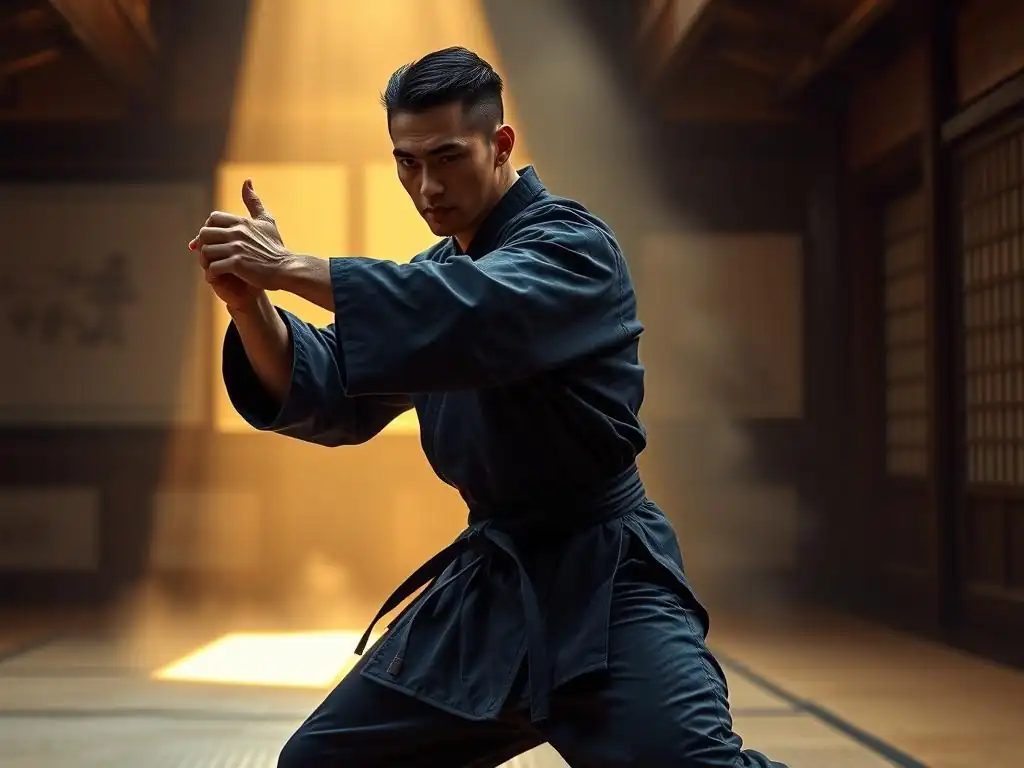
Welcome to Martial Arts Mastery, your definitive guide to the world's fighting arts! Delve into the fascinating history and ever-changing landscape of combat. Ever wondered how sparring transformed from structured dojo drills to the high-stakes competitive bouts we see today? Our latest article, "The Evolution of Sparring: From Dojo Drills to HighStakes Competitive Bouts," uncovers the secrets behind this evolution, exploring the key innovations and influences that shaped modern sparring techniques. Get ready to unlock a deeper understanding of this vital aspect of martial arts training and competition – the journey begins now!
- Introduction: Tracing the Origins of Sparring in Martial Arts
- The Development of Sparring Techniques Across Different Martial Arts
- The Standardization of Sparring Rules and Regulations
- Key Sparring Techniques Across Martial Arts Disciplines: A Detailed Look
- The Evolution of Sparring Training Methodologies
- Sparring in Modern Martial Arts Competitions
- The Future of Sparring: Innovations and Emerging Trends
- Conclusion: Sparring's Enduring Legacy in Martial Arts
-
Frequently Asked Questions
- What is meant by the "evolution" of sparring techniques in martial arts?
- How has the focus of sparring changed from traditional dojo drills to modern competitive bouts?
- What role does the historical context of martial arts play in understanding current sparring techniques?
- What are some key differences in sparring techniques between different martial arts disciplines?
- How can one effectively improve their sparring skills and overall martial arts proficiency?
- Final Reflection: Honing the Edge of Human Potential
- Ignite Your Inner Warrior: Master the Art of Sparring!
Introduction: Tracing the Origins of Sparring in Martial Arts
Sparring's Role in Traditional Martial Arts Training
In the foundational stages of many traditional martial arts, sparring, or a form of controlled practice against a partner, was not primarily focused on winning points or defeating an opponent outright. Instead, its core purpose was the practical application and testing of techniques learned in solo forms (kata) or pre-arranged drills. This early iteration of sparring techniques evolution martial arts served as a crucial bridge between theoretical knowledge and physical execution, allowing practitioners to develop essential attributes like timing, distance management, and reaction speed in a relatively safe environment.
The emphasis was on mutual learning and refinement. For instance, in Okinawan karate's early history, forms of yakusoku kumite (pre-arranged sparring) allowed students to understand the bunkai (application) of kata movements against a resisting, yet cooperative, partner. This wasn't a free-for-all fight; it was a structured exercise designed to deepen understanding of principles like body mechanics, balance disruption, and effective targeting, ensuring the sparring techniques evolution remained rooted in the art's original intent.
The Transition from Kata to Contact: Early Forms of Sparring
The journey from the solo practice of kata or repetitive basic drills to engaging with a live, unpredictable opponent marked a significant step in the development of martial arts training. Early forms of sparring often involved strict control, limited targets, and sometimes even predetermined outcomes to prevent serious injury in an era before protective gear was common. These controlled exchanges were essential for developing the practical side of self-defense.
Historical accounts and martial arts scrolls from various cultures depict training methods that included paired exercises simulating combat scenarios. In arts like Koryu (old school) Japanese martial arts, kumitachi (paired sword drills) or jujutsu forms involved highly specific, often dangerous-looking, techniques practiced with extreme precision and control. While not "free sparring" as we know it today, these were direct precursors, establishing the principle that techniques must be tested and adapted against a moving, thinking partner, driving the early martial arts sparring evolution.
The Development of Sparring Techniques Across Different Martial Arts
Sparring Styles in Karate: From Kumite to Modern Competition
Karate's journey with sparring is a prime example of the martial arts sparring evolution driven by both tradition and competition. Historically, kumite (sparring) evolved from highly structured, pre-arranged drills ( yakusoku kumite) to more free-form practice. Different karate styles developed distinct approaches; some emphasized full-contact exchanges focused on power and conditioning (like Kyokushin), while others moved towards lighter contact and control, prioritizing speed and precision (like Shotokan's early jiyu kumite).
The advent of sport karate significantly standardized and diversified karate sparring techniques. The World Karate Federation (WKF) Kumite rules, for instance, emphasize controlled techniques to specific scoring areas (head, body) with points awarded for clean, powerful, and well-timed strikes. This has led to the development of lightning-fast linear attacks, evasive footwork, and strategic feinting. In contrast, full-contact rulesets like those in Kyokushin often prohibit head punches but allow powerful body strikes and leg kicks, resulting in sparring techniques focused on relentless pressure, strong conditioning, and devastating power generation, showcasing varied sparring techniques evolution martial arts within a single discipline.
Muay Thai Clinch and Sparring Drills: A History
Muay Thai, the "Art of Eight Limbs," has always integrated realistic, hard sparring into its training methodology, reflecting its origins as a battlefield art. While formal rulesets for competition evolved over time, the core training incorporated sparring drills designed to build resilience, power, and practical fighting ability. The unique emphasis on the clinch ( plum) and the use of elbows and knees sets Muay Thai sparring apart.
Training often includes specific sparring techniques evolution martial arts drills like controlled clinching rounds, where practitioners practice dominant grips, knee strikes, and sweeps. Open sparring sessions are common, allowing fighters to practice combinations of punches, kicks, knees, and elbows at varying intensities. These sessions are vital for developing the fighter's 'ring IQ', timing for counter-attacks, and the ability to absorb and deliver powerful strikes, making Muay Thai sparring one of the most physically demanding and technically complete forms of striking practice.
Judo Randori: The Evolution of Free Practice
Judo's contribution to the martial arts sparring evolution is epitomized by randori, its form of free practice or sparring. Developed by Jigoro Kano, randori was designed to allow practitioners to apply techniques ( waza) against a resisting opponent in a dynamic, non-competitive environment focused on mutual welfare and benefit ( jita kyoei). Unlike pre-arranged drills, randori is spontaneous, forcing participants to react and adapt in real-time.
The evolution of Judo randori has been closely tied to its development as an Olympic sport. Early randori was perhaps closer to traditional Jujutsu, incorporating a wider range of joint locks and chokes. As Judo became a sport, the rules standardized, leading to a focus on specific throwing techniques ( nage-waza) and ground grappling ( katame-waza) that are permissible in competition. This evolution has refined judo sparring techniques, emphasizing grip fighting ( kumi-kata), efficient entry into throws, and strategic transitions between standing and ground phases, demonstrating a clear trajectory in sparring techniques evolution martial arts through sport.
Sparring in Western Boxing: A Comparative Analysis
Western Boxing sparring offers a valuable point of comparison in the history of sparring techniques evolution. Unlike many Eastern martial arts that originated with broader self-defense or military applications, boxing historically focused almost exclusively on stand-up striking with the hands. The evolution from bare-knuckle fighting to the padded gloves and timed rounds under rules like the Queensberry Rules fundamentally changed how boxing sparring was conducted and the techniques employed.
Boxing sparring is highly specialized, concentrating on footwork, head movement, punching mechanics (jab, cross, hook, uppercut), defensive maneuvers (blocking, slipping, rolling), and ring generalship. The introduction of padded gloves, notably larger ones for sparring than competition (e.g., 16oz vs. 10oz), allowed for more frequent and higher-intensity practice without severe hand injury or immediate knockout, enabling boxers to refine complex combinations and defensive sequences through repeated application in sparring. This specialized focus highlights how rule-sets and equipment directly influence sparring techniques development.
The Standardization of Sparring Rules and Regulations
The Influence of Competitive Martial Arts on Sparring Techniques
The formalization of martial arts into competitive sports has been a primary driver in the standardization and evolution of sparring techniques. Rulesets dictate what is permissible, scorable, and penalized, directly shaping training methodologies and preferred techniques. For example, point-fighting karate rules reward quick, accurate strikes to specific areas, leading practitioners to favor explosive, linear attacks and sophisticated timing over sustained power.
Similarly, the rules of sports like Taekwondo, with their emphasis on dynamic kicking techniques and electronic scoring systems, have led to the development of highly specialized footwork and spinning kicks optimized for generating power and scoring points under those specific conditions. The continuous refinement of rules in sports such as boxing, judo, and wrestling over decades has consistently pushed the boundaries of sparring techniques development within their respective domains, forcing athletes to adapt and innovate within the defined parameters.
The Introduction of Protective Gear and its Impact on Sparring
The widespread adoption of protective gear profoundly altered the nature and intensity of sparring across martial arts disciplines. Before gear like padded gloves, headgear, chest protectors, and shin guards became common, sparring was often limited in intensity, frequency, or realism due to the high risk of injury. The ability to practice at higher speeds and with greater force significantly accelerated the sparring techniques evolution.
In boxing, the introduction of padded gloves drastically reduced hand injuries and allowed for longer, more frequent sparring rounds, enabling fighters to develop complex defensive patterns and punch combinations. In arts like Taekwondo and sport Karate, chest protectors and headgear allowed for full-speed kicking and striking to the body and head, leading to the development of more dynamic and powerful techniques. While some argue gear reduces realism, it undeniably facilitates the higher volume and intensity of practice necessary for modern athletic performance and technique refinement in sparring.
Refereeing and Judging: Ensuring Fair Play in Sparring Matches
The implementation of formal refereeing and judging systems is integral to competitive sparring and, by extension, influences the sparring techniques evolution. Referees enforce the rules, manage the bout, and ensure safety, while judges evaluate techniques based on predefined criteria. This structure provides a framework for fair competition and incentivizes practitioners to develop techniques that are not only effective but also clearly demonstrable and scorable within the ruleset.
In sports like Judo and Taekwondo, specific criteria are used to award points for throws, holds, or strikes, requiring athletes to execute techniques with clear intent and control. In boxing and kickboxing, judges score rounds based on factors like effective aggression, ring generalship, defense, and clean striking. This system necessitates that athletes train to perform techniques that are not only powerful but also technically sound and visible to the judges, directly shaping the strategies and execution of sparring techniques development in a competitive context.
Key Sparring Techniques Across Martial Arts Disciplines: A Detailed Look
Striking Techniques in Sparring: From Jabs to Roundhouse Kicks
Striking is a fundamental element in many sparring styles, encompassing a vast array of techniques executed with hands, feet, elbows, and knees. The simplest yet most crucial strike is often the jab, a quick, straight punch used for distance management, setting up combinations, and disrupting an opponent's rhythm. Variations exist across arts; a boxer's jab is typically thrown from a bladed stance, while a karate tsuki might be more linear and delivered with hip rotation.
Kicking techniques also vary widely in sparring. Low roundhouse kicks are staples in Muay Thai and Kickboxing for attacking the legs and body, often delivered with significant power and conditioning. Taekwondo sparring, conversely, is renowned for its dynamic head kicks, spinning kicks, and fast, multiple kicking combinations executed with light, mobile footwork. The specific striking techniques evolution martial arts in sparring is heavily influenced by the art's focus and the rules under which it is practiced.
Grappling Techniques in Sparring: Takedowns, Submissions, and Control
Grappling techniques form the core of sparring in arts like Judo, Wrestling, and Brazilian Jiu-Jitsu (BJJ), and are increasingly important in MMA sparring. Takedowns are critical for bringing the fight to the ground, utilizing techniques like hip throws ( osoto gari in Judo), single/double leg takedowns (Wrestling/MMA), or trips. Sparring practice in these arts focuses on timing the entry, securing grips, and executing the takedown while maintaining balance and control.
Once on the ground, sparring shifts to positions, control, and submissions. BJJ sparring ( rolling) is a prime example, involving navigating complex positional hierarchies (guard, side control, mount, back control) and applying joint locks (armbars, kimuras) or chokeholds (rear-naked choke, triangle choke). The continuous, flowing nature of BJJ sparring allows practitioners to explore transitions and counter-submissions, showcasing a deep evolution of grappling sparring techniques for ground combat.
Footwork and Movement: Essential Elements of Effective Sparring
Effective footwork and movement are arguably the most critical, yet often overlooked, elements of successful sparring across all disciplines. Proper footwork allows a practitioner to control distance, create angles for attack, escape danger, and maintain balance while delivering or defending against techniques. In boxing, the 'bounce' and shuffling steps maintain mobility and facilitate quick pivots and slips.
Karate and Taekwondo sparring utilize light, often linear or triangular movement patterns for quick entry and exit. Muay Thai fighters often adopt a heavier, grounded stance but use fakes and shifts to create openings. Judo and Wrestling require powerful, stable stances and dynamic movement for grip fighting and executing throws. Mastering footwork is fundamental to applying any sparring technique effectively and is a cornerstone of sparring techniques development.
Defensive Strategies: Blocking, Parrying, and Evasion in Sparring
Defense is just as crucial as offense in sparring. Techniques for protecting oneself include blocking, parrying, slipping, rolling, and evasive footwork. Blocking involves using arms, legs, or body to absorb or deflect incoming strikes. Parrying uses a hand or arm to redirect a strike. Slipping and rolling are head movements used to avoid punches.
Evasive footwork includes stepping back, sidestepping, or circling away from an attack. In grappling, defense involves posturing, breaking grips, sprawling against takedowns, and utilizing positional escapes on the ground. Training defensive sparring techniques is vital for minimizing damage, creating opportunities for counter-attack, and building confidence and resilience in sparring.
The Evolution of Sparring Training Methodologies
From Repetitive Drills to Dynamic Sparring Sessions
Early martial arts training often relied heavily on repetitive solo practice (kata, forms) and highly structured, pre-arranged partner drills. While essential for learning foundational movements and principles, these methods lacked the spontaneity and unpredictability of real combat or free sparring. The evolution of training methodologies has seen a significant shift towards incorporating more dynamic and realistic sparring sessions earlier in a practitioner's development.
Modern training programs often include various forms of sparring, progressing from light, controlled exchanges focused on specific techniques to full-intensity rounds simulating competition. This allows practitioners to test their skills against live resistance, adapt techniques on the fly, and develop attributes like timing, spatial awareness, and tactical thinking under pressure. This move towards dynamic sparring is a key aspect of the martial arts sparring evolution, bridging the gap between drill and application.
The Use of Training Equipment: Pads, Bags, and Sparring Partners
The development and widespread use of training equipment have revolutionized sparring preparation. Heavy bags and focus mitts allow practitioners to practice striking techniques with power and speed without a partner. Thai pads and kick shields enable partners to absorb powerful kicks, knees, and elbows, facilitating high-intensity striking drills that closely mimic sparring exchanges.
Protective gear, as discussed earlier, directly impacts the safety and intensity of sparring itself. However, the use of equipment in preparation for sparring is equally critical. Training dummies, grappling dummies, and specialized machines that simulate movement or impact resistance further enhance the ability to practice techniques in a safe, controlled environment before applying them in live sparring, contributing significantly to the overall sparring techniques evolution.
The Importance of Strategy and Tactics in Sparring Training
Beyond physical technique and conditioning, modern sparring training places significant emphasis on strategy and tactics. Sparring is not just about exchanging blows or attempting techniques randomly; it's a physical chess match involving planning, feinting, setting traps, managing energy, and adapting to the opponent's style.
Training now includes analyzing opponents (in competition), developing fight plans, practicing specific sequences designed to exploit weaknesses, and learning how to control the pace and distance of the engagement. Coaches guide practitioners on recognizing opportunities, maintaining composure under pressure, and making strategic decisions in the heat of the moment. This focus on the mental and strategic aspects is a sophisticated layer in the ongoing sparring techniques evolution.
Sparring in Modern Martial Arts Competitions
The Rise of Mixed Martial Arts (MMA) and its Impact on Sparring
The emergence and global popularity of Mixed Martial Arts (MMA) have had a profound impact on sparring practices worldwide. MMA requires proficiency in striking, wrestling, and grappling, forcing practitioners to train and spar in a way that integrates these diverse skill sets. Traditional martial artists entering MMA quickly learned that discipline-specific sparring was insufficient; they needed to practice transitions between ranges and defend against techniques from entirely different arts.
MMA sparring is characterized by its composite nature, where fighters practice striking exchanges that can quickly transition into takedown attempts, followed by ground grappling. This necessitates a comprehensive approach to sparring techniques evolution, where athletes must be competent across multiple domains. The intensity and realism of MMA sparring, often conducted with small gloves and varying levels of protection depending on the gym, are designed to prepare athletes for the unique demands of a professional fight.
The Role of Sparring in Preparing for Professional Fights
For professional martial arts competitors, sparring is not merely a training method; it is the crucible in which their skills are forged and tested under fight-like conditions. Weeks leading up to a major bout involve intensive sparring rounds designed to mimic the opponent's style and pace, often with training partners specifically chosen for this purpose.
This period of fight-specific sparring is crucial for peaking physical condition, refining strategy, practicing timing and distance against a live, resisting opponent, and building mental toughness. Coaches meticulously analyze sparring footage to identify strengths, weaknesses, and areas for improvement. The volume and intensity of sparring in a professional fight camp are significantly higher than in recreational or even amateur training, representing the pinnacle of sparring techniques development for performance.
The Psychological Aspects of Sparring: Building Confidence and Mental Toughness
Beyond the physical and technical benefits, sparring is invaluable for developing the psychological attributes essential for martial arts and self-defense: confidence, composure, resilience, and mental toughness. Facing a resisting opponent, even in a controlled environment, requires overcoming fear, managing adrenaline, and maintaining focus.
Successfully navigating challenging sparring rounds builds confidence in one's techniques and ability to handle pressure. Learning to push through fatigue, adapt when a strategy isn't working, and recover from being hit or taken down cultivates resilience. Sparring teaches practitioners to remain calm under duress, think clearly in chaotic situations, and persevere through discomfort – crucial mental skills honed through the consistent practice of sparring techniques.
The Future of Sparring: Innovations and Emerging Trends
Technological Advancements in Sparring Training
Technology is increasingly influencing the future of sparring and the sparring techniques evolution. Wearable sensors can track strike speed, power, and location, providing objective data for analysis and improvement. Smart pads and bags offer similar feedback, allowing practitioners to measure progress and refine mechanics with precision.
Virtual and augmented reality are beginning to offer new possibilities for reaction training and simulating opponents or scenarios without physical contact. While not replacing live sparring, these technologies offer supplementary tools for targeted skill development, data-driven analysis, and potentially safer ways to practice specific, high-risk techniques or reactions, pushing the boundaries of how sparring techniques development is approached.
The Integration of Sports Science into Sparring Programs
Modern high-level sparring programs are increasingly integrating principles from sports science. This includes sophisticated strength and conditioning tailored for the specific demands of sparring (explosiveness, endurance, injury prevention), detailed nutritional planning, and advanced recovery protocols.
Biomechanics analysis is used to optimize technique for power and efficiency. Psychology consults help athletes manage stress, improve focus, and develop mental strategies for competition. The application of sports science transforms sparring from purely an art or traditional practice into a highly optimized, performance-driven discipline, further accelerating the sparring techniques evolution martial arts at the elite level.
The Continued Evolution of Sparring Techniques for Self-Defense and Competition
The evolution of sparring techniques is a continuous process, driven by innovation, cross-pollination between styles, and adaptation to changing rulesets or real-world threats. In competition, athletes constantly seek new ways to gain an edge within the rules, leading to novel variations of traditional techniques or entirely new approaches (e.g., the evolution of guard play in BJJ or striking angles in MMA).
For self-defense, sparring continues to evolve by incorporating scenarios and techniques relevant to real-world situations, often drawing from multiple disciplines (e.g., incorporating defense against common street attacks, dealing with multiple opponents in scenario-based sparring). The ongoing dialogue between traditional roots, sport applications, and practical necessity ensures that the practice of sparring techniques remains dynamic and relevant.
Conclusion: Sparring's Enduring Legacy in Martial Arts
The Importance of Sparring for Skill Development and Personal Growth
Sparring stands as a cornerstone of martial arts training, irreplaceable in its ability to develop practical skills against live resistance. It forces practitioners to apply techniques under pressure, refine timing and distance, and adapt to unpredictable situations. This direct application is vital for translating theoretical knowledge into functional ability.
Beyond technical skill, sparring is a powerful tool for personal growth. It builds confidence, teaches humility, instills discipline, and cultivates resilience. Facing challenges in sparring, learning from mistakes, and pushing physical and mental limits contribute significantly to character development, making sparring essential for holistic martial arts training and the practitioner's journey.
Sparring as a Bridge Between Tradition and Modernity in Martial Arts
Sparring serves as a vital bridge connecting the historical roots of martial arts with their modern manifestations in sport and self-defense. While its forms and rules have evolved dramatically from early dojo drills to high-stakes competitive bouts, the core principle remains the same: testing oneself against a resisting opponent to learn, adapt, and improve.
The continuous sparring techniques evolution reflects the dynamic nature of martial arts themselves. As practices adapt to new contexts – be it the controlled environment of a sport arena or the unpredictable reality of self-defense – sparring methodologies and techniques evolve alongside them. This enduring practice ensures that martial arts remain living, breathing disciplines, constantly refining their methods through the crucible of applied practice.
Frequently Asked Questions
What is meant by the "evolution" of sparring techniques in martial arts?
It refers to the changes and advancements in sparring methodologies, training drills, and competitive strategies over time, influenced by factors like scientific understanding and the ever-evolving landscape of combat sports.
How has the focus of sparring changed from traditional dojo drills to modern competitive bouts?
Traditional dojo drills emphasized discipline, form, and foundational skills, while modern competitive sparring prioritizes practical application, strategy, and adaptability to win within specific rule sets.
What role does the historical context of martial arts play in understanding current sparring techniques?
Understanding the historical roots provides insights into the philosophical underpinnings and original intent of techniques, allowing practitioners to appreciate their evolution and potential for adaptation in modern contexts.
What are some key differences in sparring techniques between different martial arts disciplines?
Sparring techniques vary greatly depending on the discipline. Karate may focus on linear strikes, while Brazilian Jiu-Jitsu centers on grappling and submissions. Muay Thai emphasizes powerful strikes and clinching.
How can one effectively improve their sparring skills and overall martial arts proficiency?
Consistent training, focused practice on fundamental techniques, strategic analysis of opponents, and a willingness to adapt and learn are crucial for improvement.
Final Reflection: Honing the Edge of Human Potential
The journey through the evolution of sparring, from its humble beginnings in structured dojo drills to the electrifying atmosphere of high-stakes competitive bouts, reveals a profound truth: the pursuit of mastery is a constant refinement of human potential. This evolution isn't merely about technique; it's about the relentless pursuit of self-improvement, the forging of mental fortitude, and the unwavering commitment to pushing the boundaries of what's possible.
The impact of sparring extends far beyond the confines of the martial arts world. It's a microcosm of life itself, teaching us resilience, adaptability, and the importance of learning from both victory and defeat. This continuous cycle of training, testing, and adapting resonates deeply with the human experience, reminding us that growth is not a destination, but a journey. The ultimate aim of martial arts is not to win fights, but to perfect character.
- Gichin Funakoshi. This quote encapsulates the deeper meaning behind the evolution of sparring, highlighting its role in shaping not just skilled fighters, but well-rounded individuals.
Now, consider the lessons learned from this exploration of sparring techniques evolution in martial arts. How can you apply the principles of continuous improvement, adaptability, and resilience to your own life? Embrace the challenges that come your way as opportunities for growth, and remember that the true measure of success lies not in avoiding failure, but in learning from it and emerging stronger. The evolution of sparring teaches us that the greatest battles are often fought within ourselves.
Ignite Your Inner Warrior: Master the Art of Sparring!
Thank you for exploring the journey of sparring with us. We hope you've gained valuable insights into how this practice has evolved and how it can elevate your martial arts skills. Now, it's time to translate that knowledge into action!
Here are some steps you can take to further your sparring mastery:
- Dedicate your next training session to consciously applying one new technique or strategy you learned from this article. Focus on precision and control.
- Engage with the Martial Arts Mastery community:Share your most memorable sparring experience in the comments below. Let's learn from each other's victories and challenges.
- Step outside your comfort zone: Experiment with a different martial arts style in a sparring session (with appropriate supervision, of course!). You might be surprised by what you discover about yourself and your own style.
What’s one small adjustment you can make today to become a more strategic and adaptable sparring partner? Share your thoughts below!