
Hand Attack Rules in Taekwondo: What Punches Are Legal and How They Score

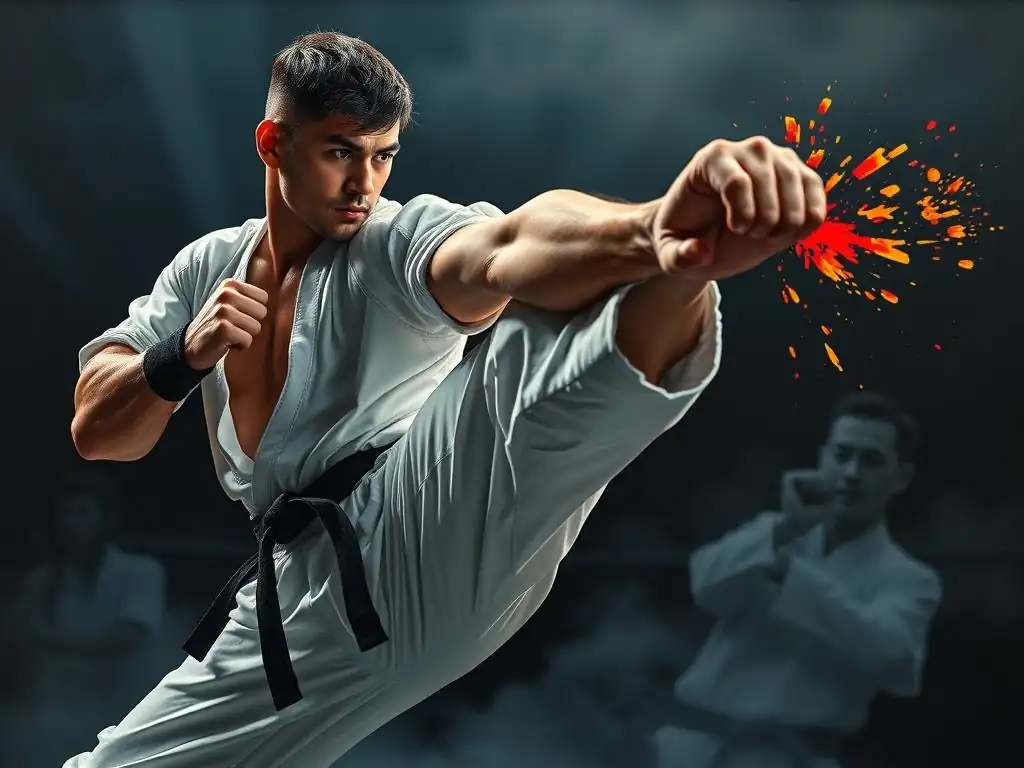
Welcome to Martial Arts Mastery, your ultimate resource for understanding the intricacies of combat disciplines! Ever wondered about the specific rules governing hand attacks in Taekwondo competitions? Delve into our comprehensive guide to uncover the legal Taekwondo hand attack rules, learn which punches are permitted, and discover how these strikes contribute to scoring. Prepare to expand your knowledge and sharpen your understanding of this dynamic martial art - the secrets of competitive Taekwondo await!
- Understanding Legal Hand Strikes in Taekwondo: An Introduction
- Permitted Hand Techniques: Legal Punches in Taekwondo
- Illegal Hand Techniques in Taekwondo: Disqualifications and Penalties
- Scoring with Hand Attacks in Taekwondo: Point Allocation
- Advanced Taekwondo Hand Attack Strategies and Tactics
- The Future of Hand Techniques in Taekwondo Competition
- Training Drills for Legal Taekwondo Hand Techniques
- Mastering Legal Hand Strikes in Taekwondo: A Summary
-
Frequently Asked Questions
- What types of hand attacks are legally permitted in Taekwondo sparring under World Taekwondo (WT) rules?
- Where on the opponent's body can a Taekwondo fighter legally target with their hands?
- How are hand attacks scored in Taekwondo competition?
- What are the penalties for illegal hand techniques in Taekwondo sparring?
- Are there variations in hand attack rules depending on the specific Taekwondo organization or competition?
- Final Reflection: The Precision of Power
- Unleash Your Inner Warrior: Explore Taekwondo's Striking Power!
Understanding Legal Hand Strikes in Taekwondo: An Introduction
Taekwondo, renowned globally for its dynamic and powerful kicking techniques, also incorporates hand strikes, although their role in competitive sparring (Kyorugi) is often more limited compared to kicks. Understanding the legal Taekwondo hand attack rules is crucial for both practitioners and competitors. These rules define which hand techniques are permitted, where they can target, and how they contribute to scoring, distinguishing legal actions from those resulting in penalties or disqualification. The emphasis on kicks in Taekwondo's modern sporting format has shaped the development and application of its hand techniques within the competitive arena.
The specific regulations governing legal Taekwondo hand attack rules are primarily set by governing bodies like World Taekwondo (WT). These rules are refined over time to ensure safety, fairness, and a consistent judging standard across international competitions, including the Olympics. While Taekwondo's traditional forms (Poomsae) feature a wide array of hand strikes, competitive sparring significantly narrows the scope of permitted techniques. This focus aims to maintain the distinctive character of Taekwondo as a kicking-dominant sport while still acknowledging the foundational importance of hand training.
The Evolution of Hand Techniques in Taekwondo Competition
The role of hand techniques in Taekwondo competition has seen significant evolution since the sport's early days. Initially, rules might have varied more widely, but as Taekwondo sought Olympic recognition and standardized its competitive format, the focus increasingly shifted towards dynamic kicking, particularly head kicks and spinning techniques, which score higher points. Hand strikes, specifically the straight punch, became the primary legal Taekwondo punch allowed to the trunk protector (hogu). This specialization was partly driven by the desire to create a visually exciting sport distinct from boxing or other punch-heavy disciplines.
This evolution has led to hand strikes often being used defensively or as setups for kicks rather than primary scoring techniques, although a well-executed and properly landed punch can still earn points. The current rules reflect decades of refinement aimed at balancing tradition, safety, and the demands of a modern, fast-paced spectator sport. While some traditionalists lament the reduced emphasis on hand techniques in sparring, the current legal Taekwondo hand attack rules are a direct result of the sport's journey onto the global stage and its adaptation for competitive play.
Why Hand Attacks Are Limited in Taekwondo Sparring
The primary reason hand attacks are limited in Taekwondo sparring rules is to emphasize the sport's unique identity centered on high, fast, and powerful kicking techniques. This focus differentiates Taekwondo significantly from other striking martial arts like boxing or karate. By restricting legal Taekwondo hand attack rules primarily to straight punches aimed at the trunk, governing bodies encourage competitors to utilize and develop the spectacular kicking arsenal that is Taekwondo's hallmark. This has shaped modern Taekwondo strategy, where complex footwork and varied kicking combinations are paramount.
Furthermore, limiting hand strikes contributes to competitor safety and simplifies judging. Kicks, particularly those targeting the head, are generally more visible and generate clear impact signals for electronic scoring systems.
While punches to the head are disallowed in WT sparring due to safety concerns (unlike in some other full-contact sports), even punches to the body require precise execution with the legal part of the hand to score, often against a padded target. The current limitations on legal Taekwondo hand attack rules help manage the intensity of exchanges and reduce the risk of certain types of injuries prevalent in sports with extensive head punching.
Permitted Hand Techniques: Legal Punches in Taekwondo
Under the most widely recognized competitive rules, particularly those of World Taekwondo (WT), the scope of legal Taekwondo hand attack rules is quite specific. Unlike the varied array of hand techniques found in traditional Taekwondo forms (Poomsae) or self-defense applications, competitive sparring significantly narrows the options. This section delves into the specific hand techniques that are permitted and how they must be executed to be considered legal and score points.
The core principle is that hand attacks must be delivered with a closed fist and strike a designated scoring area. Techniques involving open hands, knife hands, ridge hands, elbows, or any part of the arm other than the legal striking surface of the fist are strictly prohibited in competitive sparring. Adherence to these precise legal Taekwondo hand attack rules is constantly monitored by referees and judges, and any deviation can result in warnings or penalties.
The Straight Punch (Direct Punch): The Primary Legal Taekwondo Punch
The straight punch, also known as the direct punch or 'Jireugi' in Korean, is virtually the only legal Taekwondo punch permitted to score points in World Taekwondo-sanctioned sparring competitions. This technique involves extending the arm directly forward from the guard position, striking with the knuckles of a closed fist. The punch must be delivered with sufficient force and accuracy to register on the electronic scoring system or be acknowledged by the corner judges and referee in non-electronic systems.
For a straight punch to be considered legal and potentially score, it must meet several criteria:
- Striking Surface: Must be delivered with the front of the fist (knuckles).
- Technique: Must be a straight, forward motion, not a hook or uppercut.
- Target: Must land squarely on the trunk protector (hogu).
- Force: Must have enough power to cause a visible impact or register electronically.
- Timing and Balance: Must be delivered while the competitor is in balance and within the legal boundaries of the ring.
A straight punch that glances off, uses an open hand, targets an illegal area, or is delivered while the competitor is falling will not be counted and may even incur a penalty depending on the nature of the foul.
Scoring Zones for Legal Taekwondo Hand Attacks
According to legal Taekwondo hand attack rules, the only permissible scoring zone for hand strikes is the trunk protector, or 'hogu'. This padded chest protector covers the front and sides of the torso. A legal Taekwondo punch must land on this area with the correct technique and sufficient force to be considered for scoring. Strikes to any other area of the body with the hand are illegal and will not score points; instead, they will typically result in a penalty.
Specifically, the scoring area on the hogu includes the entire front and flank area covered by the protector. Strikes that land on the shoulder, arm, back, or below the waist are not legal scoring techniques for hand attacks. The electronic scoring system embedded in modern hogus is calibrated to register impacts only within this specific zone, helping to objectively determine if a legal Taekwondo hand attack has landed correctly. Referees and judges also visually confirm the legality and impact of the strike.
Illegal Hand Techniques in Taekwondo: Disqualifications and Penalties
Just as understanding legal Taekwondo hand attack rules is vital, knowing which hand techniques are prohibited is equally important to avoid penalties or even disqualification in competition. Taekwondo rules are strict regarding illegal actions, emphasizing safety and fair play. Any hand technique that deviates from the approved straight punch to the legal scoring area is considered illegal and will be penalized by the referee.
Penalties in Taekwondo sparring are typically issued as 'Gam-jeom', which results in the opponent receiving one point. Accumulating multiple Gam-jeoms can significantly impact the score and potentially lead to disqualification. Serious or malicious illegal acts, including certain hand techniques, can lead to immediate disqualification ('K.O. by foul' or 'Disqualification').
Common Illegal Hand Strikes and Reasons for Penalties
Several hand techniques are explicitly forbidden under legal Taekwondo hand attack rules and are common causes for penalties. These include:
- Striking with parts of the hand other than the knuckles: Using the palm, wrist, back of the hand, or side of the hand to strike.
- Open hand techniques: Slapping, grabbing, or pushing with an open hand.
- Striking with the arm or elbow: Using forearms or elbows to hit, block, or push the opponent.
- Hook punches or uppercuts: While powerful, these are not considered legal Taekwondo punches in competitive sparring as they are not straight punches.
- Striking after the referee calls "Kalyeo" (Break): Any strike delivered after the command to stop is illegal.
The reasons for penalizing these techniques range from safety concerns (e.g., risk of eye pokes with open hands, injury risk with elbows) to maintaining the sport's distinct identity (e.g., prohibiting hook/uppercut punches to differentiate from boxing) and ensuring fair play (e.g., preventing holding or pushing). A competitor receiving a Gam-jeom for an illegal hand strike immediately gives their opponent a point, which can significantly alter the match outcome.
Targeting Illegal Areas: Head, Groin, and Back of the Head
Beyond the type of hand technique, the target area is a critical component of legal Taekwondo hand attack rules. Striking illegal areas with any part of the hand (even if it were a straight punch motion) is strictly prohibited and results in penalties. The primary illegal target areas for hand strikes include:
- The head or face: Striking the head with the hand is a serious foul due to the high risk of injury.
- The groin: Striking the groin area is also a serious foul.
- The back of the head or neck: Striking the back of the head or neck is dangerous and illegal.
- The back or spine: Striking the back of the trunk protector or spine is not a legal scoring area and may be penalized.
Accidentally hitting an illegal area might result in a warning or a Gam-jeom, depending on the force and perceived intent. However, repeatedly targeting illegal areas or doing so with excessive force can lead to immediate disqualification. Competitors must maintain control and precision to ensure their legal Taekwondo hand attacks land only on the designated scoring zone on the trunk protector.
Scoring with Hand Attacks in Taekwondo: Point Allocation
Scoring with legal Taekwondo hand attacks involves hitting the legal target area (the trunk protector) with sufficient force using a straight punch. While kicks, particularly head kicks, typically yield higher point values (often 2 points for a trunk kick, 3 points for a head kick, 4 points for a spinning trunk kick, and 5 points for a spinning head kick), a successful straight punch to the trunk protector is generally awarded 1 point. This single point can be crucial in a close match, making the mastery of the legal hand attack rules and execution important for competitors.
The implementation of electronic scoring systems (PSS - Protector and Scoring System) has significantly impacted how hand strikes are scored. These systems use sensors in the hogu and foot protectors to register impacts, aiming for greater objectivity. However, hand strikes, particularly straight punches, can sometimes be less forceful than kicks and may not always register reliably on early PSS versions. This has led to ongoing discussions and refinements in sensor technology and rule interpretation to ensure accurate scoring of legal Taekwondo punches.
How Referees Determine Point Validity for Taekwondo Punches
In traditional scoring systems (without PSS or as a backup), referees and judges rely on visual cues and the sound of impact to determine the validity of a legal Taekwondo hand attack. The referee in the ring, along with corner judges, observes the exchange closely. For a punch to be awarded a point, it must:
- Be a legal Taekwondo punch (straight punch with the knuckles).
- Land clearly on the scoring area of the hogu.
- Have sufficient impact (discernible force).
- Be delivered while the competitor is in balance and within the ring boundaries.
In systems utilizing electronic scoring, the primary determinant for a hand strike point is the PSS registering the impact. The system is calibrated to require a certain threshold of force to award a point. However, the referee still plays a vital role in ensuring the technique was legal (e.g., it was a straight punch, not a grab or push) and was delivered to a legal area.
If the PSS registers a point, but the referee determines the technique was illegal, they can cancel the point and issue a penalty. This highlights the interplay between technology and human judgment in applying legal Taekwondo hand attack rules.
Utilizing the Electronic Scoring System for Hand Strikes
The electronic scoring system (PSS) has become standard in major Taekwondo competitions, including WT events. For hand strikes, the PSS relies on sensors within the hogu to detect the force of the impact from the opponent's punch. Competitors wear electronic socks, but these do not typically contain sensors for punching; the impact is registered solely by the hogu. A successful legal Taekwondo punch must generate enough force to trigger the sensor threshold set for the event, which is often calibrated based on age and weight divisions.
While the PSS provides a degree of objectivity, scoring hand strikes electronically can sometimes be challenging compared to kicks, which often generate higher impact forces. Athletes must practice delivering their straight punches with sufficient snap and body weight transfer to reliably activate the sensors. Understanding how the PSS works and practicing techniques that register effectively is an important part of modern Taekwondo competition strategy under the current legal Taekwondo hand attack rules.
Advanced Taekwondo Hand Attack Strategies and Tactics
Despite the limited scope of legal Taekwondo hand attack rules in competition, skilled practitioners integrate the straight punch into sophisticated strategies. The hand attack is rarely used as a sole technique to win a match but serves crucial tactical purposes. Competitors use punches to control distance, break the opponent's rhythm, create openings, and set up higher-scoring techniques.
Mastering the legal hand attack involves more than just throwing a punch; it requires precise timing, footwork, and the ability to read the opponent. The straight punch's speed and directness make it an effective tool for disrupting an opponent's offense or defense, even if it only scores one point. Integrating hand and foot techniques seamlessly is a hallmark of high-level competitive Taekwondo.
Using Hand Strikes to Set Up Kicks
One of the most common and effective uses of the legal Taekwondo punch is as a setup for kicks. A quick, sharp straight punch can momentarily distract an opponent, force them to cover their trunk, or shift their weight. This brief disruption creates an opening for a follow-up kick, which can target the head or trunk for potentially higher points. For example, a competitor might feint with a punch or throw a light jab to draw a reaction, immediately followed by a fast roundhouse kick to the head.
This tactic leverages the opponent's defensive instincts. When threatened by a punch to the body, they may naturally lower their guard or lean back, making them vulnerable to a subsequent head kick. Conversely, a punch might force them to cover their body, leaving their head exposed. This strategic combination of legal Taekwondo hand attacks and kicks is a fundamental element of competitive Taekwondo strategy.
Counter-Punching Techniques in Taekwondo
While not as emphasized as counter-kicking, effective counter-punching is also part of a well-rounded Taekwondo competitor's arsenal. A competitor can use footwork and defensive movements (like slipping or parrying) to evade an opponent's straight punch and immediately respond with their own legal Taekwondo punch or, more commonly, a counter-kick. Timing is paramount in counter-punching; the counter must be launched instantly after evading the initial attack.
Another counter-strategy involves using a straight punch to intercept an opponent who is advancing or preparing to kick. A well-timed punch can disrupt their balance or force them to abort their attack. While the rules limit hand attacks, mastering defensive movements against the straight punch and knowing when to use one's own legal Taekwondo punch as a counter or interruption are valuable skills.
The Future of Hand Techniques in Taekwondo Competition
The debate over the role and scope of hand techniques in competitive Taekwondo is ongoing. While the current legal Taekwondo hand attack rules favor the straight punch to the body, there are discussions about potentially expanding the allowed techniques or their scoring value. Proponents of change argue that allowing a wider range of hand strikes would make the sport more dynamic, better reflect the full spectrum of Taekwondo techniques, and potentially make matches less reliant solely on electronic scoring of kicks.
Opponents of significant changes often express concerns about safety, maintaining Taekwondo's unique identity, and the potential complications for judging. Any changes to legal Taekwondo hand attack rules would require careful consideration of these factors and extensive testing to ensure they enhance the sport without compromising its integrity or safety standards.
Potential Rule Changes Regarding Taekwondo Punching
Discussions regarding potential rule changes for Taekwondo punching often revolve around several possibilities:
- Allowing punches to the head: This is a highly debated topic due to significant safety concerns and the potential to drastically change the nature of the sport, making it more akin to boxing or MMA. If considered, it would likely involve headgear modifications and strict rules on force.
- Expanding allowed hand techniques to the body: Could techniques like ridge hand strikes or specific knife hand strikes to the hogu be legalized? This would add complexity and potentially require changes to scoring systems or judging criteria.
- Increasing the point value of punches: Raising the score for a legal Taekwondo punch from 1 point to 2 points (matching a trunk kick) could incentivize their use and make them a more significant scoring threat.
Any significant alteration to legal Taekwondo hand attack rules would likely be introduced gradually, perhaps initially in specific tournaments or age divisions, before being adopted universally. Such changes would require extensive consultation with athletes, coaches, referees, and medical professionals.
The Debate Over Expanding Hand Attack Options in Taekwondo
The debate over expanding hand attack options in Taekwondo competition reflects a tension between tradition, safety, and the demands of modern sport.
- Arguments for Expansion: Proponents argue that a wider array of hand techniques would make sparring more diverse, better showcase the depth of Taekwondo's techniques, and potentially reduce the reliance on electronic scoring, bringing human judgment back into greater prominence. They might point to the rich variety of hand techniques in traditional Taekwondo forms.
- Arguments Against Expansion: Opponents prioritize athlete safety, citing the increased risk of concussions or other injuries if head punching or a wider variety of powerful hand strikes were allowed. They also argue that maintaining the focus on dynamic kicking preserves Taekwondo's distinct identity as a martial art and sport, differentiating it from other combat sports. Expanding hand techniques could also complicate judging and require significant rulebook revisions and retraining for officials on legal Taekwondo hand attack rules.
This ongoing discussion highlights the dynamic nature of sports rules, which must balance historical roots with contemporary needs and values.
Training Drills for Legal Taekwondo Hand Techniques
Effectively utilizing legal Taekwondo hand attack rules in competition requires dedicated training. While kicking drills often take center stage, integrating specific hand technique practice is essential for developing a well-rounded game. Training focuses on developing speed, accuracy, power, and the ability to integrate the straight punch with footwork and kicks.
Training drills should simulate competitive scenarios as much as possible, emphasizing reaction time and targeting the specific scoring area on the hogu. Repetition and focus on proper form are key to making the straight punch a reliable tool in sparring.
Developing Speed and Accuracy with the Straight Punch
Developing speed and accuracy for the straight punch involves numerous repetitions and targeted drills.
- Shadow Boxing: Practice throwing straight punches rapidly while moving, focusing on extending fully and retracting quickly. Pay attention to keeping the non-punching hand up for guard.
- Punching the Air with Resistance Bands: Use light resistance bands anchored behind you and held in your fists. Practice punching forward against the resistance to build speed and snap.
- Target Practice: Use a focus mitt or a wall-mounted target the size of a hogu's scoring area. Practice hitting the target quickly and accurately from various distances and angles, mimicking sparring movement. Aim for a high volume of punches with perfect form.
- Practice 100 straight punches on each side daily.
- Focus on hip rotation and body weight transfer for power.
- Ensure handguard is maintained during and after the punch.
Consistent practice of these drills helps build the muscle memory and speed necessary for the legal Taekwondo punch to be effective in a fast-paced sparring match.
Target Pad Drill: Focus on Accuracy and Power
The target pad drill is fundamental for developing both accuracy and power in the straight punch.
- Partner with a focus mitt or punch pad: The partner holds the pad at the height and location of the hogu's scoring area. The practitioner practices delivering legal Taekwondo punches with force and accuracy.
- Varying positions: The partner can move the pad to simulate different opponent positions, requiring the practitioner to use footwork and adjust their angle.
- Adding combinations: Practice throwing a straight punch followed immediately by a kick, simulating the common setup strategy.
- Start slow, focusing on hitting the center of the pad.
- Increase speed and power gradually.
- Practice punching while stepping forward, backward, and laterally.
- Incorporate punch-kick combinations (e.g., jab to the body, roundhouse kick to the head).
This drill provides immediate feedback on accuracy and allows practitioners to feel the impact generated by their legal Taekwondo hand attack.
Partner Drill: Jab and Cross Combination with Footwork
While only the straight punch to the body is legal for scoring, practicing combinations like a jab and cross (both straight punches) to the body pad held by a partner helps develop rhythm, coordination, and the ability to throw multiple punches if needed (though only one point is awarded per legal punch).
- Partner wears a hogu or holds a body shield.
- Practice throwing a quick jab (leading hand straight punch) followed by a powerful cross (rear hand straight punch) to the body.
- Incorporate footwork: step in with the jab, add hip rotation for the cross.
- Practice retreating while punching or punching while circling.
This drill, while using two punches, reinforces the mechanics of the legal Taekwondo punch and helps develop the flow and footwork needed to land it effectively against a moving opponent, potentially setting up kicks or disrupting their defense.
Mastering Legal Hand Strikes in Taekwondo: A Summary
Mastering legal Taekwondo hand attack rules and techniques is an essential part of becoming a proficient Taekwondo competitor. While kicks dominate the scoring landscape, the straight punch to the trunk protector remains a valuable tool for earning points, controlling distance, and setting up other techniques. Understanding the precise rules governing hand strikes—what is allowed, where it can land, and what constitutes an illegal action—is non-negotiable for anyone competing in WT-style sparring.
The evolution of the rules has shaped the role of hand techniques, focusing them into a specific, limited application within the sparring context. Despite this limitation, strategic integration of the straight punch can significantly enhance a competitor's effectiveness. Continuous training focusing on speed, accuracy, and power, combined with a thorough understanding of the rules and scoring system, allows practitioners to maximize the potential of their legal Taekwondo hand attacks.
Key Takeaways for Taekwondo Practitioners and Competitors
For Taekwondo practitioners and competitors, the key takeaways regarding legal Taekwondo hand attack rules are:
- The straight punch (direct punch) to the trunk protector is the primary, and often only, legal hand technique for scoring in WT sparring.
- Strikes with open hands, hooks, uppercuts, elbows, or strikes to illegal areas (head, groin, back) are prohibited and result in penalties.
- A legal punch scores 1 point when it lands on the hogu with sufficient force, either registering on the PSS or being acknowledged by officials.
- Hand strikes are highly effective when used strategically to set up kicks or disrupt an opponent's actions.
- Consistent training of the straight punch focusing on speed, accuracy, and power is crucial for competitive success.
- Understanding the electronic scoring system's sensitivity for hand strikes is beneficial for competitors.
- Know the rules: Study the specific *legal Taekwondo hand attack rules* of the governing body for your competition.
- Practice precision: Focus on hitting the exact scoring area on the hogu.
- Develop speed: A fast punch is harder to defend against.
- Integrate with kicks: Use punches to open up opportunities for higher-scoring techniques.
- Avoid illegal techniques: Be mindful of hand placement and target areas to prevent penalties.
Adhering to these principles allows competitors to effectively utilize the limited but important arsenal of legal Taekwondo hand attacks.
Resources for Further Learning About Taekwondo Rules and Hand Techniques
To deepen understanding of legal Taekwondo hand attack rules and techniques, practitioners should consult official resources and experienced coaches.
- Official Governing Body Websites: Websites like World Taekwondo (WT) publish the official competition rules and regulations. These documents provide the definitive details on legal Taekwondo hand attack rules, scoring criteria, and penalties.
- Certified Taekwondo Coaches: Experienced coaches familiar with current competition rules can provide practical guidance, explain nuances, and offer drills specifically designed to improve legal hand techniques and their strategic application.
- Rule Seminars and Clinics: Attending seminars conducted by certified referees or officials offers valuable insights into rule interpretation and application in real-world competition scenarios.
- Competition Videos: Watching high-level Taekwondo competitions can provide examples of how top athletes effectively use legal Taekwondo hand attacks within the rules, demonstrating timing, strategy, and technique.
By leveraging these resources, practitioners can gain a comprehensive understanding of the rules and refine their execution of legal Taekwondo punches for maximum effectiveness in competition.
Frequently Asked Questions
What types of hand attacks are legally permitted in Taekwondo sparring under World Taekwondo (WT) rules?
Taekwondo sparring primarily focuses on kicking techniques. Permitted hand attacks are generally limited to straight punches delivered to the designated scoring areas.
Where on the opponent's body can a Taekwondo fighter legally target with their hands?
Legal hand attacks in Taekwondo must target the front of the trunk area, specifically the chest protector (hogu). Attacking the head with hands is strictly prohibited.
How are hand attacks scored in Taekwondo competition?
Hand attacks are awarded points when they land with sufficient force and accuracy on the scoring zones of the hogu (chest protector). Electronic scoring systems often detect these impacts.
What are the penalties for illegal hand techniques in Taekwondo sparring?
Using illegal hand techniques, such as attacking the head or grabbing, results in penalties which can range from warnings to point deductions and even disqualification.
Are there variations in hand attack rules depending on the specific Taekwondo organization or competition?
While World Taekwondo (WT) rules are standard, some minor variations may exist in smaller or regional competitions. It's always best to check the specific rules of the event.
Final Reflection: The Precision of Power
The intricacies of Taekwondo's hand attack rules, as we've explored, are not merely a matter of regulation, but a testament to the disciplined control and strategic application of power within the art. Understanding what constitutes a legal strike and how it scores is crucial not just for competition, but for appreciating the depth and nuance of this martial art in its entirety.
The evolution of these rules reflects a continuous striving for both safety and fairness, shaping the very essence of Taekwondo sparring. This ongoing refinement underscores the importance of adaptability and continuous learning, not just in martial arts, but in all aspects of life. The art of fighting is the art of knowing when to strike and when not to.
- Miyamoto Musashi. This quote reminds us that true mastery lies not just in the execution of techniques, but in the wisdom to apply them appropriately.
As you continue your journey in Taekwondo, whether as a practitioner, a spectator, or simply an admirer, remember the principles we've discussed. Let the precision and control demanded by these hand attack rules inspire you to cultivate similar qualities in your own endeavors. Strive for accuracy, understand the rules of the game, and always seek to refine your technique, both in the dojang and in life.
Unleash Your Inner Warrior: Explore Taekwondo's Striking Power!
Thank you for diving into the world of Taekwondo hand techniques! Now that you're equipped with the knowledge of legal punches and scoring, it's time to put that understanding into action.
- Master the Basics: Dedicate 15 minutes daily to practicing the legal punches – the straight punch and the backfist – focusing on form and speed. This is your foundational skill.
- Explore Local Dojangs: Research and visit three different Taekwondo schools in your area. Observe a class and speak with the instructors to find the right fit for your training style.
- Share Your Knowledge: Create a short video explaining the legal hand techniques in Taekwondo and post it on social media using #TaekwondoTraining.
What specific hand technique are you most excited to practice, and how will you incorporate it into your training regimen?