
The Spirit of Budo in the Competitive Arena: An Enduring Contradiction?

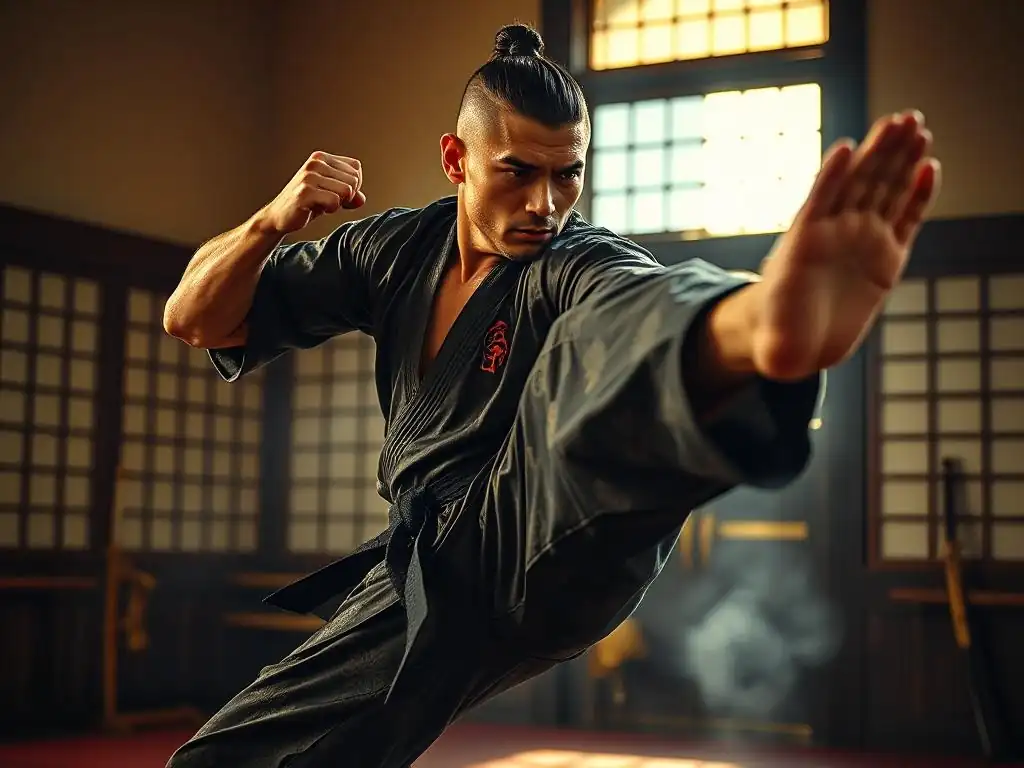
Welcome to Martial Arts Mastery, your ultimate resource for exploring the rich tapestry of martial arts! Dive into the heart of the discipline and discover the secrets that transform mere combat into a path of self-discovery. This week, we grapple with a fascinating question: Can the true spirit of Budo survive the intensity of competitive martial arts training? Prepare to challenge your assumptions and unravel the enduring, and perhaps surprising, contradiction at the core of this ancient tradition.
- The Future of Budo in Competitive Martial Arts
-
Frequently Asked Questions
- What is Budo, and how does it relate to competitive martial arts training?
- How does the emphasis on spiritual development in Budo clash with the competitive nature of tournaments and matches?
- What are some examples of ethical considerations that might be compromised in a competitive Budo setting?
- Can competitive martial arts training still be considered Budo if it incorporates spiritual and ethical principles?
- How can practitioners reconcile the desire to win in competitive martial arts with the Budo emphasis on non-violence and peaceful resolution?
- Final Reflection: Embracing the Paradox of Budo
- Embrace the Warrior Within: Start Your Budo Journey Now!
The Future of Budo in Competitive Martial Arts
Finding Harmony Between Tradition and Modernity
The tension between the ancient philosophy of Budo and the demands of modern competitive martial arts is a significant challenge for practitioners and instructors alike. Traditional Budo dojos often place a strong emphasis on character development, ethical conduct, and lifelong self-improvement as the primary goals, sometimes even overshadowing technical prowess in early stages. Conversely, the competitive arena inherently focuses on quantifiable outcomes: winning matches, scoring points, and achieving podium finishes.
This divergence creates a philosophical crossroads for individuals engaged in Budo competitive martial arts training. While exact global figures are hard to pinpoint, estimates suggest millions worldwide participate in various martial arts, with a substantial and growing segment drawn specifically to their competitive aspects, particularly in disciplines recognized as Olympic sports like Judo and Taekwondo. The sheer scale of competitive participation necessitates a serious consideration of how Budo's principles can coexist or even thrive within this environment.
Bridging this gap requires intentional effort from practitioners, instructors, and governing bodies. One approach involves integrating traditional Budo etiquette and values directly into competitive training sessions and events.
This could include mandatory bowing rituals before and after matches, formal acknowledgment of the opponent and officials, and post-competition reflection sessions focused on learning and self-assessment rather than just victory or defeat. Some progressive dojos and training centers are experimenting with curricula that explicitly teach Budo philosophy alongside sparring techniques and conditioning drills.
For example, a Judo club focused on competition might dedicate specific time slots to discussing Jigoro Kano's principles of Seiryoku Zen'yo (maximum efficiency, minimum effort) and Jita Kyoei (mutual welfare and benefit), applying these concepts not just to technique but also to sportsmanship and training partnerships. Successfully navigating this path means acknowledging the goal of competitive success while ensuring it does not entirely eclipse the deeper, transformative journey central to the Budo spirit.
The Potential for Budo to Enhance the Competitive Experience
Far from being a hindrance, the principles of Budo possess immense potential to elevate the competitive martial arts experience. Core Budo tenets like mental fortitude ( Fudoshin - immovable mind), discipline, focus, and perseverance are directly transferable to achieving peak performance under pressure. An athlete steeped in Budo philosophy is likely to exhibit greater resilience in the face of adversity, maintain composure during intense moments, and approach training with unwavering dedication.
Psychological studies on elite athletes across various sports consistently highlight the critical role of mental conditioning; some research suggests that mental training techniques, which often mirror Budo's emphasis on mindfulness and emotional control, can account for a significant portion of performance improvement, potentially up to 20% or more in specific contexts. Integrating Budo into competitive preparation means cultivating not just a strong body, but an indomitable spirit, which can be a decisive factor in high-stakes competition.
Moreover, Budo principles foster a higher standard of sportsmanship and ethical conduct, enriching the competitive landscape for all participants. When competitors embody respect ( Rei), humility ( Sonkei), and integrity ( Seijitsu), the focus shifts from merely defeating an opponent to engaging in a mutual test of skill and spirit. This perspective transforms competition from a purely adversarial battle into a challenging yet respectful exchange, where both individuals can learn and grow.
Consider instances in competitive Karate where a competitor stops short of full contact after sensing their opponent is injured, or in Kendo where the etiquette surrounding striking and acknowledging points is as crucial as the strike itself. These examples demonstrate how Budo values can manifest positively within structured competition. The benefits are clear:
- [x] Enhanced focus and concentration during matches
- [x] Improved ability to handle pressure and setbacks
- [x] Greater respect for opponents, officials, and the sport itself
- [x] Increased personal satisfaction regardless of the outcome, derived from effort and learning
- [x] A more positive and ethical competitive environment overall
Effective Budo competitive martial arts training leverages these principles to build not just champions, but individuals of strong character.
Ensuring the Enduring Legacy of Budo for Future Generations of Martial Artists
The sustained growth of competitive martial arts, while bringing global recognition to disciplines like Taekwondo, Karate, and Judo, presents a challenge to the preservation of Budo's deeper philosophical and ethical dimensions. As the spotlight focuses on athletic prowess and medal counts, there is a risk that the foundational principles of character development, mutual respect, and lifelong learning could be deemphasized or even lost. Anecdotal evidence from various regions suggests a trend where sport-focused gyms and academies sometimes attract students who are solely interested in the competitive aspect, without exposure to the historical or philosophical context of the art.
While precise global statistics on the ratio of sport-focused vs. traditional practitioners are difficult to compile, the visibility and commercial appeal of competitive events undeniably influence public perception and participation trends. Safeguarding Budo's legacy requires proactive measures to ensure its core values are transmitted alongside technical skills.
Preserving the spirit of Budo within competitive martial arts training is a collective responsibility. Instructors play a pivotal role as custodians of tradition, tasked with weaving philosophical lessons into regular classes and serving as role models who embody Budo principles both inside and outside the dojo.
Governing bodies can contribute by structuring rules and regulations that penalize unsportsmanlike conduct and reward ethical behavior, perhaps through fair play awards or sportsmanship criteria in judging. Furthermore, fostering a community culture that values the journey of self-improvement over mere victory is crucial.
This can be achieved through educational initiatives, seminars specifically focused on Budo philosophy, and encouraging mentorship between senior and junior students. Ultimately, the future of Budo in competitive martial arts depends on intentionally integrating its timeless wisdom into modern training methodologies, ensuring that practitioners understand that true mastery encompasses not just winning, but cultivating a noble character – the essence of effective Budo competitive martial arts training.
Frequently Asked Questions
What is Budo, and how does it relate to competitive martial arts training?
Budo is a Japanese term referring to martial ways that emphasize spiritual and ethical development, alongside physical skill. Its relationship to competitive training is often seen as contradictory, as competition can sometimes overshadow the deeper principles of Budo.
How does the emphasis on spiritual development in Budo clash with the competitive nature of tournaments and matches?
The core conflict lies in the focus. Budo prioritizes character building and self-improvement, while competition often emphasizes winning at all costs, potentially compromising ethical considerations.
What are some examples of ethical considerations that might be compromised in a competitive Budo setting?
Examples include intentional rule-breaking, unsportsmanlike conduct, and prioritizing personal gain over respect for opponents and the art itself. These behaviors directly contradict the Budo principles of honor and integrity.
Can competitive martial arts training still be considered Budo if it incorporates spiritual and ethical principles?
Yes, if the training environment actively cultivates respect, discipline, and humility, even within a competitive context. The key is to ensure that the competitive aspect serves to enhance personal growth rather than detract from it.
How can practitioners reconcile the desire to win in competitive martial arts with the Budo emphasis on non-violence and peaceful resolution?
By viewing competition as a test of skill and character, not a means of domination. The focus should be on self-improvement and demonstrating respect for the opponent, regardless of the outcome.
Final Reflection: Embracing the Paradox of Budo
The exploration of Budo within the competitive martial arts arena reveals a fascinating tension, a dance between tradition and modernity. The enduring contradiction lies in reconciling the pursuit of victory with the cultivation of character, a conflict that resonates deeply in today's results-driven world, where the essence of true martial arts spirit risks being overshadowed by the allure of medals and rankings.
The influence of Budo principles extends far beyond the dojo, shaping our understanding of discipline, respect, and self-improvement. This journey into the heart of Budo has reinforced the importance of seeking balance between striving for excellence and upholding ethical conduct. The ultimate aim of martial arts is not to win battles, but to avoid fighting altogether.
This quote reminds us that true strength lies not in physical dominance, but in the cultivation of inner peace and wisdom.
As we conclude this exploration, let us carry forward the spirit of Budo, not just in the competitive arena, but in all aspects of our lives. Strive for excellence, yes, but never at the expense of your integrity. Embrace the challenge of balancing ambition with humility, and remember that the true victory lies not in defeating others, but in conquering yourself. Let the principles of Budo guide you towards a life of purpose, resilience, and unwavering moral compass.
Embrace the Warrior Within: Start Your Budo Journey Now!
Thank you for exploring the enduring spirit of Budo with us. You've gained valuable insights into navigating the competitive arena with honor and integrity. Now, it's time to put those principles into action.
Here's how you can further embrace the warrior spirit:
- Commit to one act of selfless sportsmanship in your next competition or training session. Focus on helping your opponent, even if it means sacrificing your own advantage.
- Explore the philosophical texts of Budo (like Musashi's "The Book of Five Rings") to deepen your understanding of its core tenets beyond the physical techniques.
- Share your personal reflections on the contradictions of Budo and competition on your own social media, using #MartialArtsMastery, and ignite a thoughtful conversation within our community.
What small but meaningful shift can you make this week to better embody the spirit of Budo both on and off the mat?