
The Humble Pen: A Surprisingly Potent Tool for Precision SelfDefense

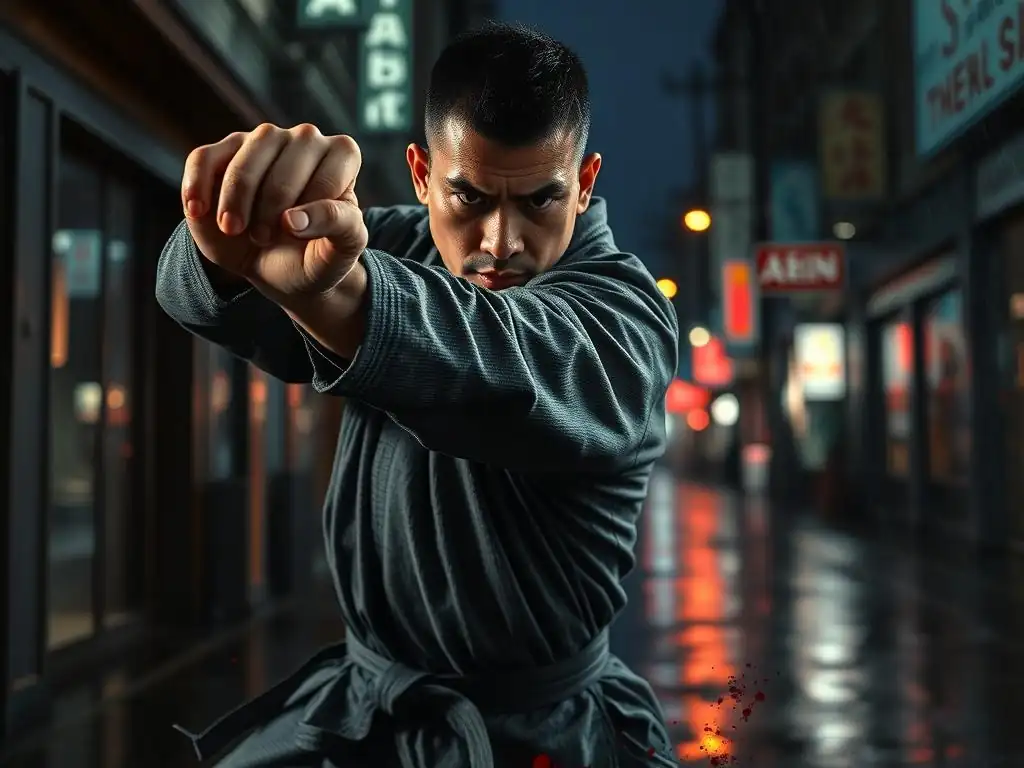
Welcome to Martial Arts Mastery, where tradition meets technique. Ever considered that the pen in your pocket might be more than just a writing tool? In this article, we delve into the surprising effectiveness of martial arts self defense writing, exploring how its principles can be applied to everyday objects for practical and precise self-defense. Intrigued? Discover how you can transform the ordinary into the extraordinary, and unlock a new dimension of personal safety.
- Introduction: Unveiling the Pen's Potential in Martial Arts Self-Defense
- Understanding the Fundamentals of Pen-Based Self-Defense
- Pen as a Force Multiplier: Enhancing Existing Martial Arts Skills
- Essential Pen Self-Defense Techniques: A Practical Guide
- Training Drills for Mastering Pen Self-Defense
- Legal and Ethical Considerations of Using a Pen for Self-Defense
- Case Studies: Real-World Examples of Pen Self-Defense
- Maintaining Your Pen for Self-Defense Readiness
- Conclusion: The Pen as a Symbol of Empowerment and Preparedness
-
Frequently Asked Questions
- What makes a pen a useful tool for self-defense in martial arts?
- How does "Martial Arts Mastery" approach the concept of using everyday objects like pens for self-defense?
- What martial arts disciplines might incorporate pen techniques for self-defense?
- What are some key considerations when learning pen-based self-defense?
- Is learning pen-based self-defense a replacement for traditional martial arts training?
- Final Reflection: The Enduring Power of the Pen
- Ignite Your Inner Guardian: Unleash the Pen!
Introduction: Unveiling the Pen's Potential in Martial Arts Self-Defense
Beyond Writing: Recognizing the Pen as an Improvised Weapon
For centuries, martial arts practitioners have studied the human body's capabilities and vulnerabilities, developing sophisticated systems for protection. While traditional training often focuses on unarmed techniques or dedicated weapons like staffs, swords, or knives, the principles of martial arts self-defense extend far beyond the dojo. In the unpredictable environment of the real world, the ability to improvise and adapt is paramount.
The humble pen, an object universally present in pockets, purses, and offices, possesses characteristics that make it surprisingly effective as an improvised tool for self-protection when conventional options are unavailable. Recognizing this potential is the first step in expanding one's self-defense repertoire.
The pen's strength lies not in brute force, but in its accessibility, concealability, and structural integrity, particularly sturdy metal pens. Unlike a dedicated weapon that might attract unwanted attention or be illegal to carry, a pen is innocuous. Its small size allows for discrete carry and rapid deployment. When wielded correctly, its hard, pointed tip can concentrate force onto a small area, making it effective for striking vulnerable points. This concept aligns perfectly with the efficiency sought in practical martial arts self defense writing, where minimal effort yields maximum necessary impact to deter an aggressor.
Martial Arts Mastery: Embracing Everyday Objects for Self-Protection
Martial arts mastery is not solely about executing complex forms or breaking boards; it is fundamentally about cultivating awareness, discipline, and the capability to protect oneself and others. This principle extends naturally to the intelligent use of everyday objects. Throughout history, various cultures have integrated common tools into their martial practices – farming implements became weapons in Okinawan kobudō, for instance. Applying this historical precedent to modern life means looking at the objects around us not just for their intended purpose, but also for their potential in a self-defense context.
Embracing everyday objects like a pen for self-protection requires a shift in perspective, viewing the environment as a potential resource. It involves understanding the physics of force application and the anatomy of the human body, core tenets taught in effective martial arts self defense writing and training manuals. By integrating improvised tools into a self-defense strategy, individuals enhance their preparedness without needing specialized gear. This approach emphasizes adaptability and resourcefulness, crucial skills for navigating uncertain situations and embodying the true spirit of self-reliance inherent in martial arts mastery.
Understanding the Fundamentals of Pen-Based Self-Defense
Grip Techniques for Maximum Control and Impact
The effectiveness of using a pen for self-defense hinges significantly on the grip. A proper grip ensures control, prevents the pen from slipping, and allows for the efficient transfer of force during strikes or thrusts. One of the most common and effective grips is the "icepick" grip (also known as the hammer grip or sabre grip), where the pen is held in a closed fist with the tip extending from the bottom of the fist (the pinky finger side).
This grip is intuitive and allows for powerful downward strikes or thrusts, leveraging the forearm and body weight. It provides excellent retention and control, making it difficult for an attacker to disarm.
Another valuable grip is the forward grip, where the pen is held with the tip extending from the top of the fist (the thumb side). This grip is useful for forward thrusts to the face or throat and can also be employed for upward strikes. While potentially offering slightly less retention than the icepick grip for downward movements, the forward grip facilitates rapid, linear attacks to vital areas.
Mastering both grips and understanding when to transition between them based on the angle of attack and target area is fundamental to effective pen-based self-defense. Practicing these grips until they feel natural is a key part of martial arts self defense writing into one's muscle memory.
Targeting Vulnerable Points: Applying Anatomical Knowledge
Effective pen self-defense is not about overpowering an aggressor; it's about creating opportunities to escape by causing pain and disruption with minimal force. This is achieved by targeting vulnerable anatomical points. These are areas where nerves are close to the surface, bones are easily struck, or structures are vital and sensitive. Such targets include the eyes, nose, throat, temple, ears, collarbone, groin, hands, and major nerve clusters (like those in the neck or armpit). A sharp, precise strike or thrust to one of these areas can be debilitating enough to momentarily incapacitate an attacker, providing precious seconds to flee.
Applying anatomical knowledge is paramount. For instance, a quick thrust to the soft tissue just below the Adam's apple can disrupt breathing and cause significant pain. A strike to the bridge of the nose can cause disorientation and watering eyes.
Even a firm poke to the back of the hand or fingers can break grips. The small tip of a pen concentrates force onto these small, sensitive areas far more effectively than an open hand or fist. Studying basic anatomy, as often detailed in martial arts self defense writing guides, allows a defender to understand why certain targets are effective and how to maximize the impact with minimal effort, aligning with the principle of efficiency.
The Importance of Awareness and Preemptive Action in Self-Defense
While physical techniques are vital, the most crucial aspect of self-defense, whether using a pen or any other tool, is awareness. Situational awareness means being alert to your surroundings, identifying potential threats before they materialize, and recognizing warning signs. This could involve noticing someone following you, observing unusual behavior, or simply being aware of potential escape routes. A high level of awareness allows for preemptive action, which is always preferable to reacting to an attack already in progress.
Preemptive action doesn't necessarily mean striking first; it can involve altering your path, increasing distance from a potential threat, moving to a safer location, or verbally de-escalating a situation. If a confrontation seems unavoidable, awareness helps you gauge the distance, the attacker's posture, and potential openings. Having a pen discreetly ready before an attack begins allows for immediate deployment if physical defense becomes necessary. This proactive mindset, emphasizing avoidance and de-escalation while being prepared to defend, is a cornerstone of practical self-defense and is frequently highlighted in martial arts self defense writing on personal safety.
Pen as a Force Multiplier: Enhancing Existing Martial Arts Skills
Integrating Pen Techniques into Krav Maga
Krav Maga, known for its practical, no-nonsense approach to self-defense, readily incorporates the use of improvised weapons. Integrating pen techniques into Krav Maga principles is a natural fit, enhancing the practitioner's ability to defend against common street attacks. Krav Maga emphasizes targeting vulnerable areas under stress and using aggressive, continuous action to neutralize a threat quickly. A pen serves as an excellent tool for amplifying the impact of strikes to these vulnerable targets.
For example, a standard Krav Maga defense against a chokehold often involves striking to the groin or eyes. Adding a pen allows for a more focused, painful strike to the eyes or throat, potentially breaking the attacker's grip faster. During ground fighting, a pen can be used for short, sharp thrusts to pressure points or sensitive areas like the ribs or inner thigh, creating pain compliance and allowing the defender to escape.
Krav Maga's focus on simultaneous defense and attack makes the pen a potent addition, allowing a block or evade to flow immediately into a disabling strike with the pen. This adaptability is a key element of effective martial arts self defense writing and training.
Adapting Traditional Martial Arts Movements for Pen Usage
While systems like Krav Maga are explicitly designed for practical self-defense, traditional martial arts movements can also be adapted for pen usage. Many traditional styles feature strikes and blocks that, with minor modification, can be enhanced by holding a pen. A downward block in Karate, for instance, when executed with a pen held in an icepick grip, can become a powerful strike to the attacker's forearm or wrist, potentially breaking their grip or causing significant pain.
Similarly, open-hand strikes or palm heels from styles like Wing Chun or Tai Chi can be subtly altered. A palm heel strike to the chin could incorporate a forward-grip pen thrust to the same area, increasing the likelihood of impact and disorientation.
Even joint lock techniques from Aikido or Hapkido can benefit; while not typically used for the lock itself, a pen held can provide additional leverage or be used for a quick pain compliance strike during the setup or execution of a lock. The key is to understand the underlying principle of the traditional movement and see how the pen can enhance its effectiveness against vulnerable points, a concept often explored in detailed martial arts self defense writing.
Utilizing the Pen for Joint Locks and Pressure Points
Beyond striking, a pen can be surprisingly effective when applied to joint locks and pressure points, techniques common in many martial arts styles like Aikido, Hapkido, and various forms of Jujutsu. The small, hard surface of a pen can be used to apply focused pressure to specific points on the body, causing pain compliance or disrupting movement.
For instance, applying a pen tip to sensitive nerve points along the jawline, behind the ear, or on the back of the hand can force an attacker to release a grip or comply with instructions. In a wrist lock, using a pen to apply pressure to a joint or tendon can significantly amplify the pain and effectiveness of the technique.
While a pen isn't a substitute for dedicated joint manipulation tools, its rigid structure allows for concentrated force application on small areas, making it a useful aid in securing compliance or creating an opening. This nuanced application goes beyond simple striking and highlights the depth of improvised weapon use, a topic that benefits from clear martial arts self defense writing to explain the specific points and techniques.
Essential Pen Self-Defense Techniques: A Practical Guide
Basic Strikes and Thrusts: Delivering Effective Impact
The most fundamental use of a pen for self-defense involves basic strikes and thrusts targeting vulnerable areas. With a pen held in an icepick grip, powerful downward or diagonal strikes can be delivered to the collarbone, temple, or hands. These strikes leverage the body's natural mechanics for force generation. A strike to the collarbone, for instance, can cause significant pain and potentially hinder an attacker's ability to use their arm effectively. A strike to the temple, if landed with sufficient force, can cause disorientation.
Using the forward grip, rapid thrusts are highly effective. Targets like the eyes, throat, or sternum are prime candidates. A thrust to the eye, even if not causing permanent damage, will cause immense pain and involuntary reaction, providing a crucial escape window. A thrust to the throat can disrupt breathing and vocalization. These techniques are simple, direct, and rely on the pen's ability to concentrate force. Practicing these basic movements, perhaps by thrusting into a sturdy cushion or padded target, helps develop accuracy and power, skills essential for effective martial arts self defense writing into your response.
Blocking and Deflecting Attacks with a Pen
While the primary use of a pen is offensive (in a defensive context), it can also be used for blocking or deflecting certain attacks, particularly those involving grabs or holds. A pen held firmly can be used to create space or disrupt an attacker's grip.
For example, if an attacker grabs your wrist, a pen held in the free hand can be used to strike or scrape along the attacker's forearm or hand, focusing on sensitive areas or tendons. This painful stimulus can cause them to release their grip.
Against a forward thrust or grab, a pen can potentially be used in a rigid, short blocking motion to deflect the incoming limb or strike a nerve point on it. This requires precise timing and positioning and is generally less reliable than using the pen for direct strikes to vulnerable points, but it remains a potential application in a close-quarters struggle.
Using the Pen for Entanglement and Control
In certain situations, a pen can be used not just for striking or blocking, but for temporary entanglement or control, particularly against an attacker's hand or clothing. While not a primary control tool like handcuffs, a pen can be used to create momentary hindrances.
For instance, if an attacker grabs your clothing, a pen can be used to twist the fabric around their fingers, potentially causing pain and disrupting their grip. In a close-quarters grappling scenario, the pen could potentially be used to hook onto a piece of clothing or even momentarily entangle fingers or a wrist. These techniques are highly situational and require significant practice and understanding of body mechanics, but they illustrate the versatility of the pen as more than just a simple striking tool. Exploring these less common applications adds depth to martial arts self defense writing on improvised weapons.
Training Drills for Mastering Pen Self-Defense
Developing Speed and Accuracy in Pen Strikes
Mastering pen self-defense requires developing both speed and accuracy, crucial components of any martial arts training. Drills should focus on rapid deployment and precise targeting. One simple drill involves holding the pen discreetly and practicing drawing and thrusting it towards a wall target or partner holding a padded shield, focusing on speed from concealment to impact.
Another effective drill uses small, marked targets on a dummy or heavy bag representing vulnerable points (eyes, throat, temple, etc.). Practice thrusting rapidly and accurately at these specific points from various angles and distances. Start slowly to ensure accuracy, then gradually increase speed.
Incorporating unexpected cues (like a partner calling out a target number or direction) can help develop reactive speed. Aim for multiple rapid strikes rather than a single powerful one, as repetition to sensitive areas is often more effective for creating an escape opportunity. This focus on precision is vital for martial arts self defense writing into effective muscle memory.
Practicing Footwork and Evasion Techniques
Pen self-defense is rarely about standing and fighting; it's about creating distance and escaping. Therefore, training drills must integrate footwork and evasion techniques. Practice drawing and using the pen while simultaneously stepping offline, circling away from an attacker, or moving backward to increase distance.
Scenario-based drills where a partner simulates an attack (with appropriate safety gear) can help you practice drawing the pen while evading the initial assault. Focus on using your footwork to create an advantageous angle for a strike to a vulnerable point, immediately followed by disengagement and escape.
For example, practicing stepping back or to the side as an attacker lunges, drawing the pen, delivering a quick thrust to the face or throat, and then turning and running. This emphasizes that the pen is a tool for facilitating escape, not engaging in prolonged combat, a critical point in practical martial arts self defense writing.
Scenario-Based Training for Realistic Application
The most valuable training for pen self-defense involves scenario-based drills that simulate realistic attack situations. These drills help practitioners learn to access and use the pen under stress and integrate techniques into a dynamic environment. Scenarios could include:
- Being grabbed from the front or behind.
- Being cornered in a hallway or elevator.
- Dealing with a verbal confrontation that escalates physically.
- Responding to an attempted robbery or assault.
These drills should be conducted safely with protective gear and a trained partner. The focus is on recognizing the threat, accessing the pen discreetly if possible, using a quick, decisive technique to create space or opportunity, and immediately escaping the situation. Discussing and analyzing these scenarios afterwards, perhaps through reflective martial arts self defense writing, helps solidify lessons learned and identify areas for improvement. Realistic training is key to applying theoretical knowledge effectively.
Legal and Ethical Considerations of Using a Pen for Self-Defense
Understanding Self-Defense Laws in the United States
Using any force, including an improvised weapon like a pen, for self-defense carries significant legal considerations in the United States. While laws vary by state, the general principle is that individuals have the right to use reasonable force to protect themselves from imminent harm. The key term is reasonable. The force used must be proportionate to the threat faced. Using a pen might be considered reasonable force against an unarmed aggressor or someone threatening physical harm, but it could potentially be viewed differently if the threat was minor or non-physical.
Most states operate under a "duty to retreat" principle, meaning you must attempt to escape a dangerous situation if it is safe to do so before resorting to physical force, especially deadly force. However, many states have "Stand Your Ground" laws or castle doctrine exceptions (applying within one's home) that remove or modify this duty. Using a pen is generally considered non-lethal or less-lethal force, but depending on the target (e.g., the eye, throat) and the outcome, it could potentially be argued as deadly force.
Understanding the specific self-defense laws in your jurisdiction is crucial and should be part of any responsible martial arts self defense writing or training program. Consulting with a legal professional for specific advice is always recommended.
The Importance of De-escalation and Avoiding Unnecessary Force
Before resorting to physical force, including using a pen, attempting de-escalation and avoiding confrontation whenever possible is paramount, both ethically and legally. Responsible self-defense is not about seeking out conflict but about surviving it when it is unavoidable. Verbal de-escalation techniques can often defuse a tense situation without physical intervention. Maintaining calm, using a clear voice, and setting boundaries can prevent an encounter from escalating to violence.
If de-escalation fails and a physical threat becomes imminent, the use of force should be a last resort and limited to what is necessary to stop the threat and escape. Using a pen to deliver a painful strike to create an opening for escape is a proportionate response to an imminent physical assault.
Continuing to strike an attacker who is no longer a threat or has ceased their aggression could be deemed excessive force and have legal consequences. Responsible use of any self-defense tool, improvised or otherwise, emphasizes minimal necessary force to ensure safety, a core principle in ethical martial arts self defense writing.
Responsible Use of Improvised Weapons for Personal Safety
The responsible use of improvised weapons like a pen for personal safety requires careful consideration beyond just techniques. It involves understanding the potential consequences of using force and being mentally prepared for the reality of a physical confrontation. While a pen can be an effective tool, it is not a magic wand. Its use should be a component of a broader self-defense strategy that prioritizes awareness, avoidance, and de-escalation.
Moreover, carrying and contemplating the use of any object as a weapon, even one as innocuous as a pen, demands a serious mindset. It's not about having a weapon; it's about having a tool and the knowledge to use it defensively if absolutely necessary. The goal is always personal safety and escape, not inflicting maximum harm or engaging in a fight.
Responsible use also means being aware of where you can legally carry certain types of pens (some tactical pens might have blade-like features or be made of materials that could raise concerns). Integrating these legal and ethical considerations is vital for comprehensive martial arts self defense writing and practice.
Case Studies: Real-World Examples of Pen Self-Defense
Analyzing Successful Applications of Pen Techniques
While specific, verifiable public records of "pen self-defense" incidents are not tracked with the same rigor as those involving firearms or knives, numerous anecdotal accounts and news reports illustrate the principle of using small, sharp objects effectively in self-defense. One widely reported case, though not strictly a "pen," involved a woman who successfully defended herself against an attacker by using a car key to strike sensitive areas, specifically the eye. The principle of concentrating force on a small, vulnerable target with a readily available object is identical to pen defense.
Another instance involved a flight attendant who reportedly used a pen to deter an unruly passenger attempting to breach the cockpit, highlighting the pen's potential in confined spaces. While details are often sparse in public reports, the success in these cases typically stems from the element of surprise, the pain inflicted by targeting vulnerable points, and the defender's immediate follow-through (often escape).
These examples, though sometimes approximations of pure "pen" use, underscore that everyday items, when wielded defensively with intent and precision, can indeed create the necessary opening to survive an attack. Such real-world applications provide valuable context for martial arts self defense writing.
Lessons Learned from Failed Attempts and Potential Pitfalls
Analyzing instances where using an improvised weapon, or self-defense in general, failed provides crucial lessons. One common pitfall is hesitation. In a life-threatening situation, decisive action is necessary. Fumbling for the pen or hesitating to use it negates its advantage. Another pitfall is underestimating the attacker or overestimating the tool. A pen is not a guaranteed fight-stopper, especially against a determined or larger aggressor. Relying solely on the pen without integrating footwork, evasion, and a clear escape plan is a recipe for failure.
Furthermore, attempting to use a pen from too far away or in a situation where grappling is already underway can be ineffective. The pen is best used for close-quarters, surprise strikes to create immediate pain and disruption. Trying to use it in a prolonged struggle risks losing control of the pen or escalating the violence without achieving the goal of escape.
Failed attempts often highlight a lack of realistic training, poor target selection, or the absence of a decisive follow-through action (like running away). Learning from these potential pitfalls is as important as studying successful techniques when developing martial arts self defense writing and training.
The Psychological Impact of Using a Pen in a Self-Defense Situation
Using any level of physical force in self-defense has a significant psychological impact on the defender. The act of using a pen, even though it's an everyday object, transforms it into a tool for survival, which can be a jarring experience. Defenders may experience adrenaline surges, tunnel vision, auditory exclusion, and post-incident emotional responses ranging from shock and anxiety to guilt.
Moreover, there is the psychological impact on the attacker. The surprise of being struck with a seemingly innocuous object, especially in a vulnerable area like the eye, can be psychologically disarming. It can shift the attacker's mindset from aggression to pain and confusion, potentially breaking their intent or focus. Understanding these psychological dynamics, both for the defender and the attacker, is a complex but important aspect of preparing for self-defense scenarios and is sometimes touched upon in advanced martial arts self defense writing. Mental preparedness is as crucial as physical technique.
Maintaining Your Pen for Self-Defense Readiness
Choosing the Right Pen for Self-Defense Purposes (Material, Size, Weight)
Not all pens are created equal when it comes to self-defense. While almost any pen can be used in an emergency, some characteristics make certain pens more suitable. Look for pens made of sturdy materials, such as metal (aluminum, steel) or durable, hard plastic. Avoid flimsy pens that might break upon impact.
The size and weight are also important. A pen that is too short might be difficult to grip securely, while one that is too long could be cumbersome. A length similar to a standard ballpoint pen (around 5-6 inches) is often manageable.
A pen with some heft feels more substantial and can potentially deliver a more impactful strike, but it shouldn't be so heavy that it's uncomfortable to carry daily. Tactical pens, designed explicitly with self-defense features like a reinforced tip (often called a glass breaker), are an option, but ensure they are legal to carry in your area and don't have features that classify them as a weapon (like a hidden blade). The ideal pen is one you will actually carry consistently and can wield effectively under stress.
Proper Storage and Handling Techniques
Carrying a pen for self-defense means having it readily accessible while remaining discreet. Avoid burying it at the bottom of a bag or pocket. Keep it in an outer pocket, clipped to clothing, or in a specific compartment in your bag or purse that you can access quickly. The goal is to be able to retrieve and deploy it in seconds.
Practice drawing the pen from its usual storage location. This helps build muscle memory so that under stress, you can access it without fumbling. Handling the pen involves being comfortable holding it in both primary defensive grips (icepick and forward) and being able to switch between them smoothly. Keep the pen clean and ensure any retractable mechanism works reliably. A pen intended for self-defense should be functional both for writing and for its defensive purpose, ready at a moment's notice. This preparedness is a practical element of martial arts self defense writing into daily life.
Regular Practice and Refinement of Skills
Like any martial art skill, pen self-defense requires regular practice to maintain proficiency. Skills degrade over time without reinforcement. Integrate pen drills into your existing martial arts training or practice them independently. Even short, regular sessions can make a difference.
Reviewing grip techniques, practicing rapid draws and strikes on a target, and mentally walking through scenario responses can help keep the skills sharp. Consider practicing with a partner (using safety gear) to work on timing, distance, and integrating footwork. Refinement comes from analyzing your technique, identifying areas for improvement, and seeking feedback if possible. Consistent practice ensures that if the need arises, using the pen for self-defense is a natural, albeit stressful, response rather than a fumbled attempt. This ongoing commitment to practice is a hallmark of dedication in any form of martial arts self defense writing or training.
Conclusion: The Pen as a Symbol of Empowerment and Preparedness
Embracing Self-Reliance Through Improvised Weaponry
The exploration of using a humble pen for self-defense is ultimately about embracing self-reliance. In a world where personal safety can sometimes feel uncertain, having the knowledge and ability to utilize everyday objects as tools for protection provides a tangible sense of empowerment. It shifts the focus from feeling helpless in the absence of traditional weapons to recognizing the potential for defense in the environment around you.
This mindset aligns perfectly with the core philosophy of martial arts mastery, which emphasizes internal strength, adaptability, and preparedness. By learning how to use improvised weaponry, individuals build confidence not just in their physical abilities, but in their resourcefulness and ability to think creatively under pressure. It's a powerful reminder that safety often depends less on specialized gear and more on awareness, mindset, and fundamental principles of defense. This journey of embracing self-reliance is a key takeaway from any comprehensive martial arts self defense writing.
Continuing Your Martial Arts Journey with Everyday Objects
Incorporating the study of improvised weapons like the pen is a natural extension of a martial arts journey. It encourages practitioners to look beyond established forms and techniques and apply underlying principles to real-world, unpredictable situations. This approach deepens understanding of concepts like leverage, force application, vulnerable anatomy, and situational awareness.
As you continue your training, maintain an open mind about the potential of everyday objects. Look at your surroundings and consider how different items could be used defensively – a rolled-up magazine, a set of keys, an umbrella. This constant observation and analysis enhance your preparedness and make your martial arts skills more practical and adaptable to the challenges of modern life. The principles learned from pen defense can be applied to countless other objects, enriching your overall martial arts self defense writing and practice.
The Pen: A Powerful Tool for Personal Safety and Confidence
The humble pen, often overlooked, emerges as a surprisingly powerful tool for personal safety. It is accessible, discreet, and when wielded correctly, can deliver focused impact to create opportunities for escape. More than just a physical tool, however, the pen serves as a symbol. It represents the potential for preparedness found in the mundane, the power of knowledge applied creatively, and the importance of being ready to defend oneself with whatever resources are available.
Carrying a pen with the knowledge of how to use it defensively instills a quiet confidence. It's not about seeking confrontation, but about knowing you have an option if avoidance and de-escalation fail. This knowledge, combined with awareness and practice, contributes significantly to overall personal safety and peace of mind.
The pen stands as a testament to the idea that effective self-defense is less about the weapon and more about the individual wielding it – their training, their mindset, and their will to survive. It's a simple yet profound element in the broader landscape of martial arts self defense writing and practical application.
Frequently Asked Questions
What makes a pen a useful tool for self-defense in martial arts?
A pen can be a surprisingly effective self-defense weapon due to its small size, inconspicuous nature, and potential for pressure point application and strikes to vulnerable areas. Its rigid structure allows for focused force.
How does "Martial Arts Mastery" approach the concept of using everyday objects like pens for self-defense?
Martial Arts Mastery emphasizes practical self-defense strategies that leverage readily available items. The focus is on adapting martial arts principles to real-world scenarios using improvised weapons.
What martial arts disciplines might incorporate pen techniques for self-defense?
Disciplines like Eskrima, Kali, and Jujutsu, which often emphasize weapon disarming and close-quarters combat, could integrate pen techniques. These styles prioritize efficient movement and targeting vulnerable areas.
What are some key considerations when learning pen-based self-defense?
Training should focus on proper grip, striking angles, and target selection for maximum effectiveness. Additionally, understanding legal implications and responsible use is crucial.
Is learning pen-based self-defense a replacement for traditional martial arts training?
No, pen-based self-defense is best viewed as a supplement to traditional martial arts training. It enhances situational awareness and provides an additional option in a self-defense scenario but doesn't replace core skills.
Final Reflection: The Enduring Power of the Pen
The exploration of the pen as a self-defense tool, while seemingly unconventional, highlights a profound truth: resourcefulness and adaptability are the cornerstones of effective self-preservation. In a world increasingly reliant on technology, it's easy to overlook the potential of everyday objects. Recognizing the inherent power in the mundane, as we've discussed, empowers us to navigate uncertain situations with greater confidence and awareness.
The concept of "martial arts self defense writing" underscores the importance of mental preparedness and strategic thinking, qualities that extend far beyond physical combat. This exploration has personally reinforced the idea that true strength lies not just in physical prowess, but in the ability to think critically and creatively under pressure. The best weapon is the one you don't have to draw.
This sentiment perfectly encapsulates the essence of proactive self-defense, emphasizing prevention and de-escalation as the ultimate goals.
As you reflect on the potential of the humble pen, consider how you can cultivate a mindset of preparedness in your own life. Look around you – what everyday objects might hold hidden potential? Embrace the challenge of thinking outside the box, and remember that the most potent weapon is often the one you already possess: your mind. Let this article be a catalyst for a deeper understanding of self-defense, not just as a physical skill, but as a holistic approach to navigating the world with greater awareness and resilience.
Ignite Your Inner Guardian: Unleash the Pen!
Thank you for exploring the subtle power of the pen as a self-defense tool. You've now unlocked a new perspective on everyday objects and their potential for personal safety. It's time to transform this knowledge into actionable skills.
- Start today: Dedicate 15 minutes to practice basic pen-grip and striking techniques, focusing on precision and speed.
- Share this empowering knowledge: Introduce a friend or family member to the concepts of improvised self-defense.
- Document Your Progress: Create a short video outlining your first pen defense drill and share it on social media. Use the hashtag #PenDefensePower.
Ready to make the humble pen your silent guardian?