
Anatomical Insights: Mastering Joint Limits for Advanced CrossStyle Control

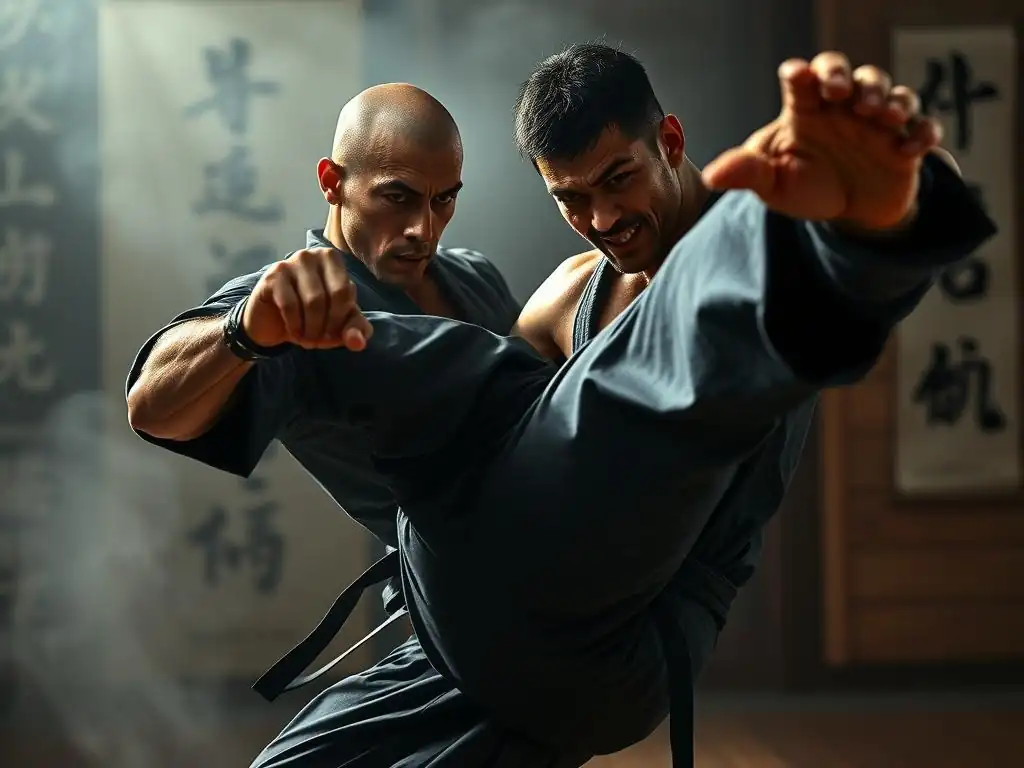
Welcome to Martial Arts Mastery, your ultimate resource for exploring the depth and breadth of martial arts knowledge. Are you ready to push your training beyond conventional boundaries? This week, we delve into anatomical insights crucial for achieving cross-style joint limits control. Understanding these limits is key to unlocking advanced techniques and maximizing your defensive capabilities. Intrigued? Discover how to leverage this knowledge and elevate your martial arts practice.
- Anatomical Insights: Mastering Joint Limits for Advanced Grappling Control
- Introduction to Cross-Disciplinary Joint Manipulation and Control
- Foundational Anatomy for Grapplers: Essential Joint Structures
- Joint Limits: Understanding the Boundaries of Safe and Effective Manipulation
- Cross-Disciplinary Analysis of Joint Lock Techniques: Exploiting Anatomical Weaknesses
- Advanced Joint Control: Progressing Beyond Basic Techniques
- Safe Training Practices for Joint Manipulation: Minimizing the Risk of Injury
-
Case Studies: Real-World Applications of Cross-Disciplinary Joint Limits
- Analyzing Successful Joint Lock Applications in [Mixed Martial Arts Competitions or Submission Grappling Matches]
- Examining the Role of Anatomical Knowledge in Preventing Injuries
- [Case Study 1: Utilizing a Kimura Variation from Wrestling in BJJ]
- [Case Study 2: Adapting a Leg Lock Entry from Sambo to MMA]
- Drills and Exercises for Mastering Cross-Disciplinary Joint Limits
- Conclusion: The Future of Cross-Disciplinary Joint Manipulation and Control
-
Frequently Asked Questions
- What does "Cross-Style Joint Limits" refer to in the context of martial arts?
- Why is understanding joint limits important for martial artists practicing multiple styles?
- How does anatomical knowledge contribute to mastering "Cross-Style Joint Limits"?
- What are some practical ways to learn about and respect joint limits during training?
- How can "Cross-Style Joint Limits" knowledge be applied to practical self-defense situations?
- Final Reflection: Embracing Anatomical Boundaries for Limitless Potential
- Unleash Your CrossStyle Potential!
Anatomical Insights: Mastering Joint Limits for Advanced Grappling Control
Introduction to Cross-Disciplinary Joint Manipulation and Control
Understanding the Importance of Anatomical Knowledge in Grappling Arts
A deep understanding of human anatomy is not merely academic for martial artists; it is fundamental to both the effective application and the safe defense of joint manipulation techniques. Grappling arts, in particular, rely heavily on exploiting the natural range of motion and structural weaknesses of the human skeleton and musculature.
Without this knowledge, practitioners risk applying techniques incorrectly, leading to inefficiency or, worse, causing severe injury to training partners or opponents. Knowledge of ligaments, tendons, muscle groups, and joint mechanics allows a grappler to apply precise force, recognize when a joint is nearing its anatomical limit, and understand the principles behind different techniques.
Furthermore, anatomical insight enhances defensive capabilities. A grappler who understands how a specific joint lock targets a particular structure can better anticipate the attack, position their body to create resistance, or initiate an escape before the joint is compromised. This understanding is crucial for navigating the complex interactions in grappling exchanges and is a cornerstone for anyone seeking advanced proficiency in cross style joint limits application and defense. It transforms techniques from rote movements into intelligent, adaptable strategies based on physiological principles.
Defining Cross-Disciplinary Application of Joint Locks and Submissions
Cross-disciplinary application in grappling refers to the integration and adaptation of techniques, principles, and strategies from various martial arts styles into a cohesive personal system. When applied to joint manipulation, this means drawing upon the rich arsenals of disciplines like Brazilian Jiu-Jitsu (BJJ), Judo, Wrestling, Sambo, and others. Each style may have unique entries, control methods, or finishes for targeting similar joints (e.g., elbow, shoulder, knee), often developed through different historical contexts and rule sets.
Mastering cross style joint limits involves recognizing the universal anatomical targets while appreciating the stylistic nuances in how these targets are attacked. For example, a shoulder lock might be entered from a standing position in Judo (like Ude Garami) or from the ground in BJJ (like a Kimura).
Understanding the underlying anatomical stress on the shoulder joint allows a practitioner to see the commonality and adapt the entry or control method based on the situation, regardless of the original style. This synthesis creates a more robust and unpredictable grappling game, enabling practitioners to exploit cross style joint limits more effectively against a wider range of opponents.
Foundational Anatomy for Grapplers: Essential Joint Structures
Overview of Major Joints Targeted in Joint Locks: Shoulders, Elbows, Wrists, Hips, Knees, Ankles
Grappling techniques frequently target the body's primary synovial joints due to their inherent mobility and the leverage points they provide. The shoulder, a ball-and-socket joint, offers significant range of motion but is vulnerable to hyperextension, hyperflexion, and rotational forces, making techniques like the Kimura, Americana, and armbars effective. The elbow, a hinge joint, primarily allows flexion and extension but is highly susceptible to hyperextension (as in a straight armbar) or lateral/medial stress if rotational force is applied incorrectly. Wrist joints, complex structures involving multiple bones and ligaments, are vulnerable to flexion, extension, and rotational locks.
Lower body joints are also prime targets. The hip, another ball-and-socket joint, is less commonly attacked directly with locks but is crucial for control and setting up leg attacks. The knee, a modified hinge joint, is susceptible to hyperextension (kneebar) and dangerous rotational forces combined with flexion/extension (heel hooks, twisting knee locks), which stress multiple ligaments.
The ankle, a complex hinge joint, is targeted with locks that force extreme plantarflexion (Achilles lock) or combine flexion/extension with rotation (heel hook), stressing ankle ligaments and potentially the subtalar joint. Understanding the specific structure and typical range of motion (ROM) of each joint is foundational to mastering cross style joint limits.
Ligament and Tendon Functionality in Joint Stability and Manipulation
Ligaments are strong, fibrous bands of connective tissue that connect bones to other bones, providing crucial stability to joints. They prevent excessive movement and guide the bones through their proper range of motion. In the context of joint locks, techniques are specifically designed to stretch or tear these ligaments by forcing the joint beyond its normal physiological limit. For instance, a kneebar directly stresses the ligaments surrounding the knee, including the anterior and posterior cruciate ligaments (ACL, PCL) and the medial and lateral collateral ligaments (MCL, LCL).
Tendons, conversely, are fibrous connective tissues that connect muscles to bones, transmitting the force generated by muscle contraction to create movement. While not the primary target of most joint locks, tendons can be stressed or injured indirectly. More importantly, the muscles connected by tendons play a vital role in either resisting joint manipulation (through isometric contraction) or becoming vulnerable when relaxed or overcome by leverage. Understanding the interplay between bones, ligaments, and tendons reveals why certain joint locks are effective and highlights the structures at risk of injury when cross style joint limits are exceeded.
The Role of Muscles in Controlling and Resisting Joint Manipulation
Muscles surround joints and, through their ability to contract, provide both movement and dynamic stability. In the context of joint locks, muscles can act as a protective barrier. A strong, engaged muscle group around a joint can resist the initial force of a lock attempt. For example, tensing the biceps and triceps can help protect the elbow joint against a sudden armbar, or engaging the quadriceps and hamstrings can add stability to the knee. This muscular resistance contributes to the "end feel" of a joint nearing its limit.
However, muscles can also be overcome by superior leverage and force. Once the passive structures (ligaments, joint capsule) begin to bear the load, the risk of injury escalates rapidly. Furthermore, fatigue or relaxation makes joints significantly more vulnerable. Some techniques, like muscle slicers (though often targeting muscle bellies, they affect joint mechanics), or simply applying pressure that causes muscle strain, can weaken muscular defense. A grappler skilled in exploiting cross style joint limits understands how to manipulate an opponent's body positioning to minimize their muscular resistance and isolate the joint, making the passive structures the primary line of defense.
Joint Limits: Understanding the Boundaries of Safe and Effective Manipulation
Defining Anatomical Joint Limits: Range of Motion (ROM) and End Feel
Anatomical joint limits refer to the natural endpoint of movement for a specific joint, determined by the structure of the bones, the flexibility of ligaments and the joint capsule, and the surrounding musculature. The Range of Motion (ROM) is the full extent of movement possible in a particular direction at a joint, typically measured in degrees. Every joint has a normal physiological ROM. Applying a joint lock aims to force a joint beyond this normal ROM.
The "End Feel" is the quality of resistance felt by the practitioner as a joint reaches its anatomical limit. It provides crucial feedback indicating how much further a joint can be safely moved, if at all. Recognizing different end feels is paramount for applying joint locks effectively in competition (to secure the tap) and safely in training (to prevent injury). This tactile sensitivity allows a grappler to gauge the opponent's cross style joint limits in real-time.
Recognizing Different Types of End Feel: Hard, Soft, Empty
There are several classic types of end feel that a practitioner should learn to identify through tactile sensitivity:
- Hard End Feel: This occurs when bone meets bone, like extending the elbow or knee fully. It's a distinct, abrupt stop. Forcing a joint beyond a hard end feel causes fractures or dislocations.
- Soft End Feel: This is felt when soft tissues compress against each other, such as flexing the elbow fully (biceps against forearm) or the knee (hamstrings against calf). It's a yielding, mushy resistance. While generally safe to reach, forcing beyond can cause bruising or muscle strain.
- Empty End Feel: This is the most concerning end feel. It is characterized by severe pain felt by the person whose joint is being manipulated before any significant resistance is felt by the practitioner. It indicates significant ligamentous laxity or rupture, or a fracture, and requires immediate cessation of force.
Developing the ability to distinguish between these end feels through slow, controlled drilling is vital for ethical and safe joint manipulation and understanding cross style joint limits in practice.
Differentiating Between Physiological and Pathological Joint Limits
Physiological joint limits represent the normal, healthy range of motion for a joint in a given individual, dictated by their natural anatomy, flexibility, and conditioning. This is the range within which movement occurs without causing injury to healthy tissues. Joint locks aim to push the joint just past the edge of this physiological limit to create pain and elicit a tap, ideally without causing permanent damage.
Pathological joint limits, conversely, are restrictions or altered ranges of motion caused by injury, disease, or congenital conditions. A joint might have a reduced ROM due to scar tissue, swelling, arthritis, or previous ligament damage. Alternatively, it might have increased laxity (hypermobility) due to torn ligaments or connective tissue disorders.
Recognizing pathological limits is crucial. Applying a standard joint lock technique to a joint with pre-existing injury or altered anatomy can cause immediate and severe harm, potentially rupturing tissues that are already compromised. An experienced grappler considers their opponent's physical condition and potential pre-existing issues when applying techniques, especially when exploring cross style joint limits against unfamiliar training partners or competitors.
Cross-Disciplinary Analysis of Joint Lock Techniques: Exploiting Anatomical Weaknesses
Comparing Joint Manipulation Techniques Across Different Grappling Disciplines: [Brazilian Jiu-Jitsu, Judo, Wrestling, Sambo]
While the underlying anatomical targets remain consistent, the methods of reaching and applying joint locks vary significantly across grappling styles. Brazilian Jiu-Jitsu, heavily focused on ground fighting, features a vast array of armbars, shoulder locks (Kimuras, Americanas, Omaplatas), wrist locks, and a rapidly evolving system of leg locks, often initiated from complex guard positions or transitions. Judo, with its emphasis on standing throws and pins, includes standing or transition-based armbars (Juji Gatame, Ude Garami) and shoulder locks (ude garami, waki gatame), but traditionally prohibits most leg locks and many spinal/neck manipulations.
Wrestling, while primarily focused on control and pinning, utilizes some joint manipulation, notably neck cranks (though often restricted in competition) and sometimes figure-four grips that resemble Kimura setups used for control rather than submission. Sambo, a Russian martial art, has a particularly rich history and extensive techniques for leg locks and armbars, often applied dynamically from throws or complex entanglement positions. Analyzing these different approaches highlights how varying rule sets and tactical goals lead to diverse methods of exploiting the same fundamental cross style joint limits.
Identifying Common Anatomical Targets in Cross-Disciplinary Joint Locks
Despite the stylistic differences in entry and control, a striking commonality across BJJ, Judo, Wrestling (to a limited extent), and Sambo is the frequent targeting of the elbow, shoulder, knee, and ankle joints. This is because these joints, while robust within their normal ROM, possess inherent structural vulnerabilities when forced beyond their physiological limits in specific planes of motion.
The elbow's hinge nature makes it susceptible to hyperextension. The shoulder's multi-axial mobility makes it vulnerable to various rotational and hyperextension/flexion forces. The knee's reliance on ligamentous support makes it prone to damage from hyperextension and rotational stress. The ankle's structure allows for powerful leverage to be applied to its ligaments and the bones of the foot and lower leg. Understanding why these specific joints are universally targeted across styles is key to both applying and defending against a wide range of cross style joint limits techniques.
Analyzing Leverage Principles in Maximizing Joint Manipulation Effectiveness
Effective joint manipulation is less about brute strength and more about applying leverage to overcome an opponent's structure and muscular resistance. Leverage principles involve using skeletal segments as levers and applying force at points that maximize mechanical advantage. For instance, in an armbar, the grappler typically uses their hips as a fulcrum placed near the opponent's elbow joint, then extends their body or pulls on the opponent's wrist to create a lever that hyperextends the elbow.
Similarly, leg locks utilize the grappler's body or legs as levers to bend, extend, or twist the opponent's knee or ankle beyond its limit. The principle is to isolate the joint, fix one side of the joint (e.g., the shoulder in an armbar, the hip in a kneebar), and apply force to the other side, using the grappler's stronger skeletal structure and body weight against the opponent's joint. Mastering these leverage principles across different techniques is essential for effectively exploiting cross style joint limits.
Advanced Joint Control: Progressing Beyond Basic Techniques
Developing Sensitivity and Proprioception for Precise Joint Manipulation
Moving beyond basic joint lock mechanics requires developing heightened sensitivity and proprioception. Sensitivity is the ability to feel the subtle cues from your opponent's body – their muscle tension, the slight movements of their joint, the point at which resistance increases, and the moment the joint nears its limit. This tactile feedback allows a grappler to adjust their pressure, angle, and timing for maximum effectiveness and safety. It's the difference between cranking blindly and applying controlled, escalating pressure.
Proprioception is the awareness of your own body's position and movement in space. For joint manipulation, this means understanding how your posture, balance, and limb positioning affect the leverage and control you have over the opponent's joint. Developing these senses allows for precise application of force, recognizing the opponent's cross style joint limits through feel rather than just visual cues, and ensuring that techniques are applied with control rather than relying on explosive force.
Utilizing Body Mechanics and Posture for Enhanced Joint Control
Proper body mechanics and posture are critical for both generating maximum leverage and maintaining control during joint manipulation attempts. Your base, hip position, spinal alignment, and limb engagement all contribute to the effectiveness and stability of a joint lock. For example, maintaining strong hip pressure in an armbar from mount prevents the opponent from posturing up and relieving the pressure on their elbow. In a Kimura, keeping your chest tight to the opponent's back and using your body weight to drive their shoulder allows for deeper penetration and control.
Poor body mechanics can lead to a loss of control, wasted energy, and decreased effectiveness. A grappler with superior body mechanics can often apply a joint lock with less perceived effort than someone relying purely on strength. Integrating sound posture and movement principles into joint lock execution enhances control, makes escapes more difficult for the opponent, and allows for better exploitation of cross style joint limits.
Integrating Positional Control and Transitions to Set Up Joint Locks
In realistic grappling scenarios, joint locks are rarely isolated techniques. They are typically the final step in a sequence that begins with achieving dominant positional control and transitioning effectively. Positions like mount, back control, side control, or specific guard entanglements (e.g., Ashi Garami for leg locks) provide the necessary stability and leverage to isolate a limb and apply a joint lock.
A skilled grappler understands that the path to a submission often involves controlling the opponent's body, limiting their movement, and creating openings. Transitions between positions are opportunities to secure grips and initiate joint lock entries while the opponent is reacting. Therefore, mastery of joint manipulation is inseparable from mastery of positional grappling and smooth transitions. This integrated approach allows grappler to navigate complex exchanges and capitalize on opportunities to attack cross style joint limits as they arise during flow.
Safe Training Practices for Joint Manipulation: Minimizing the Risk of Injury
Proper Warm-Up and Stretching for Joint Mobility
Prior to engaging in any live grappling or drilling involving joint manipulation, a thorough warm-up is essential. This increases blood flow to muscles and connective tissues, improving their elasticity and reducing stiffness. A warm body is less prone to sprains and tears than cold, stiff tissues. Dynamic stretching, which involves controlled movements through the range of motion, is particularly beneficial as it prepares the joints and muscles for the types of movements encountered in grappling.
Focusing warm-up on the major joints targeted in grappling – shoulders, elbows, wrists, hips, knees, and ankles – helps to optimize their natural range of motion and prepare the surrounding structures for the stresses of training. While static stretching can improve flexibility over time, dynamic movements are key immediately before training to enhance functional mobility and reduce injury risk when working on cross style joint limits.
Progressive Resistance Training to Strengthen Supporting Muscles
Strengthening the muscles and connective tissues surrounding a joint significantly enhances its stability and resilience against manipulative forces. Progressive resistance training, such as weightlifting or bodyweight exercises targeting specific muscle groups, can build strength and endurance in these supporting structures. For example, strengthening the rotator cuff muscles improves shoulder stability, while strong quadriceps and hamstrings protect the knee.
This increased strength doesn't make a joint invincible, as leverage can still overcome muscular resistance, but it can provide an extra layer of defense, potentially slowing down a submission attempt or allowing the individual more time to react or escape. Incorporating exercises like squats, deadlifts, overhead presses, rows, and specific rotator cuff exercises into a training regimen can contribute to overall joint health and resilience, which is vital when training cross style joint limits.
Understanding Tap-Out Signals and Recognizing Signs of Overextension
The tap-out is the universal signal in grappling that a practitioner is surrendering or is in danger of injury. Understanding and respecting the tap is the absolute cornerstone of safe training. A clear verbal "tap" or a physical tap (typically three or more times) on the opponent or the mat indicates submission. The practitioner applying the technique must release the pressure immediately and completely upon feeling or hearing the tap, or recognizing the verbal cue.
Beyond the tap, practitioners should also be attuned to non-verbal cues indicating their partner is in distress or nearing their joint limit. These include grimacing, tensing up excessively, sighing heavily, or making small, panicked movements. In training, the goal is technical execution and eliciting the tap through controlled pressure, not causing injury. Recognizing these signs and releasing before the point of damage is paramount to maintaining a safe training environment when practicing cross style joint limits techniques.
Case Studies: Real-World Applications of Cross-Disciplinary Joint Limits
Analyzing Successful Joint Lock Applications in [Mixed Martial Arts Competitions or Submission Grappling Matches]
Competitive grappling provides numerous examples of how understanding and exploiting anatomical joint limits leads to victory. In mixed martial arts (MMA), limb submissions are common finishes. For instance, the straight armbar (Juji Gatame) is a frequent submission, targeting the elbow's hyperextension limit. Fighters like Ronda Rousey in early UFC history were renowned for their rapid and effective armbars, often secured from transitions or dominant positions, demonstrating mastery of this specific joint lock and its application under pressure.
Submission grappling matches, such as those in events like the ADCC Submission Fighting World Championship, showcase an even wider array of joint locks, including complex leg locks (heel hooks, kneebars) and intricate shoulder locks. Competitors often leverage their understanding of cross style joint limits, drawing techniques from BJJ, Sambo, and wrestling to create unique attacks. The success of these techniques relies directly on the practitioner's ability to isolate a joint and apply leverage precisely to force it beyond its physiological limit, eliciting a tap.
Examining the Role of Anatomical Knowledge in Preventing Injuries
Anatomical knowledge is equally vital for injury prevention, both for oneself and for training partners. A practitioner who understands how a specific joint lock works can better defend against it. For example, knowing that a straight armbar targets elbow hyperextension allows a defender to keep their arm bent, rotate their thumb towards the ceiling, or use their skeletal structure to create a frame, making the attack harder to finish.
Furthermore, understanding the mechanics of submission allows practitioners to recognize dangerous positions early. Being caught in a position where a limb is isolated and leverage is about to be applied should trigger immediate defensive reactions or a timely tap. Responsible practitioners also use their anatomical knowledge to apply techniques with control in training, recognizing the point of danger and releasing pressure immediately upon the tap, thereby preventing accidental injuries related to cross style joint limits exploration.
[Case Study 1: Utilizing a Kimura Variation from Wrestling in BJJ]
The Kimura, or Ude Garami, is a powerful shoulder lock common in both Judo and BJJ. Its application relies on internally rotating the opponent's shoulder and flexing their arm behind their back, stressing the shoulder joint capsule and ligaments. Wrestlers often use a similar figure-four grip on the arm, sometimes called a "reverse armlock" or "double wrist lock," primarily for control or turning an opponent for a pin, rather than as a submission. However, the grip and positional control principles are directly applicable to BJJ.
A BJJ practitioner with a wrestling background might utilize the strong control from wrestling pins or top positions to secure the Kimura grip. They can then adapt the finish, perhaps by sitting out or using hip pressure from side control, to apply the necessary rotational and flexion force to the shoulder joint for a submission, effectively translating a wrestling control technique into a devastating BJJ joint lock by understanding the underlying anatomical stress points and cross style joint limits. This cross-application highlights the shared anatomical targets despite different stylistic objectives.
[Case Study 2: Adapting a Leg Lock Entry from Sambo to MMA]
Sambo has a long-standing tradition of sophisticated leg lock techniques, often initiated from dynamic entries like rolling into an opponent's legs from a standing position or a throw. These entries can be highly effective in MMA, where opponents might be less familiar with Sambo's specific leg entanglements compared to common BJJ leg attacks. A Sambo practitioner entering MMA might adapt a rolling kneebar entry, which targets the knee's hyperextension limit.
The Sambo entry might involve a throw or takedown that transitions directly into securing control of the opponent's leg, often ending up in a position where the Sambo fighter's body acts as a lever to extend the opponent's knee. While the basic kneebar principle (hyperextension) is universal, the Sambo entry's speed and unique mechanics can catch an MMA opponent off guard. Success relies on the fighter's understanding of the knee joint's anatomy and how to apply leverage effectively from a dynamic, Sambo-inspired position to exploit cross style joint limits under unpredictable MMA conditions.
Drills and Exercises for Mastering Cross-Disciplinary Joint Limits
Partner Drills for Developing Joint Manipulation Sensitivity and Control
Developing sensitivity in applying joint locks is best achieved through dedicated partner drills performed slowly and cooperatively. A fundamental drill involves practicing the mechanics of a specific joint lock (e.g., armbar, Kimura, kneebar) from a secure position without applying full force to get the tap. Partners provide gradual, controlled resistance, and the practitioner focuses on feeling the structure of the joint, the point at which resistance increases, and the transition from muscular resistance to passive tissue load.
Another effective drill is progressive resistance drilling, where partners agree to apply increasing levels of resistance as the technique is applied, allowing the practitioner to learn how much force is needed and when the point of danger is approaching. These drills build tactile awareness, improve control, and teach practitioners to recognize their partner's cross style joint limits through feel, which is essential for safe and effective training.
Solo Exercises for Improving Range of Motion and Joint Stability
While joint locks are partner-dependent, solo exercises can improve a practitioner's own joint health, flexibility, and stability, which indirectly aids in both applying and defending techniques. Controlled Articular Rotations (CARs) are solo exercises where a joint is actively moved through its full, controlled range of motion. Practicing CARs for shoulders, elbows, wrists, hips, knees, and ankles can help maintain or improve joint mobility and awareness.
Strengthening exercises using resistance bands or light weights for smaller stabilizing muscles, such as the rotator cuff for the shoulder or the muscles around the knee and ankle, can enhance joint stability. While solo exercises don't teach application, they contribute to the physical foundation needed to train joint manipulation effectively and safely manage one's own body's cross style joint limits when defending.
[Drill Example 1: Positional Drilling for Armbar Setups]
Start from a specific position like mount. The goal is to secure an armbar submission within a limited time frame or number of attempts. The defender offers light to moderate resistance, focusing on preventing the setup and escape. The attacker practices securing head and arm control, transitioning hips to isolate the arm, maintaining control as the opponent defends, and obtaining the final armbar position.
The drill focuses on the process of getting to the submission, not just the finish. Partners rotate roles. This repetition from a specific position builds muscle memory for the necessary movements, weight distribution, and transitions required to effectively isolate the arm and apply leverage, reinforcing the link between positional control and exploiting cross style joint limits.
[Drill Example 2: Grip Fighting Drills for Wrist Control]
This drill focuses specifically on hand-to-hand and wrist-to-wrist exchanges, often starting from a standing or kneeling grip-fighting posture. The objective is to secure dominant grips that allow for control of the opponent's wrists or hands, which can lead to wrist locks or serve as entries to arm attacks. Partners actively fight for grip superiority.
The drill emphasizes sensitivity in the hands and fingers, recognizing opportunities to apply pressure to the small joints of the wrist and hand, and understanding how grip breaks and controls can compromise the opponent's structure. This develops proficiency in manipulating the smaller, often overlooked cross style joint limits of the hands and wrists, which can be surprisingly effective submission targets.
Conclusion: The Future of Cross-Disciplinary Joint Manipulation and Control
Emphasizing the Importance of Continuous Learning and Anatomical Study
Mastering advanced joint manipulation and control is an ongoing journey that requires continuous learning. The human body is a complex system, and deepening one's understanding of anatomy provides a significant edge in grappling. It moves practitioners beyond simply mimicking techniques to truly understanding why they work and how to adapt them. As grappling continues to evolve, so too must the practitioner's knowledge base.
Regularly reviewing anatomical principles, studying biomechanics, and applying this knowledge in a practical training environment are crucial steps. This commitment to anatomical study enhances effectiveness, improves safety, and allows grapplers to innovate by finding new ways to exploit cross style joint limits based on fundamental physiological principles.
Promoting Ethical and Responsible Application of Joint Locks
Given the potential for injury, the ethical and responsible application of joint locks is paramount, especially in training. Joint locks are powerful tools, capable of causing severe damage if applied incorrectly or with malicious intent. In a training environment, the primary goal is mutual improvement, and this requires trust and respect between partners.
Practitioners must prioritize control over speed or force, communicate with their partners, and always release pressure immediately upon a tap or sign of distress. Promoting a culture of safety and respect ensures that joint manipulation can be trained effectively without unnecessary risk, allowing grapplers to explore cross style joint limits in a responsible manner.
The Evolving Landscape of Joint Manipulation Techniques in Modern Grappling
Modern grappling is characterized by its hybrid nature, with techniques and strategies constantly being borrowed and adapted across disciplines. This cross-pollination is leading to innovative joint lock entries, control methods, and finishes that push the boundaries of traditional styles. As practitioners continue to experiment and integrate knowledge from different arts, our understanding of how to effectively and efficiently exploit anatomical weaknesses will also grow.
The future of joint manipulation in grappling will likely involve further refinement of techniques, increased emphasis on recognizing subtle anatomical cues, and continued adaptation of methods from various styles to navigate and exploit cross style joint limits in increasingly sophisticated ways. Staying informed and maintaining a student mindset is key for anyone wishing to remain at the forefront of this evolving aspect of martial arts.
Frequently Asked Questions
What does "Cross-Style Joint Limits" refer to in the context of martial arts?
It refers to understanding the anatomical range of motion and safe limits of joints when applying techniques from different martial arts. This knowledge is crucial for effective and safe cross-style training.
Why is understanding joint limits important for martial artists practicing multiple styles?
Understanding joint limits helps prevent serious injuries during training and application. It allows for more precise control over opponents and a deeper understanding of technique effectiveness across styles.
How does anatomical knowledge contribute to mastering "Cross-Style Joint Limits"?
Anatomical knowledge provides a framework for understanding how joints function, their limitations, and potential vulnerabilities. This allows martial artists to apply techniques with greater precision and safety, adapting them to different body types and situations.
What are some practical ways to learn about and respect joint limits during training?
Focus on controlled movements, gradual stretching, and listening to your body's feedback. Working with a knowledgeable instructor who understands anatomy and biomechanics is also crucial.
How can "Cross-Style Joint Limits" knowledge be applied to practical self-defense situations?
By understanding joint limits, you can apply techniques that exploit an attacker's vulnerabilities while minimizing risk to yourself. This allows for effective control and neutralization in real-world self-defense scenarios.
Final Reflection: Embracing Anatomical Boundaries for Limitless Potential
The exploration of Cross Style Joint Limits within the human body is not merely an academic exercise; it's a gateway to unlocking unprecedented levels of control, precision, and safety in movement. Understanding these limits, as we've discussed, empowers athletes, dancers, and anyone seeking to push their physical boundaries responsibly, transforming potential injuries into opportunities for growth and mastery.
This deeper understanding of anatomical constraints has profoundly influenced how we approach physical training and rehabilitation. It's shifted the focus from simply pushing harder to moving smarter, respecting the body's inherent wisdom. Knowing your limitations is the first step to exceeding them.
This quote encapsulates the essence of our exploration, highlighting the transformative power of self-awareness and anatomical understanding.
Now, consider how this knowledge can reshape your own approach to movement. Are you truly listening to your body's signals? Are you respecting its inherent limitations while striving to expand your capabilities? Embrace the principles we've explored, and you'll not only enhance your performance but also cultivate a deeper, more harmonious relationship with your physical self, unlocking a future of movement that is both powerful and sustainable.
Unleash Your CrossStyle Potential!
Thanks for exploring the intricacies of joint limits with us! We hope this article has given you valuable insights into refining your CrossStyle control and maximizing your training effectiveness. Now, it's time to put this knowledge into action!
- Commit to one week of focused training, consciously applying the joint limit awareness techniques discussed, and observe the immediate improvements in your form and control.
- Share your personal insights and breakthroughs from applying these principles on the Martial Arts Mastery forum. Let's build a community of understanding!
- Explore unconventional training methods by deliberately practicing your CrossStyle in varied and challenging environments, like uneven terrain or with simulated resistance.
How will you integrate these anatomical insights into your training regime, and what new boundaries will you push within your CrossStyle mastery this week?