
The Kata Conundrum: Preventing Repetitive Strain from Martial Arts Form Practice


Welcome to Martial Arts Mastery, your gateway to unlocking the secrets of combat traditions worldwide. Are you ready to delve into the heart of martial arts training? In "The Kata Conundrum," we explore the surprisingly common, yet often overlooked issue of kata repetitive strain prevention. But how can you ensure your dedication to these vital forms doesn't lead to injury? Discover practical techniques and expert insights to optimize your training and keep you performing at your peak. Read on to master your art, safely.
- Preventing Repetitive Strain Injuries in Karate Kata Practice
- Understanding Repetitive Strain Injuries (RSIs) in Karate
- Analyzing Causes of Kata-Related Repetitive Strain
- Kata Repetitive Strain Prevention Strategies
- Recognizing and Addressing Early Symptoms
- Alternative Training Methods
- Gear and Equipment Considerations
- Case Studies: Examples of Kata Repetitive Strain Prevention
- Conclusion: Prioritizing Injury Prevention for Long-Term Karate Practice
-
Frequently Asked Questions
- How can Kata practice, a core component of many martial arts, lead to repetitive strain injuries?
- What are some common areas affected by repetitive strain during Kata training?
- What are some preventative measures practitioners can take to avoid repetitive strain injuries during Kata?
- How important is proper warm-up and cool-down routines for mitigating repetitive strain from Kata?
- When should a martial artist seek professional help if they suspect they have a repetitive strain injury from Kata practice?
- Final Reflection: Harmonizing Tradition and Well-being
- Ignite Your Kata: Transform Practice into Progress!
Preventing Repetitive Strain Injuries in Karate Kata Practice
Understanding Repetitive Strain Injuries (RSIs) in Karate
What are RSIs and How Do They Affect Karateka?
Repetitive Strain Injuries (RSIs), also known as cumulative trauma disorders, are a group of conditions caused by repeated movements, forceful exertions, vibrations, mechanical compression (pressing against hard surfaces), or sustained awkward postures. In the context of Karate, particularly during the rigorous practice of kata (forms), these injuries arise from the consistent, often high-impact, repetition of specific movements.
Unlike acute injuries resulting from a single traumatic event like a sprain or fracture, RSIs develop gradually over time as the body's tissues are subjected to microtrauma that exceeds their ability to repair themselves. This can manifest as inflammation, nerve compression, or muscle and tendon damage.
For karateka, RSIs can significantly impede training progress and overall performance. Symptoms often start subtly, perhaps as a mild ache after a long kata session, but can escalate to chronic pain, weakness, numbness, or tingling that persists even outside of training.
A study involving martial artists indicated that overuse injuries, which include RSIs, account for a significant portion of reported injuries, sometimes ranging from 20% to 50% depending on the style and intensity of training. The insidious nature of RSIs means that by the time symptoms become severe enough to force a practitioner to stop, the underlying tissue damage can be substantial, requiring prolonged recovery periods and potentially leading to long-term issues if not managed correctly.
Risks of Repetitive Movements in Kata: Specific Examples
Kata practice involves performing sequences of techniques – blocks, strikes, stances, and movements – often dozens or even hundreds of times within a single training session, especially when preparing for grading or competition. This inherent repetitiveness, while crucial for muscle memory and technical mastery, poses a significant risk for developing RSIs. Consider the constant, forceful snapping motion of the wrist required for techniques like gyaku-zuki (reverse punch) or shuto-uke (knife-hand block) performed repeatedly within kata like Heian Shodan or Bassai Dai. Over time, this can irritate tendons around the wrist and elbow.
Another example lies in the lower body stress. Stances like kokutsu-dachi (back stance) or deep zenkutsu-dachi (front stance) held for extended periods or transitioned into rapidly and repeatedly, particularly during kata transitions, place considerable strain on the knees, hips, and ankles.
The constant pivoting and twisting motions required in many kata, such as the turns in Tekki Shodan (Naihanchi), can stress the knee and hip joints. If these movements are executed with suboptimal alignment or excessive force due to fatigue or improper technique, the cumulative microtrauma accelerates, increasing the likelihood of conditions like patellofemoral pain syndrome or tendonitis around the hip flexors or Achilles tendon.
Common Areas Affected by RSIs in Kata Practitioners: Wrist, Shoulder, Knee
The human body is a complex system, but certain areas bear the brunt of the repetitive, forceful movements characteristic of Karate kata, making them particularly susceptible to RSIs. The wrist is a prime example, frequently affected by conditions like tendonitis (inflammation of tendons) or carpal tunnel syndrome (compression of the median nerve).
The rapid extension and flexion, combined with the impact transmitted through the fist or hand during blocks and strikes, repeatedly stresses the tendons and surrounding tissues. Practitioners focusing heavily on styles with strong hand techniques may experience symptoms ranging from a dull ache to sharp pain, stiffness, or even a burning sensation in the wrist and forearm.
The shoulder joint, with its wide range of motion, is also vulnerable. Techniques involving powerful arm movements, such as oi-zuki (lunge punch), age-uke (rising block), or the whipping motions in some open-hand techniques, subject the rotator cuff tendons and the bursa (fluid-filled sacs cushioning joints) to repeated stress. Rotator cuff tendonitis or impingement syndrome are common complaints, characterized by pain when lifting the arm, weakness, or a clicking sensation.
Similarly, the knees endure significant compressive and shearing forces from deep stances, rapid directional changes, and pivoting movements. Patellar tendonitis ("jumper's knee"), meniscal irritation, or osteoarthritis can develop over time, limiting mobility and causing pain during weight-bearing movements and stance transitions.
Improper Technique: Examples in Specific Kata
One of the most significant contributors to kata repetitive strain is improper technique. While the goal of repetition is to perfect form, practicing incorrect movements repeatedly reinforces faulty motor patterns that place undue stress on joints, muscles, and tendons.
For instance, in performing gyaku-zuki within a kata like Heian Godan, if a practitioner consistently locks out their elbow with excessive force at the end of the punch, the impact is absorbed directly by the elbow joint and surrounding tendons rather than being distributed through the body. This repetitive microtrauma to the elbow can lead to conditions like medial or lateral epicondylitis (golfer's or tennis elbow), even if the overall number of punches isn't extraordinarily high.
Another example lies in the execution of turns and pivots. In kata like Kanku Dai, there are numerous transitions involving significant body rotation. If the practitioner pivots primarily on the ball of the foot with the knee locked or twisted, instead of allowing the foot to rotate freely with the body weight balanced, excessive torque is applied to the knee joint and ligaments.
Similarly, improper hip engagement during power generation, such as relying solely on arm strength for blocks rather than using the core and hip rotation ( koshi), places disproportionate stress on the shoulder and elbow joints. These subtle, yet critical, technical flaws, repeated hundreds or thousands of times across many training sessions, are a primary driver of cumulative tissue damage and subsequent RSI development.
Overtraining and Insufficient Rest: Impact on Joint Health
Overtraining is a major factor contributing to kata repetitive strain. It occurs when the volume, intensity, or frequency of training exceeds the body's capacity for recovery. In the pursuit of perfection or preparation for events, practitioners might spend hours daily practicing the same few kata, performing dozens of repetitions of complex sequences.
For example, a student preparing for a black belt grading might practice their required kata, say Bassai Sho, 30-40 times per session, 5-6 times a week, for several months. This intense focus on specific, complex movements without adequate breaks or variation prevents the musculoskeletal system from repairing the micro-damage incurred during practice.
Insufficient rest exacerbates this issue. During rest periods, particularly sleep, the body undergoes crucial repair processes. Without adequate downtime between training sessions, muscles and connective tissues remain in a state of fatigue and micro-injury, losing their resilience.
This makes them less able to absorb shock and perform efficiently, transferring stress directly to the joints. The cartilage, tendons, and ligaments within the joints are then subjected to repeated high loads without the chance to recover, leading to inflammation and degenerative changes over time. A survey of martial artists showed that those training more than 10 hours per week had a significantly higher incidence of overuse injuries compared to those training less, highlighting the direct link between training volume, recovery, and injury risk.
Ignoring Early Warning Signs: Pain, Tingling, Numbness
A critical cause of kata repetitive strain progressing to a debilitating stage is the tendency to ignore early warning signs. Martial artists are often taught discipline and perseverance, which can sometimes translate into pushing through discomfort or pain. Initial symptoms of an RSI might be subtle – a slight ache in the wrist after practice, mild stiffness in the shoulder in the morning, or a fleeting tingling sensation in the fingers. These signals are the body's way of indicating that tissues are being overloaded and require rest or a change in activity.
However, many practitioners dismiss these early signs as typical muscle soreness or fatigue. They continue with their intense kata training, potentially increasing the volume or intensity, thereby compounding the micro-damage.
As a result, the inflammation and tissue irritation worsen, leading to more persistent pain, swelling, decreased range of motion, or more pronounced nerve symptoms like constant tingling or numbness. By the time the pain becomes severe enough to interfere with daily activities or force a complete stop to training, the injury is significantly more advanced and requires a much longer and more complex recovery process compared to addressing it when symptoms first appeared.
Individual Biomechanics: Importance of Personalized Training
Individual biomechanics play a crucial role in susceptibility to kata repetitive strain. Each person's skeletal structure, joint alignment, muscle strength, flexibility, and movement patterns are unique. These individual differences can predispose certain practitioners to specific types of RSIs, even when performing seemingly correct techniques. For example, someone with naturally hypermobile joints might be more prone to ligamentous strain if not adequately supported by strong muscles, while someone with limited ankle flexibility might place excessive strain on their knees and hips during deep stances or pivots.
A generic approach to kata training that doesn't account for these individual variations can inadvertently lead to injury. Practicing a kata exactly as demonstrated by an instructor, without modifications for personal limitations or anatomical differences, can force the body into positions or movements that are mechanically inefficient or stressful for that specific individual. This highlights the importance of personalized training, where instructors observe and provide feedback tailored to the student's body.
Understanding one's own physical limitations and strengths allows for intelligent adjustments in technique or training volume, which is key for kata repetitive strain prevention. This might involve slightly modifying a stance depth, adjusting the angle of a block, or focusing on specific strengthening exercises to support naturally weaker areas, thereby reducing the risk of cumulative stress.
Kata Repetitive Strain Prevention Strategies
Optimizing Kata Technique for Injury Prevention
Proper Alignment and Body Mechanics: Focus on Hips and Core
Optimizing kata technique is the cornerstone of kata repetitive strain prevention. This goes beyond merely performing the movements in the correct sequence; it involves understanding and applying principles of proper body mechanics to distribute force efficiently and reduce stress on vulnerable joints. A primary focus should be on utilizing the hips and core musculature.
Techniques in Karate derive power not just from the limbs, but from the rotation and stability generated by the trunk and pelvis. For example, a powerful mae-geri (front kick) should originate from a strong core and hip drive, not just leg strength. Similarly, blocks and punches gain stability and force from proper hip rotation ( koshi kaiten).
By engaging the core muscles (abdominals, obliques, lower back) and utilizing efficient hip movement, the impact and stress of techniques are absorbed and dissipated by the large, strong muscles of the torso and legs, rather than being concentrated in smaller, more delicate joints like the wrists, elbows, and shoulders. This means ensuring the spine is aligned, the pelvis is stable, and transitions between stances and techniques flow through the center of the body.
Mastering the connection between the core, hips, and limbs is fundamental; it reduces the jerky, high-impact nature of movements performed solely with muscular force from the extremities, thus significantly lowering the risk of cumulative microtrauma and aiding in kata repetitive strain prevention.
Avoiding Excessive Tension: Relaxation Techniques
Another crucial aspect of technical optimization for kata repetitive strain prevention is learning to avoid excessive muscular tension. While Karate techniques require moments of kime (focus, tension) at the point of impact, the movements leading up to and following that moment should be relatively relaxed and fluid. Holding excessive tension throughout the kata, in muscles that are not actively engaged in a technique, is counterproductive and increases the risk of injury. For instance, gripping the hands tightly or tensing the shoulders constantly restricts natural movement, impedes blood flow, and fatigues muscles unnecessarily.
Practicing relaxation techniques, both during and between kata, is vital. This involves consciously releasing tension in areas not directly involved in the current movement. Learning to breathe deeply and rhythmically throughout the kata can also help manage tension.
The principle of "hard and soft" ( go ju) is fundamental in many martial arts; understanding when to apply tension and when to relax allows for more efficient movement, greater speed, and significantly reduces the chronic load on muscles and tendons. By minimizing unnecessary muscular effort, the body moves more freely, absorbs impacts more effectively, and is less prone to the fatigue that leads to breakdown and repetitive strain injuries.
Fluidity and Smooth Transitions: Emphasis on Breathing
Achieving fluidity and smooth transitions between techniques is paramount for kata repetitive strain prevention. Jerky, abrupt movements place sudden, high-impact stress on joints and connective tissues. In contrast, flowing transitions allow the momentum from one movement to carry into the next, reducing the need for sudden, forceful stops and starts.
This involves coordinating the entire body – feet, hips, core, arms – to move as a unified system. For example, the transition from a block to a counter-attack should be seamless, utilizing the rotation and shifting of weight to power the subsequent technique, rather than stopping dead after the block and then generating force anew for the strike.
Breathing plays a critical role in facilitating this fluidity. Proper breathing techniques, often involving exhaling during the exertion phase of a technique, help to synchronize movement with the breath, promote relaxation (as mentioned earlier), and regulate internal pressure. Holding one's breath or breathing shallowly can lead to increased muscular tension and reduce the body's ability to move smoothly.
By focusing on controlled, deliberate breathing throughout the kata, practitioners can enhance their body awareness, improve coordination, and ensure that transitions are performed with grace and efficiency, minimizing the sharp stresses that contribute to repetitive strain injuries. This integrated approach, combining breath, movement, and relaxation, is key to sustainable kata practice.
Smart Training Practices for Kata Repetitive Strain
Progressive Overload: Gradual Increase in Repetitions
Implementing progressive overload is a fundamental principle of smart training, applicable even to kata practice for preventing repetitive strain. Instead of suddenly increasing the number of kata repetitions or the intensity of practice, changes should be introduced gradually.
If a practitioner typically runs through a kata 5 times per session, jumping to 20 repetitions overnight is likely to overload the tissues. A more sensible approach would be to increase the repetitions by 10-20% each week, perhaps practicing the kata 6 times the first week, 7 times the second, and so on, allowing the body time to adapt to the increased volume.
This principle also applies to the complexity or difficulty of kata. Introducing a new, more physically demanding kata should be done cautiously, initially focusing on understanding the sequence and basic movements at a lower intensity and fewer repetitions before building up speed, power, and volume. By adhering to progressive overload, the musculoskeletal system is given the opportunity to gradually strengthen and adapt to the increasing demands of training, building resilience and significantly reducing the risk of sudden overload and the development of kata repetitive strain. It's a marathon, not a sprint, when it comes to sustainable martial arts training.
Rest and Recovery: Active Recovery Techniques
Adequate rest and recovery are non-negotiable components of a smart training regimen aimed at preventing kata repetitive strain. Training breaks down muscle tissue and stresses joints; recovery is when the body rebuilds and strengthens. Ignoring the need for rest days or consistently training intensely without periods of lower intensity or complete rest prevents this vital repair process. Generally, training the same intense activity every single day without variation is not recommended. Incorporating at least 1-2 full rest days per week is crucial, especially when training volume is high.
Beyond complete rest, active recovery techniques can be beneficial. These involve engaging in light, low-impact activities that promote blood flow and aid muscle repair without adding significant stress. Examples include light walking, gentle stretching, or practicing very basic, low-intensity movements from kata focusing purely on flow and breathing rather than power. Techniques like foam rolling or self-massage can also help release muscle tension and improve circulation. By actively incorporating rest and recovery into the training schedule, practitioners allow their bodies to repair and adapt, reducing accumulated fatigue and lowering the susceptibility to overuse injuries and kata repetitive strain.
Varying Kata Practice: Exploring Different Styles and Applications
Varying kata practice is an intelligent strategy for preventing repetitive strain by distributing the stress across different muscle groups and movement patterns. Focusing exclusively on one or two kata for extended periods means repeatedly stressing the exact same joints and tendons in the same ways. For example, constantly practicing kata heavy on front stances and forward movements might disproportionately load the knees and hips in a specific manner. Introducing kata with different emphases, such as those focusing on side stances ( kiba-dachi) or involving more dynamic jumps and turns, challenges the body in new ways.
Furthermore, varying the way kata is practiced can also help. Instead of always performing kata at full speed and power, dedicate sessions to practicing slowly, focusing purely on balance, breathing, and the subtle transitions. Explore bunkai (applications) at varying intensities.
Practicing bunkai involves breaking down kata movements into practical self-defense scenarios, which often requires slightly different angles, timings, and forces than the solo form. This variation provides a different stimulus to the muscles and joints, preventing the monotonous repetition that leads to strain. Incorporating variety keeps training fresh, develops a more well-rounded practitioner, and is a key element in kata repetitive strain prevention.
Warm-up and Cool-down in Kata Training
Dynamic Stretching: Arm Circles, Leg Swings
A thorough warm-up is essential before engaging in strenuous kata practice to prepare the body and reduce the risk of injury, including repetitive strain. A proper warm-up increases blood flow to muscles, raises core body temperature, and improves joint mobility. Dynamic stretching, which involves controlled movements through a full range of motion, is particularly effective. Examples include arm circles (forward and backward) to warm up the shoulder joint and rotator cuff, leg swings (forward-backward and side-to-side) to mobilize the hips and hamstrings, torso twists to engage the core and spine, and ankle rotations.
These dynamic movements mimic the types of motions that will be performed during kata, but at a lower intensity. They help to lubricate the joints by stimulating the production of synovial fluid and prepare the muscles and tendons for the demands of sharp, powerful techniques.
A warm-up should last at least 10-15 minutes and gradually increase in intensity, perhaps starting with light cardio like jogging in place or skipping, followed by a series of dynamic stretches that target the major joints and muscle groups used in kata, such as the wrists, elbows, shoulders, hips, knees, and ankles. This preparation is a vital step in preventing kata repetitive strain by ensuring tissues are pliable and ready for action.
Static Stretching and Myofascial Release: Foam Rolling, Static Stretches
While dynamic stretching is best for warming up before kata, static stretching and myofascial release techniques are most beneficial after training during the cool-down phase. A cool-down helps the body gradually return to a resting state, reduces muscle soreness, and can improve flexibility over time. Static stretching involves holding a stretch for a period, typically 20-30 seconds, without bouncing. Examples relevant to kata practitioners include hamstring stretches, quadriceps stretches, calf stretches, chest stretches (to counteract rounded shoulders), and wrist and forearm stretches.
Myofascial release techniques, such as using a foam roller or massage ball, can help release tension in the fascia (the connective tissue surrounding muscles) and muscles themselves. Rolling areas like the quadriceps, hamstrings, calves, upper back, and even forearms after training can help improve circulation, reduce muscle tightness, and aid in recovery. Incorporating a 10-15 minute cool-down consisting of static stretches and potentially some foam rolling helps to improve flexibility, address areas of tightness developed during training, and promote muscle recovery, all of which contribute to reducing accumulated stress and preventing kata repetitive strain.
Strength and Conditioning for Kata
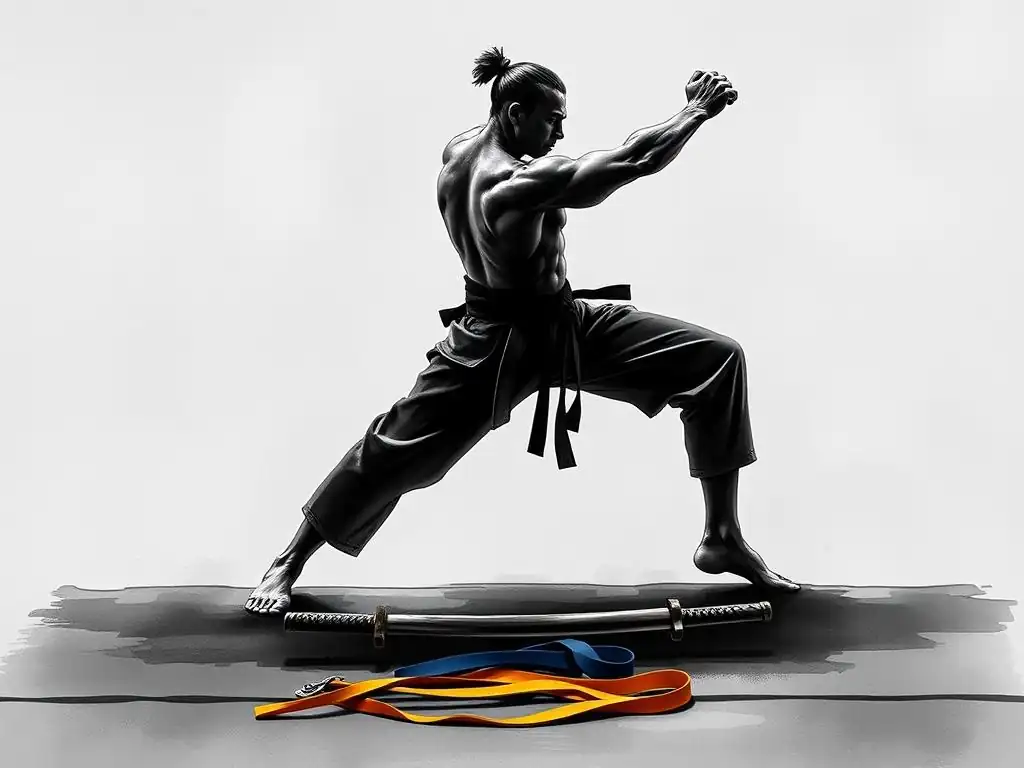
Strengthening Supporting Muscles: Rotator Cuff Exercises, Core Work
Strength and conditioning are critical, yet sometimes overlooked, components of kata repetitive strain prevention. Strengthening the muscles that support key joints helps to stabilize them and absorb forces more effectively during dynamic movements. For instance, the rotator cuff muscles (a group of four small muscles surrounding the shoulder joint) are essential for shoulder stability and control during arm movements in kata. Weak rotator cuff muscles can lead to impingement or tendonitis. Exercises like internal and external rotations with light resistance bands or small weights can significantly strengthen these crucial stabilizers.
Similarly, a strong core is foundational for all Karate movements, as discussed earlier. Exercises like planks, bridges, and bird-dogs build core stability and strength, ensuring efficient transfer of power from the lower body through the trunk to the upper body, and vice versa.
Strengthening the muscles around the knees and hips, such as the quadriceps, hamstrings, glutes, and hip abductors/adductors, provides stability in stances and during transitions. Incorporating a balanced strength training program 2-3 times per week that targets these supporting muscle groups enhances the body's resilience and reduces the strain placed directly on joints and tendons during kata practice, making it a vital part of kata repetitive strain prevention.
Improving Flexibility: Hip Flexor Stretches, Hamstring Stretches
Maintaining and improving flexibility is equally important for preventing kata repetitive strain. Adequate flexibility ensures that joints can move through their full, natural range of motion without undue restriction or stress. Tight muscles can pull on joints, alter biomechanics, and increase the load on tendons. For example, tight hip flexors, common from prolonged sitting, can inhibit proper hip extension and lead to compensatory movements that strain the lower back and knees during stances and kicks. Regular hip flexor stretches are therefore crucial.
Tight hamstrings can also affect posture and place strain on the knees and lower back. Incorporating hamstring stretches, such as seated or standing variations, helps improve flexibility in the back of the thigh.
Overall flexibility in the ankles, knees, hips, spine, shoulders, and wrists allows for more fluid and efficient movement during kata, reducing the likelihood of muscles and tendons being overstretched or forced into awkward positions. A consistent stretching routine, performed after warming up or during cool-down, complements strength training and technical practice, contributing significantly to joint health and serving as a key element of kata repetitive strain prevention.
Nutrition and Hydration: Importance of Protein and Electrolytes
Nutrition and hydration play a supporting, but important, role in preventing kata repetitive strain by supporting the body's ability to repair and recover. Adequate protein intake is essential for muscle repair and synthesis. When muscles are subjected to the micro-damage that occurs during repetitive, forceful movements in kata, protein provides the building blocks necessary for them to rebuild and become stronger. Aiming for a protein intake of around 1.2 to 1.7 grams per kilogram of body weight per day is often recommended for active individuals to support muscle recovery and tissue repair.
Proper hydration is also crucial. Water is vital for maintaining the viscosity of synovial fluid (which lubricates joints), transporting nutrients to tissues, and removing metabolic waste products. Dehydration can lead to muscle fatigue, reduced performance, and potentially increased susceptibility to injuries.
Electrolytes, such as sodium, potassium, and magnesium, are lost through sweat and are important for nerve and muscle function. Ensuring adequate intake of water and electrolytes, especially during prolonged or intense training sessions, helps maintain optimal physiological function, supports recovery processes, and indirectly contributes to the body's resilience against the cumulative stress of kata practice, aiding in kata repetitive strain prevention.
Recognizing and Addressing Early Symptoms
Common Symptoms: Pain, Swelling, Decreased Range of Motion
Recognizing the early symptoms of repetitive strain is paramount for effective intervention and preventing the injury from becoming chronic. Common early signs often include a dull ache or tenderness in the affected area (wrist, elbow, shoulder, knee, etc.) during or immediately after kata practice. This pain might initially subside quickly with rest but tends to return with subsequent training sessions. As the condition progresses, the pain may become more persistent, lasting for hours or even days after activity.
Other symptoms can include mild swelling or puffiness around the affected joint or along the tendon path, a feeling of stiffness, particularly in the morning, and a noticeable decrease in the range of motion or flexibility of the joint. There might also be a clicking or grinding sensation with movement.
In cases involving nerve irritation, tingling, numbness, or weakness may occur, often radiating down the limb. Paying close attention to these initial indicators, even if they seem minor, is crucial; they are the body's warning system signaling that tissues are being overloaded and require attention to prevent further damage and effectively implement kata repetitive strain prevention.
Seeking Professional Help: Physiotherapist, Sports Doctor
If early symptoms of pain, stiffness, or discomfort persist despite rest and basic self-care measures, it is essential to seek professional medical help. Ignoring symptoms or attempting to self-diagnose and treat can lead to the condition worsening. A physiotherapist (physical therapist) or a sports medicine doctor are ideal professionals to consult. They have expertise in musculoskeletal injuries common in athletes and can accurately diagnose the specific type and severity of the repetitive strain injury.
A professional evaluation will involve a thorough history of your symptoms, training regimen, and a physical examination to assess range of motion, strength, tenderness, and identify any specific tests that indicate tendon, nerve, or joint involvement. They may also recommend imaging tests like ultrasound or MRI in more complex cases.
Based on the diagnosis, they can develop a tailored treatment plan that may include rest, specific exercises, manual therapy, modalities like ultrasound or dry needling, and guidance on modifying your training. Early consultation with these specialists is key to getting an accurate diagnosis and starting a targeted recovery plan, which is vital for preventing long-term issues from kata repetitive strain.
Early Intervention: Rest, Ice, Compression, Elevation (RICE)
Once early symptoms are recognized and potentially after consulting a professional, early intervention using principles like RICE (Rest, Ice, Compression, Elevation) can be highly effective in managing inflammation and preventing the condition from escalating. Rest is the most critical component; it means temporarily reducing or completely stopping the activity that aggravates the symptoms, which in this case is often high-volume or high-intensity kata practice. This allows the injured tissues time to begin healing without continued stress.
Applying ice to the affected area for 15-20 minutes several times a day can help reduce pain and inflammation by constricting blood vessels. Compression using an elastic bandage can help minimize swelling, though care must be taken not to wrap too tightly, which could impede circulation. Elevating the injured limb above heart level also helps reduce swelling by facilitating fluid drainage.
While RICE is a common first-aid protocol, it's important to remember it's a temporary measure. It helps manage acute symptoms but doesn't address the underlying causes of the RSI (like technique issues or overtraining), which must be modified for true kata repetitive strain prevention and long-term recovery.
Alternative Training Methods
Shadow Boxing and Visualization: Mental Rehearsal
When recovering from or trying to prevent the exacerbation of kata repetitive strain, or simply to reduce the physical load, alternative training methods are invaluable. Shadow boxing, or performing kata movements without a partner or target, allows practitioners to focus on technique, balance, and flow at a lower intensity. This reduces the impact and stress on joints compared to practicing with full power or against resistance. It's an excellent way to maintain muscle memory and refine movements without the physical pounding.
Visualization takes this a step further by performing the kata entirely in the mind. This mental rehearsal technique has been shown to activate similar neural pathways as physical practice. By vividly imagining performing the kata correctly, focusing on proper body mechanics, timing, and breathing, practitioners can continue to refine their form and reinforce muscle memory without any physical stress.
This is particularly useful during periods of injury recovery or as a supplement to physical training to reduce overall volume while still progressing technically. Both shadow boxing and visualization are effective tools for maintaining skill while prioritizing kata repetitive strain prevention.
Resistance Training: Band Work, Light Weights
Incorporating resistance training using tools like resistance bands or light weights offers a controlled way to strengthen the muscles crucial for supporting joints and executing kata techniques, without the high impact often associated with full-power kata practice. Band work is particularly versatile and gentle on the joints. Exercises targeting the rotator cuff, hip abductors, glutes, and core with resistance bands can build strength and stability in key areas that are vulnerable to repetitive strain.
Using light dumbbells or bodyweight exercises can also build general strength and muscular endurance. Squats, lunges, push-ups, and rows, performed with proper form and appropriate weight, strengthen the major muscle groups used in Karate. This supplementary strength training builds a more robust and resilient physique that is better equipped to handle the demands of kata practice. It allows practitioners to improve their physical capacity in a controlled environment, reducing the need to rely solely on high-volume kata practice for conditioning and thus aiding in kata repetitive strain prevention.
Cross-Training: Swimming, Yoga
Cross-training involves participating in activities outside of Karate that complement martial arts training by improving overall fitness, flexibility, strength, or cardiovascular health, often in a low-impact manner. Swimming, for example, is an excellent full-body workout that is virtually impact-free. It improves cardiovascular endurance and strengthens muscles without placing stress on weight-bearing joints like the knees and ankles, which are heavily loaded during stances and movements in kata.
Yoga is another highly beneficial form of cross-training. Many yoga poses improve flexibility, balance, core strength, and body awareness – all qualities that enhance kata performance and reduce injury risk. The focus on breath control and mindful movement in yoga can also translate into better control and fluidity during kata. Incorporating activities like swimming or yoga into a training schedule provides physical benefits that support Karate practice while giving the specific joints and tissues stressed by kata a break, making cross-training a valuable strategy for overall physical health and kata repetitive strain prevention.
Gear and Equipment Considerations
Footwear: Proper Arch Support, Non-Slip Soles
While traditional Karate is often practiced barefoot, the environment and the nature of modern training spaces can sometimes necessitate footwear, or practitioners may use footwear for specific conditioning drills. If footwear is used, selecting the right type is crucial for preventing lower body repetitive strain. Shoes should offer proper arch support to maintain foot alignment and absorb shock, particularly important during dynamic movements, stomps, and landing from jumps.
Non-slip soles are essential to prevent falls and provide stability during rapid changes in direction and pivots. Shoes designed for martial arts, wrestling, or indoor court sports often provide a good balance of support, flexibility, and grip suitable for training surfaces.
Training on hard, unforgiving surfaces like concrete without proper cushioning or technique significantly increases the impact stress on the feet, ankles, knees, and hips. Choosing appropriate footwear when necessary, or ensuring training surfaces are suitable for barefoot practice, is a simple but effective measure for reducing cumulative stress on the lower body and contributing to kata repetitive strain prevention.
Protective Gear: Wrist Wraps, Knee Braces (If Necessary)
In some cases, practitioners may consider using protective gear, such as wrist wraps or knee braces, especially if they have a history of minor issues in these areas or during phases of particularly intense training. Wrist wraps can provide support and stability to the wrist joint, helping to limit excessive extension or flexion during forceful hand techniques. This can be beneficial for individuals prone to wrist tendonitis or carpal tunnel symptoms.
Knee braces or sleeves can offer compression and support to the knee joint. A compression sleeve can help reduce minor swelling and provide a sense of stability, while more structured braces might be used under professional guidance for specific ligamentous or patellar tracking issues. It's important to note that gear should be used judiciously and not as a substitute for proper technique, strengthening, or addressing the root cause of pain.
Relying too heavily on external support can sometimes weaken the muscles that naturally stabilize the joint. However, when used appropriately, protective gear can provide temporary support and confidence, helping some practitioners manage minor discomfort and continue training safely while focusing on long-term kata repetitive strain prevention strategies.
Case Studies: Examples of Kata Repetitive Strain Prevention
Case Study 1: Implementing Proper Warm-up and Cool-down Routines
Consider Aiko, a 40-year-old practitioner who had been training Karate for 15 years. She was experiencing persistent elbow pain, diagnosed as lateral epicondylitis (tennis elbow), primarily aggravated by the repetitive snapping motion in her upper-level kata like Bassai Dai. Her training involved practicing kata 4-5 times a week, often jumping straight into full-intensity repetitions after only a few minutes of light stretching. Her cool-down was minimal.
Working with her instructor and a physiotherapist, Aiko implemented a structured 15-minute dynamic warm-up before every session, including specific arm circles, wrist rotations, and light shadow punches focusing on fluidity. After training, she added a 10-minute cool-down with static stretches for the forearms, triceps, and shoulders, and began using a foam roller on her forearms. Within 6 weeks, her elbow pain significantly decreased.
The improved blood flow and joint preparation from the warm-up, combined with the muscle recovery and flexibility work in the cool-down, reduced the cumulative stress on her elbow tendons. This case illustrates how foundational practices like proper warm-up and cool-down are vital components of kata repetitive strain prevention.
Case Study 2: Modifying Training Volume and Intensity
Take the example of Hiroshi, a competitive 22-year-old practitioner aiming for the national kata championships. He was practicing his primary competition kata, Kanku Sho, up to 50 times a day, 6 days a week, for three months leading up to the event. He developed significant knee pain, diagnosed as patellar tendonitis. His training volume was clearly excessive, leading to overload.
His sports doctor and coach advised a drastic modification of his training plan. He immediately reduced Kanku Sho repetitions to a maximum of 10-15 per session, practiced only 3 times a week. On other days, he engaged in cross-training (swimming and cycling) and focused on strength training exercises specifically for his quadriceps, hamstrings, and glutes, recommended by his physiotherapist.
He also incorporated sessions dedicated purely to bunkai of Kanku Sho at lower intensity to maintain technical refinement without the repetitive impact of the solo form. Within 8 weeks, his knee pain subsided significantly, allowing him to resume a modified, less intense kata practice schedule closer to the competition. This case highlights the direct link between overtraining volume/intensity and RSIs, and the effectiveness of strategic reduction and cross-training for kata repetitive strain prevention and recovery.
Conclusion: Prioritizing Injury Prevention for Long-Term Karate Practice
The pursuit of mastery in Karate kata is a rewarding, lifelong journey that demands dedication and rigorous practice. However, the repetitive nature of forms training inherently carries a risk of developing repetitive strain injuries. Understanding what RSIs are, identifying their specific risks within kata practice, and recognizing their early symptoms are the first critical steps in safeguarding your body. Causes ranging from subtle technical flaws and individual biomechanics to the more obvious culprits of overtraining and insufficient rest all contribute to the cumulative stress that can lead to these debilitating conditions.
Fortunately, kata repetitive strain prevention is achievable through a multi-faceted approach. Optimizing technique by focusing on proper alignment, utilizing the core and hips, and embracing fluidity over tension are foundational. Smart training practices, including progressive overload, adequate rest, and varying your kata practice, manage the physical load effectively.
Supporting your body through dedicated warm-up and cool-down routines, targeted strength and conditioning, and paying attention to nutrition and hydration further builds resilience. By prioritizing these preventative strategies, listening to your body's signals, and seeking professional guidance when needed, you can mitigate the risks of repetitive strain, ensuring that your passion for Karate can be pursued safely and sustainably for years to come.
Frequently Asked Questions
How can Kata practice, a core component of many martial arts, lead to repetitive strain injuries?
Kata involves repeated movements and stances, which can strain specific muscles and joints if not performed with proper form and moderation. Overuse without adequate rest is a primary factor.
What are some common areas affected by repetitive strain during Kata training?
Common areas include the wrists, shoulders, knees, and lower back. These areas are frequently subjected to high-impact or repetitive stress during Kata practice.
What are some preventative measures practitioners can take to avoid repetitive strain injuries during Kata?
Focus on proper technique from the beginning, ensuring correct body alignment and movement. Incorporate regular stretching and warm-up exercises. Gradually increase the intensity and duration of training.
How important is proper warm-up and cool-down routines for mitigating repetitive strain from Kata?
Crucially important. Warm-ups prepare muscles for activity, while cool-downs help to reduce inflammation and promote recovery. Skipping these increases risk of injury.
When should a martial artist seek professional help if they suspect they have a repetitive strain injury from Kata practice?
If you experience persistent pain, swelling, or limited range of motion, seek medical advice immediately. Ignoring these symptoms can lead to chronic conditions.
Final Reflection: Harmonizing Tradition and Well-being
The journey through the intricacies of Kata practice reveals a critical need to balance tradition with modern understanding of physical well-being. The risk of repetitive strain injuries, often overlooked in the pursuit of martial arts mastery, demands immediate attention and proactive preventative measures. Ignoring this reality not only hinders individual progress but also threatens the long-term health and sustainability of these valuable art forms.
The enduring power of Kata lies in its ability to cultivate discipline, focus, and physical prowess. However, this pursuit must not come at the expense of our bodies. The repetitive nature of these forms, while essential for skill development, can lead to debilitating injuries if not approached with mindful awareness and proper technique. As the saying goes, A journey of a thousand miles begins with a single step,
but that journey must be taken with care and consideration for the path ahead.
Now, as you step back onto the dojo floor, remember the lessons learned. Embrace the tradition of Kata, but do so with an informed understanding of your body's limits and the importance of preventative care. Let this knowledge empower you to practice with greater awareness, ensuring that your dedication to martial arts strengthens, rather than strains, your body and spirit.
Ignite Your Kata: Transform Practice into Progress!
Thank you for exploring how to safeguard your body while perfecting your kata! We hope this article provided valuable insights into preventing repetitive strain. Now, let's translate this knowledge into action.
- Re-evaluate your stance and form using a mirror or video recording. Identify any movements causing strain or tension and gently correct them.
- Explore cross-training exercises like swimming or yoga to build complementary muscle groups and enhance flexibility.
- Share this article with your dojo or training partners to foster a community of mindful practice.
What small adjustment will you make to your next kata session to prioritize long-term well-being?