
Kung Fu Dynamism: Unlocking Explosive Power in Traditional Forms & Applications

Welcome to Martial Arts Mastery, your gateway to the world's fighting arts!
Dive deep into the heart of Kung Fu Dynamism and discover the secrets to unlocking explosive power training within traditional forms and practical applications. Intrigued by the ancient techniques that generate such formidable force? Prepare to unravel the mysteries and elevate your own martial arts journey. Let's begin...
- Introduction to Kung Fu Explosive Power Training
- Understanding the Science Behind Kung Fu Power Development
- Traditional Kung Fu Forms for Explosive Power Enhancement
- Modern Applications of Explosive Power Training in Kung Fu
- Sample Kung Fu Explosive Power Training Program
- Advanced Kung Fu Power Techniques
- Common Mistakes in Kung Fu Explosive Power Training and How to Avoid Them
- Conclusion: Mastering Kung Fu Explosive Power for Enhanced Performance
-
Frequently Asked Questions
- What are the key principles of Kung Fu explosive power training?
- How does traditional Kung Fu training contribute to explosive power?
- What are some specific drills or exercises for enhancing explosive power in Kung Fu?
- How does Kung Fu explosive power training differ from other martial arts' approaches?
- Is explosive power training safe for all Kung Fu practitioners?
- Final Reflection: Unleashing Inner Potential
- Unleash Your Inner Dragon: Ignite Your Kung Fu Journey!
Introduction to Kung Fu Explosive Power Training
Defining Explosive Power in Kung Fu: More Than Just Strength
Explosive power in Kung Fu is not simply about lifting heavy weights or possessing immense static strength. It is the ability to generate maximal force in minimal time. This dynamic quality is paramount in martial arts, enabling a practitioner to execute techniques with speed, impact, and surprise.
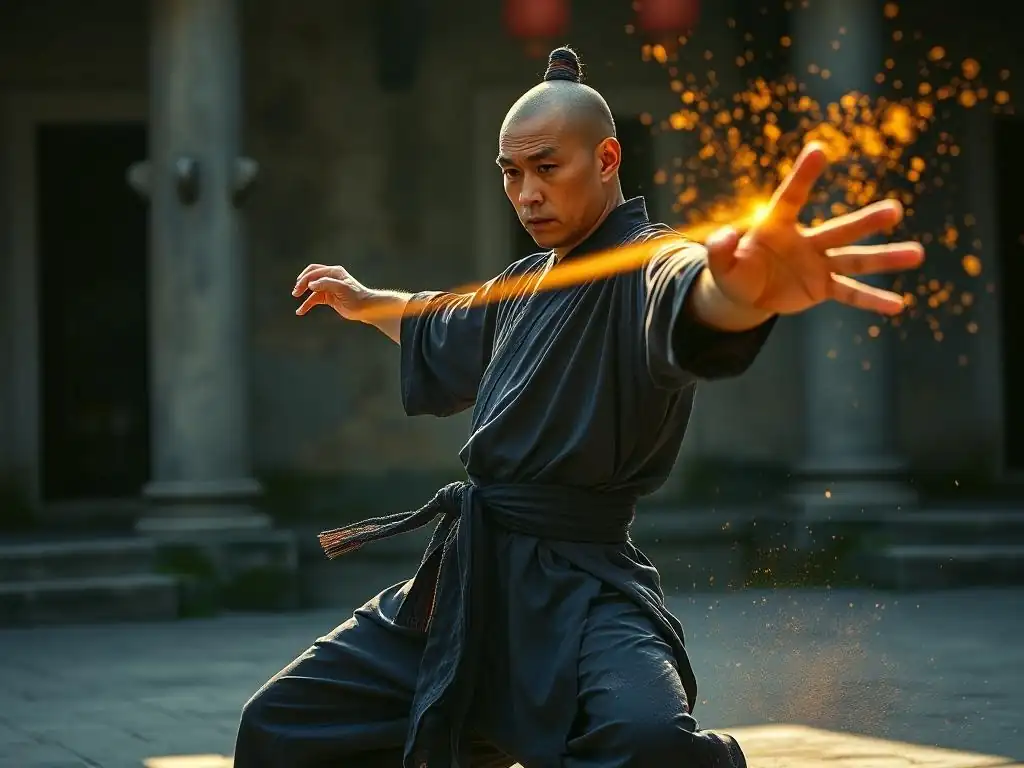
Think of the sudden snap of a whip or the quick pounce of a tiger – this is the essence of explosive power, often referred to as Fa Jing (發勁) in many Chinese martial arts traditions. It involves the coordinated effort of multiple muscle groups firing rapidly, transferring energy efficiently through the body.
This specific type of power is what allows a seemingly small practitioner to deliver a devastating blow, or to move from a static stance to a lightning-fast attack or defense. It's the difference between slowly pushing a heavy object and launching a lighter one with incredible velocity. In Kung Fu explosive power training, the focus shifts from grinding strength to developing the capacity for rapid force production, crucial for everything from a powerful one-inch punch to a soaring jump kick. This requires not just strong muscles, but a highly responsive and coordinated neuromuscular system.
The Importance of Dynamic Movement in Kung Fu Forms
Traditional Kung Fu forms, often seen as choreographed dances, are in fact sophisticated training methods designed to cultivate a wide range of physical attributes, including dynamic movement and explosive power. The transitions between stances, the sudden changes in direction, and the rapid execution of strikes and blocks within a form are all exercises in developing the ability to accelerate and decelerate quickly, and to generate force from various body positions.
A form like the Shaolin Five Animal Form, for example, incorporates movements mimicking animal characteristics – the sudden pounce of the leopard, the coiling and striking of the snake – explicitly training explosive actions.
Practicing forms with proper intent and focus on the dynamic aspects helps practitioners internalize the principles of energy generation and release. Consider a rapid shift from a high ready position into a low Bow Stance followed by an explosive punch; this sequence trains the legs to absorb and then rapidly extend, transferring that energy through the core to the striking arm.
While a beginner might perform this sequence slowly, advanced Kung Fu explosive power training through forms emphasizes speed, timing, and the sudden tensing and releasing of muscles at the point of impact, turning seemingly simple movements into powerful expressions of dynamic force.
Understanding the Science Behind Kung Fu Power Development
Plyometrics for Kung Fu: Harnessing the Stretch-Shortening Cycle
Plyometrics are exercises specifically designed to improve explosive power by utilizing the stretch-shortening cycle (SSC). This cycle involves a rapid eccentric (lengthening) contraction followed immediately by a powerful concentric (shortening) contraction of the muscle. Think of stretching a rubber band and then letting it snap back; the stored elastic energy from the stretch contributes significantly to the subsequent powerful movement. In Kung Fu, this principle is applied in techniques like dropping quickly into a low horse stance before launching upwards for a jump kick, or rapidly retracting a limb before an explosive strike.
Incorporating plyometric drills enhances the neuromuscular system's ability to react quickly and generate maximum force in minimal time. Exercises such as box jumps, squat jumps, and bounds train the lower body's explosive capability, essential for powerful stances, kicks, and evasive footwork. For the upper body, medicine ball throws and explosive push-ups utilize the SSC to improve punching and striking power. Studies have shown that consistent plyometric training, even just 2-3 sessions per week, can significantly improve rate of force development, a key component of Kung Fu explosive power training.
Kinetic Chain Efficiency: Transferring Power from Core to Strike
The human body functions as a kinetic chain, a system of linked segments where movement and force are generated and transferred sequentially. In Kung Fu, maximizing explosive power requires efficient transfer of energy from the ground up, originating in the legs and hips, passing through the core, and culminating in a strike or technique performed by the limbs. A powerful punch, for instance, doesn't just come from the shoulder and arm; it begins with rooting through the feet, rotating the hips and torso, and then unleashing that stored rotational energy through the shoulder, elbow, and fist.
A strong and stable core is the central link in this chain, acting as a crucial bridge for power transfer. Weakness or inefficiency in the core significantly leaks energy, reducing the force delivered at the target. Therefore, Kung Fu explosive power training emphasizes exercises that strengthen the core and improve coordination between the lower and upper body. Drills focusing on hip rotation, trunk stability, and coordinated multi-joint movements are vital for ensuring that the power generated by the larger muscles of the legs and hips is effectively channeled into the execution of powerful Kung Fu techniques.
The Role of Biomechanics in Maximizing Kung Fu Impact
Understanding and applying principles of biomechanics is fundamental to maximizing impact and developing Kung Fu explosive power. Biomechanics analyzes the mechanical principles of living organisms, examining how forces act on the body and how the body generates force.
In Kung Fu, this involves optimizing body alignment, joint angles, leverage, and timing to ensure that force is generated efficiently and delivered effectively. For example, the precise angle of the wrist and alignment of the knuckles in a punch, or the rotation of the hips and extension of the leg in a kick, are biomechanically optimized to transfer maximum force to the target with minimal energy loss and reduced risk of self-injury.
Specific stances, like the Horse Stance or Bow Stance, provide stable platforms for generating force, allowing practitioners to root themselves and unleash power upwards or forwards. The principle of "body unity" (Zheng Ti Jin) in many styles emphasizes moving the entire body as a single coordinated unit to generate maximum force, rather than relying solely on isolated muscle strength. By focusing on proper structure, alignment, and the coordinated movement of the whole body, practitioners can significantly enhance their ability to generate and apply Kung Fu explosive power, making their techniques faster, stronger, and more impactful.
Traditional Kung Fu Forms for Explosive Power Enhancement
Exploring Specific Forms and Stances for Power Generation
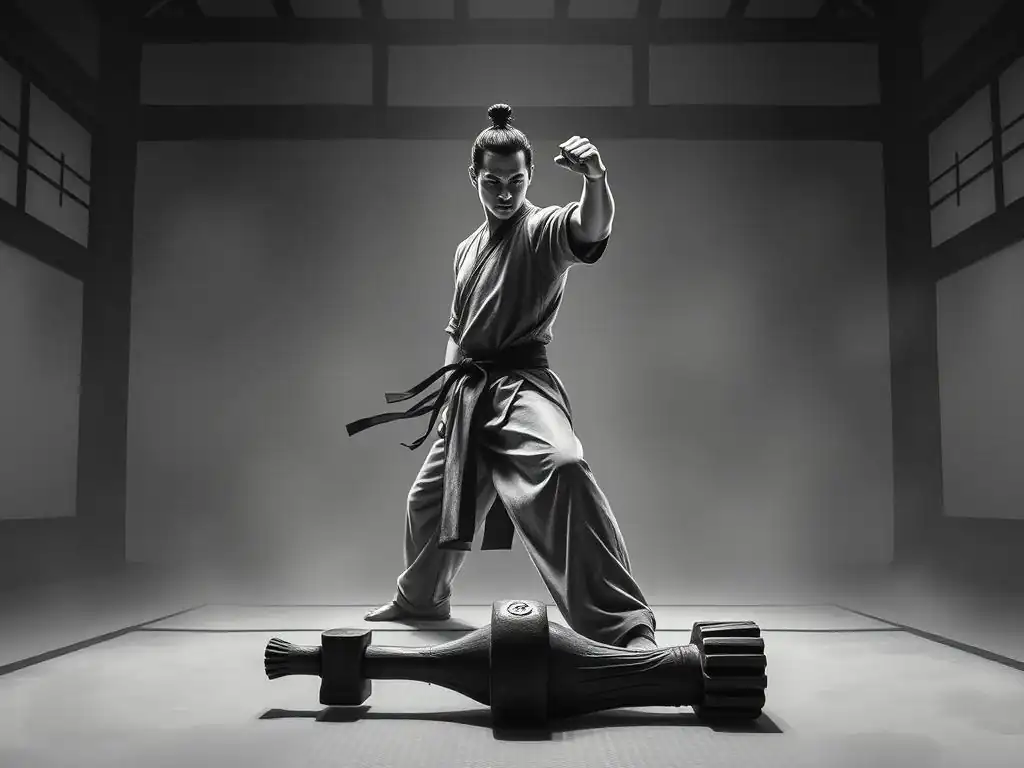
Traditional Kung Fu forms are rich repositories of methods for developing explosive power, often embedded within the movements themselves. Specific stances and transitional movements are particularly effective. For example, styles known for their powerful strikes, like Hung Gar or Choy Li Fut, often feature deep, stable stances and powerful, whipping hand techniques that inherently train the body to generate force from a rooted base. The sudden shifts between high and low postures, or between static holds and explosive releases, are designed to build dynamic strength and the ability to transition power rapidly.
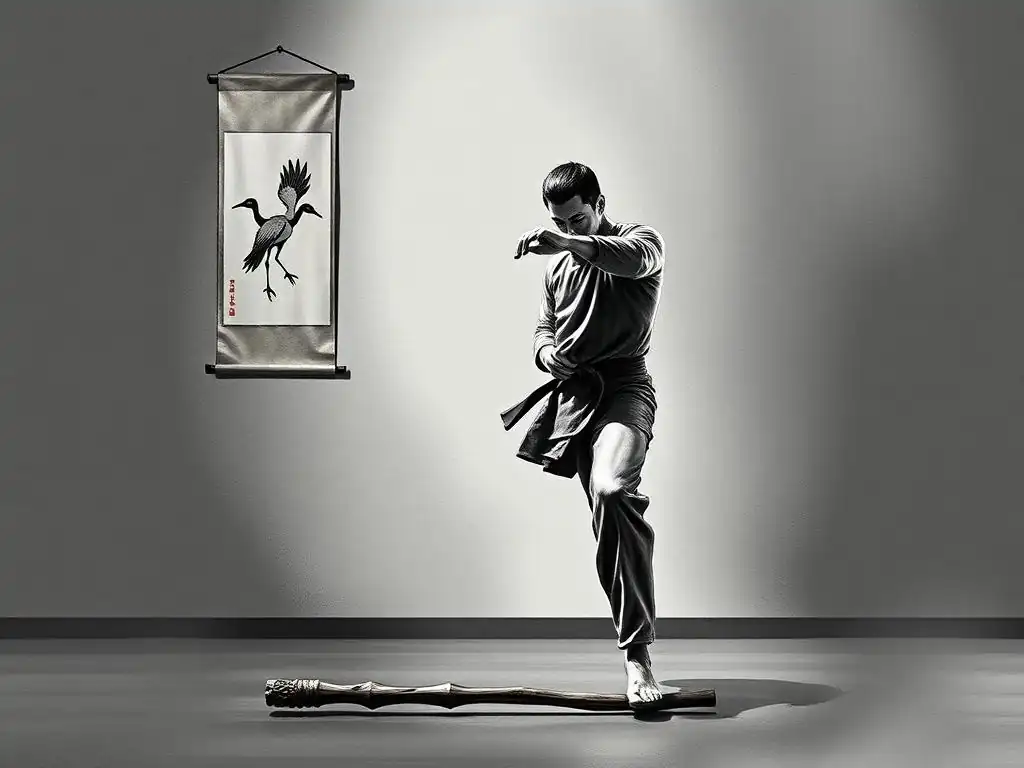
Consider forms that emphasize animal movements, such as the Tiger Crane form. The tiger's powerful pounce and the crane's sudden wing movements are not just imitations; they are exercises in developing the musculature and neuromuscular control needed for explosive actions. The rapid coiling and uncoiling of the body, the sudden extension of limbs, and the sharp exhalations accompanying strikes are all techniques for cultivating Fa Jing. Practicing these forms with focus on the intended application and the principle of rapid force generation transforms them from sequences of movements into potent tools for Kung Fu explosive power training.
Horse Stance Training: Foundation for Lower Body Explosiveness
The Horse Stance (Ma Bu) is a foundational posture across many Kung Fu styles, renowned for building incredible leg strength and endurance. While simply holding the stance develops isometric strength, dynamic drills from the Horse Stance are crucial for cultivating lower body explosiveness. Examples include explosive rises from a deep Horse Stance, rapid shifting of weight side-to-side followed by a burst of movement, or launching kicks directly from the low posture. These drills train the leg muscles – quadriceps, hamstrings, and glutes – to generate significant force rapidly, essential for powerful kicks, jumps, and changes of level.
Training in the Horse Stance also develops crucial hip strength and mobility, vital for transferring power from the lower body through the core. The ability to sink low and then explode upwards or forwards originates from the power generated by the hips and thighs. Dedicated Horse Stance drills, incorporating sudden movements and changes in tension, are a cornerstone of traditional Kung Fu explosive power training for building a powerful and dynamic lower base. A common drill involves holding the stance for a set time (e.g., 2-5 minutes) followed by 10-15 explosive squat jumps or bursts of movement.
Bow Stance Drills: Cultivating Dynamic Balance and Power
The Bow Stance (Gong Bu) is another fundamental posture, representing a dynamic forward-weighted position ideal for launching linear attacks. Training in the Bow Stance focuses on developing powerful forward movement and maintaining balance under dynamic load. Drills involve rapidly transitioning into and out of the stance, shifting weight explosively from the rear leg to the front, or performing forward lunges with sudden stops and bursts of power. These exercises build strength and explosiveness in the leading leg and hip, crucial for powerful linear punches, palm strikes, and front kicks.
Bow Stance training also enhances dynamic balance, the ability to maintain control and stability while moving powerfully. The rapid shifts and forward momentum inherent in Bow Stance drills challenge the practitioner to stay centered and rooted, ensuring that generated power is directed effectively towards the target rather than lost to instability. Incorporating drills like explosive forward steps into a deep Bow Stance followed by an immediate retraction helps develop the "spring-like" quality needed for rapid advances and retreats, key components of applied Kung Fu explosive power.
Beyond the obvious physical movements, traditional Kung Fu forms contain deeper principles of power generation that are often less apparent but critically important for developing explosive force. One such principle is the concept of Son (鬆) and Sung (緊), or relaxation and tension. Forms teach the practitioner to remain relaxed and fluid during preparation and movement, then instantaneously tense the entire body at the moment of impact or force release. This sudden transition from relaxation to extreme tension maximizes the rate of force production, a hallmark of Fa Jing.
Another hidden principle is the coordination of breath with movement and power release. Many forms incorporate specific breathing patterns, often involving a sharp exhalation coinciding with a strike or burst of power. This controlled exhalation helps to engage the core muscles, stabilize the body, and facilitate the sudden release of internal energy.
Furthermore, the precise timing and sequencing of body movements within a form – how the hips rotate just before the shoulder, or how the leg extends just after the hip turns – represent a sophisticated understanding of kinetic chain efficiency, training the body to move as a unified, explosive unit. Mastering these subtle principles through dedicated form practice is essential for unlocking true Kung Fu explosive power.
Modern Applications of Explosive Power Training in Kung Fu
Integrating Plyometrics into Kung Fu Sparring and Drills
The principles of plyometrics, while rooted in sports science, have direct and powerful applications in modern Kung Fu sparring and drills. The ability to react instantly and move explosively is critical in a dynamic combat situation. Plyometric drills can be integrated into training to enhance these reactions.
For instance, performing quick lateral bounds or jump squats between combinations during bag work can train the legs for explosive footwork needed for rapid evasions or closing distance. Incorporating jump-knee strikes or explosive push-ups followed by a quick stance transition in shadow boxing builds the capacity for sudden vertical or horizontal power generation.
Specific partner drills can also incorporate plyometric elements. For example, practicing explosive entries and exits against a compliant partner, or performing drills that involve sudden level changes like dropping into a low stance or springing upwards, directly translates plyometric power into practical application. By adding a plyometric component to traditional Kung Fu drills, practitioners can significantly improve their ability to generate sudden bursts of speed and power when it matters most in sparring or self-defense scenarios, making their Kung Fu explosive power training more directly applicable.
Weight Training for Kung Fu: Complementing Traditional Training
While traditional Kung Fu training builds functional strength, incorporating modern weight training can significantly enhance the raw strength base needed for explosive power. Compound lifts that work multiple muscle groups simultaneously are particularly beneficial. Exercises like squats, deadlifts, and overhead presses build foundational strength in the legs, hips, core, and shoulders – the prime movers in most Kung Fu techniques. These lifts increase the potential force the muscles can generate.
To translate this strength into explosive power, weight training should also include exercises focused on speed of movement and rapid force production. Olympic lifting variations such as cleans, snatches, or simpler power shrugs and high pulls train the body to generate force quickly through coordinated multi-joint movements. Medicine ball exercises, like explosive chest passes or rotational throws, mimic striking motions and build explosive power in the torso and upper body. A balanced program combining traditional Kung Fu explosive power training with targeted weightlifting can create a synergistic effect, leading to substantial gains in overall power output.
Developing Speed and Agility for Dynamic Kung Fu Techniques
Explosive power is the ability to generate force quickly, but its effectiveness in Kung Fu relies heavily on speed and agility – the ability to change direction rapidly and efficiently. A powerful technique delivered too slowly or in the wrong place is ineffective. Therefore, Kung Fu explosive power training must go hand-in-hand with drills that enhance reaction time, foot speed, and directional changes. Agility ladder drills improve footwork coordination and speed. Cone drills train the ability to accelerate, decelerate, and change direction quickly.
Reaction drills, such as responding to visual or auditory cues with explosive movement or striking, sharpen the neuromuscular system's response time. Sparring itself is a high-level form of agility and speed training, demanding constant adjustments and explosive reactions. By incorporating drills that specifically target speed and agility, practitioners ensure that their developed explosive power can be applied dynamically and effectively in the fluid, unpredictable environment of combat or sparring, making their Kung Fu explosive power training comprehensive.
Sample Kung Fu Explosive Power Training Program
Warm-up and Mobility Exercises for Explosive Movements
A thorough warm-up is critical before engaging in Kung Fu explosive power training to prepare the muscles, joints, and nervous system for high-intensity activity and reduce injury risk. Begin with 5-10 minutes of light cardio, such as jogging or skipping rope, to increase heart rate and blood flow. Follow this with dynamic stretching and mobility exercises that mimic the movements you'll be performing.
Focus on mobility for key areas like the hips, ankles, and shoulders. Include exercises like leg swings (forward-backward and side-to-side), hip circles, torso twists, arm circles, and spinal waves. Perform each dynamic stretch for 10-15 repetitions or for a set time (e.g., 30 seconds). This prepares the joints and muscles for explosive actions by increasing range of motion and activating the relevant muscle groups without excessive static stretching, which can temporarily reduce power output.
Plyometric Exercises for Kung Fu Kicks and Strikes
Plyometric exercises are essential for developing the rate of force development needed for explosive Kung Fu techniques. These should be performed with maximum effort and focus on quality over quantity, typically early in a training session after the warm-up. Rest periods between sets should be sufficient (60-120 seconds) to allow for near-full recovery, as the goal is power, not endurance.
Examples include various jumps, bounds, and throws. For lower body power crucial for kicks and stances, include exercises like squat jumps, split squats jumps, broad jumps, and box jumps. For upper body and core power needed for strikes, incorporate medicine ball throws such as chest passes, overhead throws, and rotational throws against a wall or with a partner. Start with lower volumes (e.g., 3-5 sets of 5-10 repetitions) and focus on executing each repetition as explosively as possible.
Box Jumps for Kung Fu Leg Power
Box jumps are a highly effective plyometric exercise for developing explosive power in the legs and hips, directly translating to more powerful kicks and the ability to generate force from low stances. The exercise involves jumping from the ground onto a raised platform (a box or sturdy surface). The key is to explode upwards using a powerful hip and knee extension, landing softly on the box. Step down from the box rather than jumping down to reduce impact.
Start with a lower box height that allows you to land comfortably and focus on the speed and power of the jump. As your power improves, you can gradually increase the box height. Aim for 3-5 sets of 5-8 repetitions, focusing on maximal effort on each jump. This drill specifically trains the muscles involved in generating vertical force, crucial for jumping kicks and the sudden upward drive from a low Kung Fu stance.
Medicine Ball Throws for Upper Body Explosiveness
Medicine ball throws are excellent for developing explosive power in the upper body and core, mimicking the dynamic forces involved in punches, palm strikes, and other hand techniques. Exercises include throwing the ball from the chest (like a punch), overhead (mimicking a powerful downward strike or block), or rotationally (simulating hip and torso rotation for strikes). These can be done against a sturdy wall or with a partner.
Focus on generating power from the core and transferring it through the arms, emphasizing the speed of the throw. For example, a rotational throw involves turning the hips and torso to generate momentum before unleashing the throw, similar to the mechanics of a turning punch. Perform 3-4 sets of 8-12 repetitions for each type of throw, focusing on maximal velocity and forceful exhalation with each throw to integrate breath and power.
Strength Training Exercises for Kung Fu Power Development
Strength training provides the foundation upon which explosive power is built. While traditional Kung Fu methods build functional strength, incorporating targeted weightlifting can enhance overall force potential. The goal is to build strength in movement patterns relevant to Kung Fu, not necessarily become a competitive powerlifter.
Focus on compound movements that engage multiple muscle groups. These exercises build the raw strength needed to support and enhance explosive movements. Remember to maintain proper form to prevent injury and maximize effectiveness. Integrate these into your training schedule on separate days from high-intensity plyometrics or demanding Kung Fu sessions, typically 2-3 times per week.
Squats and Deadlifts for Overall Kung Fu Strength
Squats and deadlifts are arguably the most important strength exercises for martial artists due to their ability to build significant strength in the legs, hips, and core – the primary power generators in Kung Fu. Squats strengthen the muscles used in stances, kicks, and generating upward/downward force. Deadlifts build posterior chain strength (hamstrings, glutes, back), crucial for stability, powerful hip extension, and generating force from the ground.
Perform these lifts with challenging but manageable weight, focusing on controlled movement through the full range of motion. For strength development, aim for 3-5 sets of 5-8 repetitions. As you get stronger, you can incorporate variations like front squats or Romanian deadlifts to target specific muscles or movement patterns relevant to your style. Consistent progress in these foundational lifts will significantly enhance your capacity for Kung Fu explosive power.
Olympic Lifting Variations for Explosive Power
Olympic lifting movements like the Clean and Jerk or Snatch are highly complex, but their variations are excellent for developing explosive power due to the rapid, coordinated force generation they require. Simpler variations such as Power Cleans (catching the bar in a partial squat), Hang Cleans (starting from above the knees), or high pulls are more accessible and still highly effective. These exercises train the "triple extension" – the simultaneous extension of the ankles, knees, and hips – which is fundamental to jumping, kicking, and generating force from the ground.
Focus on the speed of the lift rather than the amount of weight. Use a weight that allows you to move quickly and explosively through the pulling phase. Aim for 3-5 sets of 3-6 repetitions, emphasizing perfect form and maximal speed of execution. These lifts are demanding on the nervous system, so proper warm-up and technique are paramount. They train the body to generate and transfer force rapidly, a direct benefit for Kung Fu explosive power.
Cool-down and Stretching for Recovery and Injury Prevention
After a session of Kung Fu explosive power training, a proper cool-down is essential for recovery, reducing muscle soreness, and maintaining flexibility. Begin with 5-10 minutes of light activity, such as walking or slow forms practice, to gradually lower your heart rate. Follow this with static stretching, holding each stretch for 20-30 seconds, focusing on the major muscle groups worked during the session.
Prioritize stretching the legs (quadriceps, hamstrings, hip flexors, calves), hips (glutes, piriformis), core, chest, shoulders, and back. Flexibility is crucial for maintaining range of motion, which allows for greater speed and power generation in Kung Fu techniques, and also helps prevent injuries that can arise from tight muscles. Consider incorporating foam rolling or other self-myofascial release techniques to address muscle tightness and improve tissue quality.
Advanced Kung Fu Power Techniques
Fa Jing: The Art of Releasing Explosive Power
Fa Jing (發勁), often translated as "issuing force" or "explosive power," is a high-level skill in many Chinese martial arts, particularly emphasized in internal styles like Tai Chi, Baguazhang, and Xingyi Quan, but also present in external styles like Shaolin and Hung Gar. It represents the ability to generate a sudden, short-range burst of power that feels like a shockwave or internal vibration, capable of causing significant impact or disruption to an opponent.
Unlike brute muscular force, Fa Jing is generated through the coordinated, simultaneous release of tension throughout the entire body, originating from the ground and channeled through a relaxed, yet unified, structure.
Developing Fa Jing requires deep body awareness, precise timing, and the ability to transition instantaneously from a state of relaxed readiness to a state of complete, albeit brief, tension at the point of impact. It is often described as releasing power like cracking a whip – the force originates from the base (the handle), travels through the flexible structure (the thong), and culminates in a sudden, powerful snap at the tip.
Training involves specific drills focusing on rooting, body unity, hip rotation, and the subtle coordination of breath and movement, aiming to deliver maximum energy transfer in a minimal amount of time, distinguishing it from gross strength application in Kung Fu explosive power.
Developing Internal Power (Nei Jin) for Enhanced Impact
Nei Jin (內勁), or "internal power," is a concept central to many traditional Chinese martial arts, particularly internal styles. It refers to a type of power generated not through sheer muscular effort (Wai Jin, 外勁), but through the coordinated movement of the entire body, guided by focused intent (Yi, 意) and regulated by breath (Qi, 氣).
Developing Nei Jin involves cultivating a deep connection between the mind, body, and breath, allowing practitioners to generate significant force from seemingly relaxed postures and movements. It is often described as a pervasive, connected power that flows through the body as a unified unit.
Training Nei Jin involves practices like Qigong, specific standing postures (Zhan Zhuang), and the slow, deliberate movements found in internal forms. These practices build structural integrity, improve circulation, and cultivate sensitivity to the body's internal mechanics. The focus is on rooting, maintaining proper alignment, and using minimal muscular tension while maximizing the coordinated effort of the entire body. Nei Jin is seen as the engine that drives Fa Jing, providing the underlying connected power that is then released explosively. Cultivating Nei Jin enhances the quality and efficiency of Kung Fu explosive power, making techniques more penetrating and impactful.
Integrating Breathing Techniques for Power Generation
Breathing is not merely a physiological necessity in Kung Fu; it is a powerful tool for generating and regulating energy, crucial for developing Kung Fu explosive power. Proper breathing techniques can help stabilize the core, increase internal pressure, and facilitate the sudden release of force. Many styles incorporate specific breathing patterns, such as deep abdominal breathing (Dantian breathing) to build internal energy and stability, and sharp, forceful exhalations (often sounding like "Ha!" or "Heh!") that coincide with the moment of impact or powerful movement.
Exhaling sharply during a strike helps to tense the abdominal muscles and stabilize the trunk, allowing for more efficient transfer of power from the lower body and core to the limbs. This coordinated breath and movement creates a more unified and powerful action. Conversely, inhaling during preparation or retraction can help the muscles relax, facilitating the stretch-shortening cycle needed for the subsequent explosive action. Dedicated practice of specific breathing exercises, sometimes called Fasil Gong (发力功, Power Release Exercise), is an integral part of advanced Kung Fu explosive power training, linking breath, intent, and physical action to maximize force generation.
Common Mistakes in Kung Fu Explosive Power Training and How to Avoid Them
Overtraining and the Importance of Recovery
One of the most common mistakes in Kung Fu explosive power training is overtraining. Because explosive movements are highly demanding on the neuromuscular system, attempting too much volume or intensity too frequently can lead to fatigue, decreased performance, increased risk of injury, and burnout. The nervous system needs adequate time to recover and adapt after high-intensity power work. Symptoms of overtraining can include persistent muscle soreness, decreased strength or speed, irritability, and disturbed sleep.
To avoid overtraining, it is crucial to incorporate sufficient rest and recovery into your training schedule. Limit high-intensity plyometric or explosive weightlifting sessions to 2-3 times per week, allowing at least 48 hours between sessions targeting the same muscle groups or movement patterns. Prioritize sleep (aim for 7-9 hours per night), maintain good nutrition, and stay hydrated. Incorporate active recovery methods like light forms practice, walking, or gentle stretching on rest days. Listening to your body and adjusting your training volume and intensity based on how you feel is paramount for sustainable progress in Kung Fu explosive power training.
Neglecting Proper Form and Technique
Another critical error is performing explosive exercises or techniques with poor form. Incorrect technique in plyometrics or weightlifting not only reduces the effectiveness of the training but significantly increases the risk of acute injuries (like sprains, strains, or tears) and chronic issues (like joint pain or tendonitis). Trying to jump higher or lift heavier before mastering the correct movement pattern is counterproductive and dangerous. Similarly, applying explosive force with incorrect Kung Fu technique can lead to self-injury or wasted energy.
Always prioritize quality of movement over quantity or weight. Start with lower heights for box jumps, lighter weights for lifts, and slower speeds for complex movements until you can execute them with perfect form. Seek guidance from qualified instructors for both your Kung Fu training and any supplemental strength and conditioning. Regularly video recording yourself can help identify technical flaws. Focusing on proper body alignment, joint angles, and muscle engagement ensures that you are training effectively and safely, building true Kung Fu explosive power rather than just practicing risky movements.
Ignoring the Role of Flexibility and Mobility
Often overlooked in the pursuit of power is the foundational role of flexibility and mobility. Stiffness and limited range of motion in joints and muscles can significantly hinder the ability to move quickly and powerfully. Tight hips, for instance, can restrict the range of motion needed for powerful kicks or stances, while tight shoulders can impede the fluidity and speed of strikes. Furthermore, poor flexibility increases the risk of injury, particularly in dynamic, explosive movements where muscles and connective tissues are rapidly stretched and contracted.
Incorporating regular stretching and mobility work into your training routine is essential. Perform dynamic stretches as part of your warm-up to prepare the body for movement and static stretches during your cool-down to improve flexibility. Focus on key areas relevant to Kung Fu, including the hips, hamstrings, quads, ankles, shoulders, and spine. Aim to improve your functional range of motion, allowing your body to move freely and efficiently. Adequate flexibility and mobility enable you to get into optimal positions for generating force and reduce the risk of injury during intense Kung Fu explosive power training.
Conclusion: Mastering Kung Fu Explosive Power for Enhanced Performance
Integrating Explosive Power Training into Your Kung Fu Journey
Mastering Kung Fu explosive power is not a separate endeavor but an integral part of the lifelong journey in martial arts. It requires a holistic approach that respects and builds upon traditional training methods while intelligently incorporating modern sports science principles. By understanding the science behind power generation – the stretch-shortening cycle, kinetic chain efficiency, and biomechanics – practitioners can refine their traditional techniques and supplemental training for maximum effect. Dedication to practicing forms with intent, developing Fa Jing and Nei Jin, and integrating targeted strength and plyometric exercises are all crucial components.
Consistent and smart training, focusing on quality over quantity, prioritizing recovery, and maintaining flexibility, will lead to significant improvements in your ability to generate force rapidly. This enhanced Kung Fu explosive power will translate directly into faster, stronger strikes, more dynamic footwork, more powerful stances, and overall improved performance in all aspects of your Kung Fu practice, from forms to sparring to self-defense.
The Future of Power Development in Kung Fu
The future of power development in Kung Fu lies in the continued synthesis of ancient wisdom and modern scientific understanding. As sports science provides deeper insights into human performance, martial artists can use this knowledge to optimize traditional training methods and develop new, effective drills. Analyzing the biomechanics of traditional techniques with modern tools, understanding the physiology of Fa Jing, and using data-driven approaches to tailor training programs can help practitioners reach new levels of explosive power.
However, this evolution must always remain rooted in the philosophical and technical principles that define Kung Fu. The goal is not to turn Kung Fu into a purely athletic endeavor, but to enhance the effectiveness of its techniques and the capabilities of its practitioners while preserving its rich heritage. By embracing both tradition and innovation, the development of Kung Fu explosive power will continue to evolve, empowering practitioners to move with greater dynamism, speed, and force for generations to come.
Frequently Asked Questions
What are the key principles of Kung Fu explosive power training?
Kung Fu explosive power training emphasizes the development of kinetic linking, efficient body mechanics, and the generation of force from the ground up. It also incorporates Fa Jing (explosive force) techniques.
How does traditional Kung Fu training contribute to explosive power?
Traditional Kung Fu forms, when practiced correctly, instill proper body alignment, weight distribution, and the coordinated use of muscles. This foundational strength then translates to explosive movements in applications.
What are some specific drills or exercises for enhancing explosive power in Kung Fu?
Examples include: plyometrics like jumping squats and box jumps, medicine ball throws, and practicing Kung Fu forms with an emphasis on generating maximum force with each movement.
How does Kung Fu explosive power training differ from other martial arts' approaches?
While other martial arts also focus on power, Kung Fu emphasizes the integration of internal energy (Qi) and the use of complex, flowing movements to generate explosive force, often relying less on pure muscular strength.
Is explosive power training safe for all Kung Fu practitioners?
No. Proper form and gradual progression are crucial to prevent injuries. Beginners should focus on building a strong foundation and seek guidance from a qualified instructor before attempting advanced explosive power drills.
Final Reflection: Unleashing Inner Potential
The journey through Kung Fu, as explored in this article, reveals that explosive power training is not merely a physical pursuit, but a pathway to unlocking inner potential. The techniques and principles discussed resonate deeply with the modern desire for self-improvement and the pursuit of excellence, reminding us that true strength comes from a harmonious blend of discipline, technique, and unwavering focus.
The enduring legacy of Kung Fu lies in its ability to transform individuals, fostering not only physical prowess but also mental fortitude and spiritual awareness. This holistic approach, emphasizing the cultivation of internal energy and the refinement of movement, continues to inspire practitioners worldwide. The supreme art of war is to subdue the enemy without fighting.
- Sun Tzu, highlighting the underlying philosophy of Kung Fu that extends beyond mere combat.
As you reflect on the principles of Kung Fu explosive power training, consider how you can apply these lessons to your own life. Embrace the discipline, cultivate your inner strength, and strive for continuous improvement in all that you do. Let the spirit of Kung Fu empower you to unlock your own explosive potential and achieve your goals with unwavering determination.
Unleash Your Inner Dragon: Ignite Your Kung Fu Journey!
Thank you for exploring the power and grace of Kung Fu with us! We hope you've gained valuable insights into harnessing explosive energy through traditional forms. Now, it's time to put that knowledge into action.
Here's how you can further your Kung Fu journey:
- Deepen Your Stance: Commit to 15 minutes of daily stance work, focusing on generating power from the ground up. Feel the energy flow!
- Shadow Spar: Experiment with applying your forms in a shadow sparring session, visualizing a real opponent and reacting with dynamic movements.
- Share your favorite Kung Fu drill or form in the comments below. Let's learn from each other!
What's one small adjustment you can make today to bring more power and intention to your Kung Fu practice?