
The Role of Shoulder Girdle Mechanics in Powerful Punching


Welcome to Martial Arts Mastery, your definitive resource for exploring the depth and breadth of martial arts. Ever wondered how to unlock explosive power in your punches? This article delves into the often-overlooked, yet crucial, role of shoulder girdle mechanics in generating devastating force. Prepare to unravel the secrets behind maximizing your impact, and discover how optimizing your shoulder girdle can revolutionize your striking game. Read on to discover the training techniques and biomechanical principles that separate a good punch from a knockout blow!
- Introduction: Unlocking Punching Power Through Shoulder Girdle Mechanics
- Understanding the Shoulder Girdle: Anatomy and Function for Striking
- Shoulder Girdle Mechanics and Punching Power: The Kinetic Chain
- Common Shoulder Girdle Issues Affecting Punching Power and Performance
- Exercises for Optimizing Shoulder Girdle Function for Punching Power
- Integrating Shoulder Girdle Mechanics into Punching Technique
- Conclusion: Mastering Shoulder Girdle Mechanics for Punching Excellence
-
Frequently Asked Questions
- How does the shoulder girdle contribute to punching power in martial arts?
- What specific muscles in the shoulder girdle are most important for generating power?
- How can training specifically target the shoulder girdle to improve punching power?
- What is the relationship between core stability and shoulder girdle function in punching?
- Are there any risks of injury associated with focusing too much on shoulder girdle strength for punching power?
- Final Reflection: Unleashing Potential Through Understanding
- Ignite Your Punch: Unleash Shoulder Power Now!
Introduction: Unlocking Punching Power Through Shoulder Girdle Mechanics
Generating truly powerful punches in martial arts goes far beyond simply extending the arm. While arm speed and strength are important, the foundation of devastating striking power lies in the efficient transfer of force generated by the entire body. A critical, yet often overlooked, component in this kinetic chain is the shoulder girdle.
This complex of bones and muscles acts as the vital link between the powerful core and the punching limb, significantly influencing reach, speed, and the ultimate impact force delivered. Understanding and optimizing the mechanics of the shoulder girdle is paramount for any martial artist seeking to maximize their punching potential.
Developing exceptional shoulder girdle punching power requires a comprehensive approach that considers anatomy, functional movement, and proper integration into striking technique. Ignoring the role of the scapula, clavicle, and surrounding musculature can lead to inefficient force transfer, reduced power output, and an increased risk of injury. This article will delve into the intricate relationship between the shoulder girdle and punching power, exploring the biomechanical principles at play and providing insights into enhancing performance through targeted training and technique refinement.
Understanding the Shoulder Girdle: Anatomy and Function for Striking
Anatomy of the Shoulder Girdle: Key Muscles and Bones for Power Generation
The shoulder girdle is comprised primarily of the scapula (shoulder blade) and the clavicle (collarbone), which articulate with the sternum and the humerus (upper arm bone). While technically not part of the girdle, the humerus's movement is intrinsically linked to it via the glenohumeral joint.
The stability and mobility of this complex are governed by a network of muscles. Key players for generating shoulder girdle punching power include the rotator cuff muscles (supraspinatus, infraspinatus, teres minor, subscapularis), which provide stability and contribute to rotation; the serratus anterior, vital for scapular protraction and upward rotation; the rhomboids and middle trapezius, which retract and stabilize the scapula; and the upper and lower trapezius, involved in elevation, depression, and rotation.
These muscles work in concert to control the position and movement of the scapula, which is essential for providing a stable base for the arm while allowing for dynamic movement during a punch. For example, the serratus anterior, often called the "boxer's muscle," is crucial for driving the scapula forward around the rib cage during a punch, adding significant reach and contributing directly to the final push of force. Weakness or poor coordination in any of these muscle groups can compromise the entire system, limiting the potential for generating significant shoulder girdle punching power and increasing vulnerability to strain.
Functional Movements of the Shoulder Girdle in Punching
The shoulder girdle performs a variety of movements critical to effective punching. These include protraction (moving the scapula forward, away from the spine), retraction (moving the scapula backward, towards the spine), elevation (shrugging), depression (pulling the scapula down), and upward/downward rotation. In a straight punch, the scapula undergoes rapid protraction as the arm extends, adding length to the punch and contributing to force transfer. For a cross or hook, rotation of the torso is coupled with scapular movement – often initial retraction for setup, followed by powerful protraction and upward rotation as the punch is delivered.
Consider the mechanics of a powerful straight punch. As the body rotates and the arm extends, the serratus anterior muscle contracts forcefully, pulling the scapula forward along the rib cage. This protraction allows the humerus to travel further, increasing reach by potentially several inches. Simultaneously, the coordinated action of the trapezius and rhomboids helps stabilize the scapula during the retraction phase that might precede the punch or during recovery. Efficient shoulder girdle movement ensures that the force generated by the legs and core is effectively channeled through the arm and into the target, maximizing shoulder girdle punching power.
Shoulder Girdle Mechanics and Punching Power: The Kinetic Chain
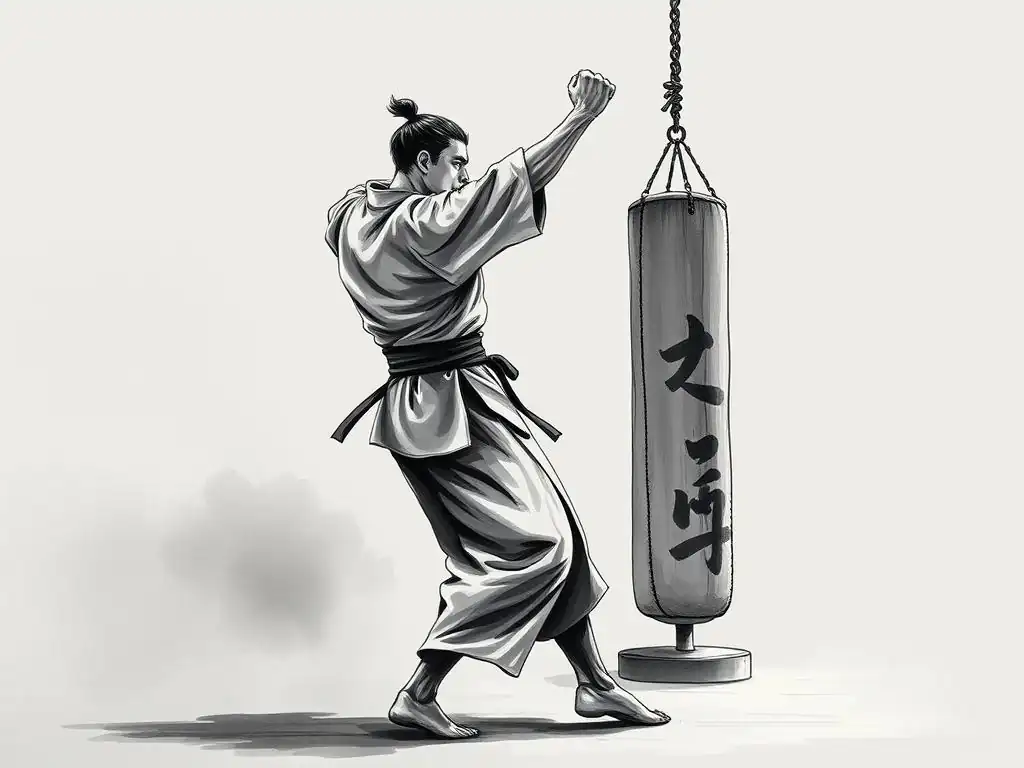
The Kinetic Chain Principle: Linking Lower Body, Core, and Upper Body for Maximum Force
Powerful punching is a prime example of the kinetic chain principle in action. This principle describes how force is generated sequentially from larger, more stable body segments and transferred through smaller, faster segments to the point of impact. In a punch, force typically originates from the ground reaction force generated by the feet.
This force travels up through the legs, is amplified by the powerful rotation and stabilization of the core, and is then efficiently transferred through the shoulder girdle and arm to the fist. The shoulder girdle acts as a critical relay point, translating the rotational and linear forces from the core into the final explosive movement of the arm.
Without proper integration of the shoulder girdle into this chain, much of the power generated by the lower body and core is lost. Imagine trying to throw a powerful punch using only arm strength – the resulting impact would be minimal compared to a punch utilizing the full kinetic chain.
Estimates suggest that the lower body and core can contribute anywhere from 50% to 70% of the total force in a powerful punch, with the shoulder girdle and arm responsible for efficiently transferring and directing that energy. Optimizing shoulder girdle mechanics ensures minimal energy leakage and maximum force transmission, directly enhancing shoulder girdle punching power.
Scapular Protraction and Punching Reach: Maximizing Distance and Impact
Scapular protraction is perhaps the most visible and directly impactful shoulder girdle movement in punching, particularly for straight strikes. As the fist travels towards the target, the scapula slides forward around the rib cage, effectively increasing the functional length of the arm. This isn't just about reach; it's also about delivering force. Protraction allows the punch to "finish" with the shoulder blade driving behind it, adding body weight and momentum to the impact. A punch that lacks sufficient protraction often feels "short" or lacks the final snap and penetration.
The serratus anterior muscle is the primary engine for this crucial protraction. When strong and properly coordinated, it allows for maximal forward movement of the scapula. This increased reach can be strategically advantageous in combat, allowing a striker to hit an opponent while remaining slightly outside their range. Furthermore, the stability provided by the serratus anterior during impact helps protect the shoulder joint and ensures that the force is absorbed by the target rather than dissipating in the shoulder complex. Training this muscle is fundamental to developing robust shoulder girdle punching power and effective striking range.
Rotational Power: Shoulder Girdle's Contribution to Punching Torque
While straight punches rely heavily on linear force and protraction, rotational strikes like hooks and crosses harness significant power from torso rotation. The shoulder girdle plays a vital role in transferring this rotational energy from the core to the arm. As the hips and torso rotate, the scapula on the striking side moves in conjunction, often initiating from a retracted or neutral position and transitioning through protraction and upward rotation as the punch is delivered. This coordinated movement allows the arm to accelerate around the body's axis of rotation.
The muscles of the shoulder girdle, particularly the rotator cuff and those controlling scapular position, must stabilize the glenohumeral joint while allowing for rapid, controlled rotation. The timing and coordination between core rotation, scapular movement, and arm extension are critical. A delay or inefficiency in shoulder girdle action can disrupt the flow of energy, reducing the angular velocity of the arm and thus diminishing the rotational power delivered by the punch. Mastery of this rotational transfer is key to unlocking the full potential of shoulder girdle punching power in circular and diagonal strikes.
Common Shoulder Girdle Issues Affecting Punching Power and Performance
Scapular Dyskinesis: Identifying and Addressing Movement Impairments
Scapular dyskinesis refers to impaired or altered movement patterns of the scapula. Instead of smooth, coordinated motion, the shoulder blade may move erratically, wing out (medial border lifts away from the rib cage), or fail to elevate or rotate properly. This condition is relatively common among athletes, particularly those involved in overhead or throwing motions, including martial artists who punch frequently. Studies have shown that scapular dyskinesis can alter shoulder mechanics, potentially reducing rotator cuff strength by up to 20% in certain positions and altering muscle activation patterns, such as delayed or reduced activity of the serratus anterior.
The impact of scapular dyskinesis on shoulder girdle punching power is significant. Impaired scapular movement compromises the stability of the shoulder joint, leading to inefficient force transfer from the core to the arm. It also limits the ability to achieve full protraction or optimal rotation, directly reducing reach and impact force. Addressing dyskinesis typically involves identifying underlying causes, such as muscle weakness (especially serratus anterior and lower trapezius), tightness (often in the pectoralis minor or posterior capsule), or poor motor control. Rehabilitation focuses on restoring balanced muscle strength, flexibility, and neuromuscular control to re-establish efficient scapular mechanics.
Shoulder Impingement: Preventing and Managing Pain and Dysfunction
Shoulder impingement syndrome occurs when tendons (most commonly the rotator cuff or biceps tendon) or the bursa are compressed as they pass through the narrow space beneath the acromion bone. This can happen during overhead movements or, relevant to punching, during forceful forward and upward arm motions, particularly if shoulder girdle mechanics are suboptimal. Poor posture, muscle imbalances, and inadequate scapular control can reduce the space available for these structures, making them prone to pinching. Pain, weakness, and limited range of motion are common symptoms.
Impingement directly hinders shoulder girdle punching power and performance. Pain inhibits the ability to generate force, and the mechanical restriction limits the range of motion necessary for full extension and powerful delivery. Furthermore, athletes may subconsciously alter their punching mechanics to avoid pain, leading to further inefficiencies and potential injury elsewhere in the kinetic chain.
Prevention involves maintaining good posture, ensuring balanced strength in the shoulder girdle muscles, and practicing proper punching technique that utilizes efficient scapular movement. Management often includes rest, physical therapy to improve mechanics and strength, and sometimes anti-inflammatory measures. Ignoring impingement can lead to chronic pain and more severe issues like rotator cuff tears, severely impacting training and punching ability.
Exercises for Optimizing Shoulder Girdle Function for Punching Power
Strengthening Exercises: Building a Strong and Stable Shoulder Girdle
Building strength and endurance in the muscles controlling the shoulder girdle is fundamental for improving shoulder girdle punching power and preventing injury. Exercises should target the key muscles responsible for scapular movement and stability.
- Scapular Push-Ups: Performed from a push-up position (on knees or toes), focusing only on moving the scapula – protracting (pushing the upper back towards the ceiling) and retracting (letting the chest sink slightly between the shoulder blades) without bending the elbows. Targets the serratus anterior.
- Band Pull-Aparts: Holding a resistance band with arms extended forward, pull the band apart by squeezing the shoulder blades together. Targets rhomboids and middle trapezius.
- Face Pulls: Using a cable machine or resistance band, pull the rope/band towards your face, leading with the elbows and squeezing the upper back and rear deltoids. Targets rear deltoids, rhomboids, and external rotators.
- External and Internal Rotations: Using light dumbbells or resistance bands, perform controlled rotations of the arm at the shoulder, keeping the elbow bent at 90 degrees. Targets the rotator cuff muscles for stability.
These exercises, performed consistently, help ensure that the shoulder girdle can provide a stable base for the arm while executing dynamic, powerful movements required for effective punching, thereby enhancing shoulder girdle punching power.
Mobility and Flexibility Exercises: Enhancing Range of Motion and Preventing Injury
Adequate mobility and flexibility in the shoulder girdle and surrounding areas are just as crucial as strength. Tightness can restrict movement, limit range of motion, and contribute to impingement or dyskinesis.
- Arm Circles: Gentle forward and backward circles to warm up the shoulder joint and surrounding muscles.
- Thread the Needle: Starting on hands and knees, thread one arm under the body, rotating the torso and resting the side of the head on the ground. Stretches the upper back and shoulder.
- Pec Stretches: Standing in a doorway, place your forearm against the frame and gently lean forward until you feel a stretch in the chest. Targets pectoralis muscles which can pull the shoulders forward if tight.
- Thoracic Spine Mobility: Exercises like foam rolling the upper back or performing cat-cow stretches help improve mobility in the thoracic spine, which is closely linked to shoulder girdle function and rotational power.
Incorporating these mobility drills helps ensure that the shoulder girdle can move through its full, healthy range of motion during punching, reducing the risk of strain and allowing for optimal force transfer, contributing indirectly but significantly to shoulder girdle punching power.
Integrating Shoulder Girdle Mechanics into Punching Technique
Drills for Developing Proper Scapular Control and Coordination
Developing conscious control over scapular movement is vital for translating strength and mobility into effective punching technique. Drills that isolate and emphasize scapular action can significantly improve coordination.
- Wall Slides with Protraction: Stand facing a wall, place hands on the wall at shoulder height, and practice sliding the body forward and backward by only protracting and retracting the scapulae, keeping arms relatively straight. Focus on feeling the serratus anterior engage during protraction.
- Band-Resisted Punching: Secure a resistance band behind you at shoulder height. Hold the ends and practice punching forward, focusing on driving the shoulder blade forward with the punch against the band's resistance. This provides tactile feedback for protraction.
- Shadow Boxing with Scapular Focus: Dedicate rounds of shadow boxing purely to exaggerating and feeling the scapular movement with each punch. For straight punches, emphasize the forward slide (protraction). For hooks, feel the initial slight retraction followed by protraction and rotation.
These drills help build the neuromuscular connection required for the shoulder girdle to work efficiently and automatically during rapid punching sequences, refining shoulder girdle punching power.
Punching Technique Adjustments: Optimizing Stance and Body Mechanics
Integrating optimal shoulder girdle mechanics into overall punching technique involves more than just isolated movements; it requires coordinating the shoulder girdle with the rest of the kinetic chain.
- Stance: A stable stance provides the base for force generation from the ground up. Ensure your weight transfer facilitates the rotational and linear forces needed for the punch.
- Torso Rotation: For rotational punches (crosses, hooks), focus on driving the rotation from the hips and core. Allow the shoulder girdle to follow and amplify this rotation, rather than initiating the movement solely with the arm. Feel the shoulder blade wrap around as you rotate and extend.
- Punching Through the Target: Instead of stopping the punch at the target, visualize punching through it. This encourages full extension and maximum scapular protraction, ensuring that the body's force is fully delivered at impact, significantly boosting shoulder girdle punching power.
Paying conscious attention to how the shoulder girdle moves during actual punching practice, and making subtle adjustments to timing and coordination with the rest of the body, is the final step in truly mastering shoulder girdle mechanics for superior punching performance.
Conclusion: Mastering Shoulder Girdle Mechanics for Punching Excellence
The shoulder girdle is far more than just the joint connecting your arm to your body; it is a dynamic, essential component of the kinetic chain responsible for generating powerful and effective punches. Understanding its anatomy, functional movements, and critical role in force transfer is non-negotiable for any martial artist serious about improving their striking ability. From providing the final push in a straight punch through scapular protraction to efficiently transferring rotational energy in hooks and crosses, the shoulder girdle directly influences reach, speed, and ultimate impact force – the core elements of shoulder girdle punching power.
Neglecting shoulder girdle health and mechanics can lead to common issues like scapular dyskinesis and impingement, which not only limit performance but also increase the risk of debilitating injuries. By incorporating targeted strengthening, mobility, and coordination exercises into your training regimen, you can build a resilient and efficient shoulder girdle. Furthermore, consciously integrating proper scapular movement and overall body mechanics into your punching technique will unlock new levels of power and precision. Dedication to mastering shoulder girdle mechanics is a crucial investment that will pay dividends in enhanced punching excellence, improved durability, and greater confidence in your striking capabilities.
Frequently Asked Questions
How does the shoulder girdle contribute to punching power in martial arts?
The shoulder girdle acts as a power transfer hub, connecting the lower body's force to the arm and fist. It allows for efficient energy transmission and increased range of motion. This adds significant force behind each punch.
What specific muscles in the shoulder girdle are most important for generating power?
Key muscles include the deltoids, trapezius, rhomboids, serratus anterior, and pectoralis major. These muscles work synergistically to provide stability, rotation, and force generation during punching.
How can training specifically target the shoulder girdle to improve punching power?
Exercises like push-ups, pull-ups, rows, and medicine ball throws can strengthen the shoulder girdle. Focus on explosive movements and proper form to maximize power transfer.
What is the relationship between core stability and shoulder girdle function in punching?
A strong core provides a stable base for the shoulder girdle to operate from. Core engagement allows for more efficient power generation and transfer from the legs and hips to the punch.
Are there any risks of injury associated with focusing too much on shoulder girdle strength for punching power?
Yes, overtraining or improper technique can lead to rotator cuff injuries, shoulder impingement, or other joint problems. Proper warm-up, cool-down, and progressive overload are crucial for injury prevention.
Final Reflection: Unleashing Potential Through Understanding
The intricacies of shoulder girdle mechanics, as explored in this article, might seem narrowly focused on the realm of punching power, but their implications extend far beyond the boxing ring. Understanding the biomechanics of movement, particularly the coordinated action of the shoulder girdle, is fundamentally relevant to optimizing human performance across a spectrum of activities, from athletic endeavors to everyday tasks. This knowledge empowers us to move more efficiently, reduce the risk of injury, and unlock our full physical potential.
The study of shoulder girdle mechanics in punching has not only refined training methodologies for combat sports but has also illuminated the broader principles of kinetic chain efficiency. This understanding has profoundly impacted my own perspective on movement, highlighting the interconnectedness of the body and the importance of holistic training approaches. The body achieves what the mind believes.
This quote, often attributed to Napoleon Hill, resonates deeply when considering the potential unlocked by a deeper understanding of our own biomechanics and the power of focused training.
Now, I invite you to consider the lessons learned here. How can you apply the principles of coordinated movement and efficient biomechanics to your own life, whether it's improving your athletic performance, enhancing your posture, or simply moving with greater ease and confidence? Embrace the power of knowledge and unlock the potential within your own body. The journey to optimized movement begins with understanding.
Ignite Your Punch: Unleash Shoulder Power Now!
Thanks for diving into the mechanics of shoulder girdle engagement for a more powerful punch! You've unlocked the secrets to generating force from the ground up. Now, it's time to put that knowledge into action.
Here are a few steps you can take right away:
- Commit to practicing the shoulder girdle activation drills outlined in this article for just 15 minutes, three times a week, and feel the difference in your punches.
- Film yourself performing shadow boxing drills, focusing on your shoulder movement, and compare your technique to professional fighters.
- Share this article with your training partners to elevate everyone's punching power and spark a collaborative improvement journey!
What's one small adjustment you can make to your shoulder mechanics today that will immediately improve your punching power?