
Hapkido Against Common Attacks: Practical Applications of Locks, Throws, and Strikes

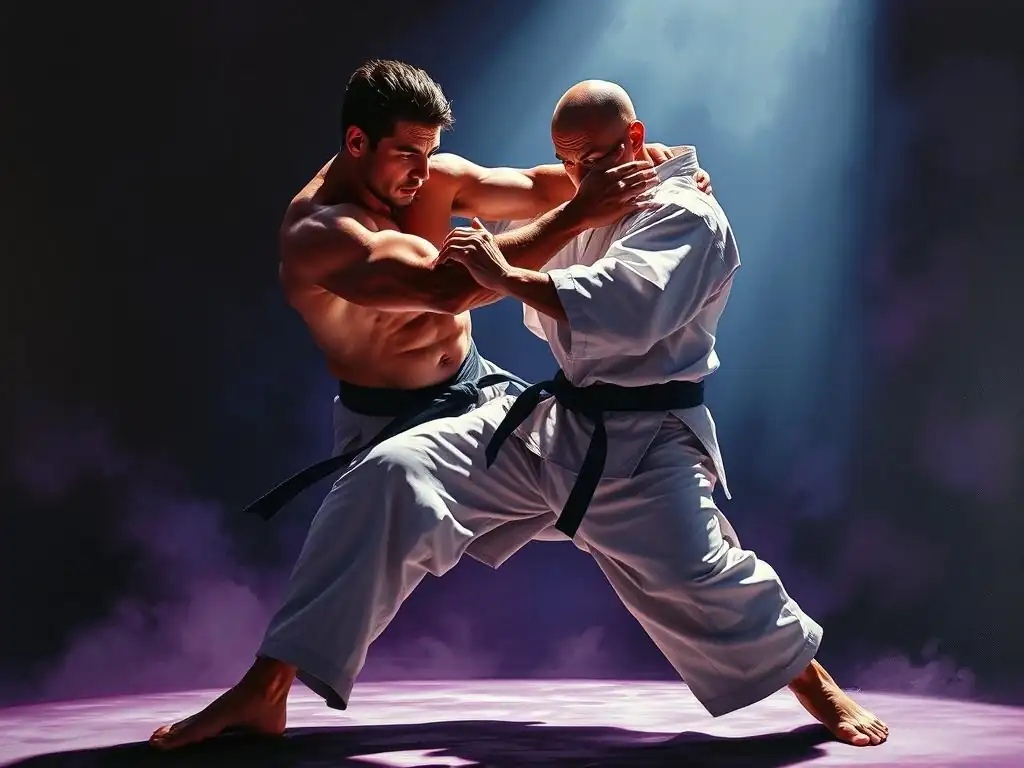
Welcome to Martial Arts Mastery!
Delve into the intricate world of combat where tradition meets technique. Ever wondered how to effectively counter common attacks using the subtle art of joint locks? Explore our in-depth analysis of Hapkido defends against locks, uncovering practical applications of throws, strikes, and pressure points. This is more than just self-defense; it's a journey into understanding the principles that make Hapkido a truly formidable martial art. Ready to unlock its secrets?
- Hapkido Against Common Attacks: Practical Applications of Locks, Throws, and Strikes for Self-Defense
- Understanding Common Attack Scenarios and Hapkido's Response
- Hapkido Joint Locks: Defending Against Grabs and Holds
- Hapkido Throws: Turning an Attacker's Force Against Them
- Hapkido Strikes: Precise and Effective Counter-Attacks
- Integrating Locks, Throws, and Strikes in Hapkido Self-Defense
- Practical Hapkido Defense: Step-by-Step Examples
- Hapkido Training for Self-Defense Proficiency
- Advanced Hapkido Self-Defense Strategies
- Conclusion: The Effectiveness of Hapkido for Practical Self-Defense
-
Frequently Asked Questions
- What is the core principle of Hapkido when defending against locks?
- How does Hapkido utilize throws in defense against a lock or grab?
- What types of strikes are typically employed in Hapkido when responding to an attempted lock?
- Does Hapkido training focus on specific defenses against common grappling locks like wrist locks or headlocks?
- Is Hapkido effective as a practical self-defense system against lock-based attacks in real-world scenarios?
- Final Reflection: Mastering Self-Defense Through Hapkido
- Master Your Defense: Start Your Hapkido Journey Now!
Hapkido Against Common Attacks: Practical Applications of Locks, Throws, and Strikes for Self-Defense
Mastering Hapkido for Real-World Self-Defense Scenarios
Hapkido, a dynamic and comprehensive Korean martial art, places a strong emphasis on practical self-defense. Unlike sport-oriented martial arts, Hapkido's curriculum is specifically designed to address common street altercations, focusing on techniques that are effective against realistic attacks. The core philosophy revolves around using an attacker's energy and momentum against them, employing a blend of joint locks, throws, and strikes to quickly neutralize threats. This integrated approach ensures that practitioners are not limited to a single range or type of engagement, making Hapkido a versatile system for personal protection in unpredictable situations.
The effectiveness of Hapkido in self-defense stems from its holistic nature. Training incorporates breakfalls (ukemi) to safely handle being thrown, various striking techniques from diverse angles, and a wide array of joint manipulation methods. For instance, mastering wrist locks requires understanding anatomy and applying precise pressure points, often learned through repetitive partner drills.
A typical Hapkido class might dedicate 30-40% of its time to practicing lock flow drills and escapes, demonstrating the art's commitment to preparing students for scenarios where they need to control or disable an aggressor through joint manipulation. This focus on practical application distinguishes Hapkido as a robust system for real-world defense.
Understanding Common Attack Scenarios and Hapkido's Response
Identifying Frequent Street Attacks: A Hapkido Perspective
Street attacks often differ significantly from what is seen in competitive martial arts. They are typically non-technical, aggressive, and unpredictable. Common scenarios include surprise grabs (wrist, arm, shoulder, or clothing), shoves, pushes, wild haymaker punches, headlocks, and bear hugs. These attacks are usually initiated from close range and lack the structure of a trained fighter's offense. Recognizing these patterns is the first step in effective Hapkido self-defense, as it allows practitioners to anticipate likely actions and apply appropriate countermeasures quickly.
Hapkido training specifically simulates these chaotic scenarios. Instead of sparring under strict rules, students often practice responding to unexpected grabs or multiple attackers. For example, a common drill involves a partner initiating a sudden two-hand wrist grab, prompting the student to immediately apply a specific wrist lock escape taught in the curriculum. This type of training, which makes up a significant portion of practical Hapkido defense classes – sometimes 50% or more focused on reactive drills – builds the muscle memory needed to respond instinctively under duress, directly addressing the unpredictable nature of street assaults.
The Core Principles of Hapkido Self-Defense: Beyond the Basics
Beyond specific techniques, Hapkido self-defense is guided by fundamental principles: non-resistance, circular motion, and the use of leverage. Non-resistance involves yielding to the attacker's force initially to redirect it, rather than meeting force with equal force. Circular motion is evident in throws and joint locks, where movements follow arcs to disrupt balance and apply pressure efficiently. Leverage is crucial for applying joint locks and executing throws, allowing a smaller person to control or unbalance a larger attacker. These principles underpin every technique, making Hapkido adaptable to various body types and strengths.
Furthermore, Hapkido emphasizes controlling the attacker with minimal effort. This is achieved through precision in striking vital points, applying joint locks that incapacitate, and using throws that render the attacker momentarily vulnerable. The concept of Jiri (principle of force) and Won (principle of circle) are constantly reinforced.
For instance, when applying a wrist lock against a grab (a common scenario where Hapkido defends against locks), the practitioner doesn't pull away forcefully but uses a circular motion combined with leverage on the wrist joint, effectively controlling the attacker's entire body with pressure on a single point. This strategic application of principles makes Hapkido remarkably efficient.
Hapkido Joint Locks: Defending Against Grabs and Holds
Applying Hapkido Joint Locks to Counter Wrist Grabs
Wrist grabs are among the most common initial physical attacks encountered in self-defense scenarios. An attacker may grab one or both wrists to restrict movement, intimidate, or set up a further assault. Hapkido offers numerous techniques to defend against these grabs, primarily utilizing joint locks that exploit the natural vulnerabilities of the wrist and elbow joints. These techniques often involve rotating the wrist in unnatural directions, applying pressure to specific points, or using the attacker's grip against them.
A fundamental Hapkido technique against a one-hand wrist grab involves stepping in, rotating the grabbed hand outwards, and applying pressure to the attacker's wrist while turning the body. This can transition into techniques like the Sohn Mok Kwan Jyel (wrist joint lock) which, when applied correctly, can cause significant pain and compliance or lead directly into a throw or takedown.
Mastering variations for single and double wrist grabs, from the front and rear, is a cornerstone of Hapkido training, with practitioners spending dozens of hours practicing these specific defenses to build fluidity and effectiveness. This focused training ensures that Hapkido defends against locks originating from wrist grabs efficiently.
Utilizing Hapkido Techniques Against Arm Grabs and Holds
Beyond wrist grabs, attackers may secure a grip on an arm, either above the wrist or higher up towards the elbow or shoulder. These arm grabs can restrict movement or be used to drag or manipulate the defender. Hapkido employs a range of joint locks and control techniques targeting the elbow, shoulder, and even the attacker's wrist from this position. The goal is to break the grip and gain control, often transitioning into a different lock or a throw.
Techniques like Pal Mok Kwan Jyel (arm joint lock) or variations of the Kwan Jyel Ki (joint breaking techniques) are used here. For example, against a strong two-hand arm grab above the elbow, a Hapkido practitioner might use body movement and leverage to rotate the attacker's arm, applying pressure on the elbow joint in a direction it is not meant to bend.
This often breaks the grip instantly and allows for follow-up control or striking. Training involves practicing these techniques against resisting partners to understand the necessary angle, pressure, and body mechanics, ensuring the Hapkido defense against locks is practical and effective.
Hapkido's Response to Bear Hugs: Escapes and Joint Manipulation
Bear hugs, whether from the front or rear, with or without the arms pinned, are dangerous holds that restrict movement and can lead to takedowns or other attacks. Hapkido addresses bear hugs with escapes that exploit the attacker's posture and leverage, often incorporating strikes to vital points followed by joint manipulation or throws. Escaping a bear hug requires disrupting the attacker's balance and grip simultaneously.
A common Hapkido escape from a rear bear hug with arms pinned involves stomping on the attacker's foot (a vital point strike), dropping weight to break their center of gravity, and then using hip movement combined with elbow strikes to create space. If the attacker's arms are accessible, techniques targeting the fingers or wrists can be applied to force a release.
For instance, bending back one or two fingers or applying a quick, sharp wrist lock (like a Sohn Mok Bi Tuhl Ki) can often break a strong bear hug grip. Hapkido training emphasizes these close-quarters escapes, recognizing that effective Hapkido defends against locks and holds even in the most restrictive embraces.
Hapkido Throws: Turning an Attacker's Force Against Them
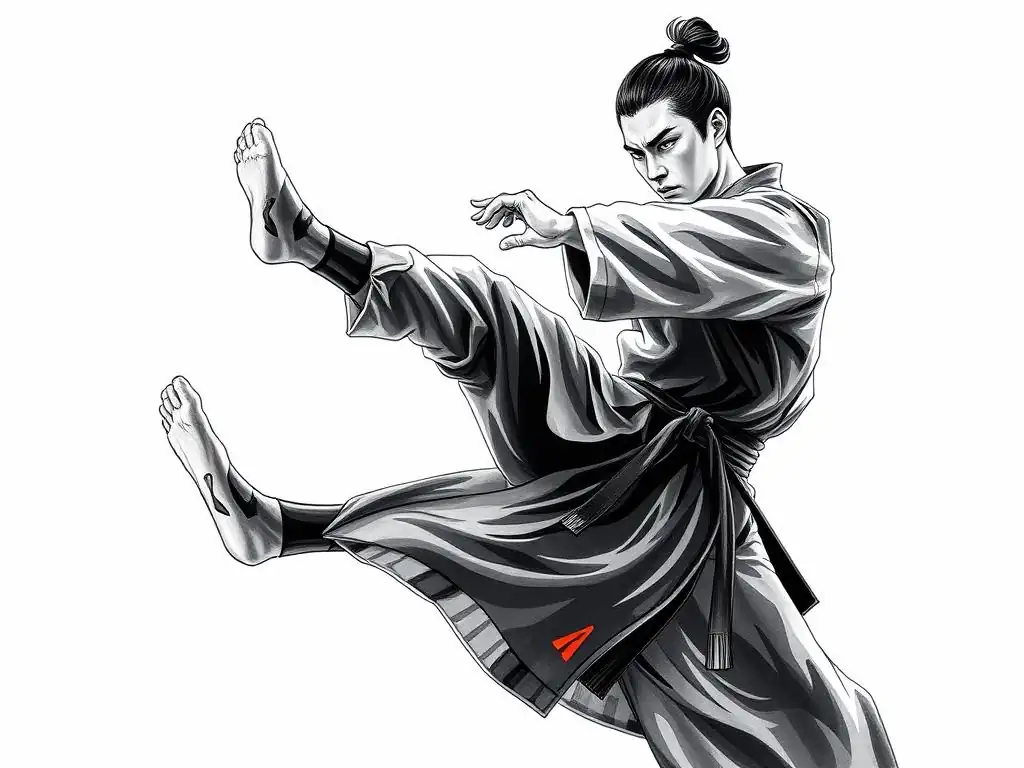
Hapkido Throws for Defense Against Pushes and Shoves
Pushes and shoves are common aggressive actions that precede or accompany other attacks. They are often attempts to unbalance the defender or create distance before charging. Hapkido utilizes the attacker's forward momentum from a push or shove, redirecting their energy to execute throws (called Too Ki). The principle here is to yield and pivot, using circular motion to guide the attacker off balance and then applying a technique to take them to the ground.
A typical Hapkido response to a two-hand chest push involves stepping to the side (yielding to the force), pivoting, and guiding the attacker's arms and body past the defender's center. This can lead into techniques like a hip throw ( Huri Too Ki) or a sophisticated redirection throw ( Jap Too Ki) where the attacker's own momentum completes the throw.
Practicing falling safely ( Nak Bub) is essential for both the thrower and the thrown in training, and Hapkido schools dedicate significant time to breakfall practice – often 15-20 minutes per class – to ensure safety while practicing these dynamic throws.
Executing Hapkido Throws to Counter Charging Attacks
A charging attack, whether a tackle attempt or a wild lunge, involves significant forward momentum. This presents an ideal opportunity for a Hapkido practitioner to use a throw that redirects this linear force into a circular or downward motion, taking the attacker off their feet. Countering a charge requires precise timing and understanding of leverage.
Techniques like the Dae Too Ki (falling throw) or variations of leg sweeps and reaping throws ( Dari Kuhl Ki) are highly effective. For example, against a charging attacker, a Hapkido practitioner might step slightly offline, using a sweep or reap against the attacker's lead leg while simultaneously pulling or guiding their upper body downwards or in a circle.
This breaks their balance and utilizes their forward motion to complete the throw with minimal effort from the defender. Mastering these counters requires drilling against partners simulating varying levels of charge intensity, ensuring the Hapkido throws are effective against committed attacks.
Using Hapkido Throws to Neutralize Balance Disruptions
Attackers often attempt to disrupt a defender's balance through pulling, pushing, or tripping. Hapkido throws are not only offensive techniques but also defensive counters to such balance disruptions. By understanding how balance is broken, a Hapkido practitioner can use small adjustments in posture, footwork, and body mechanics to restore their own balance while simultaneously initiating a throw on the attacker who created the imbalance.
This involves principles like Shim San (maintaining center of gravity) and Jok Sul (footwork). If an attacker pulls forward, the Hapkido response might involve stepping back or pivoting while applying a technique like a shoulder throw ( Oh Kae Too Ki) that uses the attacker's pull to facilitate the throw.
If pushed backward, stepping back with the push and redirecting the force into a throw like a rear throw ( Hu Too Ki) is effective. Training often includes drills where partners attempt to unbalance each other randomly, prompting the practitioner to react with an appropriate throw or control technique, refining their ability to use Hapkido defends against locks, grabs, and balance attacks.
Hapkido Strikes: Precise and Effective Counter-Attacks
Targeted Hapkido Strikes for Self-Defense: Vital Points
While Hapkido is known for its joint locks and throws, striking ( Chi Ki) is an equally integral component, used both to create openings for other techniques and as immediate disabling actions. Hapkido emphasizes striking vital points ( Hyul Do), areas of the body that are particularly vulnerable to pain or incapacitation, such as the eyes, throat, temples, solar plexus, groin, and pressure points on the limbs. Targeting these areas maximizes effectiveness with minimal force.
Strikes can include open-hand techniques (palm strikes, finger jabs), closed-hand techniques (fists, hammer fists), elbows, knees, and kicks. For example, a quick palm-heel strike to the nose or chin can momentarily stun an attacker, providing an opportunity to apply a joint lock or initiate a throw. An elbow strike to the temple or jaw can be a fight-ender at close range. Hapkido schools often teach a curriculum of vital points, detailing their effects and the most effective strikes to target them, ensuring strikes are precise and debilitating in self-defense scenarios.
Combining Hapkido Strikes with Joint Locks for Maximum Effect
The true power of Hapkido self-defense lies in the seamless integration of strikes, locks, and throws. Strikes are often used to set up joint locks or throws, and vice versa. A strike can momentarily distract or stun an attacker, making it easier to secure a grip for a lock or disrupt their posture for a throw. Conversely, applying a painful joint lock can create an opening for a strike if the attacker resists the lock.
Consider defending against a frontal assault. A quick palm strike to the face might cause the attacker to flinch, allowing the Hapkido practitioner to immediately follow up by grabbing the attacker's arm and applying a wrist or elbow lock. Or, if attempting a wrist lock fails initially due to resistance, a sharp knee strike to the thigh can break the attacker's base, making the lock easier to apply or transitioning into a throw. This combination of techniques is constantly drilled in Hapkido, emphasizing the fluid transition between ranges and types of force application.
Using Hapkido Kicks for Defensive Striking: Range and Power
Hapkido incorporates a wide variety of kicks ( Bal Chi Ki), known for their speed, power, and versatility. Kicks are valuable in self-defense for maintaining distance, interrupting an attacker's advance, or striking targets that are difficult to reach with hand techniques. While dynamic spinning kicks are part of advanced Hapkido, practical self-defense often focuses on simpler, more direct kicks to vulnerable low or middle targets.
Examples include the front snap kick to the groin or knee, side kick to the knee or ribs, and the relatively close-range defensive kick to the shin or instep. A quick, sharp kick to the knee can immediately compromise an attacker's mobility, preventing pursuit or setting them up for a follow-up technique. These kicks are often delivered with the heel or ball of the foot for maximum impact on small, hard targets. Training emphasizes balance, speed, and targeting, ensuring that Hapkido kicks are effective tools for creating space and opportunity in a self-defense situation.
Integrating Locks, Throws, and Strikes in Hapkido Self-Defense
Flow Drills: Linking Hapkido Techniques for Seamless Defense
Effective self-defense is rarely a single technique; it's a sequence of actions. Hapkido training heavily relies on flow drills, where practitioners practice transitioning smoothly between strikes, blocks, grabs, locks, and throws. These drills simulate the dynamic nature of a real confrontation, teaching students to adapt their response based on the attacker's reaction. A typical flow drill might start with a simulated punch, leading to a block, then a grab, transitioning into a wrist lock, followed by the attacker resisting, prompting a transition to an elbow lock, and finally, if necessary, a throw.
These drills are practiced repeatedly, often thousands of times over a student's journey, starting slowly and gradually increasing speed and resistance. This repetitive practice builds muscle memory and intuitive understanding of how techniques connect. For instance, learning how to seamlessly transition from a failed attempt to apply a wrist lock to a more accessible elbow lock, or how a successful joint lock can immediately set up a throw, is crucial. Flow drills are the engine that powers the integrated application of Hapkido's diverse techniques.
Scenario-Based Training: Simulating Real-World Attacks
To prepare for the unpredictability of street encounters, Hapkido schools incorporate scenario-based training. This moves beyond isolated technique practice to simulating realistic attack situations. Students might be blindfolded and grabbed, face multiple attackers, or have to defend in confined spaces or from disadvantageous positions (like sitting or lying down). These scenarios test the practitioner's ability to apply Hapkido principles and techniques under stress.
In a typical scenario drill, one or more students might act as untrained aggressors, using realistic grabs, pushes, or wild swings. The defender must then apply their Hapkido knowledge, using a combination of strikes to create distance or openings, joint locks to control or disable, and throws to take the attacker to the ground, all while adapting to the unfolding situation. This training, often involving protective gear and careful supervision, helps students understand how Hapkido defends against locks and other attacks when they are unexpected and chaotic.
Adapting Hapkido Principles to Unpredictable Situations
The true mastery of Hapkido for self-defense lies in the ability to adapt its core principles to any situation, even those not explicitly covered in training. Since street attacks are infinitely varied, memorizing responses to every possible attack is impossible. Instead, practitioners learn to understand the underlying principles of leverage, balance disruption, circular motion, and vital point targeting, applying them creatively.
This adaptability means that even if faced with an unusual hold or attack, a Hapkido practitioner can analyze the pressure, direction of force, and points of vulnerability to apply a modified joint lock, strike an accessible vital point, or use the attacker's movement to initiate a throw. For example, if caught in an unfamiliar grappling hold, recalling how Hapkido defends against locks by targeting weak points like fingers or wrists, or how to use body weight and leverage to create space or apply pressure, allows for an improvised escape or counter-attack.
This principle-based approach makes Hapkido a truly robust self-defense system.
Practical Hapkido Defense: Step-by-Step Examples
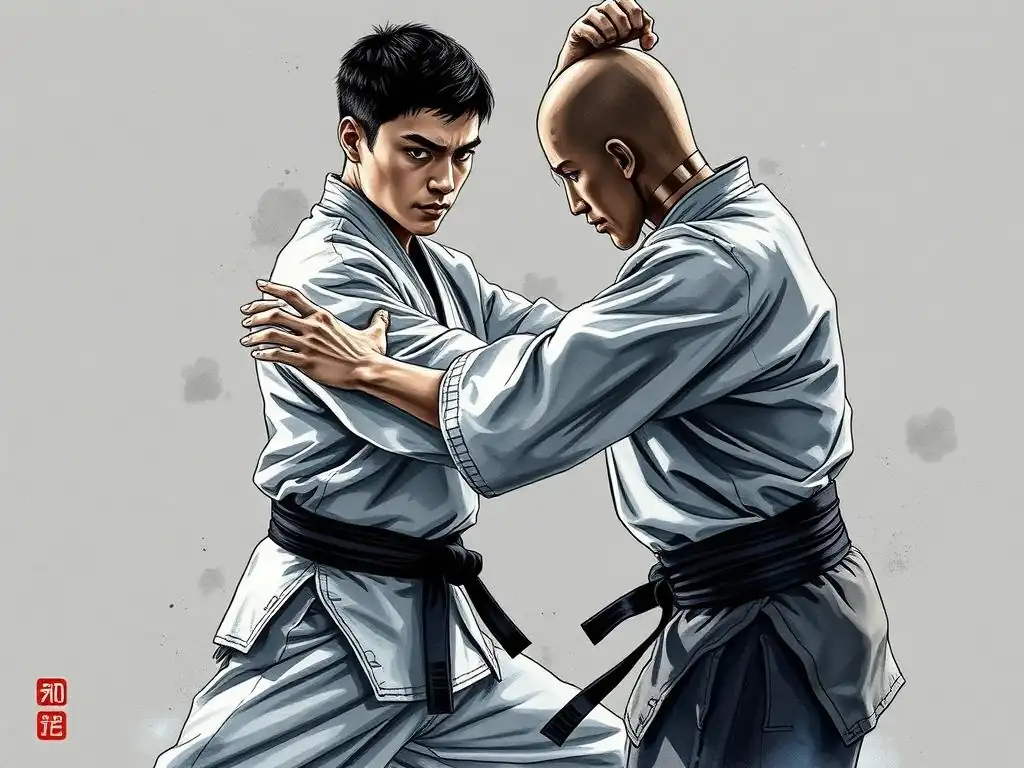
Example 1: Defending Against a Frontal Grab with a Hapkido Wrist Lock and Throw
Imagine an attacker grabs your right wrist forcefully with their left hand from the front.
- Initial Response: Step forward slightly with your right foot, turning your body to the left. This slight movement helps to break the line of force and position you advantageously.
- Applying the Lock: Rotate your grabbed right hand outwards, turning your palm upwards. With your free left hand, secure the attacker's gripping hand or wrist. Apply pressure to the attacker's wrist by bending it unnaturally outwards and downwards, utilizing a technique similar to Sohn Mok Bi Tuhl Ki.
- Controlling the Attacker: As the attacker reacts to the pain or pressure of the lock, maintain control of their wrist. Their balance will be compromised.
- Transition to Throw: Using the control established by the wrist lock, step around the attacker, pulling their locked arm across your body while turning. This motion, combined with pressure on the wrist, will guide the attacker off balance and forward or sideways, leading to a throw. This demonstrates how Hapkido defends against locks by turning a simple grab into a debilitating control and takedown.
Example 2: Responding to a Punch with a Hapkido Block and Striking Combination
Suppose an attacker throws a right haymaker punch towards your head.
- Evasion/Block: Simultaneously step offline to your left or right and use a reinforced block ( Mak Ki) with your forearms to deflect the incoming punch. The step offline reduces the impact and positions you for a counter.
- Counter Strike: Immediately after the block, while the attacker's arm is extended and their balance might be compromised, deliver a quick, sharp strike. A palm heel strike to the chin or nose, or an elbow strike to the side of the head or ribs if close enough, are effective options.
- Follow-up Strike/Control: If the initial counter strike stuns or distracts the attacker, follow up with another strike, such as a knee to the groin, or transition to a grab on the arm you blocked to attempt a joint lock ( Pal Mok Kwan Jyel) or a throw. The key is rapid, decisive action after the initial defense.
Example 3: Escaping a Bear Hug Using a Hapkido Joint Lock and Throw
Consider a rear bear hug where your arms are pinned to your sides.
- Disruption: Immediately stomp down hard on the attacker's instep or heel with your heel. This creates pain and disrupts their base. Simultaneously, try to drop your weight by bending your knees slightly.
- Creating Space: Drive your elbows backwards sharply into the attacker's ribs or solar plexus (vital points). This often forces them to loosen their grip momentarily or bend forward slightly.
- Applying Joint Manipulation (if possible): If the attacker's hands or fingers become accessible due to them loosening their grip or bending forward, quickly grab one or two fingers and bend them sharply backwards or apply a quick, painful wrist twist. This is a direct application of how Hapkido defends against locks by targeting the attacker's own grip.
- Escaping/Throw: Once space is created or the grip is weakened, twist your body forcefully towards the side of the attacker's compromised grip or balance. Use hip movement and leverage, potentially combining it with a trip or sweep of their leg, to take them off balance and escape the hold or throw them.
Hapkido Training for Self-Defense Proficiency
Essential Hapkido Drills for Developing Reflexes and Timing
Developing effective self-defense skills in Hapkido requires countless hours of focused drilling to build reflexes and timing. Static practice of techniques is necessary initially, but dynamic drills are crucial for real-world application. Drills like reactive blocking against unexpected strikes, practicing joint lock applications from various grab scenarios, and performing breakfalls from different types of throws are fundamental. Repetition under increasing speed and intensity hones the practitioner's ability to respond instantaneously without conscious thought.
Specific drills include "attack recognition" exercises where a partner initiates a random attack (grab, push, strike), and the student must identify it and apply the correct Hapkido response within seconds. Another vital drill is "flow rolling" for joint locks, where partners continuously attempt to apply and escape various locks, developing sensitivity and transitions. These drills, often constituting 40-50% of a practical Hapkido class, are designed to bridge the gap between knowing a technique and being able to use it effectively under pressure, directly improving how Hapkido defends against locks, throws, and strikes.
Strengthening and Conditioning for Effective Hapkido Techniques
While Hapkido emphasizes using leverage and an attacker's force, physical conditioning is still important for effective self-defense. Strength training builds the power needed for strikes and the stability required for throws and joint locks. Conditioning improves stamina, allowing a practitioner to defend themselves for the duration of an encounter, which might last longer than a few seconds. Flexibility is also key for executing techniques with proper range of motion and avoiding injury.
Training regimens often include exercises like push-ups, sit-ups, squats, and various stretching routines. Grip strength is particularly important for executing joint locks and maintaining control after a throw. Many Hapkido schools incorporate specific conditioning exercises that mimic the movements used in techniques, such as repetitive wrist rotations against resistance or exercises to strengthen the core for throws. A well-rounded physical foundation enhances the speed, power, and resilience of Hapkido techniques.
The Importance of Mental Preparation in Hapkido Self-Defense
Physical technique and conditioning are only part of the equation; mental preparation is equally critical for effective self-defense. This includes developing situational awareness to avoid potential threats, maintaining composure under pressure, and having the determination to defend oneself decisively. Hapkido training fosters mental fortitude through challenging physical drills and scenario-based practice that simulates the stress of an actual attack.
Cultivating a "self-defense mindset" involves understanding the legal and ethical implications of using force, recognizing pre-attack indicators, and making rapid decisions in chaotic situations. Visualization exercises, discussing real-world incidents, and practicing de-escalation tactics are often part of comprehensive Hapkido self-defense programs. The ability to remain calm, think clearly, and act decisively when confronted is paramount, allowing the Hapkido practitioner to apply their physical skills effectively when they need to use Hapkido defends against locks or any other form of aggression.
Advanced Hapkido Self-Defense Strategies
Disarming Techniques in Hapkido: Responding to Weapon Threats
Advanced Hapkido training includes techniques for defending against and disarming attackers wielding common weapons like knives, sticks, or handguns. These techniques are inherently dangerous and require significant skill, timing, and nerve. The focus is on controlling the weapon, disrupting the attacker's balance, and securing the weapon as quickly and safely as possible.
Disarming techniques often involve simultaneous blocking or redirecting the weapon, stepping into a safe zone relative to the weapon's arc, and applying a joint lock or control technique on the attacker's limb holding the weapon. For example, against a knife thrust, the Hapkido response might involve stepping offline, blocking the arm, and immediately applying a wrist lock that leverages the attacker's grip on the knife against them, forcing them to drop it or risk severe injury. These techniques are typically taught only to experienced students due to their high-risk nature.
Ground Defense in Hapkido: Adapting Techniques for Grappling Situations
While Hapkido primarily focuses on standing self-defense, acknowledging that altercations can go to the ground is important. Hapkido incorporates ground defense strategies, adapting its principles of leverage, joint locks, and vital point strikes to a grappling context. The goal on the ground is typically to escape a disadvantageous position, create space, and return to a standing position where Hapkido techniques are most potent.
Ground techniques include escapes from common pins (like mount or side control), submissions using joint locks or chokeholds (though often used for control rather than submission in self-defense), and strikes from compromised positions (e.g., elbow strikes from the guard). For instance, if pinned on the ground, a Hapkido practitioner might use hip escapes to create space, strike vital points like the groin or ears, and look for opportunities to apply a wrist or finger lock if the attacker's hands are accessible.
Improvised Weapons: Utilizing Everyday Objects for Hapkido Self-Defense
In a real self-defense situation, everyday objects can become improvised weapons. Hapkido principles can be applied to utilize items like keys, pens, umbrellas, or jackets for defense. Keys can be used for striking vital points or enhancing hand strikes. An umbrella or stick can extend reach for blocking or striking. A jacket can be used to distract, entangle, or create a barrier.
Training might involve practicing how to hold and strike with a rolled-up magazine, how to use a pen for pressure point strikes during a grab (a scenario where Hapkido defends against locks using an external object), or how to use a belt to create distance or apply control. This aspect of Hapkido self-defense encourages practitioners to be resourceful and adapt their skills to leverage their environment, recognizing that self-defense is not limited to empty-hand techniques.
Conclusion: The Effectiveness of Hapkido for Practical Self-Defense
Hapkido stands out as a highly effective martial art for practical self-defense due to its comprehensive approach, integrating joint locks, throws, and strikes into a seamless system. Its focus on using an attacker's momentum and targeting vulnerable points makes it accessible and effective for individuals of varying sizes and strengths. The rigorous training methods, emphasizing reactive drills, scenario simulation, and mental preparation, ensure that practitioners are well-equipped to handle the unpredictable nature of real-world confrontations.
By mastering the diverse techniques of Hapkido – from escaping common grabs using sophisticated joint locks, to redirecting aggressive charges with dynamic throws, and employing precise strikes to vital points – individuals gain the confidence and capability to protect themselves. The ability of Hapkido defends against locks, throws, and strikes by offering multiple layers of response within a single system provides a robust framework for personal safety. For those seeking a martial art focused squarely on practical, adaptable self-defense, Hapkido offers a powerful and proven path.
Frequently Asked Questions
What is the core principle of Hapkido when defending against locks?
Hapkido emphasizes redirecting an opponent's energy and using joint manipulation to break their balance and control their movement. This involves understanding pressure points and applying techniques with precision.
How does Hapkido utilize throws in defense against a lock or grab?
Hapkido incorporates a variety of throws, often using the opponent's own momentum against them after escaping a lock. These throws aim to quickly neutralize the threat and create distance for further defense or counter-attack.
What types of strikes are typically employed in Hapkido when responding to an attempted lock?
Hapkido employs a range of strikes, including hand strikes, kicks, and knee strikes, targeting vulnerable areas like the face, groin, and joints. The goal is to disrupt the attacker's focus and create an opening for escape or further techniques.
Does Hapkido training focus on specific defenses against common grappling locks like wrist locks or headlocks?
Yes, Hapkido training includes specific techniques and drills designed to counter common grappling locks. Students learn to escape safely and transition into offensive maneuvers, such as throws or strikes, from these vulnerable positions.
Is Hapkido effective as a practical self-defense system against lock-based attacks in real-world scenarios?
Hapkido can be highly effective if trained and applied properly. Its principles of redirecting energy and using joint manipulation offer versatile defense strategies against various lock-based attacks in self-defense situations.
Final Reflection: Mastering Self-Defense Through Hapkido
The principles and techniques of Hapkido, as explored throughout this article, are not merely historical relics; they represent a living, breathing system of self-defense that remains profoundly relevant in today's world. The ability to effectively defend against common attacks, particularly locks, is a skill that empowers individuals to navigate potentially dangerous situations with confidence and control, fostering a greater sense of personal security and well-being.
The enduring influence of Hapkido lies in its holistic approach, blending strikes, throws, and joint locks into a cohesive and adaptable fighting style. This integration, coupled with its emphasis on leverage and circular motion, allows practitioners of all sizes and strengths to effectively neutralize threats. The best fighter is never angry.
This ancient wisdom, often echoed in martial arts philosophies, underscores the importance of maintaining composure and utilizing technique over brute force – a core tenet that makes Hapkido a truly effective and empowering art.
Now, consider how you can incorporate the principles of Hapkido into your own life. Whether you choose to pursue formal training or simply reflect on the concepts of leverage, balance, and awareness, remember that self-defense is not just about physical prowess; it's about cultivating a mindset of preparedness and resilience. Embrace the spirit of Hapkido, and empower yourself to navigate the world with greater confidence and security.
Master Your Defense: Start Your Hapkido Journey Now!
Thanks for exploring the practical applications of Hapkido with us! We hope you’ve gained valuable insights into using locks, throws, and strikes for self-defense. Now, it’s time to put that knowledge into action.
Here's how to continue your journey:
- Find a Qualified Hapkido Instructor: This is the most important step! Look for a certified instructor at martialartsmastery.org/hapkido-directory to begin your training.
- Share this article with a friend who's interested in self-defense. Spread the knowledge, empower others!
- Start practicing basic Hapkido stances and movements for 15 minutes each day to build a foundation.
What's one simple Hapkido technique you'll start practicing today?