
The Influence of Medieval Warfare on Longsword Fencing Tactics

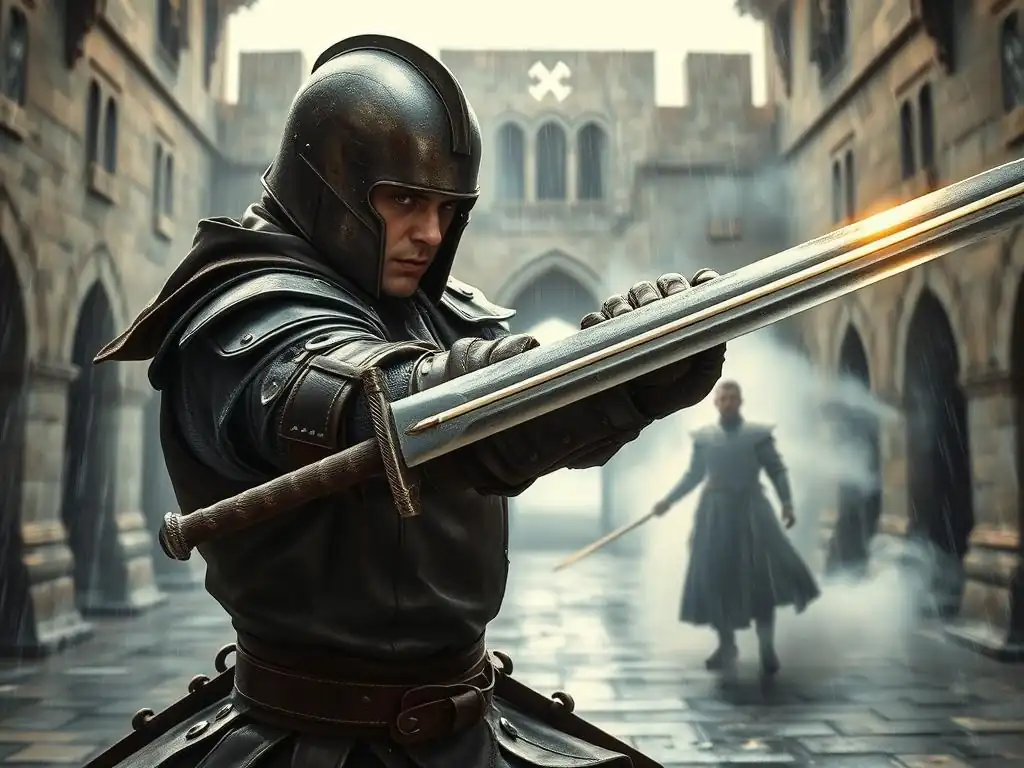
Welcome to Martial Arts Mastery, where we delve into the rich tapestry of combat traditions!
Prepare to step back in time and uncover the brutal realities that shaped the elegant art of medieval longsword fencing. This journey begins with understanding how the relentless demands of medieval warfare forged the very tactics we see in historical fencing manuals. Intrigued? Discover how battlefield necessity sculpted the techniques and strategies still practiced today, and prepare to see the longsword in a whole new light.
- Introduction: Bridging the Gap Between Battlefield and Fencing School
- The Realities of Medieval Warfare: A Crucible for Combat Techniques
- From Battlefield to Fencing Treatise: The Transmission of Knowledge
- Core Longsword Fencing Tactics Rooted in Medieval Warfare
- Specific Examples of Warfare Influence on Longsword Tactics
- The Longsword Stance and Movement: Echoes of the Battlefield
- Analyzing Historical Sources: Uncovering the Link Between Warfare and Fencing
- Modern Interpretations and Applications of Medieval Longsword Fencing Tactics
- Conclusion: The Intertwined History of War and Longsword Fencing
-
Frequently Asked Questions
- What was the primary influence on the development of Medieval longsword fencing tactics?
- How did the armor worn by knights affect longsword techniques?
- What are some key tactical differences between modern fencing and Medieval longsword fencing?
- Besides combat, were there other influences on the development of longsword fencing tactics?
- Where can I learn more about the historical context of Medieval longsword fencing tactics?
- Final Reflection: Echoes of the Battlefield in the Fencing Salle
- Rediscover Your Inner Knight: Claim Your Edge!
Introduction: Bridging the Gap Between Battlefield and Fencing School
Understanding the Evolution of Longsword Combat
The longsword, a versatile two-handed sword prevalent in Europe from roughly the 14th to 16th centuries, was not solely a dueling weapon or a tool for knightly tournaments. Its primary development and use were deeply intertwined with the realities of medieval warfare.
Understanding the evolution of longsword combat requires looking beyond formal fencing schools and into the crucible of the battlefield, where techniques were forged out of necessity and survival. Early masters, often men with military experience, codified techniques that were practical and effective against opponents equipped with period-appropriate armor and fighting within the chaotic environment of mass combat or smaller skirmishes.
This historical context is crucial for anyone studying Medieval longsword fencing tactics today. The specific guards, footwork, cuts, and thrusts taught in historical treatises like those by Fiore dei Liberi or Johannes Liechtenauer weren't abstract forms; they were designed to function in scenarios ranging from confronting a heavily armored knight on foot to fighting in a disordered mêlée against lightly armored soldiers. The constant innovation in armor technology, from mail to plate, directly influenced the techniques used, shifting emphasis from broad cuts to targeted thrusts and leverage-based attacks like half-swording and Mordhau.
The Importance of Context: Medieval Warfare and its Impact on Martial Arts
Medieval warfare was a complex interplay of technology, strategy, and individual skill. It was not simply about one-on-one duels, but involved formations, terrain, morale, and the combined arms of infantry, cavalry, and archers. This environment profoundly shaped the martial arts of the time, including the development of Medieval longsword fencing tactics. Techniques had to be adaptable, effective against various opponent types and armors, and usable within crowded or restrictive spaces.
The practical demands of surviving combat meant that techniques prioritized efficiency, power, and the ability to quickly gain an advantage or defend against multiple threats. Unlike later dueling styles that might emphasize precision and elegance for unarmored encounters, Medieval longsword fencing tactics retained a rugged practicality born from the need to fight and survive on the battlefield. Studying these tactics without acknowledging the military context from which they arose risks misunderstanding their purpose and application.
The Realities of Medieval Warfare: A Crucible for Combat Techniques
Armor and Weaponry: Shaping the Landscape of Medieval Battles
Medieval battlefields presented a diverse range of opponents, from lightly armored levies in padded jack or mail to heavily armored knights in full plate harness. This variety significantly influenced the techniques employed in Medieval longsword fencing tactics. Against opponents in full plate, direct cuts to the body were often ineffective.
Historical sources and archaeological evidence indicate that plate armor could withstand significant blunt force trauma and resist cuts from sharp blades. Consequently, techniques evolved to target the gaps in armor (such as the armpits, groin, or joints), or to exploit the leverage of the longsword through half-swording to deliver powerful thrusts capable of penetrating mail or finding weak points.
Conversely, fighting against opponents with less protection allowed for a broader range of techniques. Powerful shearing cuts were highly effective against mail or fabric armor, aiming to inflict disabling wounds quickly. The presence of shields, polearms, and other weapons also dictated tactical responses, requiring proficiency in voiding attacks, entering into close range safely, and using the longsword's versatility to parry or bind opposing weapons. The constant evolution of armor and weaponry throughout the medieval period meant that effective longsword tactics were not static but adapted over centuries.
Formations and Strategies: Influencing Individual Combat Skills
Medieval battles often involved troops fighting in formations, such as shield walls, spear blocks, or dismounted knightly retinues fighting shoulder-to-shoulder. These tactical realities imposed significant constraints and opportunities on individual combatants. Fighting in a tight formation limited the space available for wide cuts or elaborate footwork. Techniques needed to be compact and efficient, often relying on powerful, short-range actions like thrusts, pommel strikes, or close-quarters grappling to disable an opponent without endangering allies nearby.
The strategic objectives of warfare, such as breaking a formation, defending a position, or pursuing a routing enemy, also influenced the application of longsword tactics. A fighter might need to use their longsword to create openings in an enemy line, defend a narrow breach, or engage in fluid, dynamic combat during a pursuit or retreat. The ability to transition between different fighting ranges and adapt to the flow of battle was paramount, skills honed by the demands of military engagements.
The Role of the Longsword in Medieval Military Engagements
The longsword served a multi-faceted role in medieval military engagements, reflecting its versatility as a weapon. It was carried by various types of soldiers, from knights and men-at-arms to professional mercenaries and even some wealthier infantrymen. While massed troops often relied on polearms like spears, halberds, or bills for initial clashes and formation fighting, the longsword was invaluable in the subsequent mêlée, for fighting dismounted, or in smaller skirmishes. Its ability to cut, thrust, and be used with one or two hands made it adaptable to different situations, whether mounted or on foot.
Furthermore, the longsword was a weapon of status and often a sidearm carried alongside a primary polearm or lance. Its presence on the battlefield meant that soldiers needed proficiency in its use for close-quarters combat when primary weapons were lost or the fight devolved into individual duels within the larger conflict. The techniques documented in historical treatises represent the distillation of this practical battlefield experience into a teachable system of Medieval longsword fencing tactics.
From Battlefield to Fencing Treatise: The Transmission of Knowledge
Early Fencing Masters: Veterans of War Sharing Their Expertise
Many of the earliest known fencing masters were men who had direct experience with medieval warfare. Figures like Fiore dei Liberi, author of Flos Duellatorum (circa 1409), explicitly state their background includes decades of experience in battles, duels, and other martial encounters. These masters were not theoretical martial artists; they were practitioners whose techniques were forged in the harsh reality of combat. They brought this practical knowledge, including how to fight in armor, against various weapons, and within the context of military strategy, into their teachings.
Their treatises served as a means to transmit this vital knowledge, ensuring that the effective Medieval longsword fencing tactics developed through hard-won experience could be taught systematically. These masters understood that fighting effectively with a longsword involved more than just mastering cuts and thrusts; it required understanding measure, timing, leverage, and how to adapt techniques based on the opponent's equipment and the fighting environment – principles directly derived from the battlefield.
The Development of Fencing Treatises: Codifying Medieval Combat Knowledge
The emergence of detailed fencing treatises from the late 14th century onwards marked a significant step in codifying medieval combat knowledge. Texts like those from the Liechtenauer tradition in Germany or Fiore dei Liberi in Italy provided structured systems for learning Medieval longsword fencing tactics. These manuscripts were not purely academic exercises; they were practical guides intended to train individuals for combat, whether in judicial duels, self-defense, or military contexts.
These treatises meticulously described guards, strikes, footwork, defenses, and advanced techniques, often using allegorical figures or sequential illustrations to aid understanding. They represent a written record of the martial arts as practiced by the military elite and professional fighters of the era. While they also covered dueling and unarmed combat, a significant portion of their content is clearly applicable to the realities of armed combat in the medieval period, demonstrating the direct link between the battlefield and formal instruction in Medieval longsword fencing tactics.
Key Differences Between Battlefield Combat and Fencing School Practice
While fencing treatises drew heavily from battlefield experience, there were inherent differences between structured school practice and the chaos of war. Fencing schools provided a controlled environment for learning, allowing for repetition, detailed instruction, and safe practice with training weapons. Battlefield combat, however, was unpredictable, involving multiple opponents, uneven terrain, fatigue, and the psychological pressures of life-or-death stakes.
- Environment: Schools had defined spaces; battlefields were open, varied, and often crowded.
- Opponents: Schools often involved one-on-one drills; battlefields could mean facing multiple adversaries simultaneously.
- Rules: Schools followed structured teaching principles; battle had no rules beyond survival.
- Equipment: Training often used blunt weapons; battle used sharp, lethal arms.
Despite these differences, the core principles taught in the treatises – measure, timing, leverage, voiding, and understanding the opponent's intent – were directly applicable to both environments. The school provided the foundation, while the battlefield demanded adaptation and application under extreme pressure. Effective Medieval longsword fencing tactics needed to be robust enough to function in both settings.
Core Longsword Fencing Tactics Rooted in Medieval Warfare
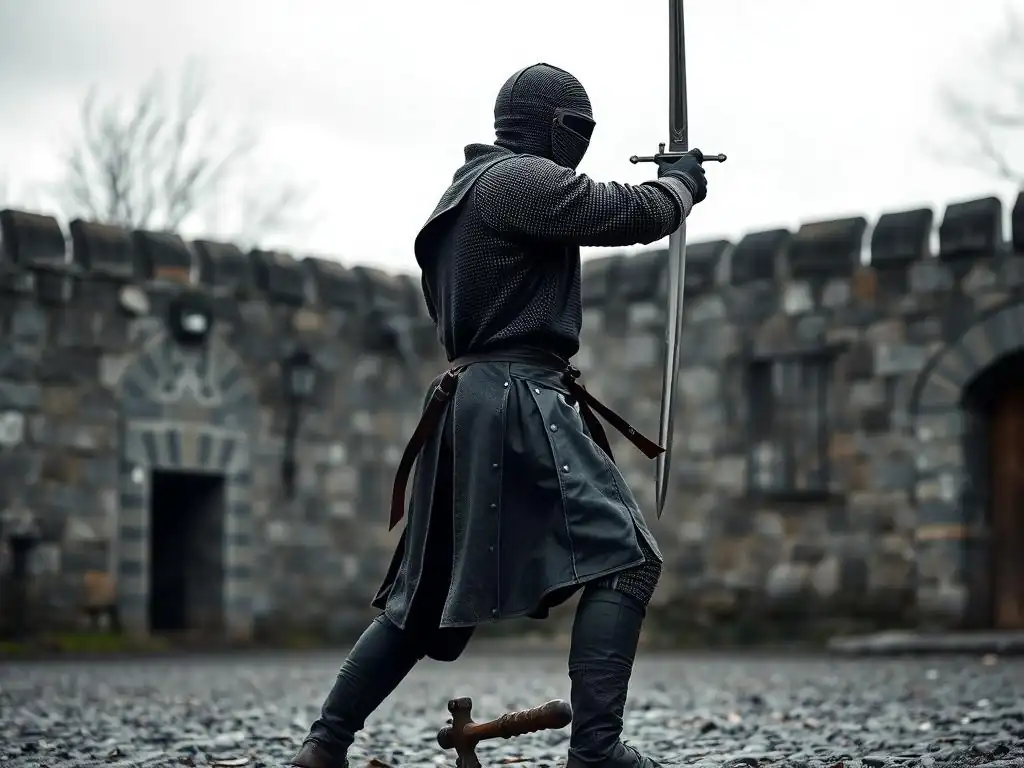
Measure and Timing: Adapting Battlefield Concepts to the Fencing Arena
Measure (distance) and timing (the opportune moment to act) are fundamental concepts in all martial arts, but they held particular significance in medieval warfare and, consequently, in Medieval longsword fencing tactics. On the battlefield, maintaining proper measure was crucial for survival – being too close risked being overwhelmed, while being too far prevented effective attack. Soldiers learned to judge distance relative to their own weapon and the opponent's, as well as the surrounding allies and enemies.
In the fencing school, these concepts were refined. Treatises meticulously describe how to enter and control measure, ensuring one can strike effectively while remaining safe from the opponent's counter. Timing involved not just reacting, but acting at the right moment – exploiting an opponent's opening, interrupting their action, or creating a favorable situation through deception or initiative. This strategic understanding of measure and timing, essential for navigating the chaotic environment of war, became a cornerstone of formal longsword instruction.
Footwork and Positioning: Maintaining Advantage in Close-Quarters Combat
Effective footwork and positioning were critical for survival and success in the close-quarters combat often encountered in medieval battles. Whether fighting in a formation or a mêlée, the ability to move efficiently, maintain balance on uneven ground, and position oneself advantageously relative to an opponent and their weapon was paramount. Medieval longsword fencing tactics heavily emphasize strong, stable stances and dynamic footwork that allows for rapid advances, retreats, and lateral movements.
Treatises illustrate guards (Posta) that provide a stable base while allowing for powerful actions. Footwork principles, such as passing steps, gathering steps, and pivoting, were taught to control distance, gain favorable angles of attack, and escape dangerous situations. This focus on robust footwork and strategic positioning directly reflects the need for mobility and stability when fighting on potentially difficult terrain or within the restrictive confines of a battle line or scrum.
Blade Work: Thrusting, Cutting, and Parrying Techniques Derived from War
The core offensive and defensive techniques of Medieval longsword fencing tactics – thrusting, cutting, and parrying – were directly shaped by the demands of medieval warfare and the evolution of armor.
The Importance of the Thrust in Armored Combat
As plate armor became more prevalent in the 14th and 15th centuries, the effectiveness of cuts diminished significantly against well-armored opponents. This led to an increased emphasis on the thrust. A longsword thrust, particularly when delivered with two hands or using half-swording techniques, concentrated the weapon's force onto a small point, making it capable of penetrating gaps in armor, mail, or even potentially weaker points in plate.
Historical treatises from this period show a strong focus on thrusting techniques, often aimed at specific vulnerable areas like the visor, throat, armpits, or groin. This tactical shift was a direct response to the technological advancements in personal protection on the battlefield.
Adapting Cutting Techniques for Unarmored Opponents
While thrusts gained prominence against heavy armor, cutting techniques remained vital, especially when fighting lightly armored or unarmored opponents. Against targets protected only by fabric, padded jack, or even mail, powerful shearing or cleaving cuts could inflict debilitating injuries. Treatises describe various cuts (Oberhaw, Unterhaw, Zwerchhaw, etc.)
designed to target different parts of the body and delivered with significant force. Furthermore, cuts were essential for managing distance, controlling the opponent's blade (binding), and setting up subsequent actions. The ability to fluidly transition between thrusts and cuts, adapting to the opponent's level of protection and the situation, was a key component of effective Medieval longsword fencing tactics learned on the battlefield.
Specific Examples of Warfare Influence on Longsword Tactics
The Use of Half-Swording: Weapon Control in Close Quarters
Half-swording (or Mezza Spada in Italian) is a prime example of a Medieval longsword fencing tactic directly born from the realities of fighting in armor and at close quarters. This technique involves gripping the blade with one hand (often the left) while the other hand remains on the hilt.
This transforms the longsword from a cutting weapon into a short, stiff spear or a leverage tool. Holding the blade allows for much greater control and precision with the point, making it ideal for targeting the small gaps in plate armor or delivering powerful, focused thrusts capable of piercing mail or padded defenses at close range.
Half-swording was also used for powerful strikes with the hilt or pommel, or to manipulate the opponent's weapon or body in grappling exchanges. Fighting in the close-packed formations or chaotic mêlées of medieval warfare often brought combatants into grappling range. Half-swording provided a means to maintain control of the weapon and deliver effective attacks or defenses within this restricted distance, a skill crucial for survival on the battlefield.
Mordhau: A Tactic Born from Armored Warfare
Mordhau (literally "murder stroke" in German, or Colpo di Villanova/Colpo di Coa in Italian traditions when referring to striking with the pommel) is another iconic Medieval longsword fencing tactic that highlights the influence of armored combat. This technique involves gripping the longsword by the blade and striking the opponent with the pommel or crossguard. While seemingly crude, it was an extremely effective tactic against heavily armored foes.
The pommel or crossguard, being blunt and often heavy, could deliver powerful concussive blows capable of stunning or injuring an opponent through their helmet or armor, even if it didn't penetrate. Such blows could break bones, cause disorientation, or create openings for follow-up attacks. This tactic was particularly useful in situations where the opponent was too heavily armored for conventional cuts or thrusts to be effective, a common challenge on the medieval battlefield. It demonstrates the pragmatic adaptability of Medieval longsword fencing tactics to overcome the technological challenges presented by advanced armor.
Wrestling and Grappling: Integrating Close-Combat Techniques
Medieval longsword treatises consistently integrate wrestling and grappling techniques alongside swordplay. This reflects the reality of medieval combat, where fights frequently devolved into close-quarters struggles, especially when opponents were armored or fighting in restricted spaces. Techniques for throwing, tripping, joint locks, and disarms are taught as integral parts of Medieval longsword fencing tactics.
The goal was often to take the opponent to the ground, where their mobility was severely restricted, making them vulnerable to finishing blows with the longsword, dagger, or even unarmed strikes. Grappling was also essential for controlling an opponent's weapon or defending against their close-range attacks. The inclusion of extensive wrestling material in fencing manuals underscores that medieval combatants viewed fighting with a longsword not in isolation, but as part of a comprehensive martial system that included unarmed techniques necessary for survival in the dynamic and often messy environment of medieval warfare.
The Longsword Stance and Movement: Echoes of the Battlefield
The Importance of a Strong and Stable Base
The stances (Posta) depicted in historical longsword treatises are characterized by their emphasis on a strong, stable base. Whether in low guards like Posta di Ferro (Iron Gate) or high guards like Posta Longa (Long Guard) or Vom Tag (From the Roof), the body is typically positioned to allow for powerful, committed actions while maintaining balance and the ability to quickly change direction or defend. This stability was crucial for fighting on uneven or slippery ground, resisting the impact of blows, and generating force for strikes or defensive actions, all common requirements on a medieval battlefield.
A stable base also allowed a fighter to absorb impacts, control their weapon under pressure, and prevent an opponent from easily disrupting their balance or throwing them. Unlike some later fencing styles that might prioritize light, mobile stances for dueling, Medieval longsword fencing tactics favor stances that provide a solid foundation for both powerful offense and resilient defense in potentially chaotic environments.
Adapting Movement for Different Terrains and Combat Scenarios
Movement in Medieval longsword fencing tactics is not just about advancing and retreating; it's about adapting to the environment and the specific combat scenario. Treatises describe footwork that allows for powerful forward momentum, quick lateral shifts to gain angles, and rapid retreats to escape danger. This adaptability in movement was essential on the battlefield, where fighting might occur on open fields, in forests, across ditches, or within the confines of fortifications.
A fighter needed to be able to move effectively while wearing armor, potentially carrying other equipment, and navigating obstacles or fallen comrades. The footwork taught in the fencing schools, emphasizing controlled steps and body mechanics, was designed to provide the necessary mobility and stability for such varied and demanding conditions. This reflects the practical requirement for Medieval longsword fencing tactics to be effective not just in a training hall, but across the diverse terrains encountered in medieval warfare.
Analyzing Historical Sources: Uncovering the Link Between Warfare and Fencing
Examining Medieval Military Manuals and Treatises
To fully understand the influence of warfare on Medieval longsword fencing tactics, it is essential to examine medieval military manuals and treatises. While not always focused on individual combat, texts like Vegetius's De Re Militari (though Roman, widely read in the Middle Ages) or later works on siege warfare, army organization, and tactics provide context for the environment in which longsword combat occurred. They describe formations, the roles of different troop types, and the overall strategic thinking of the time.
Comparing these military texts with fencing treatises reveals how individual combat skills fit into the larger picture of medieval warfare. For example, understanding the composition of a typical battle line helps explain why certain guards or footwork patterns optimized for fighting in close proximity might be emphasized in a longsword manual. These military sources provide the backdrop against which the specific techniques of Medieval longsword fencing tactics must be understood.
Deciphering the Tactical Principles Embedded in Fencing Texts
Fencing treatises themselves are rich sources for uncovering the tactical principles derived from warfare. Beyond simply describing techniques, masters like Liechtenauer and Fiore dei Liberi discuss concepts such as Indes (the immediate, opportune moment), Vor (acting before the opponent), and Nach (acting after the opponent's initial action), which are strategic principles applicable to both single combat and larger engagements. They teach how to control the fight, create openings, and exploit the opponent's weaknesses.
The structure of the treatises, often moving from basic cuts and guards to more complex techniques like grappling, disarms, and fighting in armor, mirrors a progression from fundamental skills applicable in various scenarios to specialized tactics required for specific battlefield challenges. Deciphering these underlying tactical principles embedded within the techniques provides insight into the mindset and priorities of medieval fighters, shaped by the demands of survival in warfare.
Fiore dei Liberi's Flos Duellatorum: A Treatise Reflecting Military Tactics
Fiore dei Liberi's Flos Duellatorum (The Flower of Battle) is a particularly strong example of a fencing treatise reflecting military tactics. Written by a master with extensive combat experience, the treatise covers not only longsword fencing but also wrestling, dagger, pollaxe, spear, and mounted combat. The inclusion of multiple weapon systems and unarmed combat reflects the reality of a medieval soldier or knight who needed proficiency in a range of skills.
Fiore's section on longsword combat includes techniques specifically for fighting in armor ( armizare) as well as unarmored combat ( zogo largo and zogo stretto). The armored section details techniques like half-swording, grappling, and striking with the pommel – tactics highly relevant to overcoming plate armor on the battlefield. The treatise's overall structure and content strongly suggest it was intended as a comprehensive guide for martial prowess relevant to the military environment of early 15th-century Italy, making it an invaluable resource for studying Medieval longsword fencing tactics rooted in war.
Modern Interpretations and Applications of Medieval Longsword Fencing Tactics
Reconstructing Historical Techniques for Modern Practice
Modern practitioners of Historical European Martial Arts (HEMA) diligently work to reconstruct Medieval longsword fencing tactics based on historical treatises. This involves translating and interpreting the original texts, analyzing the illustrations, and engaging in practical experimentation. The goal is to understand not just the physical mechanics of the techniques but also the underlying tactical principles and the context in which they were intended to be used.
This reconstruction process often involves using historically accurate training weapons (blunted steel swords) and protective gear to simulate the conditions described in the manuals. By practicing techniques like half-swording against armored opponents or grappling within the structure of swordplay, modern HEMA practitioners gain a deeper appreciation for the practicality and effectiveness of these Medieval longsword fencing tactics as they would have been applied in their historical context.
Applying Medieval Principles to Contemporary Fencing Styles
While HEMA focuses on historical reconstruction, the principles of Medieval longsword fencing tactics also offer insights applicable to contemporary martial arts and combat sports. Concepts such as maintaining proper measure, controlling the center line, exploiting openings, and using leverage are universal across many fighting systems. Studying the robust footwork, powerful body mechanics, and integrated grappling found in medieval sources can enrich the understanding of combat fundamentals.
For instance, the emphasis on using the entire body to generate power in a cut or thrust, or the strategic use of voiding and entering, are principles that resonate with modern fencing or even self-defense training. While the specific weapons and armor differ, the underlying tactical intelligence embedded in Medieval longsword fencing tactics remains relevant for analyzing and understanding armed combat.
The Enduring Legacy of Medieval Warfare on Longsword Fencing
The enduring legacy of medieval warfare on longsword fencing is undeniable. The techniques, principles, and tactical approaches codified in the historical treatises were shaped by the brutal realities of combat on the battlefield. From the development of thrusts to counter armor to the integration of grappling for close-quarters fighting, every aspect of Medieval longsword fencing tactics bears the imprint of its military origins.
Today, practitioners studying HEMA are not just learning historical techniques; they are engaging with a martial system designed for survival in a specific historical context. Understanding this link to medieval warfare is crucial for a complete appreciation of the depth, practicality, and effectiveness of Medieval longsword fencing tactics. It highlights that these arts were not just for sport or display, but were vital skills for those who lived and fought in the medieval world.
Conclusion: The Intertwined History of War and Longsword Fencing
Recognizing the Importance of Historical Context in Understanding Martial Arts
Understanding any martial art requires appreciating its historical context, and this is particularly true for Medieval longsword fencing tactics. These were not abstract forms developed in isolation; they were practical fighting methods refined over centuries of warfare. The armor, weaponry, formations, and strategic objectives of medieval military engagements provided the crucible in which these tactics were forged. Ignoring this context leads to a superficial understanding of the art.
By examining historical military practices alongside the detailed instructions found in fencing treatises, we gain a holistic view of how the longsword was used effectively in its time. This interconnected history reveals that the techniques and principles were designed for survival and victory in life-or-death situations, whether in a judicial duel, a skirmish, or a pitched battle.
The Continuing Evolution of Longsword Fencing
While the era of medieval warfare has passed, the study and practice of Medieval longsword fencing tactics continue to evolve. Modern HEMA practitioners, through ongoing research, translation, and practical application, are constantly deepening our understanding of these historical martial arts. New interpretations emerge, techniques are refined through diligent practice, and the community continues to uncover the nuances embedded in the original sources.
This ongoing process ensures that the legacy of medieval longsword combat, and the influence of the warfare that shaped it, remains alive and accessible. The study of these historical tactics offers valuable insights into the history of combat, the development of martial arts, and the enduring principles of effective armed fighting, demonstrating that the lessons learned on the medieval battlefield continue to inform and inspire practitioners today.
Frequently Asked Questions
What was the primary influence on the development of Medieval longsword fencing tactics?
The primary influence was Medieval warfare itself. The longsword was a weapon of the battlefield, and fencing tactics evolved to reflect the needs and realities of armored combat.
How did the armor worn by knights affect longsword techniques?
Armor significantly shaped techniques. Fencers adapted their strikes to target weak points in armor, such as joints, and developed grappling techniques to overcome armored opponents.
What are some key tactical differences between modern fencing and Medieval longsword fencing?
Modern fencing prioritizes speed and point scoring, while Medieval longsword fencing focused on lethal effectiveness and controlling the opponent in a life-or-death situation.
Besides combat, were there other influences on the development of longsword fencing tactics?
Yes, while combat was primary, cultural values like chivalry and honor also influenced fencing theory, emphasizing concepts like fair play within the context of deadly encounters.
Where can I learn more about the historical context of Medieval longsword fencing tactics?
Websites like MartialArtsMastery.org provide historical overviews and training techniques, offering insights into the philosophical underpinnings and practical self-defense strategies related to longsword combat.
Final Reflection: Echoes of the Battlefield in the Fencing Salle
The study of medieval longsword fencing tactics, as we've explored, isn't just a historical exercise; it's a vital key to understanding the very foundations of Western martial arts. The battlefield realities of the medieval period, with their brutal efficiency and pragmatic solutions, continue to resonate within the techniques and principles we analyze today, shaping our understanding of combat and self-defense.
The enduring influence of medieval warfare on longsword fencing is undeniable. It's a testament to the effectiveness of these methods that they've been preserved and adapted through centuries, influencing not only historical martial arts reconstruction but also modern combat sports. The art of war is simple enough. Find out where your enemy is. Get at him as soon as you can. Strike him as hard as you can, and keep moving.
- Ulysses S. Grant. This quote, though not medieval, captures the spirit of directness and decisive action that permeates medieval longsword fencing tactics.
Now, consider how these principles of battlefield pragmatism – the efficient use of movement, the exploitation of openings, the decisive application of force – can inform your own approach to challenges, both physical and mental. Embrace the spirit of the medieval longsword fencer: analyze your situation, identify your opponent's weaknesses, and act with unwavering resolve. The lessons of the past, forged in the fires of conflict, can empower you to face the future with courage and skill.
Rediscover Your Inner Knight: Claim Your Edge!
Thank you for exploring the historical depths of longsword fencing with us! Now that you understand the profound influence of medieval warfare on its tactics, it's time to translate that knowledge into action. Let's forge a stronger connection to this incredible art!
- Take Action: Begin incorporating at least one historical battlefield tactic into your next sparring session. Consider a specific formation-inspired footwork drill or a maneuver designed to exploit openings created by imagined allies.
- Delve Deeper: Research the life and teachings of a historical fencing master mentioned in this article. Discover their unique interpretations and strategies.
- Share Your Insights: Connect with fellow enthusiasts on forums or social media, discussing your newfound understanding of medieval warfare's impact on longsword fencing.
Which historical tactic will you first test in your training, and how do you anticipate it will improve your fencing skills?