
Bassai (Pal Che): Penetrating the Fortress – Advanced Tang Soo Do Hyung

Welcome to Martial Arts Mastery, where we delve deep into the world's most fascinating fighting systems.
Ever wondered how a single form could encapsulate centuries of martial wisdom? In this article, we unlock the secrets of the Tang Soo Do Bassai Hyung, a powerful and complex pattern. Prepare to explore the history, techniques, and strategic applications of this advanced form, and discover how it can elevate your understanding of martial arts. Read on to begin your journey into the Bassai (Pal Che)!
- Introduction to Tang Soo Do Bassai Hyung
- Decoding the Meaning of "Bassai": Penetrating the Fortress
- A Step-by-Step Breakdown of the Tang Soo Do Bassai (Pal Che) Form
- Key Principles and Concepts in Tang Soo Do Bassai Training
- Practical Applications of Bassai Techniques in Self-Defense
- Common Mistakes to Avoid When Learning Bassai (Pal Che)
- The Legacy of Bassai in Tang Soo Do History
- Mastering Tang Soo Do Bassai: A Journey of Skill and Discipline
-
Frequently Asked Questions
- What is Bassai Hyung (Pal Che) in Tang Soo Do?
- What are the key principles emphasized in Bassai Hyung?
- Where does Bassai Hyung originate from, and what is its historical significance?
- What are some specific techniques practiced within the Bassai Hyung form?
- How does Bassai Hyung contribute to a practitioner's overall martial arts development?
- Final Reflection: The Enduring Power of Penetration
- Unleash Your Inner Fortress!
Introduction to Tang Soo Do Bassai Hyung
Understanding the Significance of Bassai in Tang Soo Do
Bassai, often referred to as Pal Che in Tang Soo Do Kwan styles, is a cornerstone of advanced training within the discipline. This hyung, or form, is typically introduced at the higher gup ranks (like 1st or 2nd gup) or early dan ranks (1st or 2nd dan), signifying a significant step up in complexity and required understanding compared to earlier forms like Pyong Ahn or Chul Pa. Mastering the Tang Soo Do Bassai Hyung demonstrates a practitioner's ability to execute intricate sequences, powerful techniques, and sophisticated body mechanics, moving beyond basic foundational movements to more dynamic and practical applications.
Its study is crucial for developing explosive power, advanced footwork, and a deeper comprehension of defensive and offensive strategies embedded within the form's structure.
The significance of Bassai extends beyond technical execution; it is a test of mental focus, perseverance, and the ability to integrate multiple martial principles simultaneously. Unlike beginner forms that might emphasize singular techniques or simple combinations, the Tang Soo Do Bassai Hyung demands seamless transitions between stances, rapid changes in direction, and the precise application of force.
Instructors often use the proficiency demonstrated in Bassai as a key indicator of a student's readiness for higher ranks, evaluating not just the physical performance but also the spirit and understanding conveyed through the movements. It represents a bridge between foundational skills and the advanced techniques required for black belt level proficiency and beyond.
The Pal Che Variation of Bassai: Origin in Okinawan Karate and Adaptation to Tang Soo Do
The Bassai form, and its Tang Soo Do variation known as Pal Che, has deep roots in Okinawan karate, specifically originating from the Shuri-te lineage. Historical records suggest that variations of Bassai were practiced by prominent Okinawan masters such as Sokon Matsumura in the 19th century.
These forms were later systematized and adapted within various Japanese karate styles like Shotokan (Bassai Dai and Sho) and Shorin-ryu. Tang Soo Do, founded by Grandmaster Hwang Kee, drew heavily upon his knowledge of Korean martial arts (like Soo Bahk Do and Taekkyon) and his extensive study of Okinawan and Chinese martial arts documented in the Moo Yei Do Bo Tong Ji and his travels, including apparent exposure to Okinawan systems.
The Pal Che version of the Tang Soo Do Bassai Hyung reflects this synthesis, retaining many core sequences and principles from its Okinawan predecessors while integrating the distinct characteristics and emphasis of Tang Soo Do, such as its linear movements, powerful hip rotation, and specific hand techniques.
The adaptation of Bassai into the Tang Soo Do curriculum involved careful selection and modification of techniques and sequences to align with the style's philosophy and training methodology. While sharing foundational movements with forms like Shotokan's Bassai Dai, the Tang Soo Do Bassai Hyung (Pal Che) often features subtle differences in stance depth, hand positions, and the timing of movements.
For instance, the emphasis on deep horse stances (kima jaseh) and powerful forward stances (chun gul jaseh) in Tang Soo Do is clearly evident in the execution of Pal Che. The form was integrated into the Tang Soo Do ranking system as a crucial test of intermediate to advanced skill, ensuring that practitioners not only learned the techniques but also understood their practical application within the Tang Soo Do framework.
Decoding the Meaning of "Bassai": Penetrating the Fortress
The Defensive Applications Embedded in the Name
The name "Bassai" (or "Pal Che" in some contexts), often translated as "To Penetrate a Fortress," is highly evocative and provides significant insight into the form's underlying principles and applications. On a fundamental level, the name suggests a strategy for overcoming a strong defense or obstacle. Many of the techniques within the Tang Soo Do Bassai Hyung are designed for close-quarters combat and breaking through an opponent's guard or defenses.
This includes powerful blocking techniques followed immediately by counter-attacks, sharp, angular movements to bypass defenses, and techniques aimed at vital points that might be exposed once a defense is breached. Consider the sequence involving simultaneous block and strike, or the rapid-fire hand techniques; these are classic methods for overwhelming or penetrating an opponent's guard.
Furthermore, the concept of "penetrating the fortress" can be interpreted as breaking through an opponent's physical and psychological defenses. The form incorporates movements that require significant power generation, delivered through focused hip rotation and body weight transfer.
Techniques like the powerful hammer fist or spear hand thrust, often delivered after a defensive maneuver, are designed to have significant impact, capable of "penetrating" even a strong physical defense. The form's demanding nature also requires the practitioner to develop a strong, unwavering spirit – their own "fortress" of resolve – capable of withstanding pressure and pushing through challenges, both in training and in a confrontational situation.
Strategic Interpretation of "Penetrating the Fortress" in Combat
Beyond the literal interpretation of breaking through a physical guard, "Penetrating the Fortress" offers a strategic blueprint for combat within the Tang Soo Do Bassai Hyung. It implies not just brute force but intelligent strategy. This can involve identifying weaknesses in an opponent's posture or rhythm and exploiting them with precise, targeted attacks. The form teaches rapid changes in direction and level, techniques useful for disrupting an opponent's balance and creating openings. For example, the sudden transition from a low block in a deep stance to a high strike in a forward stance exemplifies changing levels to bypass defenses.
The strategic interpretation also encompasses the idea of overwhelming an opponent's ability to defend effectively. The Tang Soo Do Bassai Hyung features sequences of multiple, rapid-fire techniques delivered in quick succession. This approach, akin to a military force launching a concentrated assault on a weak point in a fortress wall, can prevent the opponent from recovering or setting up their next defense, thereby "penetrating" their defensive structure.
It's a philosophy of proactive defense and aggressive counter-attack, emphasizing the importance of seizing the initiative and breaking through obstacles rather than merely reacting. This strategic depth is what elevates Bassai from a mere collection of techniques to a sophisticated combat system within the Tang Soo Do curriculum.
A Step-by-Step Breakdown of the Tang Soo Do Bassai (Pal Che) Form
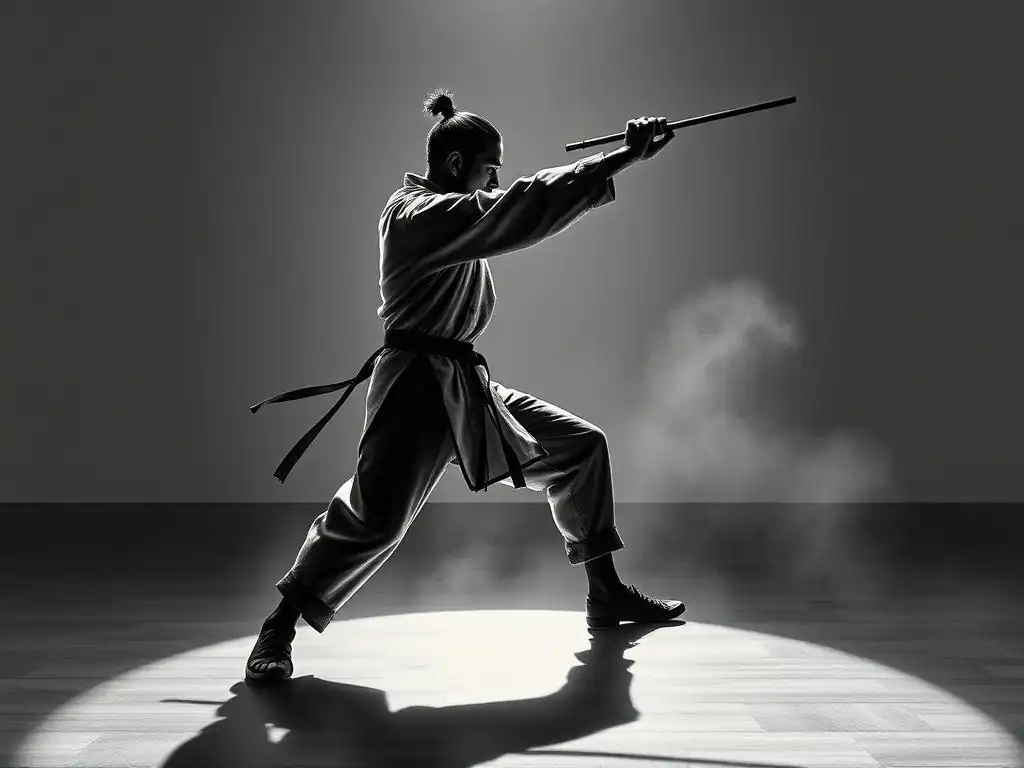
Stance Transitions in Bassai: Horse Stance, Cat Stance, and Forward Stance Emphasis
The Tang Soo Do Bassai Hyung (Pal Che) places significant emphasis on dynamic and stable stance transitions, particularly between Horse Stance (Kima Jaseh), Cat Stance (Hu Kul Jaseh), and Forward Stance (Chun Gul Jaseh). The form opens with a powerful sequence involving deep Horse Stances, grounding the practitioner and facilitating strong, rooted blocks and strikes. This stance provides a stable base for generating power from the hips.
As the form progresses, rapid transitions to Forward Stance are crucial for executing powerful linear attacks, such as punches and spear hand thrusts, requiring the practitioner to shift weight quickly and efficiently while maintaining balance and forward momentum. The depth and length of the Forward Stance are vital for maximizing power and range.
Equally important are the transitions involving Cat Stance. This stance is used for defensive maneuvers, allowing for quick retraction of the front leg to avoid attacks or setting up powerful side kicks. The ability to shift from a deep, stable stance like Forward Stance or Horse Stance into the lighter, more agile Cat Stance, and then back again, is a core skill developed through practicing the Tang Soo Do Bassai Hyung.
These transitions are not just about changing position; they are integral to the generation and redirection of power, evasion, and setting up subsequent techniques. Mastering the fluidity and stability of these stance changes is paramount to executing the form correctly and understanding its practical applications.
Hand Techniques: Knife Hand Strikes, Hammer Fists, and Spear Hand Thrusts in the Pal Che Hyung
The Bassai (Pal Che) form in Tang Soo Do features a diverse array of hand techniques, moving beyond the basic punches and blocks found in earlier forms. Prominent among these are powerful Knife Hand Strikes (Son Nal Chi Ki), often delivered to the neck or collarbone, requiring precise hand formation and strong hip rotation for maximum impact. The form includes both single and multiple Knife Hand techniques, sometimes executed in rapid succession or in combination with blocks.
Another signature technique is the Hammer Fist (Kwon Do), typically delivered downwards or sideways with significant force, often targeting areas like the temple or collarbone. The Hammer Fist in Bassai is a blunt, powerful weapon used for breaking through defenses or delivering decisive strikes.
Perhaps one of the most distinctive techniques in the Tang Soo Do Bassai Hyung is the Spear Hand Thrust (Pyo Son Kut Gi Hyung). This technique uses the fingertips as a penetrating weapon, targeting vital points like the eyes, throat, or solar plexus.
Its execution requires immense focus (Kihap) and precise alignment of the wrist and fingers to prevent injury and maximize penetration. The combination of these techniques – the sharp cut of the Knife Hand, the blunt force of the Hammer Fist, and the piercing power of the Spear Hand – within the complex sequences of the Pal Che form highlights its advanced nature and its focus on practical, disabling strikes aimed at overcoming a determined opponent.
Footwork and Kicking Techniques: Front Kicks, Side Kicks, and Pivoting in Bassai
Effective footwork is the foundation of powerful techniques and evasive movements in the Tang Soo Do Bassai Hyung. The form heavily relies on linear and angular movements, utilizing steps like the walking step (chun jin), retreating step (hoo jin), and side step (yop jin). Crucially, Bassai incorporates significant pivoting, particularly 180-degree and 360-degree turns, often combined with blocks or strikes.
These pivots are essential for changing direction rapidly, generating rotational power for strikes, and maintaining situational awareness in a dynamic confrontation. The ability to pivot smoothly and maintain balance while transitioning between stances is a hallmark of proficient Bassai execution.
While not as kick-heavy as some other Tang Soo Do forms, Bassai does include essential kicking techniques, primarily the Front Kick (Ap Cha Gi) and Side Kick (Yop Cha Gi). These kicks are integrated strategically within sequences, often following a block or used to create distance or strike a vulnerable area. For instance, a powerful Side Kick might be executed after evading an attack using a Cat Stance transition and pivot.
The form also utilizes sliding or shuffling steps (ahp po da ri) to quickly close or create distance before or after a technique. The combination of precise footwork, powerful pivoting, and strategically placed kicks makes the Tang Soo Do Bassai Hyung a comprehensive workout for lower body strength, balance, and agility.
Key Principles and Concepts in Tang Soo Do Bassai Training
Power Generation and Focus (Kihap) in Bassai Execution
Generating explosive power is a fundamental principle emphasized throughout the Tang Soo Do Bassai Hyung. This is achieved through the coordinated use of body mechanics, including hip rotation, weight transfer, and the snapping action of the limbs. Every movement in Bassai, whether a block, strike, or stance transition, should contribute to the potential for power.
For example, the winding motion of the hips before a punch or the dropping of body weight into a stance before a block are essential for maximizing force. The form teaches practitioners to channel energy efficiently from the core through the executing limb, ensuring techniques are not just physically performed but delivered with maximum potential impact.
Integral to power generation is the concept of Focus (Kihap), the shouting or exhalation of breath at the moment of impact or peak exertion. The Tang Soo Do Bassai Hyung utilizes Kihap strategically at key points within the form. Kihap serves multiple purposes: it helps to tense the body muscles at the point of impact for greater power and rigidity, it expels air from the lungs to prevent injury from a blow, and it can serve as a psychological deterrent to an opponent.
Proper Kihap requires coordinating the breath with the physical movement, ensuring that the shout coincides precisely with the moment of technique completion. Mastering Kihap in Bassai training is crucial for developing both physical power and mental fortitude.
Balance and Coordination: Achieving Fluidity in the Hyung
The intricate sequences and rapid transitions in the Tang Soo Do Bassai Hyung demand exceptional balance and coordination. Moving smoothly between deep stances, executing multiple techniques in quick succession, and performing dynamic pivots all require a high degree of body control. Poor balance will lead to unstable stances, reduced power, and telegraphing of movements. Bassai training actively develops proprioception – the body's awareness of its position in space – and strengthens the core and leg muscles essential for stability. Practicing the form slowly initially, focusing solely on balance during transitions, is often recommended before attempting full speed.
Achieving fluidity in the Tang Soo Do Bassai Hyung is the result of combining balance with precise coordination. Each movement must flow seamlessly into the next, without hesitation or unnecessary tension. This requires coordinating the upper and lower body, ensuring that hip rotation, footwork, and hand techniques work in unison.
For example, a block and counter-strike sequence should feel like one continuous action, not two separate ones. Developing this fluidity allows the practitioner to conserve energy, move more quickly, and execute techniques with greater efficiency and power. It is a key indicator of a practitioner's mastery of the form and their ability to apply its principles effectively.
Understanding the Rhythm and Timing of the Pal Che Form
The Tang Soo Do Bassai Hyung (Pal Che) is not meant to be executed at a constant speed. It possesses a distinct rhythm and timing that is crucial for conveying its practical applications and martial intent. Some sequences are performed slowly and deliberately, emphasizing tension and focused power, while others are executed with explosive speed and rapid-fire techniques. Understanding this variation in tempo is key to performing the form correctly. For instance, a slow, tension-filled movement might represent gathering power or setting a trap, while a burst of rapid techniques represents an overwhelming counter-attack.
Correct timing within the Bassai form involves not just the speed of individual movements but also the pauses and transitions between sequences. These moments of stillness or deliberate movement are as important as the fast techniques, allowing the practitioner to reset, gather focus, and prepare for the next phase of the form.
Learning the specific rhythm of the Tang Soo Do Bassai Hyung requires careful observation of experienced instructors and dedicated practice, focusing on the feeling and intent behind each section. Mastering the rhythm and timing ensures that the form is not just a physical routine but a dynamic representation of combat strategy.
Practical Applications of Bassai Techniques in Self-Defense
Adapting Bassai Movements for Real-World Scenarios
While the Tang Soo Do Bassai Hyung is a traditional form, its techniques are rooted in practical self-defense applications. Practitioners are taught to analyze the form (Bunkai) to understand how each movement could be used against an opponent. For example, the opening sequence, often involving a low block and rising block followed by strikes, can be applied against various attacks, such as a low kick followed by a high punch.
The multiple hand techniques in Bassai can be adapted for close-quarters defense against grabs or multiple attackers. A Knife Hand strike might target the neck or wrist, while a Hammer Fist could break a grip or strike a vulnerable area like the ribs.
Adapting Bassai movements for real-world scenarios involves understanding the underlying principles rather than just mimicking the form's exact movements. The quick transitions and changes in direction taught in Bassai are invaluable for creating space, evading attacks, and maneuvering in confined spaces. The emphasis on powerful strikes and penetrating techniques provides tools for quickly incapacitating a threat. Tang Soo Do instructors often use drills that take sequences directly from the Bassai form and apply them in sparring or self-defense simulations, helping students bridge the gap between traditional training and practical application.
Drills and Exercises to Enhance Bassai-Based Self-Defense Skills
Training drills are essential for internalizing the practical applications of the Tang Soo Do Bassai Hyung. One common drill involves practicing specific sequences from the form with a partner, who simulates an attack that the sequence is designed to defend against. For example, practicing the initial blocking sequence against realistic punches or kicks. Another effective drill is focusing on the rapid-fire hand techniques, practicing them on focus mitts or a heavy bag to develop speed, power, and accuracy against a moving or resisting target. This helps translate the controlled movements of the form into dynamic combat applications.
Furthermore, reaction drills that simulate sudden attacks help practitioners apply Bassai principles under pressure. This could involve a partner initiating an attack randomly, requiring the student to react using movements and strategies learned from the form, such as evading with a pivot followed by a counter-strike. Practicing stance transitions and footwork under stress, perhaps in a limited space, also enhances the ability to utilize Bassai's movement patterns effectively in a real-world confrontation. Consistent application-focused drills are key to unlocking the self-defense potential hidden within the Tang Soo Do Bassai Hyung.
Using Bassai Principles for Strategic Thinking in Combat
The concept of "Penetrating the Fortress" inherent in the name Bassai provides a framework for strategic thinking in combat. It encourages practitioners to look for weaknesses in an opponent's defense rather than simply engaging in a back-and-forth exchange of techniques. This might involve feinting to draw a reaction, exploiting an opening created by the opponent's own movement, or overwhelming a weaker side of their defense. The Tang Soo Do Bassai Hyung teaches dynamic movement and changes in angle, which are crucial for outmaneuvering an opponent and gaining a strategic advantage.
Moreover, Bassai emphasizes the importance of seizing the initiative after a defensive maneuver. The form rarely ends with just a block; a counter-attack follows almost immediately. This principle translates to a strategic mindset where defense is seamlessly integrated with offense, preventing the opponent from regrouping. By internalizing the sequences and transitions of the Tang Soo Do Bassai Hyung, practitioners develop an intuitive understanding of timing, distance, and strategic positioning, allowing them to apply the "Penetrating the Fortress" philosophy not just as a physical technique but as a comprehensive approach to self-defense.
Common Mistakes to Avoid When Learning Bassai (Pal Che)
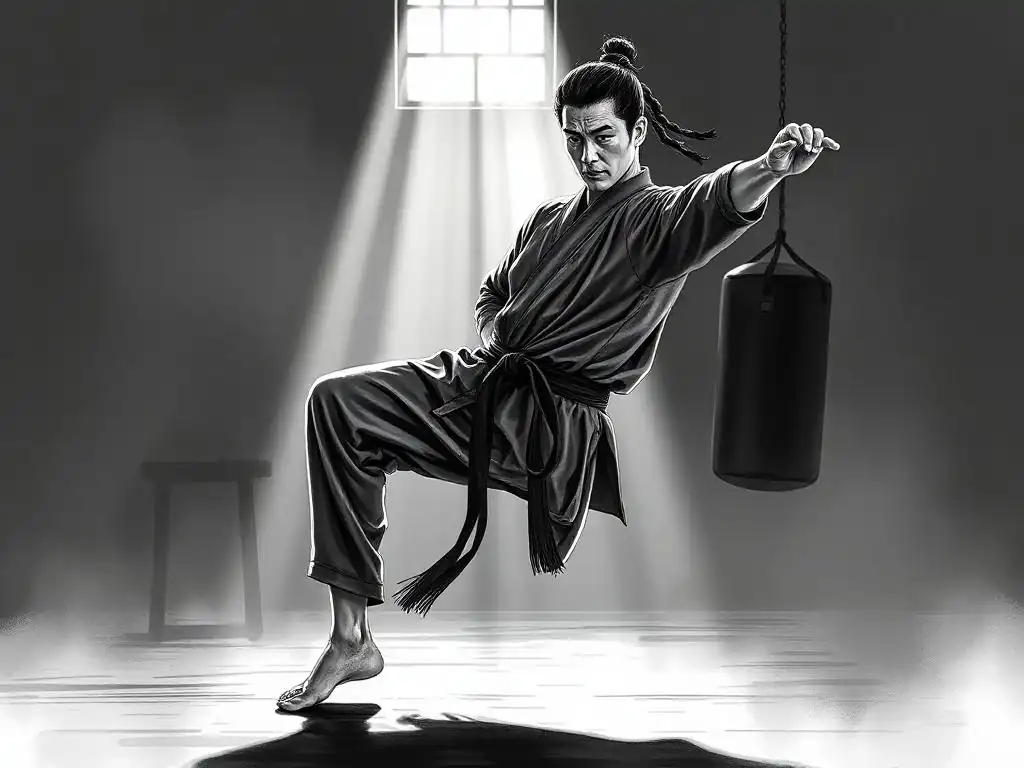
Errors in Stance and Posture: Impact on Technique Effectiveness
One of the most frequent mistakes when learning the Tang Soo Do Bassai Hyung (Pal Che) is incorrect stance and posture. Students may not achieve the correct depth in their Horse or Forward stances, leading to a weak base and reduced power generation. A shallow Forward Stance, for instance, compromises the linear power thrust. Similarly, failing to maintain proper balance and weight distribution in Cat Stance hinders quick transitions and evasive movements. Poor posture, such as a bent back or shoulders held too high, restricts movement, reduces stability, and makes techniques less effective.
These errors significantly impact the effectiveness of techniques. A punch thrown from a weak stance lacks hip power, reducing its force. A block performed with poor posture is less stable and less able to absorb or redirect an attack. Furthermore, incorrect stances and posture can lead to increased fatigue and potential injury over time. Dedicated practice focusing solely on correct stance formation and smooth, stable transitions, often in front of a mirror or with instructor feedback, is crucial for building the foundational stability required for mastering the Tang Soo Do Bassai Hyung.
Incorrect Hand and Foot Placement: Reducing Power and Accuracy
Precision in hand and foot placement is paramount in the Tang Soo Do Bassai Hyung, and errors here can severely reduce power and accuracy. For hand techniques like the Knife Hand or Spear Hand, incorrect angle, tension, or target alignment can render the strike ineffective or even cause self-injury. A Spear Hand thrust that is not perfectly straight and focused will lack penetrating power.
For foot techniques, failing to pivot correctly or stepping to the wrong position disrupts the flow of the form and compromises the base for subsequent movements. Forgetting to chamber a kick properly before execution reduces its speed and power.
Incorrect placement also relates to the timing and coordination of movements. Forgetting to rotate the hips fully during a strike, or failing to coordinate the hand technique with the final step in a stance transition, significantly diminishes the technique's power. Accuracy is lost when the practitioner does not focus on the intended target area, even in practice. Diligent attention to detail, breaking down complex sequences into smaller parts, and practicing slowly to ensure every hand and foot position is exact before increasing speed are vital steps in avoiding these common errors in the Tang Soo Do Bassai Hyung.
Rushing the Form: The Importance of Precision and Control
A common pitfall for students learning the Tang Soo Do Bassai Hyung is attempting to perform it at full speed before mastering the precision and control required. Rushing through the form leads to sloppy techniques, incorrect stances, and a loss of the intended rhythm and timing. Speed without control is ineffective in martial arts. The intricate nature of Bassai demands that each movement is executed with deliberate intent, proper body mechanics, and precise focus. Trying to go too fast too soon results in movements that lack power, accuracy, and fluidity.
Emphasizing speed over precision also hinders the practitioner's understanding of the form's applications. The subtle shifts in weight, the brief pauses, and the changes in tension are all meaningful elements of the Tang Soo Do Bassai Hyung that are lost when the form is rushed. Instructors often stress the importance of practicing Bassai slowly, focusing on breath control, muscle tension, and the exact path of each limb.
Only once the form can be performed slowly with perfect precision should the practitioner gradually increase speed, ensuring that control is maintained throughout. Precision and control are the true indicators of mastery in the Pal Che form.
The Legacy of Bassai in Tang Soo Do History
Influences on Bassai from Other Martial Arts Styles: Shotokan and Shorin-ryu Karate Influence
The Tang Soo Do Bassai Hyung (Pal Che) carries clear influences from its origins in Okinawan karate, particularly from styles like Shorin-ryu and Shotokan. Grandmaster Hwang Kee, the founder of Tang Soo Do Moo Duk Kwan, documented his extensive research into various martial arts, including Okinawan and Japanese systems. His understanding of forms like Bassai Dai and Bassai Sho from these styles directly informed the creation and adaptation of the Pal Che hyung within Tang Soo Do. The fundamental structure, key sequences, and many individual techniques in Pal Che bear a strong resemblance to their Okinawan and Japanese counterparts.
For instance, the powerful opening sequence involving low and rising blocks, the specific patterns of movement involving 180-degree turns and subsequent techniques, and the inclusion of techniques like Knife Hand strikes and Spear Hand thrusts are common across Bassai variations in different styles. The influence is not merely cosmetic; the underlying principles of power generation, hip rotation, and dynamic tension found in the Tang Soo Do Bassai Hyung reflect the methods present in the karate styles from which it originated.
While adapted to fit the unique character and curriculum of Tang Soo Do, the historical lineage and cross-pollination of techniques from Shotokan and Shorin-ryu are undeniable and form an important part of the Bassai legacy.
The Role of Bassai in Tang Soo Do Belt Rank Progression
The Tang Soo Do Bassai Hyung plays a significant role in the belt rank progression within many Tang Soo Do Kwans. It is typically one of the first advanced forms introduced after a student has mastered the foundational Pyong Ahn forms and perhaps Chul Pa. As such, learning and demonstrating proficiency in Bassai marks a key transition point in a practitioner's journey, often required for promotion to higher gup ranks (such as 1st or 2nd gup) and is a mandatory requirement for testing for 1st Dan (black belt).
Its complexity serves as a benchmark for evaluating a student's technical skill, physical conditioning, and mental discipline at an intermediate to advanced level.
Mastering the Tang Soo Do Bassai Hyung demonstrates the student's ability to execute more complex sequences, generate greater power, and maintain focus for the duration of a longer and more demanding form. It shows they have moved beyond basic mechanics to a deeper understanding of body dynamics and martial strategy.
For black belt testing, the execution of Bassai is often scrutinized for precision, power, balance, rhythm, and spirit. It is seen as a form that encapsulates many of the core principles of Tang Soo Do learned throughout the gup ranks, making its mastery essential for achieving the coveted black belt rank.
Preserving the Traditional Values of Bassai for Future Generations
Preserving the traditional values and integrity of the Tang Soo Do Bassai Hyung is crucial for maintaining the authenticity and effectiveness of the style. This involves more than just memorizing the sequence of movements; it requires understanding the history, the meaning behind the techniques, and the underlying principles of power, balance, and timing. Traditional Tang Soo Do training emphasizes the martial spirit, respect, and discipline inherent in practicing these forms. Passing on Bassai correctly ensures that future generations of practitioners learn not just a physical routine but a living piece of martial history and a comprehensive system of self-defense.
Instructors play a vital role in this preservation, teaching the Tang Soo Do Bassai Hyung with attention to detail, explaining its origins and applications, and instilling the proper mindset in their students. Students, in turn, have a responsibility to practice diligently, seeking to understand the 'why' behind the movements, not just the 'how'.
By maintaining the original structure, techniques, and emphasis on core principles, the Tang Soo Do community ensures that the Bassai (Pal Che) form continues to be a powerful tool for developing skilled, disciplined, and knowledgeable martial artists, connecting them to the rich legacy of Tang Soo Do.
Mastering Tang Soo Do Bassai: A Journey of Skill and Discipline
Tips for Effective Practice and Improvement in the Pal Che Form
Mastering the Tang Soo Do Bassai Hyung (Pal Che) is a challenging but rewarding journey that requires dedication and smart practice. Firstly, focus on understanding the Bunkai (application) of each sequence. Knowing why you are doing a movement enhances your execution and understanding. Secondly, practice slowly and deliberately, focusing on perfect technique, stance depth, balance, and breath control before attempting to increase speed. Use a mirror or record yourself to identify and correct errors in posture and movement path. Thirdly, break the form down into smaller sections. Master each section before linking them together, ensuring smooth transitions.
Consistency is key. Regular practice sessions, even short ones focused on specific challenging sequences, are more effective than infrequent long sessions. Visualize yourself performing the Tang Soo Do Bassai Hyung correctly, focusing on power, fluidity, and intent. Pay attention to the rhythm and timing – some parts are fast, others slow and deliberate. Practice with power (Kihap) and focus, even when alone. Finally, listen to your body and avoid training through pain that might indicate improper technique or potential injury. Smart, consistent, and focused practice is essential for significant improvement in the Pal Che form.
Seeking Guidance from Experienced Instructors: The Value of Expert Feedback
The guidance of an experienced Tang Soo Do instructor is invaluable when learning and refining the Tang Soo Do Bassai Hyung. Instructors possess a deep understanding of the form's nuances, including subtle details in technique, timing, and application that are difficult to grasp from videos or diagrams alone. They can identify errors in stance, posture, hip rotation, and hand/foot placement that might otherwise go unnoticed.
Personalized feedback is crucial for correcting mistakes before they become ingrained habits. An instructor can also explain the historical context and practical self-defense applications of the form, enriching the student's understanding beyond mere physical execution.
Training under an experienced instructor also provides access to their years of accumulated knowledge and insights into the principles of Tang Soo Do. They can offer tips on generating power, improving balance, and developing the proper martial spirit required for Bassai. Observing an instructor perform the Tang Soo Do Bassai Hyung provides a living example of correct execution and embodies the desired level of skill and focus. Regular feedback sessions, asking questions, and actively seeking critique are essential steps for any student serious about mastering the Pal Che form and progressing in their Tang Soo Do journey.
Integrating Bassai into a Comprehensive Tang Soo Do Training Regimen
Mastering the Tang Soo Do Bassai Hyung should be viewed not as an isolated achievement but as an integral part of a comprehensive Tang Soo Do training regimen. The skills and principles developed through practicing Bassai – such as dynamic stance transitions, powerful hand techniques, precise footwork, advanced balance, and strategic thinking – should be applied and reinforced in other aspects of training. This includes basic techniques (kibon dong jak), one-step sparring (il soo sik dae ryun), free sparring (ja yu dae ryun), and self-defense drills (ho sin sool).
For example, the hip rotation and weight transfer used for a powerful punch in Bassai should be the same mechanics used in basic technique drills and sparring. The quick evasive movements and counter-attacks from Bassai can be practiced in self-defense scenarios. Integrating the lessons learned from the Tang Soo Do Bassai Hyung across all training areas ensures that the form's principles become second nature and are applicable in dynamic situations. This holistic approach to training maximizes the benefits of practicing Bassai and solidifies its place as a cornerstone of advanced Tang Soo Do proficiency.
Frequently Asked Questions
What is Bassai Hyung (Pal Che) in Tang Soo Do?
Bassai Hyung (Pal Che), also known as Penetrating the Fortress, is an advanced Tang Soo Do form (hyung) that focuses on power generation and strategic defense. It emphasizes using one's strength to overcome an opponent's defense.
What are the key principles emphasized in Bassai Hyung?
The key principles revolve around linear attacks, strong stances for stability, and the use of concentrated power to break through an opponent's guard or structure. It also teaches efficient use of body mechanics.
Where does Bassai Hyung originate from, and what is its historical significance?
Bassai Hyung's roots can be traced back to Okinawan Karate, and it was later integrated into Tang Soo Do. Its historical significance lies in its demonstration of practical self-defense techniques against multiple opponents or a fortified position.
What are some specific techniques practiced within the Bassai Hyung form?
The form includes techniques such as hammer fist strikes, knife hand blocks, and powerful front stances designed to deliver maximum impact. These techniques are all geared toward achieving a decisive advantage in combat.
How does Bassai Hyung contribute to a practitioner's overall martial arts development?
Practicing Bassai Hyung helps develop strength, balance, and coordination, while also enhancing a practitioner's understanding of offensive and defensive strategies. It promotes a deeper understanding of Tang Soo Do's core principles.
Final Reflection: The Enduring Power of Penetration
The journey through Bassai (Pal Che) in Tang Soo Do, as explored in this article, isn't just about mastering a form; it's about cultivating a mindset. This mindset of penetrating obstacles, both physical and mental, remains profoundly relevant in today's complex world. The techniques and principles embedded within this advanced hyung offer a framework for confronting challenges with unwavering focus and strategic precision, qualities essential for navigating the uncertainties of modern life.
The influence of Bassai extends beyond the dojang, shaping the character and resilience of practitioners. The discipline and mental fortitude cultivated through rigorous training translate into a greater capacity to overcome adversity in all aspects of life. The hyung teaches us to see opportunities where others see barriers, to find pathways through seemingly impenetrable fortresses. The impediment to action advances action. What stands in the way becomes the way.
- Marcus Aurelius. This philosophy, mirrored in Bassai, reminds us that obstacles are not roadblocks, but stepping stones to growth.
Now, as you close this article, consider how the principles of Bassai can be applied to your own life. What "fortresses" do you face? What obstacles stand between you and your goals? Embrace the spirit of penetration, cultivate unwavering focus, and remember that within you lies the power to overcome any challenge. Let the lessons of Bassai guide you towards a future of strength, resilience, and unwavering determination.
Unleash Your Inner Fortress!
Thank you for exploring the powerful techniques of Bassai (Pal Che) with us. Now that you've delved into this advanced Tang Soo Do hyung, it's time to put your knowledge into action and continue your martial arts journey.
Here's how to deepen your understanding and mastery:
- Practice, practice, practice! Dedicate specific time each week to perfecting your Bassai (Pal Che) form. Focus on precision and power with each movement.
- Explore the applications: Research and experiment with self-defense techniques derived from the Bassai (Pal Che) form. This will reveal the form's practical applications and enhance your understanding.
- Share your progress: Record yourself performing Bassai (Pal Che) and share it with the Martial Arts Mastery community for feedback and inspiration!
What subtle nuance in Bassai (Pal Che) are you most focused on perfecting right now?