
"White Crane Spreads Wings": Deconstructing This Graceful Hung Gar Technique

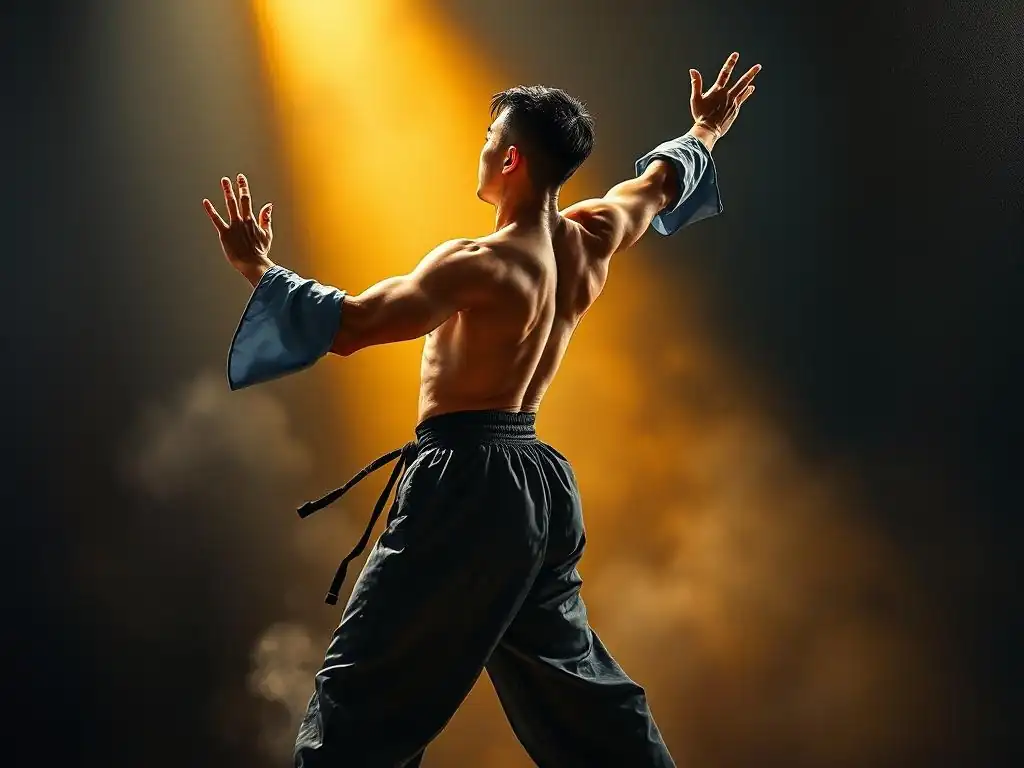
Welcome to Martial Arts Mastery, your gateway to the world's most profound fighting arts!
Discover the secrets woven into centuries of tradition and rigorous training. Are you ready to unlock the power and grace of the Hung Gar White Crane Technique? This article delves deep into its origins, principles, and applications, offering a comprehensive exploration of this iconic style. But that's just the beginning. Prepare to embark on a journey through the rich tapestry of martial arts, where discipline meets artistry and history shapes every movement. What other hidden strengths await your discovery?
- "Gung Gee Fook Fu Kuen": Deconstructing This Foundational Hung Gar Form
- Introduction to Gung Gee Fook Fu Kuen
- The Origins and History of Gung Gee Fook Fu Kuen
- Breaking Down the Gung Gee Fook Fu Kuen Form
- Applications of Gung Gee Fook Fu Kuen in Combat
- Training Methods for Mastering Gung Gee Fook Fu Kuen
- The Philosophical Underpinnings of Gung Gee Fook Fu Kuen
- Advanced Concepts in Gung Gee Fook Fu Kuen
- Gung Gee Fook Fu Kuen: A Gateway to Advanced Hung Gar Training
- Conclusion: The Enduring Legacy of Gung Gee Fook Fu Kuen
-
Frequently Asked Questions
- What is the "White Crane Spreads Wings" technique in Hung Gar Kung Fu?
- How does the "White Crane Spreads Wings" technique relate to the broader Hung Gar style?
- What are the key principles behind the "White Crane Spreads Wings" technique?
- Does "White Crane Spreads Wings" have variations within different Hung Gar lineages?
- Where can I learn the "White Crane Spreads Wings" technique and other Hung Gar skills?
- Final Reflection: Embracing the Balance of Power and Grace
- Embrace the Crane: Begin Your Transformation Today!
"Gung Gee Fook Fu Kuen": Deconstructing This Foundational Hung Gar Form
Introduction to Gung Gee Fook Fu Kuen
The Significance of Gung Gee Fook Fu Kuen in Hung Gar Kung Fu
Gung Gee Fook Fu Kuen, often translated as "Subduing the Tiger in I-Character Form" or "Method to Subdue the Tiger," holds a paramount position within the Hung Gar Kung Fu system. It is universally recognized as one of the foundational forms, if not the foundational form, that every serious Hung Gar practitioner must master.
Its importance stems from its comprehensive nature, incorporating fundamental stances, hand techniques, footwork, and body mechanics that serve as the building blocks for all subsequent training. Mastery of Gung Gee Fook Fu Kuen instills the core strength, stability, and basic application principles necessary to progress in the system.
This form is lengthy and physically demanding, designed to build robust lower body strength through deep, stable stances and powerful upper body techniques. It is said to contain approximately 108 distinct movements, a number often considered symbolic in martial arts traditions.
Practicing Gung Gee Fook Fu Kuen diligently not only develops physical attributes like endurance and power but also cultivates mental fortitude and focus. It is the primary vehicle through which the beginner learns the characteristic power generation and structure of Hung Gar, setting the stage for more complex forms like Tit Sin Kuen (Iron Wire Form) or Fu Hok Seung Ying Kuen (Tiger Crane Double Pattern Form).
Understanding the Core Principles Embodied in the Form
The Gung Gee Fook Fu Kuen form is a practical manual for understanding Hung Gar's core principles. Foremost among these is the emphasis on strong, rooted stances, particularly the "Sei Ping Ma" (Four Level Stance), which provides an unshakeable base. The form teaches practitioners to sink their weight, maintain a low center of gravity, and generate power from the ground up, a hallmark of Southern Chinese martial arts. This principle of rooting is not just physical but also mental, fostering stability under pressure.
Furthermore, Gung Gee Fook Fu Kuen integrates the concept of "Hard" and "Soft" power, though it heavily leans towards the "Hard" aspect in its initial presentation. Techniques are often delivered with explosive force (Fa Jing), but the form also contains subtle transitions and yielding movements that hint at the integration of softer principles. It emphasizes direct, efficient movements designed for practical self-defense, focusing on powerful blocks, direct punches, and close-range techniques. The form also embodies the principle of simultaneous block and strike, teaching practitioners to defend and counter in a single motion.
The Origins and History of Gung Gee Fook Fu Kuen
Tracing the Lineage and Development of the Form
The precise historical origins of Gung Gee Fook Fu Kuen are somewhat shrouded in the mists of time, typical of many traditional martial arts forms. It is widely believed to have originated from the Southern Shaolin Temple and was passed down through various masters. One common lineage traces the form through figures associated with the temple's destruction and the subsequent anti-Qing resistance. Stories attribute its refinement or codification to figures like Gee Sin Sim See (五枚師太), one of the legendary Five Elders of Shaolin, or Fong Sai-Yuk (方世玉), a famous rebel figure.
Another significant thread in the lineage connects the form to Luk Ah Choi (陸阿采), who is said to have learned it from Gee Sin Sim See or another Shaolin elder and subsequently taught it to Wong Kei-Ying (黃麒英). This transmission from Luk Ah Choi to Wong Kei-Ying is a crucial link, as Wong Kei-Ying was the father of the legendary Wong Fei-Hung, the figure most prominently associated with popularizing Hung Gar and Gung Gee Fook Fu Kuen in modern times.
While exact dates and specific contributions of each historical figure can vary depending on the lineage, the consensus points to a deep root in Southern Shaolin fighting methods and a deliberate effort to preserve and transmit these techniques through generations.
The Role of Wong Fei-Hung in Popularizing Gung Gee Fook Fu Kuen
Wong Fei-Hung (1847-1924) is arguably the most famous figure in Hung Gar history, and his association with Gung Gee Fook Fu Kuen is central to its widespread recognition. As a physician, martial artist, and folk hero, Wong Fei-Hung significantly refined and systematized the Hung Gar curriculum he inherited from his father, Wong Kei-Ying. He is credited with synthesizing various elements and emphasizing the core forms, with Gung Gee Fook Fu Kuen being paramount among them.
Through his martial arts schools (Po Chi Lam, 寶芝林) and his numerous students, Wong Fei-Hung taught Gung Gee Fook Fu Kuen as the essential starting point for all practitioners. His fame, amplified by countless movies and stories in the 20th century, cemented the form's status as the signature introductory form of Hung Gar.
While he also taught and refined other key forms like Fu Hok Seung Ying Kuen and Tit Sin Kuen, it was the accessible yet challenging nature of Gung Gee Fook Fu Kuen that made it the entry point for generations. His influence ensured that the principles and techniques contained within this foundational form were preserved and disseminated widely.
Breaking Down the Gung Gee Fook Fu Kuen Form
Stance Work: The Importance of the "Sei Ping Ma" (Four Level Stance)
The "Sei Ping Ma," or Four Level Stance, is the cornerstone of Gung Gee Fook Fu Kuen and indeed, of all Hung Gar. It is a deep, wide horse stance where the thighs are ideally parallel to the ground, the back is straight, and the feet are parallel or slightly angled outwards. The name "Four Level" refers to the stability it provides on all four sides and the potential for generating power from any direction. This stance is not merely a static posture but a dynamic base from which all movements originate and return.
Mastering the Sei Ping Ma in Gung Gee Fook Kuen is critical for developing the characteristic power and stability of the style. Practitioners spend significant time holding this stance, often for minutes at a time, to build leg strength and endurance.
The form incorporates transitions between Sei Ping Ma and other essential Hung Gar stances like the "Ding Ji Ma" (Character T Stance) and "Gung Ji Ma" (Bow and Arrow Stance), but the Sei Ping Ma remains the central pillar. It teaches the practitioner to sink their weight, root firmly into the ground, and maintain balance while executing powerful hand techniques.
Hand Techniques: Punches, Blocks, and Palm Strikes
Gung Gee Fook Fu Kuen features a diverse array of hand techniques, primarily focusing on direct, powerful strikes and solid blocks. Key punches include the straight punch (Chung Cheui), the vertical fist punch (Pek Cheui), and the uppercut (Siu Lam Cheui). These are delivered with the characteristic "snapping" power generated from the waist and rooted stance. The form also heavily utilizes palm strikes (Jeung), such as the pushing palm (Tui Jeung) and the cutting palm (Chop Jeung), which are effective for close-range fighting and breaking an opponent's structure.
Blocking techniques in Gung Gee Fook Fu Kuen are equally robust and direct. They include powerful forearm blocks (Tit Kiu, Iron Bridge), wrist blocks, and palm blocks, often used to deflect or absorb incoming force while simultaneously setting up a counter-attack. A core principle demonstrated throughout the form is the simultaneous block and strike (Lin Wan Cheui/Kiu Sao), where a defensive movement is immediately followed by or integrated with an offensive one. The form systematically introduces these fundamental hand techniques, teaching the practitioner not just how to perform them, but when and why within a combat context.
Footwork and Body Movement: Maintaining Balance and Generating Power
While stances provide the stable base, the footwork and body movement within Gung Gee Fook Fu Kuen are essential for transitioning between positions, closing or creating distance, and generating dynamic power. The footwork is generally straightforward and linear, emphasizing forward and backward movements ("Gung Bou" and "Tui Bou") and side-to-side shifts. The transitions between stances, such as moving from Sei Ping Ma to Gung Ji Ma, are executed smoothly while maintaining a low center of gravity and rootedness.
Body movement is intrinsically linked to power generation. The form teaches the practitioner to use the entire body as a unit. Power is initiated from the legs, channeled through the waist and torso, and delivered through the arms and hands. This coordinated movement, often described as "whole body power," is evident in techniques like the powerful sinking punches and the explosive palm strikes. Maintaining correct posture and alignment throughout these movements is crucial for both stability and maximizing force, ensuring that balance is never compromised, even during powerful strikes.
Applications of Gung Gee Fook Fu Kuen in Combat
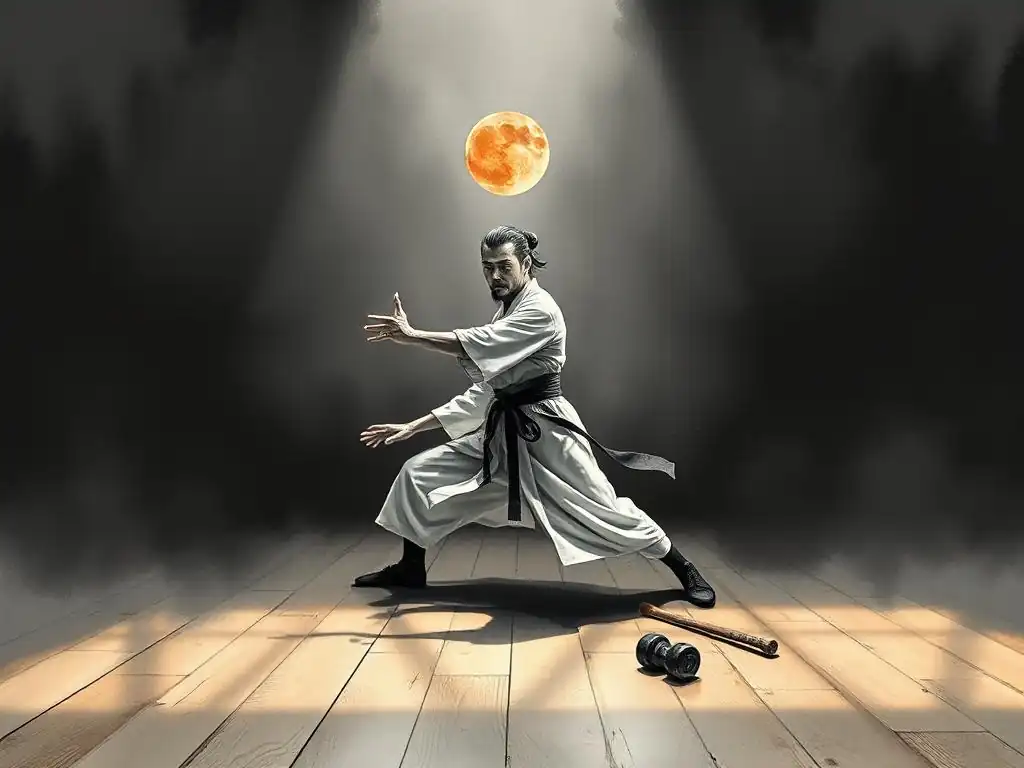
Self-Defense Applications: Responding to Common Attacks
Gung Gee Fook Fu Kuen is rich in practical self-defense applications, designed to address common street attacks. The powerful blocks and rooted stances provide excellent defense against grabs, pushes, and incoming strikes. For instance, a strong forearm block (Tit Kiu) can effectively deflect a punch or break a grip, immediately followed by a counter strike from the same rooted position. The close-range palm strikes and short-range punches are highly effective in confined spaces or when an opponent is close.
Consider an example: If an attacker attempts a lunging punch, a practitioner of Gung Gee Fook Fu Kuen might respond with a simultaneous inward block using the forearm while stepping slightly offline into a Gung Ji Ma, immediately following up with a straight punch or palm strike to the attacker's center. The form's emphasis on a low, stable base makes it difficult for an opponent to unbalance the practitioner, providing a significant advantage in close-quarters engagements. The direct nature of the techniques makes them relatively easy to apply once the fundamental body mechanics and power generation are understood.
Utilizing the Form's Techniques in Sparring
While Gung Gee Fook Fu Kuen is a solo form, its techniques are directly applicable to sparring, particularly in semi-contact or traditional sparring environments. The stances and footwork teach practitioners how to maintain a solid base while moving and exchanging techniques. The powerful hand techniques can be used for both offensive and defensive purposes. Sparring allows practitioners to test the timing, distance, and application of the techniques learned in the form against a live, unpredictable opponent.
For example, the transitions between stances practiced in the form translate directly to closing distance for an attack or shifting weight for a powerful block in sparring. The simultaneous block and strike concept is a core tactic used to maximize efficiency in exchanges. While full-contact sparring might require adaptations, the fundamental principles of stability, power generation, and directness derived from Gung Gee Fook Fu Kuen remain invaluable. Practitioners learn to recognize opportunities to apply the form's techniques, such as using a strong block to create an opening for a counter punch or palm strike.
Combining Gung Gee Fook Fu Kuen with Other Hung Gar Forms
Mastery of Gung Gee Fook Fu Kuen provides a crucial foundation for learning and integrating techniques from other Hung Gar forms. The stances, basic hand techniques, and power generation methods learned here are the prerequisites for understanding more complex movements found in forms like Fu Hok Seung Ying Kuen (Tiger Crane) or Tit Sin Kuen (Iron Wire). Techniques from Gung Gee Fook Fu Kuen are often combined with elements from these other forms in practical applications.
For instance, the powerful straight punches from Gung Gee Fook Fu Kuen can be combined with the whipping techniques of the Tiger or the fluid, evasive movements of the Crane found in Fu Hok Seung Ying Kuen. The rooted stances of Gung Gee Fook Fu Kuen provide the necessary base to execute the internal power generation techniques emphasized in Tit Sin Kuen.
Think of Gung Gee Fook Fu Kuen as the alphabet and basic grammar; the other forms teach you how to write more complex sentences and paragraphs. A skilled Hung Gar practitioner can fluidly transition between the directness of Gung Gee Fook Fu Kuen techniques and the more nuanced or specialized applications found in advanced forms.
Training Methods for Mastering Gung Gee Fook Fu Kuen
Foundational Drills: Stance Training and Basic Techniques
Mastering Gung Gee Fook Fu Kuen begins with dedicated foundational drills. Stance training is paramount, with practitioners spending significant time in the Sei Ping Ma. This isn't just holding the stance; it involves actively sinking the weight, ensuring correct alignment (knees over feet, straight back), and building endurance. Beginners might start by holding the stance for 30 seconds, gradually increasing to several minutes. A common goal for intermediate practitioners is to hold a stable Sei Ping Ma for at least 3-5 minutes.
In addition to stance holding, foundational drills include repetitive practice of the core hand techniques taught in the form. This involves drilling punches, blocks, and palm strikes against the air, heavy bags, or traditional Hung Gar training tools like the wall bag (Dau Chi Keung) or wooden dummy (Mook Yan Jong), though the dummy is more associated with later training. These drills focus on developing correct structure, power generation from the stance, and coordinating breath with movement. A typical training session might involve 100-200 repetitions of key punches and blocks from Sei Ping Ma.
[ ] Practice Sei Ping Ma hold (target duration: 3-5 minutes)
[ ] Drill straight punches from Sei Ping Ma (100 repetitions per side)
[ ] Drill inward/outward forearm blocks (50 repetitions per side)
[ ] Practice transitions between Sei Ping Ma and Gung Ji Ma (50 repetitions)
[ ] Drill pushing palm strikes from Gung Ji Ma (50 repetitions per side)
Partner Training: Applying Techniques in a Dynamic Setting
While solo form practice builds structure and power, partner training is essential for learning how to apply Gung Gee Fook Fu Kuen techniques against a moving, resisting opponent. Drills might involve one partner executing a simple attack (e.g., a straight punch), and the other applying a specific block and counter-attack from the form. This allows practitioners to practice timing, distance, and reaction.
Partner drills can escalate in complexity, incorporating multiple attacks or combinations. For instance, one drill might focus on defending against a grab using a block and striking technique from the form, while another might involve practicing transitions and counter-attacks against various angles of attack.
Many traditional Hung Gar schools incorporate "sticky hands" (Chi Sau) or similar sensitivity drills, though less emphasized than in some other Southern styles, to develop the tactile reflexes needed to apply techniques from Gung Gee Fook Fu Kuen in close range. Partner training provides invaluable feedback on the effectiveness and practicality of the techniques learned in the solo form.
Correcting Common Mistakes: Alignment, Power Generation, and Flow
Correcting common mistakes is a continuous process in mastering Gung Gee Fook Fu Kuen. Alignment is a frequent issue; practitioners may not sink low enough in stances, round their backs, or fail to align their joints correctly, which compromises stability and power generation. Instructors often use physical adjustments or visual cues, like ensuring the knee doesn't extend past the toes in Gung Ji Ma, to correct alignment.
Another common challenge is achieving proper power generation (Fa Jing). This involves learning to coordinate the entire body, snapping the waist, and transferring energy from the ground through the limbs. Beginners often rely solely on arm strength. Training focuses on feeling the connection to the ground and the whip-like action of the body.
Finally, achieving smooth flow and transitions between techniques is vital. The form should not look like a series of disconnected movements but a continuous stream. Practitioners might use slower, deliberate practice to focus on the transitions before increasing speed, aiming for a seamless flow that links defense and offense. Consistent feedback from an instructor is crucial for identifying and rectifying these common errors.
The Philosophical Underpinnings of Gung Gee Fook Fu Kuen
The Concept of "Iron Wire" (Tit Sin) within the Form
While Tit Sin Kuen is the dedicated form for internal development and the "Iron Wire" concept, Gung Gee Fook Fu Kuen lays the groundwork for understanding this principle. "Iron Wire" refers to developing internal strength, rootedness, and a sense of being solid and immovable, like a piece of iron wire. It's not just about muscular strength but cultivating a connected, resilient structure that can absorb force and generate powerful, integrated movements.
In Gung Gee Fook Fu Kuen, this concept is primarily developed through the rigorous stance training and the emphasis on maintaining a stable, rooted base throughout the movements. The deep stances and powerful, often isometric-like tension held in certain postures build the structural integrity and internal connection necessary for Iron Wire training.
While Gung Gee Fook Fu Kuen focuses more on the external application of power, the physical demands and structural requirements inherently build the foundation for the internal cultivation emphasized in Tit Sin Kuen. Practitioners often describe feeling a sense of being "heavy" or "rooted" to the ground after extended Gung Gee Fook Fu Kuen practice, indicative of developing this foundational "Iron Wire" quality.
Cultivating Discipline and Perseverance Through Practice
The sheer length and physical demanding nature of Gung Gee Fook Fu Kuen make it an excellent tool for cultivating discipline and perseverance. Learning the form requires memorization of approximately 108 movements and countless hours of repetitive practice to refine techniques and build the necessary physical conditioning. Holding deep stances for extended periods pushes physical and mental limits, teaching the practitioner to endure discomfort and maintain focus.
Regular, dedicated practice of Gung Gee Fook Fu Kuen instills a strong work ethic and mental resilience. It teaches the value of consistent effort and the rewards of pushing past perceived limitations. The process of breaking down the form, drilling individual sections, and then stitching it all together into a cohesive whole requires patience and determination. Students who successfully master Gung Gee Fook Fu Kuen often report a significant increase in their ability to focus and persevere in other areas of their lives, demonstrating the broader life skills cultivated through this demanding practice.
Advanced Concepts in Gung Gee Fook Fu Kuen
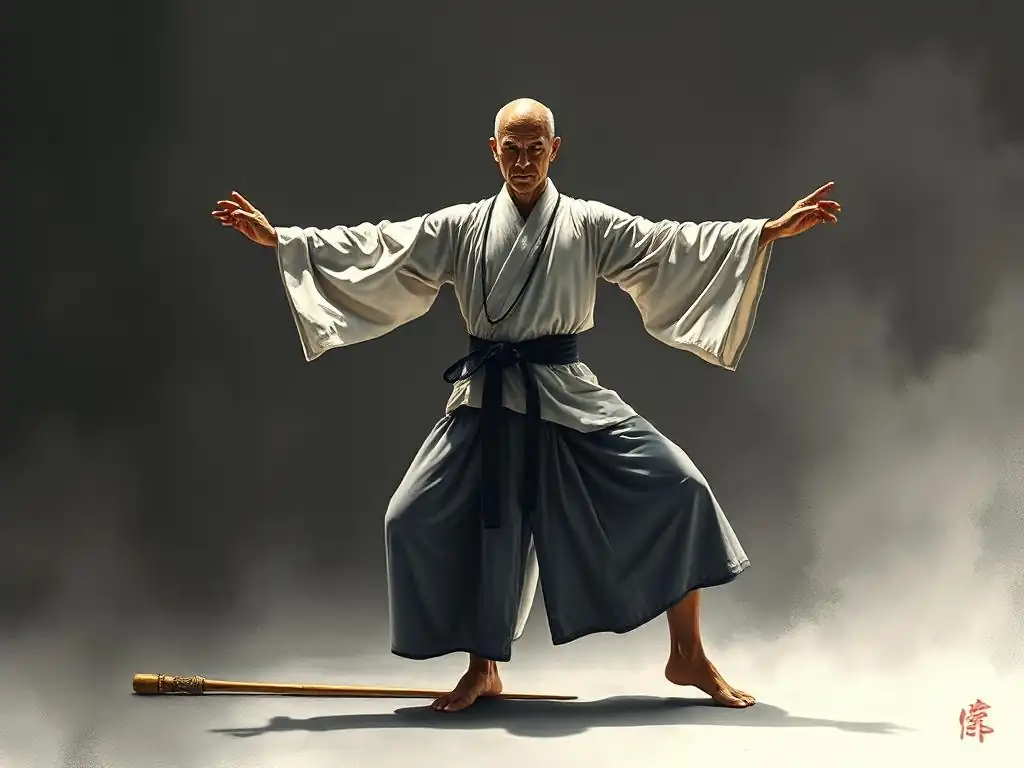
Fa Jing (Explosive Power) and Internal Development
While Gung Gee Fook Fu Kuen is often seen as a form focused on external power, it is also the initial vehicle for developing Fa Jing, or explosive power, which has both external and internal components. Fa Jing in Hung Gar is generated from the ground, channeled through the rooted stance and coordinated body movement, and released in a sudden burst at the point of impact. It requires the integration of physical structure, breath, and intent.
Developing Fa Jing in Gung Gee Fook Fu Kuen involves moving beyond simply performing the techniques to executing them with integrated body power. This requires understanding how to relax and tense the body at the precise moments to maximize force. Advanced practitioners focus on coordinating their breath with the striking action, using a sharp exhalation to accompany the release of power.
This deeper level of practice begins to touch upon internal development, linking physical movement with internal energy flow, even before formally training in forms like Tit Sin Kuen which explicitly focus on this aspect. The goal is for techniques to feel less like isolated movements and more like waves of power originating from the core.
Variations and Interpretations of the Form
Like many traditional martial arts forms passed down through different lineages, Gung Gee Fook Fu Kuen has several variations and interpretations. While the core structure, key stances, and fundamental techniques remain largely consistent across most Hung Gar schools, there can be differences in the precise sequence of movements, the emphasis on certain techniques, or the specific nuances of execution.
These variations often stem from different historical transmissions or the personal interpretations and refinements of influential masters within various lineages. For example, one lineage might have a slightly different opening sequence, or another might emphasize a particular type of palm strike more heavily. While minor variations exist, the fundamental principles of strong stances, powerful, direct techniques, and rootedness are universal across recognized Gung Gee Fook Fu Kuen versions. Studying these variations can offer deeper insights into the form's underlying principles and historical evolution, but the core lesson remains the same: build a solid foundation.
Gung Gee Fook Fu Kuen: A Gateway to Advanced Hung Gar Training
Building a Solid Foundation for Learning More Complex Forms
Gung Gee Fook Fu Kuen serves as the indispensable gateway to the more advanced and specialized forms within the Hung Gar system. Its comprehensive nature ensures that practitioners develop the fundamental physical attributes and technical understanding required for subsequent training. Without a solid foundation in Gung Gee Fook Fu Kuen, attempting to learn forms like Fu Hok Seung Ying Kuen (Tiger Crane) or Tit Sin Kuen (Iron Wire) would be akin to trying to write a novel without knowing the alphabet or basic sentence structure.
The strength, stamina, and structural integrity built through practicing Gung Gee Fook Fu Kuen are directly transferable to the demands of advanced forms. The stances and footwork provide the necessary base for the dynamic movements of the Tiger and Crane forms. The basic power generation methods are essential for understanding the more refined internal power of Tit Sin Kuen. Many Hung Gar masters emphasize that a practitioner's skill in advanced forms is a direct reflection of their mastery of Gung Gee Fook Fu Kuen. It is the bedrock upon which all higher-level Hung Gar skills are built.
Enhancing Overall Hung Gar Skill Through Mastery of the Basics
True mastery of Hung Gar Kung Fu is rooted in the profound understanding and application of its fundamental principles, which are comprehensively embodied in Gung Gee Fook Fu Kuen. By diligently practicing and refining this foundational form, practitioners not only prepare for advanced training but also enhance their overall skill level across the entire system. The discipline, focus, and physical conditioning developed through Gung Gee Fook Fu Kuen benefit every aspect of Hung Gar practice, from sparring to weapon forms.
The ability to maintain a strong, rooted stance, generate power efficiently, and execute basic techniques with precision are skills that are constantly utilized, regardless of the specific form or application. Experienced practitioners often return to Gung Gee Fook Fu Kuen even after mastering more complex forms, recognizing its value in maintaining and refining their fundamental skills. It serves as a constant reminder of the core principles of Hung Gar and ensures that the practitioner's foundation remains strong, allowing for continuous improvement and deeper understanding of the art.
Conclusion: The Enduring Legacy of Gung Gee Fook Fu Kuen
The Importance of Preserving and Passing Down Traditional Hung Gar Forms
Gung Gee Fook Fu Kuen is more than just a sequence of movements; it is a living piece of martial arts history and a repository of Hung Gar's core principles. Its enduring legacy lies in its effectiveness as a training tool and its cultural significance. Preserving and accurately passing down this traditional form is crucial for maintaining the integrity of the Hung Gar system. Each movement, technique, and principle within the form carries centuries of accumulated knowledge and experience.
Efforts to preserve Gung Gee Fook Fu Kuen involve dedicated students learning from qualified instructors, adhering to traditional training methods, and understanding the historical and philosophical context of the form. Organizations and schools dedicated to traditional Hung Gar play a vital role in documenting and transmitting the form, often tracing their lineage back to prominent masters like Wong Fei-Hung. By ensuring that Gung Gee Fook Fu Kuen is taught and practiced correctly, future generations can continue to benefit from its profound lessons in physical conditioning, self-defense, and mental discipline, keeping this essential Hung Gar form alive and relevant.
Frequently Asked Questions
What is the "White Crane Spreads Wings" technique in Hung Gar Kung Fu?
It's a defensive and offensive technique often used in Hung Gar. It focuses on redirecting force and then delivering a counter-attack, mimicking the movements of a white crane.
How does the "White Crane Spreads Wings" technique relate to the broader Hung Gar style?
It exemplifies Hung Gar's blend of hard and soft techniques. While Hung Gar is known for its powerful stances, this technique demonstrates the importance of yielding and adapting.
What are the key principles behind the "White Crane Spreads Wings" technique?
Core principles include balance, redirection, and precise striking. Emphasis is placed on using the opponent's force against them while maintaining a strong defensive posture.
Does "White Crane Spreads Wings" have variations within different Hung Gar lineages?
Yes, like many techniques, variations exist. Differences can be seen in the stance, hand movements, and specific applications, depending on the lineage's emphasis.
Where can I learn the "White Crane Spreads Wings" technique and other Hung Gar skills?
Learning requires finding a qualified Hung Gar instructor or school. MartialArtsMastery.org may offer articles and resources, but in-person training is crucial for proper execution.
Final Reflection: Embracing the Balance of Power and Grace
The journey through the "White Crane Spreads Wings" technique within Hung Gar has revealed more than just a series of movements; it has unveiled a profound understanding of balance, power, and the art of controlled expression. This exploration, deeply rooted in tradition, resonates powerfully today as we navigate a world demanding both strength and adaptability. The principles of this technique, emphasizing fluidity and precision, offer valuable lessons applicable far beyond the martial arts dojo.
The enduring appeal of the Hung Gar White Crane Technique lies in its ability to harmonize seemingly opposing forces. It reminds us that true strength isn't just about brute force, but about finding equilibrium and leveraging subtle movements for maximum impact. This concept extends beyond physical prowess, influencing how we approach challenges in our daily lives. The softest thing cannot be snapped. Water will always find a way around the rock.
This ancient wisdom, mirrored in the White Crane's movements, underscores the power of yielding and adapting rather than resisting head-on.
As we conclude this exploration, I invite you to reflect on the lessons embedded within the "White Crane Spreads Wings." Consider how you can incorporate the principles of balance, controlled power, and graceful adaptation into your own life. Embrace the fluidity of the White Crane, and discover the strength that lies in yielding, adapting, and finding your own unique expression of power. Let the spirit of Hung Gar guide you towards a more balanced and resilient future.
Embrace the Crane: Begin Your Transformation Today!
Thank you for exploring the elegance and power of the "White Crane Spreads Wings" technique. You've now unlocked the secrets of this graceful Hung Gar movement. Ready to take your understanding further?
Here's how you can continue your martial arts journey:
- Practice the "White Crane Spreads Wings" form daily, focusing on fluidity and intention. This is your key to mastering the technique!
- Explore other Hung Gar forms that incorporate crane movements to deepen your understanding of their martial applications.
- Share your insights and training experiences with fellow martial artists on the Martial Arts Mastery forum to learn from their perspectives.
What subtle nuances have you discovered while practicing "White Crane Spreads Wings" that might benefit other practitioners?