
Mastering Hapkido Hip Throws (Heori Chigi): Power, Leverage, and Timing

Welcome to Martial Arts Mastery, where the ancient traditions and modern techniques of combat converge!
Delve into the intricate world of Hapkido, a dynamic Korean martial art emphasizing circular motion and decisive strikes. This article unlocks the secrets of Hapkido hip throws (Heori Chigi), revealing how to harness power, leverage, and impeccable timing to execute these devastating techniques. Curious to learn how to turn your opponent's strength against them? Read on and begin your journey to mastering this crucial element of Hapkido.
- Introduction to Hapkido Hip Throw Techniques (Heori Chigi)
- The Core Principles of Effective Hapkido Hip Throws
- Step-by-Step Guide to Performing Heori Chigi (Hapkido Hip Throw)
- Common Mistakes to Avoid When Practicing Hapkido Hip Throws
- Drills and Training Exercises to Improve Your Hapkido Hip Throw Technique
- Advanced Variations of Hapkido Hip Throws
- The Role of Hip Throws in Hapkido Self-Defense
- Heori Chigi: Historical Context and Evolution in Hapkido
- Conclusion: Achieving Mastery in Hapkido Hip Throwing
-
Frequently Asked Questions
- What is Heori Chigi and why is it important in Hapkido?
- What are the key elements for a successful Hapkido hip throw?
- How does Hapkido hip throw technique differ from hip throws in other martial arts like Judo?
- What are some common mistakes beginners make when learning Hapkido hip throws?
- How can I improve my Heori Chigi technique outside of formal Hapkido classes?
- Final Reflection: The Enduring Art of Hapkido's Heori Chigi
- Unleash Your Inner Hapkido Master!
Introduction to Hapkido Hip Throw Techniques (Heori Chigi)
Hapkido, a dynamic and comprehensive Korean martial art, is renowned for its devastating joint locks, powerful strikes, and effective throwing techniques. Among these, the hip throw, known as Heori Chigi in Korean, stands out as a fundamental and highly effective method for controlling and neutralizing an opponent. Mastering Heori Chigi is crucial for any serious Hapkido practitioner, as it encapsulates core principles of balance disruption, leverage, and timing.
This article delves into the intricacies of the Hapkido hip throws technique, exploring the underlying principles that make it so potent. We will break down the mechanics, discuss common pitfalls, and provide insights into how consistent practice can lead to proficiency in this vital Hapkido throwing technique. Understanding Heori Chigi is not just about learning a sequence of movements; it's about internalizing the physics and strategy behind effective grappling.
Understanding the Importance of Hip Throws in Hapkido
Hip throws, particularly the Heori Chigi, occupy a central role within the Hapkido curriculum. They are not merely isolated techniques but are integrated into the art's broader philosophy of using an attacker's momentum against them. In Hapkido, throws serve multiple purposes: they can disrupt an attack, create distance, set up subsequent joint locks or strikes, or end an encounter by rendering an opponent unable to continue.
The emphasis on Heori Chigi stems from its versatility and efficiency. A well-executed Hapkido hip throws technique requires relatively little brute strength compared to the potential force it can generate. Instead, it relies on precise body positioning, understanding leverage, and impeccable timing. This makes it accessible and effective for practitioners of varying sizes and strengths, aligning perfectly with Hapkido's principle of using minimal effort for maximum effect.
Heori Chigi: A Fundamental Hapkido Throw
Heori Chigi is often one of the first major throwing techniques taught in Hapkido schools, serving as a foundational building block for more complex throws and takedowns. While variations exist across different Hapkido lineages, the core concept remains the same: using the practitioner's hips as a fulcrum to lift and project the opponent off their feet.
This fundamental Hapkido throwing technique teaches critical skills such as closing distance safely, establishing a dominant grip, entering into the opponent's space, and coordinating the entire body for a powerful rotation. Mastering Heori Chigi provides practitioners with a deep understanding of how to disrupt an opponent's base and control their center of gravity, skills that are transferable to countless other Hapkido techniques.
The Core Principles of Effective Hapkido Hip Throws
Executing effective Hapkido hip throws technique goes beyond simply mimicking the physical movements. It requires a deep understanding and application of several core principles: power generation, leverage mechanics, and timing. These elements are inextricably linked, and proficiency in one often enhances the others, leading to a truly devastating Heori Chigi.
Understanding these principles allows practitioners to adapt the basic Hapkido hip throws technique to different body types, situations, and levels of resistance. It transforms the technique from a rigid sequence into a dynamic application of physics and strategy, making it a reliable tool in both training and practical self-defense scenarios.
Power Generation in Hapkido Throwing: Utilizing the Core
While many throws rely on upper body strength, the power behind a successful Hapkido hip throws technique primarily originates from the lower body and core. The legs provide the initial drive to unbalance the opponent and lift their weight, while the core muscles are essential for maintaining stability, generating rotational force, and connecting the power from the lower body to the upper body.
Think of the body as a kinetic chain. The power starts from the feet pushing off the ground, travels up through the legs and hips, is amplified by the core's rotation, and is finally directed through the arms and grip to the opponent. Neglecting any part of this chain, particularly the core, significantly diminishes the power and stability of the Heori Chigi. Training exercises focusing on core strength, hip mobility, and leg power are therefore vital for enhancing your Hapkido throwing technique.
Leverage Mechanics for Maximum Impact
Leverage is arguably the most critical principle in executing effective Hapkido hip throws. The goal is not to lift the opponent with brute force, but to use your body's structure and positioning to create a mechanical advantage that disrupts their balance and makes them easy to move. Your hips act as the fulcrum of the lever, lifting the opponent's center of gravity over yours.
Proper positioning is key. Getting your hips lower than your opponent's and deep into their space allows you to use your skeletal structure to support their weight, rather than relying solely on muscular strength. A well-positioned Heori Chigi feels almost effortless, as you are simply guiding the opponent's already disrupted balance over your hip fulcrum. Understanding leverage allows you to maximize the impact of your Hapkido hip throws technique with minimal physical expenditure.
Timing and Distance Control for Successful Hip Throws
Timing and distance control are the final crucial components of a successful Hapkido hip throws technique. Attempting a throw when the opponent is perfectly balanced, rooted, and aware of your intention is far less likely to succeed than initiating it when they are off-balance, moving, or distracted. This is where the concept of Kuzushi (unbalancing) comes into play, a principle shared with many grappling arts.
Maintaining the correct distance is also vital. Being too far away makes it difficult to establish a strong connection and enter effectively. Being too close can limit your ability to rotate and generate power. Learning to judge the distance and initiate the Heori Chigi at the precise moment the opponent is vulnerable requires significant practice, often through partner drills focusing on movement and reaction, honing your overall Hapkido throwing technique timing.
Step-by-Step Guide to Performing Heori Chigi (Hapkido Hip Throw)
Performing the Heori Chigi, a fundamental Hapkido hip throws technique, involves a series of coordinated movements that bring together the principles of power, leverage, and timing. While variations exist, the core steps provide a reliable framework for learning and refining this essential Hapkido throwing technique. Breaking it down allows practitioners to focus on each component before integrating them into a fluid motion.
Mastering each step individually before combining them is crucial for developing a strong and effective Heori Chigi. Consistent repetition, starting slowly and gradually increasing speed and power, is key to building muscle memory and executing the Hapkido hip throws technique correctly under pressure.
Step 1: Establishing a Strong Base and Grip
The first step in executing the Hapkido hip throws technique is establishing a stable base and securing a dominant grip on your opponent. Your stance should be balanced, with feet shoulder-width apart or slightly wider, knees bent, and weight evenly distributed. This strong base provides the platform for generating power and maintaining your own balance throughout the throw.
The grip is equally important. A common grip for Heori Chigi involves controlling the opponent's sleeve with one hand and their lapel or collar with the other. This grip allows you to control their posture, pull them off balance, and maintain connection throughout the technique. Practice different grip variations and find what works best for you while ensuring it provides secure control over the opponent's upper body.
Step 2: Unbalancing Your Opponent (Kuzushi)
Unbalancing, or Kuzushi, is perhaps the most critical part of any throwing technique, including the Hapkido hip throws technique. Before attempting to lift or move your opponent, you must disrupt their balance, making them light and vulnerable. This can be achieved through pulling, pushing, circular movements, or reacting to their movement.
For Heori Chigi, a common method is to pull the opponent forward and slightly to the side, shifting their weight onto the balls of their feet or even lifting one foot slightly. This creates a momentary weakness in their base, opening the window for your entry. Learning to read your opponent's balance and react instantaneously is a hallmark of advanced Hapkido throwing technique.
Step 3: Entering the Throw and Positioning Your Hips
With the opponent unbalanced, the next step is to enter into the throw and position your hips correctly. This involves stepping in close to your opponent, turning your body so your back is towards their chest, and getting your hips deep into their space, ideally lower than theirs. Your feet should be positioned for a strong pivot and base, allowing you to rotate effectively.
The depth and angle of your hip entry are crucial for leverage. If your hips are too far out, you'll end up trying to lift them with your back, risking injury. Getting your hips deep allows you to use your skeletal structure as the fulcrum. The entry should be swift and decisive, capitalizing on the opponent's moment of unbalance created in Step 2.
Step 4: Executing the Throw with Proper Body Mechanics
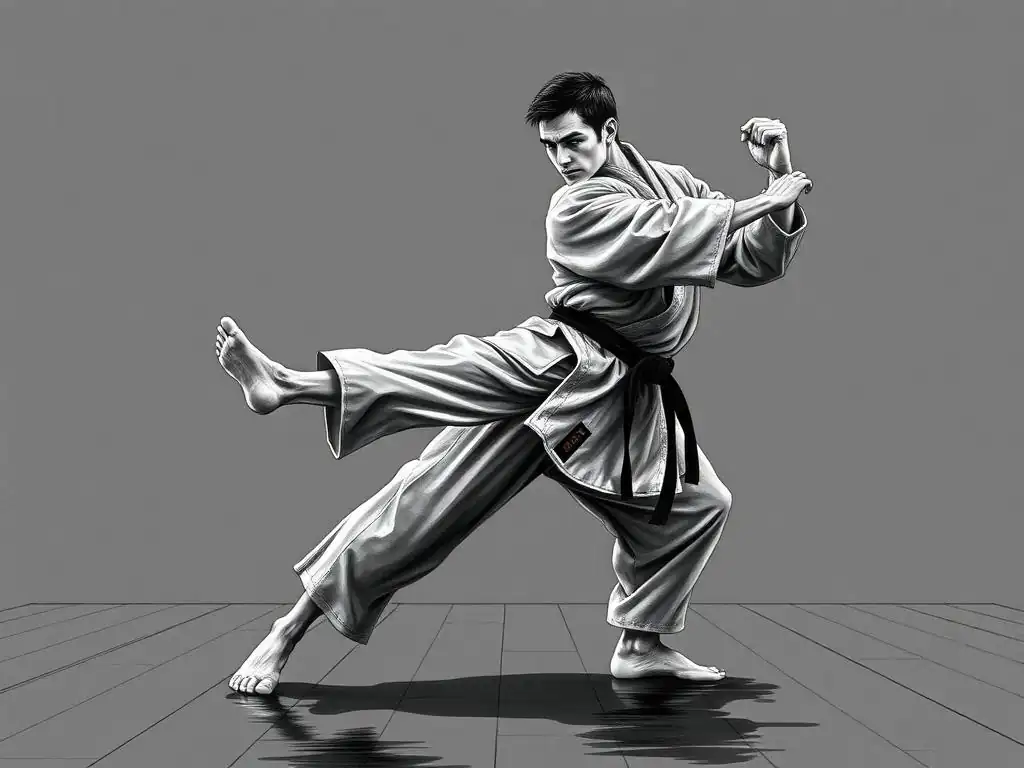
With your hips correctly positioned, execute the throw by driving your legs, rotating your core, and using your arms to guide the opponent over your hip fulcrum. The power comes from the legs extending and the core rotating, not from pulling solely with the arms or lifting with the back. Your head should generally turn in the direction of the throw, helping to drive the rotation.
As you execute the Hapkido hip throws technique, maintain your grip and connection to the opponent. This ensures they are guided safely through the throw and prevents them from escaping or countering midway. The movement should be a coordinated effort of the entire body, culminating in a powerful and controlled projection of the opponent.
Step 5: Following Through and Maintaining Control
The throw isn't finished when the opponent leaves your hips. Following through is essential for maintaining balance, preventing the opponent from recovering quickly, and positioning yourself for subsequent techniques if necessary. As the opponent goes down, maintain your grip briefly to control their fall and ensure they land safely (in training).
After the opponent is down, release the grip and transition to a dominant position, such as side control or knee-on-belly, or create distance if the situation warrants. This follow-through is a vital part of the Hapkido hip throws technique, demonstrating control and preparedness for the next phase of the encounter, whether it's training or a self-defense scenario.
Common Mistakes to Avoid When Practicing Hapkido Hip Throws
Learning any martial arts technique involves making mistakes. Identifying and correcting these errors is crucial for effective progress, especially when practicing complex movements like Hapkido hip throws. Awareness of common pitfalls allows practitioners to focus their training and refine their Heori Chigi.
Avoiding these mistakes not only improves the effectiveness of your Hapkido throwing technique but also significantly reduces the risk of injury to both yourself and your training partner. Patience and attention to detail during practice are key to overcoming these common hurdles.
Incorrect Footwork and Stance
One of the most frequent mistakes in executing the Hapkido hip throws technique is incorrect footwork during the entry. Stepping too far away, too close, or failing to pivot correctly compromises your base and prevents you from getting your hips into the optimal position. This often results in a weak throw that relies too much on upper body strength.
Similarly, having a poor initial stance before the entry can make it difficult to generate power and maintain balance. Ensure your feet are positioned to allow for a strong, dynamic entry and a stable base for the lift and rotation. Consistent drilling of the entry footwork without a partner can help build the necessary muscle memory for a solid Hapkido hip throws technique.
Telegraphing Your Intentions
Telegraphing refers to giving away your intention to throw before you initiate the technique. This might involve changing your grip too obviously, shifting your weight dramatically, or displaying facial cues. A skilled opponent will recognize these signals and stiffen their posture, widen their base, or counter your attempt, nullifying your Hapkido throwing technique.
To avoid telegraphing, practice initiating your Heori Chigi smoothly and without unnecessary preliminary movements. Integrate the setup (like the pull for Kuzushi) seamlessly with the entry. Training with experienced partners who can provide feedback on your tells is invaluable for developing a more deceptive and effective Hapkido hip throws technique.
Failing to Maintain Balance
Both your balance and your opponent's balance are critical for a successful Hapkido hip throws technique. Losing your own balance during the entry or execution significantly weakens the throw and leaves you vulnerable to counters. This often happens when practitioners rush the technique or fail to maintain a strong core and base throughout the movement.
Conversely, failing to sufficiently unbalance your opponent ( Kuzushi) means you will be attempting to lift a heavy, rooted individual, which is inefficient and potentially dangerous. Focus on disrupting their balance before committing to the throw and maintain your own stable posture throughout the entire technique.
Lack of Commitment to the Throw
Hesitation is the enemy of effective Hapkido hip throws. A half-hearted attempt lacks the necessary speed, power, and conviction to overcome an opponent's resistance. If you commit to the entry but then pause or second-guess yourself, you lose the moment of opportunity created by the Kuzushi and allow the opponent to recover their balance or counter.
Once you initiate the Heori Chigi, you must commit fully to the movement, driving through with your legs and rotating with your core. This doesn't mean being reckless, but rather executing the technique with confidence and fluidity. Overcoming hesitation requires consistent, focused practice and gradually increasing the intensity of your drills.
Drills and Training Exercises to Improve Your Hapkido Hip Throw Technique
Improving your Hapkido hip throws technique requires dedicated practice that goes beyond simply performing the full movement repeatedly. Incorporating specific drills and exercises targeting the key components – timing, coordination, power, and muscle memory – is essential for developing a truly effective Heori Chigi.
A well-rounded training regimen for Hapkido throwing technique should include partner work to refine timing and application, strength training to build the necessary power base, and solo drills to perfect the movement mechanics.
Partner Drills for Developing Timing and Coordination
Partner drills are indispensable for mastering the Hapkido hip throws technique. Drills focusing on Kuzushi (unbalancing) without completing the throw help you develop sensitivity to your partner's balance and learn how to create openings. Practice pulling and pushing your partner off balance in various directions.
Another effective drill is practicing the entry and hip positioning repeatedly with a partner who offers light resistance. This helps refine your footwork, hip depth, and body angle. Graduating to live drilling, where partners offer increasing levels of resistance, allows you to test your timing and coordination under more realistic conditions. Uchi Komi (entry practice without completing the throw) is a classic judo drill highly applicable to refining Hapkido hip throws technique, focusing purely on getting the entry perfect hundreds of times.
Strength and Conditioning Exercises for Power Generation
While Hapkido hip throws rely on leverage, sufficient strength is still necessary, particularly in the legs, hips, and core, to generate the initial lift and rotational power. Incorporate exercises like squats, lunges, deadlifts, and kettlebell swings to build lower body and hip strength.
Core exercises such as planks, Russian twists, and medicine ball rotations are crucial for developing the stability and rotational power needed for a strong Heori Chigi. Plyometric exercises like box jumps can also improve explosive power in the legs, beneficial for the dynamic entry of the Hapkido throwing technique. Aim for a balanced strength and conditioning program that supports your Hapkido practice.
Solo Practice for Refining Technique and Muscle Memory
Even without a partner, you can significantly improve your Hapkido hip throws technique through solo practice. Focus on the footwork and body rotation involved in the entry and execution. Use visual cues, like a line on the floor or a partner's imaginary position, to practice stepping in and turning your hips correctly.
Shadow throwing, visualizing an opponent and performing the entire Heori Chigi motion slowly and precisely, helps build muscle memory and refine the coordination of your body. Pay attention to your posture, hip position, and the sequence of movements. While solo practice cannot replace partner work for timing, it is invaluable for perfecting the mechanics of the Hapkido throwing technique.
Advanced Variations of Hapkido Hip Throws
Once the fundamental Heori Chigi is mastered, practitioners can explore more advanced variations and applications of Hapkido hip throws. These variations build upon the core principles but introduce additional complexity, allowing for greater adaptability and effectiveness in different situations.
Exploring advanced Hapkido throwing techniques expands a practitioner's repertoire and deepens their understanding of applying throws against resisting opponents or in dynamic self-defense scenarios.
Combining Heori Chigi with Other Hapkido Techniques
A skilled Hapkido practitioner rarely uses a technique in isolation. Advanced application of Heori Chigi often involves setting it up with strikes, joint locks, or other throws, or transitioning from the hip throw into follow-up techniques. For instance, a strike to the head or body can momentarily stun or distract an opponent, creating the opening for a swift Hapkido hip throws technique.
Alternatively, if the Heori Chigi doesn't completely finish the encounter, transitioning immediately into a joint lock, pin, or follow-up strike is crucial. Practice flowing between techniques, using the throw not just as an end in itself, but as a bridge to subsequent control or neutralization methods, demonstrating the versatility of Hapkido throwing technique combinations.
Adapting Hip Throws for Self-Defense Scenarios
Applying Hapkido hip throws technique in a self-defense situation differs significantly from training. The environment is uncontrolled, the opponent may be resisting violently, and there may be obstacles or multiple attackers. Advanced practitioners learn to adapt their Heori Chigi to these realities.
This might involve executing the throw with less emphasis on a perfect landing and more on simply getting the attacker off their feet and creating space to escape or transition. Adapting the grip to clothing or body parts available in a struggle, or using the throw to drive an attacker into a wall or obstacle, are examples of adjusting the Hapkido hip throws technique for practical self-defense. Role-playing and scenario training are vital for developing this adaptability.
Spinning Heori Chigi (Dolgi Heori Chigi)
A more dynamic variation is the spinning hip throw, sometimes referred to as Dolgi Heori Chigi. This technique involves a more pronounced rotational movement, often stepping deeper and spinning further to generate power. It can be particularly effective when an opponent is moving or pulling strongly in a specific direction.
The spinning Heori Chigi requires excellent balance, coordination, and timing. It can generate significant force, making it a powerful Hapkido throwing technique, but it also carries a higher risk if not executed correctly, potentially leaving the practitioner off balance. Mastery of the basic Heori Chigi is a prerequisite before attempting this advanced variation.
The Role of Hip Throws in Hapkido Self-Defense
Hapkido is fundamentally a self-defense art, and its techniques, including Hapkido hip throws, are designed for practical application. While throws can be used in sport contexts in other martial arts, in Hapkido, Heori Chigi is trained with the intent of controlling or incapacitating an attacker in a real-world confrontation.
Understanding the strategic use of Hapkido throwing technique in self-defense involves more than just the physical mechanics. It includes assessing the situation, considering the environment, and being aware of the potential consequences of using force.
Applying Heori Chigi in Realistic Combat Situations
In a realistic self-defense scenario, an attacker is unlikely to be wearing a gi or cooperate with your movements. Applying Hapkido hip throws technique requires adapting grips to street clothes or body parts and executing the technique decisively and powerfully. The goal is to quickly and effectively take the attacker off their feet, disrupting their ability to continue their assault.
Heori Chigi can be particularly effective against grabs, pushes, or certain types of strikes, using the attacker's forward momentum against them. For example, if an attacker pushes forward, stepping in and applying a hip throw leverages their own force. Training should include drills where partners simulate realistic attacks and resistance, allowing practitioners to practice adapting their Hapkido throwing technique under pressure.
Understanding the Legal and Ethical Considerations of Self-Defense
While mastering Hapkido hip throws technique is important, practitioners must also understand the legal and ethical implications of using such force in self-defense. The level of force used must be reasonable and proportionate to the threat faced. Using a powerful throw like Heori Chigi could potentially cause serious injury, and its use must be justifiable under the law.
Hapkido training emphasizes controlling the opponent, and throws can be used to create an opportunity to escape or transition to a less injurious control technique if the threat level decreases. Understanding when and how to apply Hapkido throwing technique responsibly is as crucial as the physical skill itself. Hapkido schools often discuss these considerations as part of a comprehensive self-defense education.
Heori Chigi: Historical Context and Evolution in Hapkido
To fully appreciate the Hapkido hip throws technique, it is helpful to understand its historical roots and how it has developed within the art. Like many Hapkido techniques, Heori Chigi draws upon older martial traditions and has been refined over time to fit Hapkido's unique principles.
Exploring the history provides context for why certain techniques are emphasized and how they fit into the broader tapestry of Korean martial arts and Hapkido's development.
The Origins of Hip Throws in Korean Martial Arts
Hip throws have a long history in various martial arts traditions around the world, including those that influenced Hapkido. Korean martial arts like Ssireum (Korean wrestling) and older forms of Yusul (a term for grappling arts) contained hip throws as core techniques. The founders of Hapkido, particularly Choi Yong-Sool, who studied Daito-ryu Aiki-jujutsu in Japan (which itself has roots in older Japanese grappling), incorporated and adapted numerous joint locks and throws, including hip throws, into the nascent art of Hapkido.
The hip throwing techniques found in Hapkido share similarities with throws in Judo and Jujutsu, reflecting the cross-pollination of martial knowledge that occurred historically. Heori Chigi represents the adaptation and integration of these fundamental throwing mechanics into Hapkido's emphasis on circular motion, non-resistance, and coordinated strikes and joint locks.
How Heori Chigi Has Evolved Over Time
As Hapkido has spread and evolved, the teaching and execution of Heori Chigi have seen variations across different schools and masters. While the core principle of using the hip as a fulcrum remains constant, specific details like grip variations, entry footwork, and the emphasis on power versus fluidity may differ.
Modern Hapkido training methods have also incorporated insights from sports science and cross-training with other grappling arts to refine the Hapkido hip throws technique. However, the fundamental importance of Kuzushi, leverage, and timing remains central to the Hapkido approach to Heori Chigi, honoring the art's foundational principles while allowing for practical adaptation.
Conclusion: Achieving Mastery in Hapkido Hip Throwing
Mastering the Hapkido hip throws technique, Heori Chigi, is a rewarding journey that significantly enhances a practitioner's overall Hapkido skill set. It requires dedication, attention to detail, and a deep understanding of the core principles of power, leverage, and timing. Proficiency in Heori Chigi provides a powerful tool for self-defense and exemplifies Hapkido's effectiveness in using an opponent's force and balance against them.
The path to mastery involves consistent, intelligent practice, focusing on refining each step of the technique, identifying and correcting mistakes, and supplementing technical training with relevant strength and conditioning. While the basic movement can be learned relatively quickly, true mastery of this Hapkido throwing technique takes years of dedicated effort and countless repetitions.
The Path to Proficiency: Dedication and Practice
Achieving proficiency in Hapkido hip throws is not about natural talent but about consistent, dedicated practice. Attending classes regularly, drilling the technique with partners, engaging in solo practice, and incorporating relevant physical conditioning are all essential components of the journey. Seek feedback from your instructors and senior students, and be patient with your progress.
Focus on quality over quantity initially, ensuring your technique is correct before attempting to execute it with speed or power. As your understanding and muscle memory develop, gradually increase the intensity and resistance in your training. Mastery of Hapkido throwing technique, like any complex skill, is a continuous process of learning, refining, and applying.
Further Resources for Learning Hapkido Throwing Techniques
To continue your journey in mastering Hapkido hip throws and other throwing techniques, seek out qualified Hapkido instructors. Direct instruction and hands-on correction are invaluable. Supplement your training with reputable instructional materials, such as books or videos produced by respected Hapkido masters, keeping in mind that these should support, not replace, in-person training.
Explore the historical context of Hapkido and its influences to deepen your appreciation for techniques like Heori Chigi. Consider cross-training in related grappling arts like Judo or Jujutsu under qualified instructors to gain different perspectives on throwing mechanics, which can further inform and improve your Hapkido throwing technique. The pursuit of mastery is ongoing, and utilizing diverse resources can accelerate your progress.
Frequently Asked Questions
What is Heori Chigi and why is it important in Hapkido?
Heori Chigi is the Korean term for hip throw techniques in Hapkido. They're crucial because they use an opponent's momentum against them, allowing a smaller practitioner to effectively throw a larger attacker. Mastering them is essential for self-defense.
What are the key elements for a successful Hapkido hip throw?
The key elements include proper stance and footwork, maintaining balance and control, and understanding the importance of timing and leverage. Without these, the throw will likely fail.
How does Hapkido hip throw technique differ from hip throws in other martial arts like Judo?
While the basic principle of using the hip as a fulcrum is similar, Hapkido hip throws often incorporate circular movements and can transition into joint locks or strikes. Judo hip throws tend to focus more on direct impact and control.
What are some common mistakes beginners make when learning Hapkido hip throws?
Common mistakes include poor footwork, failing to maintain a stable base, and trying to use brute strength instead of proper technique. Correcting these is crucial for effective execution.
How can I improve my Heori Chigi technique outside of formal Hapkido classes?
You can practice footwork drills, work on core strength and balance, and visualize the technique in slow motion. Partner practice with a qualified instructor is also highly recommended.
Final Reflection: The Enduring Art of Hapkido's Heori Chigi
The journey through mastering Hapkido hip throws, specifically the Heori Chigi technique, transcends mere physical skill; it embodies a profound understanding of leverage, timing, and the flow of energy. This exploration, while focused on technique, ultimately reveals the deeper principles of Hapkido – principles that remain strikingly relevant in today's fast-paced world, where balance and adaptability are paramount. The ability to redirect force, to find stability in motion, and to execute with precision are skills applicable far beyond the dojang.
The ripple effect of mastering such techniques extends beyond self-defense; it cultivates a heightened awareness of one's body and its potential. This journey of learning and refinement has personally reinforced the importance of consistent practice and the pursuit of continuous improvement, not just in martial arts, but in all aspects of life. The art of Hapkido is not just about fighting; it's about living with balance and harmony.
This quote, often attributed to Hapkido masters, encapsulates the true essence of the discipline and its lasting impact on the practitioner's character.
Now, as you reflect on the intricacies of the Heori Chigi and the principles of Hapkido, consider how you can apply these lessons of balance, leverage, and timing in your own life. Embrace the challenge of mastering new skills, cultivate a deeper understanding of your own potential, and strive for harmony in all that you do. The path of Hapkido, like life itself, is a continuous journey of learning and growth.
Unleash Your Inner Hapkido Master!
Thank you for exploring the art of Hapkido hip throws with us. We hope you’ve gained valuable insights into the power, leverage, and timing required to execute these techniques effectively. Now, it's time to put that knowledge into action!
- Practice the Heori Chigi entry drills to refine your balance and footwork – this is the key to unlocking the throw's potential.
- Share this article with a fellow martial artist and discuss your favorite hip throw variations.
- Challenge yourself: Try to successfully land at least one hip throw during your next sparring session.
What specific hip throw drill are you most excited to incorporate into your Hapkido training this week?