
Top 10 Plyometric Exercises to Revolutionize Your Martial Arts Kicks

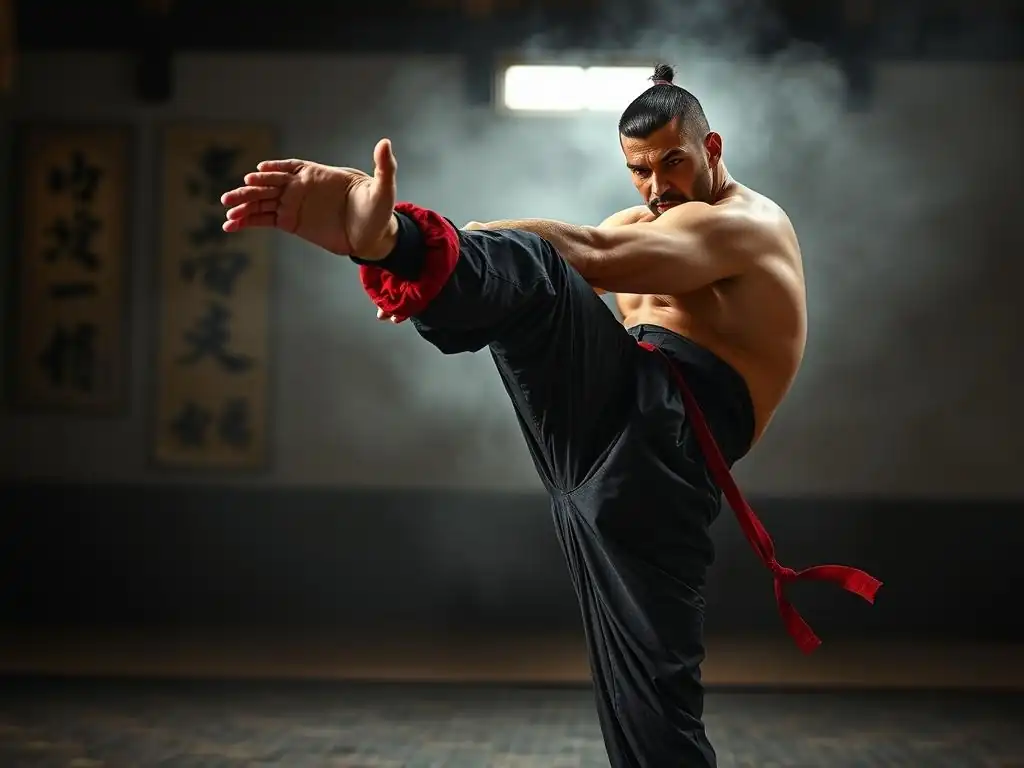
Welcome to Martial Arts Mastery, your ultimate resource for unlocking the secrets of combat excellence!
Are you ready to skyrocket your kicking power and agility? Dive into our exploration of Plyometric kick training techniques, where we unveil the top 10 exercises to revolutionize your martial arts performance. Discover how to harness explosive power and elevate your strikes to new heights. What are you waiting for?
Why Plyometric Training is Essential for Taekwondo Kicks
Taekwondo is renowned for its dynamic and powerful kicking techniques. While flexibility and technique are fundamental, explosive power is the engine that drives high, fast, and impactful kicks. This is where plyometric training techniques become indispensable. Unlike traditional strength training which builds force primarily through slow, controlled movements, plyometrics focuses on developing the ability to produce maximal force in minimal time, a critical component for effective kicking in martial arts.
Incorporating plyometric kick training techniques helps athletes bridge the gap between strength and speed. By training the muscles and nervous system to react quickly and powerfully, practitioners can significantly improve the height, speed, and impact of their kicks.
This type of training targets the stretch-shortening cycle (SSC), enabling muscles to generate more force after being rapidly stretched, leading to the 'snap' and power characteristic of high-level Taekwondo kicks. Studies in sports science consistently show that athletes who incorporate plyometrics see marked improvements in vertical jump height, sprint speed, and overall explosive power output – all directly transferable to kicking performance.
Understanding the Stretch-Shortening Cycle and Explosive Power
The stretch-shortening cycle (SSC) is the physiological mechanism at the heart of plyometric training. It involves a rapid eccentric (muscle lengthening) phase, followed by a brief amortization (transition) phase, and concluding with a concentric (muscle shortening) phase. Think of it like stretching a rubber band: the stretch stores potential energy, and when released quickly, that energy is converted into kinetic energy for a powerful snap. In muscles, this involves the elastic properties of tissues and the nervous system's reflex response.
In the context of Taekwondo kicks, the SSC is crucial. For example, before executing a powerful Dollyo Chagi (roundhouse kick), the leg muscles undergo a rapid stretch as the leg chambers and prepares to extend. The more efficiently an athlete can transition from this stretched state to a powerful contraction (the kick itself) – minimizing the amortization phase – the more explosive the resulting movement will be.
Plyometric kick training techniques are specifically designed to enhance this rapid transition, improving the nervous system's ability to recruit muscle fibers quickly and harnessing the stored elastic energy for maximum power output. Training the SSC allows practitioners to not only kick higher and faster but also to recover and transition between techniques more effectively.
Benefits of Plyometric Training for Taekwondo Kicking Techniques
Implementing plyometric kick training techniques offers a multitude of benefits specifically tailored to the demands of Taekwondo. Primarily, it dramatically increases explosive power in the legs and hips, leading to higher, faster, and more impactful kicks. This translates directly to improved performance in sparring and forms, allowing athletes to execute techniques with greater force and speed, often surprising opponents with the suddenness and power of their attacks.
Beyond raw power, plyometrics enhance reactive strength and agility. The ability to quickly absorb force and redirect it into explosive movement is vital for rapid changes in direction, defensive footwork, and chaining together complex kicking combinations. Furthermore, controlled plyometric exercises can improve joint stability around the knees, ankles, and hips by strengthening the surrounding muscles and connective tissues, potentially reducing the risk of common martial arts injuries. A well-rounded plyometric program, integrated with skill-specific Taekwondo drills, provides a comprehensive approach to developing superior kicking capabilities.
- Why Plyometric Training is Essential for Taekwondo Kicks
- Understanding the Stretch-Shortening Cycle and Explosive Power
- Benefits of Plyometric Training for Taekwondo Kicking Techniques
- 1. Box Jumps for Enhanced Vertical Power in Kicks
- 2. Depth Jumps for Reactive Strength and Kick Speed
- 3. Single Leg Hops for Balance and Kick Control
- 4. Medicine Ball Twists for Rotational Power in Kicks
- 5. Plyometric Push-ups for Upper Body Power in Kicks
- 6. Lunge Jumps for Leg Power and Kick Height
- 7. Squat Jumps for Overall Lower Body Power
- 8. Lateral Jumps for Agility and Kick Speed
- 9. Burpee Tuck Jumps for Full Body Conditioning and Explosiveness
- 10. Jump Rope for Footwork and Coordination
- What are plyometric exercises, and why are they important for martial arts kicks?
- Which plyometric exercises are most effective for improving kick height and power?
- How often should I incorporate plyometric exercises into my martial arts training routine?
- What are some common mistakes to avoid when performing plyometric kick training?
- How do plyometric exercises help with self-defense strategies?
The 10 Best Plyometric Exercises for Taekwondo Kicks
1. Box Jumps for Enhanced Vertical Power in Kicks
Box jumps are a foundational plyometric exercise that directly targets the muscles responsible for generating upward force, crucial for kicks like Ap Chagi (front kick) and Nopi Chagi (high kick). The goal is to jump from the ground onto a stable elevated surface, emphasizing a powerful, rapid hip and knee extension.
This exercise trains the body to recruit a large number of muscle fibers simultaneously for a single, explosive effort, mimicking the initial phase of launching a powerful kick. Consistent box jump training can lead to significant improvements in vertical power, directly translating to the ability to raise the leg higher and faster during kicking execution.
Regular inclusion of box jumps in your plyometric kick training techniques can boost your vertical leap by an average of 5-10% over several months, depending on training consistency and intensity. For Taekwondo practitioners, this means the difference between a mid-level kick and a head-height kick, or executing a jumping kick with greater ease and height. The exercise also builds mental confidence in explosive movements, helping athletes commit fully to dynamic techniques during training and competition.
How to Perform Box Jumps for Taekwondo Kick Training
To perform a box jump effectively for Taekwondo, start standing facing a sturdy box or platform approximately knee to mid-thigh high. Begin in a slight squat position, then quickly swing your arms forward and powerfully extend your hips, knees, and ankles to jump upwards onto the box. Land softly and quietly on the balls of your feet, absorbing the impact by bending your knees slightly.
Step back down carefully rather than jumping down initially, especially when starting out, to reduce impact on the joints. Focus on the speed and power of the upward movement, aiming for minimal ground contact time.
Aim for 3-5 sets of 3-6 repetitions, focusing on maximal effort and perfect form for each jump. Ensure adequate rest (60-90 seconds) between sets to allow for full recovery and maintain explosive power. As you progress, you can increase the box height or perform consecutive jumps, but prioritize quality over quantity. This plyometric kick training technique demands focus and control to be effective and safe.
Targeting Ap Chagi and Dwi Chagi with Box Jump Variations
Box jumps are particularly effective for enhancing the power needed for Ap Chagi (front kick) and Dwi Chagi (back kick). For Ap Chagi, the focus is on the initial upward drive from the support leg and the ability to lift the kicking leg powerfully. Standard box jumps directly train this vertical component. To make it more specific, consider single-leg box jumps, where you jump and land on one leg, mimicking the balance and single-leg power required during the chamber and execution of an Ap Chagi.
For Dwi Chagi, which requires significant hip extension and posterior chain power, variations like box step-ups followed by an explosive drive upwards can be beneficial. You can also perform box jumps where you land and immediately drive the knee of the non-jumping leg upwards into a chamber position, simulating the setup for a powerful back kick or even a jumping back kick ( Dwi Chagi). These targeted plyometric kick training techniques help translate general explosive strength into specific kicking mechanics.
2. Depth Jumps for Reactive Strength and Kick Speed
Depth jumps are an advanced plyometric exercise focused on developing reactive strength and minimizing the ground contact time, which is essential for rapid, successive kicks and explosive transitions. The exercise involves stepping off a box, absorbing the impact upon landing, and immediately jumping upwards or forwards as quickly as possible. This rapid eccentric-to-concentric transition significantly improves the efficiency of the stretch-shortening cycle, leading to faster and more powerful muscle contractions.
This plyometric kick training technique is particularly beneficial for improving the speed and 'snap' of kicks like Bandal Chagi (crescent kick) or rapid-fire Dollyo Chagi (roundhouse kicks). By reducing the time spent on the ground, depth jumps train the body to react instantly to the landing force, converting it into propulsive power. Research indicates that consistent depth jump training can improve reactive strength index (RSI) by 10-20%, indicating a faster and more efficient utilization of the SSC.
Proper Depth Jump Technique for Taekwondo
Proper technique is paramount for safety and effectiveness in depth jumps. Start by standing on a stable box (begin with a low height, perhaps 12-18 inches). Step off the box (do not jump) and land softly on the balls of your feet, bending your knees slightly to absorb the impact. The moment your feet touch the ground, immediately jump upwards as high as possible, or forwards for horizontal power. Minimize the time spent on the ground – aim for a 'pop' off the floor, not a deep squat. Land the subsequent jump softly.
Perform 3-4 sets of 4-8 repetitions, focusing on the speed of the transition. The goal is quality over quantity; if you can't rebound immediately, the box is too high or you are fatigued. Rest 60-120 seconds between sets. This demanding plyometric kick training technique should only be attempted after building a solid foundation with less intense exercises like box jumps and squat jumps.
Integrating Depth Jumps into Your Kick Training Routine
Depth jumps can be integrated into a Taekwondo training routine to specifically enhance reactive kicking power. After performing a set of depth jumps, immediately transition into a few repetitions of rapid kicks on a target or in the air. For instance, perform a set of depth jumps followed by 5-10 fast Dollyo Chagi on each leg. This helps translate the general reactive power developed by the depth jump into the specific motor pattern of the kick.
Another application is using depth jumps to improve rapid kick combinations. Perform a depth jump, land, and immediately execute a quick Ap Chagi followed by a Dollyo Chagi. This trains the body to absorb the impact of landing and transition instantly into explosive kicking movements, improving overall dynamism and speed in your plyometric kick training techniques.
3. Single Leg Hops for Balance and Kick Control
Single leg hops are a crucial plyometric exercise for Taekwondo practitioners, directly addressing the balance, stability, and unilateral power required for most kicking techniques. Since nearly every kick is performed off one leg, the ability of the support leg to absorb force, stabilize the body, and generate power is paramount. Single leg hops, performed vertically, horizontally, or laterally, challenge the ankle, knee, and hip stabilizers while building explosive strength in a single limb.
This plyometric kick training technique enhances proprioception – the body's awareness of its position in space – which is vital for maintaining balance during complex kicks like Nopi Chagi (high kick) or spinning techniques. By training each leg independently, single leg hops also help identify and correct muscular imbalances, ensuring that both legs contribute equally to power and stability. Regular practice can significantly improve the ability to hold a kick in the air and recover quickly after execution.
Improving Balance and Stability with Single Leg Plyometrics
Single leg hops inherently challenge your balance more than bilateral exercises. As you hop on one leg, the stabilizing muscles around your ankle, knee, and hip must work harder to maintain equilibrium. This constant micro-adjustment strengthens these critical support structures. Begin by performing single leg hops on a stable surface, focusing on controlled landings and minimal wobbling. As you improve, you can progress to hopping over small obstacles or performing hops on slightly unstable surfaces (like a balance pad, with caution) to further challenge your stabilizers.
Incorporate variations like single leg lateral hops or single leg forward/backward hops. These variations simulate the dynamic balance needed during footwork and transitional movements in sparring. Aim for 3-4 sets of 5-10 hops per leg, focusing on controlled, powerful movements. Pause briefly on the landing leg to ensure stability before the next hop. This focused plyometric kick training technique builds the robust support system necessary for executing powerful kicks without losing balance.
Applying Single Leg Hops to Kicking Precision for Nopi Chagi
Single leg hops are particularly beneficial for improving the precision and control of kicks like Nopi Chagi (high kick). Executing a high kick requires significant single-leg stability on the supporting leg while the kicking leg extends fully. Single leg hops directly train this support leg's ability to generate upward power and maintain balance. Perform single leg vertical hops, focusing on exploding upwards and landing softly on the same leg.
To make it more specific to Nopi Chagi, combine single leg hops with a simulated high kick chamber. Hop on one leg, then immediately drive the opposite knee up forcefully into a high chamber position, mimicking the start of a high kick. Hold the chamber briefly for balance before lowering the leg and repeating the hop. This integrates the explosive single-leg power with the specific balance requirement of the high kick chamber, making it a highly relevant plyometric kick training technique.
4. Medicine Ball Twists for Rotational Power in Kicks
While kicks are primarily leg movements, rotational power from the core and hips is fundamental for generating force in techniques like Dollyo Chagi (roundhouse kick) and Bandal Chagi (crescent kick). Medicine ball twists, particularly explosive variations, are excellent for developing this rotational strength and speed. They train the oblique muscles, rectus abdominis, and hip flexors/rotators to work synergistically, mimicking the core engagement needed to whip the leg around with speed and power.
Adding medicine ball twists to your plyometric kick training techniques improves the kinetic chain efficiency from the ground up through the core to the kicking leg. Studies on rotational athletes (like baseball pitchers or golfers) show that medicine ball training significantly increases rotational power output, a principle directly applicable to the powerful hip rotation in Taekwondo kicks. This translates to faster kick execution and increased impact force.
Utilizing Medicine Ball Twists for Core Strength and Kick Power
Medicine ball twists, performed explosively, build both strength and speed in the core's rotational muscles. Holding a medicine ball (start with a lighter weight, 4-8 lbs) with both hands, stand with feet shoulder-width apart or in a staggered stance. Keeping your arms relatively straight, explosively twist your torso to one side, then immediately and powerfully reverse the motion to twist to the other side. Focus on generating speed from your core and hips, not just your arms.
Perform 3-4 sets of 10-15 repetitions per side, focusing on the speed and control of the movement. You can perform these standing, seated, or kneeling. The key is the explosive nature of the twist. This plyometric kick training technique enhances the ability to quickly rotate the body, providing the necessary torque for powerful swinging kicks.
Medicine Ball Exercises for Bandal Chagi and Dollyo Chagi
To specifically target the rotational power needed for Bandal Chagi (crescent kick) and Dollyo Chagi (roundhouse kick), incorporate medicine ball exercises that mimic the movement pattern. Standing medicine ball twists where you rotate and throw the ball against a wall or to a partner are highly effective. Stand sideways to the wall, hold the ball, rotate your torso powerfully, and throw the ball using the rotational force. Catch the rebound and immediately repeat the motion.
Another variation is the medicine ball rotational scoop toss. Start with the ball near your ankle on one side, then explosively rotate your body and scoop the ball up and across your body, releasing it upwards and forwards, simulating the hip drive and rotation of a roundhouse kick. Perform 3-4 sets of 8-12 repetitions per side for these exercises. These targeted plyometric kick training techniques directly enhance the speed and power of rotational kicks.
5. Plyometric Push-ups for Upper Body Power in Kicks
While kicks are primarily lower body techniques, the upper body plays a crucial role in maintaining balance, generating counter-rotation for power, and using arm movements to enhance height or speed (e.g., arm swing in jumping kicks). Plyometric push-ups develop explosive strength in the chest, shoulders, and triceps, improving overall upper body power and coordination which can indirectly benefit kicking mechanics and stability.
For techniques like jumping kicks ( Twimyo Ap Chagi, Twimyo Dollyo Chagi), a powerful arm swing is vital for gaining height and momentum. Plyometric push-ups enhance the ability to generate rapid force with the upper body, improving the effectiveness of this arm swing. Furthermore, a strong and stable upper body provides a better platform for the lower body to generate force, improving overall kinetic chain efficiency during powerful kicks. This plyometric kick training technique contributes to a more integrated and powerful movement.
Strengthening Upper Body for Improved Kicking Mechanics
Plyometric push-ups require the upper body muscles to generate enough force to lift the hands off the ground. This explosive strength is beneficial for the powerful arm drive used in many jumping kicks. It also improves the ability to use the arms for balance and counter-balance during complex kicking sequences or sparring exchanges. A strong upper body helps maintain posture and stability, preventing the body from collapsing or losing form during high-intensity kicking.
Regular plyometric push-ups, performing 2-3 sets of 5-10 repetitions with sufficient rest, can significantly improve upper body pressing power and reactivity. This added upper body strength and explosiveness, while not directly a kicking muscle, supports better overall body control and power transfer from the lower body. It’s an often-overlooked aspect of plyometric kick training techniques.
Variations of Plyometric Push-ups for Taekwondo
Basic plyometric push-ups involve pushing up from the bottom position with enough force for your hands to leave the ground, perhaps clapping your hands in the air before landing. For Taekwondo, variations can focus on reactive strength and stability. Perform plyometric push-ups where you push off the ground and immediately place your hands on a slightly elevated surface (like low boxes or steps) before dropping back down. This trains the ability to react quickly and absorb force.
Another useful variation is the staggered hand plyometric push-up, where one hand is slightly higher or lower than the other. This challenges the stabilizing muscles and mimics the asymmetrical forces sometimes experienced during dynamic movements. Always ensure a soft landing and maintain core tension throughout the movement. These variations add complexity and functional strength to your plyometric kick training techniques.
6. Lunge Jumps for Leg Power and Kick Height
Lunge jumps are a dynamic lower body plyometric exercise that builds explosive power in a unilateral (single-leg) fashion, mirroring the action of pushing off the ground with one leg during a kick. This exercise targets the quadriceps, hamstrings, and glutes, while also challenging balance and coordination. The alternating nature of lunge jumps also improves hip flexor flexibility and strength, which is crucial for achieving height and range of motion in kicks.
Adding lunge jumps to your plyometric kick training techniques can significantly improve the driving power of the support leg, enabling higher chambers and more powerful extensions in kicks like Ap Chagi, Yop Chagi (side kick), and especially Nopi Chagi (high kick). This exercise also enhances lower body endurance for explosive efforts, allowing you to maintain kicking power through multiple combinations. Athletes often see a noticeable increase in kick height and speed after consistent lunge jump training.
Maximizing Leg Strength and Explosiveness with Lunge Jumps
Lunge jumps are performed by starting in a lunge position (one leg forward, knee bent at ~90 degrees, back knee hovering near the ground). From this position, explosively jump upwards, switching the position of your legs in the air so that you land in a lunge with the opposite leg forward. Ensure a soft landing, absorbing the impact by bending your knees. The key is the powerful extension of the legs to propel yourself upwards and the rapid transition between the lunge positions.
Focus on driving through the heel of the front foot and extending the hip of the back leg during the jump. Aim for 3-4 sets of 8-12 repetitions per leg (counting each leg as one rep in the alternating jump), with 60-90 seconds rest between sets. Maintain an upright torso and engage your core for stability. This plyometric kick training technique is demanding but highly effective for building unilateral leg power.
Incorporating Lunge Jumps into Kick Training Drills for Nopi Chagi
Lunge jumps are particularly effective for improving Nopi Chagi (high kick) because they mimic the powerful extension and hip drive needed from the support leg. To integrate this into your Taekwondo training, perform a set of lunge jumps and immediately follow with repetitions of Nopi Chagi on a target, focusing on driving off the support leg powerfully.
Another method is to perform a lunge jump, land, and immediately chamber the leg that just landed forward into a high Ap Chagi or Nopi Chagi chamber. This links the explosive lunge movement directly to the specific leg action required for the high kick. You can also perform stationary lunge jumps (jumping up and down without switching legs) to build sustained explosive power in one leg, mimicking the support leg's role during a held high kick. These variations make lunge jumps a targeted plyometric kick training technique for developing high kicking ability.
7. Squat Jumps for Overall Lower Body Power
Squat jumps are a fundamental bilateral plyometric exercise that builds foundational explosive power in the entire lower body – quadriceps, hamstrings, glutes, and calves. They involve performing a squat and then immediately exploding upwards into a jump. This exercise trains the body to generate force symmetrically and rapidly from a double-leg stance, which is the starting point for many Taekwondo movements and transitions.
Including squat jumps in your plyometric kick training techniques improves overall lower body power, which benefits all kicks by providing a stronger base and more explosive drive. This exercise also enhances hip extension power, crucial for generating force in techniques like Ap Chagi (front kick) and the initial lift in jumping kicks. Consistent squat jump training can lead to noticeable improvements in general leg explosiveness and vertical power.
Building a Strong Foundation with Squat Jumps
Squat jumps are relatively simple to perform but require proper form to maximize benefits and minimize risk. Start in a squat position with feet shoulder-width apart, back straight, and chest up. From the bottom of the squat, explosively extend your hips, knees, and ankles to jump upwards. Use your arms to help generate momentum by swinging them upwards. Land softly, absorbing the impact by returning to the squat position. Aim for minimal ground contact time.
Perform 3-5 sets of 6-10 repetitions, focusing on generating maximum height with each jump. Rest 60-90 seconds between sets. Ensure your knees track over your toes and your back remains straight throughout the movement. Squat jumps are a versatile plyometric kick training technique that can be a starting point for beginners before progressing to more complex unilateral or depth exercises.
Enhancing Kicking Power with Squat Jump Variations
Squat jumps can be varied to target specific aspects of kicking power. For general explosive power applicable to all kicks, weighted squat jumps (using a light weight vest or holding dumbbells cautiously) can add resistance, though this increases intensity and should only be done after mastering bodyweight versions. Squat jumps onto a box (similar to box jumps but starting from a deeper squat) emphasize the transition from a static squat to an explosive jump.
Another useful variation is the squat jump with a pause at the bottom. Squat down, hold the bottom position for 2-3 seconds (removing the benefit of the SSC), and then explode upwards. This variation focuses more on concentric strength and the ability to generate force from a static position, which can be relevant for generating power from a stationary guard stance. These variations provide different stimuli within the plyometric kick training technique framework.
8. Lateral Jumps for Agility and Kick Speed
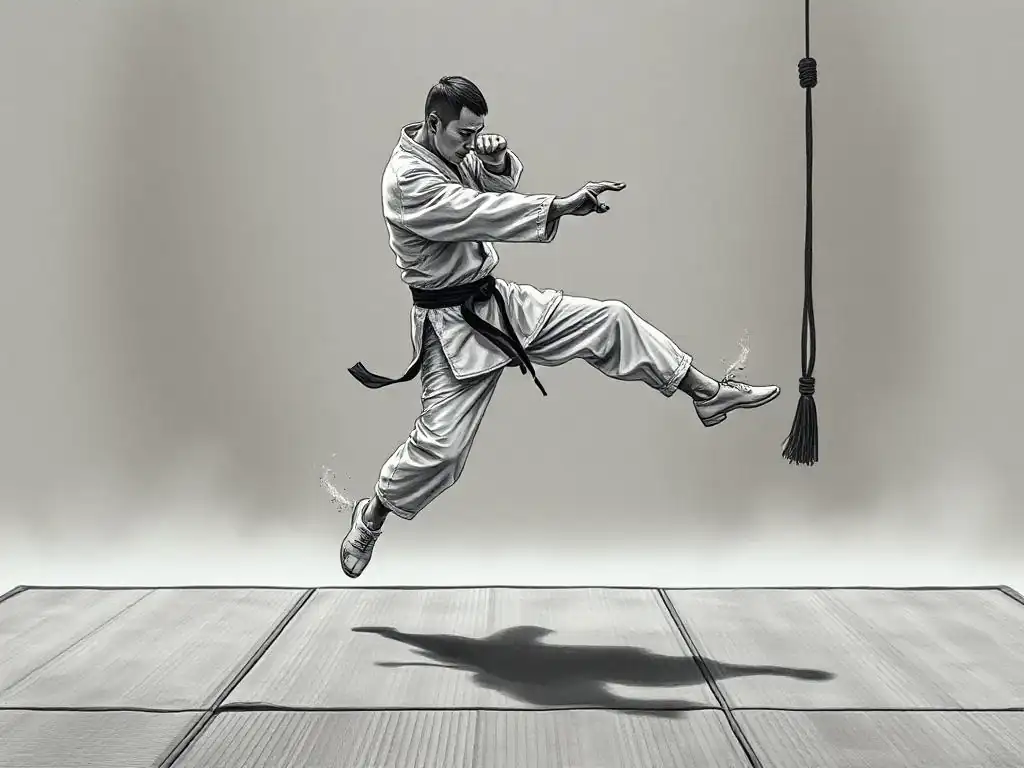
Lateral jumps are a plyometric exercise that builds explosive power and agility in the frontal plane (side-to-side movement). While many kicks are linear or rotational, the ability to move quickly and powerfully laterally is essential for footwork, evading attacks, setting up angles for kicks, and quickly shifting weight for techniques like Yop Chagi (side kick). Lateral jumps train the muscles responsible for powerful side-to-side propulsion and deceleration.
Incorporating lateral jumps into your plyometric kick training techniques improves your ability to generate power from side-to-side movements, enhancing the speed and effectiveness of lateral kicks and defensive footwork. This exercise also improves ankle and knee stability in lateral movements, reducing the risk of sprains during dynamic sparring exchanges. Enhanced lateral agility allows practitioners to create openings and deliver kicks from unexpected angles.
Improving Lateral Movement and Kick Speed with Plyometrics
Lateral jumps are performed by standing with feet together or slightly apart, then jumping explosively sideways over a line or low obstacle (like a cone or towel). Land softly on the balls of your feet, absorbing the impact by bending your knees, and immediately jump back to the starting side. Focus on generating power from the leg pushing off the ground and controlling the landing on the receiving leg.
Perform 3-4 sets of 10-15 repetitions per side (counting each side as one rep), aiming for quick transitions and controlled landings. Rest 60-90 seconds between sets. You can perform these as continuous jumps back and forth or with a brief pause between jumps. This plyometric kick training technique directly translates to faster lateral movement and the ability to generate speed in kicks that involve significant lateral weight shifts.
Using Lateral Jumps to Develop Dynamic Kicking Ability
Lateral jumps are excellent for developing the dynamic ability needed for kicks like Yop Chagi (side kick) or quickly changing direction to set up a spinning kick. To make it specific to Yop Chagi, perform a set of lateral jumps and immediately follow with repetitions of Yop Chagi on a target, focusing on driving off the support leg powerfully sideways.
You can also integrate lateral jumps into footwork drills. For example, perform two quick lateral jumps, land, and immediately execute a Yop Chagi or a sliding Ap Chagi. This trains the body to absorb lateral movement and transition instantly into a powerful kick. Lateral jumps are a key plyometric kick training technique for improving agility and power in the frontal plane, crucial for dynamic Taekwondo.
9. Burpee Tuck Jumps for Full Body Conditioning and Explosiveness
Burpee tuck jumps combine a push-up, a squat thrust, and an explosive tuck jump, making them a demanding full-body plyometric exercise. While they target multiple muscle groups and provide significant cardiovascular conditioning, the final tuck jump phase is particularly relevant for developing explosive hip flexion and lower body power, which contributes to the chambering and execution of various kicks.
Adding burpee tuck jumps to your plyometric kick training techniques improves not only lower body explosiveness but also full-body coordination, core strength, and anaerobic endurance. The ability to repeatedly perform explosive movements is crucial for maintaining kicking power and speed throughout a sparring match. This exercise enhances the overall power output and conditioning needed for high-level Taekwondo.
Combining Strength and Cardio with Burpee Tuck Jumps for Taekwondo
Burpee tuck jumps involve a sequence: start standing, drop into a squat, place hands on the ground, kick feet back to a plank position, perform a push-up (optional), jump feet back to a squat, and then explode upwards into a tuck jump, pulling your knees towards your chest. Land softly and immediately repeat. This combination challenges strength, power, and cardiovascular systems simultaneously.
Perform 2-3 sets of 8-12 repetitions, focusing on the explosive tuck jump at the end of each rep. Rest 90-120 seconds between sets due to the exercise's intensity. The explosive hip flexion during the tuck jump directly mimics the powerful knee drive required for chambering and executing many Taekwondo kicks. This plyometric kick training technique builds resilience and explosive power under fatigue.
Modifying Burpee Tuck Jumps for Enhanced Kick Training
To make burpee tuck jumps more specific to Taekwondo kicking, focus on the transition into the final jump. Instead of a standard tuck jump, explode upwards and drive one knee powerfully into a high chamber position, simulating the start of an Ap Chagi or Dollyo Chagi. Alternate legs with each repetition.
Another modification is to perform the burpee, but instead of a tuck jump, explode upwards and immediately execute a single, powerful kick (e.g., a Dollyo Chagi) in the air before landing. This integrates the full-body conditioning and explosive power development of the burpee with the specific skill of kicking, making it a highly functional plyometric kick training technique.
10. Jump Rope for Footwork and Coordination
While not a traditional "power" plyometric exercise in the same vein as jumps, jump rope is invaluable for developing reactive footwork, ankle stiffness, calf explosiveness, and coordination – all crucial elements for effective kicking in Taekwondo. The repetitive, low-level hops train the lower legs and ankles to react quickly off the ground, minimizing ground contact time and improving the efficiency of the SSC in smaller muscles.
Incorporating jump rope into your plyometric kick training techniques enhances agility, rhythm, and the ability to perform quick, light movements with the feet. This translates to faster stance changes, better positioning for kicks, and improved balance during and after kicking sequences. It's a low-impact way to build reactive strength and coordination in the ankles and feet, which are the foundation for all powerful movements.
Improving Footwork and Agility with Jump Rope Training
Jump rope training forces you to maintain a light, bouncy stance, constantly reacting to the rope's rotation. This develops fast feet and improves coordination between your hands, eyes, and feet. Practice various jump rope techniques, such as double-unders (rope passes twice per jump), single-leg jumps, high knees, and alternating foot steps. These variations challenge different aspects of footwork and coordination.
Aim for 3-5 rounds of 1-3 minutes of continuous jumping, with 30-60 seconds rest between rounds. Focus on staying light on your feet, minimizing ground contact time, and maintaining a consistent rhythm. Consistent jump rope practice significantly improves the reactive strength and agility needed for the dynamic footwork prevalent in Taekwondo sparring, making it a fundamental plyometric kick training technique.
Integrating Jump Rope into Your Plyometric Kick Training
Jump rope can serve as an excellent warm-up for more intense plyometric exercises or as an active recovery between sets. It can also be integrated directly into kicking drills. For example, jump rope for 30-60 seconds, then immediately perform a short combination of kicks on a target. This trains your ability to transition from fast footwork into explosive kicking.
Another approach is to use jump rope variations to simulate movement patterns. Practice jumping forward and backward or side-to-side while jumping rope to mimic sparring footwork. Then, pause and execute a kick. This helps connect the reactive footwork trained by jump rope with the explosive action of kicking, enhancing the functional carryover of this plyometric kick training technique.
Designing Your Plyometric Kick Training Program
Sample Plyometric Workout for Taekwondo Kicks
Designing a plyometric kick training program requires careful planning to ensure effectiveness and prevent injury. A typical session might include 5-7 exercises, focusing on different movement patterns.
Here is a sample workout structure:
- Warm-up (5-10 minutes): Light cardio (jogging, jump rope), dynamic stretching (leg swings, hip circles).
- Plyometric Exercises (Choose 5-7 exercises):
- Squat Jumps: 4 sets of 8 reps
- Box Jumps: 4 sets of 5 reps
- Lunge Jumps: 3 sets of 10 reps per leg
- Single Leg Hops (vertical): 3 sets of 8 reps per leg
- Lateral Jumps: 3 sets of 12 reps per side
- Medicine Ball Twists (explosive): 3 sets of 15 reps per side
- Burpee Tuck Jumps: 3 sets of 8 reps
- Cool-down (5-10 minutes): Static stretching, focusing on legs, hips, and core.
Perform this workout 1-2 times per week, allowing at least 48-72 hours of rest between sessions. The total volume (number of jumps/reps) should be manageable, especially when starting. For beginners, total contacts might be around 80-100 per session, gradually increasing to 150-200+ as you advance. This structured approach to plyometric kick training techniques is key for progress.
Integrating Plyometrics into Your Existing Taekwondo Training
Integrating plyometric kick training techniques into an existing Taekwondo schedule requires careful consideration to avoid overtraining. Plyometrics are high-intensity and taxing on the nervous system. It is generally recommended to perform plyometric workouts early in the week, ideally after a rest day and before heavy Taekwondo sparring or conditioning sessions. This allows your body to be fresh and recover properly.
Avoid performing intense plyometrics on the same day as heavy resistance training for the lower body or very demanding sparring. A possible schedule could be: Monday - Plyometrics, Tuesday - Taekwondo technique/light drills, Wednesday - Rest or light active recovery, Thursday - Strength training/Taekwondo sparring, Friday - Taekwondo forms/technique, Weekend - Rest/light training. Listen to your body and adjust the frequency and intensity based on your recovery. Gradually weaving in plyometric kick training techniques ensures sustainable progress.
Important Considerations: Warm-up, Cool-down, and Injury Prevention
Proper warm-up and cool-down are non-negotiable components of any plyometric kick training program. A thorough warm-up, including light cardio to raise heart rate and dynamic stretching to prepare muscles and joints for explosive movements, is crucial for injury prevention. This might involve jogging, skipping, leg swings, hip circles, and torso twists. Ensure your muscles feel warm and ready before starting any jumps.
Cool-down should include static stretching, holding stretches for 20-30 seconds, focusing on the major muscle groups used (quadriceps, hamstrings, glutes, calves, hip flexors, core). This helps improve flexibility and aids in recovery. Furthermore, pay close attention to proper landing mechanics – land softly on the balls of your feet, bending your knees to absorb impact. Avoid landing with stiff legs. Progress gradually, start with lower box heights and fewer repetitions, and always prioritize quality of movement over quantity. Consistent focus on these aspects is vital for safe and effective plyometric kick training techniques.
Optimizing Your Plyometric Kick Training for Maximum Kick Power
The Role of Nutrition in Plyometric Training and Recovery
Nutrition plays a critical role in supporting the high-intensity demands of plyometric kick training techniques and facilitating recovery. Adequate calorie intake is essential to fuel these explosive workouts. Focus on consuming a balanced diet rich in complex carbohydrates to replenish glycogen stores, which are the primary energy source for high-intensity efforts. Examples include whole grains, fruits, and vegetables.
Protein intake is equally important for muscle repair and growth. Aim for roughly 1.6-2.0 grams of protein per kilogram of body weight per day, distributed throughout meals. Lean meats, fish, eggs, dairy, legumes, and plant-based protein sources are excellent options. Proper hydration before, during, and after training is also vital for performance and recovery. Consuming a post-workout meal containing both carbohydrates and protein within an hour or two of completing your plyometric session can significantly enhance recovery and prepare your body for the next training stimulus. Fueling your body correctly optimizes the benefits of plyometric kick training techniques.
The Importance of Rest and Recovery for Plyometric Gains
Rest and recovery are arguably the most crucial, yet often overlooked, aspects of plyometric kick training techniques. Plyometrics place significant stress on the musculoskeletal system and the central nervous system. Without adequate recovery time, the body cannot repair and adapt, leading to diminished performance, increased risk of injury, and potential overtraining. Allow at least 48-72 hours of rest between intense plyometric sessions targeting the same muscle groups.
Prioritize getting 7-9 hours of quality sleep per night, as this is when the majority of physiological recovery and muscle repair occurs. Active recovery methods, such as light jogging, swimming, or dynamic stretching on non-plyometric days, can also aid in reducing muscle soreness and improving blood flow. Listen to your body; if you feel excessively sore, fatigued, or experience joint pain, take extra rest or switch to lighter activities. Consistent, quality rest is fundamental to unlocking the full potential of plyometric kick training techniques.
Conclusion: Unleashing Your Kicking Potential with Plyometrics
Mastering Taekwondo kicks requires a blend of technique, flexibility, and explosive power. By strategically incorporating the top 10 plyometric exercises discussed – from foundational squat and box jumps to specific lateral and rotational drills – practitioners can significantly enhance their kicking speed, height, and impact. These plyometric kick training techniques specifically target the stretch-shortening cycle and reactive strength, translating raw power into dynamic, functional movements essential for high-level kicking.
Remember that consistency, proper form, gradual progression, and adequate recovery are just as important as the exercises themselves. By carefully designing your plyometric kick training program, integrating it intelligently into your Taekwondo schedule, and prioritizing nutrition and rest, you can build a more powerful and dynamic kicking arsenal. Embrace these plyometric kick training techniques to unlock your full kicking potential and elevate your Taekwondo performance.
Frequently Asked Questions
What are plyometric exercises, and why are they important for martial arts kicks?
Plyometric exercises are explosive movements that improve power and speed. They are crucial for martial arts kicks because they help generate higher impact force and faster execution.
Which plyometric exercises are most effective for improving kick height and power?
Exercises like box jumps, depth jumps, and single-leg hops are particularly effective. They build explosive leg strength and improve jump height, directly translating to enhanced kicking ability.
How often should I incorporate plyometric exercises into my martial arts training routine?
Generally, 2-3 sessions per week is recommended, with adequate rest in between. Focusing on proper form and gradual progression is more important than high frequency.
What are some common mistakes to avoid when performing plyometric kick training?
Rushing the movements, neglecting warm-up, and insufficient rest are common errors. Prioritize controlled landings, proper technique, and listening to your body to prevent injuries.
How do plyometric exercises help with self-defense strategies?
Plyometrics improve explosive power and agility, essential for quick reactions and powerful strikes. This makes them invaluable for effective self-defense in real-world situations.
Final Reflection: Unleashing Explosive Potential
The journey through plyometric kick training techniques reveals more than just exercises; it unveils a pathway to unlocking explosive power within martial arts. The principles outlined, from depth jumps to single-leg hops, are not merely physical drills but catalysts for transforming potential energy into dynamic, impactful kicks. This understanding is profoundly relevant today, as martial artists increasingly seek to optimize their performance through scientifically-backed training methodologies.
The impact of plyometrics extends beyond the dojo, influencing how we understand and cultivate athletic prowess in general. This exploration has reinforced my belief in the body's remarkable capacity for adaptation and the transformative power of focused training. The body achieves what the mind believes.
This quote, often attributed to Napoleon Hill, resonates deeply, reminding us that physical limitations are often self-imposed and that with dedication and the right techniques, we can surpass our perceived boundaries.
Now, consider how you can integrate these plyometric principles into your own training regimen. Don't just perform the exercises; understand the underlying mechanics and visualize the explosive power you're cultivating. Embrace the challenge, push your limits, and witness the revolution in your kicks – and in your overall martial arts journey. The potential is within you; now, unleash it.
Elevate Your Kicks: Unleash the Power Within!
Thanks for diving into the world of plyometrics and discovering how it can supercharge your martial arts kicks! Now it's time to put that knowledge into action and experience the difference firsthand.
Here's how to kickstart your plyometric journey:
- Schedule three plyometric workout sessions this week, focusing on the exercises that resonate most with your training goals.
- Explore our forum on MartialArtsMastery.org and share your initial experiences with incorporating plyometrics.
- Challenge a training partner to a plyometric kick-off and compare your power and speed after a week of focused training.
Ready to unleash a new level of power in your kicks?