
Precision Practice: Drills to Enhance Accuracy in Your Taekwondo Patterns

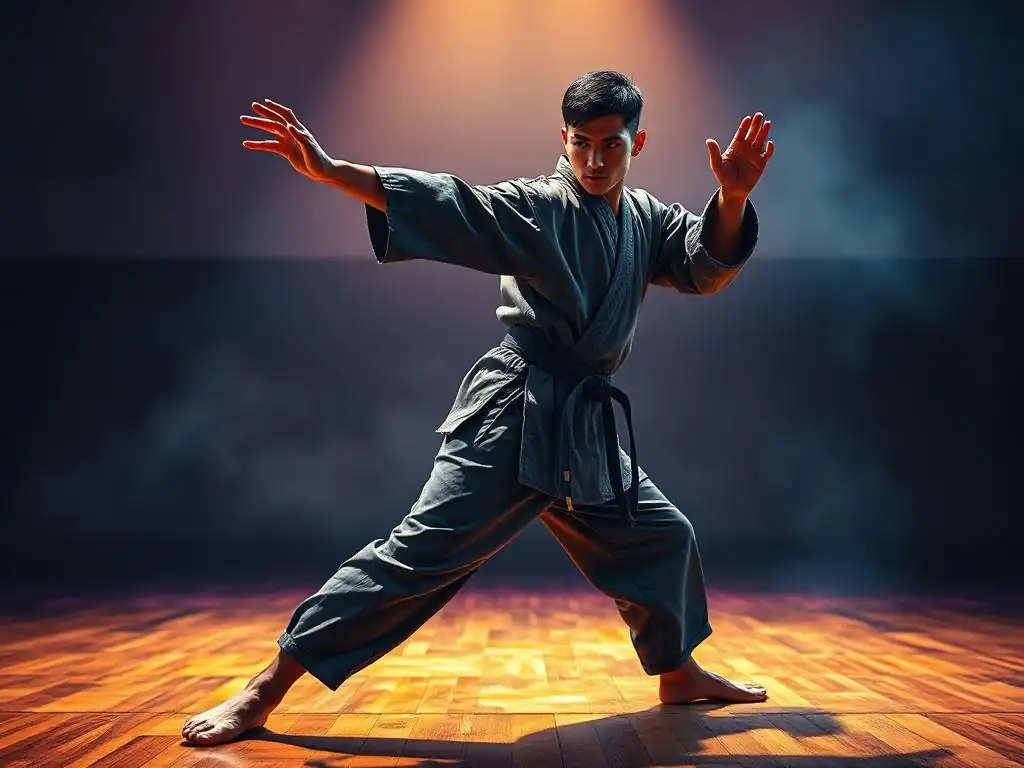
Welcome to Martial Arts Mastery, where we delve deep into the world's fighting traditions. Ever wonder how Taekwondo masters achieve that seemingly effortless precision in their patterns? This article unlocks the secrets! Explore effective Taekwondo pattern accuracy drills designed to elevate your form and technique, and discover how to bring unparalleled sharpness to your practice. Let's begin the journey to mastery...
- Introduction: Mastering Taekwondo Patterns Through Precision
- Understanding the Fundamentals of Accurate Taekwondo Patterns
- Taekwondo Pattern Accuracy Drills: A Step-by-Step Guide
- Advanced Drills for Taekwondo Poomsae Mastery
- Common Mistakes to Avoid When Practicing Taekwondo Pattern Accuracy Drills
- Integrating Taekwondo Pattern Accuracy Drills into Your Training Regimen
- Beyond Drills: Cultivating a Mindset of Precision in Taekwondo
- Conclusion: Achieving Excellence Through Dedicated Practice of Taekwondo Pattern Accuracy Drills
-
Frequently Asked Questions
- What are Taekwondo patterns, and why is accuracy important?
- What types of drills can improve accuracy in Taekwondo patterns?
- How often should I practice accuracy drills to see improvement?
- What are some common mistakes that hinder accuracy in Taekwondo patterns?
- How can I use self-assessment to track my progress in Taekwondo pattern accuracy?
- Final Reflection: Cultivating Mastery Through Precision
- Unleash Your Inner Taekwondo Master Now!
Introduction: Mastering Taekwondo Patterns Through Precision
The Importance of Accuracy in Taekwondo Poomsae
Accuracy in Taekwondo patterns, known as Poomsae (or Hyung in some styles), is not merely about aesthetics; it is fundamental to demonstrating a true understanding of the art. Each stance, block, strike, and kick within a pattern holds specific meaning and purpose, often simulating defense against multiple imaginary opponents. Precise execution ensures that the technique would be effective in a real-world application, demonstrating power generation through correct body mechanics, balance, and timing.
A slight deviation in hand position, foot placement, or body angle can drastically alter the effectiveness of a technique, rendering it weak or vulnerable. For instance, a low block (Arae Makgi) executed without the forearm properly rotated and the body angled correctly loses its defensive integrity against a low attack.
Furthermore, accuracy is a key component judged in grading examinations and competitions. Judges meticulously assess the technical correctness of each movement, the power demonstrated, the balance maintained, and the overall flow of the pattern. Minor inaccuracies, such as a stance being too wide or too narrow, a chambering hand being out of place, or a strike lacking proper snap, can lead to point deductions.
Achieving black belt ranks often requires a deep understanding and precise execution of a set number of patterns, typically ranging from Taegeuk 1 to Koryo for 1st Dan, and progressing through higher patterns like Keumgang, Taebaek, Pyongwon, Shipjin, Jitae, Cheonkwon, Hansu, and Ilyeo for subsequent Dans. Each pattern introduces increasing complexity and demands even greater Taekwondo pattern accuracy drills to master.
Why Taekwondo Pattern Accuracy Drills Are Essential for Improvement
While simply repeating patterns is necessary, focused Taekwondo pattern accuracy drills are crucial because they isolate specific elements of performance, allowing practitioners to target weaknesses and refine individual components. Patterns are complex sequences, and trying to perfect everything at once can be overwhelming. Drills break down this complexity into manageable parts.
For example, a drill might focus solely on the transition between two specific stances, ensuring correct weight distribution and footwork, or it might isolate a single blocking technique, emphasizing proper chambering, execution, and finishing position. This granular approach facilitates deeper learning and muscle memory development for each distinct movement.
Dedicated Taekwondo pattern accuracy drills also provide opportunities for self-assessment and feedback. Practicing techniques in isolation or under specific constraints (like slow motion or blindfolded) heightens body awareness, making practitioners more attuned to subtle errors they might overlook during a full pattern run-through. Receiving targeted feedback on a specific stance or hand technique during a drill is far more effective than general comments after completing an entire pattern.
Studies in motor learning suggest that focused, repetitive practice on specific skills leads to faster and more robust improvement than simply performing the whole skill repeatedly. Incorporating these drills systematically can significantly accelerate progress towards mastering the technical precision required for higher-level Taekwondo patterns.
Understanding the Fundamentals of Accurate Taekwondo Patterns
Stance Perfection: The Foundation of Precise Movements
Correct stances are the bedrock of all Taekwondo techniques within patterns. An accurate stance provides stability, balance, and the proper base for generating power and transitioning smoothly to the next movement. For example, in a front stance (Ap Kubi), the front knee must be bent directly over the ankle, the back leg straight, and the feet positioned correctly (usually shoulder-width apart laterally, and about a shoulder-and-a-half to two shoulder-widths front-to-back, depending on the style).
Incorrect weight distribution in a front stance, such as having too much weight on the back leg, will weaken a forward strike or block and make transitioning forward difficult. Conversely, in a back stance (Dwit Kubi), approximately 70% of the weight should be on the back leg, with the front foot lightly touching the ground, allowing for quick front leg techniques or pivots.
Achieving stance perfection requires consistent attention to detail in every practice session. It's not enough to just 'get into' the stance; the practitioner must actively check alignment, weight distribution, knee flexion, and foot angle. Common errors include stances that are too narrow (compromising balance), too wide (limiting mobility), or having bent back legs in front stances (reducing power generation).
Even subtle issues, like the angle of the back foot in a front stance (it should ideally be angled around 25-30 degrees outwards), can impact hip rotation and the power of subsequent techniques. Mastering stances through specific Taekwondo pattern accuracy drills focused solely on entries, exits, and holding stances is paramount before attempting to perfect the movements performed within them.
Proper Technique: Executing Each Movement with Correct Form
Proper technique in Taekwondo patterns involves executing each block, strike, and kick with the correct trajectory, body mechanics, timing, and finishing position. Every movement has a prescribed path and end point designed for maximum effectiveness and efficiency.
For instance, a middle block (Momtong Makgi) typically involves bringing the blocking arm across the body from the opposite side, chambering near the opposite shoulder or hip, and extending it outwards to intercept an incoming attack at the midline of the body, with the forearm slightly angled. The non-blocking hand (the 'balance hand') also plays a crucial role, often pulling back to the hip (chambering) to aid balance and generate counter-rotation power (the 'reaction force').
Executing techniques with correct form involves more than just the visible action; it includes subtle internal mechanics like hip rotation, core engagement, and the precise timing of muscle contractions. A punch (Jireugi), for example, gains significant power from the snap of the wrist at the point of impact and the rotation of the hips and torso. Without this coordinated body movement, the punch becomes a weak arm push.
Similarly, kicks require proper chambering, extension, and retraction for speed, power, and balance. Focusing on these technical details through Taekwondo pattern accuracy drills that isolate specific movements, such as practicing a single punch 50 times focusing only on hip rotation and wrist snap, builds the precise muscle memory needed for fluid and powerful execution within the pattern sequence.
Balance and Coordination: Achieving Fluidity and Control
Balance and coordination are the threads that weave individual techniques and stances into a cohesive and accurate Taekwondo pattern. Excellent balance allows a practitioner to execute powerful techniques without losing stability, transition smoothly between stances, and maintain composure throughout the pattern. Coordination involves the harmonious working of different body parts – arms, legs, torso – to perform movements efficiently and effectively.
For example, a powerful side kick (Yup Chagi) requires coordination between lifting the knee, extending the leg, rotating the hips, and using the arms for balance, all while standing on one leg. Poor coordination might result in a wobbly kick, reduced power, or a loss of balance upon landing.
Developing balance and coordination is an ongoing process that is significantly enhanced by Taekwondo pattern accuracy drills. Drills that require holding challenging stances for extended periods (e.g., 30 seconds in a back stance) or executing techniques while minimizing body sway directly target balance.
Coordination is improved by practicing complex sequences slowly, ensuring each part of the body moves in the correct relationship to others, and then gradually increasing speed while maintaining control. Activities like stepping drills, line drills focusing on precise foot placement, and practicing transitions between stances repeatedly without adding strikes or blocks are examples of drills that hone these essential qualities, leading to patterns that are not just technically correct but also fluid and controlled.
Taekwondo Pattern Accuracy Drills: A Step-by-Step Guide
Drill 1: Focused Repetition of Individual Movements
Breaking Down Complex Techniques into Manageable Segments
Taekwondo patterns are composed of sequences of movements, but each sequence is built from individual techniques: stances, blocks, strikes, and kicks. Complex techniques, like a jumping side kick followed by a landing into a specific stance and an immediate block, can be daunting. This drill focuses on isolating just one part of the sequence or one specific technique within the pattern.
For example, if a pattern includes a turning side kick, the drill would involve practicing only the turning side kick repeatedly, perhaps 20-30 times on each leg, without the preceding or succeeding movements. The focus is entirely on the execution of that single technique: the pivot, chambering, extension, retraction, and landing. This isolation allows the practitioner to dedicate their full attention to refining the specific body mechanics required for that movement, identifying and correcting subtle flaws like insufficient hip turn or poor leg extension.
Another application is breaking down a complex transition. If a pattern requires moving from a back stance to a front stance while executing a punch, this drill would isolate only the footwork and weight shift of that transition, perhaps practicing it 50 times forward and backward.
By removing the complexity of the upper body movement initially, the practitioner can ensure the foundational footwork and stance mechanics are perfect before adding the arm technique back in. This segmented approach is highly effective because it prevents the practitioner from being overwhelmed and allows for concentrated effort on mastering one small piece at a time, which then contributes to the accuracy of the entire pattern.
Emphasizing Form and Alignment During Repetition
Simply repeating a movement is not enough; the key to this drill is mindful repetition that emphasizes perfect form and alignment. During each repetition, the practitioner must actively check their body position against the ideal standard for that technique. This involves checking details like the angle of the wrist, the height of the block, the straightness of the back leg in a stance, or the alignment of the shoulders and hips.
It's often helpful to use a mirror or have a partner observe during this drill. For instance, when practicing a knife hand block (Sonkal Makgi), repeated 25 times per arm, the focus isn't just on moving the arm, but on ensuring the hand is angled correctly, the elbow is bent at the right degree, the non-blocking hand is properly chambered, and the body's centerline is protected.
This emphasis on form over speed or quantity is what makes the repetition effective for building Taekwondo pattern accuracy drills. Instead of rushing through 100 repetitions of a punch with poor form, it is far more beneficial to do 20 repetitions slowly and deliberately, constantly checking that the fist is aligned with the forearm, the elbow is not locked out, and the power is generated from the core and hips.
Using visual cues, like lines on the floor to mark stance width or targets to aim for during striking drills, can help reinforce correct alignment. This deliberate focus during repetition builds precise muscle memory, ensuring that when the technique is performed within the full pattern, the correct form is automatic.
Drill 2: Mirror Practice for Enhanced Self-Awareness
Identifying and Correcting Flaws in Your Technique
Practicing Taekwondo patterns and individual techniques in front of a mirror is one of the most direct ways to gain visual feedback and enhance self-awareness of your movements. When you perform a technique or a sequence from a pattern, the mirror allows you to see exactly what your body is doing in real-time. This immediate visual feedback is invaluable for identifying discrepancies between what you feel you are doing and what you are actually doing.
For example, you might feel that your middle punch is going straight, but in the mirror, you observe that your elbow is flaring out or your fist is dropping below shoulder height. Similarly, you might think your back stance is deep enough, only to see in the mirror that your back leg is bent or your weight distribution is incorrect.
Using a mirror for Taekwondo pattern accuracy drills allows you to become your own first line of defense against developing bad habits. By performing a movement slowly and observing carefully, you can spot subtle flaws like a slightly misplaced foot, an incorrect hand chambering, or a lack of hip rotation. Once identified, you can then immediately attempt to correct the movement, watching in the mirror to see if the adjustment is effective.
This iterative process of perform, observe, correct, and repeat is highly effective for refining the details of every technique and stance, leading to significantly improved accuracy in your patterns. Many high-level practitioners spend considerable time drilling in front of mirrors precisely for this diagnostic capability.
Developing a Stronger Sense of Body Positioning
Beyond identifying specific technical flaws, mirror practice helps develop a stronger overall sense of body positioning and spatial awareness, which is critical for accurate patterns. Patterns involve moving through space, changing directions, and executing techniques relative to your body's orientation.
Practicing in a mirror helps you understand where your limbs are in relation to your torso, where your body is in relation to your stance lines, and how your body rotates during turns and transitions. This improved proprioception – the sense of the relative position of one's own parts of the body and strength of effort being employed in movement – is vital for performing techniques precisely without constant visual checks.
As you become more adept at practicing with a mirror, you start to internalize the feeling of correct alignment and positioning. You learn what a perfectly executed front stance feels like, or what the correct angle of your forearm feels like during a block. This internal sense becomes increasingly important as you progress, as you won't always have a mirror available during grading or competition.
By regularly using the mirror in your Taekwondo pattern accuracy drills, you train both your visual perception and your internal body awareness, ultimately enabling you to perform patterns accurately based on feel, even without external feedback. This dual development is key to consistent and reliable pattern execution.
Drill 3: Slow-Motion Practice for Increased Control
Mastering the Subtle Nuances of Each Movement
Practicing Taekwondo patterns or individual techniques in slow motion is an incredibly effective drill for enhancing accuracy and control. When movements are performed at full speed, it's easy for small inaccuracies to slip by unnoticed, or for the practitioner to rely on momentum rather than precise muscle control. Slow motion forces you to engage the correct muscles throughout the entire range of motion and pay close attention to the subtle nuances of each technique.
Every fraction of the movement, from the initial chambering to the final snap and retraction, can be examined and refined. For example, performing a slow-motion roundhouse kick (Dollyo Chagi) allows you to focus on maintaining the chamber position, extending the leg fully with the hip leading, snapping the foot at the point of imaginary impact, and retracting along the same path – all while balancing on the supporting leg.
This drill highlights areas where control is lacking or where momentum is typically used to compensate for poor technique. If you find yourself wobbling during a slow transition between stances, it indicates a need to improve balance and controlled weight transfer. If a block feels jerky or incomplete in slow motion, it suggests issues with muscle engagement or trajectory.
By practicing slowly, you gain a deeper understanding of the mechanics of each movement and can consciously work on perfecting the path, timing, and tension required at each stage. This deliberate, slow practice builds fine motor control and a nuanced understanding of how your body should move, which translates into greater precision when performing at speed.
Improving Coordination and Balance at a Reduced Pace
Slow-motion practice significantly challenges and improves both coordination and balance. Executing complex movements or transitions slowly requires greater muscular control and stability than relying on the inertia of faster movement. For example, maintaining balance in a back stance for several seconds while slowly executing a block requires more core strength and proprioceptive awareness than just quickly passing through the stance. Similarly, coordinating the multiple steps and hand movements involved in a complex turn or a combination technique in slow motion demands precise control over each body part's movement relative to the others.
This drill is particularly effective for identifying and correcting issues with sequencing and timing within a movement. When done slowly, you can ensure that, for instance, the hip rotation for a punch happens concurrently with the arm extension, rather than slightly before or after. This refined coordination is crucial for generating maximum power and maintaining accuracy.
By practicing these movements at a reduced pace, you build the foundational control and coordination needed to perform them correctly and accurately when the speed is increased. It's like learning to drive a complex manual transmission car slowly before attempting to navigate rush hour traffic; mastering the mechanics at a low speed makes high-speed performance possible and safe.
Drill 4: Target-Based Drills for Precision and Power
Using Targets to Refine Kicking and Striking Techniques
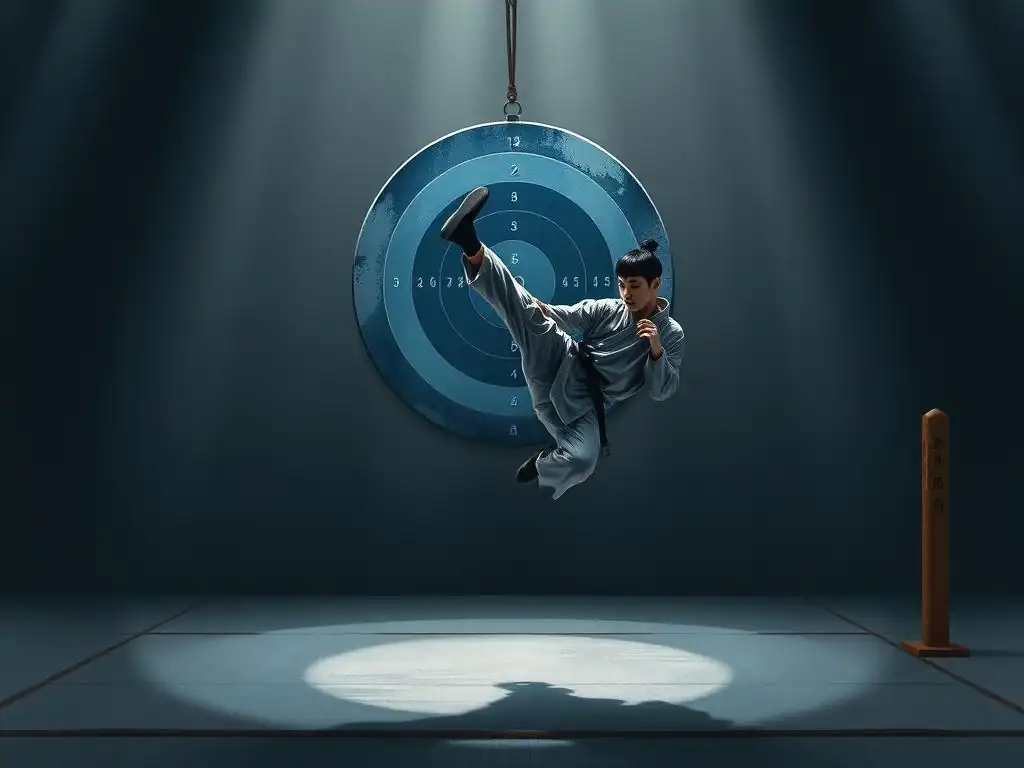
Target-based drills are invaluable for adding a practical dimension to Taekwondo pattern accuracy drills, specifically for kicks and strikes. While pattern practice involves imaginary opponents, hitting a physical target provides immediate, tangible feedback on the accuracy, power, and trajectory of a technique. Targets can range from simple focus mitts held by a partner, to kicking pads, or even stationary targets like a punching bag or purpose-built Taekwondo targets.
Using targets forces the practitioner to aim precisely at a specific point, reinforcing the concept of hitting a vital area on an opponent. For example, repeatedly practicing a middle section punch (Momtong Jireugi) on a focus mitt held at solar plexus height helps refine the height, trajectory, and extension of the punch.
This drill helps correct common errors like hitting too high or too low, or having the technique veer off course. Practicing a side kick (Yup Chagi) aimed at a small spot on a kicking shield ensures the foot is striking with the correct part (the blade of the foot) and that the kick is traveling in a straight line. Furthermore, hitting a target with proper form generates a satisfying 'pop' or impact, providing auditory and tactile feedback on power delivery.
If the sound is weak or the target barely moves, it's an indicator that the technique lacks snap, proper body weight transfer, or hip rotation, prompting the practitioner to adjust their form for greater accuracy and power. Many schools incorporate target work, estimating students might throw hundreds of kicks per week on pads to refine technique and power.
Developing Accurate Power Delivery in Your Patterns
Accuracy in Taekwondo patterns is not just about hitting the right spot; it's also about delivering power effectively at the intended point of impact. Target-based drills help connect the technical form with the application of power. By practicing techniques like a turning kick (Dollyo Chagi) on a heavy bag or a target shield, the practitioner learns how to channel their body weight and rotational force into the kick to generate maximum impact.
This isn't just about brute strength, but about timing the extension, hip rotation, and snap precisely as the foot makes contact with the target. The feedback from the target (how much it moves, the sound it makes) provides a direct measure of the effectiveness of the power delivery.
Integrating target drills into Taekwondo pattern accuracy drills helps bridge the gap between the stylized movements of Poomsae and their practical application. While you don't hit imaginary opponents in a pattern, the techniques are intended to be powerful and effective. Practicing these same techniques on targets helps develop the underlying power generation mechanics.
For instance, after practicing a sequence from a pattern involving a combination of strikes, you might then isolate those strikes and practice them on focus mitts, focusing on delivering them with the same power and accuracy you would in a real situation. This cross-training ensures that the techniques within your patterns are not just visually correct, but also possess the latent power they are designed to carry.
Drill 5: Partner Drills for Real-Time Feedback
Receiving Immediate Corrections from a Training Partner
Partner drills are invaluable for receiving real-time, external feedback on your Taekwondo pattern accuracy. While mirror practice offers visual feedback, a training partner can observe your movements from different angles and provide specific, immediate corrections that you might not see or feel yourself. This could involve a partner calling out errors as you perform a sequence, such as "Your front knee is bent in that back stance!"
or "Your hand block is too low!" They can also physically guide you into the correct position, demonstrating the proper angle of a foot or the required depth of a stance. This direct, hands-on feedback is often more impactful than self-correction based on a mirror image.
A partner can also simulate the context of the pattern more effectively. For example, practicing a defensive block, the partner can simulate the incoming 'attack' (safely, of course), allowing the practitioner to practice the block with correct timing and distance. This adds a dynamic element that static solo practice lacks.
Furthermore, a partner can help with timing within the pattern, ensuring that movements flow together correctly and are executed with the appropriate rhythm. Working with a partner for Taekwondo pattern accuracy drills provides an external perspective essential for identifying blind spots in your own self-assessment and receiving corrections from someone who understands the technical requirements of the pattern.
Improving Timing and Coordination in a Dynamic Setting
Taekwondo patterns are not just a collection of static poses; they are dynamic sequences of movements performed with specific timing and rhythm. Partner drills can significantly enhance the timing and coordination required for accurate pattern execution. While one partner performs a section of the pattern, the other can provide cues or even simulate an 'attack' at the precise moment a block or counter-attack is meant to occur.
This helps the practitioner develop the correct timing for initiating and completing techniques within the flow of the pattern. For instance, practicing a defensive sequence where the partner lightly pushes or makes contact helps the practitioner time their block or evasion correctly, rather than just going through the motions.
Partner drills can also involve synchronized practice, where two or more practitioners perform the same pattern or sequence together. This requires immense coordination and attention to detail to ensure everyone is moving in sync, executing techniques at the same speed, and hitting the same points.
This type of drill highlights inconsistencies in timing, speed, or technique between practitioners and encourages everyone to refine their movements for perfect harmony. By providing a dynamic, interactive environment, partner drills push practitioners beyond solo repetition, forcing them to react, time, and coordinate their movements more accurately, which directly translates to more precise and fluid Taekwondo patterns.
Advanced Drills for Taekwondo Poomsae Mastery
Drill 6: Blindfolded Practice for Enhanced Body Awareness
Blindfolded practice is an advanced drill that strips away visual feedback, forcing the practitioner to rely entirely on proprioception and muscle memory to execute Taekwondo patterns accurately. Performing a pattern blindfolded highlights any inconsistencies or uncertainties in your movements. If you are unsure about the correct angle of a stance, the precise distance of a step, or the exact trajectory of a block, you will quickly discover this when you cannot see.
For example, attempting to perform the 9th pattern, Keumgang, blindfolded requires an incredibly refined internal map of the body's position in space and the sequence of movements. The complex turns and transitions in patterns like Taebaek or Shipjin become significant challenges that test your internalized understanding.
This drill dramatically enhances body awareness by forcing a deeper connection between your brain and muscles. You must feel the correct weight distribution in your stances, the proper tension in your core for balance, and the exact path your limbs are traveling. Any deviation from the correct form will feel 'wrong'.
Regularly incorporating blindfolded practice into your Taekwondo pattern accuracy drills trains your body to perform techniques correctly based on feel alone. This is crucial for achieving true mastery, as it means your accuracy is not dependent on external cues like a mirror or even your own vision. It builds a profound level of internal precision.
Drill 7: Speed Variations to Improve Adaptability
Practicing Taekwondo patterns at varying speeds, beyond just slow motion and full speed, helps improve adaptability and control. While grading and competition require specific speeds (often judged based on the complexity and rhythm of the pattern, typically taking between 45 seconds and 1 minute 15 seconds for patterns like Taegeuk 1-8), training at different tempos offers unique benefits. Practicing slightly faster than competition speed (while maintaining form) can build explosive power and quick transitions. Practicing at a consistent, moderate speed helps refine the rhythm and flow between techniques.
This drill is not about sacrificing form for speed, but about developing the ability to maintain accuracy across a range of tempos. If your form breaks down significantly when you increase speed, it indicates that your underlying technique is not yet solid, or you are relying too heavily on conscious thought rather than muscle memory.
By gradually increasing the speed in your Taekwondo pattern accuracy drills while strictly maintaining form, you train your body to execute precise movements rapidly. This adaptability is valuable in real-world self-defense scenarios, where techniques must often be applied quickly and decisively, and it adds a layer of dynamic control to your pattern performance.
Drill 8: Mental Visualization Techniques for Perfect Execution
Mental visualization, also known as imagery training, is a powerful drill for enhancing Taekwondo pattern accuracy without performing a single physical movement. This involves closing your eyes and vividly imagining yourself performing the pattern perfectly.
You should visualize every detail: the feel of the stance under your feet, the path of your hand during a block, the snap of your wrist during a punch, the tension in your core, the rhythm of the pattern, and the feeling of balance. Engage all your senses in the visualization – hear the 'pop' of your techniques, feel the air moving, see the imaginary opponents.
This drill works by strengthening the neural pathways associated with performing the movements. Research has shown that visualizing a movement can activate the same brain regions as actually performing it. Regularly visualizing your patterns with perfect technique reinforces the correct sequence, timing, and body mechanics in your mind.
It helps identify areas where your mental understanding of the pattern might be unclear (if you get 'stuck' during visualization) and improves your ability to focus and concentrate throughout the pattern. Incorporating mental visualization into your daily routine, even for just 5-10 minutes, is a highly effective, low-impact method for improving Taekwondo pattern accuracy drills and overall performance.
Common Mistakes to Avoid When Practicing Taekwondo Pattern Accuracy Drills
Rushing Through Movements Without Proper Form
One of the most common and detrimental mistakes in practicing Taekwondo patterns and their associated drills is prioritizing speed or quantity over form. Students often feel pressure to perform patterns quickly, either for grading or competition, and this leads to rushing through techniques without fully completing them or ensuring correct body mechanics. A rushed movement is almost always an inaccurate movement.
For example, skipping the proper chambering before a block or punch compromises both the power and the defensive/offensive integrity of the technique. Failing to fully extend a kick or retract it cleanly reduces its effectiveness and can throw off balance for the next movement.
To avoid this, focus explicitly on executing each movement with perfect form first, even if it means performing the pattern or drill at a snail's pace. Speed should only be added gradually after accuracy is consistently achieved at a slower tempo. Think of it as building a strong foundation; you wouldn't rush building the base of a house.
Dedicate specific Taekwondo pattern accuracy drills solely to slow, deliberate practice where the only goal is technical perfection, irrespective of speed. It is far better to perform a pattern or a drill 5 times perfectly and slowly than 20 times quickly but sloppily.
Ignoring Feedback from Instructors or Training Partners
Another significant pitfall is failing to actively listen to and implement feedback from experienced instructors or training partners. External observers can spot flaws in your technique that you are completely unaware of, simply because you cannot see yourself from their perspective or you are too focused on the overall sequence.
An instructor might point out that your shoulders are too tense, your stance is too wide, or your hip rotation is mistimed – subtle details that make a big difference in accuracy and power. Dismissing or neglecting this feedback slows down your progress and allows bad habits to become ingrained.
Make it a point to actively seek feedback during your Taekwondo pattern accuracy drills. Ask your instructor to watch you perform a specific pattern or drill and provide critiques. When working with a partner, encourage them to be honest and point out every detail they notice.
When you receive feedback, make a conscious effort to understand why the correction is necessary and immediately try to implement it in your subsequent repetitions. Don't be defensive; view feedback as a valuable gift that helps you improve. Keeping a training journal to note common feedback points can also help you focus on specific areas during solo practice.
Neglecting the Importance of Warm-Up and Cool-Down
Skipping warm-up and cool-down routines is a common mistake that not only increases the risk of injury but can also negatively impact the effectiveness of Taekwondo pattern accuracy drills. A proper warm-up prepares the muscles and joints for the dynamic movements required in patterns, improving flexibility, range of motion, and blood flow. Attempting complex stances, high kicks, or rapid transitions with cold muscles can lead to strained muscles or pulled ligaments.
Stiffness and limited mobility resulting from inadequate warm-up directly hinder your ability to execute techniques with the required precision and range. For instance, tight hamstrings can prevent you from achieving the correct depth in a front stance or fully extending a kick.
Similarly, neglecting the cool-down and stretching can lead to muscle soreness and stiffness, impacting your ability to perform accurately in subsequent training sessions. Flexibility and mobility are crucial for executing Taekwondo techniques with proper form and amplitude. A consistent cool-down helps maintain and improve this necessary range of motion. Incorporating dynamic stretching before practice and static stretching after is essential. Treating your body with care by consistently warming up and cooling down ensures you can train effectively, safely, and with the necessary physical readiness to focus on the intricate details of Taekwondo pattern accuracy drills.
Integrating Taekwondo Pattern Accuracy Drills into Your Training Regimen
Creating a Structured Practice Schedule
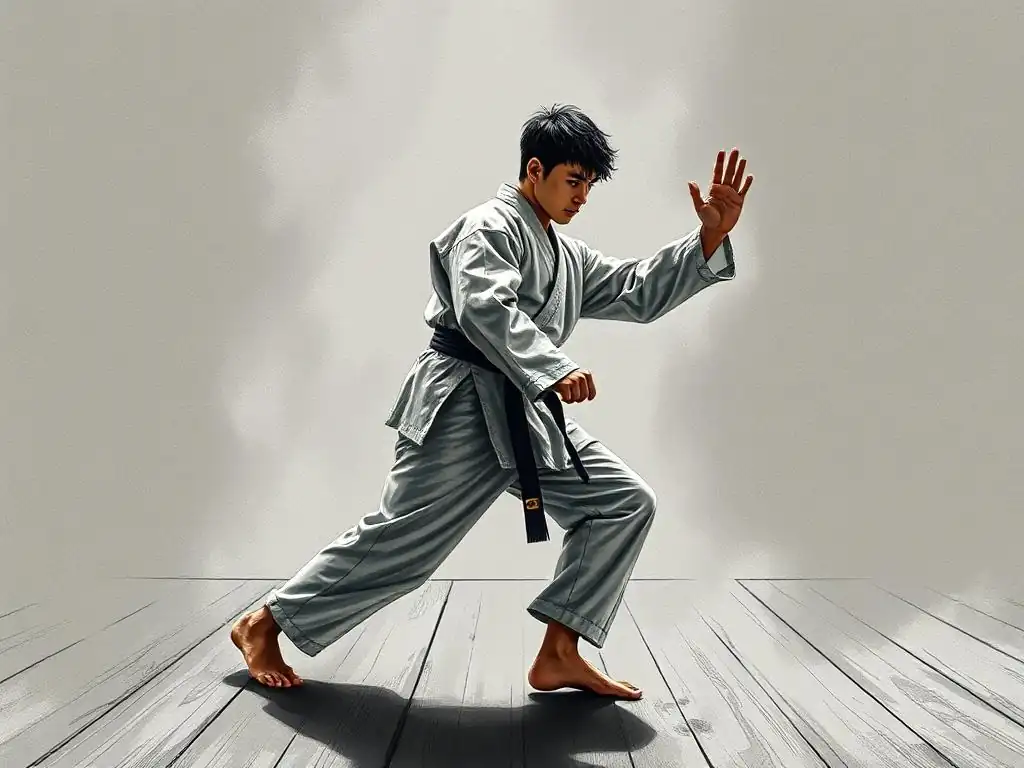
To effectively improve your Taekwondo pattern accuracy, it is crucial to move beyond random practice and create a structured training schedule that specifically incorporates dedicated drills. Simply running through patterns repeatedly isn't the most efficient way to target specific weaknesses. A structured schedule allows you to allocate specific time slots to different types of Taekwondo pattern accuracy drills.
For example, one session might focus entirely on stance transitions for the patterns you are currently working on. Another session could be dedicated to target work for the kicks and strikes within those patterns. A third might involve slow-motion practice or mirror work on specific challenging sequences.
Your schedule should ideally include both solo practice time and opportunities to train with partners or under instructor supervision. Solo practice allows for focused repetition and self-correction using drills like slow motion or mirror work. Partner practice provides external feedback and dynamic training opportunities.
Instructor-led sessions are essential for receiving expert guidance and ensuring you are practicing correctly. Aim for consistency, even if it's just 15-20 minutes of focused drill work several times a week, rather than one long, unfocused session. A structured schedule ensures that all aspects of pattern accuracy – stances, techniques, balance, coordination, power, and timing – receive adequate attention through targeted Taekwondo pattern accuracy drills.
Tracking Your Progress and Identifying Areas for Improvement
Effective training involves not just practicing, but also tracking your progress and continually identifying areas that need further work. This applies directly to improving Taekwondo pattern accuracy. Keep a training journal where you note which drills you performed, how many repetitions, what feedback you received, and what specific areas you focused on. For example, after a session of mirror practice focusing on the first half of Taegeuk Sa Jang, you might note: "Mirror Drill: Taegeuk 4, movements 1-10.
Noticed left back stance too wide, right middle block finishing too high. Focused on correcting stance width (used floor line) and block height (used shoulder height reference). Progress: Stance improved 7/10 times, block height still inconsistent."
Regularly reviewing your notes helps you see patterns in your errors and understand which Taekwondo pattern accuracy drills are most effective for you. You can also use video recording (if permitted in your training space) to watch yourself perform patterns and drills, providing objective visual evidence of your progress and areas for improvement.
Set specific, measurable goals for your accuracy training, such as "Achieve consistent back stance depth in Taegeuk Oh Jang by end of month" or "Reduce timing errors in the transition from movement X to Y in pattern Z by 50%". Tracking progress keeps you motivated and ensures that your Taekwondo pattern accuracy drills are targeted and efficient.
The Role of Deliberate Practice in Taekwondo Mastery
Deliberate practice is a concept widely recognized in the study of expertise, and it is absolutely fundamental to achieving mastery in Taekwondo patterns, particularly regarding accuracy. Deliberate practice is not simply repeating something you can already do well; it involves focused, structured training specifically designed to improve performance on a particular skill. It requires intense concentration, immediate feedback, and constant pushing outside your comfort zone. Applying deliberate practice to Taekwondo pattern accuracy drills means actively seeking out the most challenging aspects of your patterns and dedicating specific, focused time to practicing them imperfectly until they become perfect.
This contrasts with 'naive practice,' which is simply putting in hours without a specific plan or focus on improvement. Deliberate practice might involve spending an entire 30-minute session working only on perfecting the pivot and turn in one specific section of a pattern, receiving feedback, analyzing errors, and making minute adjustments.
It means choosing drills that target your weakest areas, even if they are frustrating, rather than sticking to drills where you already excel. Embracing the principles of deliberate practice in your Taekwondo pattern accuracy drills is the most effective pathway to truly mastering the technical precision required for high-level Taekwondo.
Beyond Drills: Cultivating a Mindset of Precision in Taekwondo
The Connection Between Mental Focus and Physical Accuracy
Achieving high levels of accuracy in Taekwondo patterns is not solely a physical endeavor; it is deeply intertwined with mental focus. A wandering mind leads to sloppy movements. When your mind is distracted, you are less likely to pay attention to the subtle details of your stance, the precise trajectory of your hand, or the correct timing of your breath. Conversely, intense concentration allows you to maintain awareness of your body's position, engage the correct muscles, and execute techniques with deliberate intention. This mental discipline is as critical as physical strength or flexibility.
Cultivating mental focus during Taekwondo pattern accuracy drills involves minimizing distractions and being fully present in the moment. This means leaving your worries outside the dojang, turning off your phone, and dedicating your complete attention to the task at hand. Practice mindfulness techniques, such as focusing on your breathing or the physical sensations in your body, to improve your ability to stay centered during practice.
Learn to quiet the internal chatter and direct your mental energy towards the execution of each movement. A focused mind allows you to harness your physical capabilities for maximum precision, transforming practice from mere repetition into a powerful tool for refinement.
Developing Patience and Perseverance in Your Training
Mastering Taekwondo pattern accuracy is a journey that requires significant patience and perseverance. Progress is rarely linear; there will be plateaus, setbacks, and moments of frustration when a particular technique or transition seems impossible to perfect. It takes hundreds, if not thousands, of repetitions of Taekwondo pattern accuracy drills to build the necessary muscle memory and refine techniques to a high degree of precision. Expecting instant results or becoming discouraged by slow progress is counterproductive.
Embrace the process of gradual improvement. Understand that each practice session, even those that feel challenging, contributes to your long-term development. Celebrate small victories, such as finally executing a difficult turn smoothly or correcting a long-standing stance error. Develop resilience by viewing mistakes not as failures, but as opportunities to learn and adjust your approach. Perseverance is the willingness to keep practicing, drilling, and refining even when it's difficult. This mental fortitude is a hallmark of dedicated martial artists and is essential for pushing past challenges and achieving true accuracy in your Taekwondo patterns.
Embracing the Journey of Continuous Improvement in Taekwondo Poomsae
Achieving mastery in Taekwondo patterns is not a final destination but an ongoing journey of continuous improvement. Even black belts with years of experience continue to refine their patterns, seeking greater accuracy, power, and understanding. The pursuit of perfect accuracy is a lifelong endeavor. There is always a subtle nuance to refine, a transition that could be smoother, or a technique that could be more powerful. Embracing this mindset of continuous learning is key to staying motivated and dedicated to your Taekwondo pattern accuracy drills.
View each practice session, each drill, and each pattern as an opportunity to learn something new about your body, your technique, and the art of Taekwondo itself. Be open to trying new drills, seeking different perspectives, and constantly analyzing your own performance with a critical, yet constructive, eye. The dedication to refining your Taekwondo pattern accuracy is a reflection of your commitment to the principles of the art – discipline, perseverance, and self-improvement. This journey of continuous refinement is what ultimately leads to a deeper understanding and a more profound connection with your Taekwondo practice.
Conclusion: Achieving Excellence Through Dedicated Practice of Taekwondo Pattern Accuracy Drills
Key Takeaways for Enhancing Your Taekwondo Pattern Performance
Improving accuracy in your Taekwondo patterns is a multifaceted process that requires dedicated effort and a focused approach. Key takeaways include understanding that accuracy is fundamental to the effectiveness and scoring of Poomsae, and that specialized Taekwondo pattern accuracy drills are essential for isolating and perfecting individual techniques and transitions. Foundation matters: perfect stances, correct technique, and strong balance and coordination are non-negotiable prerequisites.
Utilizing drills like focused repetition, mirror practice, slow motion, target work, and partner feedback provides concrete methods for identifying and correcting flaws. Advanced drills like blindfolded practice and speed variations push your control and adaptability, while mental visualization enhances your internal blueprint of perfect form.
Crucially, avoid common mistakes such as rushing, ignoring feedback, and neglecting physical preparation. Integrate your drills into a structured schedule, track your progress diligently, and approach your training with deliberate practice. Beyond the physical, cultivate a mindset of precision, recognizing the vital link between mental focus and physical execution. Develop patience and perseverance, understanding that mastery is a long-term commitment. By consistently applying these principles and dedicating yourself to Taekwondo pattern accuracy drills, you lay a solid foundation for achieving excellence in your Taekwondo patterns.
The Path to Mastery: Consistent Effort and Focused Training
The path to mastery in Taekwondo patterns is paved with consistent effort and focused training. There are no shortcuts; achieving exceptional accuracy comes from the cumulative effect of countless repetitions, thoughtful analysis, and persistent refinement. It requires showing up consistently for practice, even on days you don't feel motivated. It demands focused attention during every drill, actively seeking out imperfections and working to correct them. It means embracing the challenge of difficult techniques and transitions, rather than avoiding them.
By committing to a regimen that includes regular Taekwondo pattern accuracy drills, seeking out quality instruction and feedback, and maintaining a mindset of continuous improvement, you will steadily elevate your performance. The precision gained in your patterns will not only improve your scores in gradings and competitions but will also deepen your understanding of Taekwondo techniques and enhance their practical applicability. Ultimately, the dedication to accuracy in Poomsae is a reflection of your commitment to the art itself, leading to a more fulfilling and effective Taekwondo journey.
Frequently Asked Questions
What are Taekwondo patterns, and why is accuracy important?
Taekwondo patterns, or poomsae, are prearranged sequences of movements that simulate combat. Accuracy is vital for effective technique execution and demonstrating mastery of fundamental principles.
What types of drills can improve accuracy in Taekwondo patterns?
Drills can focus on stance precision, technique repetition, and target awareness. Examples include mirror drills, target practice with focus mitts, and slow-motion execution.
How often should I practice accuracy drills to see improvement?
Consistency is key. Aim for at least 3-4 sessions per week, incorporating drills into your regular training routine. Focus on quality over quantity for optimal results.
What are some common mistakes that hinder accuracy in Taekwondo patterns?
Common errors include incorrect stances, improper hand and foot placements, and lack of focus on technique. Addressing these flaws through targeted drills is essential.
How can I use self-assessment to track my progress in Taekwondo pattern accuracy?
Record yourself performing patterns and compare them to instructional videos. Seek feedback from instructors and training partners to identify areas for improvement and track your development over time.
Final Reflection: Cultivating Mastery Through Precision
The journey to black belt and beyond in Taekwondo is paved with dedication, discipline, and an unwavering commitment to precision. The pursuit of perfect form in patterns is not merely about aesthetics; it's about embodying the principles of Taekwondo itself: respect, integrity, perseverance, self-control, and indomitable spirit. These drills, meticulously designed to enhance accuracy, are more than just exercises; they are pathways to unlocking a deeper understanding of the art.
This dedication to precision extends far beyond the dojang. The discipline cultivated through these drills translates into a sharper focus, improved problem-solving skills, and a heightened awareness in all aspects of life. The unwavering pursuit of perfection, though perhaps unattainable, shapes us into better versions of ourselves. As Bruce Lee eloquently stated, I fear not the man who has practiced 10,000 kicks once, but I fear the man who has practiced one kick 10,000 times.
This sentiment underscores the profound power of focused, repetitive practice in achieving true mastery.
So, I invite you to embrace the challenge. Incorporate these Taekwondo pattern accuracy drills into your training regimen, not just as a means to improve your form, but as a vehicle for personal growth. Let each movement be a conscious act of dedication, a testament to your commitment to excellence. Strive for precision, not just in your patterns, but in every aspect of your life. The journey may be long and demanding, but the rewards – both within and beyond the dojang – are immeasurable.
Unleash Your Inner Taekwondo Master Now!
Thank you for exploring these Taekwondo pattern drills! We hope you've discovered valuable techniques to refine your precision and elevate your performance. Ready to put your newfound knowledge into action?
Here are a few next steps you can take:
- Dedicate 15 minutes daily to practice the drill that challenges you the most.
- Explore different patterns and identify areas for improvement using these drills.
- Share your experiences and insights with your Taekwondo community to inspire others.
Which of these drills will you implement first to see the biggest impact on your form?