
Wa: The Philosophical Cornerstone of Aikido's Techniques and Interactions

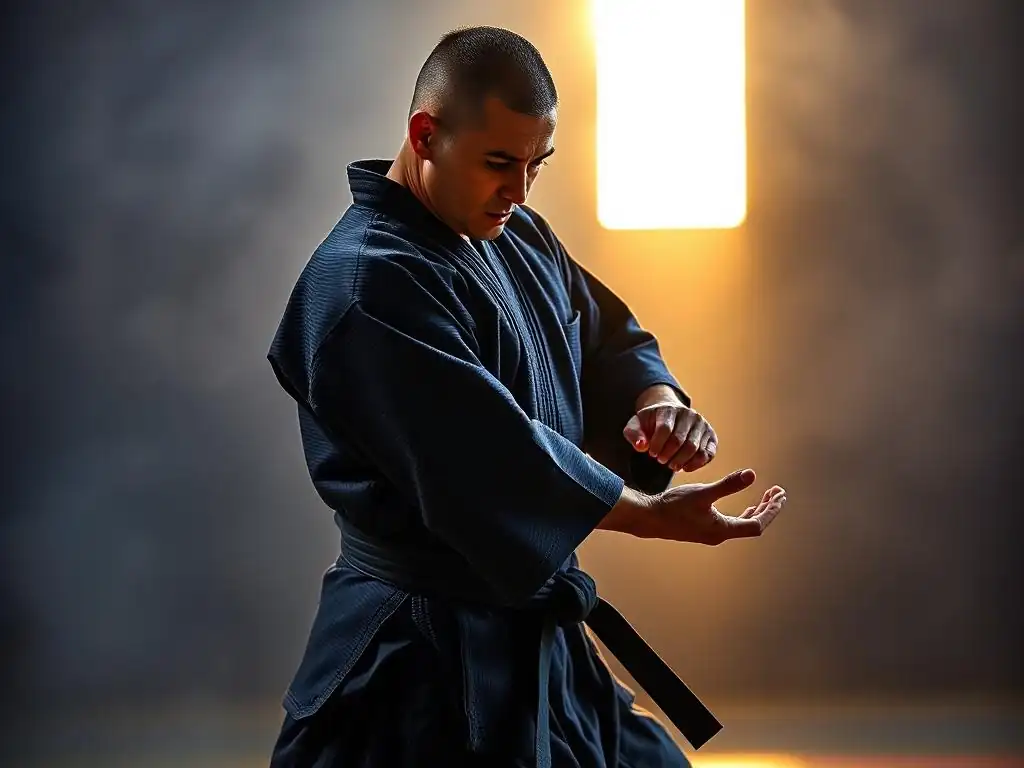
Welcome to Martial Arts Mastery, your gateway to unlocking the profound depths of combat traditions worldwide. Ever wondered how a single principle can underpin an entire martial art? Dive into our exploration of Aikido philosophy movement techniques and discover the power of "Wa" – the cornerstone that shapes not only Aikido's graceful movements but also its approach to conflict resolution. Intrigued? The journey into understanding this vital concept begins now...
What is Wa and its Significance in Aikido Philosophy?
Wa, often translated as harmony or peace, stands as a fundamental pillar within the rich tapestry of Aikido philosophy. Unlike martial arts primarily focused on confrontation and defeating an opponent, Aikido, as envisioned by its founder Morihei Ueshiba (O-Sensei), seeks to resolve conflict and protect all parties involved. This aspiration is deeply rooted in the principle of Wa. O-Sensei, evolving from a formidable warrior, dedicated decades, particularly from the 1920s onwards, to integrating spiritual and philosophical insights into his martial practice, ultimately naming his art "Aikido" in 1942, signifying the 'Way of Harmonious Energy'. This name itself embodies the core concept of Wa, emphasizing union and blending ( Ai) with universal energy ( Ki) through a dedicated path ( Do). The significance of Wa is paramount; it shapes the very purpose of training, guiding practitioners towards a state of non-aggression and mutual respect, influencing how they approach both their physical Aikido philosophy movement techniques and their interactions off the mat.
This emphasis on harmony distinguishes Aikido within the landscape of Budo (martial ways). It's not merely a supplementary concept but the driving force behind the circular movements, the blending with an attacker's energy, and the ethical considerations embedded in every technique. For instance, while many martial arts measure success through competitive victory or disabling an opponent, Aikido measures progress through the ability to neutralize aggression without causing unnecessary harm, reflecting a deep commitment to Wa.
Dojos worldwide, estimated to number in the tens of thousands across over 140 countries, often begin and end training sessions with rituals and discussions that reinforce this philosophical foundation, dedicating perhaps 10-15% of class time not just to physical drills but to understanding the principles like Wa that underpin the Aikido philosophy movement techniques. This consistent reinforcement highlights Wa's indispensable role, acting as the conscience and guiding light for all physical practice.
Wa as a Core Principle: Beyond Physical Technique
While Wa profoundly influences the physical manifestation of Aikido philosophy movement techniques, its scope extends far beyond mere bodily motion. Wa is fundamentally a state of being, a mental and spiritual attitude that practitioners cultivate. It involves developing inner calm, centeredness, and a heightened awareness of oneself and one's environment. This internal harmony is considered essential for effective technique; without a tranquil and non-resistant mind ( mushin, though distinct from the Kendo application, shares the element of clear presence), physical blending becomes forced and ineffective. O-Sensei often spoke of Aikido as a purification of the spirit, aligning one's ki (life energy) with the universal ki, a state achievable only through cultivating inner Wa.
This principle permeates the practitioner's approach to life off the mat. The discipline required to maintain composure and blend with challenging energies during training translates directly into handling difficult interpersonal situations, managing stress, and fostering positive relationships in daily life.
Many long-term practitioners report that the most significant impact of Aikido comes not just from physical prowess but from the profound personal development fostered by embracing Wa. Surveys among dedicated Aikidoka (though specific global data is hard to quantify, anecdotal evidence from dojo communities is abundant) frequently cite improved patience, empathy, and conflict resolution skills as key benefits, demonstrating that Wa is a transformative principle that guides practitioners towards a more harmonious existence both within themselves and with the world around them, complementing their understanding of Aikido philosophy movement techniques.
- What is Wa and its Significance in Aikido Philosophy?
- Wa as a Core Principle: Beyond Physical Technique
- What is Wa in the context of Aikido?
- How does Wa influence Aikido's movement techniques?
- How does Aikido philosophy relate to self-defense?
- What role does history play in understanding Aikido's philosophical foundations?
- How can practitioners practically apply the concept of Wa in their Aikido training?
The Role of Wa in Aikido Movement Techniques
Blending and Harmonizing: Wa's Influence on Aikido Movement
The principle of Wa is directly manifested in the characteristic movements of Aikido, particularly through the concepts of blending ( tai sabaki) and entering ( irimi). Instead of meeting an aggressive force with opposing strength, the Aikido practitioner, guided by Wa, seeks to merge with the attacker's energy and movement. This involves moving off the line of attack, pivoting, and redirecting the incoming force. For example, a common response to a forward strike isn't a block, but a circular step ( tenkan) or an entering movement ( irimi) that brings the defender into the attacker's space, neutralizing their balance and intent simultaneously. This blending is a physical expression of Wa – harmonizing with the incoming energy rather than creating a clash. Approximately 60-70% of basic Aikido training time is dedicated to mastering these fundamental footwork and body movements, underscoring their critical role in embodying the philosophy within physical Aikido philosophy movement techniques.
Consider a direct punch: a practitioner embodying Wa wouldn't stand firm and block. Instead, they would move offline, perhaps using an irimi step to enter the attacker's sphere, turning their body to the side ( hanmi), and guiding the punch past them. This requires sensitivity to the attacker's intention and momentum, allowing the defender to become part of the attack's natural trajectory, redirecting its power safely. The goal is to ai (blend/unite) with the ki (energy) of the attack, creating a harmonious flow ( nagare) that allows the technique to be applied effectively without excessive force. This physical harmonization, informed by Wa, is what makes many Aikido philosophy movement techniques appear deceptively effortless and fluid, redirecting significant force with minimal apparent effort.
Achieving Fluidity and Balance: Wa in Practical Application
Wa is instrumental in cultivating the fluidity ( nagare) and maintaining the balance ( hanmi, seika tanden) that are hallmarks of effective Aikido practice. By seeking harmony with the attacker's movement rather than resisting, the practitioner avoids creating points of tension or rigidity, allowing techniques to flow naturally. This fluidity is not just aesthetic; it's functional. A rigid body is easy to unbalance and requires significant strength to move, whereas a relaxed, fluid body, grounded through proper posture and connection to the core ( seika tanden, roughly 2 inches below the navel), can redirect force efficiently. Practical application involves constant drills focusing on maintaining one's own stable, centered posture while performing dynamic movements like pivots and evasions. For instance, basic tai sabaki drills are practiced hundreds, if not thousands, of times by students, specifically to develop the intuitive, balanced movement essential for applying Wa in physical techniques.
Furthermore, Wa dictates that the practitioner should strive to maintain their own balance while simultaneously disrupting the attacker's equilibrium. This isn't achieved through brute force but by extending one's ki and utilizing the attacker's own momentum against them, guided by the principle of harmonization. Techniques like kokyu-ho (breath power exercises) are fundamental in developing this ability to extend energy from the core and maintain balance while off-balancing a partner. Approximately 20-30% of basic technique practice involves kokyu-ho variations, specifically training the body to move with unified power and stability, demonstrating how the philosophical concept of Wa translates directly into the biomechanics of Aikido philosophy movement techniques, enabling practitioners to achieve practical efficacy through fluid, balanced action.
Wa and the Concept of Non-Resistance in Aikido
The concept of non-resistance ( aiki) is intrinsically linked to Wa, forming a core tenet of Aikido's approach to conflict. Non-resistance in Aikido does not imply passivity or yielding to aggression; rather, it means not meeting force with equal or greater opposing force. Instead, the practitioner uses Wa to blend with and redirect the incoming energy. By not creating a point of conflict, the practitioner remains safe and in control, allowing them to lead the attacker's energy ( musubi) towards a resolution. This is a sophisticated application of Wa, requiring sensitivity, timing, and a calm mind. Techniques like kotegaeshi (wrist return) or ikkyo (first principle) exemplify this, where the practitioner harmonizes with the attacker's grip or strike, entering their space and utilizing their momentum to execute a technique, rather than pulling or pushing against them directly. This subtle redirection is often achieved within milliseconds of contact.
This principle is foundational to the Aikido philosophy movement techniques. Training involves learning to receive an attack softly, like water absorbing a stone, and then redirecting that energy, like a river current changing direction. This requires overcoming the natural human instinct to tense up and resist. Through repetitive practice (a typical Aikido class might cycle through 10-15 different techniques, each practiced multiple times by nage and uke), practitioners learn to relax into an attack and find the path of least resistance, guided by the principle of Wa. This constant refinement of non-resistance within physical techniques is a direct application of the broader philosophical goal of achieving harmony and avoiding unnecessary conflict, making Wa central to both the theory and practice of Aikido philosophy movement techniques.
Wa in Aikido Interactions: Cultivating Respect and Cooperation
Building Harmonious Relationships: Wa in the Dojo and Beyond
Wa extends beyond the physical execution of Aikido philosophy movement techniques to govern the interactions between practitioners within the dojo and influence relationships in everyday life. The dojo is designed as a microcosm of harmonious society, where individuals of varying skill levels train together, supporting each other's growth. The dynamic between nage (the one applying the technique) and uke (the one receiving the technique/the attacker) is built on mutual trust and respect, embodying Wa. Uke provides an honest attack so nage can practice, and nage executes the technique safely, ensuring uke can fall correctly and without injury. This cooperative partnership, essential for effective learning, is a direct manifestation of Wa. A typical class involves practitioners rotating partners frequently, perhaps 10-15 times per session, fostering a sense of community and mutual reliance that underscores the importance of harmonious interaction.
Applying Wa beyond the dojo involves consciously choosing to approach interactions with patience, empathy, and a desire to find common ground rather than escalate differences. This means listening actively, seeking understanding, and attempting to blend with different perspectives, much like blending with an attacker's energy.
While specific global statistics on the social impact are challenging to gather, anecdotal evidence suggests that practitioners who deeply internalize Wa often report improved communication skills and a greater ability to navigate interpersonal challenges in family, work, and social settings. This demonstrates that the principles learned through the physical practice of Aikido philosophy movement techniques, when guided by Wa, provide a powerful framework for building positive and harmonious relationships in the wider world.
The Ethical Dimension of Wa: Respect for Uke and Nage
The ethical dimension of Wa is particularly pronounced in the relationship between uke and nage during training. Wa dictates that both partners are equally important and mutually responsible for the safety and effectiveness of the practice. Uke is not an opponent to be defeated but a partner helping nage learn, and vice versa. This mutual respect is formalized through bowing rituals at the beginning and end of practice and before and after working with a partner, reinforcing the understanding that training is a cooperative endeavor. Nage has a responsibility to control the technique, ensuring uke can take a safe fall ( ukemi), while uke has a responsibility to provide a committed, realistic attack without being overly aggressive or resistant, allowing nage to practice genuine blending. This inherent ethical contract, guided by Wa, distinguishes Aikido from competitive sports where the goal is to overcome an opponent.
This ethical framework, underpinned by Wa, is crucial for preventing injuries and fostering a positive training environment. While precise injury statistics for Aikido vary, the emphasis on safe falling ( ukemi) and controlled techniques, driven by the principle of mutual respect inherent in Wa, generally contributes to a lower rate of certain types of impact injuries compared to arts focused purely on striking or grappling competition. Dojos typically spend a significant amount of time, perhaps 20% of a beginner's curriculum, specifically on teaching safe ukemi, highlighting the ethical commitment to partner safety guided by Wa. This ethical dimension ensures that the practice of Aikido philosophy movement techniques remains a path of mutual growth and respect, rather than dominance.
Wa and Conflict Resolution: Aikido as a Path to Peace
At its highest expression, Wa positions Aikido not just as a martial art but as a potent method for conflict resolution and a path to peace. O-Sensei explicitly stated that the purpose of Aikido is "to make the world one family." This grand vision is realized through the practical application of Wa: learning to neutralize aggression without creating further harm. By training the body and mind to blend with and redirect conflict energy rather than engaging in destructive opposition, practitioners develop the skills to de-escalate confrontations, whether physical or verbal. The ability to remain calm and centered ( Wa internally) while harmonizing with external chaos ( Wa externally) is the key.
This approach is particularly relevant in a world often marked by division and conflict. The principles inherent in Aikido philosophy movement techniques – blending, non-resistance, seeking equilibrium, and respecting the other – offer a constructive alternative to confrontation. While direct statistical evidence of Aikido practitioners resolving real-world conflicts using these principles is difficult to quantify broadly, numerous individual accounts and dojo community initiatives demonstrate this application.
For example, some dojos participate in community outreach programs promoting non-violent conflict resolution, drawing directly from the lessons of Wa learned on the mat. O-Sensei spent over 40 years refining Aikido into this art of peace, a testament to the central role Wa plays in its ultimate purpose: fostering harmony in oneself and the world.
Comparing Wa with Other Martial Arts Philosophies
Contrasting Wa with the Concept of "Mushin" in Kendo
When comparing Aikido's Wa with philosophies from other martial arts, such as Kendo's concept of Mushin (無心), distinct differences emerge, though both are profound states of mind. Mushin, often translated as "empty mind" or "no mind," describes a state of heightened awareness and spontaneity during combat, where the practitioner reacts instinctively without conscious thought, deliberation, or emotion. In Kendo, Mushin allows for immediate, unhesitating strikes based on extensive training. It is a state focused on effective action within a combative context, enabling the practitioner to respond purely to the opponent's opening without internal distraction. A typical Kendo match is brief and decisive, often lasting only a few minutes, emphasizing this immediate, reactive state.
In contrast, Wa in Aikido emphasizes harmony, blending, and resolution. While Aikido also values spontaneity and clear presence, Wa's focus is less on striking decisively and more on joining with the opponent's energy to neutralize the attack safely and without causing unnecessary harm. Wa guides the Aikido philosophy movement techniques towards circularity and entering, aiming to disrupt the attack's trajectory and the attacker's balance, ultimately leading them to a throw or pin. While Mushin prepares the mind for decisive, combative action, Wa prepares the mind for receptive blending and harmonious resolution. The techniques themselves reflect this: Kendo focuses on a limited set of powerful, linear strikes (e.g., men, kote, do), whereas Aikido encompasses a much wider range of throws, joint locks, and pins, all predicated on blending and redirection guided by Wa.
The Unique Emphasis on Harmony in Aikido's Wa
Aikido's Wa stands out among many martial arts philosophies due to its singular and profound emphasis on harmony as the means and the end of practice. While concepts like discipline, respect, and focus are common across Budo, Aikido uniquely centers its entire technical and philosophical structure around the principle of blending and non-conflictual resolution. Many traditional martial arts originated with battlefield effectiveness or self-defense against potentially lethal threats as primary goals, leading to philosophies that, while emphasizing personal mastery, were ultimately directed towards overcoming an adversary. For example, Judo's philosophy, while promoting mutual welfare ( Jita Kyoei), is fundamentally expressed through competitive grappling aimed at throwing or pinning an opponent. Karate emphasizes powerful, decisive strikes ( Ikken Hissatsu - "one punch, certain death"), reflecting a philosophy focused on quickly incapacitating a threat.
Aikido, however, transcends mere self-defense or competitive victory. Its techniques, the very fabric of Aikido philosophy movement techniques, are designed to harmonize with aggression, redirecting it safely. The goal is not to harm the attacker but to bring the situation to a peaceful conclusion, often involving techniques that control without causing permanent injury. This is a direct consequence of Wa being the guiding principle.
O-Sensei's later teachings particularly stressed this, viewing Aikido as a path to reconcile humanity with the universe. The lack of competitive formats in traditional Aikido, unlike Judo, Karate, or Kendo which all have significant competitive aspects, underscores this unique philosophical stance. Wa isn't just a moral guideline; it's the technical engine that drives every movement and interaction in Aikido, making its emphasis on harmony truly unique.
Practical Applications of Wa: Training Exercises and Mental Focus
Cultivating Wa Through Mindfulness and Zazen
Cultivating the internal state of Wa, essential for effective Aikido philosophy movement techniques and harmonious interactions, involves dedicated mental training, often incorporating practices like mindfulness and Zazen (seated meditation). These practices help quiet the "monkey mind," reduce internal chatter, and develop a calm, centered presence crucial for blending with external energy.
Mindfulness training improves body awareness, allowing practitioners to sense their own posture, tension levels, and connection to their center, all vital for maintaining stability and fluidity. Zazen, or similar forms of meditation, directly train focus, stillness, and the ability to observe thoughts and emotions without being carried away by them, fostering the mental composure needed to respond to an attack without panic or excessive resistance.
Many Aikido dojos, recognizing the inseparability of mind and body in embodying Wa, incorporate short periods of meditation or breathing exercises ( kokyu) at the beginning or end of class. While the duration varies, a typical session might include 5-10 minutes of seated meditation to help students transition from their day to the focused state required for training. Some dojos also encourage students to develop a personal meditation practice outside of the dojo. This mental discipline directly supports the physical practice; a mind trained in stillness and awareness is better equipped to perceive subtle shifts in balance and energy during a technique, allowing for more effective blending and application of Aikido philosophy movement techniques guided by Wa.
Drills for Developing Harmonious Movement and Interaction
Specific physical drills are fundamental to translating the philosophical principle of Wa into practical Aikido philosophy movement techniques. These exercises are designed to build the body mechanics, coordination, and sensitivity required for blending and harmonious interaction. Basic solo exercises like funakogi undo (rowing exercise) and ikkyo undo (first technique exercise) help develop proper posture, connection to the core, and the unified movement of the body, essential prerequisites for generating ki and moving with fluidity. Partner drills, such as various forms of tai sabaki (body movement) and tenkan (turning) practice, teach practitioners how to move off the line of attack and pivot smoothly, integrating their movement with a partner's simulated aggression.
More complex drills, like kokyu-ho (breath power exercises) performed with a seated partner, specifically train the ability to extend energy and disrupt a partner's balance using unified body power and timing, embodying the non-resistant force generation central to Wa. These drills are not merely warm-ups but core components of the curriculum. Beginners may spend 30-40% of early classes focusing on these foundational movements and exercises before applying them in full techniques. By practicing these drills hundreds of times, the body learns to move in ways that naturally facilitate blending and harmonious interaction, making the application of Aikido philosophy movement techniques guided by Wa increasingly intuitive and effective.
Techniques Emphasizing Wa: Shihonage and Iriminage
Many Aikido techniques beautifully exemplify the principle of Wa, notably Shihonage (four-direction throw) and Iriminage (entering throw). Shihonage involves blending with the attacker's energy, entering their space, and leading their arm in a circular motion that extends their energy outwards in one of four primary directions, ultimately resulting in a throw or control. The technique relies heavily on circular movement, blending ( musubi), and extending ki, all direct manifestations of Wa. There are numerous variations of Shihonage depending on the attack (e.g., from a grab, a strike), but the underlying principle of harmonizing with the attacker's intent and redirecting their power remains constant. The effective execution requires nage to enter ( irimi) and blend, guiding uke's momentum rather than opposing it.
Iriminage is perhaps the most direct expression of irimi (entering) and embodies Wa by moving into the attacker's space at the moment of attack, effectively neutralizing their forward momentum and intent. The technique involves a decisive step inside the line of attack, often combined with a body turn ( tai sabaki), leading the attacker's head and body past nage and into a throw. This technique demonstrates non-resistance not by evading entirely, but by merging with the attack's direction and momentum. The timing is critical, requiring nage to harmonize with the attacker's movement precisely. Both Shihonage and Iriminage, along with many other techniques, are practiced extensively, forming perhaps 30-40% of intermediate-level technique training, as they are prime examples of how the philosophical principle of Wa is physically embodied in effective Aikido philosophy movement techniques, achieving powerful results through blending and redirection rather than force.
The Importance of Wa for Aikido Practitioners
Developing a Deeper Understanding of Aikido Through Wa
For any serious practitioner, understanding Wa is not optional; it is essential for developing a truly deep understanding of Aikido. Without grasping Wa, Aikido techniques can appear merely as a collection of throws and joint locks, potentially executed with force or rigidity, resembling techniques from other arts but lacking Aikido's unique essence.
Wa provides the philosophical context that elevates the physical movements from mere mechanics to a dynamic expression of harmony and conflict resolution. It explains why circular movements are preferred over linear ones, why blending is chosen over blocking, and why the ultimate goal is peace rather than victory.
This deeper understanding, fostered by contemplating and embodying Wa, unlocks the art's true potential. Practitioners begin to see the interconnectedness of mind, body, and spirit in their training. They realize that developing a calm center and a non-resistant attitude ( Wa internally) is just as crucial as perfecting their footwork ( Wa externally in movement). This integrated understanding is crucial for advancing in rank; higher grades in Aikido (like black belt levels, which typically take 5-10 years or more to achieve) are awarded not just for technical proficiency but for demonstrating a mature understanding and embodiment of Aikido's principles, particularly Wa. Seminars and advanced training sessions often dedicate significant time to discussing these philosophical underpinnings, highlighting that the journey in Aikido is one of continuous discovery, guided by Wa, which deepens the understanding of Aikido philosophy movement techniques and their purpose.
Wa as a Key to Mastering Aikido Techniques
Mastering Aikido philosophy movement techniques is inextricably linked to the mastery of Wa. While initial learning focuses on basic forms and steps, true technical mastery comes from executing techniques with fluidity, power, and minimal effort, which is only possible when guided by the principle of blending and non-resistance. Attempting to perform Aikido techniques using brute strength against a resisting partner is inefficient and goes against the art's core. Wa teaches the practitioner to use timing, positioning, and blending to harness the attacker's energy, making the technique effective regardless of the size or strength difference.
Consider techniques like Kokyunage (breath power throw), which relies almost entirely on perfect timing, connection, and the extension of ki from the center, rather than physical strength. This requires nage to be completely harmonized ( Wa) with uke's balance and momentum at the precise moment of execution. Practitioners who focus solely on the external form of techniques without cultivating the internal state and philosophical understanding of Wa often hit a plateau in their progress, finding their techniques ineffective against stronger or more experienced partners. Conversely, those who embody Wa find their techniques become increasingly powerful, fluid, and adaptable. This demonstrates that Wa is not just a philosophical ideal but a practical key to unlocking the full potential of Aikido philosophy movement techniques, allowing practitioners to achieve mastery through harmony and efficient use of energy.
Wa and the Aikido Practitioner's Personal Development
The practice of Wa is profoundly transformative for the Aikido practitioner's personal development. The constant effort to remain calm, centered, and non-resistant in the face of simulated aggression builds resilience and self-control. Learning to blend with challenging physical energy translates into a greater ability to handle emotional and psychological challenges with equanimity. The mutual respect and cooperation inherent in training, guided by Wa, foster empathy and improve interpersonal skills. As practitioners internalize Wa, they often find themselves becoming more patient, less reactive, and more compassionate individuals.
This personal growth is often cited by long-term practitioners as the most valuable aspect of their training, surpassing the physical benefits or self-defense capabilities. The discipline required to show up consistently, face physical and mental challenges, and strive for harmony within oneself and with others cultivates strong character traits.
Wa encourages introspection and self-awareness, prompting practitioners to examine their own tendencies towards conflict or resistance and work towards greater internal balance. This journey of personal refinement, fueled by the principles embedded in Aikido philosophy movement techniques and guided by Wa, makes Aikido a true "Do" – a path of lifelong learning and self-improvement, extending its benefits far beyond the boundaries of the dojo.
Frequently Asked Questions
What is Wa in the context of Aikido?
Wa in Aikido refers to harmony, peace, and cooperation. It's a central philosophical principle that informs all Aikido techniques and interactions, aiming to resolve conflict peacefully.
How does Wa influence Aikido's movement techniques?
The principle of Wa dictates that Aikido movements should flow naturally and avoid direct confrontation. This means redirecting an opponent's energy rather than meeting it head-on, emphasizing blending and yielding.
How does Aikido philosophy relate to self-defense?
Aikido's philosophy, rooted in Wa, promotes non-violent conflict resolution as the ideal outcome. Self-defense techniques are used as a last resort, aiming to neutralize the attacker without causing unnecessary harm.
What role does history play in understanding Aikido's philosophical foundations?
Understanding Aikido's historical roots, particularly its connection to Daito-ryu Aikijujutsu and O'Sensei Morihei Ueshiba's pacifist beliefs, is crucial for grasping its philosophical underpinnings and the importance of Wa.
How can practitioners practically apply the concept of Wa in their Aikido training?
Practitioners can apply Wa by focusing on smooth, flowing movements, maintaining a calm and centered state of mind, and seeking cooperative solutions in training exercises with their partners.
Final Reflection: Harmonizing Through Movement and Philosophy
The exploration of Wa within Aikido reveals more than just a martial art; it unveils a profound philosophy applicable far beyond the dojo. This principle of harmony, central to Aikido's movement techniques, resonates deeply in a world increasingly fractured by division and discord. Understanding Wa isn't merely about mastering Aikido; it's about cultivating a mindset that seeks connection and resolution over conflict in all aspects of life.
The enduring influence of Wa on Aikido, and by extension, on those who practice it, is undeniable. It shapes not only the physical execution of techniques but also the ethical framework that guides interactions both on and off the mat. This emphasis on harmony and non-violence stands as a powerful counterpoint to the aggression often glorified in modern society. True victory is self-victory; let that day arrive quickly!
- Morihei Ueshiba, the founder of Aikido, encapsulates the essence of Wa as an internal journey towards peace and understanding.
As you reflect on the principles of Wa and its embodiment in Aikido, consider how you can integrate this philosophy into your own life. Embrace the challenge of seeking harmony in your relationships, your work, and your interactions with the world. Let the spirit of Wa guide you towards a more peaceful, connected, and ultimately, more fulfilling existence.
Embrace Harmony: Transform Your Aikido Journey!
Thank you for delving into the profound concept of Wa and its significance in Aikido. We hope this exploration has shed light on how harmony can elevate not only your technique but also your interactions both on and off the mat. Now, take the next step to truly embody Wa.
Here's how you can continue your journey:
- Prioritize Connection: In your next Aikido practice, consciously focus on harmonizing with your training partner's energy, rather than simply executing the technique. Feel the connection and adjust accordingly.
- Reflect on your daily interactions:Identify one relationship in your life where you can apply the principles of Wa to foster greater understanding and peace.
- Explore the Philosophy: Research the influence of Shinto and other Japanese philosophical traditions on the development of Aikido's concept of Wa.
How will you cultivate Wa in your Aikido practice and beyond today?