
Flowing Between Blade and Limb: Integrated Drills in Kali

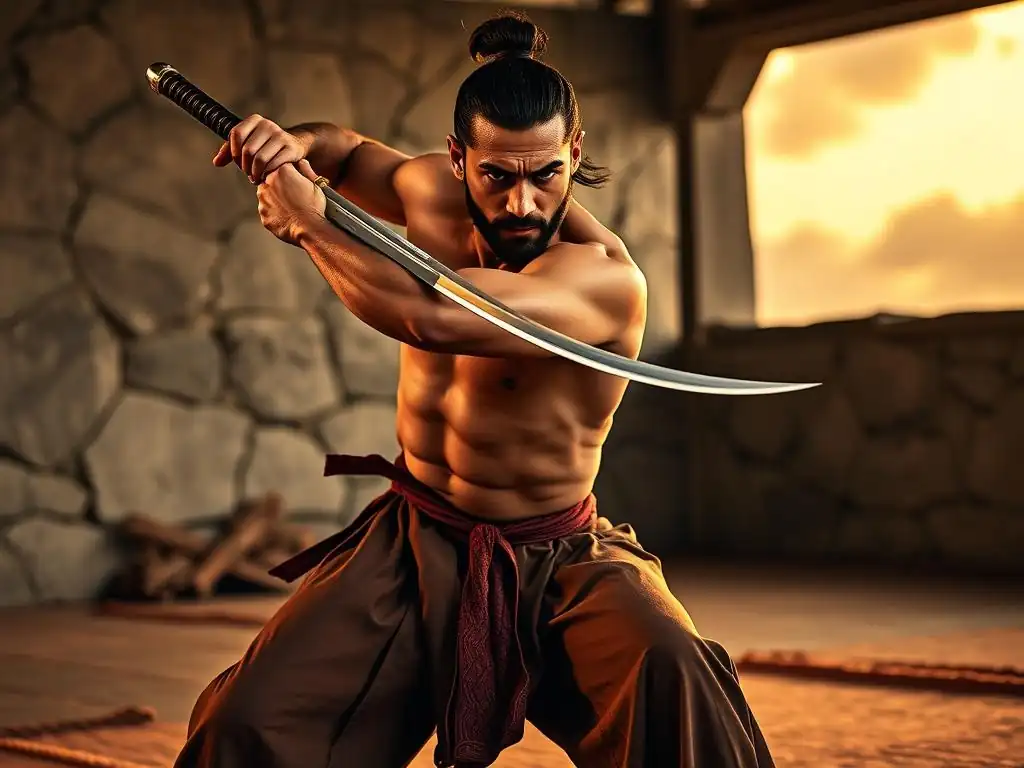
Welcome to Martial Arts Mastery, your portal to the world's fighting arts!
Delve into the intricate dance of combat and philosophy. Ever wondered how the blade can become an extension of your very being? In this article, we explore the fascinating concept of Kali blade limb integration, unveiling the drills and techniques that bridge the gap between weapon and body. Discover how to harness the flow, precision, and devastating power of this ancient Filipino martial art. Are you ready to unlock a new level of mastery? Read on and begin your journey!
- Understanding Kali Blade Limb Integration: The Essence of Flowing Between Blade and Limb
- Core Principles of Flowing Movements in Kali Blade Limb Integration
- Types of Integrated Drills in Kali: Combining Blade and Limb Techniques
- Practical Applications of Blade and Limb Integration in Self-Defense
- Training Methodologies to Master Kali Blade Limb Integration
- Profiles of Legendary Kali Practitioners Excelling in Blade and Limb Integration
- Enhancing Martial Arts Mastery Through Kali Blade Limb Integration
- Frequently Asked Questions
- Final Reflection: Embracing the Dance of Kali
- Unleash Your Inner Synergy!
Understanding Kali Blade Limb Integration: The Essence of Flowing Between Blade and Limb
Defining Kali Blade Limb Integration in Filipino Martial Arts
Kali blade limb integration refers to the profound principle within Filipino Martial Arts (FMA) where the use of a bladed weapon (or its proxy, like a stick) and the practitioner's empty hands are not separate disciplines but rather a single, fluid, and interdependent system. This concept is foundational to styles like Kali, Eskrima, and Arnis, emphasizing that the "live hand" – the hand not holding the weapon – is never passive.
Instead, it actively participates in defense, offense, control, and manipulation, working in perfect concert with the weapon. The goal is a seamless transition between striking with the blade, trapping with the hand, disarming, and delivering empty-hand strikes or grappling techniques, all as part of one continuous motion.
This integration goes beyond merely switching between a weapon and an empty hand; it’s about simultaneous application and mutual support. For instance, while the blade attacks, the empty hand might check an opponent's limb, create an opening, or prepare for a follow-up trap. This holistic approach ensures that the practitioner is never limited to a single mode of engagement but can adapt instantly to the dynamic and unpredictable nature of combat. The essence of Kali blade limb integration lies in this inherent "flow," transforming the practitioner into a multi-faceted threat capable of operating effectively across all ranges and scenarios.
Historical Context of Integrated Drills in Kali, Eskrima, and Arnis
The historical development of integrated drills in Kali, Eskrima, and Arnis is deeply rooted in the practical necessities of survival and warfare in the Philippines. For centuries, Filipino warriors faced diverse adversaries, often armed with various weapons, necessitating a highly adaptable and versatile fighting system.
From the pre-colonial era, where indigenous tribes used bladed tools for daily life and self-defense, through the Spanish colonial period and later conflicts, the ability to transition seamlessly between weapon and empty-hand combat was a matter of life and death. Early practitioners, such as those who resisted Spanish forces in the 16th century, like the warriors led by Datu Lapu-Lapu, understood that a lost weapon or a sudden close-quarters engagement demanded immediate adaptation.
These integrated drills evolved from direct combat experience, where fighters learned that a weapon was an extension of the body, and the body itself was a weapon. The development of concepts like "pangamut" (empty hand techniques) alongside "escrima" (weaponry) was not coincidental but a strategic imperative.
Masters codified these battlefield lessons into training methodologies, emphasizing continuous flow and the active use of both hands, regardless of whether a weapon was present. This historical imperative shaped the very structure of FMA training, ensuring that practitioners were prepared for the chaotic reality of armed and unarmed encounters, making Kali blade limb integration a cornerstone of their combat philosophy.
The Importance of Fluidity Between Weapon and Empty-Hand Techniques
Fluidity between weapon and empty-hand techniques is paramount in Kali blade limb integration because it directly translates to adaptability and tactical superiority in combat. Rigid adherence to a single mode of attack or defense leaves a practitioner vulnerable to exploitation. True fluidity allows for instantaneous transitions: a blade strike can seamlessly become a trap, a disarm, or an empty-hand strike, and vice-versa.
This constant shifting of threat angles and engagement types keeps an opponent off-balance and prevents them from predicting the practitioner's next move. For example, in a close-quarters situation where a blade might be less effective due to proximity, the ability to smoothly transition to a limb trap or an elbow strike can be decisive.
Furthermore, fluidity conserves energy and maximizes efficiency. Instead of disjointed, abrupt changes, movements flow into one another, leveraging momentum and body mechanics. This seamlessness also enhances defensive capabilities; a parry with the blade might immediately lead to a check with the empty hand, controlling the opponent's limb and setting up a counter-attack.
The continuous, adaptable nature of fluid movement ensures that the practitioner can respond effectively to unexpected developments, such as an opponent grabbing their weapon or closing distance rapidly. This emphasis on unbroken motion is a hallmark of advanced Kali blade limb integration, making it a highly effective and dynamic martial art system.
Core Principles of Flowing Movements in Kali Blade Limb Integration
Synchronizing Blade Work with Limb Movements for Effective Defense
Synchronizing blade work with limb movements is a core principle of Kali blade limb integration, essential for both offense and defense. In this system, the "live hand" (the non-weapon hand) is not merely a passive support but an active participant, working in tandem with the blade. For effective defense, this synchronization manifests in techniques like simultaneous parries and checks.
For instance, as the blade executes a defensive block or deflection, the live hand might simultaneously perform a check on the opponent's attacking limb, disrupting their balance or preventing a follow-up strike. This dual action provides a multi-layered defense, making it significantly harder for an attacker to penetrate.
Consider a scenario where an opponent lunges with a knife. A Kali practitioner might parry the incoming blade with their own weapon, while their live hand simultaneously "guntings" (scissors) the opponent's weapon arm or traps their lead leg. This coordinated effort not only defends against the immediate threat but also creates an opening for a counter-attack or a disarm.
This principle extends to limb destruction, where the empty hand targets an opponent's joints or muscles to incapacitate them, while the blade maintains a threat or delivers a strike. The continuous interplay between blade and limb ensures that every defensive action is also a potential offensive setup, embodying the efficiency and tactical depth of Kali blade limb integration.
Maintaining Rhythm and Flow in Integrated Drills
Maintaining rhythm and flow is critical in Kali blade limb integration, distinguishing it from static, pre-arranged movements. This rhythm is often described as a continuous, cyclical motion, akin to a dance or the ebb and flow of water. It ensures that movements are not isolated but part of an unbroken chain, allowing for rapid adaptation and seamless transitions between techniques.
In integrated drills like Hubud Lubud, practitioners continuously exchange attacks and defenses, with the rhythm dictating the timing and speed of their responses. This constant give-and-take, often at a conversational pace, builds an intuitive understanding of distance, timing, and energy transfer.
The importance of flow extends beyond just physical movement; it encompasses mental fluidity. A practitioner who maintains flow can react instinctively without conscious thought, allowing their body to respond naturally to the dynamic environment. Breaking this rhythm or flow, either intentionally by the practitioner or unintentionally by an opponent, can disrupt timing and create openings.
Therefore, drills are designed to cultivate this continuous motion, training the body to move efficiently and gracefully, regardless of whether a weapon is in hand or not. This cultivated rhythm is a cornerstone of Kali blade limb integration, enabling practitioners to maintain control and adaptability in unpredictable situations.
The Role of Body Mechanics in Seamless Blade and Limb Coordination
Efficient body mechanics are the invisible engine driving seamless Kali blade limb coordination. Without proper body mechanics, even perfectly synchronized blade and limb movements would lack power, speed, and sustainability. This principle emphasizes using the entire body as a cohesive unit, rather than relying solely on isolated arm or leg strength.
Core rotation, hip torque, and proper weight transfer are fundamental. For example, a powerful blade strike often originates from the ground up, with force generated through footwork and hip rotation, rather than just arm strength. Simultaneously, the live hand's actions, whether a check or a trap, also leverage this full-body engagement for maximum effectiveness and stability.
Footwork, in particular, plays a crucial role in maintaining balance, generating power, and controlling distance, which are all vital for Kali blade limb integration. Fluid footwork allows a practitioner to rapidly change angles, close or open distance, and pivot to avoid attacks while setting up counters.
This holistic approach ensures that every movement, whether with the blade or an empty hand, is supported by a strong foundation and efficient energy transfer. By mastering body mechanics, practitioners not only enhance the power and speed of their techniques but also reduce fatigue and improve their ability to sustain complex integrated sequences over time, making them more formidable in real-world applications.
Types of Integrated Drills in Kali: Combining Blade and Limb Techniques
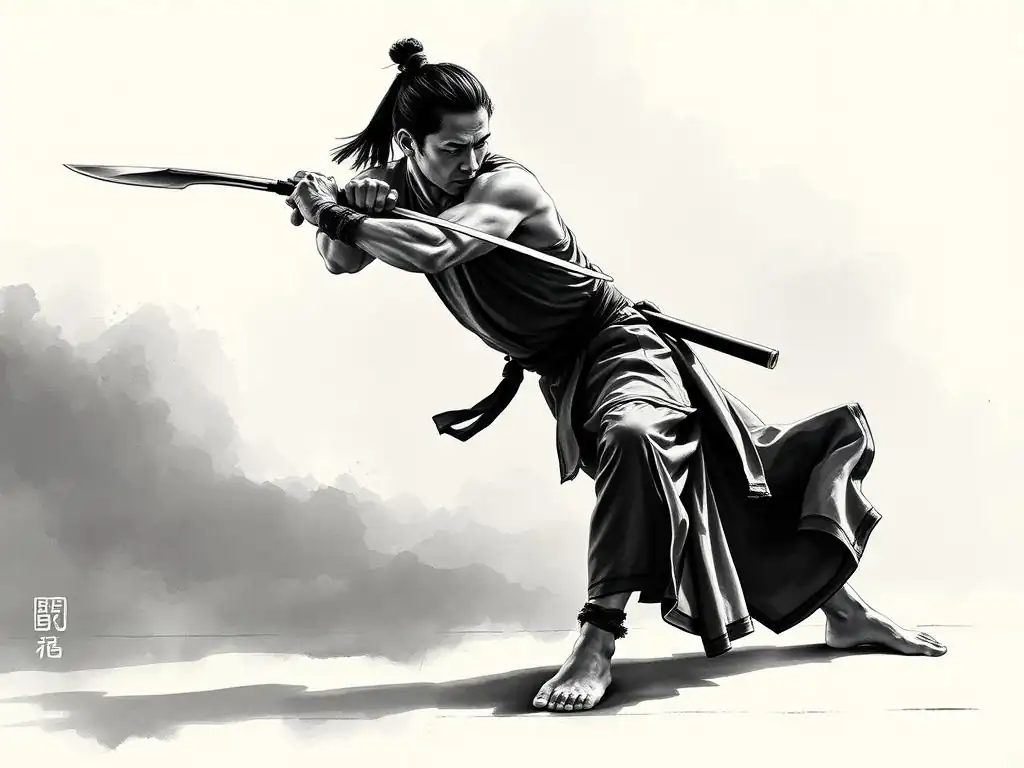
Solo Drills to Develop Blade and Limb Integration
Solo drills are fundamental for developing Kali blade limb integration, allowing practitioners to internalize movements, build muscle memory, and refine coordination without the unpredictable element of a partner. One primary solo drill involves practicing Anyos or forms, which are pre-arranged sequences of movements incorporating both weapon and empty-hand techniques.
By repeatedly executing these forms, practitioners develop the intricate coordination required to transition smoothly between blade strikes, parries, checks, and empty-hand actions. For instance, a common Anyo might involve a downward blade strike, immediately followed by a check with the free hand, then a chambering of the blade while the empty hand delivers a thrust.
Another effective solo drill is shadow boxing with a blade. This involves simulating combat scenarios against an imaginary opponent, integrating all elements of Kali blade limb integration. The practitioner might visualize an incoming attack, respond with a blade block, simultaneously use their live hand to control the imaginary limb, and then counter with a combination of blade and empty-hand strikes.
This practice not only enhances physical coordination but also sharpens mental visualization and tactical awareness. Regular solo practice, even for just 15-20 minutes daily, significantly reinforces the principles of Kali blade limb integration, making the movements instinctive and fluid when applied in partner drills or real situations.
Paired Drills: Partner Exercises for Timing and Distance Control
Paired drills are indispensable for developing Kali blade limb integration, as they introduce the dynamic elements of timing, distance control, and responsiveness to a live opponent. One of the most iconic paired drills is Hubud Lubud, a continuous flow drill that translates to "tying and untying."
In Hubud Lubud, partners maintain constant contact, exchanging attacks and defenses that seamlessly blend blade work with empty-hand techniques like trapping, checking, and disarming. This drill hones sensitivity to pressure and movement, allowing practitioners to instinctively react and flow from a blade parry into an empty-hand trap, or from a disarm into a follow-up strike, all while maintaining a continuous rhythm.
Another crucial paired drill is Sumbrada, a call-and-response exercise where one partner initiates a specific attack, and the other responds with a pre-determined or improvised defense that often involves Kali blade limb integration. For example, an incoming stick strike might be met with a blade block, followed by the free hand trapping the opponent's arm and then a rapid disarm.
Sumbrada variations can focus on specific ranges, angles of attack, or types of disarms, forcing practitioners to apply their integrated skills under varying conditions. These drills, practiced with increasing levels of resistance and speed, are crucial for refining the practical application of Kali blade limb integration in a dynamic, unpredictable environment.
Flow Drills Emphasizing Continuous Movement and Adaptability
Flow drills are designed to push practitioners beyond rote memorization of techniques, emphasizing continuous movement and adaptability in Kali blade limb integration. Unlike strictly patterned drills, flow drills encourage improvisation within a structured framework, fostering true responsiveness. A prime example is an "alive" drill where partners continuously feed attacks and defenses, allowing for a natural evolution of the engagement.
Here, a blade strike might be met with an empty-hand check, which then transitions into a disarm attempt, leading to a scramble where both blade and limb techniques are used spontaneously based on the unfolding situation. The focus is on maintaining an unbroken chain of actions and reactions.
These drills often involve varying the intensity and unpredictability. For instance, a drill might start slowly, then gradually increase in speed and complexity, forcing practitioners to make split-second decisions on whether to use their blade, their empty hand, or a combination of both.
This continuous, adaptable movement develops the ability to transition smoothly between different ranges—from long-range blade engagement to close-quarters empty-hand striking or grappling—and to adapt to unexpected shifts in an opponent's posture or attack. Flow drills are essential for developing the intuitive understanding and seamless execution that characterize mastery in Kali blade limb integration, preparing practitioners for the unpredictable nature of real-world encounters.
Practical Applications of Blade and Limb Integration in Self-Defense
Transitioning Between Weapon-Based and Empty-Hand Techniques in Real Combat
In real combat scenarios, the ability to transition seamlessly between weapon-based and empty-hand techniques is a cornerstone of Kali blade limb integration for effective self-defense. Imagine a situation where a practitioner is armed with a blade, but the engagement quickly closes distance, making the blade less effective for wide, powerful strikes.
At this point, the practitioner must instantly transition to empty-hand techniques: using elbows, knees, or grappling to control the opponent, while still maintaining the threat or potential use of the blade. This could involve using the free hand to trap an opponent's arm while simultaneously delivering a close-range blade thrust, or dropping the blade to secure a clinch and deliver powerful empty-hand strikes.
Conversely, if an empty-hand engagement suddenly reveals an opportunity to retrieve or draw a weapon, the Kali practitioner's training allows for immediate weapon deployment. For example, if an opponent's grab is broken with an empty-hand strike, the space created can be used to draw a knife and transition to blade work.
This fluidity is not a conscious decision but a trained reflex, born from countless hours of integrated drills. The ability to move effortlessly between different modes of combat ensures that the practitioner is never caught off guard and can exploit any advantage, whether armed or unarmed, making Kali blade limb integration exceptionally versatile for self-defense.
Using Limb Positioning to Enhance Blade Striking and Deflection
In Kali blade limb integration, limb positioning is strategically used to enhance both blade striking and deflection, effectively doubling the practitioner's offensive and defensive capabilities. The "live hand" is often employed to clear obstacles, create openings, or control an opponent's body, thereby setting up optimal conditions for blade deployment.
For example, if an opponent's guard is high, the live hand can be used to parry or push their arm aside, creating a direct path for a blade thrust to the body. This simultaneous action ensures that the blade strike is not only delivered with precision but also with minimal obstruction, maximizing its impact.
For deflection, the live hand acts as an active shield or an additional point of contact to control an incoming attack. A common technique involves parrying an opponent's weapon or limb with the live hand, simultaneously deflecting it while the blade is positioned for a counter-attack. This dual action is exemplified in concepts like "pasikot" (to scoop or deflect), where the live hand redirects an incoming attack, allowing the blade to follow through with a strike.
The strategic placement of limbs, whether for checking, trapping, or pushing, provides a critical advantage, making the blade more effective and the defense more robust. This intelligent use of limb positioning is a hallmark of advanced Kali blade limb integration.
Defensive Strategies Utilizing Integrated Blade and Limb Movements
Defensive strategies in Kali heavily rely on integrated blade and limb movements to create multi-layered responses that are both effective and efficient. Instead of a simple block, a Kali practitioner might execute a simultaneous block-and-counter, where the blade parries an incoming attack while the free hand checks the opponent's attacking limb or delivers a strike to a vulnerable point.
This dual action disrupts the opponent's balance and timing, preventing follow-up attacks while setting up an immediate counter. For instance, an incoming punch might be blocked with the blade, while the live hand simultaneously grabs the punching arm, creating an opportunity for a disarm or a close-range blade thrust.
Another key defensive strategy involves using the live hand for trapping and disarming. If an opponent attacks with a weapon, the practitioner might use their free hand to trap the opponent's weapon arm, controlling it while their own blade is positioned to disarm or strike. This integrated approach ensures that defense is never passive; it always seeks to neutralize the threat and create an offensive opportunity.
Furthermore, the use of limb movements to control distance, such as pushing an opponent away with the free hand while maintaining a blade threat, allows the practitioner to manage the engagement on their terms. These integrated defensive strategies underscore the comprehensive and dynamic nature of Kali blade limb integration in self-defense.
Training Methodologies to Master Kali Blade Limb Integration
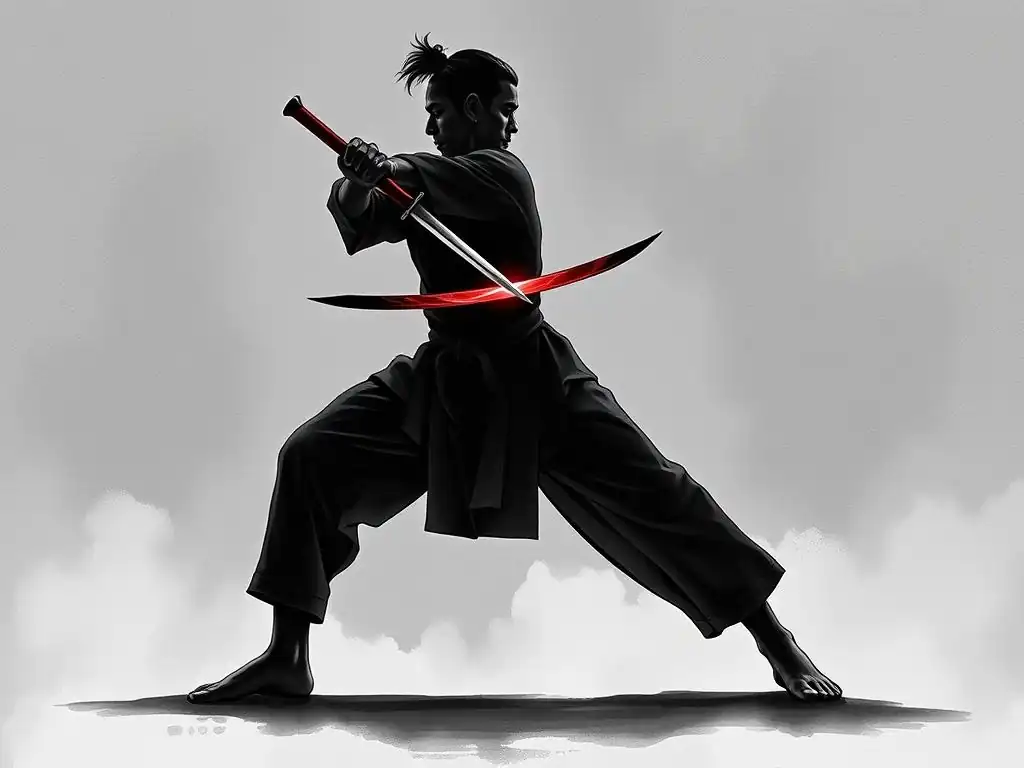
Progressive Drill Structures for Skill Development
Mastering Kali blade limb integration requires a progressive drill structure that systematically builds skills from foundational movements to complex, dynamic applications. Training typically begins with isolated, basic movements performed slowly to ensure proper form and understanding. For example, practitioners might first focus on a single blade strike combined with a simple empty-hand check, repeating it hundreds of times. Once individual components are solid, they are gradually combined into short, pre-arranged sequences, like a three-count drill that involves a blade block, a live-hand trap, and a blade counter. This ensures that the coordination between blade and limb becomes instinctive.
As proficiency grows, the drills advance to include partner work with increasing levels of resistance and speed. Initially, partner drills are cooperative, focusing on smooth transitions and continuous flow, such as the Hubud Lubud drill practiced at a conversational pace. Over time, resistance is gradually introduced, mimicking the unpredictability of a real encounter.
This progression from simple to complex, slow to fast, and cooperative to resistant, ensures that practitioners develop a deep understanding and practical application of Kali blade limb integration. This structured approach allows individuals to internalize the movements and principles, making the seamless flow between blade and limb a natural response.
Incorporating Kali Blade Limb Integration into Daily Training Routines
To truly master Kali blade limb integration, consistent incorporation into daily training routines is crucial, even if it's for short durations. Daily practice reinforces muscle memory, sharpens reflexes, and deepens the intuitive understanding of the system. A highly effective method is dedicated solo practice for 15-30 minutes each day. This can involve shadow boxing with a training blade, executing Anyos (forms) that emphasize blade and empty-hand coordination, or simply performing isolated drills repeatedly. For instance, practicing a specific blade-and-check combination 50 times on each side daily can significantly improve fluidity and synchronization.
Beyond physical drills, mental visualization plays a vital role. Practitioners can mentally rehearse integrated movements throughout the day, envisioning how their blade and empty hand would work together in various scenarios. This mental rehearsal strengthens neural pathways and improves responsiveness.
Additionally, incorporating cross-training that enhances overall athleticism, such as agility drills, grip strength exercises, or even certain dance forms, can indirectly support Kali blade limb integration by improving general coordination, balance, and body mechanics. Consistency, even in small increments, is far more effective than infrequent, long sessions for embedding the principles of Kali blade limb integration into a practitioner's core skillset.
Common Challenges and How to Overcome Them in Integrated Drills
Practitioners often encounter several common challenges when learning Kali blade limb integration, but these can be systematically overcome with focused effort. One frequent issue is stiffness or a lack of fluidity, where movements appear robotic and disjointed rather than flowing. This often stems from tension. Overcoming this requires conscious relaxation, focusing on breathing, and practicing drills at a very slow pace, emphasizing smooth transitions rather than speed. Repetitive, relaxed execution helps the body internalize the natural rhythm.
Another challenge is poor coordination between the weapon hand and the empty hand, where one hand lags or acts independently. This can be addressed by specific coordination drills that force both hands to perform interdependent actions simultaneously, such as a blade parry combined with an empty-hand check. Breaking down complex movements into smaller, manageable parts and practicing them until they become automatic also helps.
Finally, hesitation during transitions between weapon and empty-hand techniques is common. This is best overcome by increasing repetitions of flow drills, progressively increasing speed and resistance, and engaging in partner drills that require immediate, instinctive responses. Consistent practice and patient refinement are key to navigating these challenges and achieving mastery in Kali blade limb integration.
Profiles of Legendary Kali Practitioners Excelling in Blade and Limb Integration
Historical Masters Who Pioneered Integrated Drill Concepts
The concept of Kali blade limb integration, while inherent to Filipino martial arts, was significantly refined and popularized by several historical masters whose teachings continue to influence practitioners worldwide. Grandmaster Remy Presas, the founder of Modern Arnis, is widely recognized for his emphasis on "flow" and the seamless transition from weapon to empty hand and vice versa.
His system was explicitly designed to be adaptable, promoting the idea that a stick is merely an extension of the empty hand, and the principles apply universally. Presas's dynamic teaching style and emphasis on practical application made integrated drills accessible to a global audience, directly contributing to the spread of Kali blade limb integration.
Another towering figure was Grandmaster Antonio "Tatang" Ilustrisimo of Kalis Ilustrisimo. Known for his uncompromising and highly practical combat methods, Tatang Ilustrisimo's system inherently blended blade and empty-hand techniques, particularly in close-quarters combat. His focus on precision, timing, and devastating effectiveness meant that every blade movement was supported by an active "live hand" for trapping, checking, and striking, ensuring a holistic approach to combat.
Similarly, Grandmaster Leo Gaje Jr. of Pekiti-Tirsia Kali championed dynamic, continuous flow drills and the critical role of the "live hand" for offensive and defensive purposes. These masters, through their innovative teaching and battle-tested methodologies, laid the foundational understanding and practical application of Kali blade limb integration that persists today.
Contemporary Instructors Known for Teaching Kali Blade Limb Integration
In the modern era, numerous contemporary instructors continue to propagate and evolve the principles of Kali blade limb integration, making it accessible to a global community of martial artists. Guro Dan Inosanto stands out as one of the most influential figures in this regard. As a direct student of many FMA grandmasters, including Remy Presas and the late John La Coste, Guro Inosanto has dedicated his life to preserving and disseminating diverse Kali systems.
His teaching methodology consistently emphasizes the interconnectedness of weapon and empty-hand techniques, showcasing how the principles of one seamlessly apply to the other. Through his seminars and extensive network of students, he has been instrumental in teaching the nuanced application of Kali blade limb integration across various styles, from stick and knife fighting to empty-hand trapping and striking.
Many other prominent instructors within various FMA lineages also excel at teaching Kali blade limb integration, such as those from the Dog Brothers Martial Arts, who demonstrate the principles through intense, "alive" sparring scenarios. Their practical application of continuous flow and simultaneous blade and limb actions in high-pressure situations provides a compelling testament to the effectiveness of these concepts. These contemporary instructors, by building upon the foundations laid by their predecessors, ensure that Kali blade limb integration remains a living, evolving art, continually refining its methodologies for modern self-defense and martial arts mastery.
Enhancing Martial Arts Mastery Through Kali Blade Limb Integration
Benefits of Integrated Drills for Overall Martial Arts Proficiency
The practice of integrated drills in Kali blade limb integration offers profound benefits that extend far beyond specific FMA techniques, significantly enhancing overall martial arts proficiency. Firstly, it cultivates unparalleled adaptability. By constantly training to transition between weapon and empty-hand applications, practitioners develop the ability to respond fluidly to any combat scenario, regardless of whether they are armed or unarmed, or if the distance changes rapidly. This fosters a holistic understanding of combat, where the practitioner sees opportunities for both blade and limb engagement rather than being confined to a single mode.
Secondly, integrated drills drastically improve problem-solving skills under pressure. The dynamic nature of these drills, especially flow drills, forces practitioners to make split-second decisions and improvise solutions to complex problems, such as an unexpected disarm attempt or a sudden change in an opponent's attack angle.
This constant mental and physical challenge sharpens tactical awareness and decision-making capabilities, which are invaluable across all martial arts disciplines. Furthermore, the emphasis on continuous movement and efficiency in Kali blade limb integration leads to better energy conservation and a more economical use of force, making the practitioner more effective and resilient in prolonged engagements.
How Blade and Limb Integration Improves Reflexes and Coordination
Blade and limb integration inherently demands and thus dramatically improves both reflexes and coordination. The simultaneous and interdependent actions required—such as a blade block combined with an empty-hand check—train the brain and body to process multiple inputs and execute complex, coordinated responses at high speed. This constant demand for synchronized, yet often distinct, movements from both sides of the body significantly enhances ambidexterity and cross-body coordination. Practitioners learn to use their non-dominant hand with nearly the same proficiency as their dominant one, leading to a more balanced and versatile physical skill set.
Moreover, the dynamic and unpredictable nature of integrated drills, particularly paired and flow drills, constantly challenges a practitioner's reaction time. The need to respond instantly to an opponent's shifting attacks and defenses with either a weapon or a limb sharpens proprioception—the body's awareness of its position in space—and kinesthetic awareness—the sense of body movement.
This heightened sensory input and rapid response loop directly translates into faster reflexes, not just in Kali, but across any martial art. The intricate interplay of blade and limb movements forces the development of superior hand-eye coordination and spatial reasoning, making the practitioner more agile, responsive, and coordinated in any physical endeavor.
Incorporating Kali Integration Techniques Across Different Martial Arts Styles
The principles of Kali blade limb integration are remarkably universal and can be effectively incorporated across a wide array of different martial arts styles, significantly enhancing a practitioner's overall capabilities. For a boxer or Muay Thai practitioner, the concept of the "live hand" actively checking or trapping an opponent's limb while striking (even without a blade) can open new avenues for offense and defense. For example, a jab could be accompanied by a simultaneous check of the opponent's lead hand, creating a clear path for a follow-up cross, a direct application of the Kali principle of simultaneous action.
In grappling arts like Brazilian Jiu-Jitsu or wrestling, the Kali focus on limb control and the concept of "guntings" (scissoring actions) can be adapted to enhance submissions or positional control. Understanding how to use one limb to create an opening while another limb attacks, or how to disrupt an opponent's base using subtle body mechanics, directly mirrors Kali blade limb integration.
Even in traditional empty-hand systems, the emphasis on continuous flow, adaptability to changing ranges, and the seamless transition between striking and trapping, all hallmarks of Kali, can deepen a practitioner's understanding of their own art. By adopting these core principles, martial artists from diverse backgrounds can broaden their tactical repertoire, improve their fluidity, and achieve a more comprehensive level of martial arts mastery.
Frequently Asked Questions
What is Kali blade limb integration?
Kali blade limb integration refers to the seamless coordination of blade work with empty-hand techniques to maximize efficiency and effectiveness in combat. It focuses on using the blade as an extension of the limb.
Why is Kali blade limb integration important for martial artists?
Integrating the blade and limb allows for greater adaptability and versatility in self-defense situations. It ensures you can effectively transition between weapons and unarmed combat, crucial for unpredictable real-world scenarios.
What are some examples of integrated drills in Kali?
Examples include drills focusing on disarming techniques that flow into striking, trapping, or grappling. Another example is using the blade to enhance limb movements for increased power and control.
How does Kali blade limb integration enhance self-defense strategies?
By integrating the blade, you gain the ability to control distance, create openings, and exploit vulnerabilities. This integrated approach provides a more comprehensive and dynamic self-defense skillset.
Where can I learn more about Kali blade limb integration techniques?
MartialArtsMastery.org provides resources on Kali training, including articles on blade techniques, limb integration drills, and the philosophical underpinnings of this dynamic martial art.
Final Reflection: Embracing the Dance of Kali
The principles of Kali blade limb integration, as explored throughout this article, are not merely historical relics or abstract concepts; they represent a powerful and relevant framework for understanding movement, strategy, and adaptability in any context. The seamless flow between blade and limb, the constant interplay of offense and defense, speaks to a deeper truth about the interconnectedness of all things, a truth that resonates deeply in our complex and ever-changing world.
This integration, this dance between blade and limb, has profoundly influenced the martial arts landscape and continues to shape how we approach self-defense, physical expression, and even problem-solving. The beauty of Kali lies not just in its effectiveness but in its holistic approach, reminding us that true mastery comes from understanding the connection between all aspects of ourselves. The best fighter is never angry.
- Lao Tzu. This quote encapsulates the calm, centered awareness that Kali, and particularly its integrated drills, cultivates, allowing for a more fluid and effective response in any situation.
As you reflect on the principles of Kali blade limb integration, consider how you can apply these lessons to your own life. Embrace the flow, the adaptability, and the interconnectedness that this martial art embodies. Let the dance between blade and limb inspire you to find balance, strength, and resilience in all that you do.
Unleash Your Inner Synergy!
Thank you for delving into the integrated world of Kali! We hope you’ve gained valuable insights into connecting bladed techniques with limb destructions. Now, let's put that knowledge into action!
- Commit to 15 minutes daily this week to practice transitions between a blade drill and a limb destruction technique. Focus on fluidity and speed.
- Explore resources beyond this article. Research different Kali styles and their unique approaches to weapon and empty-hand integration.
- Share your experiences! What challenges did you face when integrating blade and limb work?
Ready to elevate your Kali practice?