
Understanding "Sticking" vs. "Chasing" in Advanced Chi Sao

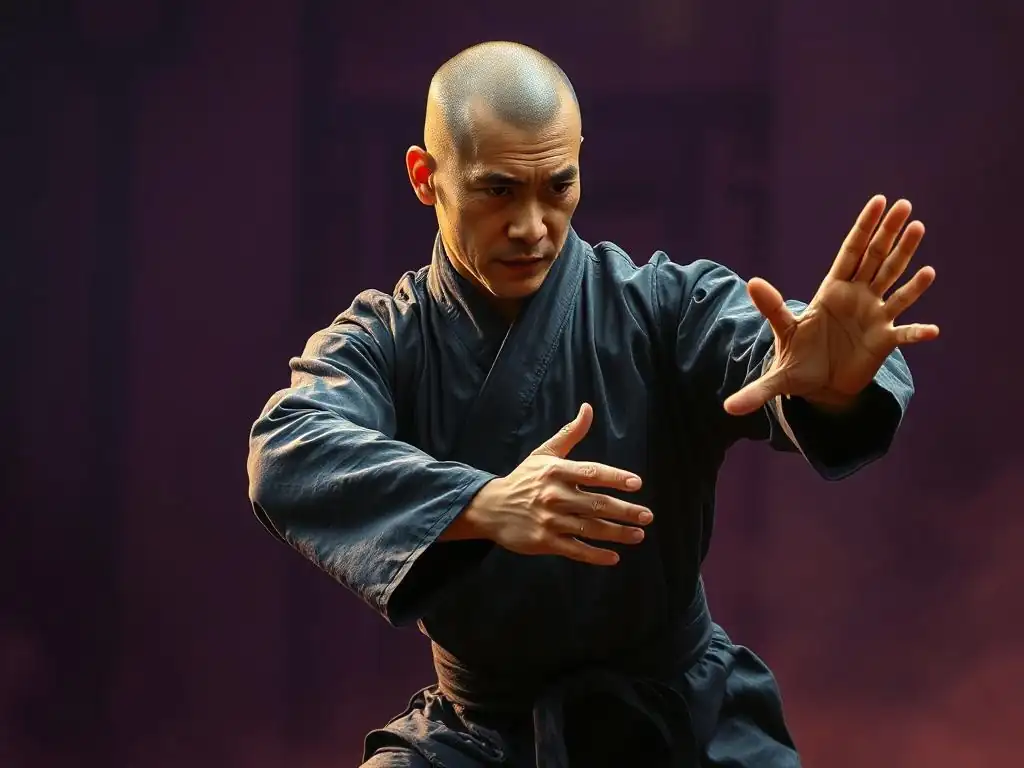
Welcome to Martial Arts Mastery, your definitive resource for uncovering the secrets of combat traditions worldwide. Are you ready to delve deeper into the nuanced world of Wing Chun? This article unlocks the complexities of Chi Sao, specifically focusing on the pivotal distinction between " sticking" and " chasing" techniques. Unravel the strategic advantages of each approach and discover how mastering this intricate balance can elevate your close-range combat prowess. Intrigued? Read on to unlock the secrets of advanced Chi Sao!
- Understanding Sticking and Following in Wing Chun Chi Sao
- Introduction to Chi Sao Sensitivity and Energy Control
- Sticking Hands (Lap Sau): Maintaining Contact and Sensitivity
- Following Hands (Sui Sau): Adapting to Changes in Force and Direction
- The Relationship Between Sticking and Following in Wing Chun Chi Sao
- Advanced Chi Sao Drills Incorporating Sticking and Following
- Common Scenarios and Applications of Chi Sao Sticking and Following
- Mastering Chi Sao: Sensitivity, Structure, and Adaptability
- Conclusion: Enhancing Wing Chun Through Sticking and Following
-
Frequently Asked Questions
- What is Chi Sao and why are "sticking" and "chasing" important?
- How does "sticking" differ from "chasing" in Chi Sao?
- What are some fundamental principles of "sticking" techniques in Chi Sao?
- When should I use "chasing" techniques versus "sticking" techniques in Chi Sao?
- How can I improve my "sticking" and "chasing" skills in Chi Sao?
- Final Reflection: Embracing the Dance of Chi Sao
- Unleash Your Chi Sao Potential!
Understanding Sticking and Following in Wing Chun Chi Sao
Introduction to Chi Sao Sensitivity and Energy Control
Chi Sao, or "sticking hands," is a fundamental training method in Wing Chun Kung Fu. It is a unique two-person drill designed to develop sensitivity, reflex, and the ability to control an opponent's energy and structure at close range. Unlike sparring, which focuses on hitting and avoiding, Chi Sao emphasizes maintaining contact to feel and respond to the opponent's movements and intentions. Mastery of Chi Sao sticking chasing techniques is crucial for effective close-quarters combat.
The Core Principles of Sensitivity and Reflex in Wing Chun
Sensitivity in Wing Chun, often referred to as "listening energy" (Ting Jin), is the ability to feel the direction, force, and intention of an opponent's movement through physical contact. This is developed extensively through Chi Sao training. By maintaining constant contact, practitioners learn to read subtle changes in pressure and tension, allowing them to react instinctively without conscious thought.
This heightened sensitivity directly feeds into developing reflex actions. Instead of relying on visual cues, which are slower, a Wing Chun practitioner responds based on tactile information. This allows for near-instantaneous adjustments to an opponent's attack or defense, enabling techniques like simultaneous blocking and striking. The goal is to develop automatic, conditioned responses that bypass the slower cognitive process.
Why Sticking and Following are Essential for Bridging and Control
"Bridging the gap" refers to closing the distance and making contact with an opponent. Once contact is made, maintaining it through sticking and following becomes paramount. Sticking ensures that the connection is not lost, allowing the practitioner to feel the opponent's energy. Following allows the practitioner to adapt to the opponent's movements, maintaining control of the bridge.
These Chi Sao sticking chasing techniques are essential for controlling the opponent's structure and center line. By maintaining contact and adapting, a skilled practitioner can disrupt the opponent's balance, tie up their hands, and create openings for attack while simultaneously protecting their own vital areas. It's about controlling the interaction from the point of contact rather than reacting to visual cues from a distance.
Sticking Hands (Lap Sau): Maintaining Contact and Sensitivity
Lap Sau literally translates to "pulling hand," but in the context of Chi Sao, "sticking hands" refers to the principle of maintaining continuous, sensitive contact. This isn't about gripping or holding tightly, but rather maintaining a light, elastic connection that allows energy to flow and be felt.
The Importance of Maintaining Constant Contact and Feeling
Maintaining constant contact during Chi Sao is the primary method for developing tactile sensitivity. It allows the practitioner to receive immediate feedback on the opponent's actions – whether they are pushing, pulling, changing direction, or generating force. This continuous flow of information bypasses the visual system, enabling faster, more intuitive responses.
Through consistent sticking, practitioners learn to differentiate between various types of force and intention. They can feel the subtle shifts in muscle tension that precede a strike or the direction of an attempted pull or push. This level of sensitivity, developed over thousands of hours of practice, is what allows Wing Chun practitioners to intercept attacks and control limbs effectively.
Developing Rooting and Structure Through Sticking Drills
Sticking drills inherently develop strong rooting and structure. When maintaining contact, any imbalance or structural weakness in one's own posture is immediately felt through the interaction with the partner. For instance, leaning too far forward or backward will cause instability that the partner can exploit.
Drills like simple single-hand Chi Sao or double-hand rolling help practitioners feel their own center of gravity and maintain a stable base while interacting with external force. A key aspect is learning to absorb or redirect force through the structure of the body rather than just the arms, ensuring that the connection remains sensitive and the practitioner remains rooted and balanced.
Common Mistakes: Stiffness, Forcing, and Loss of Center
Several common mistakes hinder the development of effective sticking. Stiffness is perhaps the most prevalent; gripping or tensing muscles prevents the flow of energy and destroys sensitivity. The hand and arm must remain relaxed and elastic, like a spring.
Forcing is another issue, attempting to muscle through the interaction rather than yielding or redirecting. This turns Chi Sao into a test of strength, which negates its purpose. Loss of center occurs when a practitioner overextends, leans, or loses their balanced posture, making them vulnerable. Effective sticking requires maintaining one's own stable structure while adapting to the partner's movements.
Following Hands (Sui Sau): Adapting to Changes in Force and Direction
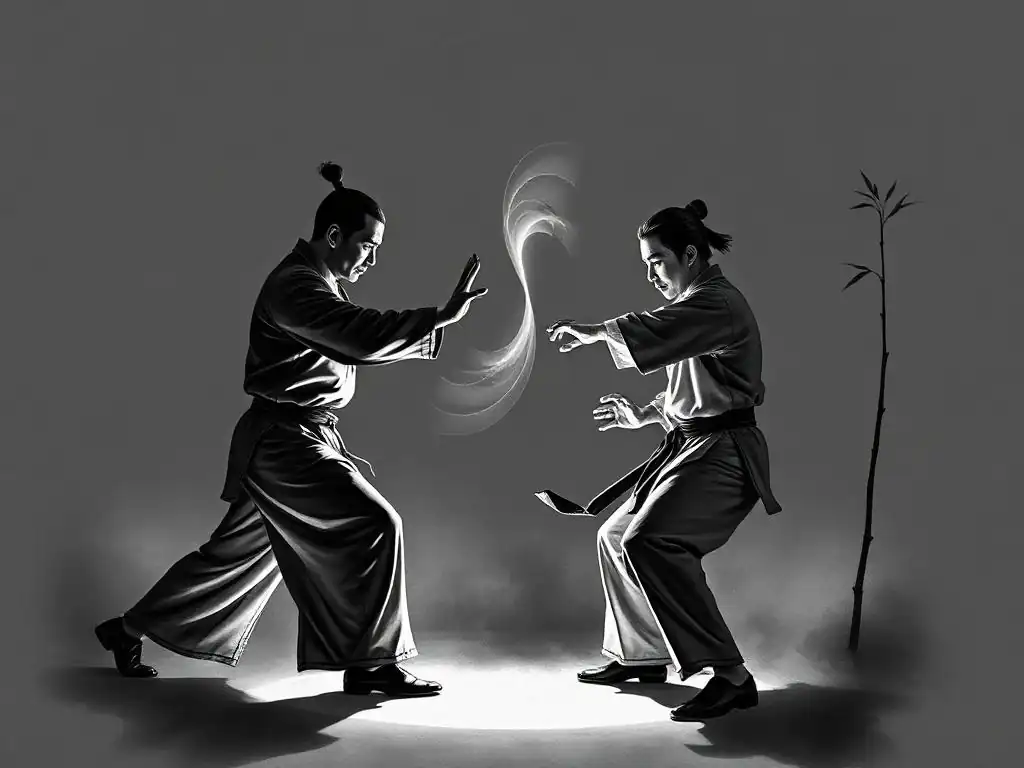
Sui Sau translates to "following hand." While sticking maintains contact, following is the active principle of adapting your movement to match the opponent's, without losing contact or control. It's about moving with them to maintain the bridge and feel their intentions.
Understanding Yielding and Redirecting Energy
Following involves a sophisticated understanding of yielding. When the opponent applies force, instead of resisting head-on (which leads to a power struggle), the practitioner yields slightly, allowing the opponent's force to dissipate or be redirected. This isn't retreating; it's moving with the force in a controlled manner to maintain contact and leverage.
Redirecting energy means taking the opponent's force and channeling it along a path that benefits you, often disrupting their balance or creating an opening. This requires high sensitivity to feel the direction of their energy and the structural integrity (or lack thereof) of their posture. Yielding and redirecting are core Chi Sao sticking chasing techniques.
When to Follow to Maintain Contact and Control
Following is necessary whenever the opponent changes the direction or intensity of their force in a way that would break contact if you simply stuck rigidly. If they pull, you follow by moving slightly towards them. If they push, you follow by yielding slightly. The key is to maintain the "listening" contact.
This allows you to stay connected to their energy source (their body) and continue to feel their intentions. It prevents them from easily withdrawing their limb to strike from a distance or from establishing a stable structure to generate power. Following ensures you remain in the control zone – the close-range bridge.
Drills for Developing Adaptability and Redirecting Force
Specific drills enhance the ability to follow and redirect. Simple rolling drills (Poon Sau) with varying pressure and speed help practitioners practice yielding and matching the partner's energy. Drills involving changing direction, like those incorporating Jik Cheong (vertical punch) and various defensive shapes (Tan Sau, Fook Sau, Bong Sau), force rapid adaptation.
Another key drill involves one partner applying gentle, unpredictable pressure or pulling, while the other practices following maintain constant, light contact. This helps develop the subtle, adaptive movements necessary to track an opponent's limb regardless of their intent. The focus is on smooth, continuous motion, not jerky reactions.
The Relationship Between Sticking and Following in Wing Chun Chi Sao
Sticking and following are not separate techniques but two sides of the same coin in Chi Sao. Sticking is the principle of maintaining contact, while following is the dynamic application of that principle when the opponent is in motion or changing force. They work in constant interplay.
Seamless Transitions: Sticking to Follow and Follow to Stick
Mastery of Chi Sao involves the ability to transition seamlessly between sticking and following. When the opponent is relatively static or applying steady pressure, you stick. The moment they initiate movement or change pressure, you follow, adapting your position and structure to maintain the connection and control.
This requires an instantaneous recognition of the change. A slight pull might require a small forward step (following), while a sudden push might require a subtle yielding motion (following). As soon as their movement stops or stabilizes, you return to the principle of sticking, maintaining sensitive contact. This fluid transition is key to advanced Chi Sao sticking chasing techniques.
Recognizing Changes in Pressure and Intent
The ability to recognize subtle changes in pressure and deduce intent is paramount. This is honed through countless hours of feeling different types of force – sharp, sudden pushes vs. slow, building pressure; direct pulls vs. circular movements. Each indicates a potential different intention from the opponent.
A sudden increase in forward pressure might indicate an impending strike or charge. A withdrawal might signal a feint or preparation for a wider attack. By feeling these subtle cues through the sticking contact, the practitioner can anticipate and respond proactively using following principles to neutralize or counter the action before it fully develops.
Adapting to Different Body Types and Skill Levels
The application of sticking and following must adapt to the opponent's physical attributes and skill level. A larger, stronger opponent might require more emphasis on yielding and redirecting force to avoid being overwhelmed. A faster, more agile opponent might necessitate quicker, more precise following movements to maintain contact.
Against a less skilled opponent, you might use sticking and following to gently guide them into positions where their structure is compromised. Against a highly skilled practitioner, the interaction becomes a subtle dance of pressure and counter-pressure, requiring exquisite sensitivity and adaptive following to gain even a slight advantage.
Advanced Chi Sao Drills Incorporating Sticking and Following
Training drills progressively incorporate more complex movements and principles to refine Chi Sao sticking chasing techniques. These go beyond basic rolling to include footwork, body mechanics, and variations in attack/defense.
Developing Sensitivity and Responsiveness in Combined Techniques
Advanced drills often combine various Wing Chun techniques (Tan Sau, Fook Sau, Bong Sau, Lau Sau, etc.) within the Chi Sao framework. For example, one drill might involve a partner randomly switching between applying forward pressure (requiring Fook Sau and following) and pulling (requiring Tan Sau and sticking/following).
Another approach uses free-flowing Chi Sao where practitioners are encouraged to find openings and apply light, controlled strikes, forcing the partner to use sticking and following principles defensively to cover and counter. This unpredictability significantly enhances responsiveness and the ability to transition between sticking, following, and attacking.
Footwork and Body Mechanics for Maintaining Balance and Control
Effective sticking and following are inseparable from proper footwork and body mechanics. The iconic Wing Chun stance (like the Biu Ma, or side-stanced moving steps) allows for rapid forward/backward movement and pivoting while maintaining balance and structure.
Drills specifically incorporate footwork, requiring practitioners to step and shift their weight smoothly while maintaining contact. For instance, practicing following a partner's circle step while keeping contact requires precise footwork to stay in range and maintain leverage. The body must move as a unit, with the hands maintaining sensitive contact as the legs provide the necessary base.
One Hand Tan Sao, One Hand Fook Sao Drill for Sensitivity
A valuable drill involves using Tan Sau with one hand and Fook Sau with the other, typically with partners rolling in a circular motion. This simultaneous application trains the hands to operate independently yet harmoniously.
The Tan Sau hand practices yielding and deflecting incoming force while maintaining a sensitive connection, embodying the following principle. The Fook Sau hand practices maintaining forward, sticking pressure, embodying the sticking principle. This drill heightens sensitivity by requiring the practitioner to manage two different types of energy flow and contact simultaneously.
Pak Sao, Lap Sao, Punch Drill for Structure and Attack
This drill integrates striking within the Chi Sao framework. One partner might present a Fook Sau. The other executes a Pak Sao (slapping hand) to deflect it outwards, immediately transitions to a Lap Sao (pulling/grabbing hand) to control the limb, and then delivers a controlled punch with the other hand.
This sequence, practiced repetitively, teaches how to disrupt the opponent's structure using sticking (Pak Sao, Lap Sao), maintain control, and exploit the opening with a follow-up attack. It emphasizes using the sticking and following principles to create opportunities for offensive action, a crucial aspect of applying Chi Sao in self-defense.
Common Scenarios and Applications of Chi Sao Sticking and Following
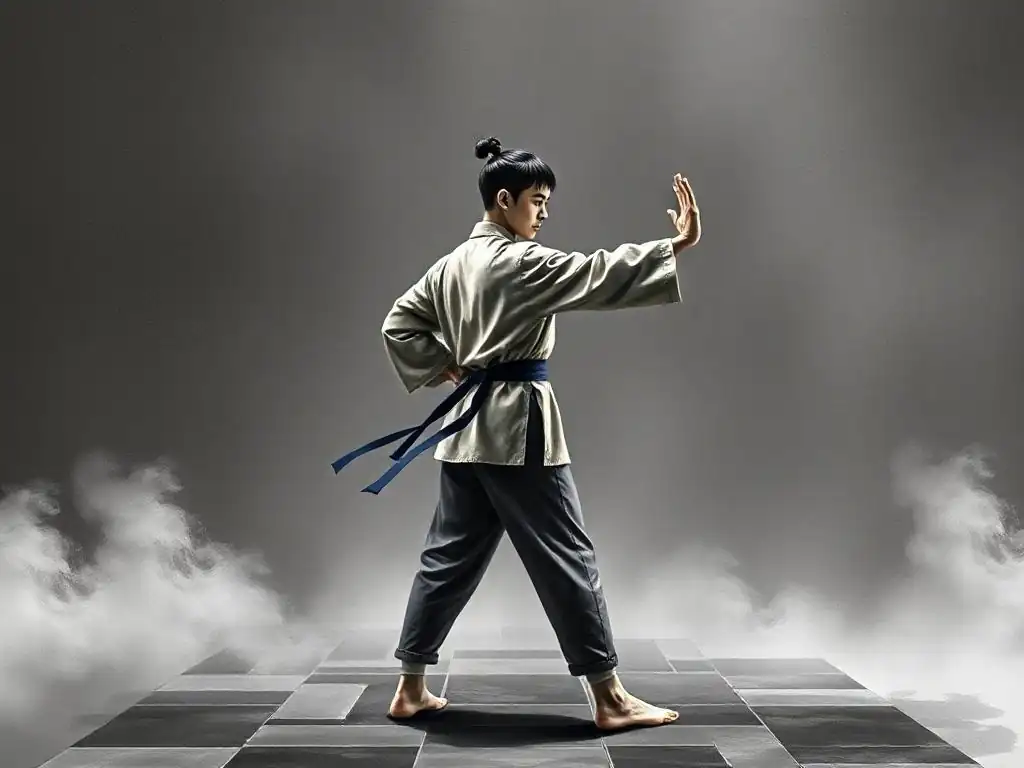
Understanding how Chi Sao sticking chasing techniques apply in realistic scenarios is key to bridging the gap between training and practical self-defense.
Using Sticking to Neutralize and Control Opponent's Limbs
In a confrontation, an opponent's arms are their primary weapons. By applying sticking principles, you can maintain contact with their limbs from the moment of impact or attempted grab. This allows you to feel their intentions and prevent them from withdrawing to strike or establishing a strong grip.
For example, if an opponent throws a punch, your defensive hand makes contact and sticks to their arm. You don't just block and move away; you maintain contact to feel if they are going to pull back, push through, or attempt another technique. This continuous contact allows you to control their weapon, limiting their options.
Employing Following to Exploit Weaknesses in Opponent's Structure
Once sticking is established, following allows you to adapt to their reactions and exploit structural weaknesses. If they pull their arm back, you follow, potentially using their momentum to unbalance them or guide their arm off-line. If they push forward weakly, you follow that line of force while maintaining your structure, potentially causing them to overcommit and lose balance.
This is particularly effective when dealing with someone who uses brute force. Instead of resisting their push, you yield and follow, redirecting their energy past you or downwards, often causing them to stumble or exposing their center line for a counter-attack.
Dealing with a Brute Force Attack
Against a larger, stronger opponent relying on brute force, sticking and following are indispensable. Attempting to match force with force is usually futile. Instead, use sticking to stay connected and feel the direction of their power.
Then, employ following, yielding just enough to redirect their overwhelming force. This might involve stepping offline while maintaining contact (Lau Sau - scooping hand principle) or using a Bong Sau (wing arm) that acts like a spring to deflect and absorb, all while maintaining sensitive contact to feel their next move. The goal is to use their strength against them by yielding and redirecting.
Countering a Fast, Evasive Opponent
Against a fast, evasive opponent who tries to hit and withdraw quickly, sticking is crucial to deny them the distance they need. By immediately closing the gap and maintaining contact (sticking), you prevent them from using their speed to strike from the periphery.
Once contact is made, diligent following ensures they cannot easily break away. Every attempt they make to withdraw or change angle is met by your adaptive movement, keeping the bridge closed. This forces the encounter into the close-range where Wing Chun excels, neutralizing their evasiveness.
Mastering Chi Sao: Sensitivity, Structure, and Adaptability
True mastery of Chi Sao sticking chasing techniques goes beyond physical drills; it involves mental discipline and a deep understanding of the underlying principles.
The Role of Meditation and Mindfulness in Chi Sao Training
Meditation and mindfulness play a significant role in developing the necessary calm and focus for advanced Chi Sao. The ability to quiet the mind allows for heightened body awareness and sensitivity. Distractions prevent you from fully feeling the opponent's energy.
Practicing mindfulness during Chi Sao helps maintain a state of relaxed alertness. This allows the practitioner to react instinctively based on tactile input rather than getting caught up in thought or emotion. A calm mind is essential for perceiving subtle changes in pressure and reacting with fluid, adaptive movements.
Integrating Sticking and Following into Sparring and Self-Defense
The ultimate goal of Chi Sao is to apply its principles in live, non-compliant situations like sparring or self-defense. This transition requires practice. Start by incorporating Chi Sao principles into light, controlled sparring. Focus on maintaining contact whenever possible and using sticking/following to control the interaction.
Gradually increase the intensity, always aiming to apply the principles of feeling the opponent's energy and reacting appropriately. In a self-defense scenario, the initial contact (a grab, a punch landing on a block) is the trigger to engage sticking and following, using the opponent's actions as opportunities to control, unbalance, and counter.
Continuous Refinement: Seek Guidance and Practice Diligently
Mastering Chi Sao sticking chasing techniques is a lifelong journey. Continuous refinement is essential. This involves consistent, diligent practice, ideally with a variety of training partners to experience different body types, energies, and skill levels.
Seeking guidance from experienced instructors is crucial to identify and correct subtle errors in posture, structure, and application of force. A good Sifu can provide personalized feedback that accelerates development far beyond what can be achieved through solo practice or training with inexperienced partners. The path to mastery requires dedication and expert guidance.
Conclusion: Enhancing Wing Chun Through Sticking and Following
Sticking and following are not mere drills but the very heart of Wing Chun's close-range strategy. They develop the tactile sensitivity and adaptive reflexes necessary to control an opponent's energy and structure upon contact. Through diligent practice of Chi Sao sticking chasing techniques, practitioners learn to feel, yield, redirect, and dominate in the critical bridge distance. This mastery transforms Wing Chun from a collection of techniques into a dynamic, responsive, and highly effective martial art for self-defense.
Frequently Asked Questions
What is Chi Sao and why are "sticking" and "chasing" important?
Chi Sao, or sticky hands, is a Wing Chun training method focused on developing sensitivity and reflexive movement. "Sticking" and "chasing" are crucial for maintaining contact and control during close-range engagements.
How does "sticking" differ from "chasing" in Chi Sao?
"Sticking" emphasizes maintaining contact and feeling your opponent's energy, allowing you to anticipate their movements. "Chasing" involves actively pursuing and controlling your opponent's limbs to create openings for attack.
What are some fundamental principles of "sticking" techniques in Chi Sao?
Key principles include maintaining a relaxed structure, listening with your hands to feel changes in pressure, and using yielding to redirect your opponent's force.
When should I use "chasing" techniques versus "sticking" techniques in Chi Sao?
"Sticking" is generally used for initial contact and assessment, while "chasing" is employed when you detect an opening or imbalance in your opponent's structure. Adaptability is key.
How can I improve my "sticking" and "chasing" skills in Chi Sao?
Consistent practice with a skilled partner is essential. Focus on developing sensitivity, structure, and footwork, and gradually increase the speed and complexity of the drills.
Okay, here's a final reflection designed to close your article on "Sticking" vs. "Chasing" in Advanced Chi Sao, optimized for emotional connection and a lasting impression, while also subtly reinforcing the keyword:
Final Reflection: Embracing the Dance of Chi Sao
The nuances of Chi Sao sticking chasing techniques are not merely abstract concepts confined to the training hall; they represent a dynamic interplay of intention and response, a conversation conducted through touch that echoes in our daily interactions. Understanding this fundamental dichotomy unlocks a deeper appreciation for the art of Wing Chun and its profound lessons about adaptability and presence.
The ongoing influence of mastering "sticking" and "chasing" extends far beyond physical combat. It cultivates a heightened awareness of our own energy and the energy of others, fostering empathy and intuitive understanding. The supreme art of war is to subdue the enemy without fighting.
This quote, often attributed to Sun Tzu, resonates deeply with the principles of Chi Sao, reminding us that true mastery lies not in brute force, but in skillful adaptation and the ability to anticipate our opponent's intentions.
Now, consider how the principles of sticking and chasing apply to your own life. Are you clinging too tightly to rigid plans, or are you fluidly adapting to the ever-changing circumstances around you? Embrace the dance, learn to sense the subtle shifts in energy, and allow yourself to move with grace and intention. The wisdom of Chi Sao, particularly in understanding the balance between sticking and chasing, offers a powerful framework for navigating the complexities of life with greater awareness, resilience, and ultimately, success.
Unleash Your Chi Sao Potential!
Thank you for delving into the intricacies of "Sticking" and "Chasing" in Chi Sao. We hope this deep dive has illuminated the subtle yet powerful nuances of this advanced skill. Now, it's time to put this knowledge into action!
Here’s how you can further elevate your Chi Sao game:
- Master the Fundamentals: Revisit basic Chi Sao drills, consciously applying the "Sticking" principles to enhance your sensitivity and responsiveness. This foundational refinement will profoundly impact your ability to apply the techniques covered in the article.
- Explore Opponent-Led Drills: Dedicate training time to drills where your training partner dictates the flow. This will force you to react to their force and movement, naturally developing your ability to adapt and "Stick" or "Chase" appropriately.
- Document Your Experiences: Keep a training journal where you note specific scenarios and how your decisions around "Sticking" versus "Chasing" affected the outcome.
How will you incorporate these advanced concepts into your next Chi Sao training session to refine your sensitivity and adaptability?