
Recreating Historical Longsword Drills Directly from Fechtbücher

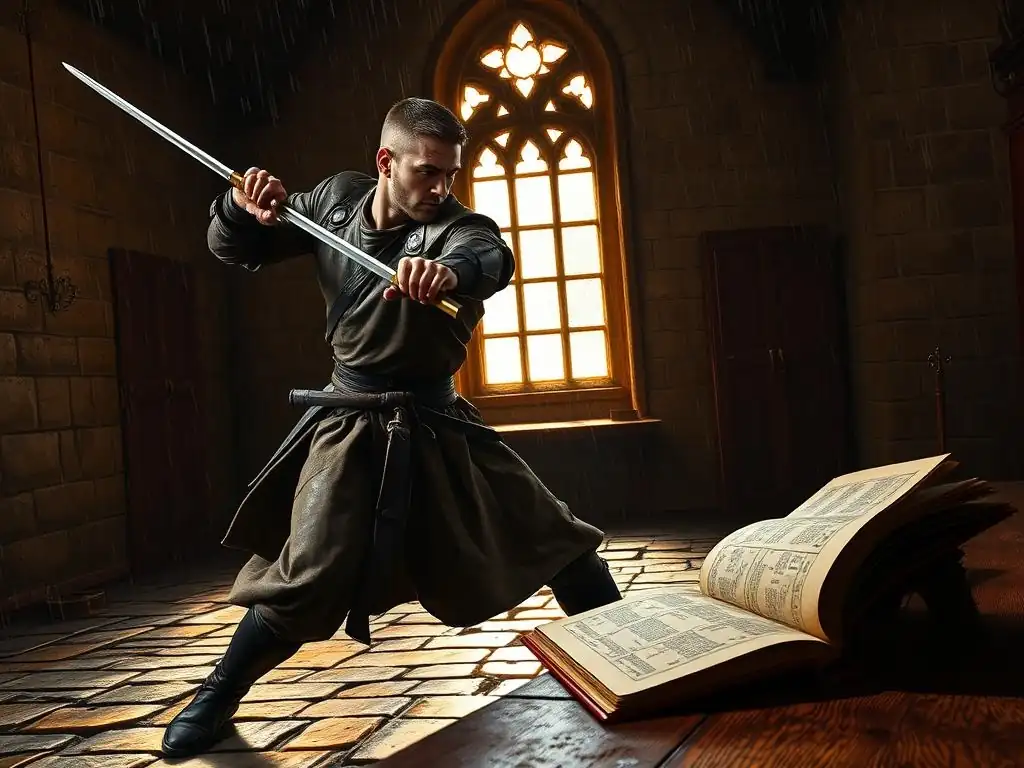
Welcome to Martial Arts Mastery, where we delve deep into the world of combat traditions. Prepare to step back in time and uncover the secrets hidden within the pages of history. Today, we're exploring the fascinating world of fechtbücher, and specifically, how to recreate historical longsword drills directly from these ancient manuals. Discover the techniques and strategies of masters past, and unlock a deeper understanding of this captivating martial art. Are you ready to wield history? Let's begin…
- Introduction to Historical Longsword Training Through Fechtbücher
- Deciphering Fechtbücher: A Guide to Understanding Historical Longsword Manuals
- Reconstructing Longsword Drills: A Step-by-Step Approach
- Examples of Recreated Historical Longsword Drills from Fechtbücher
- Safety Considerations for Recreating Historical Longsword Drills
- The Benefits of Training with Historically Accurate Longsword Drills
- Common Mistakes When Interpreting and Recreating Fechtbücher Drills
- Advanced Techniques in Recreating Fechtbücher Longsword Drills
- Conclusion: Mastering Longsword Through Historical Fechtbücher Techniques
-
Frequently Asked Questions
- How can I begin learning historical longsword techniques from Fechtbücher?
- What are Fechtbücher, and why are they important for historical longsword study?
- Are there any dangers associated with practicing longsword drills from Fechtbücher?
- Where can I find reliable resources for interpreting and applying Fechtbücher techniques?
- What's the difference between practicing Fechtbücher techniques and modern fencing?
- Final Reflection: Embracing the Legacy of Steel
- Unleash Your Inner Swordsman: Begin Your Historical Fencing Journey!
Introduction to Historical Longsword Training Through Fechtbücher
Understanding the Importance of Fechtbücher for Longsword Fencing
Fechtbücher, literally "fight books," are the cornerstone of Historical European Martial Arts (HEMA), particularly for longsword fencing. These medieval and Renaissance manuscripts serve as the primary source material, offering detailed insights into the combat systems and techniques employed by masters spanning several centuries, roughly from the late 13th to the 17th century.
Without these invaluable texts, modern practitioners attempting to learn historical longsword techniques would be left with little more than conjecture and interpretation of historical art, lacking the explicit instructions and principles that guided swordsmen of the past. The sheer volume and variety of these manuscripts—from concise instructional poems to extensive, illustrated treatises—provide a rich tapestry of historical knowledge.
For instance, manuscripts like those attributed to the Liechtenauer tradition, such as the Ringeck Fechtbuch (c. 1400) or the Talhoffer Fechtbuch (c. 1467), contain hundreds of folios detailing stances, cuts, thrusts, defenses, and grappling techniques, offering a comprehensive system rather than isolated moves.
These historical longsword drills and fechtbücher techniques are not merely academic curiosities; they are practical guides intended for instruction and application in earnest combat or judicial duels. The masters who compiled these books were highly skilled practitioners, often with extensive experience in the field or the dueling ground. Their writings represent the culmination of their understanding and teaching methods.
Studying these documents allows modern HEMA practitioners to connect directly with the historical roots of longsword fencing, moving beyond theoretical understanding to physical reconstruction. The detailed descriptions, often accompanied by illustrations, provide a framework for understanding the why behind specific movements and strategies, revealing principles like managing distance ( Zufechten), timing ( Indes), and understanding opponent reactions ( Nachreisen). Recreating historical longsword drills directly from fechtbücher ensures that training is grounded in historical precedent, aiming to replicate the effectiveness and efficiency of the original systems.
MartialArtsMastery.org: Your Guide to HEMA Longsword Training
MartialArtsMastery.org is dedicated to exploring the depth and breadth of martial arts traditions, and Historical European Martial Arts (HEMA) holds a significant place in this exploration, particularly the study and practice of longsword fencing. We aim to serve as a comprehensive resource for enthusiasts, providing insights drawn directly from the historical record, including the essential fechtbücher.
Our content delves into the historical context, philosophical underpinnings, and practical application of these ancient fighting arts, guiding practitioners through the process of deciphering and applying historical longsword drills and fechtbücher techniques. We understand that approaching these historical texts can seem daunting, with their archaic language and sometimes cryptic illustrations, and we strive to make this knowledge accessible to the modern student.
Our commitment to historical accuracy means that the training tips and techniques discussed on MartialArtsMastery.org are rigorously based on interpretations of primary source documents. We explore various traditions and masters, highlighting the nuances and commonalities found across different fechtbücher. Whether you are a beginner just starting your HEMA journey or an experienced practitioner looking to deepen your understanding, MartialArtsMastery.org offers articles, guides, and resources designed to support your training.
We emphasize the importance of structured learning, starting with fundamental stances and cuts as described in the manuals, before progressing to more complex sequences and tactical principles. By focusing on recreating historical longsword drills directly from fechtbücher, we empower our readers to build a solid foundation rooted in the practices of the past masters, ensuring a genuine and effective approach to HEMA longsword training.
Deciphering Fechtbücher: A Guide to Understanding Historical Longsword Manuals
The Language of Fechtbücher: German Terminology and Translations
One of the primary challenges in studying Fechtbücher is the language barrier. The majority of significant longsword manuals from the German school are written in Middle High German or Early New High German, dialects that differ significantly from modern German. These texts employ specific terminology for stances, cuts, thrusts, and tactical concepts that must be understood precisely to correctly interpret the historical longsword drills and fechtbücher techniques.
For example, common terms include Oberhau (over cut), Unterhau (under cut), Zornhau (wrath cut), Stich (thrust), Vom Tag (from the roof/day, a high guard), Alber (fool's guard), Ochs (ox guard), and Pflug (plow guard). Understanding these terms is not just about translation; it's about grasping the specific action or position they represent within the context of the martial system.
Translating these terms accurately is crucial, but often requires contextual interpretation based on the accompanying text and illustrations. A simple dictionary translation may not capture the full meaning. For instance, Indes is often translated as "at the same time" or "immediately," referring to seizing the moment or acting during the opponent's action.
Nachreisen describes following the opponent's retreat or action. Learning these terms and their practical implications is fundamental to reconstructing historical longsword drills from fechtbücher. Many modern HEMA resources, including glossaries and translated texts, are available to aid students in this process, making the historical knowledge more accessible and enabling practitioners to discuss and understand historical longsword drills fechtbücher techniques with greater precision.
Recognizing Key Illustrations and Diagrams in Fechtbücher
Illustrations are a vital component of many Fechtbücher, providing visual representations that complement the textual descriptions of historical longsword drills and fechtbücher techniques. These images, often woodcuts or pen-and-ink drawings, depict practitioners in various guards, performing specific actions, or illustrating tactical situations.
While sometimes stylized or simplified, they offer invaluable clues about body posture, blade angle, distance, and the sequence of movements. For example, illustrations in the Talhoffer Fechtbuch are particularly dynamic, showing not only sword techniques but also grappling, armored combat, and judicial duels, often against different weapon types or even animals, providing a broad picture of martial application.
Learning to "read" these illustrations is an acquired skill. Practitioners must look for details like the orientation of the hands, the position of the feet, the bend in the knees, and the specific point of contact or target. Comparing illustrations across different manuscripts and alongside the accompanying text helps to build a comprehensive understanding.
Sometimes, a single illustration might depict a sequence of actions within one frame, requiring careful analysis to decipher the flow. Recognizing recurring motifs, common guards, and typical engagement distances depicted in these images is essential for accurately reconstructing historical longsword drills directly from fechtbücher. These visuals serve as a critical bridge between the written instructions and the physical execution of the techniques.
Identifying the Masters: Who Created the Historical Longsword Manuals? (Liechtenauer, Ringeck, etc.)
The Fechtbücher tradition is often associated with specific masters, whose teachings were compiled and disseminated by themselves or their students. Understanding these key figures provides context for the historical longsword drills and fechtbücher techniques presented in their respective manuals. Johannes Liechtenauer, a legendary master from the late 14th century, is perhaps the most influential figure in the German school. His teachings are preserved in a cryptic mnemonic poem, the Zettel, which forms the basis for numerous later commentaries by his followers, known as glossators.
Prominent glossators of Liechtenauer's Zettel include Peter von Danzig (c. 1452), Sigmund Ringeck (c. 1440s), and Pseudo-Peter von Danzig (c. 1452), whose interpretations provide detailed explanations of Liechtenauer's principles and techniques. Other notable masters from different traditions or periods include Hans Talhoffer (c. 1467), Paulus Kal (c. 1470), and Joachim Meyer (late 16th century).
Meyer, in particular, wrote extensive, well-structured manuals that are often considered more accessible than earlier works, detailing techniques for various weapons, including the longsword. Studying the works of these different masters allows practitioners to appreciate the evolution and regional variations within historical longsword fencing and provides a diverse pool of historical longsword drills fechtbücher techniques to study and recreate.
Reconstructing Longsword Drills: A Step-by-Step Approach
Identifying Fundamental Techniques Within Fechtbücher
The first step in reconstructing historical longsword drills directly from fechtbücher is to identify and understand the fundamental techniques described in the manuals. These typically include the basic guards ( Huten) such as Vom Tag, Ochs, Pflug, and Alber, and the core cuts ( Hauen) like the Oberhau, Unterhau, and the five "master cuts" ( Meisterhauen) taught in the Liechtenauer tradition: Zornhau (Wrath Cut), Krumphau (Crooked Cut), Zwerchau (Cross Cut), Scheitelhau (Scalp Cut), and Schielhau (Squinting Cut). Thrusts ( Stiche) are also fundamental, often originating from guards like Ochs or Pflug.
Each of these techniques is described with specific body mechanics, blade angles, and intended applications. For example, the Zornhau is typically a powerful diagonal cut, often aimed at the opponent's head or shoulder, designed to break their guard. The Zwerchau is a horizontal cut, often delivered from the side, specifically intended to counter incoming vertical cuts. Understanding these individual techniques in isolation is crucial before attempting to combine them into sequences or drills. This involves careful reading of the text, comparison with illustrations, and often, consulting multiple translations and interpretations by modern HEMA scholars to ensure accuracy.
Breaking Down Techniques into Manageable Drills
Once fundamental techniques are understood, the next step is to break them down into manageable drills suitable for solo practice or partner work. Fechtbücher often describe sequences of actions, but they rarely present them in the format of modern, repetitive drills. The process of creating historical longsword drills fechtbücher techniques involves devising exercises that isolate specific movements, transitions, or tactical principles. For instance, a simple drill might focus solely on transitioning between the four basic guards, practicing the footwork and blade movement required for each change.
More complex drills can combine techniques. A common approach is to take a short sequence described in the text, such as a defense followed by an attack, and practice it repeatedly. For example, practicing defending an incoming Oberhau with a Zwerchau and immediately counter-attacking with a thrust from the Ochs position.
These drills should start slowly, focusing on correct form, body mechanics, and blade control, gradually increasing speed and intensity. Partner drills can simulate resistance or reactions, allowing practitioners to practice timing and distance. The goal is to internalize the movements and principles so they can be applied spontaneously in free play or sparring.
Adapting Historical Drills for Modern Training Environments
While the goal is historical accuracy, modern training environments require adaptations. Safety is paramount, necessitating the use of protective gear and blunted training swords. The physical constraints of a modern training hall or club also differ from the historical contexts of backyards, fields, or dueling circles. Therefore, historical longsword drills fechtbücher techniques often need modifications for space limitations and safety protocols. For example, practicing techniques involving aggressive closing or grappling might require more supervision and specific safety gear.
Furthermore, modern training often incorporates pedagogical approaches not explicitly detailed in Fechtbücher. Progressive overload, structured warm-ups, and cool-downs are standard practice. Drills might be adapted to focus on specific physical conditioning aspects, such as practicing cuts repeatedly for endurance, or focusing on explosive movements for power. While the core techniques and principles derived from the Fechtbücher remain the foundation, the structure and execution of the drills are tailored to facilitate safe, effective, and systematic learning in a contemporary setting. This adaptation ensures that practitioners can safely and effectively learn historical longsword drills directly from fechtbücher.
Examples of Recreated Historical Longsword Drills from Fechtbücher
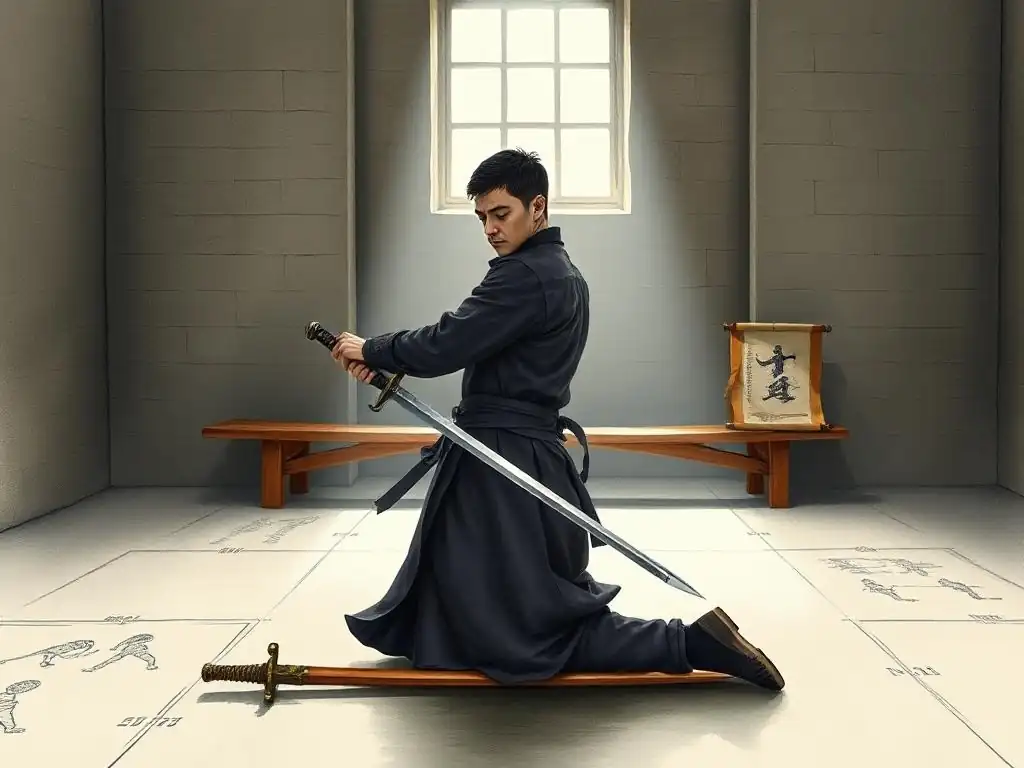
Drill 1: The Alber and Vom Tag Sequence (Longsword Techniques)
A fundamental sequence described or implied in many Fechtbücher involves transitioning between the Alber (Fool's Guard) and Vom Tag (Day/Roof Guard) guards, often incorporating a cut or thrust. Alber is a low guard, typically with the point aimed at the opponent's feet or the ground, often used defensively or as a deceptive posture. Vom Tag is a high guard, with the sword held above the head or shoulder, ready to deliver a powerful Oberhau.
A basic drill could involve starting in Alber, stepping forward with the lead foot while raising the sword to Vom Tag, and executing an Oberhau. The return could involve recovering to Alber or transitioning to another guard.
This simple historical longsword drill from fechtbücher teaches crucial elements: transitioning between guards, coordinating footwork with sword movement, and initiating an attack from a preparatory stance. Practicing this transition repeatedly helps build muscle memory for moving from a defensive or neutral posture to an offensive one. Variations can include stepping offline, adding a parry before the attack, or practicing the sequence moving backward. This drill is foundational for understanding how guards function not just as static positions but as dynamic starting points for action, a key principle in many Fechtbücher traditions.
Implementing Alber and Vom Tag in Sparring
Integrating the Alber and Vom Tag sequence into sparring requires practitioners to recognize opportunities and apply the techniques under pressure. In controlled sparring, a practitioner might adopt the Alber guard to invite an attack to the legs or lower body, then react by transitioning quickly to Vom Tag to deliver an Oberhau as a counter-attack or to force the opponent to defend high. Conversely, starting from Vom Tag allows for immediate offensive pressure with an Oberhau, potentially driving the opponent back or forcing them into a defensive guard like Alber, setting up the next exchange.
Applying this historical longsword drill fechtbücher technique in sparring helps practitioners develop tactical awareness. They learn when and why to adopt each guard, how to transition effectively, and how to use the threat of an attack from Vom Tag or the perceived weakness of Alber to their advantage. It moves the drill from a simple physical exercise to a tactical application, crucial for developing effective longsword fencing skills based on historical principles.
Benefits of Practicing Alber and Vom Tag Drills
Practicing historical longsword drills fechtbücher techniques like the Alber and Vom Tag sequence offers multiple benefits. Firstly, it builds fundamental physical coordination between footwork and sword work, essential for all longsword techniques. Secondly, it improves the speed and efficiency of guard transitions, allowing practitioners to shift seamlessly between defensive and offensive postures.
Furthermore, these drills help practitioners understand the tactical implications of different guards as described in the Fechtbücher. They learn how Alber can be used for defense or to draw an opponent in, and how Vom Tag is a powerful launching pad for attacks. This deeper understanding of guard mechanics and transitions, drawn directly from historical sources, is vital for developing a robust and historically informed longsword fencing style.
Drill 2: Recreating the Zornhau Ort Sequence (Wrath Cut Thrust Drill)
The Zornhau Ort is a classic sequence in the Liechtenauer tradition, emphasizing the principle of attacking powerfully while simultaneously threatening with a thrust. The Zornhau is a strong diagonal cut, often aimed at the head or shoulder. As the cut is delivered, the point ( Ort) of the sword is driven forward, creating a simultaneous cut and thrust threat. The drill involves practicing this specific action: stepping offline slightly with the lead foot while delivering the Zornhau, ensuring the point is directed towards the opponent's face or chest as the cut lands or is defended.
Recreating this historical longsword drill from fechtbücher involves focusing on the coordinated action of the cut and thrust. It's not just a cut followed by a thrust; it's a movement where the threat of the thrust is present throughout the cut, particularly as the blade closes on the opponent's defense. Practicing this drill teaches practitioners to exploit openings created by their own attack and to maintain forward pressure. It embodies the Liechtenauer principle of acting "in the bind" ( im Bundt), immediately following a successful defense or engagement with a continuation.
Integrating Zornhau Ort into Your Longsword Repertoire
Successfully integrating the Zornhau Ort into sparring and free play requires recognizing the appropriate context for its use. It is often employed against an opponent who is defending passively or attempting to block the incoming Zornhau with a static guard. The forward-driving point can slip past or through their defense, landing the thrust. This historical longsword drill fechtbücher technique is particularly effective when timed to arrive as the opponent commits to their defense.
Drilling the Zornhau Ort helps practitioners develop the timing and body mechanics necessary to execute this complex action effectively under pressure. It teaches them to commit to the attack while maintaining control over the point. Regular practice allows the Zornhau Ort to become a natural response to specific defensive reactions, adding a powerful and versatile tool to their longsword repertoire.
Enhancing Precision and Power with the Zornhau Ort Drill
The Zornhau Ort drill is excellent for enhancing both the power of the cut and the precision of the thrust. The power comes from the full-body mechanics of the Zornhau, driving energy from the ground up through the cut. The precision is required to ensure the point remains on line with the target throughout the cutting motion.
Practicing this historical longsword drill from fechtbücher encourages practitioners to focus on the relationship between the edge and the point. They learn how a cutting action can set up or accompany a thrust, and how to maintain threat with the point even while executing a powerful cut. This dual focus on power and precision is a hallmark of effective longsword fencing and is directly addressed by the mechanics of the Zornhau Ort.
Drill 3: The Wechselhau Drill: Mastering Changing Cuts
The Wechselhau (Changing Cut) is another fundamental concept in the Liechtenauer tradition, referring to a cut that changes direction or target, often delivered from a low position. It's frequently described as coming from the Alber guard or a similar low position, changing from an intended low target to a high one, or vice versa, often aimed at the opponent's opening after they have committed to a defense.
A drill for the Wechselhau could involve starting in Alber, making a small deceptive movement towards the opponent's legs, and then suddenly changing the angle and target to deliver an Oberhau or Zwerchau to the head or upper body.
This historical longsword drill fechtbücher technique is designed to exploit the opponent's reaction to an initial threat. By threatening low, the practitioner encourages the opponent to defend low, creating an opening high. The Wechselhau seizes this opening. Practicing this drill teaches practitioners to disguise their intentions and to react quickly to the opponent's defensive response. It emphasizes the importance of feints and the principle of acting Nachreisen (following) the opponent's action.
Improving Agility and Adaptability with Wechselhau
Practicing the Wechselhau drill significantly improves a practitioner's agility and adaptability. The drill requires quick changes in direction and target, demanding precise body control and footwork. It trains the practitioner to be less predictable, as the initial movement does not dictate the final attack.
This historical longsword drill from fechtbücher encourages fluid transitions between different cutting angles and targets. It helps practitioners develop the ability to read an opponent's defense and adjust their attack accordingly, fostering a more dynamic and responsive fighting style, which is crucial for effective longsword fencing.
Applying the Wechselhau Drill in Combat Scenarios
Applying the Wechselhau drill in sparring involves using the deceptive movement from a low guard like Alber to draw a reaction from the opponent. As the opponent shifts their weight or blade to defend low, the practitioner executes the change of target, delivering the cut to the newly created opening. This requires good timing and observation skills.
This historical longsword drill fechtbücher technique is particularly effective against opponents who react strongly to perceived threats or who defend predictably. Mastering its application allows practitioners to create their own openings and to punish an opponent's defensive commitments, making them a more versatile and dangerous fencer.
Safety Considerations for Recreating Historical Longsword Drills
Proper Equipment and Protective Gear for HEMA Longsword Training
Safety is paramount when recreating historical longsword drills directly from fechtbücher, especially when practicing with a partner. HEMA longsword training requires specific protective gear designed to mitigate the risk of injury from strikes, thrusts, and impact. This includes a FIE-certified mask with back of head protection, padded gloves (often referred to as HEMA gloves or gauntlets) providing significant finger and wrist protection, and a padded jacket or gambeson covering the torso and arms.
Additionally, practitioners should wear gorgets to protect the throat, elbow and knee pads, and often shinguards and forearm protectors. Groin protection is also essential. The training swords themselves should be specifically designed for HEMA sparring, featuring blunted edges and tips, appropriate flexibility to absorb impact, and a balance that mimics historical weapons but prioritizes safety. Using inadequate or damaged gear significantly increases the risk of injury during practice of historical longsword drills fechtbücher techniques.
The Importance of Qualified Instruction and Supervision
Learning historical longsword drills fechtbücher techniques safely requires guidance from qualified instructors. An experienced HEMA instructor can correctly interpret the historical source material, demonstrate proper technique, and supervise drills to ensure they are executed safely. They can identify common errors in body mechanics or blade control that could lead to injury and provide corrections.
Instructors also manage the intensity and context of training, ensuring that partner drills and sparring are conducted at appropriate speeds and levels of resistance for the participants' skill levels. Attempting to learn complex historical longsword drills from fechtbücher solely through self-study and without experienced supervision can lead to the development of unsafe habits and a higher likelihood of accidents. A good instructor provides not only technical guidance but also fosters a safety-conscious training environment.
Injury Prevention Strategies for Longsword Fencing
Beyond proper equipment and supervision, several strategies contribute to injury prevention in HEMA longsword training. A thorough warm-up is essential before beginning any drills or sparring to prepare muscles and joints for activity. Gradual progression is also key: starting with slow, simple movements and gradually increasing speed, complexity, and intensity as proficiency and comfort grow.
- Perform dynamic stretches before training.
- Start drills at slow speeds, focusing on form.
- Ensure partners communicate clearly during drills.
- Use control and focus, especially during partner work.
- Cool down and stretch after training.
- Listen to your body and rest when needed.
Maintaining physical fitness, including strength, flexibility, and endurance, also reduces the risk of injury. Hydration and proper nutrition support recovery. By prioritizing safety through gear, instruction, and personal practice habits, practitioners can enjoy the benefits of recreating historical longsword drills directly from fechtbücher while minimizing risks.
The Benefits of Training with Historically Accurate Longsword Drills
Developing a Deeper Understanding of Longsword Mechanics
Training with historical longsword drills fechtbücher techniques provides a profound understanding of how the weapon was intended to be used. Fechtbücher detail specific grips, stances, footwork patterns, and body mechanics that are integral to the effectiveness of the techniques. For example, the emphasis on using the whole body to generate power in a cut, or the specific angulation of the blade in guards like Ochs or Pflug for defense and immediate counter-attack, are principles best learned through direct practice of the historical drills derived from these texts.
This goes beyond simply performing a movement; it's about understanding the underlying principles of leverage, structure, and force generation that the historical masters employed. By diligently practicing historical longsword drills directly from fechtbücher, practitioners internalize these mechanics, leading to more powerful, efficient, and historically authentic execution of techniques. This deep understanding is difficult to achieve through purely modern interpretations or athletic approaches alone.
Improving Timing, Distance, and Blade Awareness
Historical longsword drills from fechtbücher are inherently designed to teach crucial martial attributes like timing ( Indes), distance management ( Zufechten), and blade awareness ( Fühlen or feeling the opponent's blade). Many drills simulate specific tactical situations described in the texts, requiring practitioners to react appropriately based on the opponent's actions and their position relative to each other.
For instance, drills involving the Zornhau Ort or Wechselhau specifically train the practitioner to act Indes, seizing the moment created by the opponent's reaction. Partner drills focusing on entering distance from Zufechten teach practitioners to judge the range needed to strike effectively while remaining safe. Drills involving binding the blades ( Bundt) develop Fühlen, allowing practitioners to sense the opponent's intentions through the pressure and angle of the steel. These attributes are fundamental to effective longsword fencing and are directly cultivated by engaging with the specific historical longsword drills fechtbücher techniques.
Connecting with the Historical Roots of Longsword Fencing
Perhaps one of the most rewarding benefits of training with historically accurate longsword drills is the direct connection it provides to the practitioners of the past. By studying the same manuals, practicing the same techniques, and grappling with the same principles described centuries ago, modern HEMA enthusiasts are walking in the footsteps of historical swordsmen. This connection adds a rich layer of historical and cultural appreciation to the physical practice.
Understanding the context in which these historical longsword drills fechtbücher techniques were developed—for self-defense, judicial combat, or military application—provides insight into their practicality and effectiveness. It moves the practice beyond mere sport or exercise into a form of living history, honoring the legacy of the masters who preserved this knowledge. This historical immersion enhances motivation and provides a deeper purpose for training.
Common Mistakes When Interpreting and Recreating Fechtbücher Drills
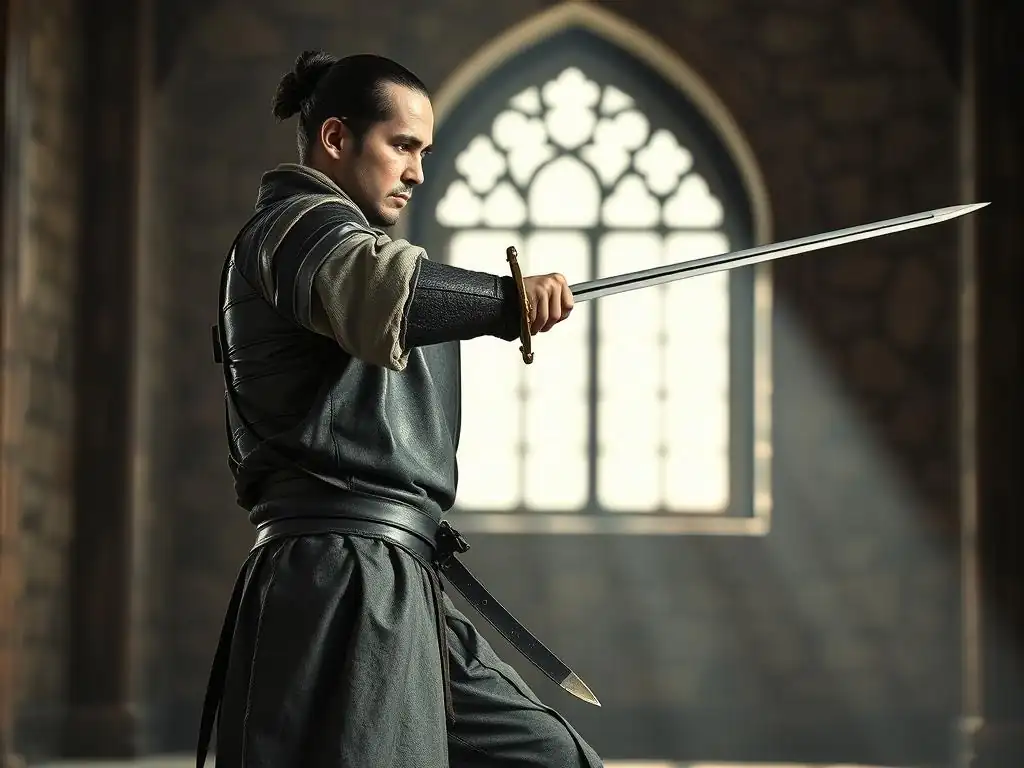
Misinterpreting Illustrations and Textual Descriptions
One of the most frequent errors when attempting to recreate historical longsword drills directly from fechtbücher is misinterpreting the source material. Illustrations can be ambiguous, showing a snapshot in time rather than the full dynamic movement, and sometimes depicting stylized or symbolic actions. Textual descriptions, written in archaic language with specific technical jargon, can be difficult to translate accurately and understand in context.
For example, the same German term might have slightly different meanings depending on the master or the century. An illustration might show a final position but not the precise path taken to get there. Over-reliance on a single translation or interpretation without cross-referencing multiple sources or consulting experienced practitioners can lead to flawed reconstructions of historical longsword drills fechtbücher techniques. It requires patience, critical thinking, and often collaborative study to arrive at plausible interpretations.
Overlooking Safety Precautions and Proper Technique
Another significant mistake is overlooking the necessary safety precautions or neglecting proper technique in the rush to perform complex actions. Fechtbücher were written for a context where injury was a constant risk, and safety protocols as we know them did not exist in the same way. Modern recreation must prioritize safety. Attempting high-speed or high-intensity drills without adequate protection, proper warm-up, or a controlled environment is dangerous.
Similarly, neglecting the foundational techniques and body mechanics described in the manuals in favor of simply mimicking the outward appearance of a technique will hinder progress and increase injury risk. Proper grip, stance, and footwork are fundamental to executing historical longsword drills fechtbücher techniques safely and effectively. Rushing through basics or ignoring the advice of experienced instructors who can correct form are common pitfalls.
Failing to Adapt Drills to Individual Skill Levels
Fechtbücher present sophisticated martial systems, but they don't typically provide a step-by-step curriculum tailored for beginners. A common mistake is attempting to practice drills that are too advanced for one's current skill level. Complex sequences, drills requiring significant timing or distance judgment, or exercises involving high levels of physical control are best approached gradually.
Beginners should focus on simple historical longsword drills fechtbücher techniques: basic cuts, thrusts, guard transitions, and fundamental footwork. As proficiency grows, more complex combinations and tactical scenarios can be introduced. Failing to adapt the intensity and complexity of drills to individual skill levels can lead to frustration, poor technique development, and an increased risk of injury. A structured, progressive approach, often guided by an instructor, is essential for effectively learning historical longsword drills directly from fechtbücher.
Advanced Techniques in Recreating Fechtbücher Longsword Drills
Integrating Free Play and Sparring into Drill-Based Training
For advanced practitioners, integrating free play and sparring is a crucial step in validating and refining the historical longsword drills fechtbücher techniques learned from the manuals. While drills isolate specific movements or sequences, free play simulates the unpredictable nature of combat, requiring practitioners to apply learned techniques spontaneously against a resisting opponent. This transition from structured drill to dynamic application is where true mastery begins.
Advanced training involves setting specific goals for sparring sessions based on the historical longsword drills being studied. For example, a practitioner might focus on creating opportunities to land the Zornhau Ort, or on effectively using Wechselhau against specific defenses. Analyzing sparring footage or outcomes allows practitioners to see which techniques are working, which need refinement, and how opponents are reacting, providing valuable feedback for adjusting their drill practice.
Customizing Drills to Target Specific Weaknesses
Advanced practitioners can customize historical longsword drills fechtbücher techniques to address their individual weaknesses or specific challenges posed by common opponents. If a practitioner struggles with defending against thrusts from Pflug, they can create or adapt drills that specifically practice parrying or countering thrusts from that guard, perhaps incorporating footwork to gain a better angle.
This customization moves beyond simply repeating sequences from the book. It involves analyzing one's own performance and using the principles and techniques found in the Fechtbücher to design targeted exercises. This might involve focusing on specific footwork patterns, improving reaction time to certain stimuli, or developing better control in the bind, all grounded in the historical longsword drills fechtbücher techniques but tailored for personal improvement.
Analyzing and Refining Techniques Based on Sparring Performance
A key aspect of advanced HEMA training, closely tied to applying historical longsword drills fechtbücher techniques, is rigorous analysis of sparring performance. This involves reviewing exchanges to understand why techniques succeeded or failed. Did the Zornhau Ort miss because the timing was off, or because the point wasn't aligned correctly? Was the Wechselhau ineffective because the initial feint wasn't convincing, or because the transition was too slow?
This analytical process informs the refinement of techniques. Based on sparring feedback, practitioners can return to their drills, focusing on the specific elements that need improvement – perhaps dedicating more time to the coordinated body mechanics of the Zornhau Ort, or practicing faster transitions in the Wechselhau drill. This iterative cycle of drilling, sparring, analyzing, and refining is essential for achieving a high level of proficiency in historical longsword fencing rooted in fechtbücher techniques.
Conclusion: Mastering Longsword Through Historical Fechtbücher Techniques
Continuing Your Journey in Historical European Martial Arts (HEMA)
Mastering the longsword, or any weapon within Historical European Martial Arts, is a lifelong journey. Recreating historical longsword drills directly from fechtbücher provides a solid foundation grounded in the practices of the past masters. However, continued learning is essential. This involves ongoing study of Fechtbücher, exploring different interpretations and traditions, and consistent physical practice.
Engagement with the HEMA community is also invaluable. Training with various partners, attending workshops led by experienced instructors, and participating in study groups dedicated to specific manuscripts can deepen understanding and refine skills. The HEMA field is constantly evolving as new research emerges and practitioners refine their interpretations of historical longsword drills fechtbücher techniques. Embracing this ongoing process of learning and refinement is key to progressing in HEMA.
Further Resources for Studying Fechtbücher and Longsword Fencing
For those serious about studying and recreating historical longsword drills fechtbücher techniques, a wealth of resources is available. Numerous online archives host digital copies of historical manuscripts, allowing direct access to the source material. Websites and forums dedicated to HEMA provide translations, interpretations, and discussions among practitioners worldwide.
Published books offer detailed analyses of specific Fechtbücher and traditions. Many HEMA clubs and schools offer structured training programs led by experienced instructors who can guide students through the complexities of the historical systems. Engaging with these resources allows practitioners to deepen their understanding of historical longsword drills fechtbücher techniques, connect with the global HEMA community, and continue their journey in mastering this fascinating martial art.
Frequently Asked Questions
How can I begin learning historical longsword techniques from Fechtbücher?
Start by finding reputable translations of the Fechtbücher. Focus on basic stances and guards first, then gradually progress to simple cuts and thrusts.
What are Fechtbücher, and why are they important for historical longsword study?
Fechtbücher are historical fencing manuals containing illustrations and descriptions of longsword techniques. They are the primary source material for understanding and recreating historical European martial arts (HEMA).
Are there any dangers associated with practicing longsword drills from Fechtbücher?
Yes, practicing without proper instruction and safety equipment can be dangerous. Always use appropriate protective gear and train under the guidance of an experienced instructor to avoid injuries.
Where can I find reliable resources for interpreting and applying Fechtbücher techniques?
Look for HEMA (Historical European Martial Arts) schools or study groups in your area. Many online resources also exist, but verify the credentials and experience of the instructors.
What's the difference between practicing Fechtbücher techniques and modern fencing?
Modern fencing is a sport with specific rules and target areas, while Fechtbücher techniques represent a combative martial art focused on self-defense and battlefield applications. The goals and strategies are distinct.
Final Reflection: Embracing the Legacy of Steel
The journey through recreating historical longsword drills, meticulously extracted from Fechtbücher, reveals more than just combat techniques; it unveils a profound connection to our past. The rediscovery of these lost arts offers a tangible link to the martial prowess and philosophical underpinnings of historical European martial arts (HEMA), reminding us that history is not just a collection of dates, but a living, breathing practice. This revival resonates deeply in a world increasingly disconnected from its physical heritage.
The impact of these rediscovered techniques extends beyond the training hall. The dedication to understanding and applying these drills fosters discipline, critical thinking, and a deeper appreciation for the cultural context from which they emerged. It's a journey of self-discovery, mirroring the dedication and skill of the masters who first documented these arts. The art of fighting is close to the art of living. The more we understand the art of fighting, the more we understand the art of living.
- Miyamoto Musashi (though not directly related to Fechtbücher, the sentiment of martial arts as a path to self-understanding remains relevant).
As we continue to explore and refine these historical longsword drills, let us not only strive for technical proficiency but also embrace the spirit of inquiry and respect for tradition. Let us remember that these techniques are not just about combat; they are about cultivating character, fostering community, and preserving a vital part of our cultural heritage. Pick up your sword, not just to fight, but to learn, to grow, and to connect with the echoes of the past.
Unleash Your Inner Swordsman: Begin Your Historical Fencing Journey!
Thank you for exploring the world of historical longsword drills with us. You've now gained valuable insights into recreating these exercises directly from the Fechtbücher. Ready to put theory into practice and truly connect with the past?
- Embark on your journey by practicing the Zwerchhau and other fundamental cuts with a partner, focusing on form and precision.
- Dive deeper by exploring different Fechtbücher, analyzing their unique interpretations and applying them to your training.
- Share your experiences and insights! Create a short video demonstrating a drill you've mastered and post it to the Martial Arts Mastery forum.
What subtle nuances did you discover while recreating a specific drill from the Fechtbücher, and how did it change your understanding of longsword combat?